

Bedsore Treatment in Pictures and Illustrations
 |
Description
Book Introduction
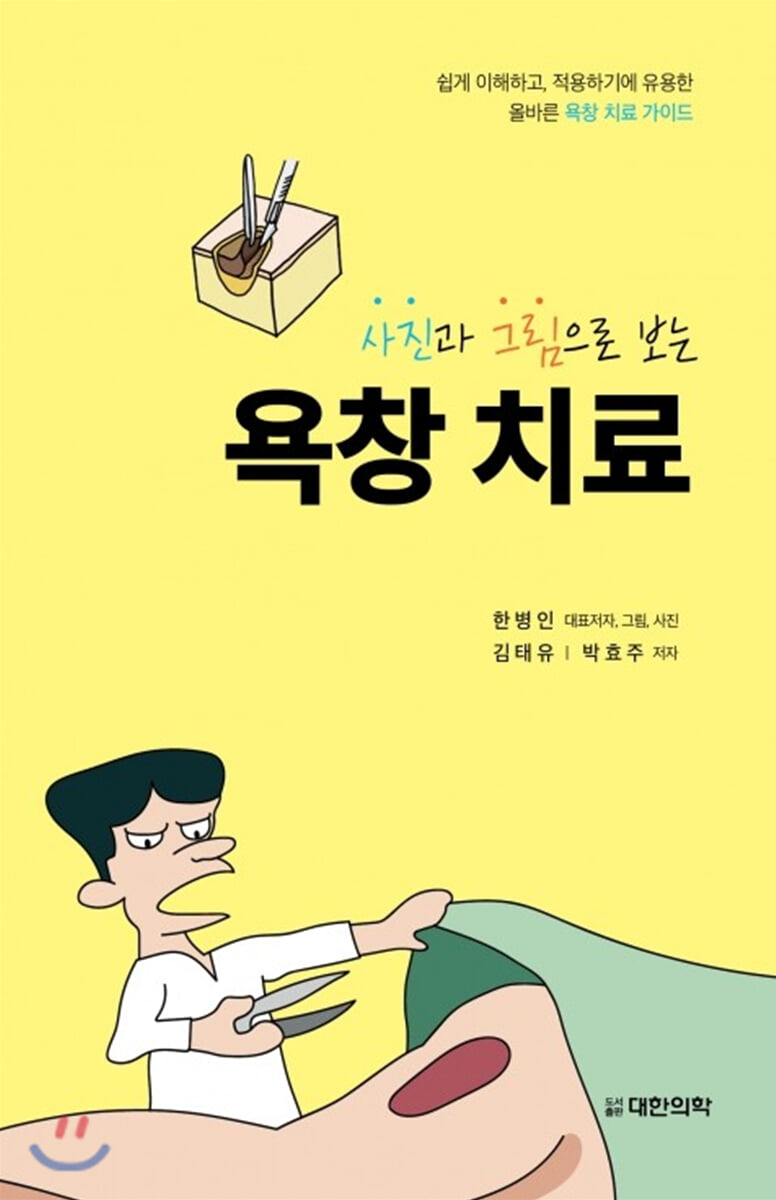
This book contains many illustrations and photographs, with the aim of generating interest no less than commercial information.
We introduced the 'color classification of bedsores', a useful method developed in Japan that is not covered in other books but is unknown in Korea, and a dressing using plastic wrap and kitchen wrap that are easily available around us.
We introduced the 'color classification of bedsores', a useful method developed in Japan that is not covered in other books but is unknown in Korea, and a dressing using plastic wrap and kitchen wrap that are easily available around us.
index
Part 01 Occurrence of bedsores
1.
The mechanism of bedsore development
2.
Mechanism by which the skin's nutrient supply is blocked
3.
Factors involved in the onset
4.
Skin defects due to phlebitis
Part 02 Frequent sites of pressure ulcers
1.
Common sites of bedsores
Part 03 Classification of pressure ulcers
1. NPUAP classification
2.
Color classification
Part 04 Recovery from bedsores
1.
The healing process of shallow pressure ulcers
2.
The healing process of deep pressure ulcers
3.
The process of secondary union
4.
Healing stages of deep pressure ulcers
Part 05 Overview of Pressure Ulcer Treatment
1.
Pressure ulcer treatment principles
2.
Points to know when treating bedsores
3.
Bedsore treatment sequence
Part 06 Wound Cleaning
1.
Purpose of wound cleaning
2.
Principles of Wound Cleaning
3.
How to clean a wound
4.
disinfection
5.
Various disinfectants
Part 07 Marginal resection
1.
outline
2.
mechanical debridement
3.
Tips for removing scabs - if they are small
4.
Tips for removing scabs - if they are large
5.
Case report of removal of scab
6.
ischemic pressure ulcers
7.
cavity
8.
Opening the edges of the bedsore
9.
Other marginal resections
Part 08 Dressing
1.
outline
2.
gauze
3.
lab
4.
plastic film
5.
hydrocolloid
6.
transparent film
7.
Suture of bedsores
Part 09 Ointment
1.
Vaseline ointment
2.
povidone iodine ointment
3.
Nitrofurazone ointment
4.
Gentamicin cream
5.
Silvaden ointment
6.
biofilm
Part 10: Step-by-step treatment of pressure ulcers
1.
Treatment of shallow bedsores
2.
Treatment of deep bedsores
Part 11 Pressure Ulcer Prevention
1.
bed
2.
30° orientation
3.
cushion
4.
bathchair
5.
excrement
References
1.
The mechanism of bedsore development
2.
Mechanism by which the skin's nutrient supply is blocked
3.
Factors involved in the onset
4.
Skin defects due to phlebitis
Part 02 Frequent sites of pressure ulcers
1.
Common sites of bedsores
Part 03 Classification of pressure ulcers
1. NPUAP classification
2.
Color classification
Part 04 Recovery from bedsores
1.
The healing process of shallow pressure ulcers
2.
The healing process of deep pressure ulcers
3.
The process of secondary union
4.
Healing stages of deep pressure ulcers
Part 05 Overview of Pressure Ulcer Treatment
1.
Pressure ulcer treatment principles
2.
Points to know when treating bedsores
3.
Bedsore treatment sequence
Part 06 Wound Cleaning
1.
Purpose of wound cleaning
2.
Principles of Wound Cleaning
3.
How to clean a wound
4.
disinfection
5.
Various disinfectants
Part 07 Marginal resection
1.
outline
2.
mechanical debridement
3.
Tips for removing scabs - if they are small
4.
Tips for removing scabs - if they are large
5.
Case report of removal of scab
6.
ischemic pressure ulcers
7.
cavity
8.
Opening the edges of the bedsore
9.
Other marginal resections
Part 08 Dressing
1.
outline
2.
gauze
3.
lab
4.
plastic film
5.
hydrocolloid
6.
transparent film
7.
Suture of bedsores
Part 09 Ointment
1.
Vaseline ointment
2.
povidone iodine ointment
3.
Nitrofurazone ointment
4.
Gentamicin cream
5.
Silvaden ointment
6.
biofilm
Part 10: Step-by-step treatment of pressure ulcers
1.
Treatment of shallow bedsores
2.
Treatment of deep bedsores
Part 11 Pressure Ulcer Prevention
1.
bed
2.
30° orientation
3.
cushion
4.
bathchair
5.
excrement
References
Publisher's Review
It has been 16 years since I started writing this book and it has finally been published.
The first time I decided to write this book was in 2004, when I was working at a nursing home.
There were an unusually large number of bedsore patients there, and a diligent and dedicated male nurse was diligently treating all of them every day.
However, because I was dressing too often and diligently, it seemed to actually delay the healing of some wounds.
I searched the internet to find the right treatment and found a lot of information from Japan.
After publishing the book "Ultrasound Cerebral Blood Flow Examination" in 2004, I had to go to Keio University Hospital to give a related lecture, so I bought two books on pressure ulcers.
I looked it up in a Japanese dictionary, read the book, and applied the treatment as it was, and it was effective.
In order to make this method widely known, I quickly created an English booklet titled “Non-Surgical management of pressure ulcer” and distributed it to members at the 2005 fall conference of the Korean Neurological Association.
Afterwards, I prepared to write a Korean version of the book by supplementing the content, but I stopped working at the nursing hospital.
The next time I decided to write this book was in the summer of 2019, when I met a patient with bedsores during a consultation.
The bedsore was disinfected with betadine and covered with gauze, which was not the way it should have been treated.
There is no need to disinfect with betadine or cover with gauze.
If you just knew the basic principles of bedsore treatment, you would have been able to treat it well.
However, since the knowledge flooding the Internet is aimed at selling products, it is not easy to learn about bedsores without studying hard.
After 15 years of trying to write a book on pressure ulcer treatment, I decided to resume the work I had previously abandoned, seeing that knowledge about pressure ulcers had remained stagnant.
Looking back at the photos of bedsores that had been left in the corner of my hard drive for a long time, I thought of each and every one of the deceased bedsore sufferers and felt the pain they must have endured.
Then, on February 14, 2020, at the preparatory meeting for the Daegu City Medical Association Academic Conference, Lee Seong-gu, the president of the Daegu City Medical Association, asked me if I was going to publish a book on pressure ulcer treatment.
You said that you were impressed by the author's "Bedsore King - Learning Bedsore Treatment Through Comics" serialized in the Korean Medical Association Newspaper from August 2006 to 4 times.
You said that in the past, your mother suffered from dementia and bedsores, and it broke your heart that you were unable to properly treat her.
When I was young, I saw my uncle suffer from bedsores before he passed away from Parkinson's disease.
I thought no one cared about bedsores until now.
I used to think that only I was writing alone.
But meeting someone so interested in this made me urge myself to finish this book as soon as possible.
This book contains many illustrations and photographs, with the aim of generating interest no less than commercial information.
The pictures were drawn by the author and student Lee Ji-min using a tablet and software, and the photos were taken by the author and received from acquaintances.
We introduced the 'color classification of bedsores', a useful method developed in Japan that is not covered in other books but is unknown in Korea, and a dressing using plastic wrap and kitchen wrap that are easily available around us.
This book is far from comprehensive in its coverage of pressure ulcer treatment.
Until a better book written by a specialist in pressure ulcer treatment comes out, I hope this book will be of some help to those treating pressure ulcers, and I hope it will be a useful book that you can recommend to your friends.
June 2020
With the coronavirus 19
Thank you to those who fought
The first time I decided to write this book was in 2004, when I was working at a nursing home.
There were an unusually large number of bedsore patients there, and a diligent and dedicated male nurse was diligently treating all of them every day.
However, because I was dressing too often and diligently, it seemed to actually delay the healing of some wounds.
I searched the internet to find the right treatment and found a lot of information from Japan.
After publishing the book "Ultrasound Cerebral Blood Flow Examination" in 2004, I had to go to Keio University Hospital to give a related lecture, so I bought two books on pressure ulcers.
I looked it up in a Japanese dictionary, read the book, and applied the treatment as it was, and it was effective.
In order to make this method widely known, I quickly created an English booklet titled “Non-Surgical management of pressure ulcer” and distributed it to members at the 2005 fall conference of the Korean Neurological Association.
Afterwards, I prepared to write a Korean version of the book by supplementing the content, but I stopped working at the nursing hospital.
The next time I decided to write this book was in the summer of 2019, when I met a patient with bedsores during a consultation.
The bedsore was disinfected with betadine and covered with gauze, which was not the way it should have been treated.
There is no need to disinfect with betadine or cover with gauze.
If you just knew the basic principles of bedsore treatment, you would have been able to treat it well.
However, since the knowledge flooding the Internet is aimed at selling products, it is not easy to learn about bedsores without studying hard.
After 15 years of trying to write a book on pressure ulcer treatment, I decided to resume the work I had previously abandoned, seeing that knowledge about pressure ulcers had remained stagnant.
Looking back at the photos of bedsores that had been left in the corner of my hard drive for a long time, I thought of each and every one of the deceased bedsore sufferers and felt the pain they must have endured.
Then, on February 14, 2020, at the preparatory meeting for the Daegu City Medical Association Academic Conference, Lee Seong-gu, the president of the Daegu City Medical Association, asked me if I was going to publish a book on pressure ulcer treatment.
You said that you were impressed by the author's "Bedsore King - Learning Bedsore Treatment Through Comics" serialized in the Korean Medical Association Newspaper from August 2006 to 4 times.
You said that in the past, your mother suffered from dementia and bedsores, and it broke your heart that you were unable to properly treat her.
When I was young, I saw my uncle suffer from bedsores before he passed away from Parkinson's disease.
I thought no one cared about bedsores until now.
I used to think that only I was writing alone.
But meeting someone so interested in this made me urge myself to finish this book as soon as possible.
This book contains many illustrations and photographs, with the aim of generating interest no less than commercial information.
The pictures were drawn by the author and student Lee Ji-min using a tablet and software, and the photos were taken by the author and received from acquaintances.
We introduced the 'color classification of bedsores', a useful method developed in Japan that is not covered in other books but is unknown in Korea, and a dressing using plastic wrap and kitchen wrap that are easily available around us.
This book is far from comprehensive in its coverage of pressure ulcer treatment.
Until a better book written by a specialist in pressure ulcer treatment comes out, I hope this book will be of some help to those treating pressure ulcers, and I hope it will be a useful book that you can recommend to your friends.
June 2020
With the coronavirus 19
Thank you to those who fought
GOODS SPECIFICS
- Date of issue: June 27, 2020
- Page count, weight, size: 140 pages | Checking size
- ISBN13: 9791155901571
- ISBN10: 1155901576
You may also like
카테고리
korean


korean

![GQ KOREA Mark (Monthly): December [2025]](http://librairie.coreenne.fr/cdn/shop/files/8ef265dbbfbf186523ed75ba7319009d.jpg?v=1765340328&width=3840)


