

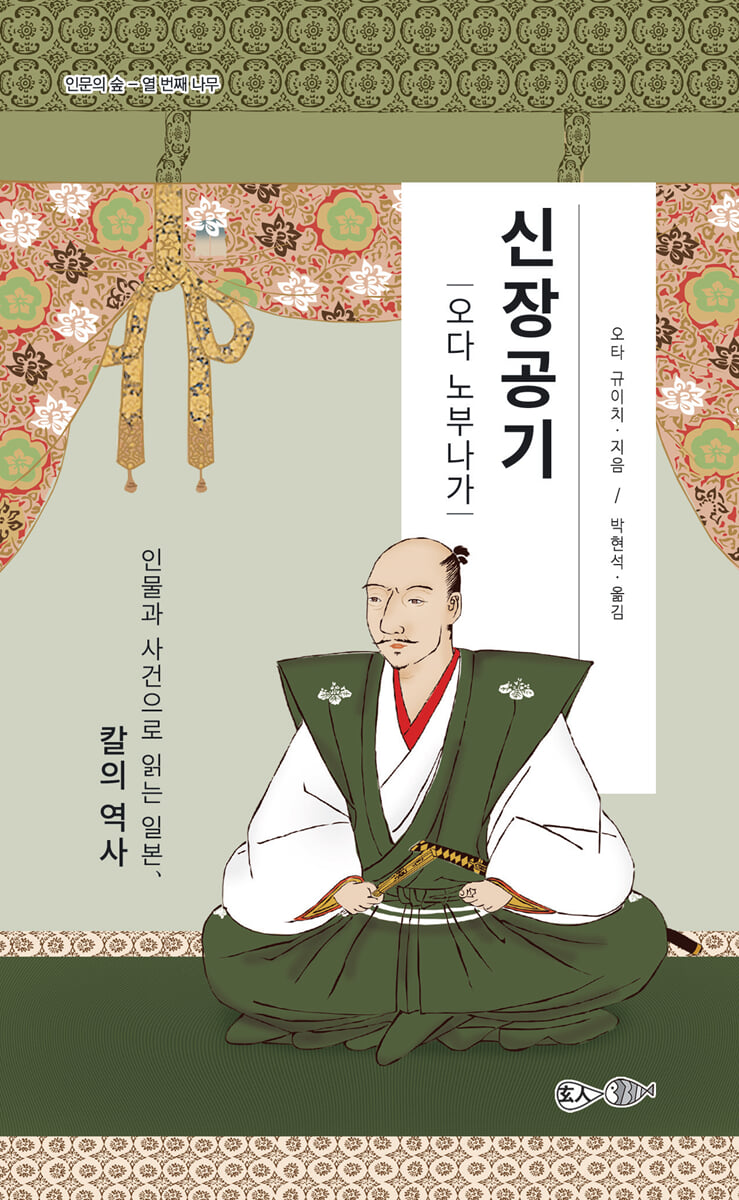
Shinjanggonggi (Oda Nobunaga)
 |
Description
Book Introduction
A must-read for fans of Oda Nobunaga!
『Shinjokkoki』 is considered the pinnacle of biographies that describe the life of Oda Nobunaga, one of the three great heroes of Japan's Warring States period.
This is a text written after Oda Nobunaga's death based on records kept by Ota Kyuichi, a vassal who closely observed Oda Nobunaga's life. It is evaluated as a very valuable resource not only for its vivid storytelling but also for its high reliability as a source that accurately reveals the circumstances of the time.
A must-read for anyone interested in Oda Nobunaga, Japan's Warring States period, or Japanese history!
『Shinjokkoki』 is considered the pinnacle of biographies that describe the life of Oda Nobunaga, one of the three great heroes of Japan's Warring States period.
This is a text written after Oda Nobunaga's death based on records kept by Ota Kyuichi, a vassal who closely observed Oda Nobunaga's life. It is evaluated as a very valuable resource not only for its vivid storytelling but also for its high reliability as a source that accurately reveals the circumstances of the time.
A must-read for anyone interested in Oda Nobunaga, Japan's Warring States period, or Japanese history!
index
First volume
Records before Nobunaga entered Kyoto
Volume 1 1568 (11th year of Eiroku, age 35)
Records of Oda Nobunaga's subsequent life
Volume 2, 1569 (12th year of Eiroku, age 36)
Volume 3 1570 (Genki 1, age 37)
Volume 4, 1571 (Genki 2, age 38)
Volume 5 1572 (Genki 3, age 39)
Volume 6 1573 (Genki 4, age 40)
Volume 7, 1574 (Tensho 2, age 41)
Volume 8, 1575 (Tensho 3, age 42)
Volume 9, 1576 (Tensho 4, age 43)
Volume 10 1577 (Tensho 5, age 44)
Volume 11 1578 (Tensho 6, age 45)
Volume 12 1579 (Tensho 7, age 46)
Volume 13 1580 (Tensho 8, age 47)
Volume 14 1581 (Tensho 9, age 48)
Volume 15 1582 (Tensho 10, age 49)
Records before Nobunaga entered Kyoto
Volume 1 1568 (11th year of Eiroku, age 35)
Records of Oda Nobunaga's subsequent life
Volume 2, 1569 (12th year of Eiroku, age 36)
Volume 3 1570 (Genki 1, age 37)
Volume 4, 1571 (Genki 2, age 38)
Volume 5 1572 (Genki 3, age 39)
Volume 6 1573 (Genki 4, age 40)
Volume 7, 1574 (Tensho 2, age 41)
Volume 8, 1575 (Tensho 3, age 42)
Volume 9, 1576 (Tensho 4, age 43)
Volume 10 1577 (Tensho 5, age 44)
Volume 11 1578 (Tensho 6, age 45)
Volume 12 1579 (Tensho 7, age 46)
Volume 13 1580 (Tensho 8, age 47)
Volume 14 1581 (Tensho 9, age 48)
Volume 15 1582 (Tensho 10, age 49)
Into the book
Until he was 16, 17, or 18 years old, Nobunaga did not indulge in any particular pastimes, practicing horsemanship day and night, and swimming in the river from March to September.
I was very good at swimming.
At that time, after seeing a match with bamboo spears, he said, “Anyway, it seems that using a short spear is disadvantageous,” and ordered that the length of the spear be 3 gan (5.5 m) or 3.5 gan (6.4 m).
Looking at Nobunaga's attire and behavior at the time, he wore a yukatabira (single-layered kimono) with only one sleeve tucked in, and a hanbakama.
He had several flintlock weapons hanging from his body and his head was covered with a chasenmage.
It was wound with red or light green thread and tied up, and a large sword in a vermilion-painted scabbard was worn at the waist.
He ordered all his subordinates to wear red armor, had Ichikawa Daisuke practice archery, had Hashimoto Ippa practice matchlock guns, and constantly had Hirata Sanmi study military strategy, and even had him practice falconry.
There were some truly ugly sights.
He walked the streets, munching on not only chestnuts and persimmons but also cucumbers, oblivious to the gazes of others. He ate rice cakes while standing on the street, leaned against others, and always walked on someone's shoulder.
At this time, the general perception in the world was that being polite was the right thing to do, so people called Nobunaga nothing more than "the world's fool."
--- From "Water Rights"
Nobunaga then summoned about ten monks from Enryakuji Temple and swore, “If you stand on Nobunaga’s side and are loyal from now on, I will return the Enryakuji fief in Nobunaga’s territory to its original state.” He swore while striking the edge of his sword.
“However, if you are going to say that it is not right for a monk to take only one side, then you should not take the side of Azai and Asakura, and you should not interfere with our operations,” he said, clarifying his reasoning.
Then he ordered Inaba Ittetsu to write the above-mentioned purpose in a document, stamp it with his seal, and hand it to him.
And, he added, “If these two articles are violated, the entire mountain, including Konponchudo and Hie Taisha, will be burned to the ground.”
But the monks of Enryakuji did not respond.
--- From Volume 3
Nobunaga initially held a bow, then switched to a second and third time, and fought a defensive battle with arrows, but the strings on all his bows broke over time.
After that, he fought with a spear, but was wounded in the side and retreated.
Until then, there were still women following him, but he said, “Women are enough now.
He said, “Escape quickly,” and made them retreat.
The fire had already started and was beginning to burn nearby.
Perhaps because he felt he should not show his last appearance to his enemies, Nobunaga went deep inside the palace and closed the door to the room used as a shrine from the inside, and ended up committing seppuku in a tragic manner.
I was very good at swimming.
At that time, after seeing a match with bamboo spears, he said, “Anyway, it seems that using a short spear is disadvantageous,” and ordered that the length of the spear be 3 gan (5.5 m) or 3.5 gan (6.4 m).
Looking at Nobunaga's attire and behavior at the time, he wore a yukatabira (single-layered kimono) with only one sleeve tucked in, and a hanbakama.
He had several flintlock weapons hanging from his body and his head was covered with a chasenmage.
It was wound with red or light green thread and tied up, and a large sword in a vermilion-painted scabbard was worn at the waist.
He ordered all his subordinates to wear red armor, had Ichikawa Daisuke practice archery, had Hashimoto Ippa practice matchlock guns, and constantly had Hirata Sanmi study military strategy, and even had him practice falconry.
There were some truly ugly sights.
He walked the streets, munching on not only chestnuts and persimmons but also cucumbers, oblivious to the gazes of others. He ate rice cakes while standing on the street, leaned against others, and always walked on someone's shoulder.
At this time, the general perception in the world was that being polite was the right thing to do, so people called Nobunaga nothing more than "the world's fool."
--- From "Water Rights"
Nobunaga then summoned about ten monks from Enryakuji Temple and swore, “If you stand on Nobunaga’s side and are loyal from now on, I will return the Enryakuji fief in Nobunaga’s territory to its original state.” He swore while striking the edge of his sword.
“However, if you are going to say that it is not right for a monk to take only one side, then you should not take the side of Azai and Asakura, and you should not interfere with our operations,” he said, clarifying his reasoning.
Then he ordered Inaba Ittetsu to write the above-mentioned purpose in a document, stamp it with his seal, and hand it to him.
And, he added, “If these two articles are violated, the entire mountain, including Konponchudo and Hie Taisha, will be burned to the ground.”
But the monks of Enryakuji did not respond.
--- From Volume 3
Nobunaga initially held a bow, then switched to a second and third time, and fought a defensive battle with arrows, but the strings on all his bows broke over time.
After that, he fought with a spear, but was wounded in the side and retreated.
Until then, there were still women following him, but he said, “Women are enough now.
He said, “Escape quickly,” and made them retreat.
The fire had already started and was beginning to burn nearby.
Perhaps because he felt he should not show his last appearance to his enemies, Nobunaga went deep inside the palace and closed the door to the room used as a shrine from the inside, and ended up committing seppuku in a tragic manner.
--- From Volume 15
Publisher's Review
The life of Oda Nobunaga, the greatest hero of Japan's Sengoku period
Japan's Warring States period was a time of ambition, in which warlords arose from all over the country, flaunting their military might and advancing to the center to seize hegemony over the world.
That is why it was a time of great chaos, with wars breaking out almost every day.
It was also an era of insurrection, where the order of superiority and inferiority collapsed, and only power ruled the world, and anyone with power could surpass their lord and rise to a higher position.
The person who suddenly appeared in such a chaotic era, seized power in the center, and extended that power throughout the country to achieve the unification of Japan was none other than Oda Nobunaga.
However, Oda Nobunaga was not born with a silver spoon in his mouth, as they say these days.
Of course, he would have had some foundation as he was born into a warrior family, but his father was nothing more than a subordinate of a local governor who ruled over a region.
If the world had been stable and social mobility nearly impossible, Oda Nobunaga, considered one of Japan's greatest heroes, might never have been born.
However, at that time, it was an era of social upheaval where anyone could rise in status if they had the skills.
Oda Nobunaga was a man who, by explosively growing his skills that had been gradually developed since his father's time, gained power that surpassed even the shogun and the emperor, the two most powerful forces in Japan at the time.
Oda Nobunaga was able to make his name known throughout the country solely through the power he had cultivated through his own abilities.
This is the 『Shinzo Koki』, a biography of Oda Nobunaga written after Oda Nobunaga's death by Ota Kyuichi, a vassal of Oda Nobunaga who had always closely observed Oda Nobunaga's life, based on the records he had kept.
This 『Shinjanggonggi』 is a work written by a vassal who served Nobunaga closely throughout his life, excluding his childhood, while maintaining a relatively objective perspective based on the materials he had collected. Therefore, it is an exciting work that not only provides a detailed understanding of the times at the time, but also allows one to vividly read about the exploits of a hero.
Originally, it was a book consisting of 15 volumes, each covering one year from 1568, when Oda Nobunaga entered Kyoto after enthroning Ashikaga Yoshiaki, the 15th shogun of the Muromachi shogunate, until 1582, when Oda Nobunaga lost his life in the Honnoji Incident. However, later, a first volume covering Oda Nobunaga's childhood was added, making it a total of 16 volumes, which is the current "Shingo Koki."
Through this book, which is considered the pinnacle of Oda Nobunaga's biography, we hope you will learn about Japan's Warring States period and the exploits of one of Japan's greatest heroes.
Japan's Warring States period was a time of ambition, in which warlords arose from all over the country, flaunting their military might and advancing to the center to seize hegemony over the world.
That is why it was a time of great chaos, with wars breaking out almost every day.
It was also an era of insurrection, where the order of superiority and inferiority collapsed, and only power ruled the world, and anyone with power could surpass their lord and rise to a higher position.
The person who suddenly appeared in such a chaotic era, seized power in the center, and extended that power throughout the country to achieve the unification of Japan was none other than Oda Nobunaga.
However, Oda Nobunaga was not born with a silver spoon in his mouth, as they say these days.
Of course, he would have had some foundation as he was born into a warrior family, but his father was nothing more than a subordinate of a local governor who ruled over a region.
If the world had been stable and social mobility nearly impossible, Oda Nobunaga, considered one of Japan's greatest heroes, might never have been born.
However, at that time, it was an era of social upheaval where anyone could rise in status if they had the skills.
Oda Nobunaga was a man who, by explosively growing his skills that had been gradually developed since his father's time, gained power that surpassed even the shogun and the emperor, the two most powerful forces in Japan at the time.
Oda Nobunaga was able to make his name known throughout the country solely through the power he had cultivated through his own abilities.
This is the 『Shinzo Koki』, a biography of Oda Nobunaga written after Oda Nobunaga's death by Ota Kyuichi, a vassal of Oda Nobunaga who had always closely observed Oda Nobunaga's life, based on the records he had kept.
This 『Shinjanggonggi』 is a work written by a vassal who served Nobunaga closely throughout his life, excluding his childhood, while maintaining a relatively objective perspective based on the materials he had collected. Therefore, it is an exciting work that not only provides a detailed understanding of the times at the time, but also allows one to vividly read about the exploits of a hero.
Originally, it was a book consisting of 15 volumes, each covering one year from 1568, when Oda Nobunaga entered Kyoto after enthroning Ashikaga Yoshiaki, the 15th shogun of the Muromachi shogunate, until 1582, when Oda Nobunaga lost his life in the Honnoji Incident. However, later, a first volume covering Oda Nobunaga's childhood was added, making it a total of 16 volumes, which is the current "Shingo Koki."
Through this book, which is considered the pinnacle of Oda Nobunaga's biography, we hope you will learn about Japan's Warring States period and the exploits of one of Japan's greatest heroes.
GOODS SPECIFICS
- Date of issue: June 20, 2025
- Page count, weight, size: 432 pages | 130*210*30mm
- ISBN13: 9791190156554
- ISBN10: 1190156555
You may also like
카테고리
korean


korean

![GQ KOREA Mark (Monthly): December [2025]](http://librairie.coreenne.fr/cdn/shop/files/8ef265dbbfbf186523ed75ba7319009d.jpg?v=1765340328&width=3840)


