

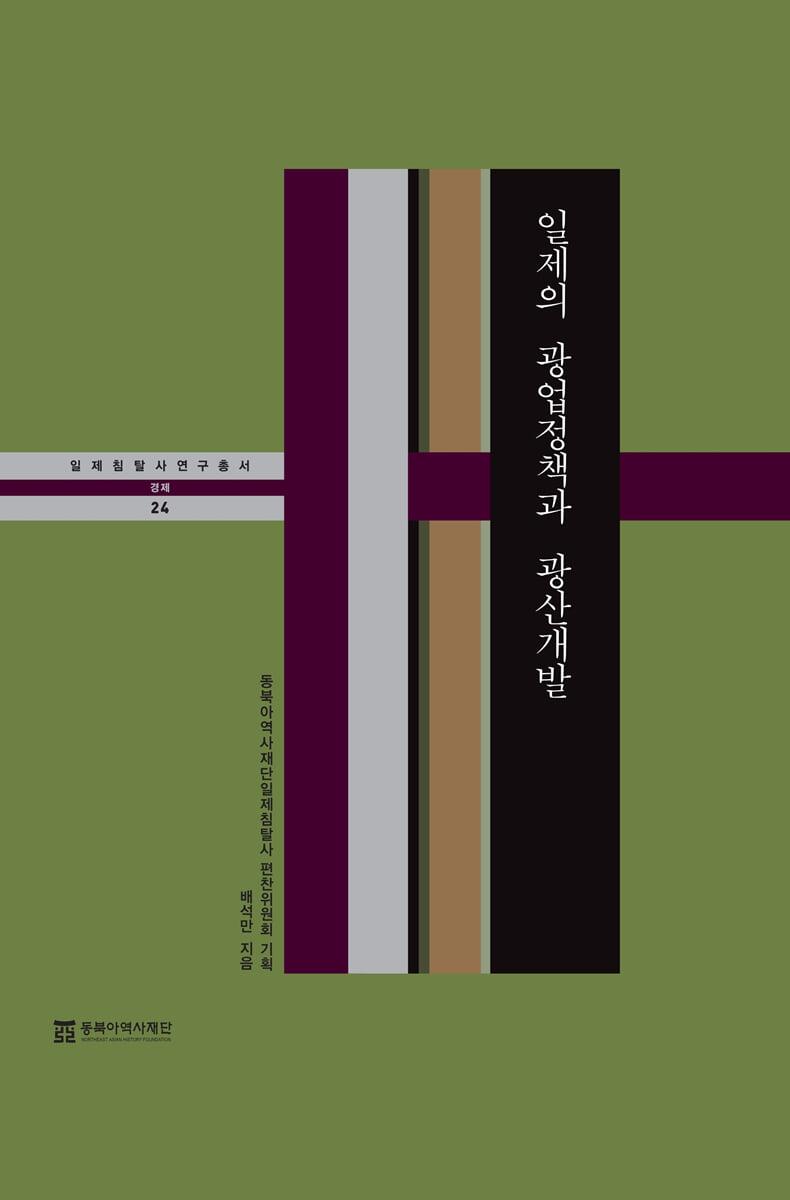
Japanese mining policy and mine development
 |
Description
Book Introduction
Research on mining during the Japanese colonial period is less extensive than expected, and the primary significance of this book lies in the fact that it primarily deals with the period before annexation.
Moreover, since mining is directly linked to development, its evaluation is bound to be difficult.
The author accurately identified the inherent difficulties of mining research and, in order to overcome them, attempted to organize the characteristics of modern Korean mining within the concepts of "modernity" and "coloniality."
In particular, to answer the question of when modern mining began in Korean history, we examined the mining 'policy' and its 'reality' in great detail.
It is also noteworthy that the dynamics of the various actors surrounding mining are also taken into account.
It is believed that this will make a significant contribution to a comprehensive analysis of colonial rule.
The history of mining during the Japanese colonial period is an area where research accumulation is very limited, and research on the Japanese colonial period is particularly lacking compared to the late Joseon period.
Moreover, there are significant differences in research perspectives, and no attempt is being made to create a new perspective that can encompass these.
In this context, this book attempts to reinterpret the development of mining from a political and historical perspective while spatially covering the entire Korean Peninsula.
To this end, the book focuses on 'subjects' such as the Japanese government, the Government-General of Korea, Japanese zaibatsu (conglomerates), Japanese capital in Korea, and Korean capital.
In addition, we thoroughly collected and systematically analyzed key statistical data in the mining industry to precisely organize trends in the production and distribution of major minerals.
This is the greatest virtue of this book, as it seems that related research can be looked up in this book as if it were a dictionary.
Moreover, since mining is directly linked to development, its evaluation is bound to be difficult.
The author accurately identified the inherent difficulties of mining research and, in order to overcome them, attempted to organize the characteristics of modern Korean mining within the concepts of "modernity" and "coloniality."
In particular, to answer the question of when modern mining began in Korean history, we examined the mining 'policy' and its 'reality' in great detail.
It is also noteworthy that the dynamics of the various actors surrounding mining are also taken into account.
It is believed that this will make a significant contribution to a comprehensive analysis of colonial rule.
The history of mining during the Japanese colonial period is an area where research accumulation is very limited, and research on the Japanese colonial period is particularly lacking compared to the late Joseon period.
Moreover, there are significant differences in research perspectives, and no attempt is being made to create a new perspective that can encompass these.
In this context, this book attempts to reinterpret the development of mining from a political and historical perspective while spatially covering the entire Korean Peninsula.
To this end, the book focuses on 'subjects' such as the Japanese government, the Government-General of Korea, Japanese zaibatsu (conglomerates), Japanese capital in Korea, and Korean capital.
In addition, we thoroughly collected and systematically analyzed key statistical data in the mining industry to precisely organize trends in the production and distribution of major minerals.
This is the greatest virtue of this book, as it seems that related research can be looked up in this book as if it were a dictionary.
index
Preface
Compiler
introduction
Chapter 1: Mining in the Late Joseon Dynasty: Efforts and Frustration in Independent Development
1.
The difficulties of establishing a mining bureau and developing a development method
2.
Promulgation and significance of the "Gold Mining Ordinance"
3.
Transfer of major mines to the Ministry of the Interior and management and operation
4.
Enactment of the Mining Act: The Beginning of Colonial Mining
Chapter 2: Attempts to Establish a Foundation for Colonial Mining Development in the 1910s and 1920s
1.
Research and investigation
2.
Enactment of the "Joseon Mining Ordinance"
3.
Development status
Chapter 3: Japan's "Gold Production Increase" National Policy and Colonial Korea in the 1930s
1.
Establishment of the national policy of 'increasing gold production'
2.
Strengthening of the gold mining incentive policy in the late 1930s
3.
The Consequences of the National Policy of 'Increasing Gold Production'
Chapter 4: Japanese Steel Policy and Iron Mine Development
1.
Beginning of colonial iron mine development and the establishment of the Gyeomipo Iron and Steel Works
2.
Full-scale iron mine development in the 1930s
3.
Development of Musan Iron Mine and Construction of Cheongjin Steelworks
Chapter 5: Coal Production Increase Policy and Reality in the 1930s
1.
Full-scale implementation of production increase policy
2.
Increased production of anthracite coal
3.
Development of bituminous coal
Chapter 6: Military Mineral Production Increase Policy and Mining Development During the Pacific War
1.
Establishment of a total mobilization system for exhibition minerals
2.
The reality of development and increased production
conclusion
supplement
Glossary of Mining Terms
References
Search
Compiler
introduction
Chapter 1: Mining in the Late Joseon Dynasty: Efforts and Frustration in Independent Development
1.
The difficulties of establishing a mining bureau and developing a development method
2.
Promulgation and significance of the "Gold Mining Ordinance"
3.
Transfer of major mines to the Ministry of the Interior and management and operation
4.
Enactment of the Mining Act: The Beginning of Colonial Mining
Chapter 2: Attempts to Establish a Foundation for Colonial Mining Development in the 1910s and 1920s
1.
Research and investigation
2.
Enactment of the "Joseon Mining Ordinance"
3.
Development status
Chapter 3: Japan's "Gold Production Increase" National Policy and Colonial Korea in the 1930s
1.
Establishment of the national policy of 'increasing gold production'
2.
Strengthening of the gold mining incentive policy in the late 1930s
3.
The Consequences of the National Policy of 'Increasing Gold Production'
Chapter 4: Japanese Steel Policy and Iron Mine Development
1.
Beginning of colonial iron mine development and the establishment of the Gyeomipo Iron and Steel Works
2.
Full-scale iron mine development in the 1930s
3.
Development of Musan Iron Mine and Construction of Cheongjin Steelworks
Chapter 5: Coal Production Increase Policy and Reality in the 1930s
1.
Full-scale implementation of production increase policy
2.
Increased production of anthracite coal
3.
Development of bituminous coal
Chapter 6: Military Mineral Production Increase Policy and Mining Development During the Pacific War
1.
Establishment of a total mobilization system for exhibition minerals
2.
The reality of development and increased production
conclusion
supplement
Glossary of Mining Terms
References
Search
GOODS SPECIFICS
- Date of issue: April 30, 2025
- Format: Hardcover book binding method guide
- Page count, weight, size: 426 pages | 904g | 158*232*30mm
- ISBN13: 9791171611799
- ISBN10: 117161179X
You may also like
카테고리
korean


korean

![GQ KOREA Mark (Monthly): December [2025]](http://librairie.coreenne.fr/cdn/shop/files/8ef265dbbfbf186523ed75ba7319009d.jpg?v=1765340328&width=3840)


