

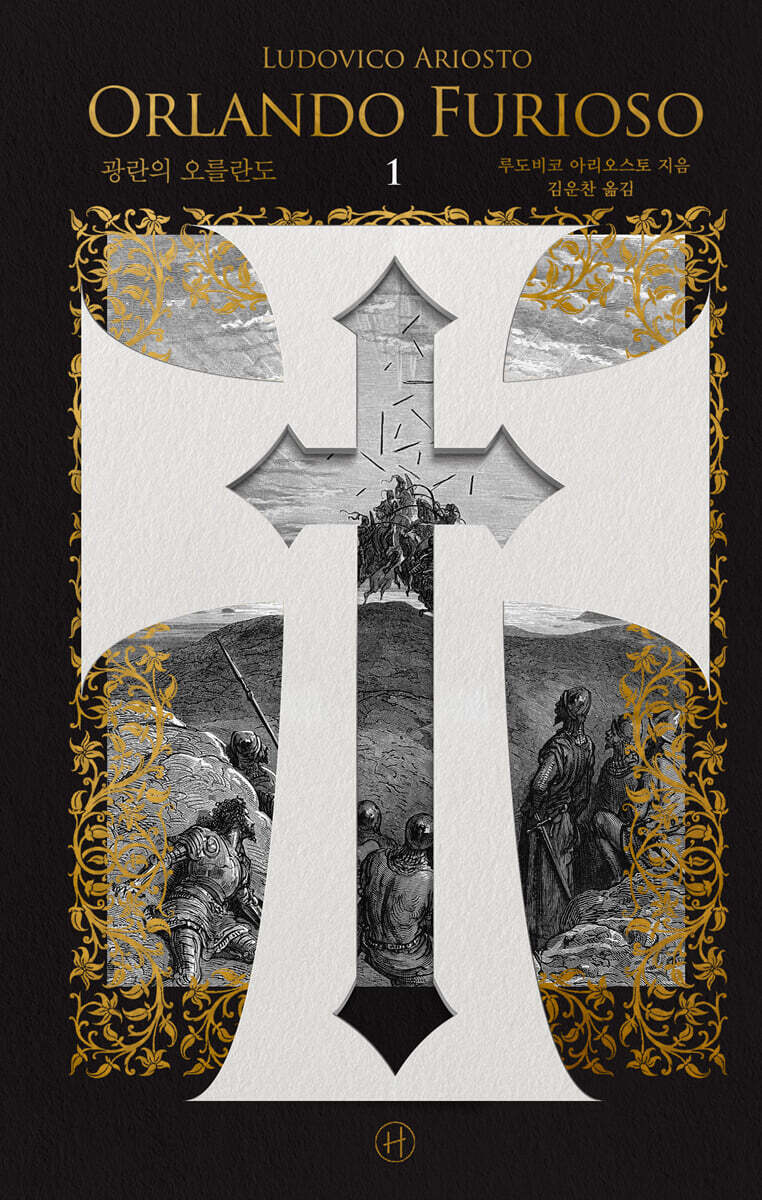
Orlando's Madness 1
 |
Description
Book Introduction
A golden tower of Renaissance literature and a monumental masterpiece of the Charlemagne legend!
Galileo recited it, Stephen King admired it.
A magnificent epic driven by madness
“A masterpiece comparable to the Iliad, the Odyssey, and Don Quixote combined.”
- Voltaire (Enlightenment philosopher)
“A work that ranks among the greatest in the history of Italian literature.”
- Natalino Sapeño (literary critic, researcher of The Divine Comedy)
『Orlando Furioso』 by Ludovico Ariosto (1474-1533), a poet praised as a 'master of Renaissance literature and the perfecter of chivalric literature', is a representative work of Italian literature that has been loved worldwide across time, and is a masterpiece of the century that opened the door to the modern literature market as a bestseller across Europe at the time of its publication in the 16th century.
However, due to the enormous volume of 38,736 lines, which is more than 2.5 times the length of the Iliad and the Divine Comedy, the hundreds of characters, and the dazzling episodes that cross between fantasy and reality, each of which can become the basis of another story, the first translation in Korea was not done until 2013 by Professor Kim Un-chan.
However, even that remained out of print for a long time, and there was a flood of requests for a reprint from readers who wanted to appreciate the true nature of the work.
Here, Humanist presents the definitive edition of 『The Madness of Orlando』, more than ten years after the first edition was published.
The translator reviewed the entire text over a period of six months, revising it from beginning to end, and included supplementary notes. 209 illustrations by Gustave Doré, the 'father of modern illustration,' stand out for their poignant beauty.
Additionally, considering the ease of collection, the existing five volumes were combined into two volumes, and the grand narrative was externally realized by splitting the volumes at turning points in the work's content.
This edition includes 2,254 footnotes, maps, and character relationship charts to aid understanding of the work, and a beautifully designed, limited edition special hardcover edition, enhancing its collection value. This edition revives the work's status as an "immortal classic worthy of rediscovery" and introduces it to Korean readers anew.
Galileo recited it, Stephen King admired it.
A magnificent epic driven by madness
“A masterpiece comparable to the Iliad, the Odyssey, and Don Quixote combined.”
- Voltaire (Enlightenment philosopher)
“A work that ranks among the greatest in the history of Italian literature.”
- Natalino Sapeño (literary critic, researcher of The Divine Comedy)
『Orlando Furioso』 by Ludovico Ariosto (1474-1533), a poet praised as a 'master of Renaissance literature and the perfecter of chivalric literature', is a representative work of Italian literature that has been loved worldwide across time, and is a masterpiece of the century that opened the door to the modern literature market as a bestseller across Europe at the time of its publication in the 16th century.
However, due to the enormous volume of 38,736 lines, which is more than 2.5 times the length of the Iliad and the Divine Comedy, the hundreds of characters, and the dazzling episodes that cross between fantasy and reality, each of which can become the basis of another story, the first translation in Korea was not done until 2013 by Professor Kim Un-chan.
However, even that remained out of print for a long time, and there was a flood of requests for a reprint from readers who wanted to appreciate the true nature of the work.
Here, Humanist presents the definitive edition of 『The Madness of Orlando』, more than ten years after the first edition was published.
The translator reviewed the entire text over a period of six months, revising it from beginning to end, and included supplementary notes. 209 illustrations by Gustave Doré, the 'father of modern illustration,' stand out for their poignant beauty.
Additionally, considering the ease of collection, the existing five volumes were combined into two volumes, and the grand narrative was externally realized by splitting the volumes at turning points in the work's content.
This edition includes 2,254 footnotes, maps, and character relationship charts to aid understanding of the work, and a beautifully designed, limited edition special hardcover edition, enhancing its collection value. This edition revives the work's status as an "immortal classic worthy of rediscovery" and introduces it to Korean readers anew.
- You can preview some of the book's contents.
Preview
index
Translator's Preface
Note
Songs 1-23
Translator's Note
Life and Chronology of the Author Ariosto
The stage (map) of "Orlando the Mad"
Character relationship chart of the protagonist Orlando's era
Character relationship chart of the author Ariosto's era
Search
Note
Songs 1-23
Translator's Note
Life and Chronology of the Author Ariosto
The stage (map) of "Orlando the Mad"
Character relationship chart of the protagonist Orlando's era
Character relationship chart of the author Ariosto's era
Search
Detailed image

Into the book
I will sing of ladies and knights, of war and love, of courtly etiquette and daring deeds,
When the Moors came across the sea from Africa and ravaged France, they followed in the footsteps of their king, Agramante, who had promised to avenge the death of Troiano to the Roman emperor, Charlemagne.
And I will tell you something about Orlando that has never been said in prose or poetry: he, who was once revered for his wisdom, became mad and crazy because of love.
--- From "Song 1"
“The old Orlando is dead and buried in the ground.
An ungrateful woman betrayed his faith and tormented him so much that he died.
“I am a soul separated from him, and now I wander in agony in this hell, the only remaining shadow, serving as an example to those who believe in Amor.”
Orlando wandered through the forest all night, and (……) every part of his body was transformed into anger, resentment, rage, madness, and without the slightest hesitation he drew his sword.
When the Moors came across the sea from Africa and ravaged France, they followed in the footsteps of their king, Agramante, who had promised to avenge the death of Troiano to the Roman emperor, Charlemagne.
And I will tell you something about Orlando that has never been said in prose or poetry: he, who was once revered for his wisdom, became mad and crazy because of love.
--- From "Song 1"
“The old Orlando is dead and buried in the ground.
An ungrateful woman betrayed his faith and tormented him so much that he died.
“I am a soul separated from him, and now I wander in agony in this hell, the only remaining shadow, serving as an example to those who believe in Amor.”
Orlando wandered through the forest all night, and (……) every part of his body was transformed into anger, resentment, rage, madness, and without the slightest hesitation he drew his sword.
--- From "Song 23"
Publisher's Review
A masterpiece of the century that marked the culmination of centuries of European chivalric literature.
The essence of Renaissance literature, containing the transitional changes from the Middle Ages to the modern era.
Born in 1532, Orlando's Madness is the oldest chivalric literature of 11th-century medieval France and is a work in the lineage of The Song of Roland, the origin of the 'Legend of Charlemagne'. It is considered the final masterpiece that concluded the tradition of European chivalric literature that had been popular for hundreds of years.
The Song of Roland provided a model for the narrative of "a tale of knightly exploits amidst the conflict between the Christian and Islamic worlds" in Europe, which was swept up in the fever of the Crusades. The story of the protagonist Orlando (Roland in French) later gained popularity in Italy and was gradually varied in various ways.
By introducing the story of Orlando's life and love before his heroic martyrdom at the Battle of Longsbo, a new chapter of adventure was opened.
A representative work of this is the unfinished epic poem Orlando Innamorato by Matteo Maria Boiardo (1441-1494), and Ludovico Ariosto completed Orlando Innamorato as a follow-up to the work of his senior poet after writing and expanding it for over 20 years.
Orlando Frenzy is evaluated to have not only inherited the flow of medieval chivalric literature, but also successfully integrated the changing mindset and ideas of the Renaissance period, richly expressing the complex inner world of human beings, and the changes that occurred during the transition from the Middle Ages to the modern era.
The Renaissance movement, based on humanism, dismantled the existing Christian-centrism. Ariosto comically satirizes the secularization and corruption of monasteries, and the Christian and pagan characters in Orlando Madness fall in love with each other or convert to follow their lovers, breaking away from the existing schematic oppositional structure.
Moreover, in a situation where medieval chivalry has collapsed, the knights in Orlando's Madness are far from ideal heroes, and are swayed by human weaknesses and emotions, making mistakes and becoming frustrated.
The author portrays the characters with a tone of irony and satire, making the reader laugh while also eliciting empathy and compassion through their imperfections.
Cervantes, Shakespeare, Borges, Stephen King… A narrative coveted by great creators.
A treasure trove of stories that captivates everyone, from classic readers to creators.
The vast narrative, spanning 46 songs, revolves around three core themes.
First, the war between the Christian and Islamic camps.
Second, Orlando's love for Angelica and the resulting madness.
Third, the love story between the Muslim knight Roger and the Christian knight Bradamante.
While these three themes are the main themes, countless side episodes unfold that make it difficult to summarize them clearly.
It features a diverse cast of characters, including heroes driven mad by love, knights consumed by desire, and ruthless female knights. The story unfolds in a thrilling and unconventional narrative of love, betrayal, conspiracy, jealousy, and revenge.
Additionally, Orlando the Mad features supernatural elements and wondrous beings that blur the lines between reality and fantasy, such as sea monsters, winged horses, magic rings and helmets, wizards, and witches. This is why the work is considered the 'father of Italian fantasy literature' and a 'classic of fantasy literature.'
The countless episodes, so numerous that one feels as if one is wandering through a complex maze, serve as a source of endlessly gushing stories, giving birth to yet another story. For this reason, Orlando the Mad has provided a source of inspiration to human intellects throughout the ages.
Scholars have explored the influence of Ariosto in the works of Cervantes and Shakespeare, and it is widely known that Galileo and Voltaire were such avid readers that they could recite passages from the work by heart.
Virginia Woolf and Italo Calvino directly borrowed some characters and episodes from Ariosto's work, and 20th- and 21st-century writers, including Jorge Luis Borges and Stephen King, were captivated by Ariosto's story.
In this way, Orlando's Madness is a "classic that gave birth to classics" that has spawned countless other works, and a "treasure trove of stories" that will captivate both readers who wish to fully enjoy the essence of the original text and creators who seek new narrative threads.
A complete translation by Professor Kim Un-chan, an authority on Italian literature and classic translations, with 2,254 annotations.
Includes 209 illustrations by Gustave Doré, the 'father of modern illustration.'
The translation of Orlando Madness, a monumental work in the history of European literature, was undertaken by Professor Emeritus Kim Un-chan of Daegu Catholic University, a disciple of Umberto Eco and an authority on Italian literature translation in Korea.
Professor Kim Un-chan has been steadily translating for over 30 years, despite the difficult environment of Italian translation in Korea, and has actively introduced the vast and diverse world of Italian literature from the modern era to the Renaissance through complete translations of original texts.
Among them, Orlando Madness can be said to be the work that most intensively displays the spirit of the Renaissance era, following the masterpiece, Divine Comedy.
Additionally, the translator personally added a total of 2,254 footnotes to help readers understand the work.
This guides readers to fully grasp the rich context of the work, including the motifs of the Bible and Greco-Roman mythology that are found throughout the work, as well as the works that Ariosto used as sources, such as Orlando in Love, A Thousand and One Nights, legends, and folktales.
Additionally, it faithfully includes maps, character relationship charts, and annotations of the work, helping readers navigate the world of chivalric literature with greater ease.
Additionally, 209 drawings by Gustave Doré, a 19th-century French illustrator who is also loved by domestic readers for his illustrations for The Divine Comedy and Don Quixote, are included, adding depth to the appreciation of the works.
Doré, considered the 'father of modern illustration,' creates an overwhelming sense of delicacy and tragedy through his elaborate brushwork and dramatic black-and-white contrast.
His illustrations, especially in Orlando's Madness, not only depict knights' exploits and battle scenes with grandeur and vividness, but also sensually depict monsters, wizards, and fantastic scenes of a journey to the moon in a chariot, greatly stimulating the imagination of readers.
The essence of Renaissance literature, containing the transitional changes from the Middle Ages to the modern era.
Born in 1532, Orlando's Madness is the oldest chivalric literature of 11th-century medieval France and is a work in the lineage of The Song of Roland, the origin of the 'Legend of Charlemagne'. It is considered the final masterpiece that concluded the tradition of European chivalric literature that had been popular for hundreds of years.
The Song of Roland provided a model for the narrative of "a tale of knightly exploits amidst the conflict between the Christian and Islamic worlds" in Europe, which was swept up in the fever of the Crusades. The story of the protagonist Orlando (Roland in French) later gained popularity in Italy and was gradually varied in various ways.
By introducing the story of Orlando's life and love before his heroic martyrdom at the Battle of Longsbo, a new chapter of adventure was opened.
A representative work of this is the unfinished epic poem Orlando Innamorato by Matteo Maria Boiardo (1441-1494), and Ludovico Ariosto completed Orlando Innamorato as a follow-up to the work of his senior poet after writing and expanding it for over 20 years.
Orlando Frenzy is evaluated to have not only inherited the flow of medieval chivalric literature, but also successfully integrated the changing mindset and ideas of the Renaissance period, richly expressing the complex inner world of human beings, and the changes that occurred during the transition from the Middle Ages to the modern era.
The Renaissance movement, based on humanism, dismantled the existing Christian-centrism. Ariosto comically satirizes the secularization and corruption of monasteries, and the Christian and pagan characters in Orlando Madness fall in love with each other or convert to follow their lovers, breaking away from the existing schematic oppositional structure.
Moreover, in a situation where medieval chivalry has collapsed, the knights in Orlando's Madness are far from ideal heroes, and are swayed by human weaknesses and emotions, making mistakes and becoming frustrated.
The author portrays the characters with a tone of irony and satire, making the reader laugh while also eliciting empathy and compassion through their imperfections.
Cervantes, Shakespeare, Borges, Stephen King… A narrative coveted by great creators.
A treasure trove of stories that captivates everyone, from classic readers to creators.
The vast narrative, spanning 46 songs, revolves around three core themes.
First, the war between the Christian and Islamic camps.
Second, Orlando's love for Angelica and the resulting madness.
Third, the love story between the Muslim knight Roger and the Christian knight Bradamante.
While these three themes are the main themes, countless side episodes unfold that make it difficult to summarize them clearly.
It features a diverse cast of characters, including heroes driven mad by love, knights consumed by desire, and ruthless female knights. The story unfolds in a thrilling and unconventional narrative of love, betrayal, conspiracy, jealousy, and revenge.
Additionally, Orlando the Mad features supernatural elements and wondrous beings that blur the lines between reality and fantasy, such as sea monsters, winged horses, magic rings and helmets, wizards, and witches. This is why the work is considered the 'father of Italian fantasy literature' and a 'classic of fantasy literature.'
The countless episodes, so numerous that one feels as if one is wandering through a complex maze, serve as a source of endlessly gushing stories, giving birth to yet another story. For this reason, Orlando the Mad has provided a source of inspiration to human intellects throughout the ages.
Scholars have explored the influence of Ariosto in the works of Cervantes and Shakespeare, and it is widely known that Galileo and Voltaire were such avid readers that they could recite passages from the work by heart.
Virginia Woolf and Italo Calvino directly borrowed some characters and episodes from Ariosto's work, and 20th- and 21st-century writers, including Jorge Luis Borges and Stephen King, were captivated by Ariosto's story.
In this way, Orlando's Madness is a "classic that gave birth to classics" that has spawned countless other works, and a "treasure trove of stories" that will captivate both readers who wish to fully enjoy the essence of the original text and creators who seek new narrative threads.
A complete translation by Professor Kim Un-chan, an authority on Italian literature and classic translations, with 2,254 annotations.
Includes 209 illustrations by Gustave Doré, the 'father of modern illustration.'
The translation of Orlando Madness, a monumental work in the history of European literature, was undertaken by Professor Emeritus Kim Un-chan of Daegu Catholic University, a disciple of Umberto Eco and an authority on Italian literature translation in Korea.
Professor Kim Un-chan has been steadily translating for over 30 years, despite the difficult environment of Italian translation in Korea, and has actively introduced the vast and diverse world of Italian literature from the modern era to the Renaissance through complete translations of original texts.
Among them, Orlando Madness can be said to be the work that most intensively displays the spirit of the Renaissance era, following the masterpiece, Divine Comedy.
Additionally, the translator personally added a total of 2,254 footnotes to help readers understand the work.
This guides readers to fully grasp the rich context of the work, including the motifs of the Bible and Greco-Roman mythology that are found throughout the work, as well as the works that Ariosto used as sources, such as Orlando in Love, A Thousand and One Nights, legends, and folktales.
Additionally, it faithfully includes maps, character relationship charts, and annotations of the work, helping readers navigate the world of chivalric literature with greater ease.
Additionally, 209 drawings by Gustave Doré, a 19th-century French illustrator who is also loved by domestic readers for his illustrations for The Divine Comedy and Don Quixote, are included, adding depth to the appreciation of the works.
Doré, considered the 'father of modern illustration,' creates an overwhelming sense of delicacy and tragedy through his elaborate brushwork and dramatic black-and-white contrast.
His illustrations, especially in Orlando's Madness, not only depict knights' exploits and battle scenes with grandeur and vividness, but also sensually depict monsters, wizards, and fantastic scenes of a journey to the moon in a chariot, greatly stimulating the imagination of readers.
GOODS SPECIFICS
- Date of issue: May 12, 2025
- Format: Hardcover book binding method guide
- Page count, weight, size: 1,184 pages | 1,330g | 135*210*63mm
- ISBN13: 9791170873150
- ISBN10: 1170873154
You may also like
카테고리
korean


korean

![ELLE 엘르 스페셜 에디션 A형 : 12월 [2025]](http://librairie.coreenne.fr/cdn/shop/files/b8e27a3de6c9538896439686c6b0e8fb.jpg?v=1766436872&width=3840)


