

Museum Archaeology in One Volume
 |
Description
Book Introduction
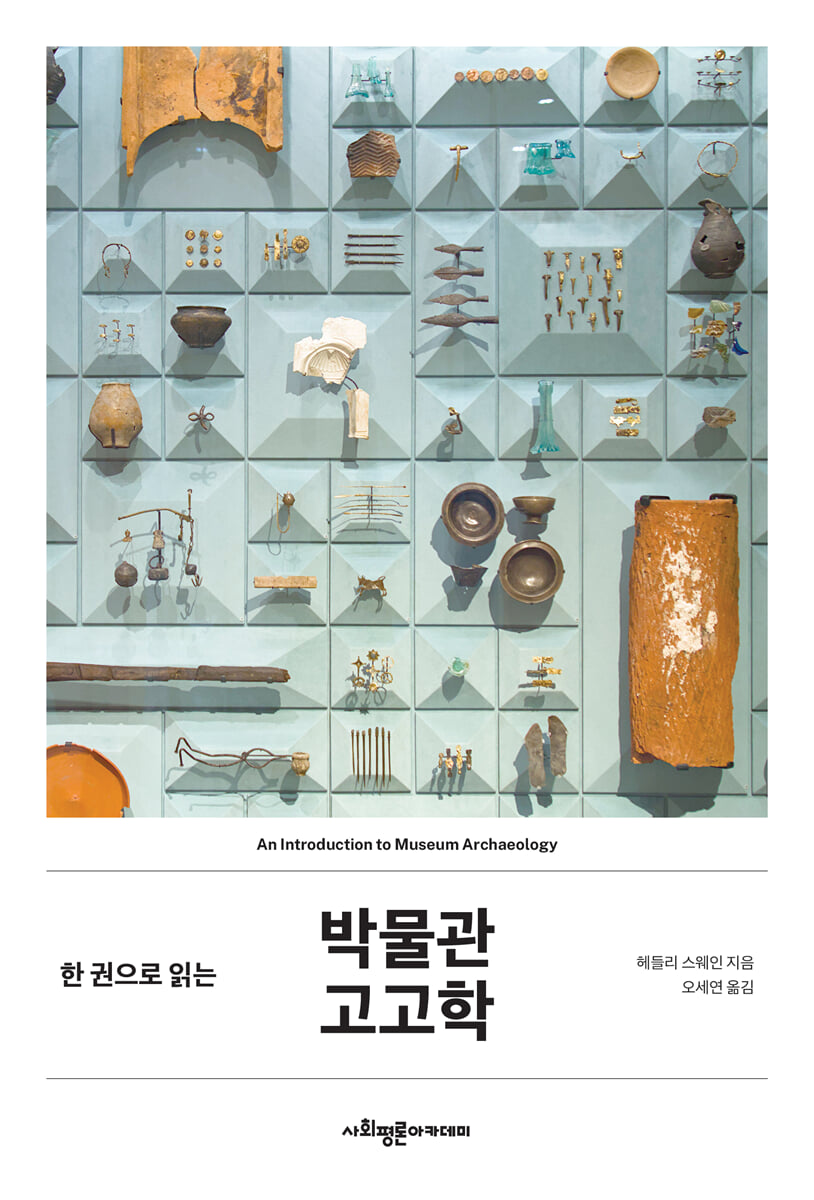
How should we address the ethical and legal debates surrounding the return of looted artifacts or the exhibition of human remains? How should archaeological materials be incorporated into public exhibitions and educational programs? Author Hedley Swain, drawing on his extensive experience as a curator at the Museum of London, addresses these questions, systematically unpacking the core theories of museum archaeology and practical guidance for practical application in the field.
Beginning with the history of archaeology and museums, covering a wide range of topics, including collection management, planning and operation of exhibitions and educational programs, and the future of museum archaeology, this book will provide practical and useful insights to those considering the future direction of museum archaeology researchers and curators in Korea.
Beginning with the history of archaeology and museums, covering a wide range of topics, including collection management, planning and operation of exhibitions and educational programs, and the future of museum archaeology, this book will provide practical and useful insights to those considering the future direction of museum archaeology researchers and curators in Korea.
- You can preview some of the book's contents.
Preview
index
Into Museum Archaeology
introduction
Preface to the Korean edition
Enter Part 1
Chapter 1: Definition and Object of Museum Archaeology
Chapter 2: The Origins of Museum Archaeology
Chapter 3: Current Purpose and Methods, Theory and Practice
Chapter 4 Legal Framework
Chapter 5: Regional Status of Museum Archaeology
Part 2 Collection
Chapter 6 Archaeological Collections
Chapter 7 Excavation Archives
Chapter 8 Human Remains
Chapter 9 Investigation
Chapter 10: Conservation and Collection Management
Part 3 Commentary
Chapter 11: Spectators
Chapter 12: Archaeological Exhibition Methods
Chapter 13: Archaeological Exhibition Cases
Chapter 14 School, Public, and Community Programs
Part 4 Conclusion
Chapter 15 Conclusion
Chapter 16: Museums and Exhibitions
Appendix Museum Archaeologist's Duties
Translator's Note
References
Search
introduction
Preface to the Korean edition
Enter Part 1
Chapter 1: Definition and Object of Museum Archaeology
Chapter 2: The Origins of Museum Archaeology
Chapter 3: Current Purpose and Methods, Theory and Practice
Chapter 4 Legal Framework
Chapter 5: Regional Status of Museum Archaeology
Part 2 Collection
Chapter 6 Archaeological Collections
Chapter 7 Excavation Archives
Chapter 8 Human Remains
Chapter 9 Investigation
Chapter 10: Conservation and Collection Management
Part 3 Commentary
Chapter 11: Spectators
Chapter 12: Archaeological Exhibition Methods
Chapter 13: Archaeological Exhibition Cases
Chapter 14 School, Public, and Community Programs
Part 4 Conclusion
Chapter 15 Conclusion
Chapter 16: Museums and Exhibitions
Appendix Museum Archaeologist's Duties
Translator's Note
References
Search
Into the book
One of the challenges facing archaeology in the 21st century is to establish an equitable relationship between the two worlds of archaeology and museums, and between museum archaeology and the public.
“As museum archaeologists, we are particularly interested in the interface between the field of archaeology and the public, which is created through museums, which are the primary spaces in which archaeology can communicate with the public,” Merriman said.
---From “Definition and Object of Museum Archaeology”
The importance of popular culture should not be underestimated, as it is a place where basic myths are repeated and reconstructed, and where most people seek entertainment.
The proximity of archaeology and museums to popular culture is clearly a positive factor for both fields.
(…) The fact that the public's long-standing and enduring image of museum archaeology is the final scene of the first Indiana Jones film, Raiders of the Lost Ark, shows the playful and didactic aspects of archaeology, but also presents a warning about them.
---From “Current Purpose and Method, Theory and Practice”
The protections provided by law and the actual protections in practice can be very different.
In many countries, poverty, poor infrastructure, and internal conflict can render protective laws virtually meaningless.
For example, in some countries, poverty has led to the looting of archaeological sites, leading to pragmatic legal decisions that may not be desirable.
---From the "Legal Framework"
Pharaonic Egyptian archaeology has produced a truly remarkable wealth of material, both because of its immense complexity and because of the extraordinary conditions in which it was preserved.
If there is a target for this criticism, it is museum curators and archaeologists who insist on studying and excavating only certain cultures and on collecting and exhibiting only certain materials.
(…) New museums in Japan and Korea blend Western and Eastern design elements, such as the Seoul Museum of History, which boasts spacious exhibition halls and excellent viewing facilities.
Japan's Osaka Museum of History, which looks like an ultra-modern office building, preserves archaeological remains that can be viewed underground.
---From “Regional Status of Museum Archaeology”
At the heart of the museum are the collections.
When listing the elements that make up a museum (collections, buildings, staff, the public, researchers, etc.), there is no problem establishing the concept of a museum even if the elements other than the collections are omitted.
Essentially, a museum is a dynamic relationship between its collections, its caretakers, and the public (as discussed in Chapter 1), but this relationship begins with the collections and is determined by the nature of the collections.
(…) As Pierce put it, “the most essential power of a curator is the power to classify” (1999, p. 18).
The reason a curved complex is a curved complex is because the curators decided so.
---From the "Archaeological Collection"
Archaeological excavation is an act of destruction of historical sites.
Excavations can provide much evidence about the past, but once the process is over, the ruins or monuments no longer exist.
This gave rise to the concept of 'preservation by records', according to which records created as part of excavations, along with the artifacts and specimens excavated, are of particular importance.
(…) Examples of archaeological collections that are poorly preserved, underused, or even inaccessible can be easily found in many parts of the world.
Europe is where discussions on this issue began, but despite similar situations emerging around the world, few places seem to be willing to address it.
---From the "Excavation Archive"
Human remains are particularly important to archaeologists because they are not only the only material evidence of ancient people, but also, most often artificially buried, provide insight into the beliefs and practices of past peoples.
In other words, human remains are not the trash or waste that characterizes most archaeological finds.
(…) An indigenous group leader reportedly said the exhibition was “a human rights violation against our loved ones” and that “our children should not be treated as exhibits in a circus-like exhibition.”
---From "Human Remains"
It is well known that the most important role of conservation is to keep collections safe for the long term.
Conservation has been the area where most investment has been made in recent years, and there has been much progress in this area.
Conservation scientists are fully aware that no matter how well an artifact is collected from a ruin and preserved in a laboratory, if the storage environment is not suitable and the artifact disappears without a trace after a few years, there is no point in preserving it.
This is not a problem unique to archaeology, but one that is particularly important to keep in mind in archaeology is the sheer number of artifacts that must be preserved, many of which are easily damaged.
---From "Conservation and Collection Management"
The public is one of the three elements that make up a museum, along with the collection and the staff, and the dynamic relationship between these three defines what a museum is.
How do we know what types of people go to museums? More importantly, what types of people don't go?
(…) Museums with collections related to living indigenous peoples must now pay attention to the opinions of indigenous peoples.
It is a shame for the museum that it took so long to get to this point.
---From "The Spectator"
When using human remains in museums, it is important to identify which group a particular human remains belong to so that differences between groups are not unnecessarily blurred.
(…) archaeology is important and museums are valuable.
There is a social role assigned to museum archaeologists.
They are responsible for being externally oriented, imaginative, and resourceful.
Because the past is revealed through surviving artifacts, museum archaeologists can also be seen as guardians of collective memory loss.
It is their responsibility to help people regain their lost memories in a way that contributes to society without being a burden to society.
“As museum archaeologists, we are particularly interested in the interface between the field of archaeology and the public, which is created through museums, which are the primary spaces in which archaeology can communicate with the public,” Merriman said.
---From “Definition and Object of Museum Archaeology”
The importance of popular culture should not be underestimated, as it is a place where basic myths are repeated and reconstructed, and where most people seek entertainment.
The proximity of archaeology and museums to popular culture is clearly a positive factor for both fields.
(…) The fact that the public's long-standing and enduring image of museum archaeology is the final scene of the first Indiana Jones film, Raiders of the Lost Ark, shows the playful and didactic aspects of archaeology, but also presents a warning about them.
---From “Current Purpose and Method, Theory and Practice”
The protections provided by law and the actual protections in practice can be very different.
In many countries, poverty, poor infrastructure, and internal conflict can render protective laws virtually meaningless.
For example, in some countries, poverty has led to the looting of archaeological sites, leading to pragmatic legal decisions that may not be desirable.
---From the "Legal Framework"
Pharaonic Egyptian archaeology has produced a truly remarkable wealth of material, both because of its immense complexity and because of the extraordinary conditions in which it was preserved.
If there is a target for this criticism, it is museum curators and archaeologists who insist on studying and excavating only certain cultures and on collecting and exhibiting only certain materials.
(…) New museums in Japan and Korea blend Western and Eastern design elements, such as the Seoul Museum of History, which boasts spacious exhibition halls and excellent viewing facilities.
Japan's Osaka Museum of History, which looks like an ultra-modern office building, preserves archaeological remains that can be viewed underground.
---From “Regional Status of Museum Archaeology”
At the heart of the museum are the collections.
When listing the elements that make up a museum (collections, buildings, staff, the public, researchers, etc.), there is no problem establishing the concept of a museum even if the elements other than the collections are omitted.
Essentially, a museum is a dynamic relationship between its collections, its caretakers, and the public (as discussed in Chapter 1), but this relationship begins with the collections and is determined by the nature of the collections.
(…) As Pierce put it, “the most essential power of a curator is the power to classify” (1999, p. 18).
The reason a curved complex is a curved complex is because the curators decided so.
---From the "Archaeological Collection"
Archaeological excavation is an act of destruction of historical sites.
Excavations can provide much evidence about the past, but once the process is over, the ruins or monuments no longer exist.
This gave rise to the concept of 'preservation by records', according to which records created as part of excavations, along with the artifacts and specimens excavated, are of particular importance.
(…) Examples of archaeological collections that are poorly preserved, underused, or even inaccessible can be easily found in many parts of the world.
Europe is where discussions on this issue began, but despite similar situations emerging around the world, few places seem to be willing to address it.
---From the "Excavation Archive"
Human remains are particularly important to archaeologists because they are not only the only material evidence of ancient people, but also, most often artificially buried, provide insight into the beliefs and practices of past peoples.
In other words, human remains are not the trash or waste that characterizes most archaeological finds.
(…) An indigenous group leader reportedly said the exhibition was “a human rights violation against our loved ones” and that “our children should not be treated as exhibits in a circus-like exhibition.”
---From "Human Remains"
It is well known that the most important role of conservation is to keep collections safe for the long term.
Conservation has been the area where most investment has been made in recent years, and there has been much progress in this area.
Conservation scientists are fully aware that no matter how well an artifact is collected from a ruin and preserved in a laboratory, if the storage environment is not suitable and the artifact disappears without a trace after a few years, there is no point in preserving it.
This is not a problem unique to archaeology, but one that is particularly important to keep in mind in archaeology is the sheer number of artifacts that must be preserved, many of which are easily damaged.
---From "Conservation and Collection Management"
The public is one of the three elements that make up a museum, along with the collection and the staff, and the dynamic relationship between these three defines what a museum is.
How do we know what types of people go to museums? More importantly, what types of people don't go?
(…) Museums with collections related to living indigenous peoples must now pay attention to the opinions of indigenous peoples.
It is a shame for the museum that it took so long to get to this point.
---From "The Spectator"
When using human remains in museums, it is important to identify which group a particular human remains belong to so that differences between groups are not unnecessarily blurred.
(…) archaeology is important and museums are valuable.
There is a social role assigned to museum archaeologists.
They are responsible for being externally oriented, imaginative, and resourceful.
Because the past is revealed through surviving artifacts, museum archaeologists can also be seen as guardians of collective memory loss.
It is their responsibility to help people regain their lost memories in a way that contributes to society without being a burden to society.
---From "Conclusion"
Publisher's Review
From the history of museum archaeology
Current status of archaeological exhibitions around the world
Comprehensive knowledge necessary for collecting, preserving, and exhibiting relics
Introduction to Museum Archaeology
While 'museology' and 'archaeology' are familiar, 'museum archaeology' may feel unfamiliar.
Beyond simply excavating and exhibiting artifacts, museum archaeology is a discipline that emphasizes the process of communication between museums and the public through archaeological data.
This book covers a wide range of topics, beginning with the history of archaeology and museums, and progressing to collection management, planning and operating exhibitions and educational programs, and the future of museum archaeology.
The significance of museum archaeology as an independent discipline lies in its in-depth exploration of the ethical, legal, and practical issues facing modern museums.
For example, the role of museum archaeology is to point out that although human remains are sometimes displayed as 'artifacts' in museums, there are complex cultural and political controversies involved.
The same goes for pointing out unrealistic representations of indigenous people in museums and exhibitions that misrepresent specific cultural phenomena.
Museum Archaeology delves deeply into various issues that individual disciplines, such as archaeology and museology, might overlook.
Effective utilization of archaeological data is also an area that museum archaeology must continue to research in the future.
This book examines new forms of exhibition that have emerged with the advancement of digital technology, such as exhibition props that stimulate the five senses, experiential spaces that recreate the actual appearance of historical sites, and "archioscopes," which combine archaeology with the latest imaging technology, and shows the efforts of museums around the world to communicate with the public.
Answering the curator's concerns!
A look at the operational practices of over 150 major museums around the world
Key Issues and Practical Guidelines in Museum Archaeology
This book contains the basic theory of museum archaeology and practical guidelines for use in museums.
Part 1 clearly defines key terms and concepts of museum archaeology, then delves into the history, legal and ethical foundations, and regional context of museums and archaeology.
Part 2 explores the various challenges facing museum archaeology.
In particular, it examines practical issues that modern museums must consider from various angles, such as the problem of illegal looting of artifacts, the difficulty of managing the rapidly increasing volume of materials resulting from archaeological excavations, the problem of balancing the preservation and utilization of artifacts, the difference between legal protection and practical management, and critical discussions about the exhibition of human remains.
This process allows readers to examine legal discussions and interpretations, which is useful for organizing their own opinions.
Especially for readers who wish to work in a museum, the contents of this book will be of great practical help.
Part 3 presents a variety of inspiring examples for displaying and utilizing archaeological artifacts.
It is particularly interesting that the various situations and concerns that inevitably arise when exhibiting archaeological artifacts in a museum are specifically mentioned.
For example, how do you explain the concept of time in archaeology to visitors who believe the Paleolithic and Neolithic periods are completely separate? How do you display artifacts like pottery shards and stone tools, which have significant archaeological significance but lack a strong visual impact? According to Oh Se-yeon, Director of the World Culture Department at the National Museum of Korea, who translated this book, "It also explains the issues curators face in actual exhibition work, such as writing explanatory texts, producing restorations, and the scope of their use, through appropriate analogies and a wealth of examples."
Finally, noteworthy is the author's insight into the direction of modern museum operations, including the advancement of digital technology and the use of online databases.
Effectively managing the vast amounts of data held by museums requires an understanding that spans museology and archaeology.
This is because management must be based on an academic foundation in archaeology while being suitable for the actual operational situation of the museum.
This is also an area that museum archaeology should consistently pursue as a subject of research.
In the concluding part, Part 4, we propose a path forward for the field of museum archaeology.
“Because the past is revealed through surviving artifacts, museum archaeologists can also be said to be guardians of collective memory loss (p. 382).” Therefore, they have a responsibility to contribute to society by reviving lost memories.
In a simple information space
A space to experience history and cultural heritage!
In the changing museum environment
Curators provide guidance on the direction to take.
Traditionally, museums have been considered spaces for storing and exhibiting knowledge.
However, today's museums have long since transformed into platforms for communicating with the public.
“The public is one of the three elements that make up a museum, along with the collection and the staff” (p. 254).
Museums should function beyond mere information providers, but as spaces where people can experience and actively interpret history and cultural heritage.
This book provides in-depth coverage of all the knowledge needed by those working in museum archaeology today, from how museums display and study artifacts to how they communicate with the public.
It is also meaningful in that it goes beyond simply imparting knowledge, but also introduces various examples of museums around the world that can be applied to the Korean situation.
We hope that this book will provide practical and useful assistance to Korean museum archaeologists and curators who are considering the direction they should take.
Current status of archaeological exhibitions around the world
Comprehensive knowledge necessary for collecting, preserving, and exhibiting relics
Introduction to Museum Archaeology
While 'museology' and 'archaeology' are familiar, 'museum archaeology' may feel unfamiliar.
Beyond simply excavating and exhibiting artifacts, museum archaeology is a discipline that emphasizes the process of communication between museums and the public through archaeological data.
This book covers a wide range of topics, beginning with the history of archaeology and museums, and progressing to collection management, planning and operating exhibitions and educational programs, and the future of museum archaeology.
The significance of museum archaeology as an independent discipline lies in its in-depth exploration of the ethical, legal, and practical issues facing modern museums.
For example, the role of museum archaeology is to point out that although human remains are sometimes displayed as 'artifacts' in museums, there are complex cultural and political controversies involved.
The same goes for pointing out unrealistic representations of indigenous people in museums and exhibitions that misrepresent specific cultural phenomena.
Museum Archaeology delves deeply into various issues that individual disciplines, such as archaeology and museology, might overlook.
Effective utilization of archaeological data is also an area that museum archaeology must continue to research in the future.
This book examines new forms of exhibition that have emerged with the advancement of digital technology, such as exhibition props that stimulate the five senses, experiential spaces that recreate the actual appearance of historical sites, and "archioscopes," which combine archaeology with the latest imaging technology, and shows the efforts of museums around the world to communicate with the public.
Answering the curator's concerns!
A look at the operational practices of over 150 major museums around the world
Key Issues and Practical Guidelines in Museum Archaeology
This book contains the basic theory of museum archaeology and practical guidelines for use in museums.
Part 1 clearly defines key terms and concepts of museum archaeology, then delves into the history, legal and ethical foundations, and regional context of museums and archaeology.
Part 2 explores the various challenges facing museum archaeology.
In particular, it examines practical issues that modern museums must consider from various angles, such as the problem of illegal looting of artifacts, the difficulty of managing the rapidly increasing volume of materials resulting from archaeological excavations, the problem of balancing the preservation and utilization of artifacts, the difference between legal protection and practical management, and critical discussions about the exhibition of human remains.
This process allows readers to examine legal discussions and interpretations, which is useful for organizing their own opinions.
Especially for readers who wish to work in a museum, the contents of this book will be of great practical help.
Part 3 presents a variety of inspiring examples for displaying and utilizing archaeological artifacts.
It is particularly interesting that the various situations and concerns that inevitably arise when exhibiting archaeological artifacts in a museum are specifically mentioned.
For example, how do you explain the concept of time in archaeology to visitors who believe the Paleolithic and Neolithic periods are completely separate? How do you display artifacts like pottery shards and stone tools, which have significant archaeological significance but lack a strong visual impact? According to Oh Se-yeon, Director of the World Culture Department at the National Museum of Korea, who translated this book, "It also explains the issues curators face in actual exhibition work, such as writing explanatory texts, producing restorations, and the scope of their use, through appropriate analogies and a wealth of examples."
Finally, noteworthy is the author's insight into the direction of modern museum operations, including the advancement of digital technology and the use of online databases.
Effectively managing the vast amounts of data held by museums requires an understanding that spans museology and archaeology.
This is because management must be based on an academic foundation in archaeology while being suitable for the actual operational situation of the museum.
This is also an area that museum archaeology should consistently pursue as a subject of research.
In the concluding part, Part 4, we propose a path forward for the field of museum archaeology.
“Because the past is revealed through surviving artifacts, museum archaeologists can also be said to be guardians of collective memory loss (p. 382).” Therefore, they have a responsibility to contribute to society by reviving lost memories.
In a simple information space
A space to experience history and cultural heritage!
In the changing museum environment
Curators provide guidance on the direction to take.
Traditionally, museums have been considered spaces for storing and exhibiting knowledge.
However, today's museums have long since transformed into platforms for communicating with the public.
“The public is one of the three elements that make up a museum, along with the collection and the staff” (p. 254).
Museums should function beyond mere information providers, but as spaces where people can experience and actively interpret history and cultural heritage.
This book provides in-depth coverage of all the knowledge needed by those working in museum archaeology today, from how museums display and study artifacts to how they communicate with the public.
It is also meaningful in that it goes beyond simply imparting knowledge, but also introduces various examples of museums around the world that can be applied to the Korean situation.
We hope that this book will provide practical and useful assistance to Korean museum archaeologists and curators who are considering the direction they should take.
GOODS SPECIFICS
- Date of issue: April 23, 2025
- Page count, weight, size: 444 pages | 165*235*30mm
- ISBN13: 9791167071774
- ISBN10: 1167071778
You may also like
카테고리
korean


korean

![GQ KOREA Mark (Monthly): December [2025]](http://librairie.coreenne.fr/cdn/shop/files/8ef265dbbfbf186523ed75ba7319009d.jpg?v=1765340328&width=3840)


