

History of the Mughal Empire
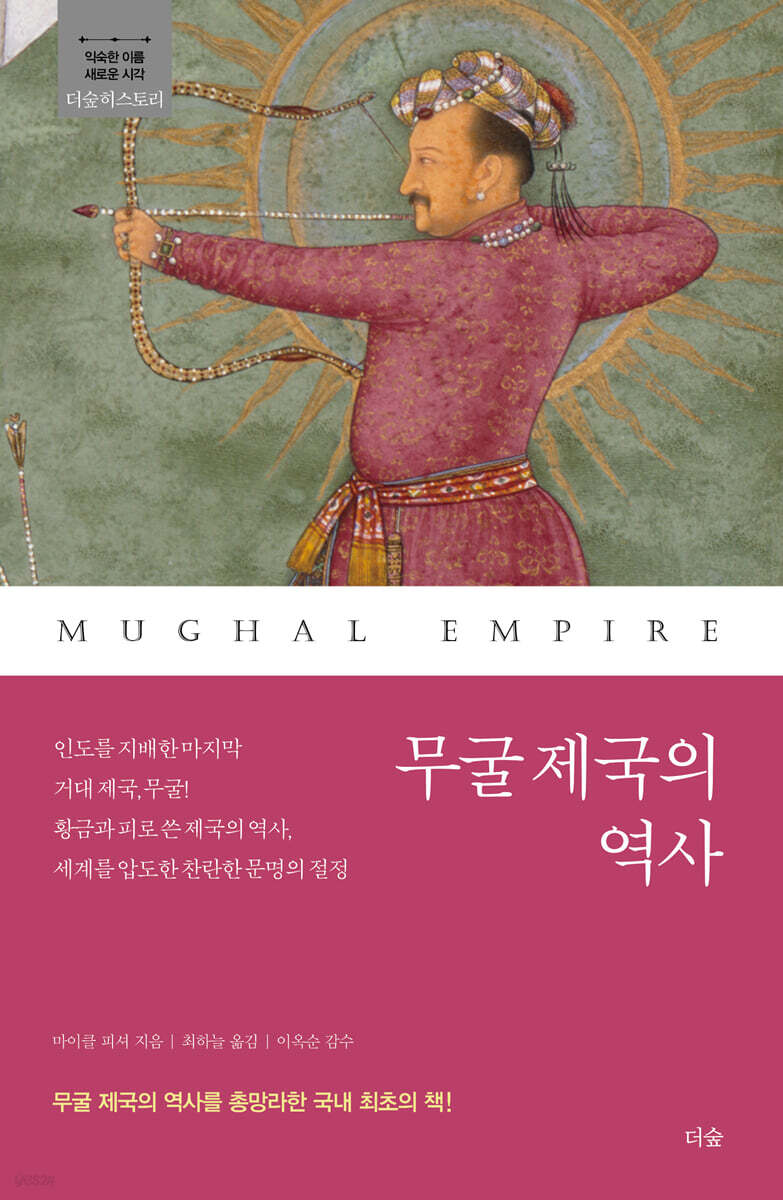 |
Description
Book Introduction
Why should we know about the Mughal Empire now?
The last great empire to rule India, the Mughal Empire.
The pinnacle of a brilliant civilization that overwhelmed the world.
The first book in Korea to comprehensively cover the history of the Mughal Empire!
Today the world is watching India.
The world's most populous nation, one of the fastest-growing major economies, the world's largest democracy, and a diplomatic powerhouse that strategically balances the gap between the United States and China.
India is at the center of the restructuring of international security and economic order.
So, where do the roots of this dazzling leap lie? The answer lies in the Mughal Empire.
This book is the first comprehensive history of the Mughal Dynasty in Korea, covering its history from its beginnings to its fall.
The Mughal Empire was not just a dynasty.
It was a vast political laboratory where Hinduism, Islam, and countless languages and ethnicities intermingled to unite and govern a vast continent through fusion, inclusion, and coexistence.
Also, the Mughal Empire was a superpower that accounted for about a quarter of the world's GDP, a center of global trade, a population twice that of Europe, a vast territory that was one-third that of Europe, a strong administrative system established through reform and innovation, and a golden age of politics, art, and thought that blossomed from the fusion of cultures and religions. All of this was the Mughal Empire.
The Mughal Empire shows that India was not a 'poor country' but a 'golden land' that European powers longed for.
India, with its abundant population and resources, is emerging as a leader in the global economy, much like the Mughal Empire in the 17th century.
A look into the Mughal Empire reveals that India was not simply a rising power, but rather a legacy of a brilliant civilization.
At that moment, world history will no longer be dominated by Europe.
By shifting the axis of world history from west to east, we will have the opportunity to take a fresh look at the current world order.
The last great empire to rule India, the Mughal Empire.
The pinnacle of a brilliant civilization that overwhelmed the world.
The first book in Korea to comprehensively cover the history of the Mughal Empire!
Today the world is watching India.
The world's most populous nation, one of the fastest-growing major economies, the world's largest democracy, and a diplomatic powerhouse that strategically balances the gap between the United States and China.
India is at the center of the restructuring of international security and economic order.
So, where do the roots of this dazzling leap lie? The answer lies in the Mughal Empire.
This book is the first comprehensive history of the Mughal Dynasty in Korea, covering its history from its beginnings to its fall.
The Mughal Empire was not just a dynasty.
It was a vast political laboratory where Hinduism, Islam, and countless languages and ethnicities intermingled to unite and govern a vast continent through fusion, inclusion, and coexistence.
Also, the Mughal Empire was a superpower that accounted for about a quarter of the world's GDP, a center of global trade, a population twice that of Europe, a vast territory that was one-third that of Europe, a strong administrative system established through reform and innovation, and a golden age of politics, art, and thought that blossomed from the fusion of cultures and religions. All of this was the Mughal Empire.
The Mughal Empire shows that India was not a 'poor country' but a 'golden land' that European powers longed for.
India, with its abundant population and resources, is emerging as a leader in the global economy, much like the Mughal Empire in the 17th century.
A look into the Mughal Empire reveals that India was not simply a rising power, but rather a legacy of a brilliant civilization.
At that moment, world history will no longer be dominated by Europe.
By shifting the axis of world history from west to east, we will have the opportunity to take a fresh look at the current world order.
- You can preview some of the book's contents.
Preview
index
Author's Preface for Korean Readers
Reviewer's note
Timeline
Note
Introduction_The Mughal Empire Changed Over Time and Space
Part 1: The Origins and Founding of the Mughal Empire (1526–1540, 1555–1556)
Chapter 1 Babur before the conquest of northern India
The origins of the Mughal Empire: the Genghis and Timurid Dynasties│Babur's Youth Between Rivals│Babur's Kabul Years│Babur's First Conquest in 1526
Chapter 2: Babur's Creation of the Mughal Empire
The Unfamiliar Environment of South Asia│The Interaction of South Asian Cultures and Communities│A South Asian Economy Based on Agriculture, Pastoralism, and Forestry│The Political World of South Asia│The Founding of the Mughal Empire
Chapter 3: Emperor Humayun and the Indians
Humayun's Ascension to the Empire | Humayun's Early Military Successes | Humayun's Loss of the Mughal Empire | Humayun's Expedition to Reestablish the Mughal Empire
Part II: The Reign of Emperor Akbar and the Establishment of the Mughal Empire (1556–1605)
Chapter 4: Emperor Akbar, the Center of the Mughal Empire
Akbar's sudden accession to the throne and his rivals│Akbar emerged from the shadow of the regency│Akbar expanded his supporters through marriage alliances
Chapter 5: Emperor Akbar and the Institutions of the Mughal Empire
The rural economy dominated by zamindars│The Mughal Empire's local administration relied on local elites│The Mughal Empire's mansab system
Chapter 6: Changes in Emperor Akbar's Reign According to the Capital
Agra period, 1556–1571│Fatehpur Sikri period, 1571–1585│Lahore period, 1586–1598│The battlefields of the Deccan and the last years in Agra
Part 3: The Golden Age of the Mughal Empire (1605–1707)
Chapter 7: Emperor Jahangir and the Enlightenment of the Mughal Court
Jahangir, who defeated rivals and rebellions and became emperor│A court of splendid art and innovation│The succession dispute between Nur Jahan and Shah Jahan
Chapter 8: Emperor Shah Jahan and the Rise of the Mughal Empire
Repeated rebellions and wars in the Deccan│Grand ambitions for Central Asia│A succession dispute that ended in Shah Jahan's imprisonment
Chapter 9: The Amplest and Beginning of the Decline of the Mughal Empire: Emperor Alamgir
Alamgir's Ascension and Reign │ The Deccan Expedition and a Dark Future │ The Escalating War and the Decline of the Mughal Empire
Part IV: The Disintegration and Memory of the Mughal Empire (1707 to the Present)
Chapter 10: The Fall of the Mughal Empire
Bahadur Shah and the Messy Succession│Salatin and the Emperors Ruled by Regents│The Last Mughal Emperors
Chapter 11: Debates on the Meaning of the Mughal Empire
Various Perspectives on the Mughal Empire in the 17th Century│History and Significance of the Mughal Empire after the 18th Century│British Colonial Period, 1857–1947│Exploring the Meaning of Mughal History after Independence
List of pictures, maps, and genealogical charts
main
References
Search
Mughal Emperors and Their Lineages: 1526–1857
Key Concepts for Understanding the Mughal Empire
Reviewer's note
Timeline
Note
Introduction_The Mughal Empire Changed Over Time and Space
Part 1: The Origins and Founding of the Mughal Empire (1526–1540, 1555–1556)
Chapter 1 Babur before the conquest of northern India
The origins of the Mughal Empire: the Genghis and Timurid Dynasties│Babur's Youth Between Rivals│Babur's Kabul Years│Babur's First Conquest in 1526
Chapter 2: Babur's Creation of the Mughal Empire
The Unfamiliar Environment of South Asia│The Interaction of South Asian Cultures and Communities│A South Asian Economy Based on Agriculture, Pastoralism, and Forestry│The Political World of South Asia│The Founding of the Mughal Empire
Chapter 3: Emperor Humayun and the Indians
Humayun's Ascension to the Empire | Humayun's Early Military Successes | Humayun's Loss of the Mughal Empire | Humayun's Expedition to Reestablish the Mughal Empire
Part II: The Reign of Emperor Akbar and the Establishment of the Mughal Empire (1556–1605)
Chapter 4: Emperor Akbar, the Center of the Mughal Empire
Akbar's sudden accession to the throne and his rivals│Akbar emerged from the shadow of the regency│Akbar expanded his supporters through marriage alliances
Chapter 5: Emperor Akbar and the Institutions of the Mughal Empire
The rural economy dominated by zamindars│The Mughal Empire's local administration relied on local elites│The Mughal Empire's mansab system
Chapter 6: Changes in Emperor Akbar's Reign According to the Capital
Agra period, 1556–1571│Fatehpur Sikri period, 1571–1585│Lahore period, 1586–1598│The battlefields of the Deccan and the last years in Agra
Part 3: The Golden Age of the Mughal Empire (1605–1707)
Chapter 7: Emperor Jahangir and the Enlightenment of the Mughal Court
Jahangir, who defeated rivals and rebellions and became emperor│A court of splendid art and innovation│The succession dispute between Nur Jahan and Shah Jahan
Chapter 8: Emperor Shah Jahan and the Rise of the Mughal Empire
Repeated rebellions and wars in the Deccan│Grand ambitions for Central Asia│A succession dispute that ended in Shah Jahan's imprisonment
Chapter 9: The Amplest and Beginning of the Decline of the Mughal Empire: Emperor Alamgir
Alamgir's Ascension and Reign │ The Deccan Expedition and a Dark Future │ The Escalating War and the Decline of the Mughal Empire
Part IV: The Disintegration and Memory of the Mughal Empire (1707 to the Present)
Chapter 10: The Fall of the Mughal Empire
Bahadur Shah and the Messy Succession│Salatin and the Emperors Ruled by Regents│The Last Mughal Emperors
Chapter 11: Debates on the Meaning of the Mughal Empire
Various Perspectives on the Mughal Empire in the 17th Century│History and Significance of the Mughal Empire after the 18th Century│British Colonial Period, 1857–1947│Exploring the Meaning of Mughal History after Independence
List of pictures, maps, and genealogical charts
main
References
Search
Mughal Emperors and Their Lineages: 1526–1857
Key Concepts for Understanding the Mughal Empire
Detailed image

Into the book
Interest in the history of the growing Mughal Empire is truly global.
Korean readers will be able to compare and contrast the history of the Mughal Empire with the history of contemporary Joseon.
Both countries struggled to overcome challenges both internal and external.
However, each dynasty had its own unique political complex, solving its own problems.
The story goes that from now on, more and more people will consider the history of the Mughal Empire important.
---From “The Author’s Preface for Korean Readers”
The history of the Mughal Empire gives us insight into more than just a country's past.
This is because the cultures and histories of various Central Asians and West Asians who migrated to the Mughal Empire in search of better lives and opportunities, as well as descendants of Pakistanis and Bangladeshis who separated from India after 1947, are intertwined here.
---From "The Supervisor's Note"
The Mughal Empire had a curious origin.
Central Asian Muslims, or rather Muslim warrior clans, invaded northern India twice in 1526 and 1555, interacting in diverse and complex ways with Hindus, Muslims, and other Indians living there, giving rise to the Mughal Empire.
The male founders of this dynasty claimed to be emperors even though they did not rule a single piece of land.
They tried repeatedly to return to their long-remembered Central Asian homeland, but ended up invading and dominating foreign lands and tribes.
The Mughal rulers defined themselves as major figures in the vast Islamic world, and, although in varying degrees and forms, emphasized their Muslim identity, warmly welcoming Sunni and Shia Muslim immigrants from Central Asia, Persia, Afghanistan, the Ottoman Empire, and Arabia.
---From "Entering"
Akbar expanded his family, court, administration, and army by attracting a wide range of Indians, both Muslim and non-Muslim, through political marriage alliances and cultural policies.
He and his courtiers restructured the empire by developing a more centralized financial and administrative system.
Akbar's reign can be divided into stages according to his capital, but he was always in direct command of the expanding Mughal army, fighting constantly, sometimes defensively, sometimes offensively, against ambitious relatives, rebellious imperial officials and elites, uprising populace, and neighboring rulers.
Akbar spent most of his life on the battlefield and personally led military expeditions until his death.
So to speak, Akbar and his supporters founded and expanded the Mughal Empire, a complex of diverse institutions, cultures, and peoples from Central Asia, Islam, and India.
---From "Emperor Akbar, the Center of the Mughal Empire"
After four months of bloody war, the British and their Indian subjects recaptured Shahjahanabad and imprisoned Bahadur Shah II.
British officers, burning with vengeance, executed Bahadur Shah II's sons and brought Bahadur Shah II to trial for treason against the British.
British officers also expelled all Indians from Shahjahanabad, damaged the Jama Masjid (Grand Mosque), and held a Christian Thanksgiving service at the Red Fort before burning down the surrounding area.
The British eventually destroyed the Mughal Empire by exiling Bahadur Shah II to Burma.
Bahadur Shah II died in Burma (now Myanmar) in 1862.
Nonetheless, historians and commentators emphasize the importance of the Mughal Empire from its birth to the present day.
---From "The Fall of the Mughal Empire"
When many northern Indians rose up against the British in 1857, the Mughal emperor became the most prominent focal point of this collective action.
The British were nearly driven out of Hindustan by this bloody conflict, and the massacres perpetrated by both Britain and India profoundly shaped the history of both sides.
In the early 20th century, some Indian nationalists argued that the event should be called the "First Indian War of Independence," while in Britain it was long referred to as the "Sepoy Mutiny."
It is significant that a series of events simultaneously brought an end to the Mughal dynasty and strengthened its cultural significance.
Given the scope, complexity, and vast amount of data available to the Mughal Empire, people interpreted and described it according to their own understanding and interests.
Korean readers will be able to compare and contrast the history of the Mughal Empire with the history of contemporary Joseon.
Both countries struggled to overcome challenges both internal and external.
However, each dynasty had its own unique political complex, solving its own problems.
The story goes that from now on, more and more people will consider the history of the Mughal Empire important.
---From “The Author’s Preface for Korean Readers”
The history of the Mughal Empire gives us insight into more than just a country's past.
This is because the cultures and histories of various Central Asians and West Asians who migrated to the Mughal Empire in search of better lives and opportunities, as well as descendants of Pakistanis and Bangladeshis who separated from India after 1947, are intertwined here.
---From "The Supervisor's Note"
The Mughal Empire had a curious origin.
Central Asian Muslims, or rather Muslim warrior clans, invaded northern India twice in 1526 and 1555, interacting in diverse and complex ways with Hindus, Muslims, and other Indians living there, giving rise to the Mughal Empire.
The male founders of this dynasty claimed to be emperors even though they did not rule a single piece of land.
They tried repeatedly to return to their long-remembered Central Asian homeland, but ended up invading and dominating foreign lands and tribes.
The Mughal rulers defined themselves as major figures in the vast Islamic world, and, although in varying degrees and forms, emphasized their Muslim identity, warmly welcoming Sunni and Shia Muslim immigrants from Central Asia, Persia, Afghanistan, the Ottoman Empire, and Arabia.
---From "Entering"
Akbar expanded his family, court, administration, and army by attracting a wide range of Indians, both Muslim and non-Muslim, through political marriage alliances and cultural policies.
He and his courtiers restructured the empire by developing a more centralized financial and administrative system.
Akbar's reign can be divided into stages according to his capital, but he was always in direct command of the expanding Mughal army, fighting constantly, sometimes defensively, sometimes offensively, against ambitious relatives, rebellious imperial officials and elites, uprising populace, and neighboring rulers.
Akbar spent most of his life on the battlefield and personally led military expeditions until his death.
So to speak, Akbar and his supporters founded and expanded the Mughal Empire, a complex of diverse institutions, cultures, and peoples from Central Asia, Islam, and India.
---From "Emperor Akbar, the Center of the Mughal Empire"
After four months of bloody war, the British and their Indian subjects recaptured Shahjahanabad and imprisoned Bahadur Shah II.
British officers, burning with vengeance, executed Bahadur Shah II's sons and brought Bahadur Shah II to trial for treason against the British.
British officers also expelled all Indians from Shahjahanabad, damaged the Jama Masjid (Grand Mosque), and held a Christian Thanksgiving service at the Red Fort before burning down the surrounding area.
The British eventually destroyed the Mughal Empire by exiling Bahadur Shah II to Burma.
Bahadur Shah II died in Burma (now Myanmar) in 1862.
Nonetheless, historians and commentators emphasize the importance of the Mughal Empire from its birth to the present day.
---From "The Fall of the Mughal Empire"
When many northern Indians rose up against the British in 1857, the Mughal emperor became the most prominent focal point of this collective action.
The British were nearly driven out of Hindustan by this bloody conflict, and the massacres perpetrated by both Britain and India profoundly shaped the history of both sides.
In the early 20th century, some Indian nationalists argued that the event should be called the "First Indian War of Independence," while in Britain it was long referred to as the "Sepoy Mutiny."
It is significant that a series of events simultaneously brought an end to the Mughal dynasty and strengthened its cultural significance.
Given the scope, complexity, and vast amount of data available to the Mughal Empire, people interpreted and described it according to their own understanding and interests.
---From "Controversies on the Meaning of the Mughal Empire"
Publisher's Review
Another center of world history and the golden land that Europe longed for
The history of the empire written in gold and blood,
A grand historical stage where prosperity and ruin intersect
The Mughal Empire was an Islamic dynasty founded in 1526 by Babur, a Central Asian, who conquered India. It enjoyed prosperity and created the world's greatest wealth for about three centuries before coming to an end in 1857.
Although this country is considered to be one of the most important in Indian history, it never officially used the name 'Mughal'.
The name 'Mughal' refers to the tribe of Babur, the founder of the dynasty, and his descendants, and is a Persian term for Mongolia.
This book provides a three-dimensional overview of the entire life of the Mughal Empire, from politics and diplomacy to religion, culture, art, and international relations.
The beginning of the Mughal Empire began with the bloody conquests of Babur, a descendant of Timur and Genghis Khan, the 'conqueror of the world.'
Afterwards, Akbar, Jahangir, Shah Jahan, and Alamgir led the empire to its golden age in the 17th century.
During this period, the Mughal Empire was not only at its peak economically and culturally, but also reached its largest territorial extent in history.
According to the editor's note, the Oxford English Dictionary's use of the term "Mogul" to refer to influential figures, rulers, and business and media tycoons reflects the imposing presence of the Mughal emperors and the status of the empires they ruled.
The Mughal Empire was one of the greatest empires in human history.
Excluding its contemporary China, it emerged as the most powerful and wealthiest nation in the world at the time, and traces of its prosperity can still be seen everywhere.
The dazzling wealth of the Mughal Empire can be seen just by looking at the Kohinoor (aka Koh-i-Noor) diamond, which was forcibly donated from India in the 1850s and is currently on display at the Tower of London, and the legendary 'Peacock Throne'.
The Kohnur Diamond was worth two and a half days to the entire world at the time, and the throne, adorned with various jewels and gold, took a full seven years to complete.
The Mughal Empire was able to accumulate such enormous wealth thanks to its geopolitical location.
The Mughal Empire, located at the center of the Silk Road connecting Central Asia, China, and even Europe, and the maritime trade route from East Asia to America, enjoyed prosperity as a key point of trade and commerce.
With this wealth, the Mughal emperors generously patronized art, literature, and architecture, which soon led to a brilliant cultural heyday.
In particular, on the foundation of the empire laid by Emperor Akbar, Emperors Jahangir and Shah Jahan brought Mughal art and architecture to a more sophisticated and refined form.
The Taj Mahal, the Red Fort in Delhi, and the Agra Fort are masterpieces that symbolize the golden age of the Mughal Empire, and their splendid glory still remains intact to this day.
However, after Alamgir's death, weak emperors came to the throne one after another, and the empire fell into chaos as the administration and control of the vast territory were not able to reach the regents and they became more powerful than the emperor. In this situation, the British East India Company gradually evolved into a conqueror and ruler of the vast Indian territory, and eventually came under British colonial rule.
The Mughal Empire is an epic written in splendid gold and blood.
At the center of this great historical stage, where prosperity and ruin intersect, was the Mughals.
In the way of fusion, inclusion and coexistence
Everything about the Mughal Empire that unified the vast Indian subcontinent
At the same time, there were powerful Islamic empires such as the Safavid Dynasty and the Ottoman Empire, but what made the Mughal Empire stand out from them was the religious gap between the ruling and ruled classes.
The rulers followed Islam, but the overwhelming majority of the people were Hindus.
In these special circumstances, the Mughal Empire chose inclusion rather than exclusion, and integration rather than assimilation.
Mughal miniatures, a fusion of Hindu traditions and Persian styles; magnificent Mughal architecture, which added Hindu aesthetics to Islamic architecture; the translation of Hindu scriptures and epics into Persian; and attempts to connect different cultures through music—all were the result of this fusion.
Although this culture did not take root deeply in the grassroots, the legacy of the Mughal Empire, where various languages, religions, and cultures coexisted in a loose manner, had a profound influence on the subsequent British colonial rule and the formation of the modern Indian state.
The Mughal Empire was not simply an empire of the past.
It poses to us the question of ‘coexistence in difference’, which is still valid today.
In today's world, where different religions and cultures clash, the Mughal experiment offers a clue as to where we should be heading.
The history of the empire written in gold and blood,
A grand historical stage where prosperity and ruin intersect
The Mughal Empire was an Islamic dynasty founded in 1526 by Babur, a Central Asian, who conquered India. It enjoyed prosperity and created the world's greatest wealth for about three centuries before coming to an end in 1857.
Although this country is considered to be one of the most important in Indian history, it never officially used the name 'Mughal'.
The name 'Mughal' refers to the tribe of Babur, the founder of the dynasty, and his descendants, and is a Persian term for Mongolia.
This book provides a three-dimensional overview of the entire life of the Mughal Empire, from politics and diplomacy to religion, culture, art, and international relations.
The beginning of the Mughal Empire began with the bloody conquests of Babur, a descendant of Timur and Genghis Khan, the 'conqueror of the world.'
Afterwards, Akbar, Jahangir, Shah Jahan, and Alamgir led the empire to its golden age in the 17th century.
During this period, the Mughal Empire was not only at its peak economically and culturally, but also reached its largest territorial extent in history.
According to the editor's note, the Oxford English Dictionary's use of the term "Mogul" to refer to influential figures, rulers, and business and media tycoons reflects the imposing presence of the Mughal emperors and the status of the empires they ruled.
The Mughal Empire was one of the greatest empires in human history.
Excluding its contemporary China, it emerged as the most powerful and wealthiest nation in the world at the time, and traces of its prosperity can still be seen everywhere.
The dazzling wealth of the Mughal Empire can be seen just by looking at the Kohinoor (aka Koh-i-Noor) diamond, which was forcibly donated from India in the 1850s and is currently on display at the Tower of London, and the legendary 'Peacock Throne'.
The Kohnur Diamond was worth two and a half days to the entire world at the time, and the throne, adorned with various jewels and gold, took a full seven years to complete.
The Mughal Empire was able to accumulate such enormous wealth thanks to its geopolitical location.
The Mughal Empire, located at the center of the Silk Road connecting Central Asia, China, and even Europe, and the maritime trade route from East Asia to America, enjoyed prosperity as a key point of trade and commerce.
With this wealth, the Mughal emperors generously patronized art, literature, and architecture, which soon led to a brilliant cultural heyday.
In particular, on the foundation of the empire laid by Emperor Akbar, Emperors Jahangir and Shah Jahan brought Mughal art and architecture to a more sophisticated and refined form.
The Taj Mahal, the Red Fort in Delhi, and the Agra Fort are masterpieces that symbolize the golden age of the Mughal Empire, and their splendid glory still remains intact to this day.
However, after Alamgir's death, weak emperors came to the throne one after another, and the empire fell into chaos as the administration and control of the vast territory were not able to reach the regents and they became more powerful than the emperor. In this situation, the British East India Company gradually evolved into a conqueror and ruler of the vast Indian territory, and eventually came under British colonial rule.
The Mughal Empire is an epic written in splendid gold and blood.
At the center of this great historical stage, where prosperity and ruin intersect, was the Mughals.
In the way of fusion, inclusion and coexistence
Everything about the Mughal Empire that unified the vast Indian subcontinent
At the same time, there were powerful Islamic empires such as the Safavid Dynasty and the Ottoman Empire, but what made the Mughal Empire stand out from them was the religious gap between the ruling and ruled classes.
The rulers followed Islam, but the overwhelming majority of the people were Hindus.
In these special circumstances, the Mughal Empire chose inclusion rather than exclusion, and integration rather than assimilation.
Mughal miniatures, a fusion of Hindu traditions and Persian styles; magnificent Mughal architecture, which added Hindu aesthetics to Islamic architecture; the translation of Hindu scriptures and epics into Persian; and attempts to connect different cultures through music—all were the result of this fusion.
Although this culture did not take root deeply in the grassroots, the legacy of the Mughal Empire, where various languages, religions, and cultures coexisted in a loose manner, had a profound influence on the subsequent British colonial rule and the formation of the modern Indian state.
The Mughal Empire was not simply an empire of the past.
It poses to us the question of ‘coexistence in difference’, which is still valid today.
In today's world, where different religions and cultures clash, the Mughal experiment offers a clue as to where we should be heading.
GOODS SPECIFICS
- Date of issue: April 25, 2025
- Page count, weight, size: 498 pages | 804g | 145*222*32mm
- ISBN13: 9791194273189
- ISBN10: 1194273181
You may also like
카테고리
korean


korean

![GQ KOREA Mark (Monthly): December [2025]](http://librairie.coreenne.fr/cdn/shop/files/8ef265dbbfbf186523ed75ba7319009d.jpg?v=1765340328&width=3840)


