

Sapiens Revolution
 |
Description
Book Introduction
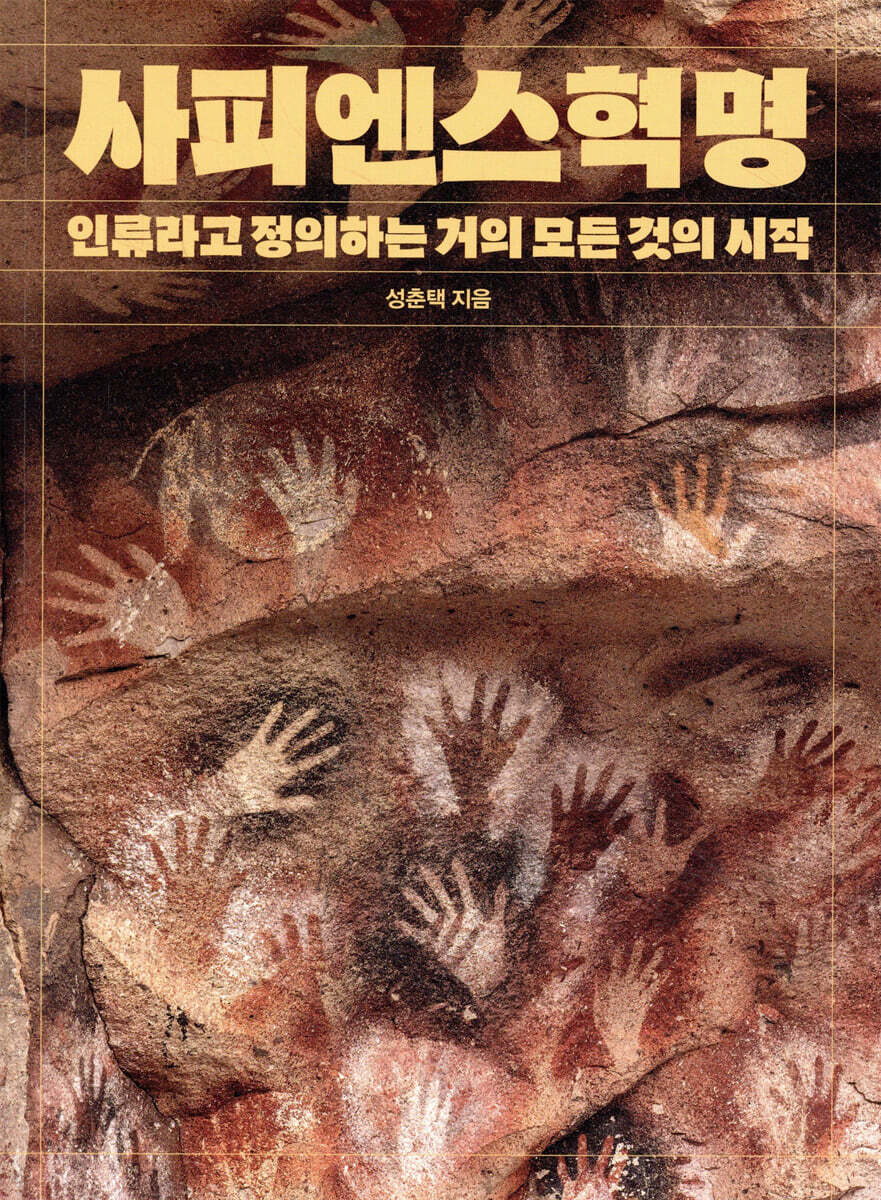
"Sapiens Revolution: The Beginning of Almost Everything We Define as Humanity" is an academic textbook that, based on archaeological research, reveals that the biological and cultural origins of modern humans (Homo sapiens) lie in the Upper Paleolithic Age.
The global expansion of humanity was not due to the Neolithic Revolution, the Agricultural Revolution, the Industrial Revolution, or the advancement of science and technology, but was an achievement of hunter-gatherers during the Ice Age, and at that time the foundation that all of humanity today shares was already laid.
The Paleolithic hunter-gatherers who spread out from Africa and around the world laid the foundation for almost everything that defines humanity today, including art and symbols represented by cave paintings and Venus statues, and the sharing, cooperation, and equality that are the foundations of modern society, which are different from those of previous ancient humans.
The author, a professor of Archaeology and Art History at Seoul National University's College of Humanities, defines this as the 'Sapiens Revolution.'
The global expansion of humanity was not due to the Neolithic Revolution, the Agricultural Revolution, the Industrial Revolution, or the advancement of science and technology, but was an achievement of hunter-gatherers during the Ice Age, and at that time the foundation that all of humanity today shares was already laid.
The Paleolithic hunter-gatherers who spread out from Africa and around the world laid the foundation for almost everything that defines humanity today, including art and symbols represented by cave paintings and Venus statues, and the sharing, cooperation, and equality that are the foundations of modern society, which are different from those of previous ancient humans.
The author, a professor of Archaeology and Art History at Seoul National University's College of Humanities, defines this as the 'Sapiens Revolution.'
index
preface
Part 1: Origin and Spread
Chapter 1: The Childhood of 8 Billion People
A turning point in human history│The Agricultural Revolution and the “Cognitive Revolution”│The distant prehistoric era right next to us│So, what about the current hunter-gatherer societies?
Chapter 2: Did Erectus Give Birth to Sapiens? ─ Principles and Misconceptions of Evolutionary Theory
Humans are a single species: The myth of polygenesis│Scientific arguments and analogies for evolution│Natural selection (elimination) and drift│Evolution is the science of chain coincidences│Why erectus could not have given birth to sapiens
Chapter 3: In Search of the First Modern Humans - Sapiens Fossils and DNA
Jebel-Irud's Old Homo Sapiens Fossils│Omokibisi, Herto, Kafze, and School Fossils│Anatomically Modern and Completely Modern Humans│The Problem of Homo Floresiensis and Naledi│What DNA Tells Us│Finger Bones from Denisova Cave│When Neanderthals Met Modern Humans
Chapter 4: The Encounter of Biological and Cultural Evolution: Behavioral Present Generation
Behavioral Presentity and Symbols│Revolution or Gradual Evolution│Archaeological Evidence│Life Extension and the Grandmother Hypothesis│A Perspective on Diffusion and Change
Chapter 5: From Africa to Eurasia - Diffusion Routes
A Look at Late Paleolithic Studies│The End of Neanderthals in Europe│The Spread to Asia and East Asia│The Emergence of East Asian Late Paleolithic Culture│Stone Blades and Sharp Blades: Korea's Late Paleolithic Culture
Chapter 6: Critique of Climate Determinism: The Toba and Aira Volcanic Eruptions
The Worst Toba Volcanic Eruption in History | Population Bottleneck | Aira Volcanic Eruption and Jeongok-ri Archaeological Site | Criticism of Environmental Determinism
Chapter 7: Wherever Modern Humans Go, There Is Art - Cave Paintings
In Search of the First Cave Paintings│Altamira Cave Paintings│What They Painted│Why They Painted
Chapter 8 Portable Art and Symbolism - The Venus Statue
Researchers of Paleolithic Artwork│Various Sculptures│How Did Hunter-Gatherers Dress and Adorn Them?│Needles and Tanning│European Late Paleolithic Groups and Cultures
Part 2: Hunters of the Ice Age
Chapter 9: Why Hunt Large Animals? ─ Development of Hunting Techniques
Expert Reindeer Hunters? │Ahrensburg Reindeer Hunting Grounds │Large Game Hunting │Upper Paleolithic Hunting Techniques │Interpretation of the Pangsbang Site
Chapter 10: Women Gather, Men Hunt? ─ The Development of Foraging Strategies
Division of Labor by Sex | Optimal Hunting and Gathering and Dietary Breadth Model | What Was Collected? | Aquatic Resource Utilization and Diversification of Food Resources | Gathering and Migration, Centralized Hunting and Gathering
Chapter 11: The Driving Force of Modern Human Expansion: Social Networks and Obsidian
Obsidian and microliths│Hunter-gatherer camps and social networks│Demographic composition of hunter-gatherer groups│Spatial structure of hunter-gatherer societies│Wide-area exchange networks│Population changes in the Late Paleolithic and Early Neolithic│The arrival of the peninsular environment and the salmon effect
Part 3: Adaptation and Conformity
Chapter 12: Beyond Beringia to America - Clovis Culture and Monteverde
The Land Bridge between the Old and New Worlds, Beringia│Evidence of the Last Expansion, Clovis│The Last Expansion Reversed, Monteverde│Before the Clovis Hunters Entered
Chapter 13: Why Did the Mammoths Disappear? ─ The Extinction of Pleistocene Megafauna
Kostenki and Mezirich Archaeological Sites│Nako Mammoth Hunting Sites│The Myth of the Clovis Hunters│Did Mammoths Go Extinct Due to Overhunting?│Large Animals That Have Disappeared│Were the Clovis People Expert Hunters of Large Animals?
Chapter 14: Did Agriculture Change the World? ─ The Emergence of Settled Agricultural Villages
The emergence of pottery│Expansion of extensive food resources│Natufeans, a stationary hunter-gatherer people│The beginning of plant cultivation and the end of the Ice Age│The beginning of sheep and goat domestication│Coevolutionary models: Cultivation and the new relationship between humans and plants│Göbekli Tepe and Çatalhöyük archaeological sites│The roots of agriculture lie in hunter-gatherer societies
Chapter 15: In Search of Hunter-Gatherer Societies: Sharing, Cooperation, and Equality
Wise Homo sapiens? │Sharing and Cooperation in Hunter-Gatherer Societies │Complex Hunter-Gatherer Societies │The Emergence of Social Inequality │Mixed Social Structure and the Pursuit of Equality
In conclusion - the most brilliant history of mankind
The Crisis of Archaeology│The Agricultural Revolution and the Sapiens Revolution│The Evolution of Humanity's Common Experience and History
main
References
Search
Part 1: Origin and Spread
Chapter 1: The Childhood of 8 Billion People
A turning point in human history│The Agricultural Revolution and the “Cognitive Revolution”│The distant prehistoric era right next to us│So, what about the current hunter-gatherer societies?
Chapter 2: Did Erectus Give Birth to Sapiens? ─ Principles and Misconceptions of Evolutionary Theory
Humans are a single species: The myth of polygenesis│Scientific arguments and analogies for evolution│Natural selection (elimination) and drift│Evolution is the science of chain coincidences│Why erectus could not have given birth to sapiens
Chapter 3: In Search of the First Modern Humans - Sapiens Fossils and DNA
Jebel-Irud's Old Homo Sapiens Fossils│Omokibisi, Herto, Kafze, and School Fossils│Anatomically Modern and Completely Modern Humans│The Problem of Homo Floresiensis and Naledi│What DNA Tells Us│Finger Bones from Denisova Cave│When Neanderthals Met Modern Humans
Chapter 4: The Encounter of Biological and Cultural Evolution: Behavioral Present Generation
Behavioral Presentity and Symbols│Revolution or Gradual Evolution│Archaeological Evidence│Life Extension and the Grandmother Hypothesis│A Perspective on Diffusion and Change
Chapter 5: From Africa to Eurasia - Diffusion Routes
A Look at Late Paleolithic Studies│The End of Neanderthals in Europe│The Spread to Asia and East Asia│The Emergence of East Asian Late Paleolithic Culture│Stone Blades and Sharp Blades: Korea's Late Paleolithic Culture
Chapter 6: Critique of Climate Determinism: The Toba and Aira Volcanic Eruptions
The Worst Toba Volcanic Eruption in History | Population Bottleneck | Aira Volcanic Eruption and Jeongok-ri Archaeological Site | Criticism of Environmental Determinism
Chapter 7: Wherever Modern Humans Go, There Is Art - Cave Paintings
In Search of the First Cave Paintings│Altamira Cave Paintings│What They Painted│Why They Painted
Chapter 8 Portable Art and Symbolism - The Venus Statue
Researchers of Paleolithic Artwork│Various Sculptures│How Did Hunter-Gatherers Dress and Adorn Them?│Needles and Tanning│European Late Paleolithic Groups and Cultures
Part 2: Hunters of the Ice Age
Chapter 9: Why Hunt Large Animals? ─ Development of Hunting Techniques
Expert Reindeer Hunters? │Ahrensburg Reindeer Hunting Grounds │Large Game Hunting │Upper Paleolithic Hunting Techniques │Interpretation of the Pangsbang Site
Chapter 10: Women Gather, Men Hunt? ─ The Development of Foraging Strategies
Division of Labor by Sex | Optimal Hunting and Gathering and Dietary Breadth Model | What Was Collected? | Aquatic Resource Utilization and Diversification of Food Resources | Gathering and Migration, Centralized Hunting and Gathering
Chapter 11: The Driving Force of Modern Human Expansion: Social Networks and Obsidian
Obsidian and microliths│Hunter-gatherer camps and social networks│Demographic composition of hunter-gatherer groups│Spatial structure of hunter-gatherer societies│Wide-area exchange networks│Population changes in the Late Paleolithic and Early Neolithic│The arrival of the peninsular environment and the salmon effect
Part 3: Adaptation and Conformity
Chapter 12: Beyond Beringia to America - Clovis Culture and Monteverde
The Land Bridge between the Old and New Worlds, Beringia│Evidence of the Last Expansion, Clovis│The Last Expansion Reversed, Monteverde│Before the Clovis Hunters Entered
Chapter 13: Why Did the Mammoths Disappear? ─ The Extinction of Pleistocene Megafauna
Kostenki and Mezirich Archaeological Sites│Nako Mammoth Hunting Sites│The Myth of the Clovis Hunters│Did Mammoths Go Extinct Due to Overhunting?│Large Animals That Have Disappeared│Were the Clovis People Expert Hunters of Large Animals?
Chapter 14: Did Agriculture Change the World? ─ The Emergence of Settled Agricultural Villages
The emergence of pottery│Expansion of extensive food resources│Natufeans, a stationary hunter-gatherer people│The beginning of plant cultivation and the end of the Ice Age│The beginning of sheep and goat domestication│Coevolutionary models: Cultivation and the new relationship between humans and plants│Göbekli Tepe and Çatalhöyük archaeological sites│The roots of agriculture lie in hunter-gatherer societies
Chapter 15: In Search of Hunter-Gatherer Societies: Sharing, Cooperation, and Equality
Wise Homo sapiens? │Sharing and Cooperation in Hunter-Gatherer Societies │Complex Hunter-Gatherer Societies │The Emergence of Social Inequality │Mixed Social Structure and the Pursuit of Equality
In conclusion - the most brilliant history of mankind
The Crisis of Archaeology│The Agricultural Revolution and the Sapiens Revolution│The Evolution of Humanity's Common Experience and History
main
References
Search
Into the book
It is a scientific fact that all humans on Earth descend from a common ancestor, but it is important enough to be re-emphasized.
People around the world today have different skin colors, different cultures, and different languages, but the history of these differences is very short compared to the entire history of mankind.
The fact that humans have had the same resume for such a long time is important to understanding humans.
The fact that we have shared ancestors and have gone through the same evolutionary process and career helps us overcome present differences and even discrimination.
--- From "Chapter 2: Did Erectus Give Birth to Sapiens?"
Archaeologists have been searching for patterns and reconstructing chronologies and behaviors based on the form, technology, and diversity of stone tools.
The fossils are Sapiens? Even if they are labeled “archaic”? Culturally, they appear to be Middle Paleolithic, with tools made by cutting off various fragments and polishing them.
Afterwards, the late Paleolithic culture using stone blades and symbols as markers developed in Africa, and then modern humans spread again to Asia and Europe.
In this way, when studying the successful expansion of modern humans, we must consider the behavioral and cultural foundations of the Late Paleolithic Age along with biological factors.
Therefore, as an archaeologist, the author believes that finding behavioral modernity is the very act of confirming the common foundation of humanity today.
Africa played a leading role in the evolution, spread, and cultural innovation of modern humans because its population was sufficiently large.
The geographical environment was diverse, and the population living there was larger than in other regions, so behavioral variations emerged based on this, and there was a greater possibility that they would develop into larger variations.
--- From "Chapter 4: The Encounter of Biological Evolution and Cultural Evolution"
If the Toba, Aira, and Baekdu eruptions truly had such a profound impact on human history, what should archaeology do?
Archaeology traces past cultural changes based on physical evidence.
If that were the case, there would certainly have been a physical record.
That's how it should be.
If it is a scientific hypothesis, it must be verifiable.
If it can't be verified, it's just a story.
--- From "Chapter 6: The Traps of Climate and Environmental Determinism"
Why would modern humans enter deep, dark caves and paint with natural colors? What message were they trying to convey by leaving behind shapes and figures, animals, or symbols? The history of writing is only about 5,000 years, so it's hard to believe our brains evolved to read and decipher text.
Rather, perhaps they were adapted to visual images? People who lived during the Ice Age may have possessed extensive knowledge of their surroundings and were adept at remembering and visualizing animal appearances and behaviors.
The Late Paleolithic people depicted horses, buffalo, lions, and rhinoceroses galloping on cave ceilings and walls with astonishing vividness and accuracy.
Cave paintings were not only splendid and beautiful, but they were also human in themselves.
--- From “Chapter 7: Wherever Modern Humans Go, There Is Art”
Wherever modern humans are, wherever they go, there is art.
One cannot help but be amazed by the talent of the artists and craftsmen of the Last Glacial Period.
The art and symbolism of the Upper Paleolithic period spread exponentially.
Modern humans painted on dark cave walls and carried art and symbols with them.
Symbols and art would have always been a part of these people's daily lives as they hunted, processed, and talked to each other.
--- From "Chapter 8 Portable Art and Symbols"
Livelihood behavior patterns, including the division of labor between men and women, appear in most hunter-gatherer societies recorded in ethnographic records.
Research suggests that this pattern dates back to the Upper Paleolithic period.
Furthermore, diversifying food resources is a beneficial strategy for ensuring stability in the face of unexpected livelihood risks.
Entering the Late Paleolithic Age, people began to utilize various aquatic resources.
Among the various plant resources, there are even species that are currently used for medicinal purposes.
Modern humans would have spread across the world based on strategies of division of labor and diversification of food resources.
--- From "Chapter 10: Gathering is for Women, Hunting is for Men?"
The foundation of this social structure cannot be understood without considering cooperation.
Furthermore, cooperation is a fundamental characteristic of human society.
According to a study by Hill et al., sharing and cooperation were common patterns among 32 hunter-gatherer populations.
In particular, not only the acquisition and sharing of food resources, but also communal childcare and education were widespread.
People who have no relationship with each other form groups and even marry.
Such societies were healthier than others, and over generations, these behavioral patterns naturally became established as the norm.
This was an evolutionarily stable strategy.
This would have allowed us to overcome the imbalance of resources across space, seasons, and the difficult times that come periodically.
--- From "Chapter 11: The Driving Force of Modern Human Expansion"
There is one problem with the hypothesis that overhunting by hunters led to the extinction of large animals.
If humans came in and hunted the animals excessively, driving them to extinction, then the two points in time should coincide.
However, there is no evidence that all the animals that disappeared became extinct at the same time.
In fact, the chronology of extinction has not yet been well established.
In other words, it may have disappeared at the end of the Pleistocene as Martin claims, but it is more likely that it gradually became extinct as the ice sheets began to melt after the Last Glacial Maximum.
In other words, it may have already disappeared before humans arrived in the Americas.
It is also questionable whether the hypothesis that they went extinct due to overfishing can be scientifically verified based on evidence.
--- From "Chapter 13: Why Did Mammoths Disappear?"
The transition to agriculture was not a revolutionary event, but a very long process.
The word revolution is merely a metaphor for the profound impact it has had on human history.
The elements of the Neolithic Revolution suggested by Childe—plant cultivation, animal husbandry, settled villages, pottery, and stone tools—did not appear simultaneously with the end of the Pleistocene.
As we have seen, the appearance of almost all elements dates back to the late Paleolithic hunter-gatherer societies.
--- From Chapter 14, “Did Agriculture Change the World?”
Evidence of sharing and cooperation among hunter-gatherers overwhelms the structuring of hierarchy and inequality.
It would be correct to view the context of cave paintings and communal rituals as events for the unity of the group as well as peace and well-being.
Even if there were leaders, the positions would not have been hereditary.
And they worshipped their ancestors.
In other words, it emphasized the long history and origins of the group.
Just as the world today is an extension of a long history.
People around the world today have different skin colors, different cultures, and different languages, but the history of these differences is very short compared to the entire history of mankind.
The fact that humans have had the same resume for such a long time is important to understanding humans.
The fact that we have shared ancestors and have gone through the same evolutionary process and career helps us overcome present differences and even discrimination.
--- From "Chapter 2: Did Erectus Give Birth to Sapiens?"
Archaeologists have been searching for patterns and reconstructing chronologies and behaviors based on the form, technology, and diversity of stone tools.
The fossils are Sapiens? Even if they are labeled “archaic”? Culturally, they appear to be Middle Paleolithic, with tools made by cutting off various fragments and polishing them.
Afterwards, the late Paleolithic culture using stone blades and symbols as markers developed in Africa, and then modern humans spread again to Asia and Europe.
In this way, when studying the successful expansion of modern humans, we must consider the behavioral and cultural foundations of the Late Paleolithic Age along with biological factors.
Therefore, as an archaeologist, the author believes that finding behavioral modernity is the very act of confirming the common foundation of humanity today.
Africa played a leading role in the evolution, spread, and cultural innovation of modern humans because its population was sufficiently large.
The geographical environment was diverse, and the population living there was larger than in other regions, so behavioral variations emerged based on this, and there was a greater possibility that they would develop into larger variations.
--- From "Chapter 4: The Encounter of Biological Evolution and Cultural Evolution"
If the Toba, Aira, and Baekdu eruptions truly had such a profound impact on human history, what should archaeology do?
Archaeology traces past cultural changes based on physical evidence.
If that were the case, there would certainly have been a physical record.
That's how it should be.
If it is a scientific hypothesis, it must be verifiable.
If it can't be verified, it's just a story.
--- From "Chapter 6: The Traps of Climate and Environmental Determinism"
Why would modern humans enter deep, dark caves and paint with natural colors? What message were they trying to convey by leaving behind shapes and figures, animals, or symbols? The history of writing is only about 5,000 years, so it's hard to believe our brains evolved to read and decipher text.
Rather, perhaps they were adapted to visual images? People who lived during the Ice Age may have possessed extensive knowledge of their surroundings and were adept at remembering and visualizing animal appearances and behaviors.
The Late Paleolithic people depicted horses, buffalo, lions, and rhinoceroses galloping on cave ceilings and walls with astonishing vividness and accuracy.
Cave paintings were not only splendid and beautiful, but they were also human in themselves.
--- From “Chapter 7: Wherever Modern Humans Go, There Is Art”
Wherever modern humans are, wherever they go, there is art.
One cannot help but be amazed by the talent of the artists and craftsmen of the Last Glacial Period.
The art and symbolism of the Upper Paleolithic period spread exponentially.
Modern humans painted on dark cave walls and carried art and symbols with them.
Symbols and art would have always been a part of these people's daily lives as they hunted, processed, and talked to each other.
--- From "Chapter 8 Portable Art and Symbols"
Livelihood behavior patterns, including the division of labor between men and women, appear in most hunter-gatherer societies recorded in ethnographic records.
Research suggests that this pattern dates back to the Upper Paleolithic period.
Furthermore, diversifying food resources is a beneficial strategy for ensuring stability in the face of unexpected livelihood risks.
Entering the Late Paleolithic Age, people began to utilize various aquatic resources.
Among the various plant resources, there are even species that are currently used for medicinal purposes.
Modern humans would have spread across the world based on strategies of division of labor and diversification of food resources.
--- From "Chapter 10: Gathering is for Women, Hunting is for Men?"
The foundation of this social structure cannot be understood without considering cooperation.
Furthermore, cooperation is a fundamental characteristic of human society.
According to a study by Hill et al., sharing and cooperation were common patterns among 32 hunter-gatherer populations.
In particular, not only the acquisition and sharing of food resources, but also communal childcare and education were widespread.
People who have no relationship with each other form groups and even marry.
Such societies were healthier than others, and over generations, these behavioral patterns naturally became established as the norm.
This was an evolutionarily stable strategy.
This would have allowed us to overcome the imbalance of resources across space, seasons, and the difficult times that come periodically.
--- From "Chapter 11: The Driving Force of Modern Human Expansion"
There is one problem with the hypothesis that overhunting by hunters led to the extinction of large animals.
If humans came in and hunted the animals excessively, driving them to extinction, then the two points in time should coincide.
However, there is no evidence that all the animals that disappeared became extinct at the same time.
In fact, the chronology of extinction has not yet been well established.
In other words, it may have disappeared at the end of the Pleistocene as Martin claims, but it is more likely that it gradually became extinct as the ice sheets began to melt after the Last Glacial Maximum.
In other words, it may have already disappeared before humans arrived in the Americas.
It is also questionable whether the hypothesis that they went extinct due to overfishing can be scientifically verified based on evidence.
--- From "Chapter 13: Why Did Mammoths Disappear?"
The transition to agriculture was not a revolutionary event, but a very long process.
The word revolution is merely a metaphor for the profound impact it has had on human history.
The elements of the Neolithic Revolution suggested by Childe—plant cultivation, animal husbandry, settled villages, pottery, and stone tools—did not appear simultaneously with the end of the Pleistocene.
As we have seen, the appearance of almost all elements dates back to the late Paleolithic hunter-gatherer societies.
--- From Chapter 14, “Did Agriculture Change the World?”
Evidence of sharing and cooperation among hunter-gatherers overwhelms the structuring of hierarchy and inequality.
It would be correct to view the context of cave paintings and communal rituals as events for the unity of the group as well as peace and well-being.
Even if there were leaders, the positions would not have been hereditary.
And they worshipped their ancestors.
In other words, it emphasized the long history and origins of the group.
Just as the world today is an extension of a long history.
--- From "Chapter 15: In Search of Hunter-Gatherer Societies"
Publisher's Review
When and how was the common foundation for 8 billion people created?
Through the window of archaeology, this book presents the answer that “the common ground of humanity was laid by hunter-gatherers of the Upper Paleolithic.”
Modern humans (Homo sapiens), who originated in Africa, migrated as early as 65,000 years ago through Southeast Asia to Australia, from West Asia to Europe 50,000 years ago, and then through high latitudes and East Asia to the Americas before the end of the Ice Age.
Sapiens successfully spread as a single species throughout the Old and New Worlds.
The global expansion of humanity was not due to the Neolithic Revolution, the Agricultural Revolution, the Industrial Revolution, or the advancement of science and technology, but was an achievement of hunter-gatherers during the Ice Age, and at that time the foundation that all of humanity today shares was already laid.
It is said that humans achieved the Neolithic Revolution and the Urban Revolution by breaking free from the constraints of nature through creative will and effort, but almost all elements of the Neolithic Revolution, such as pottery, stone tools, settlements, and plant cultivation, were created by hunter-gatherers at the end of the Ice Age.
The prevailing perception is that human culture developed from the barbaric state of the Paleolithic Age, through the agricultural revolution of the Neolithic Age, into a settled village, and then into an uncivilized society, and then, based on metal civilization, nations emerged and developed into what is now history.
But what archaeological research tells us is that almost every characteristic that defines us is a legacy from the hunter-gatherers of the Upper Paleolithic.
The commonalities shared by extant hunter-gatherers, such as group size and mobility, territoriality, sharing, egalitarian society, population composition and ideas, behavioral patterns, and social structure, can be traced back to the hunter-gatherers of the Late Paleolithic period.
The Upper Paleolithic was a period in which the foundations of almost everything that defines humanity today were laid, including art and symbols represented by cave paintings and Venus statues, and the pursuit of sharing, cooperation, and equality that are the foundations of modern society. It is a period that differs from previous ancient humans, and in this respect, it is the starting point of a truly global history.
Humans are a single species
There were once people who believed that the people on Earth today were not united but had different origins.
The so-called polygenetic theory and the racism based on it were rejected after the defeat of Nazi Germany in World War II.
The idea that humanity is a single biological species, or the theory of a single origin, has become an irrefutable proposition explaining humanity since Charles Darwin published The Origin of Species in 1859.
This book explores the origins of all humans on Earth, regardless of skin color, age, gender, place of residence, or appearance, based on the premise that they are all modern humans (Homo sapiens).
When biological evolution and cultural evolution meet
Archaeological evidence, including fossils, shows that modern humans, who spread from Africa to the rest of the world during the Upper Paleolithic period (45,000–12,000 years ago), differ anatomically and biologically from other hominins, such as Homo sapiens and Neanderthals.
In particular, DNA analysis, which has recently brought a new wind to the study of human evolution, is reaffirming these archaeological research results.
However, the global spread of modern humans cannot be explained by biological evolution alone.
To understand the successful dispersal of modern humans, we must consider the behavioral and cultural modernity of the Upper Paleolithic, along with the biological modernity that distinguishes us from earlier humans.
The argument of this book is that only when the two things combine can we reach a complete modern human, which continues to this day.
The most important aspects of the behavior and cultural manifestations of the Late Paleolithic Age are the ability to think abstractly and symbols, and the appearance of ornaments such as cave paintings and Venus sculptures are cited as archaeological evidence.
In addition, the development of stone tools and bone tools, diversification of livelihood resources, population growth, and establishment of social networks are representative behavioral and cultural characteristics of the Late Paleolithic Age.
Life extension and the grandmother hypothesis
The background that enabled modern humans' biological and cultural evolution to achieve another 'revolution' of global expansion is the population increase resulting from extended lifespan.
Homo sapiens appeared in Africa between 300,000 and 200,000 years ago, but culturally they remained in the Middle Paleolithic period.
Although elements of Upper Paleolithic culture appeared 80,000 to 70,000 years ago, it was the group that left Africa 45,000 years ago that successfully spread it globally.
The reason modern humans in Africa were in a leading position in evolution, expansion, and cultural innovation was because their population was sufficiently large.
Population growth is closely linked to longer life expectancy.
Unlike previous human generations, the lifespan of modern humans has increased significantly.
The elderly population has more than doubled the youth population.
This gives rise to the 'grandmother hypothesis', which suggests that grandmothers who do not have children cared for their grandchildren, thereby increasing the survival rate of their descendants and driving population growth.
What drove the global spread of modern humans?
It was during the Late Paleolithic period that humans spread across the globe as they do now.
There are attempts to explain the Agricultural Revolution or the Industrial Revolution as the driving force behind the global spread of humanity, but archaeological data show that the spread was completed in the Upper Paleolithic period, before these periods.
Can the success of this expansion be explained solely by biological and cultural evolution, along with population growth driven by increased lifespan? This book proposes "social networks" as the answer.
Ethnographic studies of living hunter-gatherers show that they form groups and intermarry even among unrelated individuals.
This society was healthier than others, and over generations, these behavioral patterns naturally became the norm.
This was an evolutionarily stable strategy.
The foundation of this social structure cannot be understood without considering cooperation.
Cooperation is a fundamental characteristic of human society.
This would have allowed us to overcome the imbalance of resources across space, seasons, and difficult times that come periodically.
The social network of modern humans was not a small, short-distance network.
Obsidian stone tools that likely originated from distant Baekdu Mountain or Japan have been discovered in the southernmost part of the Korean Peninsula, and raw stones and seashells that must have traveled 200 to 600 kilometers are being excavated in Western and Eastern Europe.
This means that the network of indirect exchanges that went beyond the direct exchange zone was that large, and this may have been the driving force behind its spread, the book explains.
Did mammoths become extinct because of Ice Age hunters?
Modern humans successfully spread from their starting point in Africa to the farthest continent of America through this wide-area network.
Around 15,000 years ago, modern humans left behind many remains in North and South America.
Although it was initially known that modern humans first advanced into North America (Clovis, New Mexico, USA), archaeological sites have been excavated that show that modern humans reached South America (Monteverde, Chile) at an earlier time.
What caught the attention of many was the fact that large animals such as mammoths that lived in various places including the American continent during this period became extinct.
Based on stone tools found with mammoth bone fossils, a hypothesis emerged that modern humans who migrated to the American continent were hunters of large animals, which may have led to the extinction of mammoths and other animals.
This kind of imagination still has its vitality.
However, this book argues that it was not hunting that drove mammoths to extinction, but rather rising temperatures and environmental changes.
Hunting was merely a small fan on the flames of extinction.
The Sapiens Revolution came before the Agricultural Revolution.
All 8 billion people living on Earth are the same Homo sapiens (modern humans).
It was only ten thousand years ago, or even thousands of years ago, that our appearance and skin changed and our language and culture diverged.
It is true that the Neolithic Revolution, the Agricultural Revolution, and the Industrial Revolution brought about great changes in human society, but almost everything that can be defined as human began as hunter-gatherers in the Upper Paleolithic Age.
Agriculture is commonly perceived as having originated in the Neolithic Age, but the elements of the so-called Neolithic Revolution—plant cultivation, animal husbandry, settled villages, pottery, and stone tools—had already appeared in the late Paleolithic hunter-gatherer societies.
If we use the metaphor of 'revolution', the archaeological evidence shows that the Sapiens Revolution occurred before the Agricultural Revolution.
The Sapiens Revolution was based on sharing, cooperation, and a desire for equality.
The background of Homo sapiens' most successful evolutionary history as a single species was the customs and social mechanisms that pursued sharing, cooperation, and equality rather than inequality.
From the perspective of archaeology, which collects and analyzes physical evidence, evidence of social inequality and hierarchy in late Paleolithic societies is scant.
Furthermore, it is difficult to find evidence of hierarchy even in the settled agricultural village of Çatalhöyük, which lasted for over 1,000 years during the Neolithic Age.
Rather, this book argues that it lasted so long because it was a society that pursued equality and maintained peace.
In numerous archaeological sources, evidence of sharing and cooperation among hunter-gatherers overwhelms the structures of hierarchy and inequality.
Humanity has a common experience of surviving successfully, or more or less successfully, in various environments for tens of thousands of years during the Late Paleolithic period.
It is the most shining career on our human resume.
Through the window of archaeology, this book presents the answer that “the common ground of humanity was laid by hunter-gatherers of the Upper Paleolithic.”
Modern humans (Homo sapiens), who originated in Africa, migrated as early as 65,000 years ago through Southeast Asia to Australia, from West Asia to Europe 50,000 years ago, and then through high latitudes and East Asia to the Americas before the end of the Ice Age.
Sapiens successfully spread as a single species throughout the Old and New Worlds.
The global expansion of humanity was not due to the Neolithic Revolution, the Agricultural Revolution, the Industrial Revolution, or the advancement of science and technology, but was an achievement of hunter-gatherers during the Ice Age, and at that time the foundation that all of humanity today shares was already laid.
It is said that humans achieved the Neolithic Revolution and the Urban Revolution by breaking free from the constraints of nature through creative will and effort, but almost all elements of the Neolithic Revolution, such as pottery, stone tools, settlements, and plant cultivation, were created by hunter-gatherers at the end of the Ice Age.
The prevailing perception is that human culture developed from the barbaric state of the Paleolithic Age, through the agricultural revolution of the Neolithic Age, into a settled village, and then into an uncivilized society, and then, based on metal civilization, nations emerged and developed into what is now history.
But what archaeological research tells us is that almost every characteristic that defines us is a legacy from the hunter-gatherers of the Upper Paleolithic.
The commonalities shared by extant hunter-gatherers, such as group size and mobility, territoriality, sharing, egalitarian society, population composition and ideas, behavioral patterns, and social structure, can be traced back to the hunter-gatherers of the Late Paleolithic period.
The Upper Paleolithic was a period in which the foundations of almost everything that defines humanity today were laid, including art and symbols represented by cave paintings and Venus statues, and the pursuit of sharing, cooperation, and equality that are the foundations of modern society. It is a period that differs from previous ancient humans, and in this respect, it is the starting point of a truly global history.
Humans are a single species
There were once people who believed that the people on Earth today were not united but had different origins.
The so-called polygenetic theory and the racism based on it were rejected after the defeat of Nazi Germany in World War II.
The idea that humanity is a single biological species, or the theory of a single origin, has become an irrefutable proposition explaining humanity since Charles Darwin published The Origin of Species in 1859.
This book explores the origins of all humans on Earth, regardless of skin color, age, gender, place of residence, or appearance, based on the premise that they are all modern humans (Homo sapiens).
When biological evolution and cultural evolution meet
Archaeological evidence, including fossils, shows that modern humans, who spread from Africa to the rest of the world during the Upper Paleolithic period (45,000–12,000 years ago), differ anatomically and biologically from other hominins, such as Homo sapiens and Neanderthals.
In particular, DNA analysis, which has recently brought a new wind to the study of human evolution, is reaffirming these archaeological research results.
However, the global spread of modern humans cannot be explained by biological evolution alone.
To understand the successful dispersal of modern humans, we must consider the behavioral and cultural modernity of the Upper Paleolithic, along with the biological modernity that distinguishes us from earlier humans.
The argument of this book is that only when the two things combine can we reach a complete modern human, which continues to this day.
The most important aspects of the behavior and cultural manifestations of the Late Paleolithic Age are the ability to think abstractly and symbols, and the appearance of ornaments such as cave paintings and Venus sculptures are cited as archaeological evidence.
In addition, the development of stone tools and bone tools, diversification of livelihood resources, population growth, and establishment of social networks are representative behavioral and cultural characteristics of the Late Paleolithic Age.
Life extension and the grandmother hypothesis
The background that enabled modern humans' biological and cultural evolution to achieve another 'revolution' of global expansion is the population increase resulting from extended lifespan.
Homo sapiens appeared in Africa between 300,000 and 200,000 years ago, but culturally they remained in the Middle Paleolithic period.
Although elements of Upper Paleolithic culture appeared 80,000 to 70,000 years ago, it was the group that left Africa 45,000 years ago that successfully spread it globally.
The reason modern humans in Africa were in a leading position in evolution, expansion, and cultural innovation was because their population was sufficiently large.
Population growth is closely linked to longer life expectancy.
Unlike previous human generations, the lifespan of modern humans has increased significantly.
The elderly population has more than doubled the youth population.
This gives rise to the 'grandmother hypothesis', which suggests that grandmothers who do not have children cared for their grandchildren, thereby increasing the survival rate of their descendants and driving population growth.
What drove the global spread of modern humans?
It was during the Late Paleolithic period that humans spread across the globe as they do now.
There are attempts to explain the Agricultural Revolution or the Industrial Revolution as the driving force behind the global spread of humanity, but archaeological data show that the spread was completed in the Upper Paleolithic period, before these periods.
Can the success of this expansion be explained solely by biological and cultural evolution, along with population growth driven by increased lifespan? This book proposes "social networks" as the answer.
Ethnographic studies of living hunter-gatherers show that they form groups and intermarry even among unrelated individuals.
This society was healthier than others, and over generations, these behavioral patterns naturally became the norm.
This was an evolutionarily stable strategy.
The foundation of this social structure cannot be understood without considering cooperation.
Cooperation is a fundamental characteristic of human society.
This would have allowed us to overcome the imbalance of resources across space, seasons, and difficult times that come periodically.
The social network of modern humans was not a small, short-distance network.
Obsidian stone tools that likely originated from distant Baekdu Mountain or Japan have been discovered in the southernmost part of the Korean Peninsula, and raw stones and seashells that must have traveled 200 to 600 kilometers are being excavated in Western and Eastern Europe.
This means that the network of indirect exchanges that went beyond the direct exchange zone was that large, and this may have been the driving force behind its spread, the book explains.
Did mammoths become extinct because of Ice Age hunters?
Modern humans successfully spread from their starting point in Africa to the farthest continent of America through this wide-area network.
Around 15,000 years ago, modern humans left behind many remains in North and South America.
Although it was initially known that modern humans first advanced into North America (Clovis, New Mexico, USA), archaeological sites have been excavated that show that modern humans reached South America (Monteverde, Chile) at an earlier time.
What caught the attention of many was the fact that large animals such as mammoths that lived in various places including the American continent during this period became extinct.
Based on stone tools found with mammoth bone fossils, a hypothesis emerged that modern humans who migrated to the American continent were hunters of large animals, which may have led to the extinction of mammoths and other animals.
This kind of imagination still has its vitality.
However, this book argues that it was not hunting that drove mammoths to extinction, but rather rising temperatures and environmental changes.
Hunting was merely a small fan on the flames of extinction.
The Sapiens Revolution came before the Agricultural Revolution.
All 8 billion people living on Earth are the same Homo sapiens (modern humans).
It was only ten thousand years ago, or even thousands of years ago, that our appearance and skin changed and our language and culture diverged.
It is true that the Neolithic Revolution, the Agricultural Revolution, and the Industrial Revolution brought about great changes in human society, but almost everything that can be defined as human began as hunter-gatherers in the Upper Paleolithic Age.
Agriculture is commonly perceived as having originated in the Neolithic Age, but the elements of the so-called Neolithic Revolution—plant cultivation, animal husbandry, settled villages, pottery, and stone tools—had already appeared in the late Paleolithic hunter-gatherer societies.
If we use the metaphor of 'revolution', the archaeological evidence shows that the Sapiens Revolution occurred before the Agricultural Revolution.
The Sapiens Revolution was based on sharing, cooperation, and a desire for equality.
The background of Homo sapiens' most successful evolutionary history as a single species was the customs and social mechanisms that pursued sharing, cooperation, and equality rather than inequality.
From the perspective of archaeology, which collects and analyzes physical evidence, evidence of social inequality and hierarchy in late Paleolithic societies is scant.
Furthermore, it is difficult to find evidence of hierarchy even in the settled agricultural village of Çatalhöyük, which lasted for over 1,000 years during the Neolithic Age.
Rather, this book argues that it lasted so long because it was a society that pursued equality and maintained peace.
In numerous archaeological sources, evidence of sharing and cooperation among hunter-gatherers overwhelms the structures of hierarchy and inequality.
Humanity has a common experience of surviving successfully, or more or less successfully, in various environments for tens of thousands of years during the Late Paleolithic period.
It is the most shining career on our human resume.
GOODS SPECIFICS
- Date of issue: April 7, 2025
- Page count, weight, size: 438 pages | 170*230*30mm
- ISBN13: 9791167071828
- ISBN10: 1167071824
You may also like
카테고리
korean


korean

![ELLE 엘르 스페셜 에디션 A형 : 12월 [2025]](http://librairie.coreenne.fr/cdn/shop/files/b8e27a3de6c9538896439686c6b0e8fb.jpg?v=1766436872&width=3840)


