

Hotteok and Chocolate Come to Gyeongseong
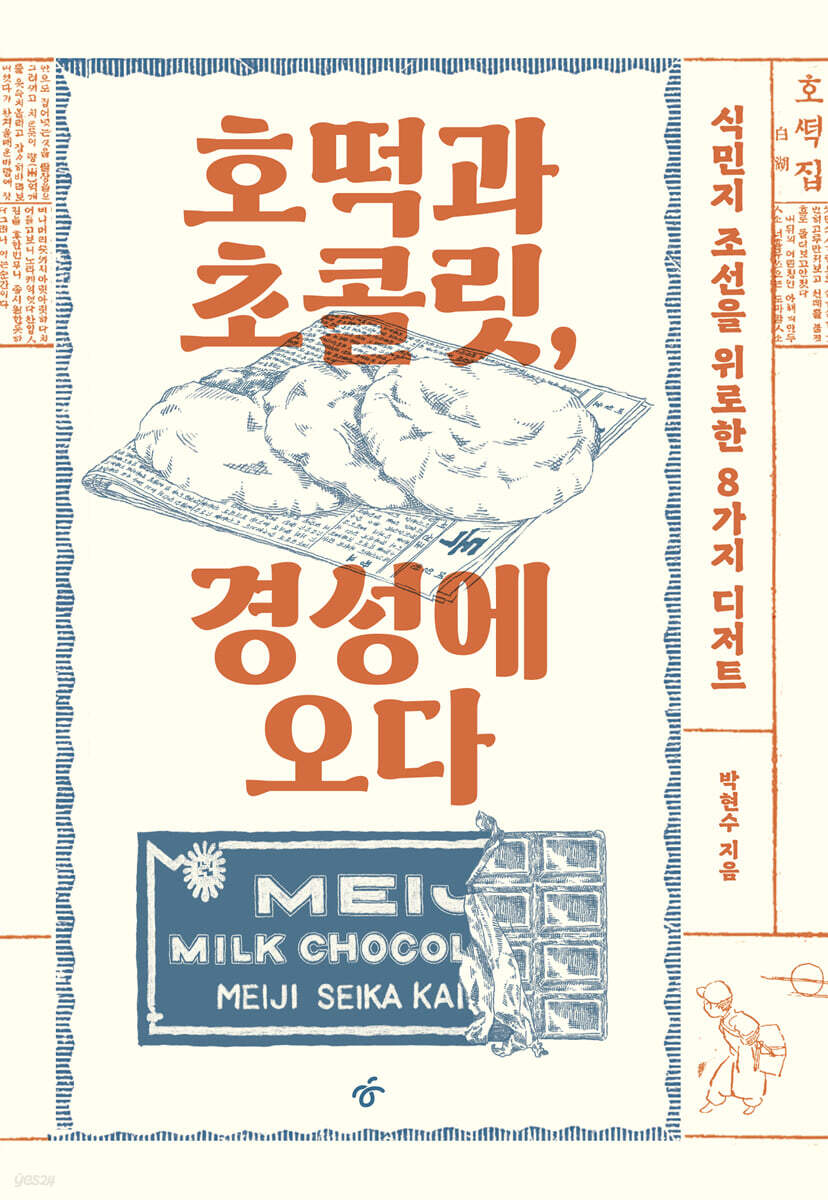 |
Description
Book Introduction
Even in colonial Korea, there was a favorite dessert!
Eight Sweetnesses Crafted from Times, Life, Tears, and Romance
'Colony' and 'Dessert'.
At first glance, it's an odd combination.
Desserts and snacks in colonial Joseon, where even getting a meal was difficult.
But what can you do? It's true that even back then, people's favorite desserts existed.
Professor Park Hyeon-su, Korea's only food literature researcher who, in his previous work "A Walk Through Gyeongseong's Best Restaurants," explored the dining scene that adorned Gyeongseong's bustling streets and the shadow of colonialism that hung over them, has now returned with "Hotteok and Chocolate, Come to Gyeongseong," which highlights eight contemporary desserts.
Coffee that is 'hinggi lemming-gre' but has a strange charm that draws you in, Manju that high school students sold to earn tuition, melon that author Yi Sang wanted to eat as the last thing before he died, hotteok that was bigger than your face and filling as a meal, Ramune, Joseon's first carbonated drink, chocolate that was already a sweet for lovers back then, roasted sweet potatoes that stop you in your tracks with their savory smell on winter nights, shaved ice that lets you beat the heat with just the sound of ice shaving...
Through eight snacks that comforted the hungry and weary colonial Joseon, we vividly relive the laughter and tears of that time and fully reflect on the colorful meaning of the act of "eating."
In this day and age of ubiquitous restaurants and cafes and indiscriminate eating, this is a profound and sweet educational book that explores the history, life, tragedy, and romance mixed with the sweetness that arrived in this land 100 years ago.
“The newly introduced dessert captured the hearts of Koreans with its sweet and cold taste and the mask of civilization.
However, this process was intertwined with the process of pushing out snacks that had previously been enjoyed.
“The sweetness and coldness of snacks like hangwa, yakgwa, sikhye, and taffy were not enough to compete with the new desserts.” _From ‘Introduction’
Eight Sweetnesses Crafted from Times, Life, Tears, and Romance
'Colony' and 'Dessert'.
At first glance, it's an odd combination.
Desserts and snacks in colonial Joseon, where even getting a meal was difficult.
But what can you do? It's true that even back then, people's favorite desserts existed.
Professor Park Hyeon-su, Korea's only food literature researcher who, in his previous work "A Walk Through Gyeongseong's Best Restaurants," explored the dining scene that adorned Gyeongseong's bustling streets and the shadow of colonialism that hung over them, has now returned with "Hotteok and Chocolate, Come to Gyeongseong," which highlights eight contemporary desserts.
Coffee that is 'hinggi lemming-gre' but has a strange charm that draws you in, Manju that high school students sold to earn tuition, melon that author Yi Sang wanted to eat as the last thing before he died, hotteok that was bigger than your face and filling as a meal, Ramune, Joseon's first carbonated drink, chocolate that was already a sweet for lovers back then, roasted sweet potatoes that stop you in your tracks with their savory smell on winter nights, shaved ice that lets you beat the heat with just the sound of ice shaving...
Through eight snacks that comforted the hungry and weary colonial Joseon, we vividly relive the laughter and tears of that time and fully reflect on the colorful meaning of the act of "eating."
In this day and age of ubiquitous restaurants and cafes and indiscriminate eating, this is a profound and sweet educational book that explores the history, life, tragedy, and romance mixed with the sweetness that arrived in this land 100 years ago.
“The newly introduced dessert captured the hearts of Koreans with its sweet and cold taste and the mask of civilization.
However, this process was intertwined with the process of pushing out snacks that had previously been enjoyed.
“The sweetness and coldness of snacks like hangwa, yakgwa, sikhye, and taffy were not enough to compete with the new desserts.” _From ‘Introduction’
- You can preview some of the book's contents.
Preview
index
Introduction · Sweet civilization, the modern history of the snack that captivated the colonies
Chapter 1.
Coffee: When you open the door to the coffee shop through the bitter cold
1 · An indescribable refreshing and intoxicating feeling
2 · A city dweller's delight, a city dweller's oasis
3. Hottest cafes in Gyeongseong
4 · Where was the first teahouse?
5 · How the teahouse appeared and spread in Japan
6 · A space where lonely dreams ask for a handshake
*Further Reading: How to Buy Delicious Coffee, How to Brew Delicious Coffee
Chapter 2.
Manchuria: I ate a big piece of steaming stuff
1 · Manchuria in a high school student's chest
2 · Traditional Japanese sweets, containing red bean paste
3 · "Manju no hoya hoya!" The sound that fills the night streets
4 · Mantou, dumplings, Manchurian
5 · Sweet red bean bread baked without steaming
6 · Is there something stuck in your wisdom tooth?
*Further Reading: Why a Colonial Joseon Journalist Disguised Himself as a Baker
Chapter 3.
Melon: Their hearts are filled with the scent of a foreign land like fog.
1. What the dying man wanted to eat
2 · The King of Precious Fruits
3 · Senbikiya, a fruit shop with 200 years of history
4 · The sweeter pushes out the less sweet
5. The melon didn't stay still either.
6 · The Modernist's Sorrow Reflected in Melon
*Further Reading: I know the name, but not the flavor
Chapter 4.
Hotteok: Wrap a couple in newspaper and bring them home at night, and eat them under the blanket.
1 · Bake, steam, add red beans and honey
2 · The reason it was delicious but embarrassing
3 · This is what is called 'Hotteokin'
4 · There are more hotteok restaurants than seolleongtang restaurants.
5 · The label of being dark and unclean
6 · The hidden meaning behind the name hotteok
*Further Reading: Students' Favorite Snacks
Chapter 5.
Ramune: A quiet happiness that is summer yet not summer.
1. Blue Beads in a Bottle
2. Don't let the steam drain out.
3 · It's not in the cafe, but it's in the theater
4 · Until it gives way to cider
5 · Fear of the pandemic leads to a search for carbonated beverages.
6 · Natural beauty discovered after the baptism of civilization
*Further Reading: How to Spot Bad Soft Drinks
Chapter 6.
Chocolate: What's a love candy? Don't you even know what a chocolate is?
1 · The King of Desserts
2 · Tastes like 'romance'
3 · Even in the days before Valentine's Day
4 · The World History of Chocolate
5 · Not only delicious but also healthy
*Further Reading: Chocolate for Blood Health
Chapter 7.
Sweet Potatoes: The longer the night and the drier your appetite, the more delicious "Yakiimo!" becomes.
1. What Boknyeo stole wasn't potatoes.
2 · The witness of the incident was a sweet potato vendor
3 · A tin can on a handcart on a winter night
4 · Pushing out chestnuts and becoming a representative winter snack
5. From the stove to the convenience store
6 · Whatever Boknyeo stole
*Further Reading: The Sorrows of a One-Cheol Business
Chapter 8.
Bingsu: When you scoop it up and place it on your tongue, the cool taste goes all the way to the back of your head.
1. About the name 'Bingsu'
2. Bang Jeong-hwan, who loved shaved ice as much as a child
3 · Flags that announce summer
4 · 400 in Gyeongseong alone, the boom of shaved ice shops
5 · Lose to ice cream
6 · Ice, ice water, ice hail
*Further Reading: The Secret to Enjoying a Vacation on 20 Won
Helpful Articles
Image source
Chapter 1.
Coffee: When you open the door to the coffee shop through the bitter cold
1 · An indescribable refreshing and intoxicating feeling
2 · A city dweller's delight, a city dweller's oasis
3. Hottest cafes in Gyeongseong
4 · Where was the first teahouse?
5 · How the teahouse appeared and spread in Japan
6 · A space where lonely dreams ask for a handshake
*Further Reading: How to Buy Delicious Coffee, How to Brew Delicious Coffee
Chapter 2.
Manchuria: I ate a big piece of steaming stuff
1 · Manchuria in a high school student's chest
2 · Traditional Japanese sweets, containing red bean paste
3 · "Manju no hoya hoya!" The sound that fills the night streets
4 · Mantou, dumplings, Manchurian
5 · Sweet red bean bread baked without steaming
6 · Is there something stuck in your wisdom tooth?
*Further Reading: Why a Colonial Joseon Journalist Disguised Himself as a Baker
Chapter 3.
Melon: Their hearts are filled with the scent of a foreign land like fog.
1. What the dying man wanted to eat
2 · The King of Precious Fruits
3 · Senbikiya, a fruit shop with 200 years of history
4 · The sweeter pushes out the less sweet
5. The melon didn't stay still either.
6 · The Modernist's Sorrow Reflected in Melon
*Further Reading: I know the name, but not the flavor
Chapter 4.
Hotteok: Wrap a couple in newspaper and bring them home at night, and eat them under the blanket.
1 · Bake, steam, add red beans and honey
2 · The reason it was delicious but embarrassing
3 · This is what is called 'Hotteokin'
4 · There are more hotteok restaurants than seolleongtang restaurants.
5 · The label of being dark and unclean
6 · The hidden meaning behind the name hotteok
*Further Reading: Students' Favorite Snacks
Chapter 5.
Ramune: A quiet happiness that is summer yet not summer.
1. Blue Beads in a Bottle
2. Don't let the steam drain out.
3 · It's not in the cafe, but it's in the theater
4 · Until it gives way to cider
5 · Fear of the pandemic leads to a search for carbonated beverages.
6 · Natural beauty discovered after the baptism of civilization
*Further Reading: How to Spot Bad Soft Drinks
Chapter 6.
Chocolate: What's a love candy? Don't you even know what a chocolate is?
1 · The King of Desserts
2 · Tastes like 'romance'
3 · Even in the days before Valentine's Day
4 · The World History of Chocolate
5 · Not only delicious but also healthy
*Further Reading: Chocolate for Blood Health
Chapter 7.
Sweet Potatoes: The longer the night and the drier your appetite, the more delicious "Yakiimo!" becomes.
1. What Boknyeo stole wasn't potatoes.
2 · The witness of the incident was a sweet potato vendor
3 · A tin can on a handcart on a winter night
4 · Pushing out chestnuts and becoming a representative winter snack
5. From the stove to the convenience store
6 · Whatever Boknyeo stole
*Further Reading: The Sorrows of a One-Cheol Business
Chapter 8.
Bingsu: When you scoop it up and place it on your tongue, the cool taste goes all the way to the back of your head.
1. About the name 'Bingsu'
2. Bang Jeong-hwan, who loved shaved ice as much as a child
3 · Flags that announce summer
4 · 400 in Gyeongseong alone, the boom of shaved ice shops
5 · Lose to ice cream
6 · Ice, ice water, ice hail
*Further Reading: The Secret to Enjoying a Vacation on 20 Won
Helpful Articles
Image source
Detailed image
.jpg)
Into the book
This book, which covers desserts from 100 years ago, is part of an effort to move beyond competing to see who can eat more or obsessing over finding the best restaurant, and to explore the full meaning of the act of eating.
--- p.6
Lee Sang first reminded us that in colonial Korea, tea houses were spaces of dreams that allowed us to escape reality.
He said that if even dreams are lonely, it is truly lonely, and that the tea house is a space where lonely dreams ask for hands with other lonely dreams.
To borrow Lee Tae-jun's expression, those who frequented teahouses at the time were 'people without any special business affiliation.'
To be more precise, they were people who had neither decent jobs nor the possibility of having them under the oppression of Japanese colonial rule.
--- p.55~56
The most important factor in making Manchurian food widely known in colonial Korea was 'galdophoe'.
The Galdophoe, which Kim Seong-yeon, a high school student who was killed while selling Manchuria, is said to have joined, was a group of students who were studying hard in Gyeongseong. They rented a tile-roofed house with about 30 rooms at 70 Hyoja-dong, Gyeongseong and used it as a dormitory and factory.
In the early 1920s, there were about 150 members, but by June 1924, the number had increased to about 1,300.
(…) The most common job among them was that of a Manchurian general.
--- p.74~75
In September 1930, the magazine Samcheolli published a somewhat satirical article titled “Nude Overflow - The Painter’s Studio and the Naked Woman.”
The writer visits the studio of painter M to see the naked woman he has always wanted.
When he visits, M brings him a plate of two melons and three apples, saying that she is entertaining him.
A female model arrives just in time and Melon takes over as model.
--- p.110
The reason why people were embarrassed to go to a hotteok restaurant is not unrelated to the fact that hotteok was a cheap food mainly eaten by the lower classes.
But it seems that the reason I felt embarrassed or ashamed about eating hotteok or visiting a hotteok restaurant wasn't just because of the price.
Because I don't feel ashamed when I buy and eat Manju or sweet potatoes that are similarly priced.
Shame is related to the perception of China and Chinese people that Koreans had during the colonial period.
--- p.150~151
As it was the first carbonated beverage to be introduced in Korea, Ramune's popularity appears to have been enormous.
An article titled “Cool Drinks for Summer” published in the July 1927 Dong-A Ilbo stated that summer drinks should be cold and refreshing.
Then, he mentions the benefits of carbonation, saying that drinks like Ramune contain carbonation and that drinking them makes you feel refreshed.
(…) In the past, people drank water from streams or springs, but now, thanks to the power of civilization, they drink cooler soft drinks.
--- p.191
Korean consumers did not only eat cheap chocolate.
In Kim Mal-bong's novel "The Rose of Sharon," there is a scene where Gyeong-ae and Jeong-sun eat chocolate together.
The chocolate the two people ate had whiskey inside.
(…) It was also often used as a gift when visiting someone’s home or visiting the sick.
In the novels "The Grapes of Tomorrow" published in October 1937 and "Hospitalization" published in May 1937, there is a scene where the guests "peel off the silver foil from the chocolates they bought" and eat them.
--- p.231~232
How did roasted sweet potatoes displace roasted chestnuts and become the quintessential winter dessert? A clue to the answer can be found in an article published in the January 1931 Chosun Ilbo titled "Roasted Chestnuts, Delicious Sweet Potatoes in Season."
(…) It is said that 10 years ago, they gave about 40 chestnuts and four or five sweet potatoes.
While even an adult can feel full after eating just one or two regular-sized sweet potatoes, it is difficult to feel full even after eating several roasted chestnuts.
--- p.283
Bang Jeong-hwan, who had a special love for children, including establishing Children's Day, also loved shaved ice, so much so that he was called the 'Bingsu Party Leader', half voluntarily and half involuntarily.
It is said that he was even satisfied with being called that.
In an article titled “Bingsu” published in the August 1929 issue of the magazine Byeolgeongon, Bang Jeong-hwan said that while some people sprinkle orange or banana syrup on their shaved ice, what really brings out the flavor of the shaved ice is bright red strawberry syrup.
I can't confirm this because I didn't try the shaved ice at the time, but since it's what the shaved ice maker said, it's likely to be credible.
--- p.6
Lee Sang first reminded us that in colonial Korea, tea houses were spaces of dreams that allowed us to escape reality.
He said that if even dreams are lonely, it is truly lonely, and that the tea house is a space where lonely dreams ask for hands with other lonely dreams.
To borrow Lee Tae-jun's expression, those who frequented teahouses at the time were 'people without any special business affiliation.'
To be more precise, they were people who had neither decent jobs nor the possibility of having them under the oppression of Japanese colonial rule.
--- p.55~56
The most important factor in making Manchurian food widely known in colonial Korea was 'galdophoe'.
The Galdophoe, which Kim Seong-yeon, a high school student who was killed while selling Manchuria, is said to have joined, was a group of students who were studying hard in Gyeongseong. They rented a tile-roofed house with about 30 rooms at 70 Hyoja-dong, Gyeongseong and used it as a dormitory and factory.
In the early 1920s, there were about 150 members, but by June 1924, the number had increased to about 1,300.
(…) The most common job among them was that of a Manchurian general.
--- p.74~75
In September 1930, the magazine Samcheolli published a somewhat satirical article titled “Nude Overflow - The Painter’s Studio and the Naked Woman.”
The writer visits the studio of painter M to see the naked woman he has always wanted.
When he visits, M brings him a plate of two melons and three apples, saying that she is entertaining him.
A female model arrives just in time and Melon takes over as model.
--- p.110
The reason why people were embarrassed to go to a hotteok restaurant is not unrelated to the fact that hotteok was a cheap food mainly eaten by the lower classes.
But it seems that the reason I felt embarrassed or ashamed about eating hotteok or visiting a hotteok restaurant wasn't just because of the price.
Because I don't feel ashamed when I buy and eat Manju or sweet potatoes that are similarly priced.
Shame is related to the perception of China and Chinese people that Koreans had during the colonial period.
--- p.150~151
As it was the first carbonated beverage to be introduced in Korea, Ramune's popularity appears to have been enormous.
An article titled “Cool Drinks for Summer” published in the July 1927 Dong-A Ilbo stated that summer drinks should be cold and refreshing.
Then, he mentions the benefits of carbonation, saying that drinks like Ramune contain carbonation and that drinking them makes you feel refreshed.
(…) In the past, people drank water from streams or springs, but now, thanks to the power of civilization, they drink cooler soft drinks.
--- p.191
Korean consumers did not only eat cheap chocolate.
In Kim Mal-bong's novel "The Rose of Sharon," there is a scene where Gyeong-ae and Jeong-sun eat chocolate together.
The chocolate the two people ate had whiskey inside.
(…) It was also often used as a gift when visiting someone’s home or visiting the sick.
In the novels "The Grapes of Tomorrow" published in October 1937 and "Hospitalization" published in May 1937, there is a scene where the guests "peel off the silver foil from the chocolates they bought" and eat them.
--- p.231~232
How did roasted sweet potatoes displace roasted chestnuts and become the quintessential winter dessert? A clue to the answer can be found in an article published in the January 1931 Chosun Ilbo titled "Roasted Chestnuts, Delicious Sweet Potatoes in Season."
(…) It is said that 10 years ago, they gave about 40 chestnuts and four or five sweet potatoes.
While even an adult can feel full after eating just one or two regular-sized sweet potatoes, it is difficult to feel full even after eating several roasted chestnuts.
--- p.283
Bang Jeong-hwan, who had a special love for children, including establishing Children's Day, also loved shaved ice, so much so that he was called the 'Bingsu Party Leader', half voluntarily and half involuntarily.
It is said that he was even satisfied with being called that.
In an article titled “Bingsu” published in the August 1929 issue of the magazine Byeolgeongon, Bang Jeong-hwan said that while some people sprinkle orange or banana syrup on their shaved ice, what really brings out the flavor of the shaved ice is bright red strawberry syrup.
I can't confirm this because I didn't try the shaved ice at the time, but since it's what the shaved ice maker said, it's likely to be credible.
--- p.309~310
Publisher's Review
The lonely dreams of modernists and the street vendors of high school students at night
Coffee, Manju, Melon, Hotteok
Let's start with coffee, a dessert that is now inseparable from people living today.
Chapter 1, “Coffee: Opening a Tea House in the Bitter Cold,” unfolds the story centered around space, from the best coffee shops of the time, such as the Mitsukoshi Department Store restaurant and Meiji Confectionery, to cafes opened by Koreans and that became hangouts for artists, such as Kakadu, Mexico, and Jebi.
It is interesting to note that Chae Man-sik and Yoo Jin-oh mentioned that the space for drinking coffee can be divided into two.
They say that Mitsukoshi Department Store's cafeteria and Meiji Confectionery are coffee shops, not teahouses, no matter how delicious their coffee is.
The teahouse we are talking about here is not simply a place that sells coffee, but a place that sells the 'feeling of drinking coffee', a space that provides a unique atmosphere filled with the music of Beethoven and Mozart and cigarette smoke.
Howard Schultz, who made Starbucks the world's best coffee shop today with the strategy of "selling spatial experiences," shares the same philosophy as the writers who frequented the teahouses of Gyeongseong 100 years ago.
Chapter 2, 'Manchuria: I ate a bunch of steaming bastards', begins with the story of the Manchurian merchants who provided a livelihood for the poor and difficult lives of the colonial Koreans, especially high school students.
Newspaper articles from that time vividly portray the difficult winters of Manchurian generals.
If you go around to restaurants, bars, and inns in the city and beg people to buy you some Manju, you can sell about 100 of them in one night and make a profit of about 2 yuan.
The illustration of a Manchurian general wearing a student hat and carrying a wooden chest, shivering in the cold and shouting, “Buy Manchuria!” adds to the pathos.
The most striking story in Chapter 3, “Melon: Their Hearts Are Filled with the Scent of a Foreign Country Like Fog,” is about Lee Sang, a representative writer of the colonial era.
It is said that the last words he said before he died at the age of 27 were, “I want to smell lemons,” but in fact, they were melons, not lemons.
During the colonial era, melons commanded high prices, marking the first time that fruits could be considered 'luxury'.
It was an object that showed the process of modern logic spreading in that fruits were ranked and hierarchized, and at the same time, it is interesting to note that the longing for tropical, exotic fruits “caused an earthquake in the bodies and minds of Joseon youth.”
Chapter 4, “Hotteok: Wrap a couple in newspaper and bring them home at night, under the covers,” provides insight into the hunger of the time and the colonial policies of the Japanese government.
The explanation is that the reason why hotteok, which was much larger than it is now and could be eaten as a meal, was a filling but somehow 'shameful' food was because of Japan's intention to position China in a negative light by labeling food of Chinese origin as 'dark and unclean'.
“By defining China as a negative other, they were trying to build a strong centralized state while justifying their invasion of Asia.
A new perception of China and the Chinese, symbolized by contempt and discrimination, also spread throughout colonial Korea.
(…) The fact that hotteok shops and Chinese restaurants are depicted as dark and unclean, and that Chinese people are likened to devils and their residences to devil’s dens, are also closely related to this process.” _Page 172
How new sweetness melts into modernity
Ramune, chocolate, sweet potato, shaved ice
Chapter 5, 'Ramune: A Quiet Happiness That Is Summer Yet Not Summer', introduces Ramune, Korea's first carbonated beverage.
Ramune is a name that was transformed from lemonade in Japan, and its unique bottle shape attracts attention.
To prevent carbonation from escaping, the middle part of the bottle was made concave and a marble was placed in it.
It was loved for its refreshing, tangy taste like modern cola, and it is said that it was also used to avoid waterborne infectious diseases that were prevalent at the time, such as typhoid fever and cholera.
Chapter 6, "Chocolate: What is a Love Candy? Don't You Know Chocolate?", highlights that even then, chocolate, the king of desserts, was already a sweet for lovers.
In Korea, it was established as a symbol of love long before companies began marketing Valentine's Day.
In Lee Ki-young's novel "Hometown," we can feel the loveliness of youth that survived innocently even in dark times through the image of girls rolling around in the grass and laughing while calling chocolate "love candy."
In Chapter 7, “Baked Sweet Potatoes: The Longer the Night and the More Bored You Get, the More Savory “Yakiimo!””, the voice of the baked sweet potato vendor pulling a cart on a winter night is faint.
The author explains that the main reason why sweet potatoes pushed out chestnuts and became the representative winter snack was not because they were a 'snack' in the modern sense, but because they were a good size for filling hungry stomachs, that is, they were full.
In the last chapter 8, 'Bingsu: A cool taste that hits the back of your head when you scoop it up and place it on your tongue', bingsu, a summer dessert that is familiar to us today, appears.
The story of novelist Natsume Soseki, who loved shaved ice more than anyone else, and Bang Jeong-hwan, who loved shaved ice as much as a child, adds to the realism.
Since the 'bingsu business' was a seasonal business, it is said that when the seasons changed, they switched to things like roasted sweet potatoes or red bean porridge to make a living.
“From May 1903, advertisements for a shaved ice shop called ‘Gukyeongdang’ were published continuously in the Imperial Newspaper.
It is interesting that they advertised that they were selling shaved ice with a preventative medicine added to prevent stomach upset after eating it.
(…) It tells us that shaved ice was so popular that people ate it even though it might give them a stomachache.” _Page 334
A 'modern' snack that comforted the hungry and weary.
Rereading Gyeongseong through novels, articles, and colorful images
Like its predecessor, “A Walk Through the Gourmet Spots of Gyeongseong,” “Hotteok and Chocolate Come to Gyeongseong” meticulously reconstructs colonial Korea through a wealth of photographs, illustrations, novels, and articles.
While the previous work recreated the 'hot spots' of the time, focusing on the streets and locations of Gyeongseong, this work focuses on the eight dessert menus themselves, examining their origins, establishment, popularity, and changes.
The author explains that the eight selection criteria were based on the most popular and well-liked snacks of the time, but similar types were not duplicated in order to introduce a variety of snacks.
He added that there are snacks that were loved enough, like ice cream or cider, but were inevitably excluded, which is a shame.
The author's unique achievements, having explored Korean food culture through literature for a long time, still stand out.
Contemporary novels, which meticulously depict everything from the struggles of peddlers in the cold to the weary faces of those struggling to pay their debts, through the conflicts and backgrounds between characters, are more valuable than any fragmentary historical material.
While exploring colonial Korea through the works of writers who cannot be left out of the history of Korean literature, such as Park Tae-won, Lee Sang, Lee Hyo-seok, Sim Hun, Kim Dong-in, and Lee Gwang-su, as well as Japanese and Chinese literature such as Natsume Soseki and Lu Xun, readers can enjoy an intellectual experience where food and life, taste and era are harmoniously intertwined.
“You might think it strange that Lee Hyo-seok, who pursued modernity more diligently than anyone else, discovered the natural beauty of modern Joseon.
But that was also the same reason why I thought Ramune was the bluest being.
“The beauty of modern nature, which is ‘pure’ and ‘clean,’ is visible only to the eyes of those who have been baptized by civilization.” _Page 215
Coffee, Manju, Melon, Hotteok
Let's start with coffee, a dessert that is now inseparable from people living today.
Chapter 1, “Coffee: Opening a Tea House in the Bitter Cold,” unfolds the story centered around space, from the best coffee shops of the time, such as the Mitsukoshi Department Store restaurant and Meiji Confectionery, to cafes opened by Koreans and that became hangouts for artists, such as Kakadu, Mexico, and Jebi.
It is interesting to note that Chae Man-sik and Yoo Jin-oh mentioned that the space for drinking coffee can be divided into two.
They say that Mitsukoshi Department Store's cafeteria and Meiji Confectionery are coffee shops, not teahouses, no matter how delicious their coffee is.
The teahouse we are talking about here is not simply a place that sells coffee, but a place that sells the 'feeling of drinking coffee', a space that provides a unique atmosphere filled with the music of Beethoven and Mozart and cigarette smoke.
Howard Schultz, who made Starbucks the world's best coffee shop today with the strategy of "selling spatial experiences," shares the same philosophy as the writers who frequented the teahouses of Gyeongseong 100 years ago.
Chapter 2, 'Manchuria: I ate a bunch of steaming bastards', begins with the story of the Manchurian merchants who provided a livelihood for the poor and difficult lives of the colonial Koreans, especially high school students.
Newspaper articles from that time vividly portray the difficult winters of Manchurian generals.
If you go around to restaurants, bars, and inns in the city and beg people to buy you some Manju, you can sell about 100 of them in one night and make a profit of about 2 yuan.
The illustration of a Manchurian general wearing a student hat and carrying a wooden chest, shivering in the cold and shouting, “Buy Manchuria!” adds to the pathos.
The most striking story in Chapter 3, “Melon: Their Hearts Are Filled with the Scent of a Foreign Country Like Fog,” is about Lee Sang, a representative writer of the colonial era.
It is said that the last words he said before he died at the age of 27 were, “I want to smell lemons,” but in fact, they were melons, not lemons.
During the colonial era, melons commanded high prices, marking the first time that fruits could be considered 'luxury'.
It was an object that showed the process of modern logic spreading in that fruits were ranked and hierarchized, and at the same time, it is interesting to note that the longing for tropical, exotic fruits “caused an earthquake in the bodies and minds of Joseon youth.”
Chapter 4, “Hotteok: Wrap a couple in newspaper and bring them home at night, under the covers,” provides insight into the hunger of the time and the colonial policies of the Japanese government.
The explanation is that the reason why hotteok, which was much larger than it is now and could be eaten as a meal, was a filling but somehow 'shameful' food was because of Japan's intention to position China in a negative light by labeling food of Chinese origin as 'dark and unclean'.
“By defining China as a negative other, they were trying to build a strong centralized state while justifying their invasion of Asia.
A new perception of China and the Chinese, symbolized by contempt and discrimination, also spread throughout colonial Korea.
(…) The fact that hotteok shops and Chinese restaurants are depicted as dark and unclean, and that Chinese people are likened to devils and their residences to devil’s dens, are also closely related to this process.” _Page 172
How new sweetness melts into modernity
Ramune, chocolate, sweet potato, shaved ice
Chapter 5, 'Ramune: A Quiet Happiness That Is Summer Yet Not Summer', introduces Ramune, Korea's first carbonated beverage.
Ramune is a name that was transformed from lemonade in Japan, and its unique bottle shape attracts attention.
To prevent carbonation from escaping, the middle part of the bottle was made concave and a marble was placed in it.
It was loved for its refreshing, tangy taste like modern cola, and it is said that it was also used to avoid waterborne infectious diseases that were prevalent at the time, such as typhoid fever and cholera.
Chapter 6, "Chocolate: What is a Love Candy? Don't You Know Chocolate?", highlights that even then, chocolate, the king of desserts, was already a sweet for lovers.
In Korea, it was established as a symbol of love long before companies began marketing Valentine's Day.
In Lee Ki-young's novel "Hometown," we can feel the loveliness of youth that survived innocently even in dark times through the image of girls rolling around in the grass and laughing while calling chocolate "love candy."
In Chapter 7, “Baked Sweet Potatoes: The Longer the Night and the More Bored You Get, the More Savory “Yakiimo!””, the voice of the baked sweet potato vendor pulling a cart on a winter night is faint.
The author explains that the main reason why sweet potatoes pushed out chestnuts and became the representative winter snack was not because they were a 'snack' in the modern sense, but because they were a good size for filling hungry stomachs, that is, they were full.
In the last chapter 8, 'Bingsu: A cool taste that hits the back of your head when you scoop it up and place it on your tongue', bingsu, a summer dessert that is familiar to us today, appears.
The story of novelist Natsume Soseki, who loved shaved ice more than anyone else, and Bang Jeong-hwan, who loved shaved ice as much as a child, adds to the realism.
Since the 'bingsu business' was a seasonal business, it is said that when the seasons changed, they switched to things like roasted sweet potatoes or red bean porridge to make a living.
“From May 1903, advertisements for a shaved ice shop called ‘Gukyeongdang’ were published continuously in the Imperial Newspaper.
It is interesting that they advertised that they were selling shaved ice with a preventative medicine added to prevent stomach upset after eating it.
(…) It tells us that shaved ice was so popular that people ate it even though it might give them a stomachache.” _Page 334
A 'modern' snack that comforted the hungry and weary.
Rereading Gyeongseong through novels, articles, and colorful images
Like its predecessor, “A Walk Through the Gourmet Spots of Gyeongseong,” “Hotteok and Chocolate Come to Gyeongseong” meticulously reconstructs colonial Korea through a wealth of photographs, illustrations, novels, and articles.
While the previous work recreated the 'hot spots' of the time, focusing on the streets and locations of Gyeongseong, this work focuses on the eight dessert menus themselves, examining their origins, establishment, popularity, and changes.
The author explains that the eight selection criteria were based on the most popular and well-liked snacks of the time, but similar types were not duplicated in order to introduce a variety of snacks.
He added that there are snacks that were loved enough, like ice cream or cider, but were inevitably excluded, which is a shame.
The author's unique achievements, having explored Korean food culture through literature for a long time, still stand out.
Contemporary novels, which meticulously depict everything from the struggles of peddlers in the cold to the weary faces of those struggling to pay their debts, through the conflicts and backgrounds between characters, are more valuable than any fragmentary historical material.
While exploring colonial Korea through the works of writers who cannot be left out of the history of Korean literature, such as Park Tae-won, Lee Sang, Lee Hyo-seok, Sim Hun, Kim Dong-in, and Lee Gwang-su, as well as Japanese and Chinese literature such as Natsume Soseki and Lu Xun, readers can enjoy an intellectual experience where food and life, taste and era are harmoniously intertwined.
“You might think it strange that Lee Hyo-seok, who pursued modernity more diligently than anyone else, discovered the natural beauty of modern Joseon.
But that was also the same reason why I thought Ramune was the bluest being.
“The beauty of modern nature, which is ‘pure’ and ‘clean,’ is visible only to the eyes of those who have been baptized by civilization.” _Page 215
GOODS SPECIFICS
- Date of issue: March 26, 2025
- Page count, weight, size: 356 pages | 520g | 152*220*22mm
- ISBN13: 9791172132330
You may also like
카테고리
korean


korean

![GQ KOREA Mark (Monthly): December [2025]](http://librairie.coreenne.fr/cdn/shop/files/8ef265dbbfbf186523ed75ba7319009d.jpg?v=1765340328&width=3840)


