

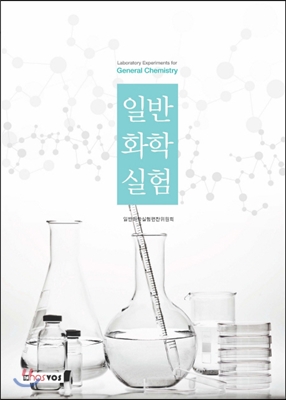
General chemistry experiments
 |
Description
Book Introduction
This general chemistry laboratory textbook includes a one-semester course from glassblowing to luminol reactions, and a two-semester course from density measurement to hand warmer making, including explanations of laboratory precautions and laboratory equipment, covering a one-year curriculum.
Each experiment is designed to be feasible under current conditions, is consistent with general chemical theory, and is designed to stimulate interest in science.
Before the experiment, it contains an explanation of the basic theory related to the content of the experiment, the method and precautions for the experimental process, as well as any problems that may be encountered during the experiment, and the contents of the results report to be written after the experiment.
Therefore, in this class, the professor and teaching assistant provide guidance on the theory and experimental methods for proper experiments, and students must plan the experiments and cooperate with their group members to conduct the experiments.
Additionally, to prevent laboratory safety accidents, students should always be familiar with the response manual, and the roles and responsibilities of professors and teaching assistants should always be known when conducting experiments.
Upon completing this course, students will be able to develop the ability to independently find data suited to a given purpose, develop an experimental plan based on this data, conduct experiments collaboratively, and finally analyze the results to identify problems.
With this purpose in mind, this textbook does not significantly change the basic content of previous general chemistry laboratory textbooks, but adds essential content and several interesting chemistry experiments that will stimulate students' interest and curiosity in chemistry.
I sincerely hope that the contents of this textbook will provide all students taking general chemistry lab courses with an opportunity to develop interest and curiosity in chemistry, as well as a variety of scientific ways of thinking.
Each experiment is designed to be feasible under current conditions, is consistent with general chemical theory, and is designed to stimulate interest in science.
Before the experiment, it contains an explanation of the basic theory related to the content of the experiment, the method and precautions for the experimental process, as well as any problems that may be encountered during the experiment, and the contents of the results report to be written after the experiment.
Therefore, in this class, the professor and teaching assistant provide guidance on the theory and experimental methods for proper experiments, and students must plan the experiments and cooperate with their group members to conduct the experiments.
Additionally, to prevent laboratory safety accidents, students should always be familiar with the response manual, and the roles and responsibilities of professors and teaching assistants should always be known when conducting experiments.
Upon completing this course, students will be able to develop the ability to independently find data suited to a given purpose, develop an experimental plan based on this data, conduct experiments collaboratively, and finally analyze the results to identify problems.
With this purpose in mind, this textbook does not significantly change the basic content of previous general chemistry laboratory textbooks, but adds essential content and several interesting chemistry experiments that will stimulate students' interest and curiosity in chemistry.
I sincerely hope that the contents of this textbook will provide all students taking general chemistry lab courses with an opportunity to develop interest and curiosity in chemistry, as well as a variety of scientific ways of thinking.
index
Laboratory Precautions 09
01 Glassworking 19
02 Crystallization-recrystallization of solids 29
03 Synthesis of iron sulfate 41
04 Water Quality Test 47
05 Acid-Base Titration 55
06 Oxidation-reduction titration 65
07 Determination of gas constant (R) 75
08 Soap Making 85
09 Aspirin Synthesis 93
10 Polymer Synthesis - Flubber Manufacturing 101
11 Fragrance Extraction 109
12 Copper plating 117
13 Chemical reaction rate 125
14 Making a Glow Stick 135
15 Luminol reaction 145
16 Density Measurement 151
17 Chemical Garden 159
18 Paper Chromatography 167
19 Nylon Manufacturing 175
20 Molecular Weight Measurement by Freezing Point Depression 183
21 Chelate Titration: Determination of Magnesium 197
22 Iodine titration method 207
23 Le Chatelier's Principle 215
24 pH Measurement 225
25 Recording Heat Measurement 235
26 Qualitative Analysis of Group 1 Cations 243
27 Qualitative Analysis of Group 3 Cations 255
28 Qualitative Analysis of Group 5 Cations 265
29 Anion Qualitative Analysis 275
30 Hand Warmer Production 283
Appendix 291
01 Glassworking 19
02 Crystallization-recrystallization of solids 29
03 Synthesis of iron sulfate 41
04 Water Quality Test 47
05 Acid-Base Titration 55
06 Oxidation-reduction titration 65
07 Determination of gas constant (R) 75
08 Soap Making 85
09 Aspirin Synthesis 93
10 Polymer Synthesis - Flubber Manufacturing 101
11 Fragrance Extraction 109
12 Copper plating 117
13 Chemical reaction rate 125
14 Making a Glow Stick 135
15 Luminol reaction 145
16 Density Measurement 151
17 Chemical Garden 159
18 Paper Chromatography 167
19 Nylon Manufacturing 175
20 Molecular Weight Measurement by Freezing Point Depression 183
21 Chelate Titration: Determination of Magnesium 197
22 Iodine titration method 207
23 Le Chatelier's Principle 215
24 pH Measurement 225
25 Recording Heat Measurement 235
26 Qualitative Analysis of Group 1 Cations 243
27 Qualitative Analysis of Group 3 Cations 255
28 Qualitative Analysis of Group 5 Cations 265
29 Anion Qualitative Analysis 275
30 Hand Warmer Production 283
Appendix 291
GOODS SPECIFICS
- Date of publication: February 15, 2017
- Page count, weight, size: 292 pages | 176*248mm
- ISBN13: 9788970925691
- ISBN10: 8970925694
You may also like
카테고리
korean


korean

![GQ KOREA Mark (Monthly): December [2025]](http://librairie.coreenne.fr/cdn/shop/files/8ef265dbbfbf186523ed75ba7319009d.jpg?v=1765340328&width=3840)


