

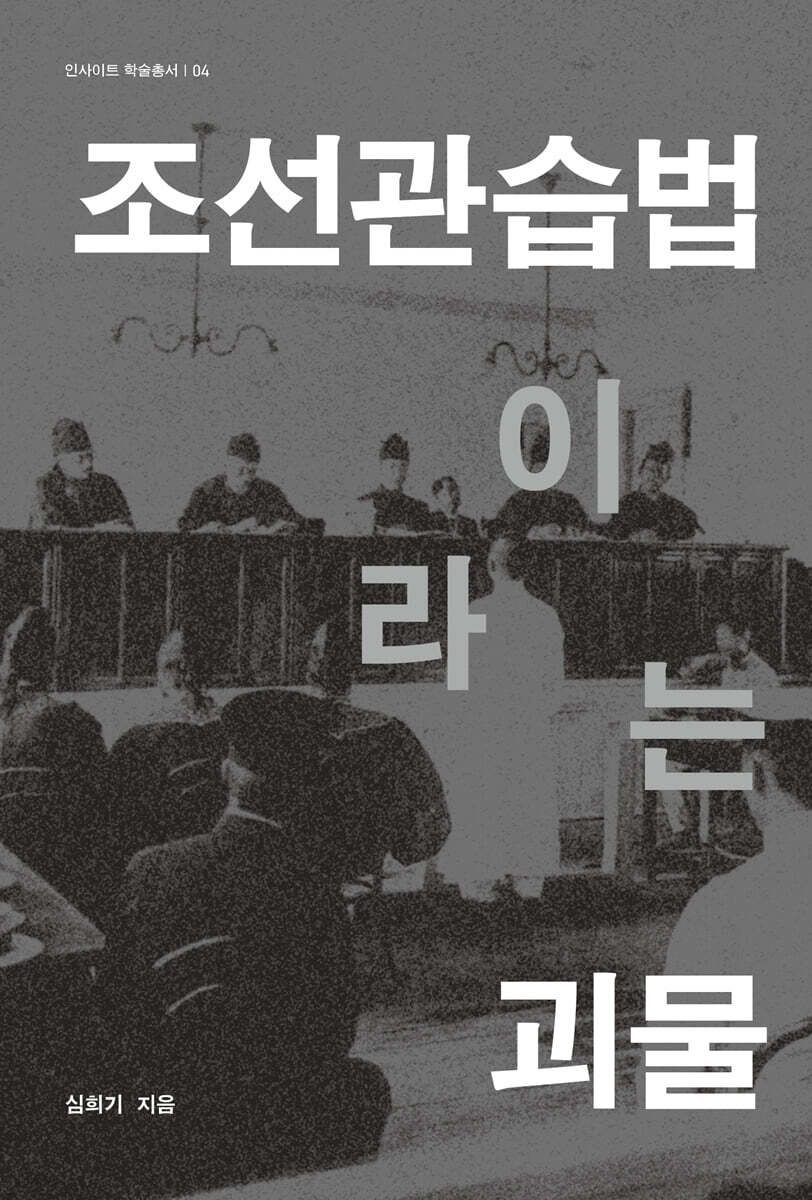
The monster called Joseon customary law
 |
Description
Book Introduction
The negative legacy of colonial rule,
Korean customary law created by the Japanese
Kenzaburo Oe, the second Japanese to win the Nobel Prize in Literature, said in a 2014 interview, “Japan invaded China and made the land and people of Korea Japanese.
There has been no atonement whatsoever for Japan's atrocities in Asia.
“At least those of us who remember the war should remember and atone for what happened in Asia throughout our lives,” he said.
One of the things that Japan did in Asia was to record the customs of Taiwan and Korea in Japanese.
Many later generations regard the record as the basis for the customary law of the two countries.
This book is a work that traces the reality of Joseon customary law recorded in Japanese and argues that its essence was 'created'.
In this book, the author analyzes basic historical materials written by Japanese judicial officials during the Japanese colonial period, who investigated and recorded the customary laws of the Joseon and Korean Empire eras, and argues that these records are fictional norms created by claiming that “customary laws did not exist.”
That is, I will try to argue this from the perspective that the so-called 'Joseon customary law' was not something that was passed down from the end of the Joseon Dynasty, but was created during the colonial period as a product of colonial management.
Furthermore, I predict that the monster known as Joseon customary law was so cleverly constructed that even if the theory of its creation is raised, the attitude of the Korean judiciary and the existing academic community will not be greatly shaken.
According to this book, the idea that customary law existed in Joseon and the Korean Empire is a fantasy without historical basis.
Some readers may have the preconceived notion that if we say that customary law did not exist, we are belittling that era as barbaric.
But the claim that customary law did not exist does not in any way establish the period as barbaric.
In Joseon, the rulers created numerous written laws, including the Gyeongguk Daejeon, and used them as legal foundations.
In addition, the Song officials of the Joseon Dynasty handled private disputes based on reason, humanity, and the principles of nature, and in many cases strongly recommended compromise and concession between the parties involved.
The assumption that, in the absence of written laws, the Songguan would have naturally relied on customary norms is unfounded.
Korean customary law created by the Japanese
Kenzaburo Oe, the second Japanese to win the Nobel Prize in Literature, said in a 2014 interview, “Japan invaded China and made the land and people of Korea Japanese.
There has been no atonement whatsoever for Japan's atrocities in Asia.
“At least those of us who remember the war should remember and atone for what happened in Asia throughout our lives,” he said.
One of the things that Japan did in Asia was to record the customs of Taiwan and Korea in Japanese.
Many later generations regard the record as the basis for the customary law of the two countries.
This book is a work that traces the reality of Joseon customary law recorded in Japanese and argues that its essence was 'created'.
In this book, the author analyzes basic historical materials written by Japanese judicial officials during the Japanese colonial period, who investigated and recorded the customary laws of the Joseon and Korean Empire eras, and argues that these records are fictional norms created by claiming that “customary laws did not exist.”
That is, I will try to argue this from the perspective that the so-called 'Joseon customary law' was not something that was passed down from the end of the Joseon Dynasty, but was created during the colonial period as a product of colonial management.
Furthermore, I predict that the monster known as Joseon customary law was so cleverly constructed that even if the theory of its creation is raised, the attitude of the Korean judiciary and the existing academic community will not be greatly shaken.
According to this book, the idea that customary law existed in Joseon and the Korean Empire is a fantasy without historical basis.
Some readers may have the preconceived notion that if we say that customary law did not exist, we are belittling that era as barbaric.
But the claim that customary law did not exist does not in any way establish the period as barbaric.
In Joseon, the rulers created numerous written laws, including the Gyeongguk Daejeon, and used them as legal foundations.
In addition, the Song officials of the Joseon Dynasty handled private disputes based on reason, humanity, and the principles of nature, and in many cases strongly recommended compromise and concession between the parties involved.
The assumption that, in the absence of written laws, the Songguan would have naturally relied on customary norms is unfounded.
- You can preview some of the book's contents.
Preview
index
5 at the beginning of the book
Opening Remarks: Joseon Customary Laws Created by the Japanese 11
Part 1: Family and Inheritance
Chapter 1: Creation of Australian Inheritance Categories
1.
Oda's conceptual categorization 19
2.
Similarities between Oda and Hozumi's Concepts 30
3.
Joseon's inheritance customs 41
4.
Weaknesses in Research and Arguments Regarding Australian Inheritance 45
5.
Conclusion 55
Chapter 2: Distorted Discourse on the Inheritance of Joseon Rituals
1.
59 Joseon Dynasty Cases That Provoked the Discourse on Ancestral Rites
2.
The Concept of Inheritance in Japan Around 1900
3.
A Critical Review of the Discourse on Ancestral Rites and Inheritance 79
4.
Conclusion 85
Chapter 3: Creation of Core Categories of Customary Law of Kinship and Inheritance
1.
Question 87 Regarding the Core Categories of the Meiji Civil Code, Section on Relatives and Inheritance
2.
Comparison of the "Customs Investigation Report" and the Resolution of the Old Officials and Institutions Investigation Committee 115
3.
The Reality of the Resolution of the Old Government and System Investigation Committee 124
4.
Conclusion 131
Part 2: Property Rights
Chapter 4: Creation of the Concept of Statutory Ground Rights under Customary Law
1.
138 areas of widespread non-customary, unknown, and uninvestigated practices
2.
Comparison of the "First Draft Table of Regional Customs Movements" and the "Customs Survey Report" 152
3.
Discourse on the Legal Nature of Reclamation Tenancy 156
4.
Analysis of the Chosun High Court Decision 166
5.
Why the Records in the "Customs Investigation Report" Are Unreliable 171
6.
Conclusion 190
Chapter 5 Creation of Grave Site Rights under Customary Law
1.
Continuity between the current Supreme Court and the Chosun High Court decisions 196
2.
The Weakness of Argumentation in Civil Law 202
3.
The Illogicality of the "Civil Customs Answer Collection" 212
4.
Forestry Governance in Joseon as Seen Through the 2017 En banc Ruling 222
5.
Conclusion 223
Chapter 6: Creation of a legal system that treats land and buildings as separate real estate
1.
Japanese Records and Korean Researchers' Blind Trust 229
2.
Household Transactions in Joseon before 1876 232
3.
244 The seller's name written on the sales slip
4.
253 Domestic Sales in Joseon after 1906
5.
An attempt to view buildings and sites separately 261
6.
Conclusion 266
Part 3: The Myth and Demythologization of Customary Law
Chapter 7: A Comprehensive Evaluation of Joseon Customary Law
1.
The Reckless Assumption that There Is Only One Customary Law 273
2.
Anti-customary ideas aimed at extracting national customary law 274
3.
Reliability of the information provider 284
4.
The Anti-Anthropological Contradiction of Authoritative Verification 292
5.
Choi Byeong-ju, a Korean judge obsessed with Hozumi's customary law theory, 294
6.
Conclusion 298
Chapter 8: Legal Basis Used by Local Officials in Joseon Dynasty Sasong
1.
Written Law of the Joseon Dynasty 302
2.
Why Joseon's National Artifacts Were Artificially Established Laws 307
3.
The Vulgar and the Example 313
4.
Reason 328, just and natural
5.
Considering the circumstances, 329
6.
Discourse on the implementation of the right to clan 330
7.
Solomonic Judgment Transcending Written Law, Justice 331
8.
Conclusion 336
Closing Remarks: Demolishing the Monster and Myth of Joseon Customary Law 339
Opening Remarks: Joseon Customary Laws Created by the Japanese 11
Part 1: Family and Inheritance
Chapter 1: Creation of Australian Inheritance Categories
1.
Oda's conceptual categorization 19
2.
Similarities between Oda and Hozumi's Concepts 30
3.
Joseon's inheritance customs 41
4.
Weaknesses in Research and Arguments Regarding Australian Inheritance 45
5.
Conclusion 55
Chapter 2: Distorted Discourse on the Inheritance of Joseon Rituals
1.
59 Joseon Dynasty Cases That Provoked the Discourse on Ancestral Rites
2.
The Concept of Inheritance in Japan Around 1900
3.
A Critical Review of the Discourse on Ancestral Rites and Inheritance 79
4.
Conclusion 85
Chapter 3: Creation of Core Categories of Customary Law of Kinship and Inheritance
1.
Question 87 Regarding the Core Categories of the Meiji Civil Code, Section on Relatives and Inheritance
2.
Comparison of the "Customs Investigation Report" and the Resolution of the Old Officials and Institutions Investigation Committee 115
3.
The Reality of the Resolution of the Old Government and System Investigation Committee 124
4.
Conclusion 131
Part 2: Property Rights
Chapter 4: Creation of the Concept of Statutory Ground Rights under Customary Law
1.
138 areas of widespread non-customary, unknown, and uninvestigated practices
2.
Comparison of the "First Draft Table of Regional Customs Movements" and the "Customs Survey Report" 152
3.
Discourse on the Legal Nature of Reclamation Tenancy 156
4.
Analysis of the Chosun High Court Decision 166
5.
Why the Records in the "Customs Investigation Report" Are Unreliable 171
6.
Conclusion 190
Chapter 5 Creation of Grave Site Rights under Customary Law
1.
Continuity between the current Supreme Court and the Chosun High Court decisions 196
2.
The Weakness of Argumentation in Civil Law 202
3.
The Illogicality of the "Civil Customs Answer Collection" 212
4.
Forestry Governance in Joseon as Seen Through the 2017 En banc Ruling 222
5.
Conclusion 223
Chapter 6: Creation of a legal system that treats land and buildings as separate real estate
1.
Japanese Records and Korean Researchers' Blind Trust 229
2.
Household Transactions in Joseon before 1876 232
3.
244 The seller's name written on the sales slip
4.
253 Domestic Sales in Joseon after 1906
5.
An attempt to view buildings and sites separately 261
6.
Conclusion 266
Part 3: The Myth and Demythologization of Customary Law
Chapter 7: A Comprehensive Evaluation of Joseon Customary Law
1.
The Reckless Assumption that There Is Only One Customary Law 273
2.
Anti-customary ideas aimed at extracting national customary law 274
3.
Reliability of the information provider 284
4.
The Anti-Anthropological Contradiction of Authoritative Verification 292
5.
Choi Byeong-ju, a Korean judge obsessed with Hozumi's customary law theory, 294
6.
Conclusion 298
Chapter 8: Legal Basis Used by Local Officials in Joseon Dynasty Sasong
1.
Written Law of the Joseon Dynasty 302
2.
Why Joseon's National Artifacts Were Artificially Established Laws 307
3.
The Vulgar and the Example 313
4.
Reason 328, just and natural
5.
Considering the circumstances, 329
6.
Discourse on the implementation of the right to clan 330
7.
Solomonic Judgment Transcending Written Law, Justice 331
8.
Conclusion 336
Closing Remarks: Demolishing the Monster and Myth of Joseon Customary Law 339
Publisher's Review
The monster known as "Joseon Customary Law" still flexing its muscles? Demolishing the myth.
The 'Korean Customary Law' written by Japanese people in Japanese from 1906 to 1945 is scattered throughout laws related to family registration, such as the 'Customary Investigation Report', 'Civil Customary Answer Collection', and 'Korean High Court Decision Record'.
Surprisingly, even after liberation, the judiciary of the Republic of Korea regards this record as a golden rule and uses it as a standard for trials.
That is, even now, 80 years after independence from colonial rule, the Supreme Court of Korea has repeatedly recognized various aspects of Joseon's customary law in the fields of kinship, inheritance, property rights, and clan relations, and has handled civil disputes accordingly.
During the Japanese colonial period, it was stipulated (Joseon Civil Code) that customary law would be applied only to the areas of kinship, inheritance, and property rights, but the Civil Code of the Republic of Korea, which came into effect in 1960, did not limit the areas and applied customary law as a secondary source of law in the absence of a written law, thus dramatically expanding the areas in which customary law could be applied.
It even reached a point where the recognition and application of customary law was questioned by the Constitutional Court.
It can be said that the 'myth of customary law' is unfolding.
In addition, for numerous other issues, the Supreme Court and other courts and administrative departments generally still use the Joseon customary law declared by the courts at all levels under the Government-General of Korea during the Residency-General and Japanese colonial periods and recorded by the administrative agencies as the basis for their trials.
This book is divided into three parts. Part 1 selects three issues from the field of kinship and inheritance, and Part 2 selects three issues from the field of property rights, and argues for their operationality.
Part 3 comprehensively reviews the nature of the so-called Joseon customary law fabricated by Japanese lawyers, judges, and administrators during the Japanese colonial period, taking as a mirror the academic discussion on African customary law created by the British in Africa. Then, it empirically examines the records of the Sasong (詞訟) of the lowest-ranking local officials in the late Joseon Dynasty and the late Joseon Dynasty to suggest the form of Sasong.
The 'Korean Customary Law' written by Japanese people in Japanese from 1906 to 1945 is scattered throughout laws related to family registration, such as the 'Customary Investigation Report', 'Civil Customary Answer Collection', and 'Korean High Court Decision Record'.
Surprisingly, even after liberation, the judiciary of the Republic of Korea regards this record as a golden rule and uses it as a standard for trials.
That is, even now, 80 years after independence from colonial rule, the Supreme Court of Korea has repeatedly recognized various aspects of Joseon's customary law in the fields of kinship, inheritance, property rights, and clan relations, and has handled civil disputes accordingly.
During the Japanese colonial period, it was stipulated (Joseon Civil Code) that customary law would be applied only to the areas of kinship, inheritance, and property rights, but the Civil Code of the Republic of Korea, which came into effect in 1960, did not limit the areas and applied customary law as a secondary source of law in the absence of a written law, thus dramatically expanding the areas in which customary law could be applied.
It even reached a point where the recognition and application of customary law was questioned by the Constitutional Court.
It can be said that the 'myth of customary law' is unfolding.
In addition, for numerous other issues, the Supreme Court and other courts and administrative departments generally still use the Joseon customary law declared by the courts at all levels under the Government-General of Korea during the Residency-General and Japanese colonial periods and recorded by the administrative agencies as the basis for their trials.
This book is divided into three parts. Part 1 selects three issues from the field of kinship and inheritance, and Part 2 selects three issues from the field of property rights, and argues for their operationality.
Part 3 comprehensively reviews the nature of the so-called Joseon customary law fabricated by Japanese lawyers, judges, and administrators during the Japanese colonial period, taking as a mirror the academic discussion on African customary law created by the British in Africa. Then, it empirically examines the records of the Sasong (詞訟) of the lowest-ranking local officials in the late Joseon Dynasty and the late Joseon Dynasty to suggest the form of Sasong.
GOODS SPECIFICS
- Date of issue: March 6, 2025
- Page count, weight, size: 416 pages | 708g | 146*217*30mm
- ISBN13: 9791157076499
- ISBN10: 1157076491
You may also like
카테고리
korean


korean

![GQ KOREA Mark (Monthly): December [2025]](http://librairie.coreenne.fr/cdn/shop/files/8ef265dbbfbf186523ed75ba7319009d.jpg?v=1765340328&width=3840)


