

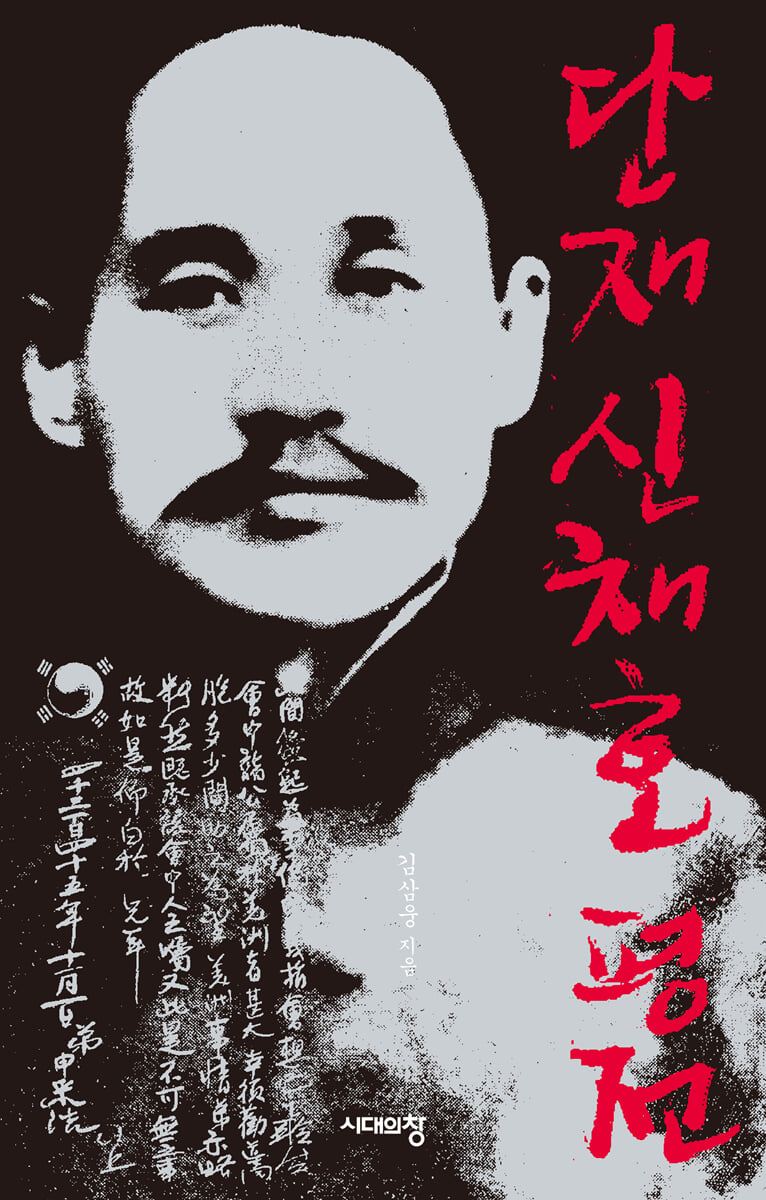
Biography of Danjae Shin Chae-ho
 |
Description
Book Introduction
A noble revolutionary who lived a life of struggle between the self and the non-self.
In the history of the independence movement, there is probably no figure who is respected by both North and South Korea as much as Mr. Danjae.
After liberation, in the midst of intense ideological conflict, the independence fighters did not recognize each other based on their ideologies, but the teacher was respected as a great revolutionary, as much as the achievements he left behind.
But just as North and South Korea lost one side of their history to the point of going to war, we are still making the mistake of not even being able to restore the teacher's nationality.
This book is also a masterpiece by the author who researched the life of Danjae and continuously discovered new materials by following his footsteps.
This book includes photos of the teacher taken when he was admitted to prison, which the author obtained through several visits to Lushun Prison, and also introduces an anecdote about obtaining two volumes of the magazine "Cheongo" in Yanbian and introducing them to the domestic media.
Danjae's life was as fierce, as agonizing, as noble, as unwavering as the definition of history, which he called the "struggle between A and Bia." He lived the life of a revolutionary without a single flaw.
Moreover, the achievements the teacher left behind, as well as the weight of his life, are a typical example of today's true intellectuals.
In the history of the independence movement, there is probably no figure who is respected by both North and South Korea as much as Mr. Danjae.
After liberation, in the midst of intense ideological conflict, the independence fighters did not recognize each other based on their ideologies, but the teacher was respected as a great revolutionary, as much as the achievements he left behind.
But just as North and South Korea lost one side of their history to the point of going to war, we are still making the mistake of not even being able to restore the teacher's nationality.
This book is also a masterpiece by the author who researched the life of Danjae and continuously discovered new materials by following his footsteps.
This book includes photos of the teacher taken when he was admitted to prison, which the author obtained through several visits to Lushun Prison, and also introduces an anecdote about obtaining two volumes of the magazine "Cheongo" in Yanbian and introducing them to the domestic media.
Danjae's life was as fierce, as agonizing, as noble, as unwavering as the definition of history, which he called the "struggle between A and Bia." He lived the life of a revolutionary without a single flaw.
Moreover, the achievements the teacher left behind, as well as the weight of his life, are a typical example of today's true intellectuals.
index
Note
At the beginning of the book
Chapter 1: Why Danjae Shin Chae-ho Now?
A life of 57 years without a single flaw / Leading the anti-Japanese press as editor-in-chief of the Daehan Maeil Shinbo / A determination that refused to change even a single particle / A resignation from a nation that transcended the times
Chapter 2: Departing for Exile on the Eve of National Destruction
Young exiles crossing the Yalu River / New People's Association leaders and the resolution to go into exile / A silent lecture at Osan School in Jeongju / The Liberation Association's "Notice" and "Notice"
Chapter 3: Born in a remote mountain village and became a doctor at Sungkyunkwan University
Born into a fallen family/ Educated by his grandfather, known as a genius of Shandong/ Unfortunate adolescence and failed first marriage/ Entered Sungkyunkwan and broadened his horizons of both new and old learning
Chapter 4: Appearance as a Commentator for the Hwangseong Shinmun
A gloomy landscape from the year of Eulsa / Emergence as a young enlightenment journalist and thinker / Illustration from the days of the Hwangseong Newspaper
Chapter 5: The Patriotic Enlightenment Movement and the Vanguard of National Salvation Media
The origin of the national press, the 『Daehan Maeil Shinbo』 / Wrote famous editorials in the 『Daehan Maeil Shinbo』 / Participated in social movements such as the National Debt Redemption Movement / Wrote historical biographies, promoted patriotism / Wrote editorials such as 『Doksa Shinron』 / Left without regrets when the 『Daehan Maeil Shinbo』 was corrupted / A natural-born journalist / Nanga thought as the national vein
Chapter 6: Research on Ancient History and Visit to Goguryeo Ruins in the West Gando Region
At the invitation of Brother Yun Se-bok, he went to the West Gando/ A place where he developed an understanding of ancient history and a national view of history/ Recorded the tombs and steles with a six-dimensional scale/ He laments the destruction of relics and sites by the Chinese.
Chapter 7: The Beijing Era of Research, Writing, and Preparation for the Independence Movement
Wrote the national epic 『Dream Sky』 / Hell that imprisons nationality and traitors / Deeply participated in the Great Religion Movement / Wrote editorials for 『Zhonghuabo』 and 『Beijing Daily』 / Small religious community but good person with no stenography / Infiltrated the homeland to arrange the marriage of his niece / Participated in the announcement of the "Muo Independence Declaration"
Chapter 8 Participation in the Establishment of the Provisional Government of the Republic of Korea
The March 1st Movement became a wildfire, establishing the Provisional Government/ Outraged by Syngman Rhee's theory of mandated rule/ Criticized the Provisional Government's diplomatic theories/ Developed a theory of armed struggle and broke with the Provisional Government/ As editor-in-chief of Shindaehan, fought the Japanese and the Provisional Government with the press/ The Provisional Government attempted to shut down Shindaehan
Chapter 9: The Exile Magazine "Cheongo"
Publishing a Chinese-language anti-Japanese magazine on his own / Inaugural address filled with the will to fight against Japanese colonial rule and save the nation
Chapter 10: Joining Hands with the Uiyoldan and Writing the "Joseon Revolutionary Declaration"
The alliance between Shin Chae-ho and Kim Won-bong / The fierce struggle of Kim Won-bong and the Uiyoldan / The completion of a declaration with a fiery tone / The contents of the "Joseon Revolutionary Declaration" / The historical evaluation of the "immortal literature"
Chapter 11: From Heroic History to People's History
Writing the "Damuldan Declaration" and lecturing on Joseon history / Punishing high-ranking spy Kim Dal-ha / Announcing the "Declaration of Sweeping Out" of pro-Japanese elements / The role of Damuldan in the times / Participating as a central committee member of the New People's Association / The struggle between "A" and "Bia" / Writing "Nanggaek's New Year's Manpil" / Criticizing intellectuals who turned a blind eye to the colonial reality / The true nature of intellectuals, intellectuals in action / The martyrdom of pure intellectuals
Chapter 12: Struggle to Eradicate Japanese Imperialism through Anarchism
Accepting anarchism as an ideology of national liberation / Influenced by Kropotkin, Kodoku, and Yu Sa-bok / An equal society without ethnic rule or privileged classes / The limits of anarchism and nationalism
Chapter 13: Arrest due to foreign nationality incident
Activities of the Anarchist Eastern Federation / Anarchist Eastern Federation "Manifesto" / A blood-written letter calling for the awakening of the people / An uprising to raise funds for the publication of a magazine
Chapter 14: Grasping my aching heart, I walk along the path of destiny.
Refusal to publish a newspaper serial using the Japanese era name / Lushun Prison, where Ahn Jung-geun and Danjae died / Record of a prison interview with Danjae, a master of Joseon history
Chapter 15: Humans Alive and Dead
The magnificent 'Symphony of Fate' of fifty-seven years / A handful of ashes in a prison crematorium / The world's greatest man, Danjae Shin Chae-ho
supplement
In front of the spirit tablet of the late Danjae / Father Danjae / Visiting Danjae's grave / Song Danjae's grave / Song Danjae / Danjae's story / Danjae Shin Chae-ho, the star of nationalism / Danjae Shin Chae-ho / Lamenting the famous Danjae / Danjae and Udang / Preface / Mourning Danjae / Plans for the restoration of Danjae Shin Chae-ho's nationality and publication of his complete works
Classification and creation date of posthumous works
annual report
pictorial
At the beginning of the book
Chapter 1: Why Danjae Shin Chae-ho Now?
A life of 57 years without a single flaw / Leading the anti-Japanese press as editor-in-chief of the Daehan Maeil Shinbo / A determination that refused to change even a single particle / A resignation from a nation that transcended the times
Chapter 2: Departing for Exile on the Eve of National Destruction
Young exiles crossing the Yalu River / New People's Association leaders and the resolution to go into exile / A silent lecture at Osan School in Jeongju / The Liberation Association's "Notice" and "Notice"
Chapter 3: Born in a remote mountain village and became a doctor at Sungkyunkwan University
Born into a fallen family/ Educated by his grandfather, known as a genius of Shandong/ Unfortunate adolescence and failed first marriage/ Entered Sungkyunkwan and broadened his horizons of both new and old learning
Chapter 4: Appearance as a Commentator for the Hwangseong Shinmun
A gloomy landscape from the year of Eulsa / Emergence as a young enlightenment journalist and thinker / Illustration from the days of the Hwangseong Newspaper
Chapter 5: The Patriotic Enlightenment Movement and the Vanguard of National Salvation Media
The origin of the national press, the 『Daehan Maeil Shinbo』 / Wrote famous editorials in the 『Daehan Maeil Shinbo』 / Participated in social movements such as the National Debt Redemption Movement / Wrote historical biographies, promoted patriotism / Wrote editorials such as 『Doksa Shinron』 / Left without regrets when the 『Daehan Maeil Shinbo』 was corrupted / A natural-born journalist / Nanga thought as the national vein
Chapter 6: Research on Ancient History and Visit to Goguryeo Ruins in the West Gando Region
At the invitation of Brother Yun Se-bok, he went to the West Gando/ A place where he developed an understanding of ancient history and a national view of history/ Recorded the tombs and steles with a six-dimensional scale/ He laments the destruction of relics and sites by the Chinese.
Chapter 7: The Beijing Era of Research, Writing, and Preparation for the Independence Movement
Wrote the national epic 『Dream Sky』 / Hell that imprisons nationality and traitors / Deeply participated in the Great Religion Movement / Wrote editorials for 『Zhonghuabo』 and 『Beijing Daily』 / Small religious community but good person with no stenography / Infiltrated the homeland to arrange the marriage of his niece / Participated in the announcement of the "Muo Independence Declaration"
Chapter 8 Participation in the Establishment of the Provisional Government of the Republic of Korea
The March 1st Movement became a wildfire, establishing the Provisional Government/ Outraged by Syngman Rhee's theory of mandated rule/ Criticized the Provisional Government's diplomatic theories/ Developed a theory of armed struggle and broke with the Provisional Government/ As editor-in-chief of Shindaehan, fought the Japanese and the Provisional Government with the press/ The Provisional Government attempted to shut down Shindaehan
Chapter 9: The Exile Magazine "Cheongo"
Publishing a Chinese-language anti-Japanese magazine on his own / Inaugural address filled with the will to fight against Japanese colonial rule and save the nation
Chapter 10: Joining Hands with the Uiyoldan and Writing the "Joseon Revolutionary Declaration"
The alliance between Shin Chae-ho and Kim Won-bong / The fierce struggle of Kim Won-bong and the Uiyoldan / The completion of a declaration with a fiery tone / The contents of the "Joseon Revolutionary Declaration" / The historical evaluation of the "immortal literature"
Chapter 11: From Heroic History to People's History
Writing the "Damuldan Declaration" and lecturing on Joseon history / Punishing high-ranking spy Kim Dal-ha / Announcing the "Declaration of Sweeping Out" of pro-Japanese elements / The role of Damuldan in the times / Participating as a central committee member of the New People's Association / The struggle between "A" and "Bia" / Writing "Nanggaek's New Year's Manpil" / Criticizing intellectuals who turned a blind eye to the colonial reality / The true nature of intellectuals, intellectuals in action / The martyrdom of pure intellectuals
Chapter 12: Struggle to Eradicate Japanese Imperialism through Anarchism
Accepting anarchism as an ideology of national liberation / Influenced by Kropotkin, Kodoku, and Yu Sa-bok / An equal society without ethnic rule or privileged classes / The limits of anarchism and nationalism
Chapter 13: Arrest due to foreign nationality incident
Activities of the Anarchist Eastern Federation / Anarchist Eastern Federation "Manifesto" / A blood-written letter calling for the awakening of the people / An uprising to raise funds for the publication of a magazine
Chapter 14: Grasping my aching heart, I walk along the path of destiny.
Refusal to publish a newspaper serial using the Japanese era name / Lushun Prison, where Ahn Jung-geun and Danjae died / Record of a prison interview with Danjae, a master of Joseon history
Chapter 15: Humans Alive and Dead
The magnificent 'Symphony of Fate' of fifty-seven years / A handful of ashes in a prison crematorium / The world's greatest man, Danjae Shin Chae-ho
supplement
In front of the spirit tablet of the late Danjae / Father Danjae / Visiting Danjae's grave / Song Danjae's grave / Song Danjae / Danjae's story / Danjae Shin Chae-ho, the star of nationalism / Danjae Shin Chae-ho / Lamenting the famous Danjae / Danjae and Udang / Preface / Mourning Danjae / Plans for the restoration of Danjae Shin Chae-ho's nationality and publication of his complete works
Classification and creation date of posthumous works
annual report
pictorial
Publisher's Review
A noble revolutionary who lived a life of struggle between the self and the non-self.
In the history of the independence movement, there is probably no figure who is respected by both North and South Korea as much as Mr. Danjae.
After liberation, in the midst of intense ideological conflict, the independence fighters did not recognize each other based on their ideologies, but the teacher was respected as a great revolutionary, as much as the achievements he left behind.
But just as North and South Korea lost one side of their history to the point of going to war, we are still making the mistake of not even being able to restore the teacher's nationality.
This book is also a masterpiece by the author who researched the life of Danjae and continuously discovered new materials by following his footsteps.
This book includes photos of the teacher taken when he was admitted to prison, which the author obtained through several visits to Lushun Prison, and also introduces an anecdote about obtaining two volumes of the magazine "Cheongo" in Yanbian and introducing them to the domestic media.
Danjae's life was as fierce, as agonizing, as noble, as unwavering as the definition of history, which he called the "struggle between A and Bia." He lived the life of a revolutionary without a single flaw.
Moreover, the achievements the teacher left behind, as well as the weight of his life, are a typical example of today's true intellectuals.
First of all, as a historian, Danjae not only established the framework of national history, but also criticized not only the restoration of ancient Korean history but also the errors and distorted history of wrong history.
The 'Nanga Thought', which can be said to be the most characteristic feature of this single-minded history, can be seen as part of an effort to clarify the direction of the nation and the zeitgeist by establishing a modern spirit of independence and self-reliance for the restoration of national sovereignty while clarifying the origin, transmission, and function of national thought.
In addition, the numerous works left behind by the teacher, including “Ancient History of Joseon,” exemplify the typical form of historical research today.
As a journalist, Danjae can be said to be determination itself.
Not only had the teacher served as an editorial writer for the Hwangseong Shinmun, but he also helped write the second half of Jang Ji-yeon's [Siil Ya Bang Seong Dae Gok], informing the world of the injustice of the Eulsa Treaty.
In addition, as the editor-in-chief of the Daehan Maeil Shinbo, he published editorials and articles that strongly criticized the Japanese invasion and the treasonous acts of pro-Japanese collaborators. During this period, in order to promote patriotism and self-reliance, he translated foreign historical books (Biographies of the Three Founding Heroes of Italy) and wrote biographies of Korean historical heroes (Biographies of Yi Sun-sin, the Greatest Naval Commander, and Choi Do-tong, the Greatest Leader of the East).
Even after going into exile, the teacher continued to work on the Daedong Gongbo and was active as the editor-in-chief of the Gwonup Shinmun.
He also founded the anti-Japanese newspaper Shindaehan to oppose Syngman Rhee's provisional government, and published his personal magazine Cheongo, burning with passion for the anti-Japanese struggle that united Chinese and Koreans and for the study of ancient Korean history.
As an independence activist, Danjae was a revolutionary who maintained an armed struggle line.
The [Joseon Revolutionary Declaration], also known as the [Declaration of the Righteous Army], is considered to have the most outstanding content and sentences among the numerous declarations of independence from the Japanese colonial period.
In this declaration, the teacher called for a direct revolution by the people through violence.
He also wrote the declaration of the Damuldan that executed the high-ranking spy Kim Dal-ha, and lived with the group members and lectured on Joseon history and other topics.
Finally, as an anarchist, Danjae sought to build a society in which “all ruling institutions and means used by the ruling class to oppress the people or deceive the people into submitting to their rule and extinguishing the revolution are destroyed, all social systems established by the ruling class are abolished and no longer exist, the private property system is denied, and a system of sharing all goods is implemented, so that there is no exploitation whatsoever.”
While some criticize the teacher's ideological change, others view it as a more advanced stage of nationalism.
This book provides a glimpse into the anarchist Shin Chae-ho's side by presenting various opinions and criticisms about him.
The life of Danjae Shin Chae-ho was that of a desperate revolutionary who devoted everything to fighting against the Japanese during a time of national ruin, and who desired nothing else but the overthrow of Japanese imperialism and the liberation of his country.
The teacher fought to overthrow Japanese imperialism, mobilizing every possible means and method—including the press, literature, history, Daejonggyo, anarchism, and the Uiyoldan—and today, he has left behind great achievements in each field, demonstrating the epitome of a true intellectual.
Now that China's historical distortions, represented by the Northeast Project, are causing resentment among the Korean people, the teacher has already researched and restored our brilliant ancient history in the name of national history.
The reason we seek to retrace the teacher's footsteps even a little today is to clear up the wrongs of history and restore a correct historical consciousness.
In the history of the independence movement, there is probably no figure who is respected by both North and South Korea as much as Mr. Danjae.
After liberation, in the midst of intense ideological conflict, the independence fighters did not recognize each other based on their ideologies, but the teacher was respected as a great revolutionary, as much as the achievements he left behind.
But just as North and South Korea lost one side of their history to the point of going to war, we are still making the mistake of not even being able to restore the teacher's nationality.
This book is also a masterpiece by the author who researched the life of Danjae and continuously discovered new materials by following his footsteps.
This book includes photos of the teacher taken when he was admitted to prison, which the author obtained through several visits to Lushun Prison, and also introduces an anecdote about obtaining two volumes of the magazine "Cheongo" in Yanbian and introducing them to the domestic media.
Danjae's life was as fierce, as agonizing, as noble, as unwavering as the definition of history, which he called the "struggle between A and Bia." He lived the life of a revolutionary without a single flaw.
Moreover, the achievements the teacher left behind, as well as the weight of his life, are a typical example of today's true intellectuals.
First of all, as a historian, Danjae not only established the framework of national history, but also criticized not only the restoration of ancient Korean history but also the errors and distorted history of wrong history.
The 'Nanga Thought', which can be said to be the most characteristic feature of this single-minded history, can be seen as part of an effort to clarify the direction of the nation and the zeitgeist by establishing a modern spirit of independence and self-reliance for the restoration of national sovereignty while clarifying the origin, transmission, and function of national thought.
In addition, the numerous works left behind by the teacher, including “Ancient History of Joseon,” exemplify the typical form of historical research today.
As a journalist, Danjae can be said to be determination itself.
Not only had the teacher served as an editorial writer for the Hwangseong Shinmun, but he also helped write the second half of Jang Ji-yeon's [Siil Ya Bang Seong Dae Gok], informing the world of the injustice of the Eulsa Treaty.
In addition, as the editor-in-chief of the Daehan Maeil Shinbo, he published editorials and articles that strongly criticized the Japanese invasion and the treasonous acts of pro-Japanese collaborators. During this period, in order to promote patriotism and self-reliance, he translated foreign historical books (Biographies of the Three Founding Heroes of Italy) and wrote biographies of Korean historical heroes (Biographies of Yi Sun-sin, the Greatest Naval Commander, and Choi Do-tong, the Greatest Leader of the East).
Even after going into exile, the teacher continued to work on the Daedong Gongbo and was active as the editor-in-chief of the Gwonup Shinmun.
He also founded the anti-Japanese newspaper Shindaehan to oppose Syngman Rhee's provisional government, and published his personal magazine Cheongo, burning with passion for the anti-Japanese struggle that united Chinese and Koreans and for the study of ancient Korean history.
As an independence activist, Danjae was a revolutionary who maintained an armed struggle line.
The [Joseon Revolutionary Declaration], also known as the [Declaration of the Righteous Army], is considered to have the most outstanding content and sentences among the numerous declarations of independence from the Japanese colonial period.
In this declaration, the teacher called for a direct revolution by the people through violence.
He also wrote the declaration of the Damuldan that executed the high-ranking spy Kim Dal-ha, and lived with the group members and lectured on Joseon history and other topics.
Finally, as an anarchist, Danjae sought to build a society in which “all ruling institutions and means used by the ruling class to oppress the people or deceive the people into submitting to their rule and extinguishing the revolution are destroyed, all social systems established by the ruling class are abolished and no longer exist, the private property system is denied, and a system of sharing all goods is implemented, so that there is no exploitation whatsoever.”
While some criticize the teacher's ideological change, others view it as a more advanced stage of nationalism.
This book provides a glimpse into the anarchist Shin Chae-ho's side by presenting various opinions and criticisms about him.
The life of Danjae Shin Chae-ho was that of a desperate revolutionary who devoted everything to fighting against the Japanese during a time of national ruin, and who desired nothing else but the overthrow of Japanese imperialism and the liberation of his country.
The teacher fought to overthrow Japanese imperialism, mobilizing every possible means and method—including the press, literature, history, Daejonggyo, anarchism, and the Uiyoldan—and today, he has left behind great achievements in each field, demonstrating the epitome of a true intellectual.
Now that China's historical distortions, represented by the Northeast Project, are causing resentment among the Korean people, the teacher has already researched and restored our brilliant ancient history in the name of national history.
The reason we seek to retrace the teacher's footsteps even a little today is to clear up the wrongs of history and restore a correct historical consciousness.
GOODS SPECIFICS
- Date of issue: March 1, 2025
- Page count, weight, size: 520 pages | 120*188*35mm
- ISBN13: 9788959408610
- ISBN10: 8959408611
You may also like
카테고리
korean


korean

![GQ KOREA Mark (Monthly): December [2025]](http://librairie.coreenne.fr/cdn/shop/files/8ef265dbbfbf186523ed75ba7319009d.jpg?v=1765340328&width=3840)


