

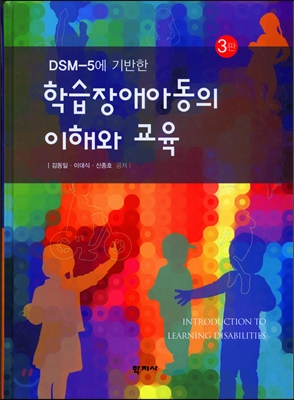
Understanding and Educating Children with Learning Disabilities
 |
Description
Book Introduction
This is the third revised edition of 『Understanding and Educating Children with Learning Disabilities』, following the first edition in 2003 and the second edition in 2009. The authors aimed to include all the contents and items necessary for a representative textbook in the field of learning disabilities.
This book was designed to reflect the various academic, institutional, and practical changes in learning disabilities to date, and was written based on reflection and consideration of how the field of learning disabilities should evolve in the future.
This book covers a wide range of topics to demystify learning disabilities and provide theoretical armament and practical interventions for understanding and educating the children around us today.
This book was designed to reflect the various academic, institutional, and practical changes in learning disabilities to date, and was written based on reflection and consideration of how the field of learning disabilities should evolve in the future.
This book covers a wide range of topics to demystify learning disabilities and provide theoretical armament and practical interventions for understanding and educating the children around us today.
index
Preface to the 3rd edition
Preface to the 1st edition
Chapter 1.
Conceptual Understanding of Learning Disabilities
1.
Introduction
2.
Historical stages of learning disability research
1) History of learning disabilities in the West
2) History of learning disabilities in Korea
3.
Definition of Learning Disabilities
1) Definition of learning disabilities in the United States
2) Definition of learning disabilities in Korea
3) Things to consider when defining learning disabilities
4.
Closing remarks
Chapter 2.
Characteristics, causes, diagnosis, and identification of learning disabilities
1.
Introduction
2.
Characteristics of learning disabilities
1) Overall academic characteristics
2) Cognitive ability
3) Attention and body-perceptual characteristics
4) Social, emotional, and behavioral characteristics
3.
Causes of learning disabilities
1) Genetic factors
2) Medical factors
3) Environmental factors
4.
Diagnosis and identification of learning disabilities
1) Prevalence of learning disabilities
2) Diagnosis and identification of learning disabilities
3) Example of a Learning Disability Assessment: Screening Procedure
4) Things to consider when diagnosing and identifying learning disabilities
5.
Closing remarks
Chapter 3.
Learning Disabilities and Neurobiological Links
1.
Overview of the Neurological Controversy
2.
The debate surrounding the underlying causes of learning disabilities
1) Initial explanation of the underlying causes of learning disabilities.
2) Debate regarding the claim that learning disabilities are a social construct
3.
Neurobiological Mechanisms of Learning: The Human Brain
1) Basic unit of brain structure: nerve cells
2) Structure and function of the brain
3) The highest level of the brain
4.
Neurobiological correlates of learning disabilities
1) Introduction to brain imaging methods
2) Factors that negatively affect brain development: Focusing on the possibility of causing learning disabilities
3) Neurobiological characteristics of children with learning disabilities
4) Brain research to confirm the effectiveness of intervention
5.
Pitfalls and Educational Criticism of Brain-Based Education
1) Brain-based education methods proposed to promote learning
2) Critical evaluation
6.
Closing remarks
Chapter 4.
Early diagnosis and intervention for learning disabilities
1.
Early developmental delays and learning disabilities
2.
Conceptual Understanding of Early Childhood Special Education
1) Definition, target, and prevalence of early childhood special education
2) Theoretical basis for early childhood special education programs
3) Recent trends in early childhood special education and learning disabilities
3.
Preschool Language and Cognitive Development and School-Age Learning
1) Understanding language and cognitive development in infancy and preschool years
2) Predicting school-age learning using language and cognitive development in preschool children
4.
Early diagnosis of learning disabilities
1) Difficulty in early diagnosis of learning disabilities
2) Early screening and diagnosis of learning disabilities
3) Screening tools for early screening and diagnosis of learning disabilities
5.
Early Intervention for Learning Disabilities
1) Conceptual definition and types of early intervention
2) Basis for early intervention
3) Characteristics of effective early intervention programs and introduction of the program
6.
Closing remarks
Chapter 5.
Reading assessment
1.
Reading as a basic learning skill
2.
Conceptual understanding of reading
1) Functional composition of reading
2) Development of reading skills: Focusing on word recognition skills
3) Definition of reading disability
3.
Conceptual understanding of reading tests
1) Curriculum-centered measurement reading test
2) Reading comprehension assessment centered on the reading process
3) Informal reading test
4) Reading tests used in learning disability diagnostic evaluations
5) Case Analysis: Basic Learning Skills Reading Test
4.
Reading Assessment as a Problem-Solving Process
Chapter 6.
Reading Map
1.
Reading and School Learning Overview
2.
Causes of reading problems
1) Initial understanding of the causes of reading problems
2) Recent understanding of the causes of reading problems
3.
Introduction to the Reading Education Program
1) Traditional reading teaching method: Multisensory reading teaching method
2) Teaching methods to improve word recognition skills
3) Teaching methods to improve reading comprehension skills
4.
Closing remarks
Chapter 7.
Writing Assessment and Guidance
1.
Overview of Writing
1) Writing
2) Spelling
3) Writing
2.
Writing Development and Learning Issues
1) Writing development
2) Writing and learning problems
3.
Writing Assessment
1) Evaluation by response type: direct evaluation and indirect evaluation
2) Evaluation system: subjective and objective evaluation
4.
Effective Writing Assessment Methods
5.
Writing guidance
1) Process-based approach to writing
2) Guidelines for writing instruction
Chapter 8.
Math Assessment
1.
The severity of math learning problems
2.
Types and characteristics of mathematics learning disabilities
1) Types of mathematics learning disabilities
2) General characteristics of mathematics learning disabilities
3) Learning characteristics by content area
3.
Diagnosis and Evaluation of Mathematical Learning Disabilities
1) Mathematics assessment area
2) Diagnosis and identification methods for mathematics learning disabilities
4.
Alternative Approaches to Mathematics Assessment
1) Portfolio Evaluation
2) Error analysis
5.
Closing remarks
Chapter 9.
Math instruction
1.
Conditions for effective mathematics teaching methods
2.
General mathematics teaching methods
1) Explicit instruction
2) Reorganization of the curriculum and teaching process
3) Direct teaching method
4) Utilization of goal structure using curriculum-centered measurement data
5) Guidance of students with learning disabilities in mathematics in integrated classes
6) Use of computers and calculators
3.
Math teaching methods for each area
1) Understanding basic mathematical concepts
2) Centuries
3) Place value
4) Arithmetic operations
5) Fraction
6) Sentence problem application
7) Sense of shape and space
4.
Closing remarks
Chapter 10.
Assessment and guidance of social skills
1.
The importance of social skills
2.
The concept of social skills
3.
Social skills in children with learning disabilities
1) Characteristics of social skills in children with learning disabilities
2) Causes of social skill deficiencies in children with learning disabilities
4.
Assessment of social skills
1) Components of social skills and social competence
2) Social skills assessment method
3) Linkage between evaluation purpose and evaluation method
5.
Map of social skills
1) Effectiveness of existing social skills training programs
2) Key social skills training programs
3) Characteristics of effective existing social skills training programs
4) General guidelines for teaching real-world social skills
6.
nonverbal learning disability
Chapter 11.
Guidance on learning subjects (social studies, science) for children with learning disabilities
1.
Skills required for learning social studies and science subjects
2.
The needs of students with learning disabilities in social studies and science classes
3.
Evidence-Based Social Studies and Science Curriculum Education Case Studies
1) Results of previous research on effective teaching methods
2) Approach using learning strategies
3) Diversifying content presentation and learning modes
4) Utilizing interaction between teachers and learners
5) Restructuring and reorganization of content
6) Motivating students to learn by asking key questions
4.
Closing remarks
Chapter 12.
Learning strategy guidance to improve basic learning skills
1.
Learning Strategy Education Overview
2.
Conceptual definition of learning strategies, necessity and purpose of learning strategy education
1) What is a learning strategy?
2) The need for learning strategy education for students with learning disabilities.
3) Purpose of the learning strategy program: To develop self-regulated learning skills.
3.
A Critical Review of Traditional Information Processing-Centered Learning Strategy Programs
1) Perception-centered education program
2) Memory-focused education program
4.
Specific learning strategy program for students with learning disabilities
1) Reciprocal teaching method
2) Process-centered teaching method
3) Strategic mediation model
4) Integrated strategic teaching method
5.
Introduction to learning strategies for each learning activity
1) Learning strategies to assist reading learning activities
2) Learning strategies to support writing learning activities
3) Learning strategies to support math learning activities
6.
Learning Counseling and Academic Consulting Strategies for Students with Learning Disabilities
1) Cognitive strategy utilization strategy
2) Strategies to strengthen learning motivation
3) Strategies to overcome learned helplessness
7.
Factors to Consider for Successful Implementation of Learning Strategy Programs
1) The need for curriculum development that integrates content and strategy.
2) The need for teacher preparation through teacher education and retraining programs.
3) The need to develop a learning strategy evaluation method
8.
Closing remarks
Chapter 13.
Issues and Prospects of Learning Disabilities
1.
Theoretical and Practical Challenges of Learning Disabilities
1) Diagnosis and identification of learning disabilities
2) Coexistence and intersection of learning disabilities
3) A life-long approach to learning disabilities
4) Alternative explanations for learning disabilities
2.
A New Approach to Diagnosing Learning Disabilities
1) DSM-5 Revision and Learning Disability Diagnosis
2) Movement toward learning disability diagnosis using cognitive diagnostic models
3.
Defining Next-Generation Learning Disabilities: A Hybrid Diagnostic Model
References
Search
Preface to the 1st edition
Chapter 1.
Conceptual Understanding of Learning Disabilities
1.
Introduction
2.
Historical stages of learning disability research
1) History of learning disabilities in the West
2) History of learning disabilities in Korea
3.
Definition of Learning Disabilities
1) Definition of learning disabilities in the United States
2) Definition of learning disabilities in Korea
3) Things to consider when defining learning disabilities
4.
Closing remarks
Chapter 2.
Characteristics, causes, diagnosis, and identification of learning disabilities
1.
Introduction
2.
Characteristics of learning disabilities
1) Overall academic characteristics
2) Cognitive ability
3) Attention and body-perceptual characteristics
4) Social, emotional, and behavioral characteristics
3.
Causes of learning disabilities
1) Genetic factors
2) Medical factors
3) Environmental factors
4.
Diagnosis and identification of learning disabilities
1) Prevalence of learning disabilities
2) Diagnosis and identification of learning disabilities
3) Example of a Learning Disability Assessment: Screening Procedure
4) Things to consider when diagnosing and identifying learning disabilities
5.
Closing remarks
Chapter 3.
Learning Disabilities and Neurobiological Links
1.
Overview of the Neurological Controversy
2.
The debate surrounding the underlying causes of learning disabilities
1) Initial explanation of the underlying causes of learning disabilities.
2) Debate regarding the claim that learning disabilities are a social construct
3.
Neurobiological Mechanisms of Learning: The Human Brain
1) Basic unit of brain structure: nerve cells
2) Structure and function of the brain
3) The highest level of the brain
4.
Neurobiological correlates of learning disabilities
1) Introduction to brain imaging methods
2) Factors that negatively affect brain development: Focusing on the possibility of causing learning disabilities
3) Neurobiological characteristics of children with learning disabilities
4) Brain research to confirm the effectiveness of intervention
5.
Pitfalls and Educational Criticism of Brain-Based Education
1) Brain-based education methods proposed to promote learning
2) Critical evaluation
6.
Closing remarks
Chapter 4.
Early diagnosis and intervention for learning disabilities
1.
Early developmental delays and learning disabilities
2.
Conceptual Understanding of Early Childhood Special Education
1) Definition, target, and prevalence of early childhood special education
2) Theoretical basis for early childhood special education programs
3) Recent trends in early childhood special education and learning disabilities
3.
Preschool Language and Cognitive Development and School-Age Learning
1) Understanding language and cognitive development in infancy and preschool years
2) Predicting school-age learning using language and cognitive development in preschool children
4.
Early diagnosis of learning disabilities
1) Difficulty in early diagnosis of learning disabilities
2) Early screening and diagnosis of learning disabilities
3) Screening tools for early screening and diagnosis of learning disabilities
5.
Early Intervention for Learning Disabilities
1) Conceptual definition and types of early intervention
2) Basis for early intervention
3) Characteristics of effective early intervention programs and introduction of the program
6.
Closing remarks
Chapter 5.
Reading assessment
1.
Reading as a basic learning skill
2.
Conceptual understanding of reading
1) Functional composition of reading
2) Development of reading skills: Focusing on word recognition skills
3) Definition of reading disability
3.
Conceptual understanding of reading tests
1) Curriculum-centered measurement reading test
2) Reading comprehension assessment centered on the reading process
3) Informal reading test
4) Reading tests used in learning disability diagnostic evaluations
5) Case Analysis: Basic Learning Skills Reading Test
4.
Reading Assessment as a Problem-Solving Process
Chapter 6.
Reading Map
1.
Reading and School Learning Overview
2.
Causes of reading problems
1) Initial understanding of the causes of reading problems
2) Recent understanding of the causes of reading problems
3.
Introduction to the Reading Education Program
1) Traditional reading teaching method: Multisensory reading teaching method
2) Teaching methods to improve word recognition skills
3) Teaching methods to improve reading comprehension skills
4.
Closing remarks
Chapter 7.
Writing Assessment and Guidance
1.
Overview of Writing
1) Writing
2) Spelling
3) Writing
2.
Writing Development and Learning Issues
1) Writing development
2) Writing and learning problems
3.
Writing Assessment
1) Evaluation by response type: direct evaluation and indirect evaluation
2) Evaluation system: subjective and objective evaluation
4.
Effective Writing Assessment Methods
5.
Writing guidance
1) Process-based approach to writing
2) Guidelines for writing instruction
Chapter 8.
Math Assessment
1.
The severity of math learning problems
2.
Types and characteristics of mathematics learning disabilities
1) Types of mathematics learning disabilities
2) General characteristics of mathematics learning disabilities
3) Learning characteristics by content area
3.
Diagnosis and Evaluation of Mathematical Learning Disabilities
1) Mathematics assessment area
2) Diagnosis and identification methods for mathematics learning disabilities
4.
Alternative Approaches to Mathematics Assessment
1) Portfolio Evaluation
2) Error analysis
5.
Closing remarks
Chapter 9.
Math instruction
1.
Conditions for effective mathematics teaching methods
2.
General mathematics teaching methods
1) Explicit instruction
2) Reorganization of the curriculum and teaching process
3) Direct teaching method
4) Utilization of goal structure using curriculum-centered measurement data
5) Guidance of students with learning disabilities in mathematics in integrated classes
6) Use of computers and calculators
3.
Math teaching methods for each area
1) Understanding basic mathematical concepts
2) Centuries
3) Place value
4) Arithmetic operations
5) Fraction
6) Sentence problem application
7) Sense of shape and space
4.
Closing remarks
Chapter 10.
Assessment and guidance of social skills
1.
The importance of social skills
2.
The concept of social skills
3.
Social skills in children with learning disabilities
1) Characteristics of social skills in children with learning disabilities
2) Causes of social skill deficiencies in children with learning disabilities
4.
Assessment of social skills
1) Components of social skills and social competence
2) Social skills assessment method
3) Linkage between evaluation purpose and evaluation method
5.
Map of social skills
1) Effectiveness of existing social skills training programs
2) Key social skills training programs
3) Characteristics of effective existing social skills training programs
4) General guidelines for teaching real-world social skills
6.
nonverbal learning disability
Chapter 11.
Guidance on learning subjects (social studies, science) for children with learning disabilities
1.
Skills required for learning social studies and science subjects
2.
The needs of students with learning disabilities in social studies and science classes
3.
Evidence-Based Social Studies and Science Curriculum Education Case Studies
1) Results of previous research on effective teaching methods
2) Approach using learning strategies
3) Diversifying content presentation and learning modes
4) Utilizing interaction between teachers and learners
5) Restructuring and reorganization of content
6) Motivating students to learn by asking key questions
4.
Closing remarks
Chapter 12.
Learning strategy guidance to improve basic learning skills
1.
Learning Strategy Education Overview
2.
Conceptual definition of learning strategies, necessity and purpose of learning strategy education
1) What is a learning strategy?
2) The need for learning strategy education for students with learning disabilities.
3) Purpose of the learning strategy program: To develop self-regulated learning skills.
3.
A Critical Review of Traditional Information Processing-Centered Learning Strategy Programs
1) Perception-centered education program
2) Memory-focused education program
4.
Specific learning strategy program for students with learning disabilities
1) Reciprocal teaching method
2) Process-centered teaching method
3) Strategic mediation model
4) Integrated strategic teaching method
5.
Introduction to learning strategies for each learning activity
1) Learning strategies to assist reading learning activities
2) Learning strategies to support writing learning activities
3) Learning strategies to support math learning activities
6.
Learning Counseling and Academic Consulting Strategies for Students with Learning Disabilities
1) Cognitive strategy utilization strategy
2) Strategies to strengthen learning motivation
3) Strategies to overcome learned helplessness
7.
Factors to Consider for Successful Implementation of Learning Strategy Programs
1) The need for curriculum development that integrates content and strategy.
2) The need for teacher preparation through teacher education and retraining programs.
3) The need to develop a learning strategy evaluation method
8.
Closing remarks
Chapter 13.
Issues and Prospects of Learning Disabilities
1.
Theoretical and Practical Challenges of Learning Disabilities
1) Diagnosis and identification of learning disabilities
2) Coexistence and intersection of learning disabilities
3) A life-long approach to learning disabilities
4) Alternative explanations for learning disabilities
2.
A New Approach to Diagnosing Learning Disabilities
1) DSM-5 Revision and Learning Disability Diagnosis
2) Movement toward learning disability diagnosis using cognitive diagnostic models
3.
Defining Next-Generation Learning Disabilities: A Hybrid Diagnostic Model
References
Search
Publisher's Review
This is the third revised edition of 『Understanding and Educating Children with Learning Disabilities』, following the first edition in 2003 and the second edition in 2009. The authors aimed to include all the contents and items necessary for a representative textbook in the field of learning disabilities.
This book was designed to reflect the various academic, institutional, and practical changes in learning disabilities to date, and was written based on reflection and consideration of how the field of learning disabilities should evolve in the future.
This book covers a wide range of topics to demystify learning disabilities and provide theoretical armament and practical interventions for understanding and educating the children around us today.
What sets this third edition apart from the second is that, as academic and practical interest in learning disabilities broadens and deepens, it additionally discusses new brain-based approaches, refinements in teaching methods and assessment, and expansion of content curriculum beyond basic skills.
Moreover, with the inclusion of the concept of learning disabilities and a practical educational approach to diagnosis in DSM-5, the need for integrated ideas encompassing education, medicine, and psychology is increasingly demanded. Therefore, this book aims to cover content based on more sophisticated concepts and practical applications of learning disabilities.
This book is for professionals and parents who want to learn more about learning disabilities, as well as college and graduate students who aspire to become teachers or school counselors.
This book was designed to reflect the various academic, institutional, and practical changes in learning disabilities to date, and was written based on reflection and consideration of how the field of learning disabilities should evolve in the future.
This book covers a wide range of topics to demystify learning disabilities and provide theoretical armament and practical interventions for understanding and educating the children around us today.
What sets this third edition apart from the second is that, as academic and practical interest in learning disabilities broadens and deepens, it additionally discusses new brain-based approaches, refinements in teaching methods and assessment, and expansion of content curriculum beyond basic skills.
Moreover, with the inclusion of the concept of learning disabilities and a practical educational approach to diagnosis in DSM-5, the need for integrated ideas encompassing education, medicine, and psychology is increasingly demanded. Therefore, this book aims to cover content based on more sophisticated concepts and practical applications of learning disabilities.
This book is for professionals and parents who want to learn more about learning disabilities, as well as college and graduate students who aspire to become teachers or school counselors.
GOODS SPECIFICS
- Date of publication: February 25, 2016
- Format: Hardcover book binding method guide
- Page count, weight, size: 446 pages | 1,070g | 190*260*24mm
- ISBN13: 9788999708978
- ISBN10: 8999708977
You may also like
카테고리
korean


korean

![GQ KOREA Mark (Monthly): December [2025]](http://librairie.coreenne.fr/cdn/shop/files/8ef265dbbfbf186523ed75ba7319009d.jpg?v=1765340328&width=3840)


