

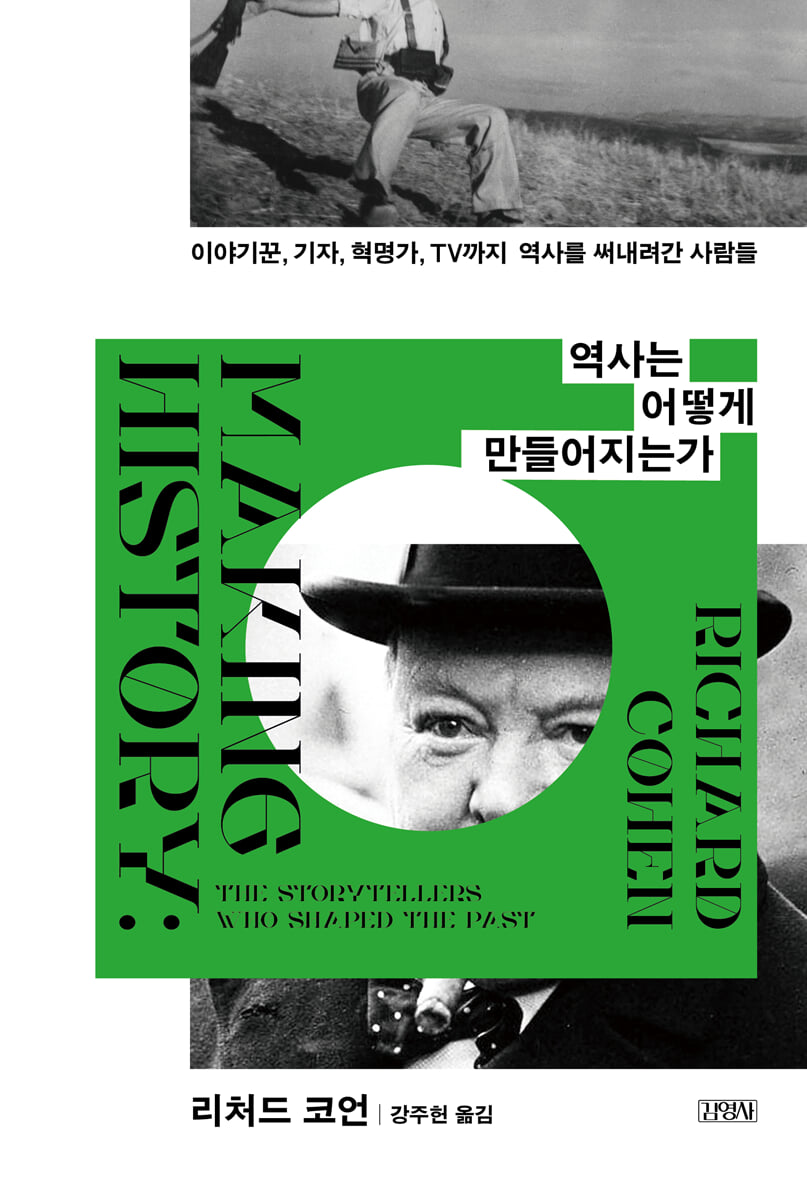
How History Is Made
 |
Description
Book Introduction
The most fundamental questions and answers about history
“Before studying history, first study the historian.”
History is one of the important tools we use to understand the world.
History not only defines the past, but also has a profound impact on the present and future.
It can become a political issue that sparks sharp conflict, such as the controversy over the removal of the bust of General Hong Beom-do from the Korea Military Academy, or a current issue of conflict between countries, such as the issue of forced labor at the Sado Mine.
Why do records of the past, long past, provoke conflict and confrontation? How is history made, and who writes it? "How History Is Made" challenges the most fundamental questions about history.
“Before studying history, first study the historian.”
History is one of the important tools we use to understand the world.
History not only defines the past, but also has a profound impact on the present and future.
It can become a political issue that sparks sharp conflict, such as the controversy over the removal of the bust of General Hong Beom-do from the Korea Military Academy, or a current issue of conflict between countries, such as the issue of forced labor at the Sado Mine.
Why do records of the past, long past, provoke conflict and confrontation? How is history made, and who writes it? "How History Is Made" challenges the most fundamental questions about history.
- You can preview some of the book's contents.
Preview
index
introduction
Overture: The Monk Outside the Monastery
Chapter 1 The Dawn of History: Herodotus or Thucydides?
Chapter 2: Cinema in Ancient Rome: From Polybius to Suetonius
Chapter 3 History and Myth: The Birth of the Bible
Chapter 4: Closing the Past: Muslim Views of History
Chapter 5 Medieval Chroniclers: Crafting the Story of a Nation
Chapter 6: How a Historian Became a Man: Niccolo Machiavelli
Chapter 7 William Shakespeare: Historical Plays
Chapter 8 Cao Cao and the Disloyal Puppet: Voltaire and Gibbon
Chapter 9: Declaring Science: From Macaulay to von Ranke
Chapter 10: Once Upon a Time: The Novelist as a Master of Shaping the Past
Chapter 11 The American Civil War: Various Interpretations of the Civil War
Chapter 12: On Shoes, Ships, and Sealing Wax: The Annales School
Chapter 13: Red Historians: From Karl Marx to Eric Hobsbawm
History in 14 Chapters: From Julius Caesar to Ulysses S.
Until Grant
Chapter 15: Measuring History: Churchill, the History-Measuring Factory
Chapter 16: A Powerful Nemesis: The War Within Academia
Chapter 17: A Historian Who Overcame Physical Disability: John Keegan and the Soldier's Spirit
Chapter 18: Herstory - Women Historians: From Ban So to Mary Beard
Chapter 19 Who Writes Our Story? : George W.
From Williams to Abraham X.
To Kendi
Chapter 20: Bad History: Telling the Truth or Patriotism
Chapter 21: The Draft of History: Journalists and the Near Past
Chapter 22 On Television: A.
JP
From Taylor to Henry Louis Gates Jr.
Reviews
Acknowledgements
Translator's Note
main
Search
Overture: The Monk Outside the Monastery
Chapter 1 The Dawn of History: Herodotus or Thucydides?
Chapter 2: Cinema in Ancient Rome: From Polybius to Suetonius
Chapter 3 History and Myth: The Birth of the Bible
Chapter 4: Closing the Past: Muslim Views of History
Chapter 5 Medieval Chroniclers: Crafting the Story of a Nation
Chapter 6: How a Historian Became a Man: Niccolo Machiavelli
Chapter 7 William Shakespeare: Historical Plays
Chapter 8 Cao Cao and the Disloyal Puppet: Voltaire and Gibbon
Chapter 9: Declaring Science: From Macaulay to von Ranke
Chapter 10: Once Upon a Time: The Novelist as a Master of Shaping the Past
Chapter 11 The American Civil War: Various Interpretations of the Civil War
Chapter 12: On Shoes, Ships, and Sealing Wax: The Annales School
Chapter 13: Red Historians: From Karl Marx to Eric Hobsbawm
History in 14 Chapters: From Julius Caesar to Ulysses S.
Until Grant
Chapter 15: Measuring History: Churchill, the History-Measuring Factory
Chapter 16: A Powerful Nemesis: The War Within Academia
Chapter 17: A Historian Who Overcame Physical Disability: John Keegan and the Soldier's Spirit
Chapter 18: Herstory - Women Historians: From Ban So to Mary Beard
Chapter 19 Who Writes Our Story? : George W.
From Williams to Abraham X.
To Kendi
Chapter 20: Bad History: Telling the Truth or Patriotism
Chapter 21: The Draft of History: Journalists and the Near Past
Chapter 22 On Television: A.
JP
From Taylor to Henry Louis Gates Jr.
Reviews
Acknowledgements
Translator's Note
main
Search
Detailed image

Into the book
“I would like to boldly assert that there are people who have had a significant influence on our view of the past, or rather, those who ‘gave’ us our past.
The research of the wandering Greeks 2,500 years ago reflected a special kind of inquiry: geography and ethnography, philology and genealogy, sociology and anthropology, biography and psychology, imaginative recreation (art), and many other kinds of knowledge.
“Anyone who has shown such vast curiosity should be entitled to the title of ‘historian.’”
--- p.18
“Ibn Khaldun wanted to know how history unfolds over generations.
It was a new approach, not seen in Muslim writers of the past, and it seemed to anticipate not only the theories of Georg Wilhelm Friedrich Hegel, who argued that the primary purpose of the historian was not to write about the past itself, but to find a comprehensive theoretical framework that could be applied to all facts, but even the approach that Fernand Braudel advocated in the 20th century, that is, a methodology for approaching history from a long-term perspective.”
--- p.195
“Shakespeare simplified his material, arranged the secondary plots in contrasting perspectives, and harmoniously weaved everything he dealt with.
Pure invention, in the manipulation and ordering of material, far surpassing the historical writing laid down by Geoffrey of Monmouth and Henry of Huntingdon, has now become the historian's weapon.
“And so Pandora’s box was opened, and writing about the past could never be the same again.”
--- p.313
“Balzac had a grand plan to write a series of works that would examine ‘all aspects of society.’
At first Balzac titled these books 'Studies of Morality,' but they eventually became history as The Human Comedy, with its more than 2,000 characters.”
--- p.429
“The term ‘long-term’ originally meant simply ‘a long period of time,’ but in Braudel’s book it meant a method of observing beyond the time period normally used by historians.
In other words, it meant a 'way of thickening time' to focus on changes over two or three centuries, especially those in geography and the environment that move slowly and are barely perceptible.
This method allowed historians to trace long-term patterns, such as the rise and fall of particular groups, and to study how urban life, language, travel, and climate shaped human life over centuries rather than short periods of time.
“The history of politics was but the foam of the waves, and what was important was to be found far below the surface.”
--- p.551
"How did postwar Japan react to these facts? The Japanese were largely unaware of the atrocities their government had committed (even after Kim Bok-dong returned home at age 22, she lied to her family about what had happened there).
Even the Japanese tended to think of themselves as victims because they were unaware that they had invaded China.”
--- p.926
“It may be reasonable to argue that over time, methods of recording history have also evolved.
In other words, people who try to write the past differently and portray it differently are becoming more adept at uncovering and describing actual events.
Ultimately, historical works seem to progress steadily, accumulating relevant knowledge just as natural science does.”
The research of the wandering Greeks 2,500 years ago reflected a special kind of inquiry: geography and ethnography, philology and genealogy, sociology and anthropology, biography and psychology, imaginative recreation (art), and many other kinds of knowledge.
“Anyone who has shown such vast curiosity should be entitled to the title of ‘historian.’”
--- p.18
“Ibn Khaldun wanted to know how history unfolds over generations.
It was a new approach, not seen in Muslim writers of the past, and it seemed to anticipate not only the theories of Georg Wilhelm Friedrich Hegel, who argued that the primary purpose of the historian was not to write about the past itself, but to find a comprehensive theoretical framework that could be applied to all facts, but even the approach that Fernand Braudel advocated in the 20th century, that is, a methodology for approaching history from a long-term perspective.”
--- p.195
“Shakespeare simplified his material, arranged the secondary plots in contrasting perspectives, and harmoniously weaved everything he dealt with.
Pure invention, in the manipulation and ordering of material, far surpassing the historical writing laid down by Geoffrey of Monmouth and Henry of Huntingdon, has now become the historian's weapon.
“And so Pandora’s box was opened, and writing about the past could never be the same again.”
--- p.313
“Balzac had a grand plan to write a series of works that would examine ‘all aspects of society.’
At first Balzac titled these books 'Studies of Morality,' but they eventually became history as The Human Comedy, with its more than 2,000 characters.”
--- p.429
“The term ‘long-term’ originally meant simply ‘a long period of time,’ but in Braudel’s book it meant a method of observing beyond the time period normally used by historians.
In other words, it meant a 'way of thickening time' to focus on changes over two or three centuries, especially those in geography and the environment that move slowly and are barely perceptible.
This method allowed historians to trace long-term patterns, such as the rise and fall of particular groups, and to study how urban life, language, travel, and climate shaped human life over centuries rather than short periods of time.
“The history of politics was but the foam of the waves, and what was important was to be found far below the surface.”
--- p.551
"How did postwar Japan react to these facts? The Japanese were largely unaware of the atrocities their government had committed (even after Kim Bok-dong returned home at age 22, she lied to her family about what had happened there).
Even the Japanese tended to think of themselves as victims because they were unaware that they had invaded China.”
--- p.926
“It may be reasonable to argue that over time, methods of recording history have also evolved.
In other words, people who try to write the past differently and portray it differently are becoming more adept at uncovering and describing actual events.
Ultimately, historical works seem to progress steadily, accumulating relevant knowledge just as natural science does.”
--- p.1065
Publisher's Review
The truth of historical records, between subjectivity and objectivity
History is not 'given' but 'made'.
The history we see is not the actual past.
From ancient historians like Herodotus and Thucydides, to literary figures like Shakespeare, Tolstoy, and George Orwell, to modern historians, women, minorities like Black people, and star historians who became famous on TV, the history recorded by historians is a narrative that reflects the mindset and power structure of human society.
Historians are not transmitters of the past, but storytellers.
Historians' role is to connect past events into a single story and give it meaning.
Through the stage created by historians, we accept history and form our own identity and view of history.
Behind the great power of history, there are countless portraits of historians engraved.
We often unconsciously equate the word 'history' with the 'past' itself.
However, the history we read and learn is not something that is 'given', but something that is 'written' by someone.
Historian E.
H. Carr once said, “Before studying history, first study the historian.”
This means that history is not a simple list of facts, but rather the result of the perspectives and choices of those who record history.
The book begins with a discussion of how historians explore historical facts.
Herodotus's "History" is a vast record that covers a wide range of topics, including politics, culture, geography, and nationality, of the time.
Herodotus traveled to various places himself, recorded the testimonies of local people, and compared different sources to try to distinguish fact from legend.
But rather than being a passive information provider, he actively selected events and facts to create a narrative?
Just as Herodotus narrated wars and cultures, just as Thucydides analyzed human nature and political motivations to write history, just as Livy and Tacitus sought to impart moral lessons, ancient historians each wrote history in different ways, but they all show that 'history can change depending on who writes it.'
The process of tracing the birth of the Bible also clearly shows the point where historical fact and mythical propaganda diverge.
The history of the Bible reveals the truth that it was not 'given' by God, but was 'created' by editing four existing documents into one volume.
Ultimately, the Bible is a highly fictionalized and refined work born from the intersection of history and faith.
Fiction more true than fact
History as Creation and Interpretation
History is not a 'listing' of facts, but is made up of 'stories'.
Historians are not the only ones who tell these historical stories.
For a long time since ancient times, those who spoke of the past were mainly storytellers, not scholars.
This book focuses on the various ways in which history is reconstructed into fiction.
It shows how authors use 'storytelling' to make historical events more vivid and persuasive, and ultimately contribute to the narrative of history.
Shakespeare is a representative figure who shows this.
Shakespeare did not just use history as material for his plays; he used it as a way to explore historical truth.
Shakespeare portrayed Richard III as a cunning tyrant in his masterpiece [Richard III], but it is difficult to conclude from actual records that he was such a vicious person.
Nevertheless, the reason Shakespeare's historical plays were a great success in their time and are still remembered today is because they vividly portray the political conspiracies, power struggles, and individual desires hidden within historical events.
Thanks to this, we come to realize that historical events are dramas filled with emotions and desires.
The novels of great writers such as Tolstoy, Balzac, and Victor Hugo also explore the truth of an era that historians have failed to record.
In this way, writers vividly convey the overall mood and atmosphere of the times through fiction, and convey the emotions and experiences of ordinary people that historians do not address.
History is the story itself, and it is in the story that we can find the truth of the past.
Lies, fraud, and incitement that interfere with history
A prism that refracts history
History is often, if not more often than we think, manipulated, distorted, and used as a political tool.
This book introduces the dark side of history, showing how historical distortion and propaganda occur.
When recording historical events, historians not only select facts, but also choose their own perspectives and give them specific meanings.
Since World War II, Japan has been a defeated nation and has continued to raise controversy over historical distortion over responsibility for the war.
Japan has been trying to deny or downplay the Nanjing Massacre and the issue of wartime sexual slavery under the pretext of “instilling pride in the Japanese people.”
The purpose was to instill pride in the Japanese people and divert their attention from the truth through the self-deception that 'Japan is a heroic nation that fought against the West to protect Asia.'
However, this distortion of history is not exclusive to the Japanese.
Soviet historians have long been subject to the dictates of the Communist Party, and white American historians have downplayed the significance of the Civil War in the abolition of slavery.
In addition, historical distortion, denial, and manipulation occurred for various reasons.
Not only grand ideologies, but also conflicts between schools and even personal grudges between scholars can be the cause.
The reason why history is constantly embroiled in controversy over distortion, manipulation, and propaganda is fundamentally because history itself is not factual, but is conveyed to us through interpreters called “historians.”
This is why, when we read history, we should not acquire it uncritically, but rather recognize the existence of 'historians' and critically examine their arguments, distortions, and differences in interpretation.
From the history of kings and nobles to the history of all people,
The expanding realm of history and historians
The emergence of the Annales school was one of the decisive changes that changed the direction of historiography.
The pages of history, dominated by politics and war, expanded to encompass all fields of social science, starting with the Annales School.
By focusing on microscopic objects such as the fluctuations in the prices of goods and the value of currency in the Middle Ages, they captured macroscopic trends that had previously been missed in political history.
Moreover, by analyzing historical events through the impersonal lens of geography and environment, he reconstructed contemporary life.
As the scope of history expanded significantly, previously neglected entities were rediscovered.
Women were half of humanity, yet they were not even recorded.
The once neglected half of humanity is finally beginning to be incorporated into history.
As the scope of history expanded, the 'subject' of writing history also changed.
Although there was no such thing as a female historian, with some exceptions, female historians began to emerge from the academic world in earnest, riding the wave of the women's liberation movement in the 1960s, and are demonstrating their capabilities in all subjects beyond "feminist history."
Black people, who had long been treated as invisible in the United States, also emerged as protagonists in the history of Africa and the lives of black slaves, and began to write their own history as subjects rather than being evaluated by white historians.
These newly emerging historians are expanding the scope of history by combining with popular culture, politics, and social movements.
History is not fixed knowledge.
History is not only "made" but also "being made."
The question at the beginning of the book, "Who writes history?", leads to the question in the latter half, "Who will write history?"
In the past, the role of recording history was the exclusive domain of the ruling and educated classes.
In modern times, a new profession called journalists emerged and began producing the first drafts of history through news articles.
As we enter the modern era, the personal diaries and records of ordinary people who did not receive historical education have also become valuable historical sources.
『Anne Frank's Diary』 is a representative example.
Nowadays, with the development of social media and digital media, it has become very easy for the public to record, photograph, and share history.
Has it become an era where anyone can record and interpret historical events?
Only when we recognize ourselves as the subjects of history does history become not a fixed and unchanging body of knowledge, but an object that is constantly renewed and dynamic.
What we must assume when learning history is not to memorize historical facts, but to question, ponder, and reflect.
As historian Wilson Jeremiah Moses put it, “historical consciousness is neither the independent creation of professional scholars nor their exclusive property.”
Because it is we who create and write history.
This book, "How History Is Made," clearly demonstrates that history is not simply a record, but a process of interpreting the past, and that the historian's subjectivity inevitably enters into all historical records.
Moreover, it provides readers with insight into the complexity and dynamic nature of the process of pursuing historical truth, allowing them to deepen their historical thinking.
What this book emphasizes is that history is a narrative that humans constantly create and transform.
History cannot be completely objective, and changes depending on the values of the person writing it and the background of the times.
Recognizing these limitations is the first step toward a correct understanding of history.
History is not 'given' but 'made'.
The history we see is not the actual past.
From ancient historians like Herodotus and Thucydides, to literary figures like Shakespeare, Tolstoy, and George Orwell, to modern historians, women, minorities like Black people, and star historians who became famous on TV, the history recorded by historians is a narrative that reflects the mindset and power structure of human society.
Historians are not transmitters of the past, but storytellers.
Historians' role is to connect past events into a single story and give it meaning.
Through the stage created by historians, we accept history and form our own identity and view of history.
Behind the great power of history, there are countless portraits of historians engraved.
We often unconsciously equate the word 'history' with the 'past' itself.
However, the history we read and learn is not something that is 'given', but something that is 'written' by someone.
Historian E.
H. Carr once said, “Before studying history, first study the historian.”
This means that history is not a simple list of facts, but rather the result of the perspectives and choices of those who record history.
The book begins with a discussion of how historians explore historical facts.
Herodotus's "History" is a vast record that covers a wide range of topics, including politics, culture, geography, and nationality, of the time.
Herodotus traveled to various places himself, recorded the testimonies of local people, and compared different sources to try to distinguish fact from legend.
But rather than being a passive information provider, he actively selected events and facts to create a narrative?
Just as Herodotus narrated wars and cultures, just as Thucydides analyzed human nature and political motivations to write history, just as Livy and Tacitus sought to impart moral lessons, ancient historians each wrote history in different ways, but they all show that 'history can change depending on who writes it.'
The process of tracing the birth of the Bible also clearly shows the point where historical fact and mythical propaganda diverge.
The history of the Bible reveals the truth that it was not 'given' by God, but was 'created' by editing four existing documents into one volume.
Ultimately, the Bible is a highly fictionalized and refined work born from the intersection of history and faith.
Fiction more true than fact
History as Creation and Interpretation
History is not a 'listing' of facts, but is made up of 'stories'.
Historians are not the only ones who tell these historical stories.
For a long time since ancient times, those who spoke of the past were mainly storytellers, not scholars.
This book focuses on the various ways in which history is reconstructed into fiction.
It shows how authors use 'storytelling' to make historical events more vivid and persuasive, and ultimately contribute to the narrative of history.
Shakespeare is a representative figure who shows this.
Shakespeare did not just use history as material for his plays; he used it as a way to explore historical truth.
Shakespeare portrayed Richard III as a cunning tyrant in his masterpiece [Richard III], but it is difficult to conclude from actual records that he was such a vicious person.
Nevertheless, the reason Shakespeare's historical plays were a great success in their time and are still remembered today is because they vividly portray the political conspiracies, power struggles, and individual desires hidden within historical events.
Thanks to this, we come to realize that historical events are dramas filled with emotions and desires.
The novels of great writers such as Tolstoy, Balzac, and Victor Hugo also explore the truth of an era that historians have failed to record.
In this way, writers vividly convey the overall mood and atmosphere of the times through fiction, and convey the emotions and experiences of ordinary people that historians do not address.
History is the story itself, and it is in the story that we can find the truth of the past.
Lies, fraud, and incitement that interfere with history
A prism that refracts history
History is often, if not more often than we think, manipulated, distorted, and used as a political tool.
This book introduces the dark side of history, showing how historical distortion and propaganda occur.
When recording historical events, historians not only select facts, but also choose their own perspectives and give them specific meanings.
Since World War II, Japan has been a defeated nation and has continued to raise controversy over historical distortion over responsibility for the war.
Japan has been trying to deny or downplay the Nanjing Massacre and the issue of wartime sexual slavery under the pretext of “instilling pride in the Japanese people.”
The purpose was to instill pride in the Japanese people and divert their attention from the truth through the self-deception that 'Japan is a heroic nation that fought against the West to protect Asia.'
However, this distortion of history is not exclusive to the Japanese.
Soviet historians have long been subject to the dictates of the Communist Party, and white American historians have downplayed the significance of the Civil War in the abolition of slavery.
In addition, historical distortion, denial, and manipulation occurred for various reasons.
Not only grand ideologies, but also conflicts between schools and even personal grudges between scholars can be the cause.
The reason why history is constantly embroiled in controversy over distortion, manipulation, and propaganda is fundamentally because history itself is not factual, but is conveyed to us through interpreters called “historians.”
This is why, when we read history, we should not acquire it uncritically, but rather recognize the existence of 'historians' and critically examine their arguments, distortions, and differences in interpretation.
From the history of kings and nobles to the history of all people,
The expanding realm of history and historians
The emergence of the Annales school was one of the decisive changes that changed the direction of historiography.
The pages of history, dominated by politics and war, expanded to encompass all fields of social science, starting with the Annales School.
By focusing on microscopic objects such as the fluctuations in the prices of goods and the value of currency in the Middle Ages, they captured macroscopic trends that had previously been missed in political history.
Moreover, by analyzing historical events through the impersonal lens of geography and environment, he reconstructed contemporary life.
As the scope of history expanded significantly, previously neglected entities were rediscovered.
Women were half of humanity, yet they were not even recorded.
The once neglected half of humanity is finally beginning to be incorporated into history.
As the scope of history expanded, the 'subject' of writing history also changed.
Although there was no such thing as a female historian, with some exceptions, female historians began to emerge from the academic world in earnest, riding the wave of the women's liberation movement in the 1960s, and are demonstrating their capabilities in all subjects beyond "feminist history."
Black people, who had long been treated as invisible in the United States, also emerged as protagonists in the history of Africa and the lives of black slaves, and began to write their own history as subjects rather than being evaluated by white historians.
These newly emerging historians are expanding the scope of history by combining with popular culture, politics, and social movements.
History is not fixed knowledge.
History is not only "made" but also "being made."
The question at the beginning of the book, "Who writes history?", leads to the question in the latter half, "Who will write history?"
In the past, the role of recording history was the exclusive domain of the ruling and educated classes.
In modern times, a new profession called journalists emerged and began producing the first drafts of history through news articles.
As we enter the modern era, the personal diaries and records of ordinary people who did not receive historical education have also become valuable historical sources.
『Anne Frank's Diary』 is a representative example.
Nowadays, with the development of social media and digital media, it has become very easy for the public to record, photograph, and share history.
Has it become an era where anyone can record and interpret historical events?
Only when we recognize ourselves as the subjects of history does history become not a fixed and unchanging body of knowledge, but an object that is constantly renewed and dynamic.
What we must assume when learning history is not to memorize historical facts, but to question, ponder, and reflect.
As historian Wilson Jeremiah Moses put it, “historical consciousness is neither the independent creation of professional scholars nor their exclusive property.”
Because it is we who create and write history.
This book, "How History Is Made," clearly demonstrates that history is not simply a record, but a process of interpreting the past, and that the historian's subjectivity inevitably enters into all historical records.
Moreover, it provides readers with insight into the complexity and dynamic nature of the process of pursuing historical truth, allowing them to deepen their historical thinking.
What this book emphasizes is that history is a narrative that humans constantly create and transform.
History cannot be completely objective, and changes depending on the values of the person writing it and the background of the times.
Recognizing these limitations is the first step toward a correct understanding of history.
GOODS SPECIFICS
- Date of issue: February 19, 2025
- Format: Hardcover book binding method guide
- Page count, weight, size: 1,140 pages | 1,452g | 153*227*55mm
- ISBN13: 9791173320439
- ISBN10: 1173320431
You may also like
카테고리
korean


korean

![GQ KOREA Mark (Monthly): December [2025]](http://librairie.coreenne.fr/cdn/shop/files/8ef265dbbfbf186523ed75ba7319009d.jpg?v=1765340328&width=3840)


