

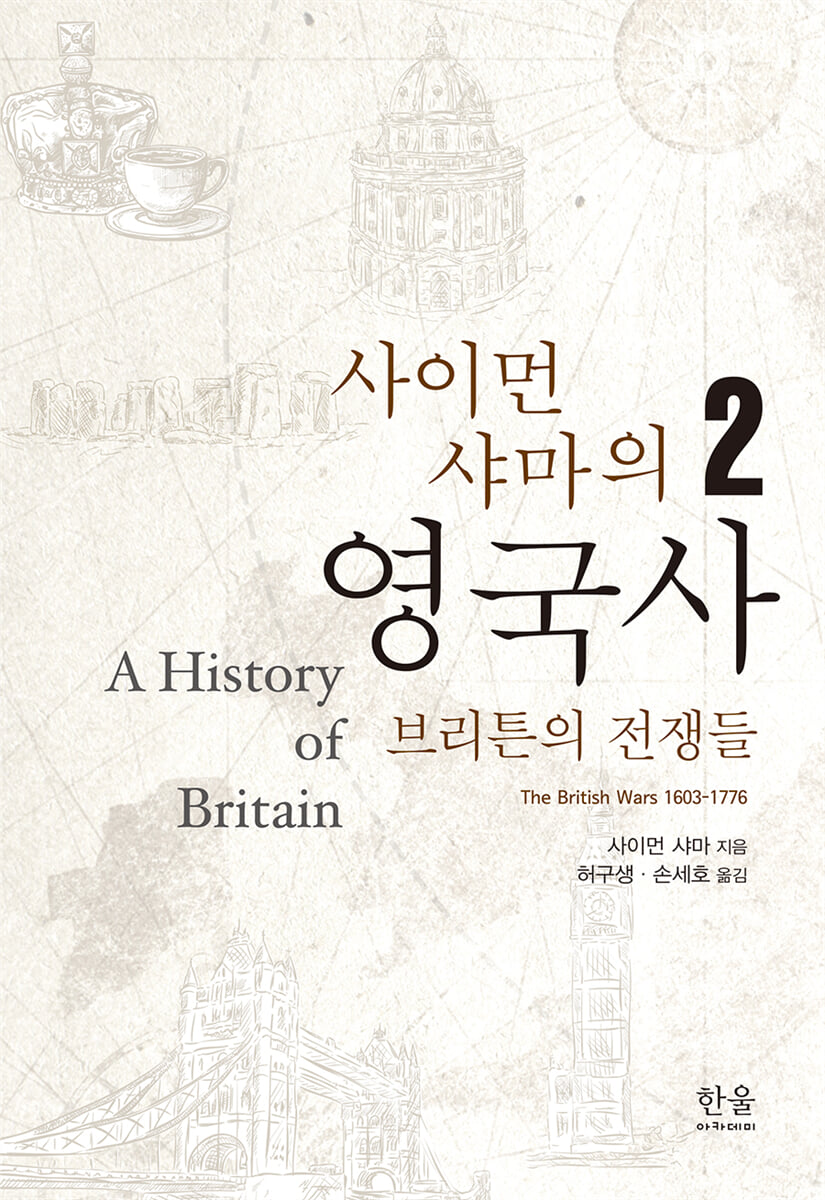
Simon Schama's History of Britain 2
 |
Description
Book Introduction
How was Great Britain born?
Professor Simon Schama's History of Britain's Wars
If you were to ask people what was the most decisive and dramatic event in British history, what would come to mind? Some would recall the English Revolution, which Crane Brinton confidently listed as the first of the four great revolutions of the world in his book, "The Anatomy of Revolution," last century.
So, what about the process by which England, Scotland, and Ireland, long separate and independent political communities, unified into "Great Britain"? Or how did Scotland, which had gradually relegated to the periphery of Britain after unification and was often considered a barren wasteland, suddenly emerge as a "hotbed of genius" in the 18th century, simultaneously producing such brilliant minds as David Hume, Adam Ferguson, and Adam Smith? Each of these moments is a masterpiece, a moment too precious to miss.
That's not all.
The formation of the United States, which has enjoyed the status of a unique superpower throughout the 20th century and even today, is literally inseparable from British history.
Why and how did the American colonies separate from Britain and become independent? And how did Britain come to rule the Indian subcontinent, once ruled by the mighty Mughal Empire? In Volume 2, Sharma magically blends and seasonings all these historical events into a delicious meal.
Professor Simon Schama's History of Britain's Wars
If you were to ask people what was the most decisive and dramatic event in British history, what would come to mind? Some would recall the English Revolution, which Crane Brinton confidently listed as the first of the four great revolutions of the world in his book, "The Anatomy of Revolution," last century.
So, what about the process by which England, Scotland, and Ireland, long separate and independent political communities, unified into "Great Britain"? Or how did Scotland, which had gradually relegated to the periphery of Britain after unification and was often considered a barren wasteland, suddenly emerge as a "hotbed of genius" in the 18th century, simultaneously producing such brilliant minds as David Hume, Adam Ferguson, and Adam Smith? Each of these moments is a masterpiece, a moment too precious to miss.
That's not all.
The formation of the United States, which has enjoyed the status of a unique superpower throughout the 20th century and even today, is literally inseparable from British history.
Why and how did the American colonies separate from Britain and become independent? And how did Britain come to rule the Indian subcontinent, once ruled by the mighty Mughal Empire? In Volume 2, Sharma magically blends and seasonings all these historical events into a delicious meal.
index
introduction
1│Reinventing Britain
2│Render unto Caesar what is Caesar's?
3│Looking forward to Leviathan
4│Unfinished Task
5│Britannia Co., Ltd.
6│The Wrong Empire
References
Search
Translator's Note
1│Reinventing Britain
2│Render unto Caesar what is Caesar's?
3│Looking forward to Leviathan
4│Unfinished Task
5│Britannia Co., Ltd.
6│The Wrong Empire
References
Search
Translator's Note
Into the book
Why did the British people bring this ordeal upon themselves? For what, exactly, did hundreds of thousands of people die? These questions have been asked often, but no matter how many questions there are, they will never be enough.
Although historians have often failed to provide answers, we can never give up on the search.
We have a duty to ask the victims whether their misfortune was meaningful.
Or perhaps we should ask whether Britain's wars were merely meaningless atrocities.
… …was their cause an unavoidable clash of principles between the ultimately irreconcilable visions of church and state?
---From "Chapter 1: Reinventing Britain"
A gruesome end awaited the conspirators.
Catesby and Thomas Percy were hunted down from their safe house in Staffordshire, beaten to death, and Catesby was found holding a picture of the Virgin Mary as he lay dying.
Their bodies were exhumed from their graves, their heads removed for proper display in the corner of the Capitol building they had planned to blow up.
Tresham died in prison in the Tower of London from some terrible urinary tract infection after making a sensational confession.
Perhaps this excruciatingly painful situation rendered the customary tortures inflicted upon him useless.
Fawkes and the rest of the conspirators were hanged quite simply, and then the hearts of those still alive were taken out and displayed to the delighted public.
---From "Chapter 1: Reinventing Britain"
The royalist army took control of the field.
Essex, of the Parliamentary army, felt it necessary to hold together the remaining army for a possible second engagement if the King decided to move on London, and retreated to Warwick Castle at Lord Brooke for safety.
… … About 3,000 men lay dead in the Warwickshire valleys, and countless more were badly wounded.
The cold was bitter and biting.
The few soldiers who were found alive the next morning survived because the sub-zero cold stopped the bleeding in their wounds.
Commanders on both sides, especially those who had never seen such bloodshed in Europe, were shocked.
The tally-ho war is over.
---From “Chapter 2: What is Caesar’s to Caesar?”
Charles, looking perfectly composed, wore two shirts so that his trembling would not be mistaken for fear, but he was conscious that the guillotine was too low compared to the wooden platform, and asked if it could be raised a little.
Although no reason was given, it was unacceptable.
And finally he was given a chance to speak, and he opened the paper he had written on the scaffold.
… … He said in a deep, quiet voice, ‘I go from a corruptible throne to an incorruptible throne.
He said, 'There can be no noise, there is no noise in this world.'
With his tangled hair pushed back behind his white cap, he laid down his life before a low guillotine.
Then the scoundrel Richard Brandon cut off his head with a single stroke of the sword.
---From “Chapter 2: What is Caesar’s to Caesar?”
Mary Overton seems to have had quite radical tendencies in her heart from the beginning.
She suffered severe punishment for publishing and distributing her husband's pamphlets.
She was dragged through the streets of London in a cart, clutching her six-month-old son, while being attacked and verbally abused like a street prostitute.
But the most articulate and passionate of the Levellers was Katherine Chidley, a former preacher.
She urged the Commonwealth government to recognize the special hardships women face and to implement poor relief programs aimed at women.
---From "Chapter 3: Looking Forward to Leviathan"
His name is ceremoniously placed in the pantheon of heroes alongside Caesar, Napoleon, and all the other sons of destiny, but the remarkable thing about Cromwell is that for most of his life he never expressed any premonition of what awaited him, nor uttered any precocious yearning that might be considered exceptional.
He spent a significant portion of his 59-year life toiling away in Central Anglia, living as a truly obscure rural gentleman-farmer.
He was ultimately destined to become Britain's policy maker, but surprisingly, he remained unaware of this for most of his career.
Likewise, although he was the greatest general of his time, he had never studied or practiced the art of war.
In this way, Cromwell was not a man who instinctively knew that he would one day ascend to power.
---From "Chapter 3: Looking Forward to Leviathan"
On Monday, September 3, the fire spread beyond the cluster of houses, taverns, and warehouses, leaping the narrow Fleet River that divides the old city, and reaching the Royal Stock Exchange and Lombard Street.
Thomas Vincent, who was caught in the flames near the stock exchange, wrote:
'The fire rattled and rattled in my ears, as if a thousand iron chariots were pounding stones, and the whole street was engulfed in flames, the flames pouring out their power like great bellows.' … … Towards the end of the day he wanted to tell his father the appalling news that St. Paul's and all Cheapside were on fire, but 'the post-office was burning, so I could not send a letter.'
… … The fire did not spare London's great public buildings.
More than 40 guild halls were destroyed, and the guild hall burned for 24 hours.
---From "Chapter 4: Unfinished Tasks"
The prison was the area where Britannia Corporation was experiencing the most robust growth.
Thus, during the so-called 'Macheath era' when Walpole was Prime Minister, the value of the position of warden steadily increased.
A man named John Huggins paid £5,000 for the position of warden of Fleet Prison.
He adjusted the inmates' living expenses to ensure he made a profit from his investment.
Five pounds would get you a cell, and for a few shillings more you could get food and a regular pint of beer (which was popular with both suppliers and customers) or a pint of prison-distilled gin.
If you couldn't afford these expenses, you had no choice but to sleep on dirty straw in a crowded common room with no air, light, or sanitary facilities.
---From Chapter 5 Britannia Corporation
The method involved 'driving bent sticks into all the slaves' limbs and fixing them to the ground, then slowly setting fire to their feet and arms, gradually spreading to their heads, thus increasing their suffering.'
According to official records, five slaves were burned to death, six were hanged, and 77 were burned at the stake.
In total, 88 executions took place in less than four months.
Those more indirectly involved in the uprising plots were able to survive after being castrated or having their hands or feet amputated.
Others were 'beaten until their skin was raw, and pepper and salt were applied to the wounds to make them more bitter'.
---From Chapter 6, The Wrong Empire
How did the East Asian tea drink, made from the leaves of the Camellia sinensis plant, first capture the British palate? There is still no proper anthropological or even satisfactory economic explanation for this.
When Thomas Garway began selling 'China Tea' (Tay or Tee) in leaf and steeped water from his coffee house in Exchange Lane in 1657, ... ...as if he had foreseen the now-discussed benefits of green tea, Garway promoted the tea as a miracle drug.
It was said to be 'good for the body enough to preserve perfect health until a very old age and to brighten the eyesight.'
Although historians have often failed to provide answers, we can never give up on the search.
We have a duty to ask the victims whether their misfortune was meaningful.
Or perhaps we should ask whether Britain's wars were merely meaningless atrocities.
… …was their cause an unavoidable clash of principles between the ultimately irreconcilable visions of church and state?
---From "Chapter 1: Reinventing Britain"
A gruesome end awaited the conspirators.
Catesby and Thomas Percy were hunted down from their safe house in Staffordshire, beaten to death, and Catesby was found holding a picture of the Virgin Mary as he lay dying.
Their bodies were exhumed from their graves, their heads removed for proper display in the corner of the Capitol building they had planned to blow up.
Tresham died in prison in the Tower of London from some terrible urinary tract infection after making a sensational confession.
Perhaps this excruciatingly painful situation rendered the customary tortures inflicted upon him useless.
Fawkes and the rest of the conspirators were hanged quite simply, and then the hearts of those still alive were taken out and displayed to the delighted public.
---From "Chapter 1: Reinventing Britain"
The royalist army took control of the field.
Essex, of the Parliamentary army, felt it necessary to hold together the remaining army for a possible second engagement if the King decided to move on London, and retreated to Warwick Castle at Lord Brooke for safety.
… … About 3,000 men lay dead in the Warwickshire valleys, and countless more were badly wounded.
The cold was bitter and biting.
The few soldiers who were found alive the next morning survived because the sub-zero cold stopped the bleeding in their wounds.
Commanders on both sides, especially those who had never seen such bloodshed in Europe, were shocked.
The tally-ho war is over.
---From “Chapter 2: What is Caesar’s to Caesar?”
Charles, looking perfectly composed, wore two shirts so that his trembling would not be mistaken for fear, but he was conscious that the guillotine was too low compared to the wooden platform, and asked if it could be raised a little.
Although no reason was given, it was unacceptable.
And finally he was given a chance to speak, and he opened the paper he had written on the scaffold.
… … He said in a deep, quiet voice, ‘I go from a corruptible throne to an incorruptible throne.
He said, 'There can be no noise, there is no noise in this world.'
With his tangled hair pushed back behind his white cap, he laid down his life before a low guillotine.
Then the scoundrel Richard Brandon cut off his head with a single stroke of the sword.
---From “Chapter 2: What is Caesar’s to Caesar?”
Mary Overton seems to have had quite radical tendencies in her heart from the beginning.
She suffered severe punishment for publishing and distributing her husband's pamphlets.
She was dragged through the streets of London in a cart, clutching her six-month-old son, while being attacked and verbally abused like a street prostitute.
But the most articulate and passionate of the Levellers was Katherine Chidley, a former preacher.
She urged the Commonwealth government to recognize the special hardships women face and to implement poor relief programs aimed at women.
---From "Chapter 3: Looking Forward to Leviathan"
His name is ceremoniously placed in the pantheon of heroes alongside Caesar, Napoleon, and all the other sons of destiny, but the remarkable thing about Cromwell is that for most of his life he never expressed any premonition of what awaited him, nor uttered any precocious yearning that might be considered exceptional.
He spent a significant portion of his 59-year life toiling away in Central Anglia, living as a truly obscure rural gentleman-farmer.
He was ultimately destined to become Britain's policy maker, but surprisingly, he remained unaware of this for most of his career.
Likewise, although he was the greatest general of his time, he had never studied or practiced the art of war.
In this way, Cromwell was not a man who instinctively knew that he would one day ascend to power.
---From "Chapter 3: Looking Forward to Leviathan"
On Monday, September 3, the fire spread beyond the cluster of houses, taverns, and warehouses, leaping the narrow Fleet River that divides the old city, and reaching the Royal Stock Exchange and Lombard Street.
Thomas Vincent, who was caught in the flames near the stock exchange, wrote:
'The fire rattled and rattled in my ears, as if a thousand iron chariots were pounding stones, and the whole street was engulfed in flames, the flames pouring out their power like great bellows.' … … Towards the end of the day he wanted to tell his father the appalling news that St. Paul's and all Cheapside were on fire, but 'the post-office was burning, so I could not send a letter.'
… … The fire did not spare London's great public buildings.
More than 40 guild halls were destroyed, and the guild hall burned for 24 hours.
---From "Chapter 4: Unfinished Tasks"
The prison was the area where Britannia Corporation was experiencing the most robust growth.
Thus, during the so-called 'Macheath era' when Walpole was Prime Minister, the value of the position of warden steadily increased.
A man named John Huggins paid £5,000 for the position of warden of Fleet Prison.
He adjusted the inmates' living expenses to ensure he made a profit from his investment.
Five pounds would get you a cell, and for a few shillings more you could get food and a regular pint of beer (which was popular with both suppliers and customers) or a pint of prison-distilled gin.
If you couldn't afford these expenses, you had no choice but to sleep on dirty straw in a crowded common room with no air, light, or sanitary facilities.
---From Chapter 5 Britannia Corporation
The method involved 'driving bent sticks into all the slaves' limbs and fixing them to the ground, then slowly setting fire to their feet and arms, gradually spreading to their heads, thus increasing their suffering.'
According to official records, five slaves were burned to death, six were hanged, and 77 were burned at the stake.
In total, 88 executions took place in less than four months.
Those more indirectly involved in the uprising plots were able to survive after being castrated or having their hands or feet amputated.
Others were 'beaten until their skin was raw, and pepper and salt were applied to the wounds to make them more bitter'.
---From Chapter 6, The Wrong Empire
How did the East Asian tea drink, made from the leaves of the Camellia sinensis plant, first capture the British palate? There is still no proper anthropological or even satisfactory economic explanation for this.
When Thomas Garway began selling 'China Tea' (Tay or Tee) in leaf and steeped water from his coffee house in Exchange Lane in 1657, ... ...as if he had foreseen the now-discussed benefits of green tea, Garway promoted the tea as a miracle drug.
It was said to be 'good for the body enough to preserve perfect health until a very old age and to brighten the eyesight.'
---From Chapter 6, The Wrong Empire
Publisher's Review
Simon Schama unravels Britain's military history with exquisite balance and a delicious narrative.
The virtues of Volume 2 of Simon Schama's History of England are not much different from those of Volume 1.
First of all, his exquisite sense of balance is at work everywhere.
For example, in the section on the English Civil War, he criticizes the views of Whig historians who claim that it was inevitable or a straight path toward a free and just parliamentary democracy, saying that they “read history backwards.”
However, I also disagree with the revisionist position that Charles I's personal rule without Parliament was "a 'quiet period' brought about by the rule of a selfless royal government."
In particular, he evaluates Oliver Cromwell as a social conservative who believed in the traditional constitutional order, but at the same time as a passionate evangelical reformer, and explains his impulsive actions, such as the forced dissolution of Parliament by force (1653), which “has made his statue outside the House of Commons the butt of a vain joke even now,” as an external expression of the conflict and contradiction between the two personalities within him.
Here we get a glimpse of Shama's uniquely brilliant psychological portrayal, along with his efforts to mediate and complement the conflicting assessments of Cromwell.
The second virtue is Shama's delicious narrative, which seems alive and breathing.
Countless books have explored the English Civil War, but few have so meticulously crafted a microhistory of a tragic family, torn apart by the complex loyalties of king and parliament, between father and son, and brother and brother. The scene where Ralph Birney, a member of the Parliamentary forces, searches for his father, Edmund Birney, who died fighting as a commander in the enemy army, will surely bring tears to readers' eyes.
The Great Fire of London in 1666, the rebuilding of the city, and the rebuilding of St. Paul's Cathedral have a strange charm that draws you into the story naturally even without knowledge of Western architecture.
The virtues of Volume 2 of Simon Schama's History of England are not much different from those of Volume 1.
First of all, his exquisite sense of balance is at work everywhere.
For example, in the section on the English Civil War, he criticizes the views of Whig historians who claim that it was inevitable or a straight path toward a free and just parliamentary democracy, saying that they “read history backwards.”
However, I also disagree with the revisionist position that Charles I's personal rule without Parliament was "a 'quiet period' brought about by the rule of a selfless royal government."
In particular, he evaluates Oliver Cromwell as a social conservative who believed in the traditional constitutional order, but at the same time as a passionate evangelical reformer, and explains his impulsive actions, such as the forced dissolution of Parliament by force (1653), which “has made his statue outside the House of Commons the butt of a vain joke even now,” as an external expression of the conflict and contradiction between the two personalities within him.
Here we get a glimpse of Shama's uniquely brilliant psychological portrayal, along with his efforts to mediate and complement the conflicting assessments of Cromwell.
The second virtue is Shama's delicious narrative, which seems alive and breathing.
Countless books have explored the English Civil War, but few have so meticulously crafted a microhistory of a tragic family, torn apart by the complex loyalties of king and parliament, between father and son, and brother and brother. The scene where Ralph Birney, a member of the Parliamentary forces, searches for his father, Edmund Birney, who died fighting as a commander in the enemy army, will surely bring tears to readers' eyes.
The Great Fire of London in 1666, the rebuilding of the city, and the rebuilding of St. Paul's Cathedral have a strange charm that draws you into the story naturally even without knowledge of Western architecture.
GOODS SPECIFICS
- Date of issue: June 15, 2023
- Page count, weight, size: 688 pages | 153*224*18mm
- ISBN13: 9788946082618
You may also like
카테고리
korean


korean

![GQ KOREA Mark (Monthly): December [2025]](http://librairie.coreenne.fr/cdn/shop/files/8ef265dbbfbf186523ed75ba7319009d.jpg?v=1765340328&width=3840)


