

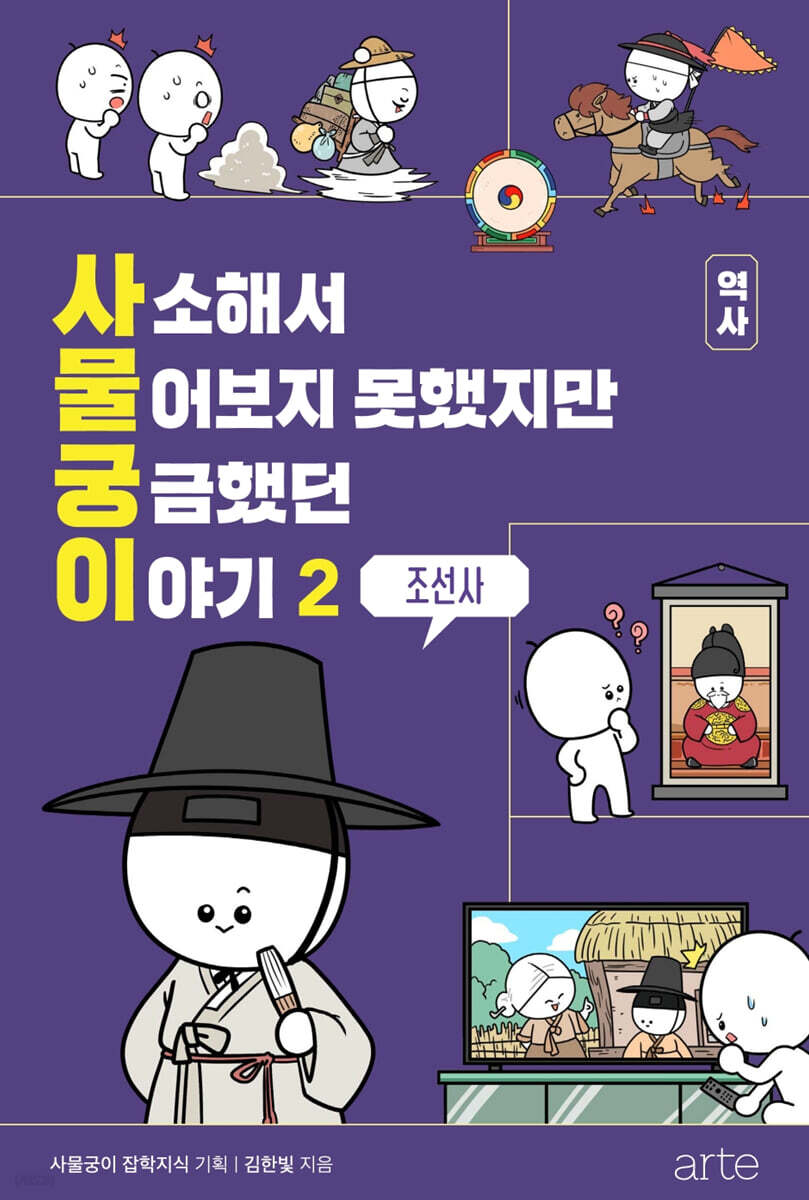
A story I was curious about but never asked because it was trivial: History 2 (Joseon Dynasty)
 |
Description
Book Introduction
“There is no unimportant question in the world!”
The history section of Korea's largest science channel, "Samulgungi Miscellaneous Knowledge," has been released!
"Samulgungi Miscellaneous Knowledge," a popular knowledge channel that humorously unravels the knowledge contained in trivial everyday curiosities, has returned with a history textbook! The ingenious questions that "make you wonder about things you didn't know before," the delightful and clear explanations that never leave a dull moment, and the lively illustrations naturally lead "subscribers" to become "readers."
The second volume of the 'Samulgungi' history series unfolds an interesting story related to Korean Joseon history.
How much did a Joseon court lady earn? Did princesses live in their in-laws' homes? Did they even retouch portraits of kings? It's easy to overlook, but every place in the world has a history and a story!
Let's dive into the world of "history" closely related to daily life, guided by YouTube's curiosity solver, "Gung-i," through the Samulgung History series, which returns with richer materials and colorful explanations, featuring three young historians.
The history section of Korea's largest science channel, "Samulgungi Miscellaneous Knowledge," has been released!
"Samulgungi Miscellaneous Knowledge," a popular knowledge channel that humorously unravels the knowledge contained in trivial everyday curiosities, has returned with a history textbook! The ingenious questions that "make you wonder about things you didn't know before," the delightful and clear explanations that never leave a dull moment, and the lively illustrations naturally lead "subscribers" to become "readers."
The second volume of the 'Samulgungi' history series unfolds an interesting story related to Korean Joseon history.
How much did a Joseon court lady earn? Did princesses live in their in-laws' homes? Did they even retouch portraits of kings? It's easy to overlook, but every place in the world has a history and a story!
Let's dive into the world of "history" closely related to daily life, guided by YouTube's curiosity solver, "Gung-i," through the Samulgung History series, which returns with richer materials and colorful explanations, featuring three young historians.
- You can preview some of the book's contents.
Preview
index
Prologue 4
Part 1: A Story of Joseon History That Was So Trivial That I Forgot to Ask
1 What happened to the Goryeo royal family after the transition from Goryeo to Joseon? 11
2 Could anyone really knock on the door of the newspaper office? 19
3 What happened to the person who cursed the king? 25
4 What happens if a physician causes a medical accident? 33
5 Would even a king with absolute power be afraid of ghosts? 41
6 What would happen if the king developed dementia? 49
How much did the king have to study, and what did he do if he didn't want to? 57
Why do the temple names of kings other than Taejo end with "Jo"?
The more you watch Part 2, the more interesting the story of the Joseon royal family becomes.
9 How often did the king leave the palace? 73
10 They say that in the old days, married life was harsh. Did princesses also have to live with their in-laws? 79
11 What was Korea's first delivery food? 87
How many people lived in the 12 palaces? 93
13 How to Criticize the King Politely? 99
14 How much was a palace maid's salary? 105
15 Why were there five palaces in Hanyang? 111
There are East, West, and South Gates, but why isn't there a North Gate? 119
Part 3: A story of Joseon life that will immerse you in the story.
17 How many times did Joseon people use Hangul? 127
18 Were there weekends in the Joseon Dynasty? 133
19 Looking back, how many days did it take to get to Hanyang? 141
20 What kind of meat did the people eat and how often? 147
21 Did the Joseon people also migrate? 153
22 How precious were tangerines during the Joseon Dynasty? 159
23 How did the poor-sighted Joseon people read? 165
Did Joseon people also enjoy alcohol? 171
The story of Joseon art becomes more interesting after knowing Part 4.
25. Did the King's portrait really look exactly like the King? 179
26 Why do exile lyrics sound like love letters? 185
Did Han Seok-bong, known as a master calligrapher, possess talents beyond calligraphy? 191
28 Were there books that were forbidden to read during the Joseon Dynasty? 197
29 Why were most of Joseon's white porcelains without any designs? 203
30 Why is the Tongyeong region famous for its traditional crafts? 209
31 What would happen if a court musician made a mistake while playing in front of the king? 215
32 Were there product reviews during the Joseon Dynasty? 221
Part 5: A story about Joseon society that everyone has been curious about at least once.
33 Were the Annals Really Recorded Exactly as They Were? 229
34 How quickly would signal fires announcing an enemy invasion have been transmitted? 235
How much is one Korean nyang worth in today's money?
36 How intense were the civil service examinations during the Joseon Dynasty? 247
37 How did Joseon control prices? 253
Was divorce possible during the Joseon Dynasty? 259
39 Was there counterfeit currency in Joseon? 265
What happens if a sinner takes poison and remains fine? 271
Reference 278
Part 1: A Story of Joseon History That Was So Trivial That I Forgot to Ask
1 What happened to the Goryeo royal family after the transition from Goryeo to Joseon? 11
2 Could anyone really knock on the door of the newspaper office? 19
3 What happened to the person who cursed the king? 25
4 What happens if a physician causes a medical accident? 33
5 Would even a king with absolute power be afraid of ghosts? 41
6 What would happen if the king developed dementia? 49
How much did the king have to study, and what did he do if he didn't want to? 57
Why do the temple names of kings other than Taejo end with "Jo"?
The more you watch Part 2, the more interesting the story of the Joseon royal family becomes.
9 How often did the king leave the palace? 73
10 They say that in the old days, married life was harsh. Did princesses also have to live with their in-laws? 79
11 What was Korea's first delivery food? 87
How many people lived in the 12 palaces? 93
13 How to Criticize the King Politely? 99
14 How much was a palace maid's salary? 105
15 Why were there five palaces in Hanyang? 111
There are East, West, and South Gates, but why isn't there a North Gate? 119
Part 3: A story of Joseon life that will immerse you in the story.
17 How many times did Joseon people use Hangul? 127
18 Were there weekends in the Joseon Dynasty? 133
19 Looking back, how many days did it take to get to Hanyang? 141
20 What kind of meat did the people eat and how often? 147
21 Did the Joseon people also migrate? 153
22 How precious were tangerines during the Joseon Dynasty? 159
23 How did the poor-sighted Joseon people read? 165
Did Joseon people also enjoy alcohol? 171
The story of Joseon art becomes more interesting after knowing Part 4.
25. Did the King's portrait really look exactly like the King? 179
26 Why do exile lyrics sound like love letters? 185
Did Han Seok-bong, known as a master calligrapher, possess talents beyond calligraphy? 191
28 Were there books that were forbidden to read during the Joseon Dynasty? 197
29 Why were most of Joseon's white porcelains without any designs? 203
30 Why is the Tongyeong region famous for its traditional crafts? 209
31 What would happen if a court musician made a mistake while playing in front of the king? 215
32 Were there product reviews during the Joseon Dynasty? 221
Part 5: A story about Joseon society that everyone has been curious about at least once.
33 Were the Annals Really Recorded Exactly as They Were? 229
34 How quickly would signal fires announcing an enemy invasion have been transmitted? 235
How much is one Korean nyang worth in today's money?
36 How intense were the civil service examinations during the Joseon Dynasty? 247
37 How did Joseon control prices? 253
Was divorce possible during the Joseon Dynasty? 259
39 Was there counterfeit currency in Joseon? 265
What happens if a sinner takes poison and remains fine? 271
Reference 278
Detailed image

Publisher's Review
“There is no unimportant question in the world!”
1.56 million subscribers, 320 million cumulative views
The history section of Korea's largest science channel, "Samulgungi Miscellaneous Knowledge," has been released!
"What was the first delivery food in Korea?" "How many times did Joseon Dynasty scholars take the civil service exam?" "How quickly were signal fires to signal an enemy invasion actually transmitted?" The popular knowledge channel "Samulgungi Miscellaneous Knowledge," which unravels great knowledge contained in trivial curiosities through animation, has published volumes 1, 2, and 3 of its history series at the same time.
Based on the planning and supervision of YouTuber 'Samulgungi', three young historians who teach students in the Department of Korean History at Seoul National University participate as writers to solve historical curiosities in everyday life.
Volume 2 of the 'History' series addresses the fascinating questions surrounding 'Joseon History' in Korean history.
'Samulgungi', an abbreviation for 'a story that was so trivial that I couldn't ask, but was curious', is a knowledge channel that uses animation to easily and funnily explain the trivial curiosities that cross our minds in everyday life and the not-so-trivial knowledge contained within them.
As of February 2025, 'Samulgungi', which has a whopping 1.56 million subscribers, has a unique difference in that it asks novel and unique questions and supports them with solid historical research.
If you click on the video, captivated by the unexpected questions that make you curious about things you weren't curious about, you'll find historical facts and contexts explained in a fun and engaging way, organized through meticulous research and expert advice.
In recognition of this sincerity and high quality, 'Samulgungi' has established itself as a 'trusted and watched' knowledge channel recommended by teachers, students, various media, and education offices, and has proven its excellence by winning the Korea Foundation for the Advancement of Science and Creativity's Outstanding Science and Culture Content and the Youth Recommended YouTube Channel Award.
Recently, thanks to its popularity, it has established itself as an unrivaled knowledge channel by providing videos to public transportation such as Seoul and Gyeonggi buses, Seoul Subway Line 2, and Kakao T taxis.
The new "History" series of "Samulgungi" published by Arte Publishing faithfully embodies the channel's concept by inheriting the strengths of the existing "Science" series.
The video goes through a meticulous editing process to provide readers with a captivating reading experience, allowing them to grasp historical facts and context that are easily missed at a glance.
Let's embark on a journey into the world of "history" that is closely related to everyday life with YouTube's curiosity solver, "Gung-i."
- Topics that are 200% curious and not covered in the video
- A reliable and educational history textbook written by young historians
- Historical facts and context that are easily missed in textbooks at a glance
The history section of 'Stories I Was Curious About But Never Asked About' was planned and supervised by YouTuber 'Samulgungi', and three young historians participated as writers to provide fresher and richer content and friendly and colorful explanations.
The second volume of 'Samulgungi' history was compiled by Kim Han-bit, a young historian who teaches at the Department of Korean History at Seoul National University, by selecting 40 historical questions that readers are most curious about and confused about, with the theme of Joseon history.
The surprising charm of 'Samulgungi' is that no matter how trivial the question, the reason and history contained in it are by no means trivial.
For example, to understand “Why is Joseon white porcelain almost devoid of patterns?”, we must understand the foreign relations of the late Joseon Dynasty as well as the long-standing correlation between economy and art. To answer “Why are there East, West, and South Gates, but no North Gate?”, we must look back at the capital city traditions of East Asia and the complex inter-Korean relations of the modern and contemporary era.
Immerse yourself in a world of history that is closely related to your daily life, with novel questions that “make you wonder about things you weren’t curious about,” delightful and clear explanations that never leave you bored, lively illustrations, and the quirky and cute character Gung-i.
“There is no unimportant question in the world!”
Small questions that knock on the door of history
We often overlook the 'trivial' curiosities we encounter in our daily lives.
Especially in an era where AI provides instant answers to all questions, the value of the process of asking questions and finding answers is increasingly being forgotten.
However, while AI seems to be adept at answering important information or clear questions, it provides clumsy answers to trivial or ambiguous questions, or questions that no one has thought deeply about.
Relying on the accumulated knowledge of expert researchers often leads to superficial or inadequate answers to vague or insufficiently researched topics.
In the age of AI, history offers a crucial lesson: great insights don't come solely from asking grand questions, but also from persistently exploring the "small" curiosities that only you can ask.
I hope that readers of this book will delve into their own "minor" curiosities and discover new insights in the process.
1.56 million subscribers, 320 million cumulative views
The history section of Korea's largest science channel, "Samulgungi Miscellaneous Knowledge," has been released!
"What was the first delivery food in Korea?" "How many times did Joseon Dynasty scholars take the civil service exam?" "How quickly were signal fires to signal an enemy invasion actually transmitted?" The popular knowledge channel "Samulgungi Miscellaneous Knowledge," which unravels great knowledge contained in trivial curiosities through animation, has published volumes 1, 2, and 3 of its history series at the same time.
Based on the planning and supervision of YouTuber 'Samulgungi', three young historians who teach students in the Department of Korean History at Seoul National University participate as writers to solve historical curiosities in everyday life.
Volume 2 of the 'History' series addresses the fascinating questions surrounding 'Joseon History' in Korean history.
'Samulgungi', an abbreviation for 'a story that was so trivial that I couldn't ask, but was curious', is a knowledge channel that uses animation to easily and funnily explain the trivial curiosities that cross our minds in everyday life and the not-so-trivial knowledge contained within them.
As of February 2025, 'Samulgungi', which has a whopping 1.56 million subscribers, has a unique difference in that it asks novel and unique questions and supports them with solid historical research.
If you click on the video, captivated by the unexpected questions that make you curious about things you weren't curious about, you'll find historical facts and contexts explained in a fun and engaging way, organized through meticulous research and expert advice.
In recognition of this sincerity and high quality, 'Samulgungi' has established itself as a 'trusted and watched' knowledge channel recommended by teachers, students, various media, and education offices, and has proven its excellence by winning the Korea Foundation for the Advancement of Science and Creativity's Outstanding Science and Culture Content and the Youth Recommended YouTube Channel Award.
Recently, thanks to its popularity, it has established itself as an unrivaled knowledge channel by providing videos to public transportation such as Seoul and Gyeonggi buses, Seoul Subway Line 2, and Kakao T taxis.
The new "History" series of "Samulgungi" published by Arte Publishing faithfully embodies the channel's concept by inheriting the strengths of the existing "Science" series.
The video goes through a meticulous editing process to provide readers with a captivating reading experience, allowing them to grasp historical facts and context that are easily missed at a glance.
Let's embark on a journey into the world of "history" that is closely related to everyday life with YouTube's curiosity solver, "Gung-i."
- Topics that are 200% curious and not covered in the video
- A reliable and educational history textbook written by young historians
- Historical facts and context that are easily missed in textbooks at a glance
The history section of 'Stories I Was Curious About But Never Asked About' was planned and supervised by YouTuber 'Samulgungi', and three young historians participated as writers to provide fresher and richer content and friendly and colorful explanations.
The second volume of 'Samulgungi' history was compiled by Kim Han-bit, a young historian who teaches at the Department of Korean History at Seoul National University, by selecting 40 historical questions that readers are most curious about and confused about, with the theme of Joseon history.
The surprising charm of 'Samulgungi' is that no matter how trivial the question, the reason and history contained in it are by no means trivial.
For example, to understand “Why is Joseon white porcelain almost devoid of patterns?”, we must understand the foreign relations of the late Joseon Dynasty as well as the long-standing correlation between economy and art. To answer “Why are there East, West, and South Gates, but no North Gate?”, we must look back at the capital city traditions of East Asia and the complex inter-Korean relations of the modern and contemporary era.
Immerse yourself in a world of history that is closely related to your daily life, with novel questions that “make you wonder about things you weren’t curious about,” delightful and clear explanations that never leave you bored, lively illustrations, and the quirky and cute character Gung-i.
“There is no unimportant question in the world!”
Small questions that knock on the door of history
We often overlook the 'trivial' curiosities we encounter in our daily lives.
Especially in an era where AI provides instant answers to all questions, the value of the process of asking questions and finding answers is increasingly being forgotten.
However, while AI seems to be adept at answering important information or clear questions, it provides clumsy answers to trivial or ambiguous questions, or questions that no one has thought deeply about.
Relying on the accumulated knowledge of expert researchers often leads to superficial or inadequate answers to vague or insufficiently researched topics.
In the age of AI, history offers a crucial lesson: great insights don't come solely from asking grand questions, but also from persistently exploring the "small" curiosities that only you can ask.
I hope that readers of this book will delve into their own "minor" curiosities and discover new insights in the process.
GOODS SPECIFICS
- Date of issue: February 5, 2025
- Page count, weight, size: 284 pages | 145*215*20mm
- ISBN13: 9791173570834
- ISBN10: 1173570837
You may also like
카테고리
korean


korean

![GQ KOREA Mark (Monthly): December [2025]](http://librairie.coreenne.fr/cdn/shop/files/8ef265dbbfbf186523ed75ba7319009d.jpg?v=1765340328&width=3840)


