

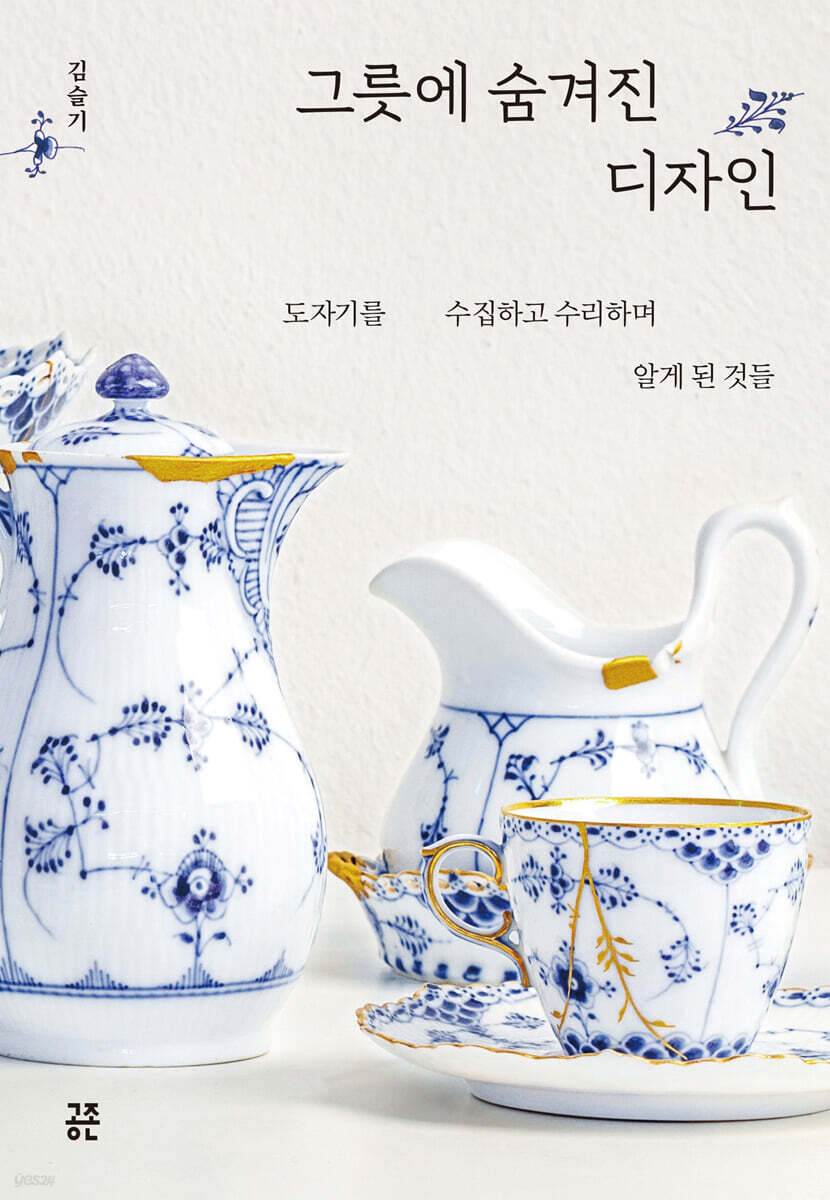
Hidden design in the bowl
 |
Description
Book Introduction
Tableware is both a practical necessity in human life and an aesthetic decoration.
In particular, ceramics, which have developed over a long period of time from earthenware to pottery and then to porcelain, contain the entire history of human civilization.
Therefore, if you know about ceramics, you can understand not only the life and society of the time, but also the culture and art.
As a design major who has been collecting and repairing ceramics for about 10 years, author Kim Seul-gi interprets ceramics from a designer's perspective in her new book, "Design Hidden in Bowls."
It is an exciting story that tells various facts and logical analyses that can be understood from the external form of ceramics to design elements such as texture, color, pattern, and pictures.
The author begins with the concept and history of porcelain design, and then uses Royal Copenhagen, one of Europe's most representative porcelains, as the warp and weft to explain in detail the components of porcelain design. He also shares his experiences and thoughts as a porcelain repairer.
We will also discuss Korean ceramics, focusing on the influence of the exchange between Eastern and Western civilizations on ceramic design and universal designs derived from nature.
It contains about 200 images to help you understand easily.
In particular, ceramics, which have developed over a long period of time from earthenware to pottery and then to porcelain, contain the entire history of human civilization.
Therefore, if you know about ceramics, you can understand not only the life and society of the time, but also the culture and art.
As a design major who has been collecting and repairing ceramics for about 10 years, author Kim Seul-gi interprets ceramics from a designer's perspective in her new book, "Design Hidden in Bowls."
It is an exciting story that tells various facts and logical analyses that can be understood from the external form of ceramics to design elements such as texture, color, pattern, and pictures.
The author begins with the concept and history of porcelain design, and then uses Royal Copenhagen, one of Europe's most representative porcelains, as the warp and weft to explain in detail the components of porcelain design. He also shares his experiences and thoughts as a porcelain repairer.
We will also discuss Korean ceramics, focusing on the influence of the exchange between Eastern and Western civilizations on ceramic design and universal designs derived from nature.
It contains about 200 images to help you understand easily.
- You can preview some of the book's contents.
Preview
index
preface
Part 1: About Ceramic Design
Chapter 1 A Brief History of Ceramic Design
Chapter 2: A Blue-Crowned World of European Porcelain
Chapter 3: Modern Ceramic Design
Part 2: Ceramics Born from the Interchange of Civilizations
Chapter 4 Royal Copenhagen
Chapter 5: Design Created from Imitation
Chapter 6: Ceramics that are loved longer as they age
Chapter 7: The Painter Leaves His Signature
Chapter 8: When the pattern changes, the vessel changes.
Chapter 9: Special Beauty
Part 3: The Secrets of Ceramic Design
Chapter 10 Auspicious or Noble Patterns
Chapter 11 Geometric, Elegant, or Dangerous Races
Chapter 12: Simplicity, Detail, and New Variations
Chapter 13: The Influence of Chinoiserie and Rococo
Chapter 14: The Mystery and Beauty of Blue
Part 4: What I Learned from Collecting and Repairing Ceramics
Chapter 15: Repairing and Creating New Patterns
Chapter 16: Living and Thinking with Ceramics
Americas
References
Part 1: About Ceramic Design
Chapter 1 A Brief History of Ceramic Design
Chapter 2: A Blue-Crowned World of European Porcelain
Chapter 3: Modern Ceramic Design
Part 2: Ceramics Born from the Interchange of Civilizations
Chapter 4 Royal Copenhagen
Chapter 5: Design Created from Imitation
Chapter 6: Ceramics that are loved longer as they age
Chapter 7: The Painter Leaves His Signature
Chapter 8: When the pattern changes, the vessel changes.
Chapter 9: Special Beauty
Part 3: The Secrets of Ceramic Design
Chapter 10 Auspicious or Noble Patterns
Chapter 11 Geometric, Elegant, or Dangerous Races
Chapter 12: Simplicity, Detail, and New Variations
Chapter 13: The Influence of Chinoiserie and Rococo
Chapter 14: The Mystery and Beauty of Blue
Part 4: What I Learned from Collecting and Repairing Ceramics
Chapter 15: Repairing and Creating New Patterns
Chapter 16: Living and Thinking with Ceramics
Americas
References
Detailed image

Publisher's Review
Symbols of life and culture read from ceramic design
In the “Preface,” the author says, “While collecting and repairing ceramics, I have tried to understand ceramics with a focus on design.
In particular, when dealing with old ceramics, we looked at the similarities, differences, and connections in design seen in other ceramics from the same period in which they were made, as well as before and after.
“We considered not only the history of ceramics, but also world history and cultural history,” he said.
In "Part 1: On Ceramic Design," we will first briefly examine the concept and history of ceramic design, and then explore how European ceramics, created by imitating Oriental ceramics, were able to surpass Oriental ceramics.
It also examines the characteristics and trends of modern ceramic design, citing examples from world-renowned major ceramic brands.
Part 2: Ceramics Born from the Interchange of Civilizations introduces the process of establishing and design characteristics of Royal Copenhagen, Denmark's leading ceramics brand.
We closely examine how designs imitating Chinese blue and white porcelain evolved into designs representative of Danish royal porcelain, what information is contained in the cryptic marks on the porcelain, how the signatures of those who painted on the porcelain were displayed, and what similarities and differences there are with designs of Eastern porcelain, including those from our own country.
In Part 3, “Secrets in Porcelain Design,” the culture and art contained in porcelain design are interpreted, focusing on Royal Copenhagen.
We examine what the patterns and decorations on ceramics mean and how they were made, and analyze how politics, society, artistic trends, and science and technology influenced ceramic design.
In “Part 4: What I Learned from Collecting and Repairing Ceramics,” the author reveals his experiences and reflections as a ceramic collector and repairer.
We also introduce the motivation behind collecting ceramics and repairing them, as well as the new method developed to repair ceramics to make them more beautiful.
In addition, we will explore the symbolic meaning of ceramics and other vessels in human life and the world, and examine the history of Korean ceramics in light of the history of Royal Copenhagen to explore their development and sustainability.
I hope that the culture of caring for and repairing ceramics will spread widely!
In an era where Western ceramics, developed based on Eastern technology, materials, and designs, are becoming mainstream, the author seeks to broadly share the historical and cultural knowledge and design understanding necessary to use ceramics in daily life or appreciate them as works of art.
I also hope that the culture of caring for and repairing ceramics will spread.
The author says this in the “Preface”:
“As I repaired ceramics, I came to think that if we could spread the culture of repairing and reusing broken ceramics instead of just throwing them away, we could solve this problem to some extent.
In Japan and China, the skills and culture of repairing broken pottery have been passed down for hundreds of years.
Additionally, more diverse methods for recycling ceramic waste should be developed.
“As I repair broken ceramics, I savor the design again, recall the memories contained within, and cherish the repair process and the result as another precious piece of life.”
Since ceramic design was not yet established as a specialized field, the author spent several years researching various literature and materials, establishing his own system, and visiting various countries to verify the actual objects before writing the book.
The author, who majored in design in college and graduate school, worked in a design profession before becoming a ceramic repairman.
He has also obtained a license as a cultural property repair technician (chilgong) and is actively giving lectures and practicing ceramic repair.
In the “Preface,” the author says, “While collecting and repairing ceramics, I have tried to understand ceramics with a focus on design.
In particular, when dealing with old ceramics, we looked at the similarities, differences, and connections in design seen in other ceramics from the same period in which they were made, as well as before and after.
“We considered not only the history of ceramics, but also world history and cultural history,” he said.
In "Part 1: On Ceramic Design," we will first briefly examine the concept and history of ceramic design, and then explore how European ceramics, created by imitating Oriental ceramics, were able to surpass Oriental ceramics.
It also examines the characteristics and trends of modern ceramic design, citing examples from world-renowned major ceramic brands.
Part 2: Ceramics Born from the Interchange of Civilizations introduces the process of establishing and design characteristics of Royal Copenhagen, Denmark's leading ceramics brand.
We closely examine how designs imitating Chinese blue and white porcelain evolved into designs representative of Danish royal porcelain, what information is contained in the cryptic marks on the porcelain, how the signatures of those who painted on the porcelain were displayed, and what similarities and differences there are with designs of Eastern porcelain, including those from our own country.
In Part 3, “Secrets in Porcelain Design,” the culture and art contained in porcelain design are interpreted, focusing on Royal Copenhagen.
We examine what the patterns and decorations on ceramics mean and how they were made, and analyze how politics, society, artistic trends, and science and technology influenced ceramic design.
In “Part 4: What I Learned from Collecting and Repairing Ceramics,” the author reveals his experiences and reflections as a ceramic collector and repairer.
We also introduce the motivation behind collecting ceramics and repairing them, as well as the new method developed to repair ceramics to make them more beautiful.
In addition, we will explore the symbolic meaning of ceramics and other vessels in human life and the world, and examine the history of Korean ceramics in light of the history of Royal Copenhagen to explore their development and sustainability.
I hope that the culture of caring for and repairing ceramics will spread widely!
In an era where Western ceramics, developed based on Eastern technology, materials, and designs, are becoming mainstream, the author seeks to broadly share the historical and cultural knowledge and design understanding necessary to use ceramics in daily life or appreciate them as works of art.
I also hope that the culture of caring for and repairing ceramics will spread.
The author says this in the “Preface”:
“As I repaired ceramics, I came to think that if we could spread the culture of repairing and reusing broken ceramics instead of just throwing them away, we could solve this problem to some extent.
In Japan and China, the skills and culture of repairing broken pottery have been passed down for hundreds of years.
Additionally, more diverse methods for recycling ceramic waste should be developed.
“As I repair broken ceramics, I savor the design again, recall the memories contained within, and cherish the repair process and the result as another precious piece of life.”
Since ceramic design was not yet established as a specialized field, the author spent several years researching various literature and materials, establishing his own system, and visiting various countries to verify the actual objects before writing the book.
The author, who majored in design in college and graduate school, worked in a design profession before becoming a ceramic repairman.
He has also obtained a license as a cultural property repair technician (chilgong) and is actively giving lectures and practicing ceramic repair.
GOODS SPECIFICS
- Date of issue: January 31, 2025
- Page count, weight, size: 312 pages | 456g | 135*195*19mm
- ISBN13: 9791197916540
- ISBN10: 1197916547
You may also like
카테고리
korean


korean

![GQ KOREA Mark (Monthly): December [2025]](http://librairie.coreenne.fr/cdn/shop/files/8ef265dbbfbf186523ed75ba7319009d.jpg?v=1765340328&width=3840)


