

Psychology and Education of Slow Learners
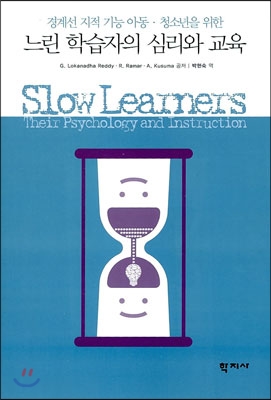 |
Description
Book Introduction
This book systematically examines the theory and practical application methods for slow learners, that is, children and adolescents with borderline intellectual functioning, covering the concept of slow learners, the selection process, cognitive and emotional development, learning programs, language and mathematical ability development and teaching methods, creativity and social development, career education for borderline intellectual functioning youth, and an overview of recent related research.
In particular, this book not only covers the theory of slow learners, but also introduces in detail specific methods that can be applied in actual educational settings, so it can easily serve as a practical guide as well as a simple theory book.
In particular, this book not only covers the theory of slow learners, but also introduces in detail specific methods that can be applied in actual educational settings, so it can easily serve as a practical guide as well as a simple theory book.
index
01 The concept of slow learners
Differences between slow learners and underachievers / Differences between slow learners and students with learning disabilities / Characteristics of slow learners / Causes of slow learning / Teachers of slow learners / Summary
02 Identification of slow learners
The Need for Early Screening / A Three-Step Screening Process / Initial Screening Stage / Scientific Confirmation Stage / Revalidation Stage / Summary
03 Cognitive Development of Slow Learners
Factors affecting cognitive development / Developmental stages and slow learners / Memory / IQ / Mental age / Relationship between intelligence and performance / Summary
04 Emotional Development of Slow Learners
Emotional needs of slow learners / Factors influencing the emotional development of slow learners / Assessment and measurement / Characteristics of students with emotional instability / Frequent behavior patterns and their causes / How to help with maladjustment / Emotional development of slow learners: A shared responsibility / Summary
05 Educational Program for Slow Learners
Educational Programs for Slow Learners / A Study of Peer Tutoring
06 Language Education for Slow Learners
Language development in slow learners / Causes of language development difficulties / Basic principles of reading instruction / The role of reading in language development / Reading methods / Developing speed reading for comprehension / Spelling / Difficulties experienced by slow learners in spelling / Spelling instruction methods / Assessment for spelling instruction in slow learners / Reading problems in slow learners / Speech and language problems / Types of speech or language problems / Improving spoken language problems / Techniques for improvement / Written language / Remedial programs for written language problems / Summary
07 Mathematics Education for Slow Learners
A.
Teaching Numbers to Younger Slow Learners
Principles of Mathematical Instruction / Causes of Poor Mathematical Ability / Key Characteristics of Mathematical Instruction for Slow Learners / What to Teach / How to Teach
B.
Teaching Math to Older Slow Learners
Factors Affecting Mathematics Learning / Basic Principles for Teaching Mathematics to Slow Learners / Individualized Mathematics Education for Slow Learners / Methods for Classroom Teachers / Summary
08 Vocational and Physical Education for Slow Learners
Purpose of teaching vocational subjects / Importance of teaching vocational subjects in inclusive education / Teaching vocational subjects to slow learners / Role of teachers / Physical education / Physical education programs for younger slow learners / Teaching physical education to older slow learners / Goals of physical education / Role of physical education teachers / Summary
09 Creativity and Social Development in Slow Learners
Developing Creativity in Slow Learners / The Importance of Creative Learning / The Role of the Teacher / Arts and Crafts / Drama
Social Development in Slow Learners / Research Base / Causes of Failure in the Workplace / The Importance of Social Development in Schools / Methods for Social Development in Slow Learners / Summary
10 Studies on Slow Learners
What is research? What is educational research? The need for educational research? The need for research on slow learners? Research on slow learners? Suggestions for future research? Summary
Differences between slow learners and underachievers / Differences between slow learners and students with learning disabilities / Characteristics of slow learners / Causes of slow learning / Teachers of slow learners / Summary
02 Identification of slow learners
The Need for Early Screening / A Three-Step Screening Process / Initial Screening Stage / Scientific Confirmation Stage / Revalidation Stage / Summary
03 Cognitive Development of Slow Learners
Factors affecting cognitive development / Developmental stages and slow learners / Memory / IQ / Mental age / Relationship between intelligence and performance / Summary
04 Emotional Development of Slow Learners
Emotional needs of slow learners / Factors influencing the emotional development of slow learners / Assessment and measurement / Characteristics of students with emotional instability / Frequent behavior patterns and their causes / How to help with maladjustment / Emotional development of slow learners: A shared responsibility / Summary
05 Educational Program for Slow Learners
Educational Programs for Slow Learners / A Study of Peer Tutoring
06 Language Education for Slow Learners
Language development in slow learners / Causes of language development difficulties / Basic principles of reading instruction / The role of reading in language development / Reading methods / Developing speed reading for comprehension / Spelling / Difficulties experienced by slow learners in spelling / Spelling instruction methods / Assessment for spelling instruction in slow learners / Reading problems in slow learners / Speech and language problems / Types of speech or language problems / Improving spoken language problems / Techniques for improvement / Written language / Remedial programs for written language problems / Summary
07 Mathematics Education for Slow Learners
A.
Teaching Numbers to Younger Slow Learners
Principles of Mathematical Instruction / Causes of Poor Mathematical Ability / Key Characteristics of Mathematical Instruction for Slow Learners / What to Teach / How to Teach
B.
Teaching Math to Older Slow Learners
Factors Affecting Mathematics Learning / Basic Principles for Teaching Mathematics to Slow Learners / Individualized Mathematics Education for Slow Learners / Methods for Classroom Teachers / Summary
08 Vocational and Physical Education for Slow Learners
Purpose of teaching vocational subjects / Importance of teaching vocational subjects in inclusive education / Teaching vocational subjects to slow learners / Role of teachers / Physical education / Physical education programs for younger slow learners / Teaching physical education to older slow learners / Goals of physical education / Role of physical education teachers / Summary
09 Creativity and Social Development in Slow Learners
Developing Creativity in Slow Learners / The Importance of Creative Learning / The Role of the Teacher / Arts and Crafts / Drama
Social Development in Slow Learners / Research Base / Causes of Failure in the Workplace / The Importance of Social Development in Schools / Methods for Social Development in Slow Learners / Summary
10 Studies on Slow Learners
What is research? What is educational research? The need for educational research? The need for research on slow learners? Research on slow learners? Suggestions for future research? Summary
Publisher's Review
In this book, the term 'slow learner' refers to children and adolescents with borderline intellectual functioning.
'Borderline intellectual functioning' refers to an IQ of 71 to 84 on the Wechsler Intelligence Scale (WISC-III). This is higher than the standard for intellectual disability of IQ 70 or lower, but falls below the average IQ standard of IQ 85 or higher, so it is expressed as 'borderline intellectual functioning'.
Although interest in slow learners has been rapidly increasing over the past decade, it is difficult to find any related books published in Korea, except for a very small number of theses.
This book was published in India, and it is quite surprising that long before its publication, India had been paying attention to children who were lagging behind, including slow learners, and had been working on their education in a more systematic and scientific way.
This book systematically examines the theory and practical application methods for slow learners, that is, children and adolescents with borderline intellectual functioning, covering the concept of slow learners, the selection process, cognitive and emotional development, learning programs, language and mathematical ability development and teaching methods, creativity and social development, career education for borderline intellectual functioning youth, and an overview of recent related research.
In particular, this book not only covers the theory of slow learners, but also introduces in detail specific methods that can be applied in actual educational settings, so it can easily serve as a practical guide as well as a simple theory book.
'Borderline intellectual functioning' refers to an IQ of 71 to 84 on the Wechsler Intelligence Scale (WISC-III). This is higher than the standard for intellectual disability of IQ 70 or lower, but falls below the average IQ standard of IQ 85 or higher, so it is expressed as 'borderline intellectual functioning'.
Although interest in slow learners has been rapidly increasing over the past decade, it is difficult to find any related books published in Korea, except for a very small number of theses.
This book was published in India, and it is quite surprising that long before its publication, India had been paying attention to children who were lagging behind, including slow learners, and had been working on their education in a more systematic and scientific way.
This book systematically examines the theory and practical application methods for slow learners, that is, children and adolescents with borderline intellectual functioning, covering the concept of slow learners, the selection process, cognitive and emotional development, learning programs, language and mathematical ability development and teaching methods, creativity and social development, career education for borderline intellectual functioning youth, and an overview of recent related research.
In particular, this book not only covers the theory of slow learners, but also introduces in detail specific methods that can be applied in actual educational settings, so it can easily serve as a practical guide as well as a simple theory book.
GOODS SPECIFICS
- Date of publication: December 20, 2012
- Page count, weight, size: 412 pages | 640g | 153*224*30mm
- ISBN13: 9788963309767
- ISBN10: 8963309762
You may also like
카테고리
korean


korean

![GQ KOREA Mark (Monthly): December [2025]](http://librairie.coreenne.fr/cdn/shop/files/8ef265dbbfbf186523ed75ba7319009d.jpg?v=1765340328&width=3840)


