

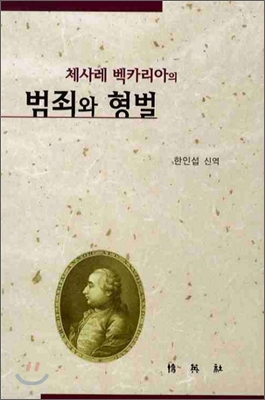
Crime and Punishment
 |
Description
Book Introduction
This is a translated version of Beccaria's Crimes and Punishments, which is still considered a monumental classic 250 years after its publication.
Not only did it become the foundation for modern criminal law and human rights in each country, but its stance of restraining abuse of power and pursuing humanitarianism has resonated across the ages.
In the revised edition, we have attempted to provide a more accurate and easy-to-understand translation to make the content easier to understand.
Not only did it become the foundation for modern criminal law and human rights in each country, but its stance of restraining abuse of power and pursuing humanitarianism has resonated across the ages.
In the revised edition, we have attempted to provide a more accurate and easy-to-understand translation to make the content easier to understand.
index
Dedicated to the new translation (2006)
Cesare Beccaria and Crimes and Punishments
About the translation
To the reader
Introduction
1.
Origin of Punishment
2.
Fundamental principles of the right to punish
3.
Consequences from the preceding principles
4.
Interpretation of the law
5.
Ambiguity of the law
6.
Proportion between crime and punishment
7.
Errors in the measurement of punishment
8.
Classification of crimes
9.
About Honor
10.
Duel
11.
public peace
12.
Purpose of punishment
13.
Witness
14.
Proof of crime and method of trial
15.
Snitches
16.
torture
17.
About fines
18.
Oath
19.
The swiftness of punishment
20.
violent criminals
21.
Punishment of the nobles
22.
Theft
23.
defamation
24.
About the Wuyi diagram
25.
Banishment and confiscation of property
26.
family spirit
27.
On the leniency of punishment
28.
Death penalty
29.
pretrial detention
30.
Period and statute of limitations for litigation
31.
crimes that are difficult to prove
32.
Suicide and loss of citizenship
33.
About smuggling
34.
About bankruptcy
35.
About the sanctuary
36.
About the bounty
37.
Exemption from punishment for attempted crimes, accomplices, and informing accomplices
38.
About the Judo Newspaper
39.
About special types of crimes
40.
On false axioms
41.
How to prevent crime
42.
knowledge
43.
judge
44.
Award
45.
education
46.
Four sides
47.
conclusion
Cesare Beccaria and Crimes and Punishments
About the translation
To the reader
Introduction
1.
Origin of Punishment
2.
Fundamental principles of the right to punish
3.
Consequences from the preceding principles
4.
Interpretation of the law
5.
Ambiguity of the law
6.
Proportion between crime and punishment
7.
Errors in the measurement of punishment
8.
Classification of crimes
9.
About Honor
10.
Duel
11.
public peace
12.
Purpose of punishment
13.
Witness
14.
Proof of crime and method of trial
15.
Snitches
16.
torture
17.
About fines
18.
Oath
19.
The swiftness of punishment
20.
violent criminals
21.
Punishment of the nobles
22.
Theft
23.
defamation
24.
About the Wuyi diagram
25.
Banishment and confiscation of property
26.
family spirit
27.
On the leniency of punishment
28.
Death penalty
29.
pretrial detention
30.
Period and statute of limitations for litigation
31.
crimes that are difficult to prove
32.
Suicide and loss of citizenship
33.
About smuggling
34.
About bankruptcy
35.
About the sanctuary
36.
About the bounty
37.
Exemption from punishment for attempted crimes, accomplices, and informing accomplices
38.
About the Judo Newspaper
39.
About special types of crimes
40.
On false axioms
41.
How to prevent crime
42.
knowledge
43.
judge
44.
Award
45.
education
46.
Four sides
47.
conclusion
GOODS SPECIFICS
- Date of issue: August 15, 2014
- Page count, weight, size: 224 pages | 128*188*20mm
- ISBN13: 9788964545638
- ISBN10: 896454563X
You may also like
카테고리
korean


korean

![GQ KOREA Mark (Monthly): December [2025]](http://librairie.coreenne.fr/cdn/shop/files/8ef265dbbfbf186523ed75ba7319009d.jpg?v=1765340328&width=3840)


