

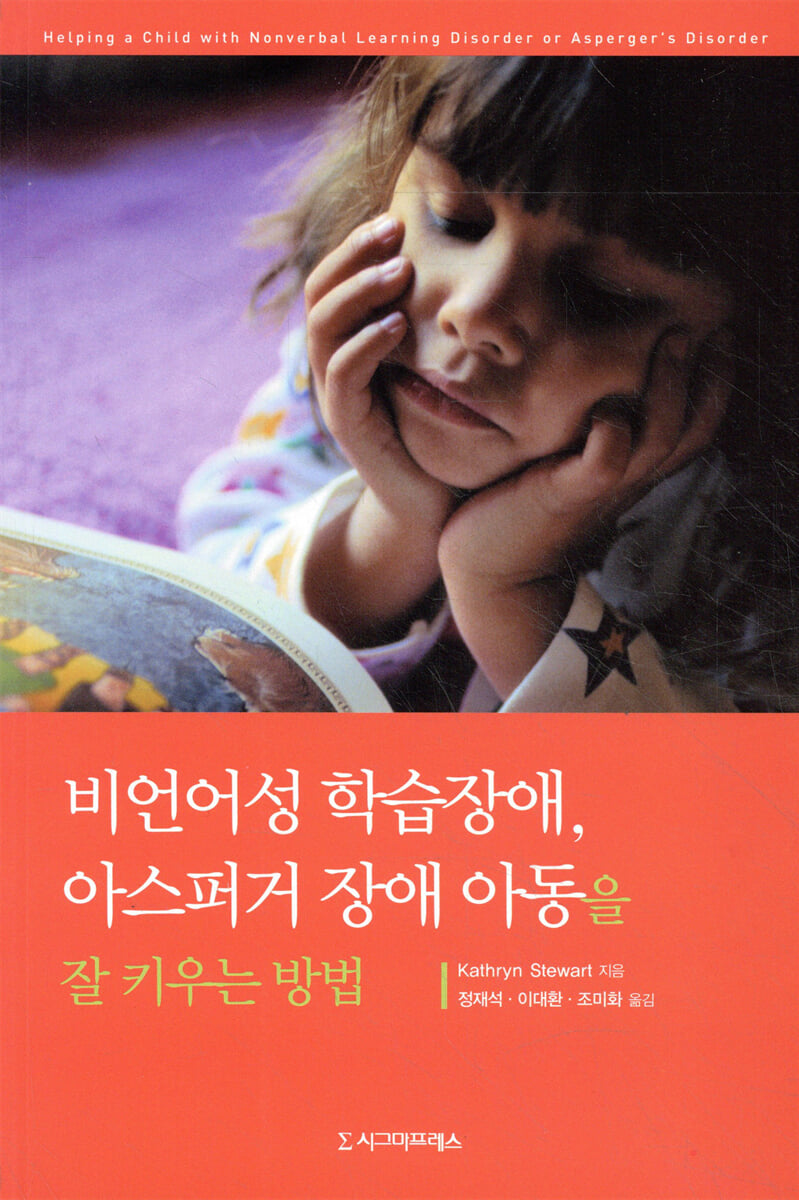
How to Raise a Child with Nonverbal Learning Disorder and Asperger's Disorder
 |
Description
Book Introduction
Provides practical methods to help children with nonverbal learning disabilities and Asperger's disorder learn and develop.
It contains methods for identifying a child's strengths and weaknesses in areas such as visuospatial functions, information processing, and organizational skills, and presents easy-to-do activities that can help children socialize through humor and empathy and organize their daily activities, multitask, and more.
Readers will discover effective strategies to help their children develop social and emotional skills, language and writing skills, and interactive abilities.
It contains methods for identifying a child's strengths and weaknesses in areas such as visuospatial functions, information processing, and organizational skills, and presents easy-to-do activities that can help children socialize through humor and empathy and organize their daily activities, multitask, and more.
Readers will discover effective strategies to help their children develop social and emotional skills, language and writing skills, and interactive abilities.
index
Part 1: An Overview of Nonverbal Learning Disorders, Asperger's Disorder, and Related Conditions
Chapter 1: What are Nonverbal Learning Disorder and Asperger's Disorder?
Chapter 2 Areas of Strength and Weakness
Chapter 3 Why is it important to accurately assess nonverbal learning disabilities or Asperger's disorder?
Part 2: The Impact of Nonverbal Learning Disorder and Asperger's Disorder
Chapter 4: A Different Language: The Development of Social Skills and Socioemotional Functioning
Chapter 5 Spatial Deficits: Spatiotemporal Information Processing and Sensory Integration
Chapter 6: The Root of the Problem: Information Processing and Organizational Issues
Part 3: Mediation and Program Planning
Chapter 7: Addressing Deficiencies in Organizational Skills and Information Processing
Chapter 8: Learning Study Skills: Interventions for Learning Success
Chapter 9: The Moving Body: Spatiotemporal Perception and Sensory-Motor Integration
Chapter 10 Social Competence: Self, Others, and Self-Esteem Issues
Chapter 11 What Should We Think About in the Future?
Chapter 1: What are Nonverbal Learning Disorder and Asperger's Disorder?
Chapter 2 Areas of Strength and Weakness
Chapter 3 Why is it important to accurately assess nonverbal learning disabilities or Asperger's disorder?
Part 2: The Impact of Nonverbal Learning Disorder and Asperger's Disorder
Chapter 4: A Different Language: The Development of Social Skills and Socioemotional Functioning
Chapter 5 Spatial Deficits: Spatiotemporal Information Processing and Sensory Integration
Chapter 6: The Root of the Problem: Information Processing and Organizational Issues
Part 3: Mediation and Program Planning
Chapter 7: Addressing Deficiencies in Organizational Skills and Information Processing
Chapter 8: Learning Study Skills: Interventions for Learning Success
Chapter 9: The Moving Body: Spatiotemporal Perception and Sensory-Motor Integration
Chapter 10 Social Competence: Self, Others, and Self-Esteem Issues
Chapter 11 What Should We Think About in the Future?
Publisher's Review
Practical Ways to Help Children with Nonverbal Learning Disabilities and Asperger's Disorder Learn and Develop
About one in a hundred children has a nonverbal learning disability, and another 1% have Asperger's disorder.
Although these two disorders have different diagnostic characteristics, their treatment approaches overlap.
This book contains methods for identifying a child's strengths and weaknesses in areas such as visuospatial functions, information processing, and organizational skills.
It also presents easy-to-do activities that can help children socialize through humor and empathy and organize their daily activities, multitask, and more.
Readers will discover effective strategies to help their children develop social and emotional skills, language and writing skills, and interactive abilities.
“This book explains the real-life impact of Asperger’s Disorder and related conditions, provides a clear understanding of the common ways children think and learn, and offers clear strategies for intervention in the classroom.”
Simon Baron-Cohen (Experimental Psychology and Psychiatry Director, Autism Research Centre, University of Cambridge, UK; author of Mind Blindness and How Children with Autism Can Learn to Read Minds)
About one in a hundred children has a nonverbal learning disability, and another 1% have Asperger's disorder.
Although these two disorders have different diagnostic characteristics, their treatment approaches overlap.
This book contains methods for identifying a child's strengths and weaknesses in areas such as visuospatial functions, information processing, and organizational skills.
It also presents easy-to-do activities that can help children socialize through humor and empathy and organize their daily activities, multitask, and more.
Readers will discover effective strategies to help their children develop social and emotional skills, language and writing skills, and interactive abilities.
“This book explains the real-life impact of Asperger’s Disorder and related conditions, provides a clear understanding of the common ways children think and learn, and offers clear strategies for intervention in the classroom.”
Simon Baron-Cohen (Experimental Psychology and Psychiatry Director, Autism Research Centre, University of Cambridge, UK; author of Mind Blindness and How Children with Autism Can Learn to Read Minds)
GOODS SPECIFICS
- Date of issue: March 22, 2010
- Page count, weight, size: 328 pages | 153*224*30mm
- ISBN13: 9788958327691
- ISBN10: 8958327693
You may also like
카테고리
korean


korean

![GQ KOREA Mark (Monthly): December [2025]](http://librairie.coreenne.fr/cdn/shop/files/8ef265dbbfbf186523ed75ba7319009d.jpg?v=1765340328&width=3840)


