

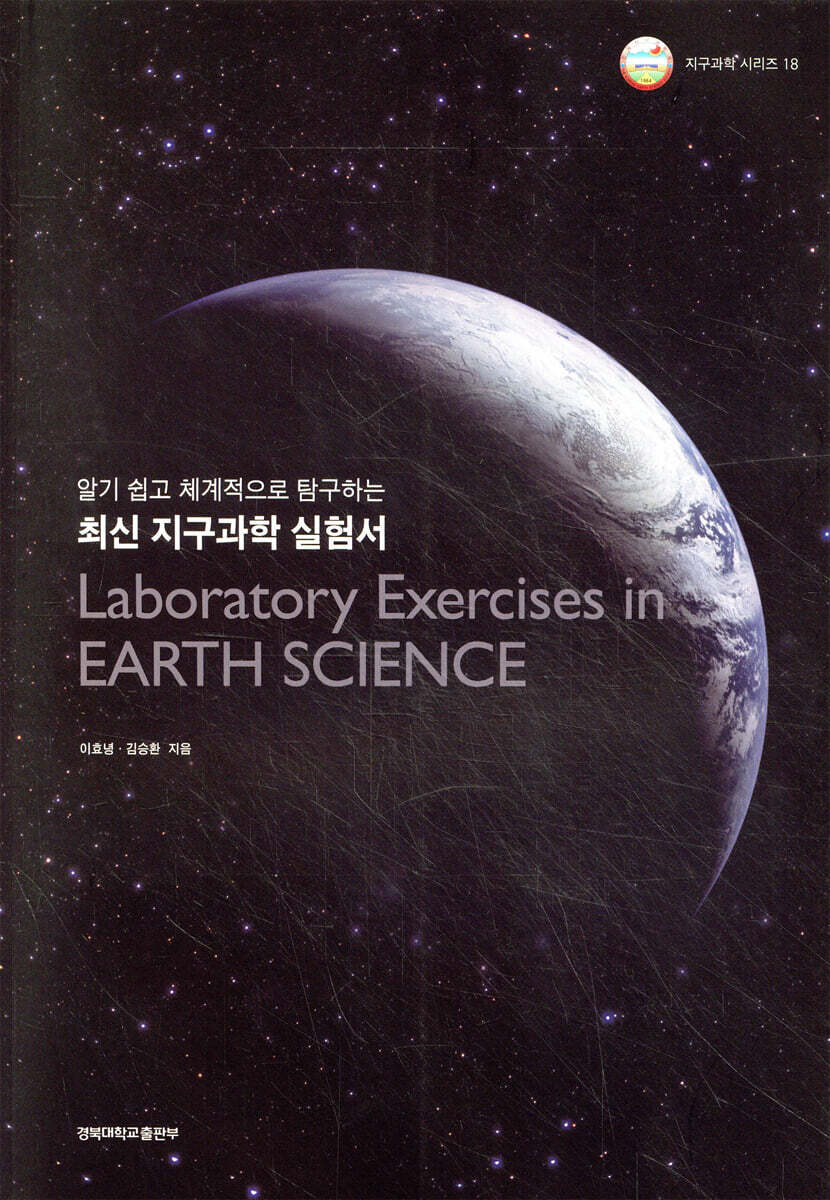
Latest Earth Science Experiment Book
 |
Description
Book Introduction
"The Latest Earth Science Experiment Book" was written based on my experience and trial and error in teaching Earth science experiments to students in the Department of Science Education at a teacher's college.
This book is designed to be suitable for lectures related to basic earth science experiments and practices at the college level, and is organized so that students can easily understand and systematically utilize it on their own.
In addition, it reflects the recent trend in Earth science education and the characteristics of Earth science research subjects and the contents related to the Earth system that are emphasized in the recently revised curriculum.
This book is designed to be suitable for lectures related to basic earth science experiments and practices at the college level, and is organized so that students can easily understand and systematically utilize it on their own.
In addition, it reflects the recent trend in Earth science education and the characteristics of Earth science research subjects and the contents related to the Earth system that are emphasized in the recently revised curriculum.
index
Ⅰ.
General Earth Science Experiments
1.
What is Earth Science?
2.
Characteristics of Earth Science
3.
Earth Science Exploration
Ⅱ.
Exploration of the Earth and the Geosphere
[Experiment 1] Understanding the Earth System
[Experiment 2] Measuring the size of a model Earth
[Experiment 3] Earth's ellipsoid and geoid
[Experiment 4] Calculating Earth's Mass Using Satellite Trajectories
[Experiment 5] Determining the location of the epicenter and hypocenter
[Experiment 6] Understanding the internal structure of the Earth's crust and determining its thickness using seismic waves
[Experiment 7] Observation and classification of minerals (mineral properties)
[Experiment 8] Structure of Silicate Minerals
[Experiment 9] Observation and Classification of Rocks: Igneous Rocks
[Experiment 10] Observation and classification of rocks: sedimentary rocks, metamorphic rocks
[Experiment 11] Measurement of the direction and slope
[Experiment 12] Sequencing geological events
[Experiment 13] Contrast of Strata
Ⅲ.
Exploration of the atmosphere and ocean
[Experiment 14] Adiabatic changes and cloud formation
[Experiment 15] Drawing a Weather Map
[Experiment 16] Weather chart interpretation
[Experiment 17] Thermocline
[Experiment 18] The relationship between seawater temperature, salinity, and density
[Experiment 19] Ocean currents around Korea
[Experiment 20] Seafloor Spreading and Plate Tectonics
[Experiment 21] Board Puzzle
Ⅳ.
Exploration of the Universe
[Experiment 22] Measuring the size of the sun
[Experiment 23] Determining the Distance Between the Earth and the Sun
[Experiment 24] Determination of observation time according to the relative position of celestial bodies
[Experiment 25] Quantification of the observed shape (phase) according to the relative position of celestial bodies
[Experiment 26] Drawing the orbit of Mars
[Experiment 27] Building a Model of Mars' Apparent Motion
[Experiment 28] HR chart
[Experiment 29] Measuring the distance to the Small Magellanic Cloud using Cepheid variables
[Experiment 30] Understanding Hubble's Law
[Experiment 31] Determining the distance to an open cluster by main sequence alignment
V.
supplement
Summary of Earth Science Experiments
Various constant values
References and Citations
General Earth Science Experiments
1.
What is Earth Science?
2.
Characteristics of Earth Science
3.
Earth Science Exploration
Ⅱ.
Exploration of the Earth and the Geosphere
[Experiment 1] Understanding the Earth System
[Experiment 2] Measuring the size of a model Earth
[Experiment 3] Earth's ellipsoid and geoid
[Experiment 4] Calculating Earth's Mass Using Satellite Trajectories
[Experiment 5] Determining the location of the epicenter and hypocenter
[Experiment 6] Understanding the internal structure of the Earth's crust and determining its thickness using seismic waves
[Experiment 7] Observation and classification of minerals (mineral properties)
[Experiment 8] Structure of Silicate Minerals
[Experiment 9] Observation and Classification of Rocks: Igneous Rocks
[Experiment 10] Observation and classification of rocks: sedimentary rocks, metamorphic rocks
[Experiment 11] Measurement of the direction and slope
[Experiment 12] Sequencing geological events
[Experiment 13] Contrast of Strata
Ⅲ.
Exploration of the atmosphere and ocean
[Experiment 14] Adiabatic changes and cloud formation
[Experiment 15] Drawing a Weather Map
[Experiment 16] Weather chart interpretation
[Experiment 17] Thermocline
[Experiment 18] The relationship between seawater temperature, salinity, and density
[Experiment 19] Ocean currents around Korea
[Experiment 20] Seafloor Spreading and Plate Tectonics
[Experiment 21] Board Puzzle
Ⅳ.
Exploration of the Universe
[Experiment 22] Measuring the size of the sun
[Experiment 23] Determining the Distance Between the Earth and the Sun
[Experiment 24] Determination of observation time according to the relative position of celestial bodies
[Experiment 25] Quantification of the observed shape (phase) according to the relative position of celestial bodies
[Experiment 26] Drawing the orbit of Mars
[Experiment 27] Building a Model of Mars' Apparent Motion
[Experiment 28] HR chart
[Experiment 29] Measuring the distance to the Small Magellanic Cloud using Cepheid variables
[Experiment 30] Understanding Hubble's Law
[Experiment 31] Determining the distance to an open cluster by main sequence alignment
V.
supplement
Summary of Earth Science Experiments
Various constant values
References and Citations
GOODS SPECIFICS
- Date of issue: July 5, 2019
- Page count, weight, size: 190 pages | 210*291*20mm
- ISBN13: 9788971802618
- ISBN10: 8971802618
You may also like
카테고리
korean


korean

![GQ KOREA Mark (Monthly): December [2025]](http://librairie.coreenne.fr/cdn/shop/files/8ef265dbbfbf186523ed75ba7319009d.jpg?v=1765340328&width=3840)


