

Narrative Inquiry
 |
Description
Book Introduction
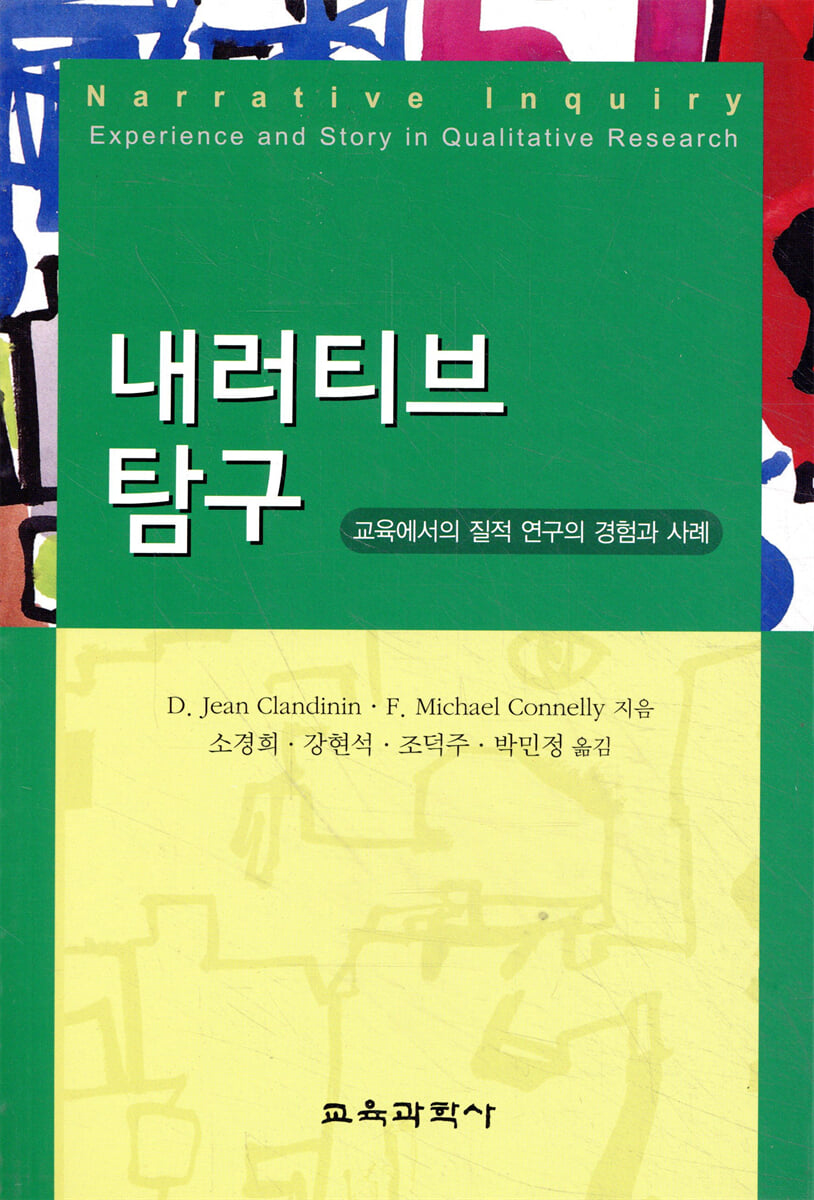
Unlike other books, this one begins with a rather lengthy prologue, in which the authors explain why they chose a narrative approach over a measurement-statistical one as a way of understanding experience.
Chapter 1 introduces the theories of scholars who have influenced the authors' approach to narrative inquiry, and Chapters 2 and 3 examine how the narrative inquiry perspective differs from the grand narrative perspective, a traditional inquiry method.
Chapter 4 outlines the specifics of narrative inquiry by detailing what narrative inquiry does.
Chapters 5 through 9 provide a detailed, procedural introduction to the narrative inquiry process. Chapter 10 addresses issues that may arise continuously during narrative inquiry, such as ethics, ownership, anonymity, and fact versus fiction.
Chapter 1 introduces the theories of scholars who have influenced the authors' approach to narrative inquiry, and Chapters 2 and 3 examine how the narrative inquiry perspective differs from the grand narrative perspective, a traditional inquiry method.
Chapter 4 outlines the specifics of narrative inquiry by detailing what narrative inquiry does.
Chapters 5 through 9 provide a detailed, procedural introduction to the narrative inquiry process. Chapter 10 addresses issues that may arise continuously during narrative inquiry, such as ethics, ownership, anonymity, and fact versus fiction.
index
Chapter 1.
Why narrative?
introduction
John Dewey
Mark Johnson and Alasdair MacIntyre
A New Way of Thinking: The Contribution of Inquiry
『After the fact: Two Countries, Four Decades, One Anthropologist』 by Clifford Geertz
『Peripheral Visions: Learning Along the Way』 by Mary Catherine Bateson
『Narrating the Organization: Dreams of Institutional Identity』 by Barbara Czarniawska
『The Call of Stories: Teaching and the Moral Imagination』 by Robert Coles
『Narrative Knowing and the Human Sciences』 by Donald Polkinghorne
Bringing these authors into narrative inquiry
Why turn to narrative?
Studying narratively
Chapter 2.
Thinking Narratively: A Case Study at the Boundary of Inquiry
introduction
Bloom's taxonomy
Research with the taxonomy team
Reaction to the narrative revision
A life of exploration at the border
summation
Chapter 3.
Thinking Narratively: Reductionist and Formalist Boundaries
introduction
Schn, Oakeshott, and Johnson's ideas
Narrative Thinking at the Formalist Boundary
A life of inquiry on the borders of formalism
summation
Chapter 4.
What do narrative explorers do?
introduction
Narrative Inquiry Terminology and Narrative Inquiry Spaces
Ming Fang He's Research Story in a Three-Dimensional Narrative Exploration Space
3D narrative exploration space
A story about working with Karen Whelan in a three-dimensional narrative exploration space.
Reflection Note
Chapter 5.
Being Present: Entering the Story
introduction
Start your research in the middle of the field
Start your research in the heart of Bay Street School.
What exists in the middle of a research field is different for each person.
Living the story, telling it, retelling it, and living it again
What should we do now on the ground?
Living life in the foreground
Chapter 6.
Moving from Field to Field Text: Being in Story Space·159
introduction
Falling in love, becoming a cold observer
Remember the outline, then go into detail
Narrative Truth and Narrative Relativism
Returning inside, observing outside
The ambiguity of research in three-dimensional exploration spaces
Chapter 7.
Configuring field text
introduction
Constructing a field text is an interpretive process.
The field text records express the relationship between the researcher and the research participants.
Field text composed in a three-dimensional exploration space
Mixed and composed field text
Field text in the form of teachers' stories
Field text in the form of autobiographical writing
Field text in the form of a diary
Field text in the form of field notes
Field text in letter form
On-site text in conversational form
Field text in the form of research interviews
Field text in the form of a story about family and home life
Field text in document form
Field texts in the form of photographs, memory boxes, and other personal, family, and social document artifacts
Life experience as a source of field text
What is important for researchers to understand field texts?
Chapter 8.
From Field Text to Research Text: Constructing Meaning from Experience
introduction
What do narrative explorers do?
Justification (why?)
phenomenon (what?)
How (how?)
Theory and Literature
Type of intended text
Chapter 9.
Writing a research text
introduction
The tension you experience when you start writing
Describing research texts at boundaries
Writing, Memory, and Research Texts
Describing research texts in the midst of ambiguity
narrative format
In search of narrative form
Audience and composition of research text
Chapter 10.
Questions that continually arise in narrative inquiry
introduction
ethics
Ethics and Anonymity
Ownership and Responsibility for Relationships
How are we talked about as researchers?
Fact and Fiction
Risk, Disability, and Abuse: “Me as a Critical Researcher”
Stay awake
Why narrative?
introduction
John Dewey
Mark Johnson and Alasdair MacIntyre
A New Way of Thinking: The Contribution of Inquiry
『After the fact: Two Countries, Four Decades, One Anthropologist』 by Clifford Geertz
『Peripheral Visions: Learning Along the Way』 by Mary Catherine Bateson
『Narrating the Organization: Dreams of Institutional Identity』 by Barbara Czarniawska
『The Call of Stories: Teaching and the Moral Imagination』 by Robert Coles
『Narrative Knowing and the Human Sciences』 by Donald Polkinghorne
Bringing these authors into narrative inquiry
Why turn to narrative?
Studying narratively
Chapter 2.
Thinking Narratively: A Case Study at the Boundary of Inquiry
introduction
Bloom's taxonomy
Research with the taxonomy team
Reaction to the narrative revision
A life of exploration at the border
summation
Chapter 3.
Thinking Narratively: Reductionist and Formalist Boundaries
introduction
Schn, Oakeshott, and Johnson's ideas
Narrative Thinking at the Formalist Boundary
A life of inquiry on the borders of formalism
summation
Chapter 4.
What do narrative explorers do?
introduction
Narrative Inquiry Terminology and Narrative Inquiry Spaces
Ming Fang He's Research Story in a Three-Dimensional Narrative Exploration Space
3D narrative exploration space
A story about working with Karen Whelan in a three-dimensional narrative exploration space.
Reflection Note
Chapter 5.
Being Present: Entering the Story
introduction
Start your research in the middle of the field
Start your research in the heart of Bay Street School.
What exists in the middle of a research field is different for each person.
Living the story, telling it, retelling it, and living it again
What should we do now on the ground?
Living life in the foreground
Chapter 6.
Moving from Field to Field Text: Being in Story Space·159
introduction
Falling in love, becoming a cold observer
Remember the outline, then go into detail
Narrative Truth and Narrative Relativism
Returning inside, observing outside
The ambiguity of research in three-dimensional exploration spaces
Chapter 7.
Configuring field text
introduction
Constructing a field text is an interpretive process.
The field text records express the relationship between the researcher and the research participants.
Field text composed in a three-dimensional exploration space
Mixed and composed field text
Field text in the form of teachers' stories
Field text in the form of autobiographical writing
Field text in the form of a diary
Field text in the form of field notes
Field text in letter form
On-site text in conversational form
Field text in the form of research interviews
Field text in the form of a story about family and home life
Field text in document form
Field texts in the form of photographs, memory boxes, and other personal, family, and social document artifacts
Life experience as a source of field text
What is important for researchers to understand field texts?
Chapter 8.
From Field Text to Research Text: Constructing Meaning from Experience
introduction
What do narrative explorers do?
Justification (why?)
phenomenon (what?)
How (how?)
Theory and Literature
Type of intended text
Chapter 9.
Writing a research text
introduction
The tension you experience when you start writing
Describing research texts at boundaries
Writing, Memory, and Research Texts
Describing research texts in the midst of ambiguity
narrative format
In search of narrative form
Audience and composition of research text
Chapter 10.
Questions that continually arise in narrative inquiry
introduction
ethics
Ethics and Anonymity
Ownership and Responsibility for Relationships
How are we talked about as researchers?
Fact and Fiction
Risk, Disability, and Abuse: “Me as a Critical Researcher”
Stay awake
GOODS SPECIFICS
- Date of issue: August 30, 2007
- Page count, weight, size: 347 pages | 526g | 153*224*30mm
- ISBN13: 9788925400990
- ISBN10: 8925400995
You may also like
카테고리
korean


korean

![GQ KOREA Mark (Monthly): December [2025]](http://librairie.coreenne.fr/cdn/shop/files/8ef265dbbfbf186523ed75ba7319009d.jpg?v=1765340328&width=3840)


