

Sometimes dogs are better than people
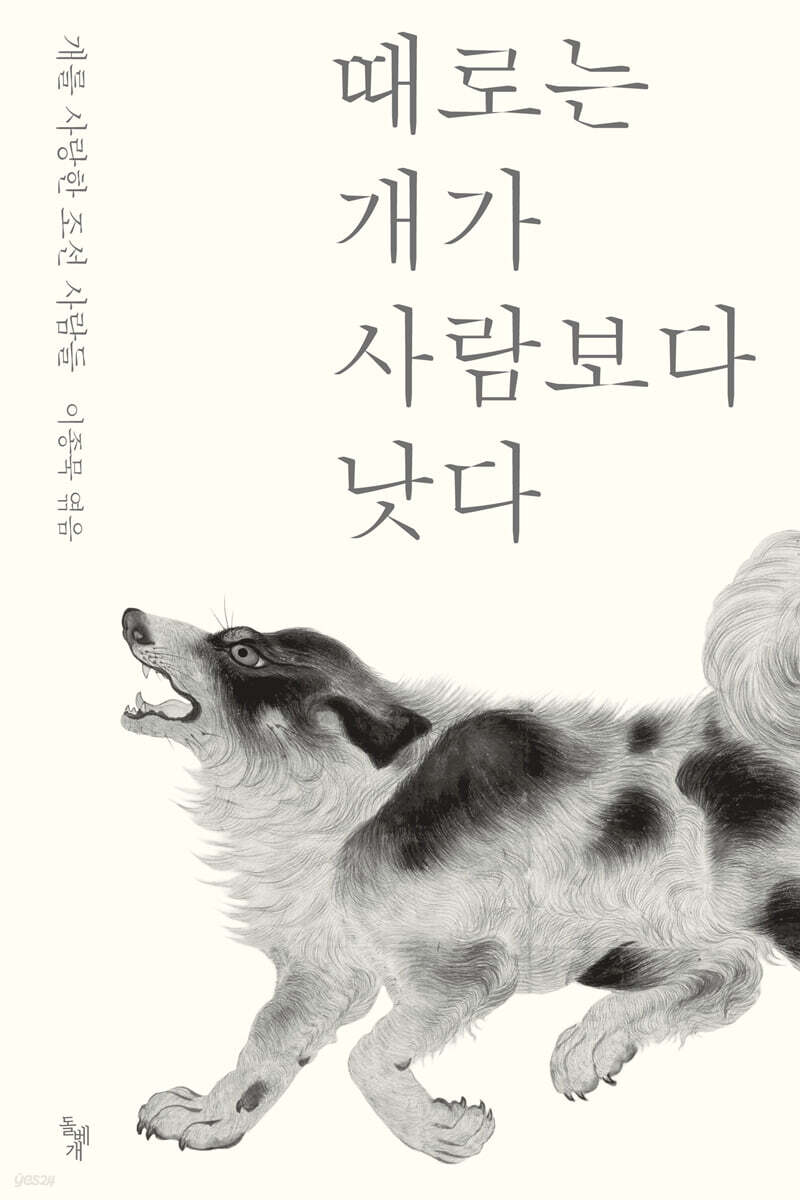 |
Description
Book Introduction
Laughing at a world where people are worse than dogs
On the park trails, there are now more dog strollers than strollers, and dog funerals are just as popular as those for people. For modern people, dogs are more than just pets; they are companions. Of course, there are also opposite cases. There are countless instances where the word 'dog' is used as a derogatory term. So, how were dogs treated during the Joseon Dynasty? Through the few surviving pieces of writing about dogs, we delve into ancient people's perceptions of them. The writings in this book are at least 100 years old, but as you read them, you will naturally find yourself drawn to the current state of affairs. It's as if an old person knew the current situation in advance and taught me. The saying that the past is an old future seems to be used in situations like this. |
- You can preview some of the book's contents.
Preview
index
Chapter 1 What is a dog?
To My Dog / A Dog's Duties and Nature / It's Dogs' Nature to Bark / Why Dogs Bark / Why Do We Raise Dogs? / The Cute Pumpkin Dog - 53
Chapter 2: The Dog Sharing Milk
A dog that raised another litter together / Brotherly love and dog love / A story about a dog without litters raising another litter / A dog that nursed a cat
Chapter 3: Friendship and Filial Piety
A dog that waited and ate together / A dog's friendship and inspiration / The master's filial piety and Hyogu-chong / Hyogu who died following his mother / A dog that avenged his mother
Chapter 4: The Dog with Distrust
King Sammok and the Tripitaka Koreana / A dog that realized Buddhism / A stupa housing dog relics / A dog offering prayers
Chapter 5: A Dog's Loyalty to its Master
The Blind Child's Companion Dog / The Filial Dog that Caught a Pheasant / The Dog that Punishes its Mistress / The Chaste Woman's Dog, Uigu / The Fair Heart of a Dog / In Praise of Hangu
Chapter 6: The Dog Who Loved His Master with His Life
The gun of opinions of Osu / The gun of the ancestral shrine / The dog that saved its owner by fighting a tiger / The dog that died following its owner / Another gun and a dog that hung themselves to follow its owner
To My Dog / A Dog's Duties and Nature / It's Dogs' Nature to Bark / Why Dogs Bark / Why Do We Raise Dogs? / The Cute Pumpkin Dog - 53
Chapter 2: The Dog Sharing Milk
A dog that raised another litter together / Brotherly love and dog love / A story about a dog without litters raising another litter / A dog that nursed a cat
Chapter 3: Friendship and Filial Piety
A dog that waited and ate together / A dog's friendship and inspiration / The master's filial piety and Hyogu-chong / Hyogu who died following his mother / A dog that avenged his mother
Chapter 4: The Dog with Distrust
King Sammok and the Tripitaka Koreana / A dog that realized Buddhism / A stupa housing dog relics / A dog offering prayers
Chapter 5: A Dog's Loyalty to its Master
The Blind Child's Companion Dog / The Filial Dog that Caught a Pheasant / The Dog that Punishes its Mistress / The Chaste Woman's Dog, Uigu / The Fair Heart of a Dog / In Praise of Hangu
Chapter 6: The Dog Who Loved His Master with His Life
The gun of opinions of Osu / The gun of the ancestral shrine / The dog that saved its owner by fighting a tiger / The dog that died following its owner / Another gun and a dog that hung themselves to follow its owner
Publisher's Review
scolding humans through dogs
This book contains 31 articles about dogs.
Including the articles about dogs and other animals, such as cows, chickens, cats, and geese, which the author introduces separately in each commentary, this volume introduces approximately 70 articles about animals.
Looking at the writings, it seems that dogs or companion animals probably had no meaning to people in the Joseon Dynasty, but considering that the population that could leave records was an absolute minority, there may have been many unknown dog lovers.
It is clear that dogs are lovable creatures, both in the past and present.
The way the ancients treated dogs in their writings is clear.
It has a moral character, scolding human wrongdoing through the dog's behavior rather than about the dog itself.
Regardless of whether the story is true or not, the fact that there were so many exemplary dogs in this land, recorded in books, and even monuments erected in their honor is proof that even in ancient times, there were many people who were worse than dogs, or worthy of being compared to dogs.
Among the expressions that use the word 'dog' as a metaphor, such as 'dog-like' and 'dog-like', it is difficult to find expressions with noble meanings.
The same goes for sayings like, ‘If you drink alcohol, you turn into a dog,’ ‘A dog that acts as a lackey of the Japanese,’ and ‘Dogs give birth to dogs.’
A dog is often used as a metaphor for a poor person.
In new words, '개' is sometimes used as a prefix to mean 'very much', and expressions such as '개멋있다' and '개꿀' are used.
The word 'dog' at this time does not seem to have a very positive meaning.
It was the same during the Joseon Dynasty.
During the Joseon Dynasty, the six animals raised at home, including cows, horses, pigs, sheep, chickens, and dogs, were called Yukchuk (六畜), and among the six animals, dogs were considered the most despised.
It is also the last among the six livestock.
When raising dogs, they were not given clean food, and on Boknal, they would fight over food and eat it, but it was not offered on the ancestral rites table.
Moreover, dogs were also used as a metaphor for the most common insults during the Joseon Dynasty.
So how insulting is it to compare people to dogs?
Nonetheless, in the records of the Joseon Dynasty, there are mentions of dogs such as Chunggu (loyal dog), Yeolgu (virtuous dog), and Uigu (righteous dog).
As a typical example, you may have heard the story of a dog that died saving its owner from a fire at least once during your school years.
Dogs like this existed in Joseon, Goryeo, and China.
The Uiguchong Tomb in Seonsan, Gyeongsangbuk-do is widely known, and in the 『Dongyeodo』 (東輿圖) written by Kim Jeong-ho, Wolpajeong and Uiguchong are marked as representative landmarks of Seonsan.
Instead of the remains of Giljae or Hawiji, the loyal subjects of the region's representative sages who did not serve two masters, the tomb of a righteous dog was included, which allows us to guess how widely known the tomb of Uigu was.
There is also a story about a filial dog, where a puppy follows its mother dog to death.
In this story, the author says:
Ah, the so-called human being is a person who can speak, wears clothes, has limbs and a hundred organs.
But if you look closely, the principle of filial piety is barely there or completely lost.
How could anyone not blush at the sight of this dog? I think even a pig would refuse to eat the excrement of such a person.
In addition, this book introduces anecdotes about dogs that share their milk with other dogs' puppies, dogs with deep friendship and filial piety, dogs with Buddhist hearts that produce relics from their bodies, and dogs that sacrifice their lives for their owners.
These are writings that have great implications that cannot be dismissed as mere old tales.
It is a dog's nature to bark.
It is really hard to listen to the sound of a dog barking loudly.
In modern society, where apartments have become the primary living space, this issue can lead to sharp conflicts.
Even dogs raised in the yard rather than inside a room are like this.
If they bark because there's a thief or at least a stranger around, that's understandable, but it's really annoying when they bark for no reason and get on people's nerves.
So, even if the dog lives inside the house like a family member, some people adopt dogs that are trained not to bark or have their vocal cords cut to prevent them from barking, just to prevent them from bothering the neighbors.
Park Jong-gyeong (朴宗慶), a writer from the Joseon Dynasty, reflected on this issue in his piece “Forgive the Dog” (恕狗).
The two dogs he raised at home were ugly and had skin diseases, and they were dirty and unsightly because they defecated all over the place.
Then one day, Park Jong-kyung fell ill.
Fortunately, there was a bit of a road, but the dogs barked so much that I couldn't sleep well and was getting very sick.
I had the child chase the dog away, but it always came back and barked.
Park Jong-kyung, who was angry, called his servant and told him to catch and kill the dog the next morning.
And then I fell into thought again.
“It is the nature of dogs to bark.
If I kill that animal while it is following its nature, it means that I am not fulfilling my animal nature.
“How can this be right?” Park Jong-gyeong, who came to this realization, wrote a poem telling his servant not to kill the dog and forgiving the dog.
Park Jong-kyung learned a lesson of reflection from his own dog, which he had no complaints about.
All things in the world have a job to do according to their innate nature.
The dog barks hard to stop the thief.
The ox plows the fields and the horse carries the load.
In comparison, what great deeds has man, the lord of all creation, accomplished? He cursed and tried to kill a barking dog to ward off a thief, claiming he was sick. This is shameful for the dog.
You say you forgive the dog, but in reality, it is the dog that needs to forgive you.
Dogs are naturally inclined to bark, and that is why they were able to form a group with humans.
Now, we artificially block their nature in order to live together as a family in the house.
Is it okay to do this in the name of family? It's like putting yourself in their shoes.
We need to change the perspective of dogs and humans.
The reason so many dogs in this day and age have lost the ability to bark is purely due to human greed.
How to Raise a Dog in the Joseon Dynasty
Lee Gyu-gyeong, a 19th-century scholar of Silhak (practical learning), introduced various methods of raising dogs in his “Gubyeonjeungseol” (dog-distinguishing theory) section of “Ojuyeonmunjangjeonsango” (produced works of five continents).
This is a quote from Chinese and Japanese literature such as 『Compendium of Materia Medica』 and 『Illustrated Compendium of Materia Medica』. It is not reliable as Lee Gyu-gyeong did not do this himself, but it is worth reading for fun.
Here are a few to introduce:
- If your dog is thin and weak, put one or two loaches in its mouth and nostrils and it will gain weight right away.
- If you put raw black sesame seeds on a dog's paw and wrap it in silk, it can travel a thousand miles.
- If you feed a puppy with black sesame oil, it will turn black.
Also, if you feed hemp powder to dogs, they will turn black and become outstanding.
- How to get rid of flies on dogs.
If you rub some perfume on your dog when he gets a fly, it will disappear right away.
- How to make a dog smaller.
If you mix donggi oil into the food of a small dog right after it is born, it will be so small that it will never grow.
- How to make a dog bark all the time.
Dogs are most afraid of the cold, so when they lie down, you usually cover their noses with your tail to help them sleep deeply.
If you really want to make them alert at night, cut off their tail so that their nose has nothing to cover it with and they will bark all night long.
- How to stop a dog fight.
If you pour a bucket of water on its head and wash it, it will stop.
When the pet industry was booming, 'teacup puppies' were popular.
It was a product that was intentionally made small and sold, and it became a social problem because it delivered live dogs by courier.
Considering that there have been written about how to make dogs smaller in the past, it seems that attempts to reduce the size of dogs for raising indoors have been around for a long time.
Nowadays, the main reason for docking a dog's tail is for cosmetic purposes, but in the past, it was done to make the dog better at guarding the house, so the reasons were quite different.
A bucket of water is all it takes to stop a fight, whether between dogs or people.
This book contains 31 articles about dogs.
Including the articles about dogs and other animals, such as cows, chickens, cats, and geese, which the author introduces separately in each commentary, this volume introduces approximately 70 articles about animals.
Looking at the writings, it seems that dogs or companion animals probably had no meaning to people in the Joseon Dynasty, but considering that the population that could leave records was an absolute minority, there may have been many unknown dog lovers.
It is clear that dogs are lovable creatures, both in the past and present.
The way the ancients treated dogs in their writings is clear.
It has a moral character, scolding human wrongdoing through the dog's behavior rather than about the dog itself.
Regardless of whether the story is true or not, the fact that there were so many exemplary dogs in this land, recorded in books, and even monuments erected in their honor is proof that even in ancient times, there were many people who were worse than dogs, or worthy of being compared to dogs.
Among the expressions that use the word 'dog' as a metaphor, such as 'dog-like' and 'dog-like', it is difficult to find expressions with noble meanings.
The same goes for sayings like, ‘If you drink alcohol, you turn into a dog,’ ‘A dog that acts as a lackey of the Japanese,’ and ‘Dogs give birth to dogs.’
A dog is often used as a metaphor for a poor person.
In new words, '개' is sometimes used as a prefix to mean 'very much', and expressions such as '개멋있다' and '개꿀' are used.
The word 'dog' at this time does not seem to have a very positive meaning.
It was the same during the Joseon Dynasty.
During the Joseon Dynasty, the six animals raised at home, including cows, horses, pigs, sheep, chickens, and dogs, were called Yukchuk (六畜), and among the six animals, dogs were considered the most despised.
It is also the last among the six livestock.
When raising dogs, they were not given clean food, and on Boknal, they would fight over food and eat it, but it was not offered on the ancestral rites table.
Moreover, dogs were also used as a metaphor for the most common insults during the Joseon Dynasty.
So how insulting is it to compare people to dogs?
Nonetheless, in the records of the Joseon Dynasty, there are mentions of dogs such as Chunggu (loyal dog), Yeolgu (virtuous dog), and Uigu (righteous dog).
As a typical example, you may have heard the story of a dog that died saving its owner from a fire at least once during your school years.
Dogs like this existed in Joseon, Goryeo, and China.
The Uiguchong Tomb in Seonsan, Gyeongsangbuk-do is widely known, and in the 『Dongyeodo』 (東輿圖) written by Kim Jeong-ho, Wolpajeong and Uiguchong are marked as representative landmarks of Seonsan.
Instead of the remains of Giljae or Hawiji, the loyal subjects of the region's representative sages who did not serve two masters, the tomb of a righteous dog was included, which allows us to guess how widely known the tomb of Uigu was.
There is also a story about a filial dog, where a puppy follows its mother dog to death.
In this story, the author says:
Ah, the so-called human being is a person who can speak, wears clothes, has limbs and a hundred organs.
But if you look closely, the principle of filial piety is barely there or completely lost.
How could anyone not blush at the sight of this dog? I think even a pig would refuse to eat the excrement of such a person.
In addition, this book introduces anecdotes about dogs that share their milk with other dogs' puppies, dogs with deep friendship and filial piety, dogs with Buddhist hearts that produce relics from their bodies, and dogs that sacrifice their lives for their owners.
These are writings that have great implications that cannot be dismissed as mere old tales.
It is a dog's nature to bark.
It is really hard to listen to the sound of a dog barking loudly.
In modern society, where apartments have become the primary living space, this issue can lead to sharp conflicts.
Even dogs raised in the yard rather than inside a room are like this.
If they bark because there's a thief or at least a stranger around, that's understandable, but it's really annoying when they bark for no reason and get on people's nerves.
So, even if the dog lives inside the house like a family member, some people adopt dogs that are trained not to bark or have their vocal cords cut to prevent them from barking, just to prevent them from bothering the neighbors.
Park Jong-gyeong (朴宗慶), a writer from the Joseon Dynasty, reflected on this issue in his piece “Forgive the Dog” (恕狗).
The two dogs he raised at home were ugly and had skin diseases, and they were dirty and unsightly because they defecated all over the place.
Then one day, Park Jong-kyung fell ill.
Fortunately, there was a bit of a road, but the dogs barked so much that I couldn't sleep well and was getting very sick.
I had the child chase the dog away, but it always came back and barked.
Park Jong-kyung, who was angry, called his servant and told him to catch and kill the dog the next morning.
And then I fell into thought again.
“It is the nature of dogs to bark.
If I kill that animal while it is following its nature, it means that I am not fulfilling my animal nature.
“How can this be right?” Park Jong-gyeong, who came to this realization, wrote a poem telling his servant not to kill the dog and forgiving the dog.
Park Jong-kyung learned a lesson of reflection from his own dog, which he had no complaints about.
All things in the world have a job to do according to their innate nature.
The dog barks hard to stop the thief.
The ox plows the fields and the horse carries the load.
In comparison, what great deeds has man, the lord of all creation, accomplished? He cursed and tried to kill a barking dog to ward off a thief, claiming he was sick. This is shameful for the dog.
You say you forgive the dog, but in reality, it is the dog that needs to forgive you.
Dogs are naturally inclined to bark, and that is why they were able to form a group with humans.
Now, we artificially block their nature in order to live together as a family in the house.
Is it okay to do this in the name of family? It's like putting yourself in their shoes.
We need to change the perspective of dogs and humans.
The reason so many dogs in this day and age have lost the ability to bark is purely due to human greed.
How to Raise a Dog in the Joseon Dynasty
Lee Gyu-gyeong, a 19th-century scholar of Silhak (practical learning), introduced various methods of raising dogs in his “Gubyeonjeungseol” (dog-distinguishing theory) section of “Ojuyeonmunjangjeonsango” (produced works of five continents).
This is a quote from Chinese and Japanese literature such as 『Compendium of Materia Medica』 and 『Illustrated Compendium of Materia Medica』. It is not reliable as Lee Gyu-gyeong did not do this himself, but it is worth reading for fun.
Here are a few to introduce:
- If your dog is thin and weak, put one or two loaches in its mouth and nostrils and it will gain weight right away.
- If you put raw black sesame seeds on a dog's paw and wrap it in silk, it can travel a thousand miles.
- If you feed a puppy with black sesame oil, it will turn black.
Also, if you feed hemp powder to dogs, they will turn black and become outstanding.
- How to get rid of flies on dogs.
If you rub some perfume on your dog when he gets a fly, it will disappear right away.
- How to make a dog smaller.
If you mix donggi oil into the food of a small dog right after it is born, it will be so small that it will never grow.
- How to make a dog bark all the time.
Dogs are most afraid of the cold, so when they lie down, you usually cover their noses with your tail to help them sleep deeply.
If you really want to make them alert at night, cut off their tail so that their nose has nothing to cover it with and they will bark all night long.
- How to stop a dog fight.
If you pour a bucket of water on its head and wash it, it will stop.
When the pet industry was booming, 'teacup puppies' were popular.
It was a product that was intentionally made small and sold, and it became a social problem because it delivered live dogs by courier.
Considering that there have been written about how to make dogs smaller in the past, it seems that attempts to reduce the size of dogs for raising indoors have been around for a long time.
Nowadays, the main reason for docking a dog's tail is for cosmetic purposes, but in the past, it was done to make the dog better at guarding the house, so the reasons were quite different.
A bucket of water is all it takes to stop a fight, whether between dogs or people.
GOODS SPECIFICS
- Date of issue: October 28, 2024
- Page count, weight, size: 280 pages | 448g | 140*210*20mm
- ISBN13: 9791192836942
- ISBN10: 1192836944
You may also like
카테고리
korean


korean

![GQ KOREA Mark (Monthly): December [2025]](http://librairie.coreenne.fr/cdn/shop/files/8ef265dbbfbf186523ed75ba7319009d.jpg?v=1765340328&width=3840)


