

History of World War I
 |
Description
Book Introduction
How the War in Europe Became a World War
The book begins with the colonial struggle that led to the war, and ends with an incident in a Berlin movie theater twelve years after the war ended.
The film shown at the time was the eponymous version of the anti-war novel [All Quiet on the Western Front], which was based on the author's experiences as a participant in World War I.
The person who led the effort to block the screening of this film at the time was the famous Goebbels.
The author, who has consistently presented history books in the form of episodes of about six pages each, crossing over Korean and world history, has this time explored 'World War I' as his topic.
The author's intention to simultaneously look into and reflect on "the trees and the forest" in an episodic format permeates the book's thematic consciousness once again.
Why was the war that took place in Europe, including Britain, Germany, Austria, and France, given the grandiose name "world war"? It was triggered by "capital," and its course coincided with the development of "capitalism."
At the time, Africa and Asia, which were colonies of the participating nations such as Britain and France, had no choice but to organize armies and participate in the war or to focus on producing war materials for the great powers to use in the war.
Neutral countries, including the United States, made a fortune by jumping into the war business.
Capitalism connected the entire world to a 'market', and thus the European war for hegemony influenced the entire world.
Here, the author reveals a second problem of concern: the ‘war of modern civilization.’
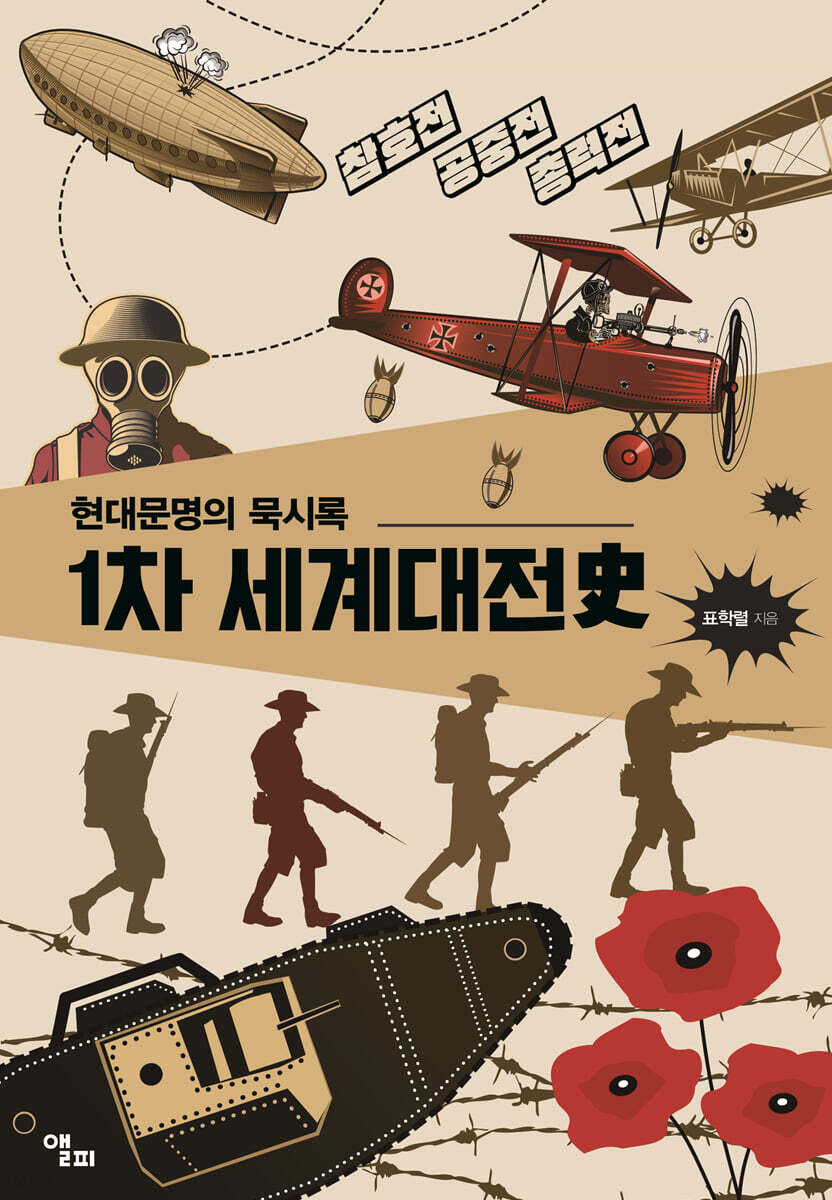
The latest weapons, such as tanks, submarines, fighter planes, and machine guns that made their debut in World War I, were the first 'weapons of mass destruction' in human history, mobilizing all the technology of the time.
The days of plains battles, with regular ranks and clashes according to formality, are a thing of the distant past.
The side that pours out the most and the fastest wins.
The market created by capitalism, and war inevitably made war global as well.
And the result was a disaster.
In other words, it is the fundamental contradiction of modern civilization.
This is why we must continue to remember and engrave the war of 100 years ago.
Because we are still suffering from the self-destructive nature of war (capital) invented by modern civilization.
The wars raging in distant Russia and the Middle East are shaking our daily lives no different from a hundred years ago.
How did World War I, considered the most brutal war in human history, begin, how did it unfold, and what consequences did it ultimately leave behind? As we build up each of the 46 episodes, we will learn what we gained and lost from this worst war of attrition.
Above all, we learn how the entire 'forest' is on fire, even though there may be less damaged trees, and how the 'embers' that have not yet been extinguished threaten our future.
The book begins with the colonial struggle that led to the war, and ends with an incident in a Berlin movie theater twelve years after the war ended.
The film shown at the time was the eponymous version of the anti-war novel [All Quiet on the Western Front], which was based on the author's experiences as a participant in World War I.
The person who led the effort to block the screening of this film at the time was the famous Goebbels.
The author, who has consistently presented history books in the form of episodes of about six pages each, crossing over Korean and world history, has this time explored 'World War I' as his topic.
The author's intention to simultaneously look into and reflect on "the trees and the forest" in an episodic format permeates the book's thematic consciousness once again.
Why was the war that took place in Europe, including Britain, Germany, Austria, and France, given the grandiose name "world war"? It was triggered by "capital," and its course coincided with the development of "capitalism."
At the time, Africa and Asia, which were colonies of the participating nations such as Britain and France, had no choice but to organize armies and participate in the war or to focus on producing war materials for the great powers to use in the war.
Neutral countries, including the United States, made a fortune by jumping into the war business.
Capitalism connected the entire world to a 'market', and thus the European war for hegemony influenced the entire world.
Here, the author reveals a second problem of concern: the ‘war of modern civilization.’
The latest weapons, such as tanks, submarines, fighter planes, and machine guns that made their debut in World War I, were the first 'weapons of mass destruction' in human history, mobilizing all the technology of the time.
The days of plains battles, with regular ranks and clashes according to formality, are a thing of the distant past.
The side that pours out the most and the fastest wins.
The market created by capitalism, and war inevitably made war global as well.
And the result was a disaster.
In other words, it is the fundamental contradiction of modern civilization.
This is why we must continue to remember and engrave the war of 100 years ago.
Because we are still suffering from the self-destructive nature of war (capital) invented by modern civilization.
The wars raging in distant Russia and the Middle East are shaking our daily lives no different from a hundred years ago.
How did World War I, considered the most brutal war in human history, begin, how did it unfold, and what consequences did it ultimately leave behind? As we build up each of the 46 episodes, we will learn what we gained and lost from this worst war of attrition.
Above all, we learn how the entire 'forest' is on fire, even though there may be less damaged trees, and how the 'embers' that have not yet been extinguished threaten our future.
- You can preview some of the book's contents.
Preview
index
· Introduction: Why World War?
1 Imperialism _ Colonial struggle = Market struggle!
Further, More, In Search of New Markets│Colonizing the World
2 Belle Époque _ Anxiety in Peace
Peace brought about by the balance of power│Artists of the Moulin Rouge, Montmartre, and the Champs-Élysées│Anxiety in Munch's [The Scream]
3 Modern Warfare _ The Industrial Revolution Changed the Face of War
Mass production and mass consumption of soldiers and weapons│The International Peace Conference failed to preserve peace.
4 Tripartite Alliance vs. Tripartite Negotiation: A Dangerous Alliance That Leads to War
The Gamble for Alliance Expansion│The Risk of War Raised by Unconditional Participation│Germany and France Clash in Morocco
5 The Fall of the Austro-Hungarian Empire: The Fall of Austria
Losing the initiative to Prussia│Expanding influence to the Balkan Peninsula│Problematic marriage that shook the imperial family
6 Sarajevo Incident - The Gunshot That Signaled the Beginning of War
"Sophie, my love, don't die."│Declaration of war on Serbia
7 Russia _ Nicholas II's Dangerous Choice
He succeeded his father as a reformist monarch, but he loved his family more than his country. Between revolution and war.
8 Germany _ Europe's Bad Boy, Wilhelm II
Confrontation with Bismarck│The "3B Policy," a synonym for expansionist policies
9 England _ From the House of Hanover to the House of Windsor
The Hanoverian dynasty established the principle of constitutional monarchy. George V, who humbled himself and devoted himself to war.
10 France _ Uniting Against Germany
The Dreyfus Affair That Rocked the Third Republic│National Support for Poincaré│'Shut Up and Attack', by De Grandmaison
11 German Social Democratic Party _ Class or Nation?
The Divergence of Social Democracy and Stalinism│The Social Democratic Party's Dilemma│Marxism Swept Away by War
12 Japan _ The war no one wanted
A Nominal Emperor│Moving Towards Imperialism
13 The Islamic World _ The Young Turks and the Three Pashas
Lost Reform│Becoming Germany's Allies
14 Schlieffen Plan - Germany's Victorious Strategy
Push the revolving door hard│Germany seizes the early lead
15 The Battle of the Marne _ The Beginning of Trench Warfare
Two Reasons Why the Schlieffen Plan Failed│The Front Lines Stalled
16 Barbed Wire _ A Symbol of World War I
The thorny undergrowth that enveloped the European continent│Machine guns, cannons, tanks… Weapons used to break through barbed wire
17 Machine Guns and Cannons _ The Brutal Power of New Weapons
The Amazing Power of the Maxim Machine Gun: Automatic Firing│Fat Bertha Shatters Trench│Soldiers Shattered
Trench 18 _ Crouching Soldiers
Bedbugs, fleas, lice, rats… The masters of the underground space│On the border between life and death
19 Fritz Haber - Father of Poison Gas
The Battle of Ypres, Fueled by Chlorine Gas | The Unleashed Poison Gas Development Race | The Tragic End of a National Hero
20 Italy _ The empty-handed victor
From a City-State to a Unified Nation│A Late Entry into the War│The Disastrous Battle of Caporetto
21 Mussolini _ The Black Shirt Fascist
The Frustration and Transformation of the Anti-Imperialist Fighter│The Rise of Militant Fascism and the Construction of the Fascist Party│The Black Shirt Demonstrators Marching on Rome
22 Battle of Verdun ① _ France's Last Bastion
An impregnable fortress│Indiscriminate artillery fire poured down on Douaumont│'New Hero' Pétain's decisive move
23 Battle of Verdun ② _ Falling into the quagmire of a war of attrition
Germany's June Offensive│A Call for Help from the Eastern Front│10 Months, 1 Million Casualties
24 Philippe Pétain - The Heretic Who Saved France
From a straggler to a soldier's hero│Why did Pétain choose a puppet government?
25 Tanks _ King of Land Combat
France's CA-1, Britain's Mother │ Tank Debut, Battle of the Somme │ The Worst Weapon of Mass Destruction
26 George Patton _ The epitome of tank warfare
Guderian, who led Germany's tank development, and Patton's true value in World War II, a destructive figure unsuited to peace.
27 Fighter _ The Romance of Air Combat
Zeppelin Takes on a Reconnaissance Mission│From Reconnaissance Ship to Fighter│A Legendary One-on-One Duel Between Pilots
28 Hermann Goering _ German Air Force's 'ace'
A Fateful Encounter with Hitler | Failure in World War II | The Shadow of Increasing Air Warfare
29 Battleships _ The Front Line of the Arms Race
The emergence of armored ships, bigger and heavier│The most powerful dreadnought battleship│Germany's failure to break the blockade at the Battle of Jutland│The era of aircraft carriers
30 Winston Churchill _ A leader optimized for war command
Imperialist Navy Minister│Anti-Labor, Anti-Leftist, and Anti-Fascist│Moving to War
31 Submarine _ The line extends beneath the sea
Imagination Becomes Reality│Britain's Submarine Hunt│Abandoned German U-Boats
32 Total War - The 'Mothers of Sparta' Who Supported the War
Women who protected the rear│Patriotism, propaganda, unity, perseverance…
33 Hitler _ A monster born of war
The Western Front's Messengers│'Execute the Traitors': The Rise of the Nazis│The Lessons of Germany's Choice
34 Gandhi _ Hitting the Vulnerable Point of Imperialism
The Split of the Pro-British Indian Faction│Indian Youth Who Went to the Battlefield for Independence│From Encouraging Participation to Leader of the Independence Movement│Gandhi's Path to Subjugating Britain
35 Hussein-McMahon Letters - The Seeds of a Long Middle East Conflict
Repeated Ottoman Defeats│British Diversionary Operations Utilizing the Arab National Movement
36 China _ The path to modernization is too slow
Yuan Shikai, Back to the Emperor's Palace│The Impact of World War I on China
37 Woodrow Wilson _ Ambiguous Neutrality
A Strange Election: A Gamble for the White Workers and Middle Class | A Shaken Isolationism
38 The Lusitania Incident - The Last Voyage of a Luxury Liner
An Internal Explosion? Was It a Justified Military Operation? │ Wilson's Concerns Ahead of Re-election │ The Zimmerman Memorandum That Led to the US Declaration of War
39 US Entry into the War _ The Emergence of a New Hegemon
The US poured in supplies and troops│“I Want You For US
Army”│White people go to the white unit, black people go to the black unit
40 Eastern Front - Germany Overwhelms Russia
The Russian army, struggling in disarray│Nicholas II rushes to the front.
41 Russian Revolution _ Lenin Seizes the Winter Palace
Operation to Eliminate Rasputin│Mothers Who Occupied the Streets│From the March Revolution to the November Revolution│The Failed Restoration Movement
42 Treaty of Brest-Litovsk _ Russia in the grip of civil war
Lenin's Choice of Surrender│Whites vs. Reds│The Path Socialism Walked After the Civil War│What the Russian Revolution Left Behind
43 Spanish Flu _ The Illegitimate Child of World War I
The virus that spread around the world with soldiers│People wearing masks│The worst epidemic in human history
44 Egon Schiele _ Artists in War
The conflicting fates of the war veterans and the escapees│They continued their artistic activities even during the war.
45 End of the War - Why Did Germany Surrender?
Germany's final offensive, the Spring Offensive | Growing anti-war sentiment | The Social Democratic Party opts for an unconditional armistice
46 All Quiet on the Western Front _ There is no war with a human face
What Goebbels Wanted to Hide│What the Unreflective End of War Left Behind│Germany Swept by Hatred and Resentment│Pacifists Driven Out
· Epilogue
Photo source
1 Imperialism _ Colonial struggle = Market struggle!
Further, More, In Search of New Markets│Colonizing the World
2 Belle Époque _ Anxiety in Peace
Peace brought about by the balance of power│Artists of the Moulin Rouge, Montmartre, and the Champs-Élysées│Anxiety in Munch's [The Scream]
3 Modern Warfare _ The Industrial Revolution Changed the Face of War
Mass production and mass consumption of soldiers and weapons│The International Peace Conference failed to preserve peace.
4 Tripartite Alliance vs. Tripartite Negotiation: A Dangerous Alliance That Leads to War
The Gamble for Alliance Expansion│The Risk of War Raised by Unconditional Participation│Germany and France Clash in Morocco
5 The Fall of the Austro-Hungarian Empire: The Fall of Austria
Losing the initiative to Prussia│Expanding influence to the Balkan Peninsula│Problematic marriage that shook the imperial family
6 Sarajevo Incident - The Gunshot That Signaled the Beginning of War
"Sophie, my love, don't die."│Declaration of war on Serbia
7 Russia _ Nicholas II's Dangerous Choice
He succeeded his father as a reformist monarch, but he loved his family more than his country. Between revolution and war.
8 Germany _ Europe's Bad Boy, Wilhelm II
Confrontation with Bismarck│The "3B Policy," a synonym for expansionist policies
9 England _ From the House of Hanover to the House of Windsor
The Hanoverian dynasty established the principle of constitutional monarchy. George V, who humbled himself and devoted himself to war.
10 France _ Uniting Against Germany
The Dreyfus Affair That Rocked the Third Republic│National Support for Poincaré│'Shut Up and Attack', by De Grandmaison
11 German Social Democratic Party _ Class or Nation?
The Divergence of Social Democracy and Stalinism│The Social Democratic Party's Dilemma│Marxism Swept Away by War
12 Japan _ The war no one wanted
A Nominal Emperor│Moving Towards Imperialism
13 The Islamic World _ The Young Turks and the Three Pashas
Lost Reform│Becoming Germany's Allies
14 Schlieffen Plan - Germany's Victorious Strategy
Push the revolving door hard│Germany seizes the early lead
15 The Battle of the Marne _ The Beginning of Trench Warfare
Two Reasons Why the Schlieffen Plan Failed│The Front Lines Stalled
16 Barbed Wire _ A Symbol of World War I
The thorny undergrowth that enveloped the European continent│Machine guns, cannons, tanks… Weapons used to break through barbed wire
17 Machine Guns and Cannons _ The Brutal Power of New Weapons
The Amazing Power of the Maxim Machine Gun: Automatic Firing│Fat Bertha Shatters Trench│Soldiers Shattered
Trench 18 _ Crouching Soldiers
Bedbugs, fleas, lice, rats… The masters of the underground space│On the border between life and death
19 Fritz Haber - Father of Poison Gas
The Battle of Ypres, Fueled by Chlorine Gas | The Unleashed Poison Gas Development Race | The Tragic End of a National Hero
20 Italy _ The empty-handed victor
From a City-State to a Unified Nation│A Late Entry into the War│The Disastrous Battle of Caporetto
21 Mussolini _ The Black Shirt Fascist
The Frustration and Transformation of the Anti-Imperialist Fighter│The Rise of Militant Fascism and the Construction of the Fascist Party│The Black Shirt Demonstrators Marching on Rome
22 Battle of Verdun ① _ France's Last Bastion
An impregnable fortress│Indiscriminate artillery fire poured down on Douaumont│'New Hero' Pétain's decisive move
23 Battle of Verdun ② _ Falling into the quagmire of a war of attrition
Germany's June Offensive│A Call for Help from the Eastern Front│10 Months, 1 Million Casualties
24 Philippe Pétain - The Heretic Who Saved France
From a straggler to a soldier's hero│Why did Pétain choose a puppet government?
25 Tanks _ King of Land Combat
France's CA-1, Britain's Mother │ Tank Debut, Battle of the Somme │ The Worst Weapon of Mass Destruction
26 George Patton _ The epitome of tank warfare
Guderian, who led Germany's tank development, and Patton's true value in World War II, a destructive figure unsuited to peace.
27 Fighter _ The Romance of Air Combat
Zeppelin Takes on a Reconnaissance Mission│From Reconnaissance Ship to Fighter│A Legendary One-on-One Duel Between Pilots
28 Hermann Goering _ German Air Force's 'ace'
A Fateful Encounter with Hitler | Failure in World War II | The Shadow of Increasing Air Warfare
29 Battleships _ The Front Line of the Arms Race
The emergence of armored ships, bigger and heavier│The most powerful dreadnought battleship│Germany's failure to break the blockade at the Battle of Jutland│The era of aircraft carriers
30 Winston Churchill _ A leader optimized for war command
Imperialist Navy Minister│Anti-Labor, Anti-Leftist, and Anti-Fascist│Moving to War
31 Submarine _ The line extends beneath the sea
Imagination Becomes Reality│Britain's Submarine Hunt│Abandoned German U-Boats
32 Total War - The 'Mothers of Sparta' Who Supported the War
Women who protected the rear│Patriotism, propaganda, unity, perseverance…
33 Hitler _ A monster born of war
The Western Front's Messengers│'Execute the Traitors': The Rise of the Nazis│The Lessons of Germany's Choice
34 Gandhi _ Hitting the Vulnerable Point of Imperialism
The Split of the Pro-British Indian Faction│Indian Youth Who Went to the Battlefield for Independence│From Encouraging Participation to Leader of the Independence Movement│Gandhi's Path to Subjugating Britain
35 Hussein-McMahon Letters - The Seeds of a Long Middle East Conflict
Repeated Ottoman Defeats│British Diversionary Operations Utilizing the Arab National Movement
36 China _ The path to modernization is too slow
Yuan Shikai, Back to the Emperor's Palace│The Impact of World War I on China
37 Woodrow Wilson _ Ambiguous Neutrality
A Strange Election: A Gamble for the White Workers and Middle Class | A Shaken Isolationism
38 The Lusitania Incident - The Last Voyage of a Luxury Liner
An Internal Explosion? Was It a Justified Military Operation? │ Wilson's Concerns Ahead of Re-election │ The Zimmerman Memorandum That Led to the US Declaration of War
39 US Entry into the War _ The Emergence of a New Hegemon
The US poured in supplies and troops│“I Want You For US
Army”│White people go to the white unit, black people go to the black unit
40 Eastern Front - Germany Overwhelms Russia
The Russian army, struggling in disarray│Nicholas II rushes to the front.
41 Russian Revolution _ Lenin Seizes the Winter Palace
Operation to Eliminate Rasputin│Mothers Who Occupied the Streets│From the March Revolution to the November Revolution│The Failed Restoration Movement
42 Treaty of Brest-Litovsk _ Russia in the grip of civil war
Lenin's Choice of Surrender│Whites vs. Reds│The Path Socialism Walked After the Civil War│What the Russian Revolution Left Behind
43 Spanish Flu _ The Illegitimate Child of World War I
The virus that spread around the world with soldiers│People wearing masks│The worst epidemic in human history
44 Egon Schiele _ Artists in War
The conflicting fates of the war veterans and the escapees│They continued their artistic activities even during the war.
45 End of the War - Why Did Germany Surrender?
Germany's final offensive, the Spring Offensive | Growing anti-war sentiment | The Social Democratic Party opts for an unconditional armistice
46 All Quiet on the Western Front _ There is no war with a human face
What Goebbels Wanted to Hide│What the Unreflective End of War Left Behind│Germany Swept by Hatred and Resentment│Pacifists Driven Out
· Epilogue
Photo source
Into the book
Poor people went to the colonies to make a killing.
Contemporary works such as A Little Princess and Jane Eyre feature relatives who made a fortune in India.
There was an atmosphere of freedom and challenge, where one could venture into the unknown and seize the opportunity for success if one wanted to.
Meanwhile, as the gap between the rich and the poor widened due to the Industrial Revolution and the resistance of the working class intensified, Marxism became popular.
It was common for Marxists and unions to clash violently with the police, leaving the streets littered with casualties.
--- p.25
“What happened? You should have gone straight.
“Put the car in reverse quickly.” The car that was speeding to protect the Grand Duke and his wife stopped.
The car began to slowly reverse.
On the street corner stood a young man named Gavrilo Princip, clutching a pistol, who had missed his car and was looking bewildered.
He must have thought that heaven had helped him when he saw the car of the Grand Duke and Duchess approaching him.
--- p.47
The spirit that dominated the most belligerent French army since the Napoleonic era was 'De Grandmaison'.
It is a kind of 'dak-gong' (shut up and attack) tactic where you charge forward with a bayonet.
It is a tactic reminiscent of the Japanese army's attacks during the Russo-Japanese War.
The French General Staff created Plan 17 based on de Grandmaison's ideas.
The plan was to have an 800,000-strong army charge toward the Rhine River if war broke out with Germany, with the goal of pushing Germany to its senses and ending the war quickly.
--- p.70
The three key figures who led the Young Turks were the three 'Paschas' (Tallat Pasha, Djemal Pasha, and Enver Pasha).
Pasha means general, but it also means the most respected person.
Among them, Djemal Pasha promoted an alliance with Britain, but negotiations with Britain failed, and the other two pashas supported an alliance with Germany, so Djemal also eventually agreed to an alliance with Germany.
--- p.86
The most marginalized people in Italy were former workers who had fought in the war.
Left on the streets without any compensation due to the incompetent government that treated them like a defeated nation, they harbored strong hostility towards those who criticized them from the rear during the war, namely the socialists who criticized the war.
Their discontent could not be expressed through existing ideas.
Something new was required.
Beginning in 1919, men wearing black shirts, symbolizing newness rather than old, began to walk the streets of Italy.
--- p.128
Patton, like Germany's Guderian, noticed the destructive power of tanks early on and studied tactics.
Unlike German tank commander Erwin Rommel and British tank commander Bernard Law Montgomery, who moved from infantry commanders to tank commanders in World War II, Patton prepared early on, leading to victory in battles at key junctures in World War II and becoming synonymous with tank warfare.
Contemporary works such as A Little Princess and Jane Eyre feature relatives who made a fortune in India.
There was an atmosphere of freedom and challenge, where one could venture into the unknown and seize the opportunity for success if one wanted to.
Meanwhile, as the gap between the rich and the poor widened due to the Industrial Revolution and the resistance of the working class intensified, Marxism became popular.
It was common for Marxists and unions to clash violently with the police, leaving the streets littered with casualties.
--- p.25
“What happened? You should have gone straight.
“Put the car in reverse quickly.” The car that was speeding to protect the Grand Duke and his wife stopped.
The car began to slowly reverse.
On the street corner stood a young man named Gavrilo Princip, clutching a pistol, who had missed his car and was looking bewildered.
He must have thought that heaven had helped him when he saw the car of the Grand Duke and Duchess approaching him.
--- p.47
The spirit that dominated the most belligerent French army since the Napoleonic era was 'De Grandmaison'.
It is a kind of 'dak-gong' (shut up and attack) tactic where you charge forward with a bayonet.
It is a tactic reminiscent of the Japanese army's attacks during the Russo-Japanese War.
The French General Staff created Plan 17 based on de Grandmaison's ideas.
The plan was to have an 800,000-strong army charge toward the Rhine River if war broke out with Germany, with the goal of pushing Germany to its senses and ending the war quickly.
--- p.70
The three key figures who led the Young Turks were the three 'Paschas' (Tallat Pasha, Djemal Pasha, and Enver Pasha).
Pasha means general, but it also means the most respected person.
Among them, Djemal Pasha promoted an alliance with Britain, but negotiations with Britain failed, and the other two pashas supported an alliance with Germany, so Djemal also eventually agreed to an alliance with Germany.
--- p.86
The most marginalized people in Italy were former workers who had fought in the war.
Left on the streets without any compensation due to the incompetent government that treated them like a defeated nation, they harbored strong hostility towards those who criticized them from the rear during the war, namely the socialists who criticized the war.
Their discontent could not be expressed through existing ideas.
Something new was required.
Beginning in 1919, men wearing black shirts, symbolizing newness rather than old, began to walk the streets of Italy.
--- p.128
Patton, like Germany's Guderian, noticed the destructive power of tanks early on and studied tactics.
Unlike German tank commander Erwin Rommel and British tank commander Bernard Law Montgomery, who moved from infantry commanders to tank commanders in World War II, Patton prepared early on, leading to victory in battles at key junctures in World War II and becoming synonymous with tank warfare.
--- p.163
GOODS SPECIFICS
- Date of issue: September 15, 2024
- Page count, weight, size: 302 pages | 148*215*30mm
- ISBN13: 9791192647371
- ISBN10: 1192647378
You may also like
카테고리
korean


korean

![GQ KOREA Mark (Monthly): December [2025]](http://librairie.coreenne.fr/cdn/shop/files/8ef265dbbfbf186523ed75ba7319009d.jpg?v=1765340328&width=3840)


