

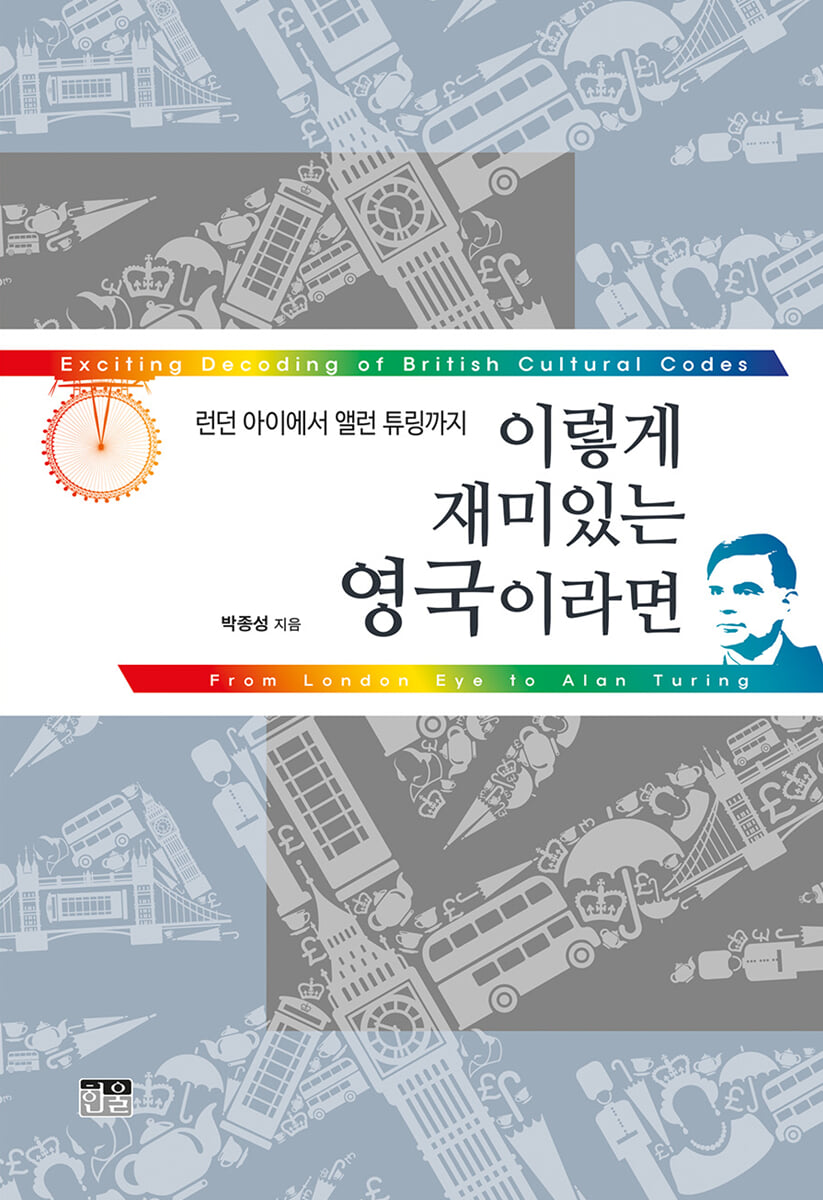
If Britain is this fun
 |
Description
Book Introduction
“The flower of civilization that bloomed on the periphery of Europe,
Choosing brilliant isolation after Brexit
Can Britain today be resilient?”
Into Britain, embracing tradition and innovation
This book explores the aspirations of British consciousness, the archetypes of culture, and British values.
After Brexit, we chose isolation, lost our spiritual leader, the Queen, and are going through a drastic change with a new Prime Minister.
At a historical turning point for Britain, a symbol of capitalism and parliamentary democracy, the author presents a flow that examines the flow of British history and civilization.
To understand the essence of British culture, we chose to decipher various cultural symbols, such as the London Eye and Alan Turing.
It also explores the characteristics of British values by presenting abundant examples of the influence of British culture and the English language in everyday life and history.
A striking feature of this book is its use of a postcolonial lens to examine Britain's past and present, its achievements and limitations, its pride and despair.
The author explores the rise and fall of the island nation of Britain over 2,000 years, employing a multidisciplinary approach that crosses history, science, literature, engineering, geography, and economics.
I hope this will serve as a useful guide for readers seeking to understand where a country's growth engine comes from.
Choosing brilliant isolation after Brexit
Can Britain today be resilient?”
Into Britain, embracing tradition and innovation
This book explores the aspirations of British consciousness, the archetypes of culture, and British values.
After Brexit, we chose isolation, lost our spiritual leader, the Queen, and are going through a drastic change with a new Prime Minister.
At a historical turning point for Britain, a symbol of capitalism and parliamentary democracy, the author presents a flow that examines the flow of British history and civilization.
To understand the essence of British culture, we chose to decipher various cultural symbols, such as the London Eye and Alan Turing.
It also explores the characteristics of British values by presenting abundant examples of the influence of British culture and the English language in everyday life and history.
A striking feature of this book is its use of a postcolonial lens to examine Britain's past and present, its achievements and limitations, its pride and despair.
The author explores the rise and fall of the island nation of Britain over 2,000 years, employing a multidisciplinary approach that crosses history, science, literature, engineering, geography, and economics.
I hope this will serve as a useful guide for readers seeking to understand where a country's growth engine comes from.
index
prolog
Chapter 1 Island Island Nation Britain
1 Weather and Climate
2 The symbolic color of achromatic London is red
3 London's urban planning
4 Greek and Roman architectural styles
5 The Rise and Fall of Britain
6 Historical Relations between Britain and Neighboring Countries
7 Brexit
Chapter 2: Ship and Marine Accidents
1 Joseon Dynasty
2 Suez Canal and Waterways
3 Maritime accidents and commercial conflicts
4 battleships, HMS Belfast
5 aircraft carriers, Queen Elizabeth
6 Trilateral Security Alliance, Okus
Chapter 3: Building a Vast Empire
1 Elizabeth I's Statecraft
2. Establishment and operation of the East India Company
Network of 3 Empires
4 The Light and Shadow of Imperialism
5 Cases of Colonial Malfunction
6 Reassessing the White Colonizer
7. The Perspective of a Postcolonial Novelist
8 The Iraq War and the Chilcot Report
9 Palestine-Israel War
10 Historic Encounters between Korea and the UK
Chapter 4: Creative Thinking
1 Characteristics of British education
2 The Power of Storytelling
3 Creative Methods
4 Design Powerhouses
5 Cultural Content Industry Powerhouses
6 Love Passwords and Codes
7. Alan Turing, the father of computer science
Chapter 5: Rest and Slow Lifestyle
1 tee break
2 Slow Fashion
3 Slow Food
4 Churchill's hobby: watercolor painting
5 Green Countries
6 Clean Zone, Carbis Bay, Cornwall
7 Alcohol Stories
8 Sports and Classes
9 Characteristics of English Football
10. Banning racial discrimination in football stadiums
11 Pub and Club Culture
Chapter 6 Maintaining Class
1 Chivalry
2 The dignity of language
3 Leadership Styles of Past Prime Ministers
4 House of Representatives scenery
5 Sponsorship System
6 Etiquette Education and Invitation Culture
7 British newspapers and broadcasts
8 Secrets to Maintaining Fairness in the Booker Prize
9 Queen's State Funeral and Mourning Culture
10 The Queen's Sense of Humor and Compatibility
11 Coronation of Charles III
12 The Role of the British Police
13 The Judicial System and the Statue of the Goddess of Justice
14 National Health Services
Chapter 7: Pursuing Diversity
1. Origin of the Festival
2 Voices of the Counterculture
3 The Windrush Scandal and Illegal Immigrant Hatred
4. Policy to block refugee inflow
5 Global Refugee Issues
6 Ethnic Diversity in the British Cabinet
7 Prince Harry and Meghan Markle's wedding
8 public art exhibition spaces
Epilogue
References
Search
Chapter 1 Island Island Nation Britain
1 Weather and Climate
2 The symbolic color of achromatic London is red
3 London's urban planning
4 Greek and Roman architectural styles
5 The Rise and Fall of Britain
6 Historical Relations between Britain and Neighboring Countries
7 Brexit
Chapter 2: Ship and Marine Accidents
1 Joseon Dynasty
2 Suez Canal and Waterways
3 Maritime accidents and commercial conflicts
4 battleships, HMS Belfast
5 aircraft carriers, Queen Elizabeth
6 Trilateral Security Alliance, Okus
Chapter 3: Building a Vast Empire
1 Elizabeth I's Statecraft
2. Establishment and operation of the East India Company
Network of 3 Empires
4 The Light and Shadow of Imperialism
5 Cases of Colonial Malfunction
6 Reassessing the White Colonizer
7. The Perspective of a Postcolonial Novelist
8 The Iraq War and the Chilcot Report
9 Palestine-Israel War
10 Historic Encounters between Korea and the UK
Chapter 4: Creative Thinking
1 Characteristics of British education
2 The Power of Storytelling
3 Creative Methods
4 Design Powerhouses
5 Cultural Content Industry Powerhouses
6 Love Passwords and Codes
7. Alan Turing, the father of computer science
Chapter 5: Rest and Slow Lifestyle
1 tee break
2 Slow Fashion
3 Slow Food
4 Churchill's hobby: watercolor painting
5 Green Countries
6 Clean Zone, Carbis Bay, Cornwall
7 Alcohol Stories
8 Sports and Classes
9 Characteristics of English Football
10. Banning racial discrimination in football stadiums
11 Pub and Club Culture
Chapter 6 Maintaining Class
1 Chivalry
2 The dignity of language
3 Leadership Styles of Past Prime Ministers
4 House of Representatives scenery
5 Sponsorship System
6 Etiquette Education and Invitation Culture
7 British newspapers and broadcasts
8 Secrets to Maintaining Fairness in the Booker Prize
9 Queen's State Funeral and Mourning Culture
10 The Queen's Sense of Humor and Compatibility
11 Coronation of Charles III
12 The Role of the British Police
13 The Judicial System and the Statue of the Goddess of Justice
14 National Health Services
Chapter 7: Pursuing Diversity
1. Origin of the Festival
2 Voices of the Counterculture
3 The Windrush Scandal and Illegal Immigrant Hatred
4. Policy to block refugee inflow
5 Global Refugee Issues
6 Ethnic Diversity in the British Cabinet
7 Prince Harry and Meghan Markle's wedding
8 public art exhibition spaces
Epilogue
References
Search
Detailed image
Into the book
Britain is an island nation surrounded by sea and a maritime nation.
The English Channel, which William Shakespeare called the castle's moat, provided a natural defense.
It was relatively safe from the wars of Europe, and the king had no need to maintain a standing army.
Moreover, it was the birthplace of parliamentary democracy and the industrial revolution.
The peace under British rule in the 19th century was called 'Pax Britannia' (reign, Britannia).
The foundation upon which Britain, a country on the periphery of Europe, built an empire of approximately 350 million subjects was its naval and economic power.
Thanks to its statecraft, Britain was once known as 'Cool Britannia', a thriving nation.
However, after two world wars, the country's national power was weakened, and a new superpower, the United States, emerged.
The UK currently has the world's fourth largest economy.
Comedian Mr. Bean's beloved British compact car, the Mini, has the phrase "Do not tease or harass the Mini" engraved on the bottom of its license plate.
The island nation of Britain cannot be taken lightly.
---From "Chapter 1 Island Island, England"
The painter William Turner painted [The Fighting Temeraire] with the sunset over the Thames River in the background.
Temeraire, which means 'reckless' or 'bold' in French, has been used as the name of a French naval ship since the 17th century.
This large sailing ship was used in the Battle of Trafalgar.
Turner captured the scene of a small, flame-belching steamer towing a decommissioned warship to Rotherhithe Docks for dismantling.
The large sailing ship is dismantled and reduced to a log, and the sun sets.
Turner presents a majestic and sad portrait of the end of an era.
It is one of the greatest British paintings.
The UK has used this historic image on its £20 note since February 20, 2020.
The back of the note features Turner's face and the phrase "Therefore light is color."
---From "Chapter 2: Ships and Maritime Thinking"
The relationship between Britain and Ireland is geographically close, but emotionally distant.
Because there is a painful history of colonial rule.
The history of how we came to possess the DNA of anger is as follows.
Oliver Cromwell occupied Ireland from 1649 to 1653.
Most of the landowners in Ireland were British.
During the 300 years of British rule in Ireland, a structural imbalance persisted between British landowners and the yeoman farmers (including tenant farmers) who made up about 70% of the Irish population.
So it was possible for Britain to seize almost all of Ireland's wheat and corn.
The number of Irish tenant farmers in arrears with their rents increased.
Dissatisfaction with this injustice accumulated, eventually leading to the boycott movement (a movement to refuse to accept unfair actions and to organize and collectively reject them).
The term was coined after tenant farmers successfully evicted Charles Cunningham Boycott, the land manager of a British aristocratic estate, who was the land manager of the 3rd Earl of Earn, County Mayo, Ireland, in 1880.
---From "Chapter 3: Building a Vast Empire"
But why are private schools called public schools?
Public schools without entrance exams are also called state schools.
In the past, children of nobles and the wealthy received individual education through private tutors.
However, the term public was used to refer to the gathering of gentry children in one place to educate them, and it came to be called a public school.
Representative public schools include Winchester, Eton, and Harrow.
During the period of overseas colonization, British parents sent their children to boarding public schools and worked abroad.
Public school graduates formed the ruling class as an elite and grew up to be imperialists.
Therefore, public school graduates are understood as “people who were born to good parents and received a different education and culture from ordinary people.”
It means that it has the fatal limitation of only mixing with people of the same type.
The only exception is George Orwell, an Eton graduate who became a classless person.
---From "Chapter 4: Creative Thinking"
Tea is the national drink enjoyed by the British.
Germany is the country of beer, France is the country of wine, and England is the country of tea.
Around 3:30 p.m. all over Britain there is a chorus of kettles boiling.
A nationwide movement of people drinking tea simultaneously takes place in factories, laboratories, offices and homes.
Of course, it is not a law, it is just a custom.
The British will even pause to drink tea while fighting with their spouses or even while on the front lines facing the enemy.
Why are the British so obsessed with drinking bland tea?
The first thing to think about is that the cold and humid weather made the British need drinks to keep them warm.
The English expression “When it rains, you definitely need a car” was created.
As the saying goes, drinking tea has become a common occurrence.
The English word for the feeling of your body getting hot after drinking tea is 'glow' (meaning the heat spreads throughout your body).
---From "Chapter 5 Rest Slow Lifestyle"
The British Parliament operates as a bicameral system consisting of the House of Lords and the House of Commons.
The House of Lords is composed of hereditary nobles, and the House of Commons is composed of members of the National Assembly elected from local constituencies.
Here, 'Commons' (referring to the House of Representatives) means commoners.
Based on the color of the sofas they sit on, the House of Representatives is green and the Senate is cardinal red.
Tony Blair's Labour government carried out reforms to the House of Lords.
Hereditary nobles were not automatically eligible to become senators.
Of the 1,459, 759 were eliminated, leaving about 500.
The House of Commons is based on a two-party system with a ruling party and an opposition party, the Conservative Party and the Labour Party.
The ruling party is called the ruling party, and the opposition party is called the opposition party.
In this way, the roles of each party are clear.
The Senate is the final body that deliberates and decides on important matters.
In a constitutional monarchy, the prime minister of the majority party can form a government and cabinet only with the request and permission of the queen.
---From "Maintaining Class and Dignity"
London's Notting Hill Carnival is Europe's largest street festival.
It is the second largest carnival in the world after the Rio Carnival in Brazil.
Traditional Caribbean food, diverse musical performances, and a 12km parade take place over two days in August.
This festival was started in 1964 by African-Caribbean immigrants living in the Notting Hill area to promote their unique culture and traditions and to relieve nostalgia.
The festival's highlights include colorfully costumed dancers, steel bands and the slaves' work song, calypso.
The dancers' costumes reveal a blurring of the boundaries between humans and insects.
Steel bands are played by making instruments out of drums, which produce a resonant sound like water droplets spreading out.
It radiates the spirit of carnival like this.
Immigrants brought exotic cultures and revitalized London.
The English Channel, which William Shakespeare called the castle's moat, provided a natural defense.
It was relatively safe from the wars of Europe, and the king had no need to maintain a standing army.
Moreover, it was the birthplace of parliamentary democracy and the industrial revolution.
The peace under British rule in the 19th century was called 'Pax Britannia' (reign, Britannia).
The foundation upon which Britain, a country on the periphery of Europe, built an empire of approximately 350 million subjects was its naval and economic power.
Thanks to its statecraft, Britain was once known as 'Cool Britannia', a thriving nation.
However, after two world wars, the country's national power was weakened, and a new superpower, the United States, emerged.
The UK currently has the world's fourth largest economy.
Comedian Mr. Bean's beloved British compact car, the Mini, has the phrase "Do not tease or harass the Mini" engraved on the bottom of its license plate.
The island nation of Britain cannot be taken lightly.
---From "Chapter 1 Island Island, England"
The painter William Turner painted [The Fighting Temeraire] with the sunset over the Thames River in the background.
Temeraire, which means 'reckless' or 'bold' in French, has been used as the name of a French naval ship since the 17th century.
This large sailing ship was used in the Battle of Trafalgar.
Turner captured the scene of a small, flame-belching steamer towing a decommissioned warship to Rotherhithe Docks for dismantling.
The large sailing ship is dismantled and reduced to a log, and the sun sets.
Turner presents a majestic and sad portrait of the end of an era.
It is one of the greatest British paintings.
The UK has used this historic image on its £20 note since February 20, 2020.
The back of the note features Turner's face and the phrase "Therefore light is color."
---From "Chapter 2: Ships and Maritime Thinking"
The relationship between Britain and Ireland is geographically close, but emotionally distant.
Because there is a painful history of colonial rule.
The history of how we came to possess the DNA of anger is as follows.
Oliver Cromwell occupied Ireland from 1649 to 1653.
Most of the landowners in Ireland were British.
During the 300 years of British rule in Ireland, a structural imbalance persisted between British landowners and the yeoman farmers (including tenant farmers) who made up about 70% of the Irish population.
So it was possible for Britain to seize almost all of Ireland's wheat and corn.
The number of Irish tenant farmers in arrears with their rents increased.
Dissatisfaction with this injustice accumulated, eventually leading to the boycott movement (a movement to refuse to accept unfair actions and to organize and collectively reject them).
The term was coined after tenant farmers successfully evicted Charles Cunningham Boycott, the land manager of a British aristocratic estate, who was the land manager of the 3rd Earl of Earn, County Mayo, Ireland, in 1880.
---From "Chapter 3: Building a Vast Empire"
But why are private schools called public schools?
Public schools without entrance exams are also called state schools.
In the past, children of nobles and the wealthy received individual education through private tutors.
However, the term public was used to refer to the gathering of gentry children in one place to educate them, and it came to be called a public school.
Representative public schools include Winchester, Eton, and Harrow.
During the period of overseas colonization, British parents sent their children to boarding public schools and worked abroad.
Public school graduates formed the ruling class as an elite and grew up to be imperialists.
Therefore, public school graduates are understood as “people who were born to good parents and received a different education and culture from ordinary people.”
It means that it has the fatal limitation of only mixing with people of the same type.
The only exception is George Orwell, an Eton graduate who became a classless person.
---From "Chapter 4: Creative Thinking"
Tea is the national drink enjoyed by the British.
Germany is the country of beer, France is the country of wine, and England is the country of tea.
Around 3:30 p.m. all over Britain there is a chorus of kettles boiling.
A nationwide movement of people drinking tea simultaneously takes place in factories, laboratories, offices and homes.
Of course, it is not a law, it is just a custom.
The British will even pause to drink tea while fighting with their spouses or even while on the front lines facing the enemy.
Why are the British so obsessed with drinking bland tea?
The first thing to think about is that the cold and humid weather made the British need drinks to keep them warm.
The English expression “When it rains, you definitely need a car” was created.
As the saying goes, drinking tea has become a common occurrence.
The English word for the feeling of your body getting hot after drinking tea is 'glow' (meaning the heat spreads throughout your body).
---From "Chapter 5 Rest Slow Lifestyle"
The British Parliament operates as a bicameral system consisting of the House of Lords and the House of Commons.
The House of Lords is composed of hereditary nobles, and the House of Commons is composed of members of the National Assembly elected from local constituencies.
Here, 'Commons' (referring to the House of Representatives) means commoners.
Based on the color of the sofas they sit on, the House of Representatives is green and the Senate is cardinal red.
Tony Blair's Labour government carried out reforms to the House of Lords.
Hereditary nobles were not automatically eligible to become senators.
Of the 1,459, 759 were eliminated, leaving about 500.
The House of Commons is based on a two-party system with a ruling party and an opposition party, the Conservative Party and the Labour Party.
The ruling party is called the ruling party, and the opposition party is called the opposition party.
In this way, the roles of each party are clear.
The Senate is the final body that deliberates and decides on important matters.
In a constitutional monarchy, the prime minister of the majority party can form a government and cabinet only with the request and permission of the queen.
---From "Maintaining Class and Dignity"
London's Notting Hill Carnival is Europe's largest street festival.
It is the second largest carnival in the world after the Rio Carnival in Brazil.
Traditional Caribbean food, diverse musical performances, and a 12km parade take place over two days in August.
This festival was started in 1964 by African-Caribbean immigrants living in the Notting Hill area to promote their unique culture and traditions and to relieve nostalgia.
The festival's highlights include colorfully costumed dancers, steel bands and the slaves' work song, calypso.
The dancers' costumes reveal a blurring of the boundaries between humans and insects.
Steel bands are played by making instruments out of drums, which produce a resonant sound like water droplets spreading out.
It radiates the spirit of carnival like this.
Immigrants brought exotic cultures and revitalized London.
---From "Chapter 7: Pursuing Diversity"
Publisher's Review
Discover Britain today, a land of tradition and innovation.
The historian Tacitus called Britain “the unknown and mysterious land at the very end of the earth,” and Orwell said, “All of England sleeps a deep, deep sleep.”
Today's Britain feels more like a country undergoing change, embracing Brexit, the ever-turning London Eye, Alan Turing, the inventor of the early computer, and a new king and prime minister, than a country that feels unrealistic and serene.
Examining British culture, which embraces tradition and innovation, will be meaningful in finding the driving force to survive in the post-pandemic world.
This book covers the rise and fall of the island nation of Britain over 2,000 years.
We examine the flow of history and civilization from the Roman invasion, through the construction and dissolution of the British Empire, to today, with Brexit.
So now the question turns to:
Can Britain, having chosen "Brexit"—a splendid isolation—rebuild its "greatness" on the global stage? As Britain, the cradle of parliamentary democracy, faces the crisis of populism and voices of concern about civilizational decline, can Britain be resilient? This book explores Britain's past and present, its achievements and limitations, its pride and despair, and the rise and fall of civilization over two millennia.
A deeper dive into modern Britain
The keywords and key contents of each chapter are as follows.
The keyword for Chapter 1 is island.
Britain is an island country surrounded by the sea and separated from the European continent, so it has little sunlight and frequent wind and rain.
They established colonies through sea routes, opened markets for their goods, intervened in conflict zones to advance national interests, and spread English and democracy.
In this respect, Britain can be defined as an expansionist nation.
Examines the influence of geographical and climatic factors on the temperament and thinking of the British people.
Examples include safety obsession and tea culture.
The keyword for Chapter 2 is ship.
As a maritime nation, Britain's navy is its main force.
Britain has long felt the urgent need to connect with the world by sea.
British maritime thinking enabled them to dominate the seas through innovations in shipbuilding, navigation, cartography, and gunsmithing.
For example, thanks to the invention of the ironclad, China won the Opium War, and today, destroyers and aircraft carriers are dispatched to conflict zones to protect national interests.
Britain has consistently made technological innovations, from sailing ships to steamships to nuclear-powered aircraft carriers.
The keyword for Chapter 3 is ‘broad’.
Discover the secrets of Britain's vast empire.
The island nation of Britain was able to build an empire thanks to its ships capable of long-distance sailing.
Moreover, Britain demonstrated meticulous statecraft to secure the world's strategically important locations.
Gibraltar, the entrance to the Mediterranean Sea, the Suez Canal, an important route to India, Singapore, the gateway to Asia, the Cape of Good Hope at the southernmost tip of South Africa, a stopover for long-distance ships, and the Falkland Islands at the southernmost tip of Argentina are all under their control or are still under their control.
The keyword for Chapter 4 was ‘creation’.
Finding British creativity in language and culture.
By building an empire, Britain was able to spread the English language and literature, Christianity and democracy, and to plunder resources and secure markets.
Today, English is the international language and the primary language of the marketplace.
British influence will not diminish unless English disappears.
Not only has English literacy and command become a means of survival, but Britain is also a recognized cultural powerhouse.
Next, we explore where the inventive power of science and technology, and the creative power of culture and art, come from to discuss British values.
Chapter 5 highlights the ‘slow lifestyle’ using ‘rest’ as a keyword.
We explore how the culture of slowness, leisure, solitude, and contemplation, which permeates the British way of life, sports, and gardening, gives rise to creative products.
The keyword for Chapter 6 is class, which discusses behavioral norms, dress codes, and the quality of language.
Medieval chivalry evolved into gentlemanlyism in the 19th century, and Kingsman (knights) transformed into intelligence agent 007.
And the sponsorship system and donation culture are expressions of altruism.
We explore the secret to how a character that exerts a positive influence can coexist with predatory imperialism or frenzied capitalism.
The keyword for Chapter 7 is ‘many’, that is, diversity.
Britain's growth engine comes from a culture that respects diversity.
Through its imperial administration, Britain absorbed diverse peoples, races, languages, religions, and cultures.
For example, the rich vocabulary of the English language is a result of Roman invasions, the Norman conquest, colonization, and the influx of immigrants.
The secret to an isolated island nation's blossoming civilization lay not in its isolation but in its openness.
The historian Tacitus called Britain “the unknown and mysterious land at the very end of the earth,” and Orwell said, “All of England sleeps a deep, deep sleep.”
Today's Britain feels more like a country undergoing change, embracing Brexit, the ever-turning London Eye, Alan Turing, the inventor of the early computer, and a new king and prime minister, than a country that feels unrealistic and serene.
Examining British culture, which embraces tradition and innovation, will be meaningful in finding the driving force to survive in the post-pandemic world.
This book covers the rise and fall of the island nation of Britain over 2,000 years.
We examine the flow of history and civilization from the Roman invasion, through the construction and dissolution of the British Empire, to today, with Brexit.
So now the question turns to:
Can Britain, having chosen "Brexit"—a splendid isolation—rebuild its "greatness" on the global stage? As Britain, the cradle of parliamentary democracy, faces the crisis of populism and voices of concern about civilizational decline, can Britain be resilient? This book explores Britain's past and present, its achievements and limitations, its pride and despair, and the rise and fall of civilization over two millennia.
A deeper dive into modern Britain
The keywords and key contents of each chapter are as follows.
The keyword for Chapter 1 is island.
Britain is an island country surrounded by the sea and separated from the European continent, so it has little sunlight and frequent wind and rain.
They established colonies through sea routes, opened markets for their goods, intervened in conflict zones to advance national interests, and spread English and democracy.
In this respect, Britain can be defined as an expansionist nation.
Examines the influence of geographical and climatic factors on the temperament and thinking of the British people.
Examples include safety obsession and tea culture.
The keyword for Chapter 2 is ship.
As a maritime nation, Britain's navy is its main force.
Britain has long felt the urgent need to connect with the world by sea.
British maritime thinking enabled them to dominate the seas through innovations in shipbuilding, navigation, cartography, and gunsmithing.
For example, thanks to the invention of the ironclad, China won the Opium War, and today, destroyers and aircraft carriers are dispatched to conflict zones to protect national interests.
Britain has consistently made technological innovations, from sailing ships to steamships to nuclear-powered aircraft carriers.
The keyword for Chapter 3 is ‘broad’.
Discover the secrets of Britain's vast empire.
The island nation of Britain was able to build an empire thanks to its ships capable of long-distance sailing.
Moreover, Britain demonstrated meticulous statecraft to secure the world's strategically important locations.
Gibraltar, the entrance to the Mediterranean Sea, the Suez Canal, an important route to India, Singapore, the gateway to Asia, the Cape of Good Hope at the southernmost tip of South Africa, a stopover for long-distance ships, and the Falkland Islands at the southernmost tip of Argentina are all under their control or are still under their control.
The keyword for Chapter 4 was ‘creation’.
Finding British creativity in language and culture.
By building an empire, Britain was able to spread the English language and literature, Christianity and democracy, and to plunder resources and secure markets.
Today, English is the international language and the primary language of the marketplace.
British influence will not diminish unless English disappears.
Not only has English literacy and command become a means of survival, but Britain is also a recognized cultural powerhouse.
Next, we explore where the inventive power of science and technology, and the creative power of culture and art, come from to discuss British values.
Chapter 5 highlights the ‘slow lifestyle’ using ‘rest’ as a keyword.
We explore how the culture of slowness, leisure, solitude, and contemplation, which permeates the British way of life, sports, and gardening, gives rise to creative products.
The keyword for Chapter 6 is class, which discusses behavioral norms, dress codes, and the quality of language.
Medieval chivalry evolved into gentlemanlyism in the 19th century, and Kingsman (knights) transformed into intelligence agent 007.
And the sponsorship system and donation culture are expressions of altruism.
We explore the secret to how a character that exerts a positive influence can coexist with predatory imperialism or frenzied capitalism.
The keyword for Chapter 7 is ‘many’, that is, diversity.
Britain's growth engine comes from a culture that respects diversity.
Through its imperial administration, Britain absorbed diverse peoples, races, languages, religions, and cultures.
For example, the rich vocabulary of the English language is a result of Roman invasions, the Norman conquest, colonization, and the influx of immigrants.
The secret to an isolated island nation's blossoming civilization lay not in its isolation but in its openness.
GOODS SPECIFICS
- Date of issue: September 13, 2024
- Page count, weight, size: 304 pages | 400g | 153*224*14mm
- ISBN13: 9788946083271
You may also like
카테고리
korean


korean

![GQ KOREA Mark (Monthly): December [2025]](http://librairie.coreenne.fr/cdn/shop/files/8ef265dbbfbf186523ed75ba7319009d.jpg?v=1765340328&width=3840)


