

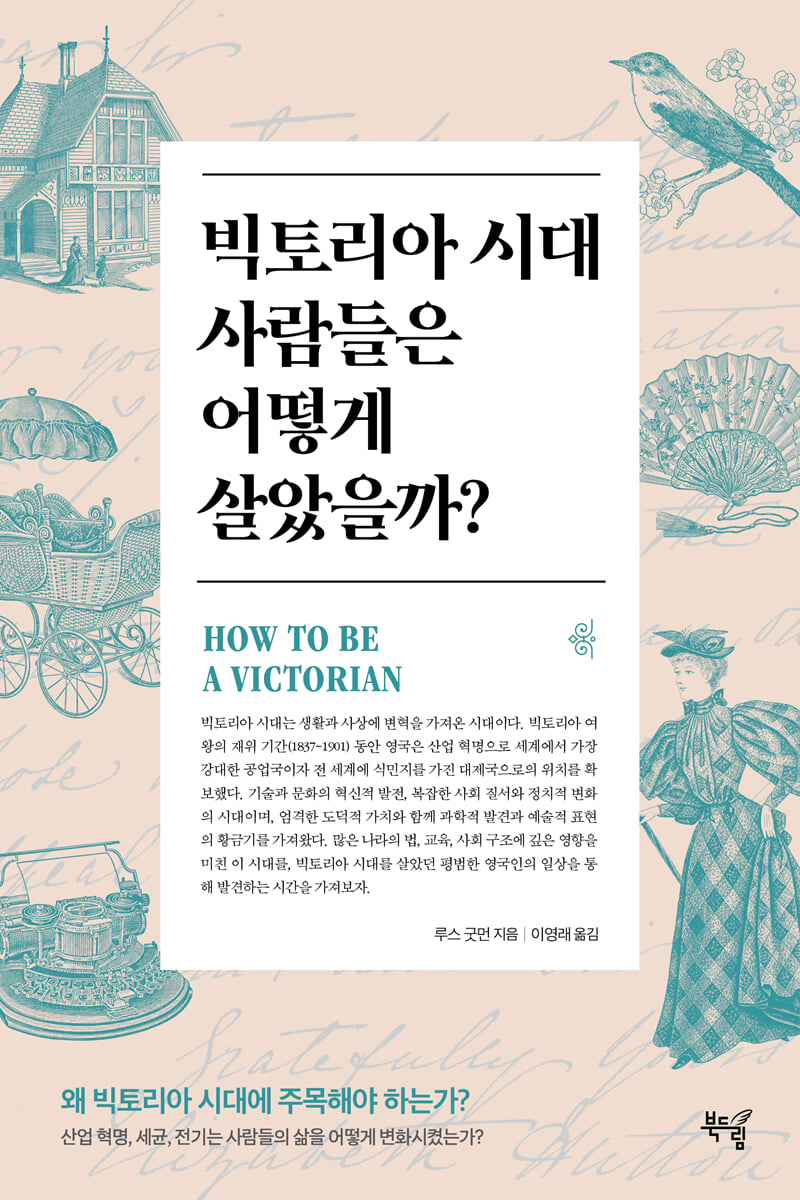
How did Victorian people live?
 |
Description
Book Introduction
People of the Victorian era, who are far removed from us in both time and space. They lived completely different lives from us, and you might think they have nothing to do with us. However, just like us today, they have been searching for and implementing solutions to live healthier and happier lives, take better care of their families, and raise their children well. And their efforts still impact our daily lives today. This book, which vividly records the author's firsthand experience of Victorian lifestyle, will help you see how our lives are connected in many ways to the Victorians of old. |
- You can preview some of the book's contents.
Preview
index
Preface · 11
Chapter 1 A day that starts with chills
You took a bath standing up? · 24
Class distinction based on body odor? · 33
Germ Theory: The Era of Personal Hygiene · 38
Why I Prefer Pink Toothpaste · 42
Melange pad vs.
Belt-type sanitary pad · 46
Chapter 2: Dressing for Men
Besides drawers, vests and shirts were also underwear. · 51
City People's Clothing and Country People's Clothing · 64
Men also wore corsets · 72
The Sewing Machine's Revitalization of the Ready-to-Wear and Used Clothing Markets · 76
A man should not take off his hat without permission · 86
Chapter 3: Dressing for Women
Chemises, drawers, knickers, stockings - Underwear that touches the body · 94
The Evolution of the Corset · 101
Various Shapes and Types of Petticoats · 115
The puffier the skirt, the better · 121
A characteristic feature of Victorian clothing was layering. 138
Chapter 4: Toilet Culture
Essential Daily Necessities: Yogang · 145
Traditional Toilet · 149
flush toilet · 156
Dry toilet and pale closet · 160
Toilet paper · 162
Chapter 5 Hair & Beauty Care
Beautiful and pretty hands are a lady's virtue · 164
Women's Hair Care? · 168
Hair Dyeing and Hair Removal · 183
What did makeup mean? · 186
Perfume is a fashion item for both men and women · 197
Men's Hair and Beard Care · 203
Chapter 6 Morning Exercises for Men and Beauty Exercises for Women
Chapter 7 Breakfast · 232
Hunger is a part of life. Everyone goes hungry. · 242
Chapter 8 Transportation Systems and Labor Environment
Even then, the commute was a battlefield. · 258
Air pollution in cities was worse than it is now. · 272
Workplace injuries and deaths are a common occurrence · 275
A time when even children had to work to make a living · 289
Chapter 9 Parenting
Baby Bath and Diapers · 305
Newborn Clothes · 310
Clothing for infants over 9 months · 319
Clothes for older children · 326
Infant and Toddler Food · 335
Drug Addiction in Babies · 345
Chapter 10 Lunch
Chapter 11 Laundry and Home Health
Laundry · 364
Home Health Care · 385
Chapter 12 Education System
School for All · 423
The Open Exam Begins · 426
Concerns arising from the rise of girls' schools · 429
Sewing classes are mandatory for female students · 435
Chapter 13 Leisure Life
Sports enjoyed by men · 449
Sports enjoyed by boys · 469
Sports enjoyed by girls and young women · 480
Gardening and Park Walks · 489
Men's Space, Pub · 495
Children's Play · 501
Beach Vacation · 511
Chapter 14 Dinner
Early Victorian Dinner · 521
Mid-Victorian Dinner · 528
Late Victorian Dinner · 531
Learn to Cook · 537
Food Science and Dietetics · 540
Chapter 15 Bathing Culture
Bathing for Health · 552
Bathing for Cleanliness · 561
Public Bath Movement · 566
Chapter 16 Sexual Culture
Men's Sex Life · 575
Thoughts on Masturbation · 582
Women's Sex Life · 586
Contraception · 592
Abortion · 598
Extramarital Sex · 600
Conclusion · 621
Image Source · 624
Endnotes · 625
Chapter 1 A day that starts with chills
You took a bath standing up? · 24
Class distinction based on body odor? · 33
Germ Theory: The Era of Personal Hygiene · 38
Why I Prefer Pink Toothpaste · 42
Melange pad vs.
Belt-type sanitary pad · 46
Chapter 2: Dressing for Men
Besides drawers, vests and shirts were also underwear. · 51
City People's Clothing and Country People's Clothing · 64
Men also wore corsets · 72
The Sewing Machine's Revitalization of the Ready-to-Wear and Used Clothing Markets · 76
A man should not take off his hat without permission · 86
Chapter 3: Dressing for Women
Chemises, drawers, knickers, stockings - Underwear that touches the body · 94
The Evolution of the Corset · 101
Various Shapes and Types of Petticoats · 115
The puffier the skirt, the better · 121
A characteristic feature of Victorian clothing was layering. 138
Chapter 4: Toilet Culture
Essential Daily Necessities: Yogang · 145
Traditional Toilet · 149
flush toilet · 156
Dry toilet and pale closet · 160
Toilet paper · 162
Chapter 5 Hair & Beauty Care
Beautiful and pretty hands are a lady's virtue · 164
Women's Hair Care? · 168
Hair Dyeing and Hair Removal · 183
What did makeup mean? · 186
Perfume is a fashion item for both men and women · 197
Men's Hair and Beard Care · 203
Chapter 6 Morning Exercises for Men and Beauty Exercises for Women
Chapter 7 Breakfast · 232
Hunger is a part of life. Everyone goes hungry. · 242
Chapter 8 Transportation Systems and Labor Environment
Even then, the commute was a battlefield. · 258
Air pollution in cities was worse than it is now. · 272
Workplace injuries and deaths are a common occurrence · 275
A time when even children had to work to make a living · 289
Chapter 9 Parenting
Baby Bath and Diapers · 305
Newborn Clothes · 310
Clothing for infants over 9 months · 319
Clothes for older children · 326
Infant and Toddler Food · 335
Drug Addiction in Babies · 345
Chapter 10 Lunch
Chapter 11 Laundry and Home Health
Laundry · 364
Home Health Care · 385
Chapter 12 Education System
School for All · 423
The Open Exam Begins · 426
Concerns arising from the rise of girls' schools · 429
Sewing classes are mandatory for female students · 435
Chapter 13 Leisure Life
Sports enjoyed by men · 449
Sports enjoyed by boys · 469
Sports enjoyed by girls and young women · 480
Gardening and Park Walks · 489
Men's Space, Pub · 495
Children's Play · 501
Beach Vacation · 511
Chapter 14 Dinner
Early Victorian Dinner · 521
Mid-Victorian Dinner · 528
Late Victorian Dinner · 531
Learn to Cook · 537
Food Science and Dietetics · 540
Chapter 15 Bathing Culture
Bathing for Health · 552
Bathing for Cleanliness · 561
Public Bath Movement · 566
Chapter 16 Sexual Culture
Men's Sex Life · 575
Thoughts on Masturbation · 582
Women's Sex Life · 586
Contraception · 592
Abortion · 598
Extramarital Sex · 600
Conclusion · 621
Image Source · 624
Endnotes · 625
Detailed image

Into the book
1.
In the Victorian era, bright red toothpaste was preferred.
Because it reminded me of the color of healthy gums.
Mascara was originally a tinted wax used by men to make their mustaches and eyebrows more defined and to cover up gray hairs.
2.
In the Victorian era, the clothes we wear today were so thick and tough that we would consider them the kind of clothes you would wear when dispatched to a tropical colony.
This is because the windows were open even in winter for ventilation, so the indoor temperature would have been around 10 degrees.
3.
At the time, gardening books published in London had more stories about smog than about gardening.
Because only plants that could survive smog could be grown.
4.
In the Victorian era, it was believed that overly tight corsets were bad for your health, but that moderate tightness was good for preventing injuries, recovery after childbirth, and digestion.
Not wearing a corset was considered to be immodesty and vulgar, so almost all women in the Victorian era wore one.
5.
The Victorian era was the period when flush toilets first became common.
Early flush toilets did not have S-shaped pipes, so smells would flow back into the toilet through the pipe leading to the sewer.
So, it was considered less hygienic than a well-ventilated traditional toilet in the garden.
However, as flush toilet technology has advanced, this problem has disappeared.
6.
Victorian workers also suffered from heat, cold, and crowds on their way to and from work.
In particular, train companies did not increase the number of cars because it became more cost-effective to carry more people per car.
Because of these austerity measures, train stations initially lacked shelters, lighting, or signs indicating train departure and arrival locations.
So the station staff loudly announced the arrival time, destination, and stopping point of each train.
7.
In Victorian times, not many people worked less than 12 hours a day.
Industrial accidents were so common that death from them was considered fate.
It was taken for granted that children would work, and there were very few teenagers who did not work even after turning 12.
In rural areas, many children began working at the age of five or six, and middle-class youth also found office jobs.
From 1835 to 1850, half of the workers in British textile mills were under 18 years old.
8.
Victorian women earned between half and two-thirds of what men earned for doing the same work.
Married women had to work to earn money and take care of housework, childbirth, and childcare.
When a mother had to go to work and there was no family at home to care for the baby, it was common for the baby to be put to sleep with narcotic medication.
9.
Even in the Victorian era, there were some employers who tried to improve working conditions.
They paid attention to the lighting and ventilation of the workplace, and also installed restrooms, bathing facilities, and a cafeteria.
Very occasionally, daycare centers were set up for the children of workers.
Unfortunately, such conscientious employers were a minority.
10.
The nobles and wealthy people who lived in mansions did their laundry less frequently than the lower class people, but they showed off that they had plenty of clothes to wear even without doing laundry.
11.
In the Victorian era, there were schools where upperclassmen taught and guided lowerclassmen.
By doing so, the school was able to save money, and in return, the student teachers got the opportunity to pursue higher education.
However, the student teachers, who were only a few years older than the students, were immature and the quality of education was poor.
The only way they could control the students was through corporal punishment.
12.
It was thought that girls studying too much or engaging in too much physical activity would interfere with their duty to become pregnant and give birth.
A glimpse into the perception of women at the time can be seen in the claim by a Times reporter in 1872 that "women who pursue higher education are in danger of becoming sterile."
13.
Even in the Victorian era, many diet foods and diet methods were already popular.
The most popular method was William Banting's high-protein, low-calorie diet, which he popularized in a pamphlet about his experiences in 1863.
The banting diet became the basis for modern low-carb diets, and 'banting' has been used as a general verb to mean weight loss for quite some time.
14.
Victorian public baths had laundry facilities.
It was mainly used by men, and there were few bathhouses for women and they were open only on a limited number of days.
Even today, public baths throughout Britain still have Victorian-era bathing rooms, which, according to the author, provide plenty of hot water.
15.
In the Victorian era, it was believed that men had stronger sexual desires than women and that it was healthy for men to naturally release their sexual desires.
Sex with women was considered a cure for a variety of male health problems.
Because female masturbation was not as wasteful as male masturbation, it was considered less harmful to the body, and masturbation devices became secretly popular.
16.
In the Victorian era, it was believed that if parents had sex with love, consideration, moderation, and enjoyment, the children born from the sex would have good character.
It was believed that children born from drunken sex would be lewd and stupid, children born from violent sex would be cruel, children born from loveless sex would be cold and cruel, and children born from lustful sex would lack self-control and be impulsive.
17.
Early soccer goals consisted of only two vertical posts, and a goal was scored when the ball passed through the space between the posts.
So there were many cases of fighting with the opposing team over whether it was a goal or not.
It wasn't until 1889 that nets were added to soccer goals.
The penalty area did not exist until 1937.
In the Victorian era, bright red toothpaste was preferred.
Because it reminded me of the color of healthy gums.
Mascara was originally a tinted wax used by men to make their mustaches and eyebrows more defined and to cover up gray hairs.
2.
In the Victorian era, the clothes we wear today were so thick and tough that we would consider them the kind of clothes you would wear when dispatched to a tropical colony.
This is because the windows were open even in winter for ventilation, so the indoor temperature would have been around 10 degrees.
3.
At the time, gardening books published in London had more stories about smog than about gardening.
Because only plants that could survive smog could be grown.
4.
In the Victorian era, it was believed that overly tight corsets were bad for your health, but that moderate tightness was good for preventing injuries, recovery after childbirth, and digestion.
Not wearing a corset was considered to be immodesty and vulgar, so almost all women in the Victorian era wore one.
5.
The Victorian era was the period when flush toilets first became common.
Early flush toilets did not have S-shaped pipes, so smells would flow back into the toilet through the pipe leading to the sewer.
So, it was considered less hygienic than a well-ventilated traditional toilet in the garden.
However, as flush toilet technology has advanced, this problem has disappeared.
6.
Victorian workers also suffered from heat, cold, and crowds on their way to and from work.
In particular, train companies did not increase the number of cars because it became more cost-effective to carry more people per car.
Because of these austerity measures, train stations initially lacked shelters, lighting, or signs indicating train departure and arrival locations.
So the station staff loudly announced the arrival time, destination, and stopping point of each train.
7.
In Victorian times, not many people worked less than 12 hours a day.
Industrial accidents were so common that death from them was considered fate.
It was taken for granted that children would work, and there were very few teenagers who did not work even after turning 12.
In rural areas, many children began working at the age of five or six, and middle-class youth also found office jobs.
From 1835 to 1850, half of the workers in British textile mills were under 18 years old.
8.
Victorian women earned between half and two-thirds of what men earned for doing the same work.
Married women had to work to earn money and take care of housework, childbirth, and childcare.
When a mother had to go to work and there was no family at home to care for the baby, it was common for the baby to be put to sleep with narcotic medication.
9.
Even in the Victorian era, there were some employers who tried to improve working conditions.
They paid attention to the lighting and ventilation of the workplace, and also installed restrooms, bathing facilities, and a cafeteria.
Very occasionally, daycare centers were set up for the children of workers.
Unfortunately, such conscientious employers were a minority.
10.
The nobles and wealthy people who lived in mansions did their laundry less frequently than the lower class people, but they showed off that they had plenty of clothes to wear even without doing laundry.
11.
In the Victorian era, there were schools where upperclassmen taught and guided lowerclassmen.
By doing so, the school was able to save money, and in return, the student teachers got the opportunity to pursue higher education.
However, the student teachers, who were only a few years older than the students, were immature and the quality of education was poor.
The only way they could control the students was through corporal punishment.
12.
It was thought that girls studying too much or engaging in too much physical activity would interfere with their duty to become pregnant and give birth.
A glimpse into the perception of women at the time can be seen in the claim by a Times reporter in 1872 that "women who pursue higher education are in danger of becoming sterile."
13.
Even in the Victorian era, many diet foods and diet methods were already popular.
The most popular method was William Banting's high-protein, low-calorie diet, which he popularized in a pamphlet about his experiences in 1863.
The banting diet became the basis for modern low-carb diets, and 'banting' has been used as a general verb to mean weight loss for quite some time.
14.
Victorian public baths had laundry facilities.
It was mainly used by men, and there were few bathhouses for women and they were open only on a limited number of days.
Even today, public baths throughout Britain still have Victorian-era bathing rooms, which, according to the author, provide plenty of hot water.
15.
In the Victorian era, it was believed that men had stronger sexual desires than women and that it was healthy for men to naturally release their sexual desires.
Sex with women was considered a cure for a variety of male health problems.
Because female masturbation was not as wasteful as male masturbation, it was considered less harmful to the body, and masturbation devices became secretly popular.
16.
In the Victorian era, it was believed that if parents had sex with love, consideration, moderation, and enjoyment, the children born from the sex would have good character.
It was believed that children born from drunken sex would be lewd and stupid, children born from violent sex would be cruel, children born from loveless sex would be cold and cruel, and children born from lustful sex would lack self-control and be impulsive.
17.
Early soccer goals consisted of only two vertical posts, and a goal was scored when the ball passed through the space between the posts.
So there were many cases of fighting with the opposing team over whether it was a goal or not.
It wasn't until 1889 that nets were added to soccer goals.
The penalty area did not exist until 1937.
--- From the text
Publisher's Review
The Victorian era is not simply a backdrop for glamorous dramas and novels.
This period, which marked 19th-century Britain, brought about sweeping changes across society along with the Industrial Revolution, and people's daily lives also changed significantly.
"How Did People Live in the Victorian Era?" vividly portrays the daily lives of ordinary people and the changes that occur within them, rather than the glamorous lives of the aristocracy, taking us deep into their lives, which we had never known before.
The story of adaptation and survival amidst rapid industrialization, advancements in science and medicine, and the daily social changes we had to face still has much to teach us today.
Author Ruth Goodman also worked with the British Broadcasting Corporation to create a documentary that recreates and experiences Victorian environments.
Based on that experience, this book meticulously recreates the daily lives of Victorian people, covering the lives of Victorians in three dimensions, from morning to night, from their food, clothing, and shelter to their social relationships, medical environment, and even their intimate private lives such as sexual culture.
The book focuses particularly on the daily lives of ordinary people in the Victorian era, particularly the working class and women.
Their daily lives, where they cook over coal in a stove, drink beer for breakfast, and brush their teeth with toothpaste made from ground squid bones, seem strange and bizarre to us today.
Additionally, the corsets made of whalebone they were required to wear were so tight that it was suffocating, and they were not just fashion items but also symbols of social norms and oppression at the time.
The Industrial Revolution forced children under the age of ten to work in underground coal mines to support their families, and mothers would put their babies to sleep with opium pills before going to work in factories.
In this way, it reveals the true face hidden behind the glamour of the Victorian era that we are so familiar with.
Victorian stories still teach us important lessons today in many ways.
It is still useful for us today to examine how they adapted to rapid change, sought new opportunities, and restructured their lives.
As modern society faces yet another technological revolution and social change, the experiences of the Victorian era, which experienced more rapid change than any other era, can serve as valuable guidance as we address current challenges and prepare for a better future.
"How Did People Live in the Victorian Era?" is not simply a book about reminiscing about the past.
This book connects the past and the present, offering insight and wisdom on the path forward.
A must-read for anyone who wants to learn from their past lives and prepare for tomorrow!
Who would benefit from reading this?
- A history enthusiast with a keen interest in history, especially microhistory and life history.
- People who like any content (movies, dramas, novels, webtoons, etc.) set in the Victorian era of England.
- Creators who want to write novels set in the Victorian era with more detail and vividness.
Special features of this book
First, it is highly credible as it was written by a British historian.
Most of the books on Victorian British life currently sold in bookstores are popular history books written by Japanese people.
However, 『How Did Victorians Live?』 is a book written by a British historian who specializes in British life history.
So it is more trustworthy.
This is precisely why it has maintained its position as a bestseller in the British history category on Amazon.com since its publication.
Second, it is helpful for understanding society and culture in general by explaining life in the Victorian era over time.
Existing Victorian life histories primarily focus on specific groups, such as the aristocracy, the middle class, or their employees, and are often divided into separate volumes, making it difficult to see the overall picture of British society.
However, "How Did Victorians Live?" provides a comprehensive understanding of contemporary British society and culture by detailing how people of all classes spent their days in the Victorian era, their food, clothing, shelter, and lifestyles, and by examining them over time.
Third, the author personally experienced the food, clothing, and shelter of the Victorian era and told the story.
Author Ruth Goodman personally recreated the environment of the Victorian era to vividly convey what people wore, what they ate, and how they lived.
I tried making and wearing corsets and swimsuits that people wore at the time, made and used toner using recipes from the time, and even tried calisthenics myself.
Even while transporting coal in a Victorian-style horse-drawn cart, he had a dangerous experience when a rabbit suddenly jumped out and startled the horse, causing it to fall out of the cart.
I almost got crushed by over a ton of coal.
Thanks to the author's experimental spirit, which does not shy away from such risks, readers can experience the daily lives of Victorians more vividly.
A Walk Through a Day in the Victorian Era
An invitation to ordinary daily life
If you remember the Victorian era as all about the magnificent buildings and interiors, the extravagant dresses and jewelry of the aristocracy, and the balls, you've only seen one side of the era.
What did ordinary people in the Victorian era do, what were their concerns, and how did they address the social and cultural challenges they faced each day?
This book invites you on a fascinating exploration into one of the most dynamic periods in human history.
Why should we pay attention to the Victorian era?
The Victorian era is not simply a period in Britain.
It was a time of radical change and development, of scientific discovery and the industrial revolution.
On the one hand, it was a complex world where darkness and light, strict moralism and the hypocrisy behind it coexisted.
The people of this period laid the foundation for modern society, and their concerns and solutions still offer significant insights today.
This book does not simply view them as historical figures.
They were people who, like us today, pondered life, dreamed of a better life, and pursued health and happiness.
The process of discovering how their lives have influenced us and how much we are like them will be full of surprises and enlightenment.
A recreation of the Victorian era through the author's vivid experiences
Author Ruth Goodman doesn't just describe the Victorian era in words.
He wore Victorian clothes, ate food, did housework, and lived each day like people of the time.
Through this, the author provides readers with an experience that allows them to jump right into that era.
Readers will be transported to a Victorian breakfast table with Ruth Goodman and gain a vivid understanding of the discomfort and beauty of the corsets worn by women of that era.
The stories he experienced firsthand are not mere information, but a true experience that communicates with the times.
For example, readers will be able to deeply feel and empathize with the lives of people of that era, from imitating Victorian calisthenics to experiencing a terrifying accident while driving a coal cart in the style of that era.
Rich content, deep exploration: A colorful look at the Victorian era.
A day that starts with a chill: How did Victorians start their mornings? Before the advent of germ theory, they didn't understand the importance of personal hygiene, and the ingenious methods they invented are astonishing.
What is the secret behind the color of toothpaste, and what were the unique bathing habits of people back then?
The shift in clothing culture and the boundaries between genders: A time when men also had to wear corsets.
Why was Victorian clothing so complex, when men's and women's clothing signaled social status, and even the act of removing a hat held significance? The evolution of clothing over time offers a glimpse into social norms and evolving aesthetics.
Hidden desires and cultural clashes: The Victorian era emphasized strict moral codes, but at the same time, people were fascinated by spiritualism, magic, and the occult.
Why did they believe in the power of the invisible world alongside scientific discovery? Let's enjoy exploring the human psyche amidst this cultural fusion.
Hidden spaces and their stories from the Victorian era: The toilet or soap you use without thinking, or the clothes you wore this morning, have their origins in the Victorian era.
What did people do in their bathrooms back then, and what did they do with their hair and skin? Women's desire for beauty was no different than today, and men also pursued their own unique style.
Finding a connection with modern society
This book delves into the everyday life of the Victorian era, exploring the lifestyles of the people of that time and reinterpreting their experiences from a modern perspective.
You can discover the connection between past and present, how their lives are integrated into our lives today.
This book does not simply explore the past; it provides a new perspective on our present.
As we follow a day in the Victorian era and learn about their worries and dreams, we will empathize with their lives and even rethink our own present.
"How Did Victorians Live?" is not just a history book; it's a vivid bridge connecting the people of the past with us today.
Through Ruth Goodman's meticulous research and experience, we can become closer to them and have the wonderful experience of discovering ourselves in their lives.
Are you ready to dive into the fascinating everyday life of the Victorian era through this book? If you want to rediscover that era with a deeper understanding and empathy, open this book now.
Vivid Victorian life awaits you!
This period, which marked 19th-century Britain, brought about sweeping changes across society along with the Industrial Revolution, and people's daily lives also changed significantly.
"How Did People Live in the Victorian Era?" vividly portrays the daily lives of ordinary people and the changes that occur within them, rather than the glamorous lives of the aristocracy, taking us deep into their lives, which we had never known before.
The story of adaptation and survival amidst rapid industrialization, advancements in science and medicine, and the daily social changes we had to face still has much to teach us today.
Author Ruth Goodman also worked with the British Broadcasting Corporation to create a documentary that recreates and experiences Victorian environments.
Based on that experience, this book meticulously recreates the daily lives of Victorian people, covering the lives of Victorians in three dimensions, from morning to night, from their food, clothing, and shelter to their social relationships, medical environment, and even their intimate private lives such as sexual culture.
The book focuses particularly on the daily lives of ordinary people in the Victorian era, particularly the working class and women.
Their daily lives, where they cook over coal in a stove, drink beer for breakfast, and brush their teeth with toothpaste made from ground squid bones, seem strange and bizarre to us today.
Additionally, the corsets made of whalebone they were required to wear were so tight that it was suffocating, and they were not just fashion items but also symbols of social norms and oppression at the time.
The Industrial Revolution forced children under the age of ten to work in underground coal mines to support their families, and mothers would put their babies to sleep with opium pills before going to work in factories.
In this way, it reveals the true face hidden behind the glamour of the Victorian era that we are so familiar with.
Victorian stories still teach us important lessons today in many ways.
It is still useful for us today to examine how they adapted to rapid change, sought new opportunities, and restructured their lives.
As modern society faces yet another technological revolution and social change, the experiences of the Victorian era, which experienced more rapid change than any other era, can serve as valuable guidance as we address current challenges and prepare for a better future.
"How Did People Live in the Victorian Era?" is not simply a book about reminiscing about the past.
This book connects the past and the present, offering insight and wisdom on the path forward.
A must-read for anyone who wants to learn from their past lives and prepare for tomorrow!
Who would benefit from reading this?
- A history enthusiast with a keen interest in history, especially microhistory and life history.
- People who like any content (movies, dramas, novels, webtoons, etc.) set in the Victorian era of England.
- Creators who want to write novels set in the Victorian era with more detail and vividness.
Special features of this book
First, it is highly credible as it was written by a British historian.
Most of the books on Victorian British life currently sold in bookstores are popular history books written by Japanese people.
However, 『How Did Victorians Live?』 is a book written by a British historian who specializes in British life history.
So it is more trustworthy.
This is precisely why it has maintained its position as a bestseller in the British history category on Amazon.com since its publication.
Second, it is helpful for understanding society and culture in general by explaining life in the Victorian era over time.
Existing Victorian life histories primarily focus on specific groups, such as the aristocracy, the middle class, or their employees, and are often divided into separate volumes, making it difficult to see the overall picture of British society.
However, "How Did Victorians Live?" provides a comprehensive understanding of contemporary British society and culture by detailing how people of all classes spent their days in the Victorian era, their food, clothing, shelter, and lifestyles, and by examining them over time.
Third, the author personally experienced the food, clothing, and shelter of the Victorian era and told the story.
Author Ruth Goodman personally recreated the environment of the Victorian era to vividly convey what people wore, what they ate, and how they lived.
I tried making and wearing corsets and swimsuits that people wore at the time, made and used toner using recipes from the time, and even tried calisthenics myself.
Even while transporting coal in a Victorian-style horse-drawn cart, he had a dangerous experience when a rabbit suddenly jumped out and startled the horse, causing it to fall out of the cart.
I almost got crushed by over a ton of coal.
Thanks to the author's experimental spirit, which does not shy away from such risks, readers can experience the daily lives of Victorians more vividly.
A Walk Through a Day in the Victorian Era
An invitation to ordinary daily life
If you remember the Victorian era as all about the magnificent buildings and interiors, the extravagant dresses and jewelry of the aristocracy, and the balls, you've only seen one side of the era.
What did ordinary people in the Victorian era do, what were their concerns, and how did they address the social and cultural challenges they faced each day?
This book invites you on a fascinating exploration into one of the most dynamic periods in human history.
Why should we pay attention to the Victorian era?
The Victorian era is not simply a period in Britain.
It was a time of radical change and development, of scientific discovery and the industrial revolution.
On the one hand, it was a complex world where darkness and light, strict moralism and the hypocrisy behind it coexisted.
The people of this period laid the foundation for modern society, and their concerns and solutions still offer significant insights today.
This book does not simply view them as historical figures.
They were people who, like us today, pondered life, dreamed of a better life, and pursued health and happiness.
The process of discovering how their lives have influenced us and how much we are like them will be full of surprises and enlightenment.
A recreation of the Victorian era through the author's vivid experiences
Author Ruth Goodman doesn't just describe the Victorian era in words.
He wore Victorian clothes, ate food, did housework, and lived each day like people of the time.
Through this, the author provides readers with an experience that allows them to jump right into that era.
Readers will be transported to a Victorian breakfast table with Ruth Goodman and gain a vivid understanding of the discomfort and beauty of the corsets worn by women of that era.
The stories he experienced firsthand are not mere information, but a true experience that communicates with the times.
For example, readers will be able to deeply feel and empathize with the lives of people of that era, from imitating Victorian calisthenics to experiencing a terrifying accident while driving a coal cart in the style of that era.
Rich content, deep exploration: A colorful look at the Victorian era.
A day that starts with a chill: How did Victorians start their mornings? Before the advent of germ theory, they didn't understand the importance of personal hygiene, and the ingenious methods they invented are astonishing.
What is the secret behind the color of toothpaste, and what were the unique bathing habits of people back then?
The shift in clothing culture and the boundaries between genders: A time when men also had to wear corsets.
Why was Victorian clothing so complex, when men's and women's clothing signaled social status, and even the act of removing a hat held significance? The evolution of clothing over time offers a glimpse into social norms and evolving aesthetics.
Hidden desires and cultural clashes: The Victorian era emphasized strict moral codes, but at the same time, people were fascinated by spiritualism, magic, and the occult.
Why did they believe in the power of the invisible world alongside scientific discovery? Let's enjoy exploring the human psyche amidst this cultural fusion.
Hidden spaces and their stories from the Victorian era: The toilet or soap you use without thinking, or the clothes you wore this morning, have their origins in the Victorian era.
What did people do in their bathrooms back then, and what did they do with their hair and skin? Women's desire for beauty was no different than today, and men also pursued their own unique style.
Finding a connection with modern society
This book delves into the everyday life of the Victorian era, exploring the lifestyles of the people of that time and reinterpreting their experiences from a modern perspective.
You can discover the connection between past and present, how their lives are integrated into our lives today.
This book does not simply explore the past; it provides a new perspective on our present.
As we follow a day in the Victorian era and learn about their worries and dreams, we will empathize with their lives and even rethink our own present.
"How Did Victorians Live?" is not just a history book; it's a vivid bridge connecting the people of the past with us today.
Through Ruth Goodman's meticulous research and experience, we can become closer to them and have the wonderful experience of discovering ourselves in their lives.
Are you ready to dive into the fascinating everyday life of the Victorian era through this book? If you want to rediscover that era with a deeper understanding and empathy, open this book now.
Vivid Victorian life awaits you!
GOODS SPECIFICS
- Date of issue: September 4, 2024
- Page count, weight, size: 632 pages | 704g | 140*210*32mm
- ISBN13: 9791191509519
- ISBN10: 1191509516
You may also like
카테고리
korean


korean

![GQ KOREA Mark (Monthly): December [2025]](http://librairie.coreenne.fr/cdn/shop/files/8ef265dbbfbf186523ed75ba7319009d.jpg?v=1765340328&width=3840)


