

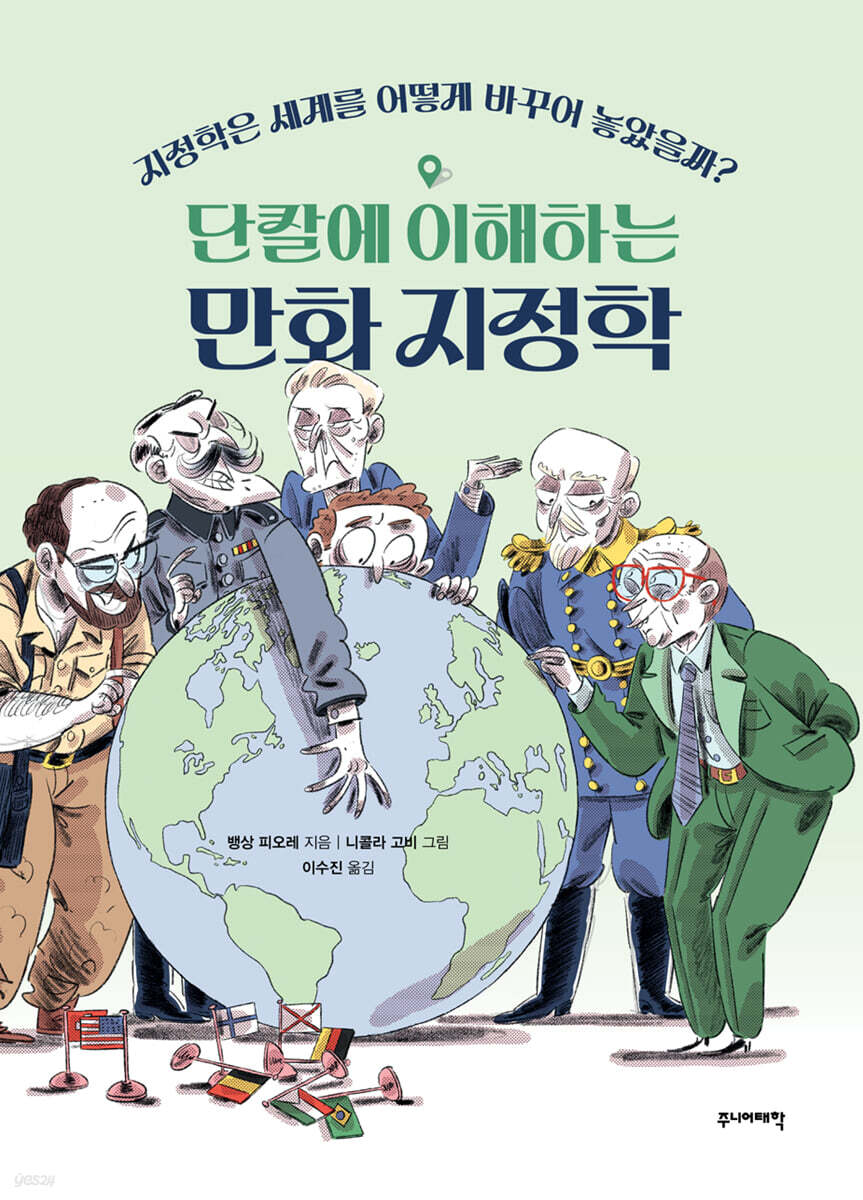
Understanding Comic Geopolitics in One Shot
 |
Description
Book Introduction
As seen by French high school students
An introduction to geopolitics!
If we follow the geopolitical theory,
The geopolitics of the Korean Peninsula is also visible!
One of the most popular subjects in French high schools is geopolitics.
This book is an introductory book to geopolitics that introduces the history of geopolitics, focusing on geopolitical theory, for French high school students.
Author Vincent Fiore is a geopolitics expert whose book Tax Havens: Geopolitical Issues won the grand prize at the Geopolitics Festival.
The history of geopolitics is the history of the world.
This book covers the history of geopolitics from its inception to the recent Russo-Ukrainian war.
The difficult subject of geopolitics is presented in an accessible and engaging way in the form of a graphic novel.
Because a vast amount of content is expressed in a cartoon format, there is a great advantage in being able to extract and highlight only the key points.
An introduction to geopolitics!
If we follow the geopolitical theory,
The geopolitics of the Korean Peninsula is also visible!
One of the most popular subjects in French high schools is geopolitics.
This book is an introductory book to geopolitics that introduces the history of geopolitics, focusing on geopolitical theory, for French high school students.
Author Vincent Fiore is a geopolitics expert whose book Tax Havens: Geopolitical Issues won the grand prize at the Geopolitics Festival.
The history of geopolitics is the history of the world.
This book covers the history of geopolitics from its inception to the recent Russo-Ukrainian war.
The difficult subject of geopolitics is presented in an accessible and engaging way in the form of a graphic novel.
Because a vast amount of content is expressed in a cartoon format, there is a great advantage in being able to extract and highlight only the key points.
- You can preview some of the book's contents.
Preview
Detailed image

Publisher's Review
Geopolitics that emerged with sovereignty
The one who leads the story is Herodotus, known as the ‘father of history.’
Herodotus appears as a TV host and introduces leading geopolitical theorists one by one.
A natural question and answer session follows.
Geopolitics began in earnest in the late 19th century with the emergence of the concept of sovereignty.
It was often abused as a basis for expanding one's own territory.
The representative force is the Nazis.
Geopolitics has long been regarded with suspicion as an academic discipline due to its close relationship with territorial expansion, imperialism, and war, and there was even a time when it was removed from school curricula.
However, as conflicts and wars between nations continue, it is now receiving renewed attention as a tool for analyzing international affairs.
Ravensraum and the Nazis
This book explains what geopolitics is and what geopolitical theories exist.
In particular, we focused on easily introducing prominent geopolitical scholars and their theories.
The first person to be introduced was Friedrich Ratzel of Prussia, a pioneer in geopolitics.
He is the person who advocated the concept of Lebensraum.
Lebensraum means 'space for survival' in German.
He argued that the German people were superior to other peoples and therefore needed more space.
This argument was passed down from Rudolf Scheelen of Sweden to Karl Haushofer of Germany.
Haushofer was a figure who reigned as the spiritual leader of the Nazis, to the point that when one thinks of geopolitics, one thinks of the Nazis.
It incited Nazi aggression, ultimately leading to the outbreak of World War II.
City Power and Heartland, Surrounding Areas
Geopolitics has developed not only in Western Europe but also in the United States.
Alfred Mahan, known as a naval philosopher, created the concept of sea power and argued that sea power is the power that allows one to dominate a wider area.
The logic is that controlling the seas would give U.S. industry access to not only the raw materials it needs, but also markets for its goods.
It laid the foundation for American imperialism.
The United States, greatly influenced by Mahan, prohibited further European intervention in the American continent and also prohibited the establishment of colonies.
Britain's Harford Mackinder questions the power of poetry.
He emphasizes that the 'heartland' (northern Eurasia and its interior regions) is more important than city power.
The main target of the heartland theory was Russia.
At that time, Britain was fighting with Russia over Asia.
The heartland theory continues to this day.
It's just that China, not Russia, has become the main target.
There is concern that China will dominate the world through its Belt and Road Initiative.
The Dutchman Nicolas Spykman argued that we should pay more attention to the 'rimland' surrounding the heartland than to the surrounding area.
The analysis suggests that Rimland could be the key to controlling the world due to its large population, abundant resources, and access to the coastline.
Spykman analyzes that the Korean War was a conflict between the United States and the Soviet Union that erupted on the Korean Peninsula, which was part of the Rimland, and that the Vietnam War was a war that the United States fought to protect the Rimland.
The Clash of Civilizations and Chessboard Theory
The collapse of the Soviet Union in the 1990s also marked a major turning point in geopolitics.
American political science professor Francis Fukuyama excitedly claimed that only the United States remained and that American liberal principles would now command the world, but his mentor Samuel Huntington, famous for his book “The Clash of Civilizations,” made a different argument.
While the end of communism did end ideological conflict, it also awakened cultural identities, leading to conflicts between different civilizations as they sought to impose their own values, particularly religion.
This argument gained strength after the 9/11 terrorist attacks.
Since Huntington, the most influential geopolitician in the United States has been Joseph Nye.
He argues that he can dominate other countries through 'soft power'.
America's representative soft power is its liberal ideology.
Joseph emphasizes that it is possible to dominate other countries through soft power, not military force.
The reason the Soviet Union fell was also because of a lack of soft power.
On the one hand, Zbigniew Brzezinski's 'Giant Chessboard' theory is also influential.
The argument is that if the United States is to maintain its position as the world's number one power, it must strategically manage and control the vast chessboard that is Eurasia.
For example, the recent Russian-Ukrainian war can be analyzed as a giant chessboard.
Even if we just look at the flow of geopolitical theory, we can see that geopolitics is an academic discipline that developed while countries were busy trying to take more land from other countries.
However, after reflection on this trend, it has now become established as a method for analyzing the power struggle between various stakeholders.
The Korean Peninsula is one of the most important geopolitically important places.
It is time to learn geopolitics, at least to keep the places we live safe.
The one who leads the story is Herodotus, known as the ‘father of history.’
Herodotus appears as a TV host and introduces leading geopolitical theorists one by one.
A natural question and answer session follows.
Geopolitics began in earnest in the late 19th century with the emergence of the concept of sovereignty.
It was often abused as a basis for expanding one's own territory.
The representative force is the Nazis.
Geopolitics has long been regarded with suspicion as an academic discipline due to its close relationship with territorial expansion, imperialism, and war, and there was even a time when it was removed from school curricula.
However, as conflicts and wars between nations continue, it is now receiving renewed attention as a tool for analyzing international affairs.
Ravensraum and the Nazis
This book explains what geopolitics is and what geopolitical theories exist.
In particular, we focused on easily introducing prominent geopolitical scholars and their theories.
The first person to be introduced was Friedrich Ratzel of Prussia, a pioneer in geopolitics.
He is the person who advocated the concept of Lebensraum.
Lebensraum means 'space for survival' in German.
He argued that the German people were superior to other peoples and therefore needed more space.
This argument was passed down from Rudolf Scheelen of Sweden to Karl Haushofer of Germany.
Haushofer was a figure who reigned as the spiritual leader of the Nazis, to the point that when one thinks of geopolitics, one thinks of the Nazis.
It incited Nazi aggression, ultimately leading to the outbreak of World War II.
City Power and Heartland, Surrounding Areas
Geopolitics has developed not only in Western Europe but also in the United States.
Alfred Mahan, known as a naval philosopher, created the concept of sea power and argued that sea power is the power that allows one to dominate a wider area.
The logic is that controlling the seas would give U.S. industry access to not only the raw materials it needs, but also markets for its goods.
It laid the foundation for American imperialism.
The United States, greatly influenced by Mahan, prohibited further European intervention in the American continent and also prohibited the establishment of colonies.
Britain's Harford Mackinder questions the power of poetry.
He emphasizes that the 'heartland' (northern Eurasia and its interior regions) is more important than city power.
The main target of the heartland theory was Russia.
At that time, Britain was fighting with Russia over Asia.
The heartland theory continues to this day.
It's just that China, not Russia, has become the main target.
There is concern that China will dominate the world through its Belt and Road Initiative.
The Dutchman Nicolas Spykman argued that we should pay more attention to the 'rimland' surrounding the heartland than to the surrounding area.
The analysis suggests that Rimland could be the key to controlling the world due to its large population, abundant resources, and access to the coastline.
Spykman analyzes that the Korean War was a conflict between the United States and the Soviet Union that erupted on the Korean Peninsula, which was part of the Rimland, and that the Vietnam War was a war that the United States fought to protect the Rimland.
The Clash of Civilizations and Chessboard Theory
The collapse of the Soviet Union in the 1990s also marked a major turning point in geopolitics.
American political science professor Francis Fukuyama excitedly claimed that only the United States remained and that American liberal principles would now command the world, but his mentor Samuel Huntington, famous for his book “The Clash of Civilizations,” made a different argument.
While the end of communism did end ideological conflict, it also awakened cultural identities, leading to conflicts between different civilizations as they sought to impose their own values, particularly religion.
This argument gained strength after the 9/11 terrorist attacks.
Since Huntington, the most influential geopolitician in the United States has been Joseph Nye.
He argues that he can dominate other countries through 'soft power'.
America's representative soft power is its liberal ideology.
Joseph emphasizes that it is possible to dominate other countries through soft power, not military force.
The reason the Soviet Union fell was also because of a lack of soft power.
On the one hand, Zbigniew Brzezinski's 'Giant Chessboard' theory is also influential.
The argument is that if the United States is to maintain its position as the world's number one power, it must strategically manage and control the vast chessboard that is Eurasia.
For example, the recent Russian-Ukrainian war can be analyzed as a giant chessboard.
Even if we just look at the flow of geopolitical theory, we can see that geopolitics is an academic discipline that developed while countries were busy trying to take more land from other countries.
However, after reflection on this trend, it has now become established as a method for analyzing the power struggle between various stakeholders.
The Korean Peninsula is one of the most important geopolitically important places.
It is time to learn geopolitics, at least to keep the places we live safe.
GOODS SPECIFICS
- Date of issue: September 5, 2024
- Page count, weight, size: 112 pages | 256g | 180*250*9mm
- ISBN13: 9791168103078
- ISBN10: 116810307X
You may also like
카테고리
korean


korean

![GQ KOREA Mark (Monthly): December [2025]](http://librairie.coreenne.fr/cdn/shop/files/8ef265dbbfbf186523ed75ba7319009d.jpg?v=1765340328&width=3840)


