

A refreshing summary of Korean history
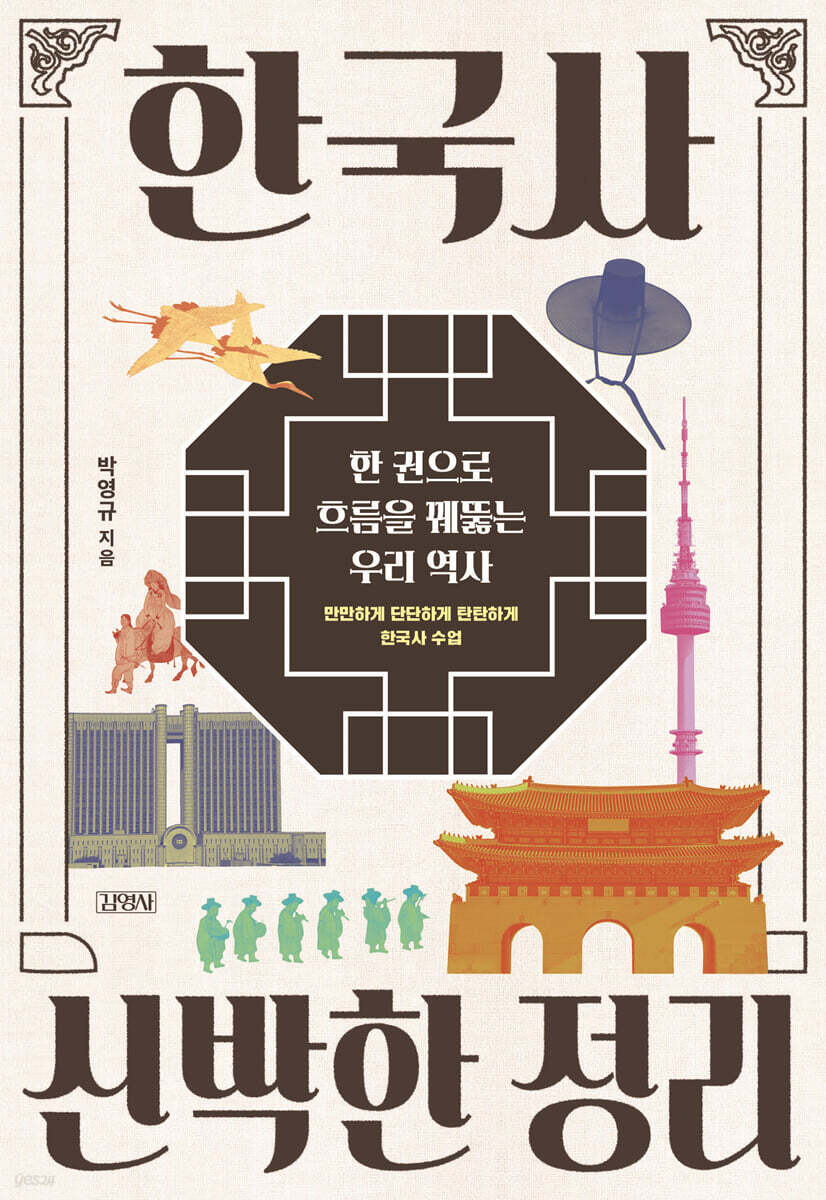 |
Description
Book Introduction
Master the 3 million-selling "Reading the Real Story in One Volume" series!
Easy, solid, sturdy
A Korean history class that becomes yours just by reading it.
Tired of studying events, years, and names that just repeat? Clearly presented, with a clear context! From Gojoseon to the Republic of Korea, from Dangun to the Moon Jae-in administration, Park Young-gyu, the 3 million-read bestseller Siloksa, has finally compiled 5,000 years of Korean history into a single volume.
It condenses and unravels the basic historical knowledge that every Korean must know, interesting events that arouse curiosity, and various aspects of people we never knew about.
An essential Korean history course that you can master in one breath with easy and clear explanations that show the flow and context at a glance.
Our history class becomes yours just by reading it.
Easy, solid, sturdy
A Korean history class that becomes yours just by reading it.
Tired of studying events, years, and names that just repeat? Clearly presented, with a clear context! From Gojoseon to the Republic of Korea, from Dangun to the Moon Jae-in administration, Park Young-gyu, the 3 million-read bestseller Siloksa, has finally compiled 5,000 years of Korean history into a single volume.
It condenses and unravels the basic historical knowledge that every Korean must know, interesting events that arouse curiosity, and various aspects of people we never knew about.
An essential Korean history course that you can master in one breath with easy and clear explanations that show the flow and context at a glance.
Our history class becomes yours just by reading it.
- You can preview some of the book's contents.
Preview
index
Introduction_For a fresh and knowledgeable Korean history
Part 1: Gojoseon and the Dangun Myth
Chapter 1: History and Records of Gojoseon
1. Footsteps left by the people of Gojoseon
2 When did the term Gojoseon first come into use?
3 Where did the name Joseon come from?
Chapter 2: Dangun Joseon as Seen Through Historical Documents
1. Location and territory of Gojoseon recorded in the Classic of Mountains and Seas
2 Dangun Joseon as Appeared in Samguk Yusa and Jewang Ungi
3 What is the biggest difference between the two Dangun myths?
4 Why is the Dangun myth not recorded in the Samguk Sagi?
5 When was the founding date of Joseon by Dangun confirmed?
Chapter 3: Reporter Chosun as Seen Through Historical Materials
Gija Joseon recorded in Jinsu's "Romance of the Three Kingdoms"
2. The Gija Dongrae Theory and the Han Dynasty Theory
Chapter 4: Wiman Joseon as Seen Through Historical Documents
1. The establishment and expansion of Wiman Joseon
2. The power struggle between Wiman Joseon and the Han Dynasty
3. The Fall of Wiman Joseon
Part 2: Three Kingdoms and North-South States Periods
Chapter 1 Goguryeo
1 Jumong's founding of Goguryeo and Yuri's succession to the throne
2. Continue to grow while opposing the Later Han
3. Baekje is struck by a blow
4. Expanding territory and reaching its golden age
5. The 700-year-old kingdom collapses due to internal strife and foreign invasion.
6 People who influenced Goguryeo
Chapter 2 Baekje
1. Soseono's exile and Onjo's founding of Baekje
2. Expanding territory while opposing Silla
3 Unifying Mahan and ushering in a golden age
4. National power declines and the country heads towards ruin.
5 Baekje's expansion into the continent
6. People who influenced Baekje
Chapter 3 Silla
1 Park Hyeokgeose, the founder of Silla, and the Park royal family
2 The Seok royal family focused on expanding its territory
3 The Kim royal family that achieved the great feat of unifying the Three Kingdoms
4 Unified Silla, which began the North-South States Period
5 People Who Influenced Silla
Chapter 4: Go
1. The Founding Father, King Suro of Gaya and the Emergence of the Kingdom of Gaya
2 King Suro, the leader of the Gaya Confederacy
3 Kings of Gaya
4. The meaning and origin of the national name Gaya
5. Why Gaya's founding myths were divided into two
Chapter 5 Balhae
1. The founding of Balhae by Dae Jo-yeong
2. Recovering Goguryeo's former territory and becoming the suzerain state of the East
3. Haedongseongguk, the strongest country in the North
4 The Fall of Balhae and the Revival Movement
Part 3: Goryeo and Joseon
Chapter 1 Consideration
1 Wang Geon, who founded Goryeo and unified the Later Three Kingdoms
2. The life-threatening struggle for the throne and Gwangjong's reign of terror
A period of growth that overcame internal and external turmoil and achieved stability.
4. The prosperous era of Goryeo, which ushered in an era of peace
5 A period of chaos in which the king's reign ended due to repeated rebellions
6 The military regime that lasted for 100 years
The Yuan Dynasty's vassal state, which fell to a vassal state
8. Restoration of Goryeo's sovereignty and the fall of the dynasty
9 People Who Influenced Goryeo
Chapter 2 Joseon
1. Yi Seong-gye, who rose from a frontier general to the founder of Joseon
2 A country of Confucianism built on the foundation of chaos
3. A period of peace after rebellion and regency
4. Repeated purges and the seizure of power by the Sarim
The fierce political strife and turmoil of the five factions
6 Overcoming the aftermath of war and the subsequent political transition
7 Innovation and Prosperity, the Second Renaissance
8 The people who fought against the tyranny of the royal family with rebellion
9 Isolation, Enlightenment, and the Fall of the Dynasty
10 People Who Influenced Joseon
Part 4: Japanese Colonial Period and the Republic of Korea
Chapter 1: Japanese colonial period
1. The process of Japan's plunder of sovereignty from the Korean Empire
2. Ruthless tyranny and fierce resistance
The March 1st Movement and the Birth of the Provisional Government of the Republic of Korea
4 The great victories of Bongodong and Cheongsanri, and the Gyeongsin Massacre
5. The independence movement in chaos under deceptive cultural rule
6 Japan's policy of genocide, which turned it into a war-mongering state
7. The Last Struggle of Japanese Imperialism and the Regrettable Division
Chapter 2 Republic of Korea
1. The US military government and division that began with liberation
2 The First Republic and Syngman Rhee's Government
3 The April 19 Revolution and the Jang Myun Government of the Second Republic
4 The May 16 Coup and the Third and Fourth Republics under Park Chung-hee's military regime
5 12/12 Coup and Chun Doo-hwan's Fifth Republic
6 The Roh Tae-woo government, which opened the first chapter of the 6th Republic
7 Kim Young-sam government
8 Kim Dae-jung government
9 Roh Moo-hyun administration
10 Lee Myung-bak government
11 Park Geun-hye government
12 Moon Jae-in administration
Find a person's name
Part 1: Gojoseon and the Dangun Myth
Chapter 1: History and Records of Gojoseon
1. Footsteps left by the people of Gojoseon
2 When did the term Gojoseon first come into use?
3 Where did the name Joseon come from?
Chapter 2: Dangun Joseon as Seen Through Historical Documents
1. Location and territory of Gojoseon recorded in the Classic of Mountains and Seas
2 Dangun Joseon as Appeared in Samguk Yusa and Jewang Ungi
3 What is the biggest difference between the two Dangun myths?
4 Why is the Dangun myth not recorded in the Samguk Sagi?
5 When was the founding date of Joseon by Dangun confirmed?
Chapter 3: Reporter Chosun as Seen Through Historical Materials
Gija Joseon recorded in Jinsu's "Romance of the Three Kingdoms"
2. The Gija Dongrae Theory and the Han Dynasty Theory
Chapter 4: Wiman Joseon as Seen Through Historical Documents
1. The establishment and expansion of Wiman Joseon
2. The power struggle between Wiman Joseon and the Han Dynasty
3. The Fall of Wiman Joseon
Part 2: Three Kingdoms and North-South States Periods
Chapter 1 Goguryeo
1 Jumong's founding of Goguryeo and Yuri's succession to the throne
2. Continue to grow while opposing the Later Han
3. Baekje is struck by a blow
4. Expanding territory and reaching its golden age
5. The 700-year-old kingdom collapses due to internal strife and foreign invasion.
6 People who influenced Goguryeo
Chapter 2 Baekje
1. Soseono's exile and Onjo's founding of Baekje
2. Expanding territory while opposing Silla
3 Unifying Mahan and ushering in a golden age
4. National power declines and the country heads towards ruin.
5 Baekje's expansion into the continent
6. People who influenced Baekje
Chapter 3 Silla
1 Park Hyeokgeose, the founder of Silla, and the Park royal family
2 The Seok royal family focused on expanding its territory
3 The Kim royal family that achieved the great feat of unifying the Three Kingdoms
4 Unified Silla, which began the North-South States Period
5 People Who Influenced Silla
Chapter 4: Go
1. The Founding Father, King Suro of Gaya and the Emergence of the Kingdom of Gaya
2 King Suro, the leader of the Gaya Confederacy
3 Kings of Gaya
4. The meaning and origin of the national name Gaya
5. Why Gaya's founding myths were divided into two
Chapter 5 Balhae
1. The founding of Balhae by Dae Jo-yeong
2. Recovering Goguryeo's former territory and becoming the suzerain state of the East
3. Haedongseongguk, the strongest country in the North
4 The Fall of Balhae and the Revival Movement
Part 3: Goryeo and Joseon
Chapter 1 Consideration
1 Wang Geon, who founded Goryeo and unified the Later Three Kingdoms
2. The life-threatening struggle for the throne and Gwangjong's reign of terror
A period of growth that overcame internal and external turmoil and achieved stability.
4. The prosperous era of Goryeo, which ushered in an era of peace
5 A period of chaos in which the king's reign ended due to repeated rebellions
6 The military regime that lasted for 100 years
The Yuan Dynasty's vassal state, which fell to a vassal state
8. Restoration of Goryeo's sovereignty and the fall of the dynasty
9 People Who Influenced Goryeo
Chapter 2 Joseon
1. Yi Seong-gye, who rose from a frontier general to the founder of Joseon
2 A country of Confucianism built on the foundation of chaos
3. A period of peace after rebellion and regency
4. Repeated purges and the seizure of power by the Sarim
The fierce political strife and turmoil of the five factions
6 Overcoming the aftermath of war and the subsequent political transition
7 Innovation and Prosperity, the Second Renaissance
8 The people who fought against the tyranny of the royal family with rebellion
9 Isolation, Enlightenment, and the Fall of the Dynasty
10 People Who Influenced Joseon
Part 4: Japanese Colonial Period and the Republic of Korea
Chapter 1: Japanese colonial period
1. The process of Japan's plunder of sovereignty from the Korean Empire
2. Ruthless tyranny and fierce resistance
The March 1st Movement and the Birth of the Provisional Government of the Republic of Korea
4 The great victories of Bongodong and Cheongsanri, and the Gyeongsin Massacre
5. The independence movement in chaos under deceptive cultural rule
6 Japan's policy of genocide, which turned it into a war-mongering state
7. The Last Struggle of Japanese Imperialism and the Regrettable Division
Chapter 2 Republic of Korea
1. The US military government and division that began with liberation
2 The First Republic and Syngman Rhee's Government
3 The April 19 Revolution and the Jang Myun Government of the Second Republic
4 The May 16 Coup and the Third and Fourth Republics under Park Chung-hee's military regime
5 12/12 Coup and Chun Doo-hwan's Fifth Republic
6 The Roh Tae-woo government, which opened the first chapter of the 6th Republic
7 Kim Young-sam government
8 Kim Dae-jung government
9 Roh Moo-hyun administration
10 Lee Myung-bak government
11 Park Geun-hye government
12 Moon Jae-in administration
Find a person's name
Detailed image

Into the book
When we think of Prince Hodong, he is remembered for his passionate love with Princess Nakrang.
However, it is not well known that he was a tragic figure who ended his life by suicide.
(…) Hodong was the son of Hae, a concubine of King Daemusin, and King Daemusin’s queen was very wary of Hodong and disliked him.
Because Hodong was older than the queen's son and was a hero of the Nangnang conquest, there was fear that he might inherit the throne.
So she badmouthed Hodong to the Great God King in all sorts of ways.
He even made up a story that Hodong had treated him rudely and even tried to swear at him.
At first, the Great God did not believe her words, but when she cried and accused Hodong, he believed her words to be true and tried to punish Hodong.
When a courtier who cared for Hodong went to see him and advised him to tell the king the truth, Hodong replied as follows:
“If I tell the truth, it will reveal my mother’s sins and add to my father’s worries. How can this be called filial piety?”
Hodong ended up taking his own life by lying down with a knife in his hand.
--- p.95~96
The titles of Baekje kings continued as Onjo, Daru, Giru, and Gaeru.
Onjo is commonly known by his name, but it is actually not his name but a title of the king.
(…) The title Onjo is interpreted as ‘king of the people’ or ‘king of all’, and is a temple name with the same meaning as Taejo or Gojo, given to the founder of a country.
It is unique that the royal names of Onjo, Daru, Giru, and Gaeru all use the word 'Lu (婁)'.
Lu is a character commonly used to write the names of stars in the sky, and the reason this character was given to a person is probably because the person is a star-like being in the sky, that is, a king.
In other words, Lu would have been a title meaning leader, or king, in Mahan.
--- p.138~139
Even though siblings were marrying, there were certain rules that had to be followed.
First, siblings with the same parents cannot marry.
Second, even siblings with the same mother cannot marry.
In other words, if they had the same father, they could get married, but if they had the same mother, they could not get married.
In the early Goryeo royal family, daughters often took their mother's surname rather than their father's.
Even in the case of Queen Daemok of the Hwangbo clan, the wife of King Gwangjong mentioned above, she was the daughter of Wang Geon, but instead of using her father's surname, Wang, she used her mother's surname, Hwangbo.
Queen Heonjeong and Queen Heonae, the wives of the 5th King Gyeongjong, also had fathers from the Wang clan and mothers from the Hwangbo clan, and they also took their mothers' surnames.
These facts suggest that women in the Goryeo Dynasty were much more socially powerful than women in the Joseon Dynasty.
--- p.290~291
A king passing on the throne while he is still alive causes instability in the court, pain to his subjects, and hardship to the new king who inherited the throne.
Why did Taejong, fully aware of these facts, make such an absurd decision? It's often considered a grand decision by Taejong to teach Sejong the ways of statecraft.
But Taejong himself did not say that.
Taejong said that the decisive reason for passing the throne to Sejong while he was still alive was his health.
Is this really true?
--- p.368~369
But King Jungjong was not only indecisive.
Sometimes he acted duplicitously, like a man with two faces.
It is said that at that time, all the subjects doubted their eyes and asked, 'Is that really our lord?'
This behavior of King Jungjong was most clearly revealed when he killed Jo Gwang-jo and Kim An-ro, two men he once trusted most. (…) What on earth led him to display such extreme duplicity? Perhaps the cause was the fear of death, which had plagued him since childhood due to Yeonsangun.
--- p.392~395
The Sarim faction split into the Dong-in and Seo-in factions and formed factions, and King Seonjo's reaction to this was somewhat unexpected.
When factions were first formed, he strongly criticized them, but once factions became a reality, he secretly legalized them and even showed his intention to run the government through them.
(…) Even after that, depending on the situation, King Seonjo alternately appointed the Easterners and the Westerners and repeatedly took control of the government through political factions.
Meanwhile, the Dong-in faction split into the Nam-in faction and the Buk-in faction, making the factions even more complex. King Seonjo cleverly took advantage of this situation and used the factions as a tool to control the government.
In this way, King Seonjo used factions appropriately to move the government as he pleased.
This was the real reason why Seonjo legalized factional politics.
--- p.404~406
Yun Bong-gil's Hongkou incident caused enormous repercussions.
Chiang Kai-shek, the leader of the Chinese Nationalist Party, declared that he would not spare support for the provisional government, saying that Yun Bong-gil had done what the one million-strong Chinese army could not do, and (…) Inspired by Yun Bong-gil’s deed, the Korean Revolutionary Party’s Sino-Korean allied forces attacked the Japanese and Manchurian allied forces in Manchuria and occupied Xingjing County Fortress, and Baek Jeong-gi, Lee Kang-hun, Lee Won-hun, and others attempted to assassinate Ariyoshi, the Japanese minister to China.
Meanwhile, Kim Gu, who was leading the provisional government, also secured support from China by receiving a promise from Chiang Kai-shek to establish a Korean training class at the Luoyang Military Academy and a subsidy of 5,000 won.
--- p.517~518
At the time, the military judged that Park Chung-hee, who had leftist backgrounds, was likely to start a rebellion and kept him under constant surveillance.
The Army Counterintelligence Corps disguised its agents as sweet potato vendors and kept tabs on Park Chung-hee's house.
Park Chung-hee, who staged a coup to avoid such surveillance, placed the 6th Corps artillery unit at the forefront and mobilized the Marine Corps and the 1st Airborne Special Forces Group to enter Seoul.
Army Chief of Staff Jang Do-young, who belatedly heard the news of the rebellion, ordered about 100 military police to form a cordon with rifles, but they were unable to put up a proper resistance and only suffered two casualties before opening the road to Seoul.
Park Chung-hee crossed the Han River bridge and headed straight for the Central Government Complex, taking control of the Army Headquarters, the Central Broadcasting Station, and the power plant.
Afterwards, they announced the 'revolution' through broadcasts and distributed 350,000 leaflets containing its purpose.
At the same time, martial law was declared in the name of Jang Do-young.
(…) The May 16 coup was able to succeed due to three key factors: Yun Bo-seon’s support, Jang Do-young’s assistance and cooperation with the military, and the tacit support of the United States.
However, it is not well known that he was a tragic figure who ended his life by suicide.
(…) Hodong was the son of Hae, a concubine of King Daemusin, and King Daemusin’s queen was very wary of Hodong and disliked him.
Because Hodong was older than the queen's son and was a hero of the Nangnang conquest, there was fear that he might inherit the throne.
So she badmouthed Hodong to the Great God King in all sorts of ways.
He even made up a story that Hodong had treated him rudely and even tried to swear at him.
At first, the Great God did not believe her words, but when she cried and accused Hodong, he believed her words to be true and tried to punish Hodong.
When a courtier who cared for Hodong went to see him and advised him to tell the king the truth, Hodong replied as follows:
“If I tell the truth, it will reveal my mother’s sins and add to my father’s worries. How can this be called filial piety?”
Hodong ended up taking his own life by lying down with a knife in his hand.
--- p.95~96
The titles of Baekje kings continued as Onjo, Daru, Giru, and Gaeru.
Onjo is commonly known by his name, but it is actually not his name but a title of the king.
(…) The title Onjo is interpreted as ‘king of the people’ or ‘king of all’, and is a temple name with the same meaning as Taejo or Gojo, given to the founder of a country.
It is unique that the royal names of Onjo, Daru, Giru, and Gaeru all use the word 'Lu (婁)'.
Lu is a character commonly used to write the names of stars in the sky, and the reason this character was given to a person is probably because the person is a star-like being in the sky, that is, a king.
In other words, Lu would have been a title meaning leader, or king, in Mahan.
--- p.138~139
Even though siblings were marrying, there were certain rules that had to be followed.
First, siblings with the same parents cannot marry.
Second, even siblings with the same mother cannot marry.
In other words, if they had the same father, they could get married, but if they had the same mother, they could not get married.
In the early Goryeo royal family, daughters often took their mother's surname rather than their father's.
Even in the case of Queen Daemok of the Hwangbo clan, the wife of King Gwangjong mentioned above, she was the daughter of Wang Geon, but instead of using her father's surname, Wang, she used her mother's surname, Hwangbo.
Queen Heonjeong and Queen Heonae, the wives of the 5th King Gyeongjong, also had fathers from the Wang clan and mothers from the Hwangbo clan, and they also took their mothers' surnames.
These facts suggest that women in the Goryeo Dynasty were much more socially powerful than women in the Joseon Dynasty.
--- p.290~291
A king passing on the throne while he is still alive causes instability in the court, pain to his subjects, and hardship to the new king who inherited the throne.
Why did Taejong, fully aware of these facts, make such an absurd decision? It's often considered a grand decision by Taejong to teach Sejong the ways of statecraft.
But Taejong himself did not say that.
Taejong said that the decisive reason for passing the throne to Sejong while he was still alive was his health.
Is this really true?
--- p.368~369
But King Jungjong was not only indecisive.
Sometimes he acted duplicitously, like a man with two faces.
It is said that at that time, all the subjects doubted their eyes and asked, 'Is that really our lord?'
This behavior of King Jungjong was most clearly revealed when he killed Jo Gwang-jo and Kim An-ro, two men he once trusted most. (…) What on earth led him to display such extreme duplicity? Perhaps the cause was the fear of death, which had plagued him since childhood due to Yeonsangun.
--- p.392~395
The Sarim faction split into the Dong-in and Seo-in factions and formed factions, and King Seonjo's reaction to this was somewhat unexpected.
When factions were first formed, he strongly criticized them, but once factions became a reality, he secretly legalized them and even showed his intention to run the government through them.
(…) Even after that, depending on the situation, King Seonjo alternately appointed the Easterners and the Westerners and repeatedly took control of the government through political factions.
Meanwhile, the Dong-in faction split into the Nam-in faction and the Buk-in faction, making the factions even more complex. King Seonjo cleverly took advantage of this situation and used the factions as a tool to control the government.
In this way, King Seonjo used factions appropriately to move the government as he pleased.
This was the real reason why Seonjo legalized factional politics.
--- p.404~406
Yun Bong-gil's Hongkou incident caused enormous repercussions.
Chiang Kai-shek, the leader of the Chinese Nationalist Party, declared that he would not spare support for the provisional government, saying that Yun Bong-gil had done what the one million-strong Chinese army could not do, and (…) Inspired by Yun Bong-gil’s deed, the Korean Revolutionary Party’s Sino-Korean allied forces attacked the Japanese and Manchurian allied forces in Manchuria and occupied Xingjing County Fortress, and Baek Jeong-gi, Lee Kang-hun, Lee Won-hun, and others attempted to assassinate Ariyoshi, the Japanese minister to China.
Meanwhile, Kim Gu, who was leading the provisional government, also secured support from China by receiving a promise from Chiang Kai-shek to establish a Korean training class at the Luoyang Military Academy and a subsidy of 5,000 won.
--- p.517~518
At the time, the military judged that Park Chung-hee, who had leftist backgrounds, was likely to start a rebellion and kept him under constant surveillance.
The Army Counterintelligence Corps disguised its agents as sweet potato vendors and kept tabs on Park Chung-hee's house.
Park Chung-hee, who staged a coup to avoid such surveillance, placed the 6th Corps artillery unit at the forefront and mobilized the Marine Corps and the 1st Airborne Special Forces Group to enter Seoul.
Army Chief of Staff Jang Do-young, who belatedly heard the news of the rebellion, ordered about 100 military police to form a cordon with rifles, but they were unable to put up a proper resistance and only suffered two casualties before opening the road to Seoul.
Park Chung-hee crossed the Han River bridge and headed straight for the Central Government Complex, taking control of the Army Headquarters, the Central Broadcasting Station, and the power plant.
Afterwards, they announced the 'revolution' through broadcasts and distributed 350,000 leaflets containing its purpose.
At the same time, martial law was declared in the name of Jang Do-young.
(…) The May 16 coup was able to succeed due to three key factors: Yun Bo-seon’s support, Jang Do-young’s assistance and cooperation with the military, and the tacit support of the United States.
--- p.552~554
Publisher's Review
Are you tired of superficial studies that only repeat events, years, and names?
The flow is clear and the context is simple and clear!
A Korean history class that becomes yours just by reading it.
"You'll also compile Korean history in a refreshingly new way, right?" From Gojoseon to the Republic of Korea, from Dangun to the Moon Jae-in administration! Park Young-gyu, author of the 3 million-selling "Silok in One Volume" series, has finally condensed 5,000 years of Korean history into a single volume, "Korean History: A Refreshing Compilation."
He, who sparked a craze for popularizing history in Korea, has completed a book that clearly captures only the core of Korean history with the skills he has honed over 30 years.
Instead of simply repeating events, years, and names, “A Fresh Summary of Korean History” provides a clear overview of the overall context of Korean history.
By inserting a royal succession chart for each dynasty, it connects the flow of time, and complements existing books that briefly listed events or focused on a few key figures, making it difficult to grasp the big picture of history, providing a three-dimensional and even explanation of various aspects of Korean history.
This book not only covers the basic historical knowledge that every Korean should know, but also includes interesting events that pique our curiosity, as well as the lives and achievements of people we may not have known about.
Let's take a look at a Korean history class that will become yours just by reading it.
Easy, solid, and sturdy!
5,000 years of our history, mastered in one breath
“Most Korean history books have categorized our history according to the European concept of ‘ancient, medieval, and modern’ history.
The Three Kingdoms are divided into ancient times, the Middle Ages from the Goryeo Dynasty to the mid-Joseon Dynasty, the early modern times after the Imjin War, the modern times from the Treaty of Ganghwa Island to the Japanese colonial period, and the modern times after liberation.
This is why it was perceived that Buddhism dominated Goryeo, just as Christianity dominated the Middle Ages in Europe.
Moreover, why include the mid-Joseon period, up to the Imjin War, within the scope of the Middle Ages? Where in Joseon history was there religious dominance and feudal lords, like those of the European Middle Ages? This is purely a result of forcibly fitting Korean history into European historical classifications.
In this way, not only textbooks but also all Korean history books on the market look at our history from a Western perspective.
“Only by breaking away from this Western framework of history can we establish Korean history properly.” _[Introduction]
《A Fresh Look at Korean History》 breaks away from Western-style historical classification and looks at Korean history from our own perspective.
This book divides Korean history into sections based on changes in political structure and international affairs, allowing for an intuitive understanding of historical changes.
For example, Goryeo is broadly divided into early and late periods based on whether the king ruled personally or not. The early period is further divided into the period of foundation building, growth, prosperity, and chaos, and the late period is further divided into the period of military rule, subjugation to the Yuan Dynasty, and downfall.
“Fundamental knowledge is often called common sense.
Of course, there is common sense in history that we don't necessarily question.
Things like 'Dangun founded Gojoseon in 2333 BC'.
But is that really true? And if so, when did Koreans begin to accept this as common sense? History is transformed and reborn through these questions.
“It means that revisiting facts that are so obvious that they are considered common sense makes the transformation and rebirth of history possible.” _[Introduction]
The author says, 'You have to break common sense to see history correctly.'
To this end, we study numerous historical materials, including Korean historical books such as Samguk Yusa and Jewangungi, as well as Chinese historical books such as Shiji and Hanshu, to deeply analyze how the history we learn today was recorded and discover new facts hidden within it.
This book offers fresh discoveries and profound insights by revisiting existing historical common sense.
I recommend this book to readers who want to cultivate a perspective on the present through history in keeping with the changing times.
Fresh discoveries, new perspectives, and in-depth analysis!
Finally, a proper introduction to Korean history essentials
· Where did the name of Gojoseon come from?
We know the name of Gojoseon, but we have never learned where the name Joseon (朝鮮) came from or what it means.
The author introduces various interpretations of the etymology of Joseon from various domestic and foreign historical books and Korean scholars such as Shin Chae-ho, Yang Ju-dong, and Lee Byeong-do.
In summary, it is estimated that the Chinese character expression for Asadal, the capital of Gojoseon, Josan (朝山) may have become Joseon, which has a similar pronunciation.
This book examines the rise and fall of Dangun, Gija, and Wiman Joseon through literature, and reveals the hidden story of Gojoseon that has previously gone unnoticed.
· Who are the top 3 forgotten heroes of Goguryeo?
It would not be an exaggeration to say that the 700-year history of Goguryeo is a history of war, as it experienced so many wars.
At each time, there was a heroic warrior who saved the country without sparing his life.
However, we only remember Eulji Mundeok, who won the Battle of Salsu against the Sui Dynasty at the end of Goguryeo, and Yang Manchun, the lord of Ansi Castle who repelled the invasion of the Tang Dynasty. We do not know names like Bubangno, Goyu, and Yuyu.
These were the warriors who protected Goguryeo against the Xianbei tribe, Dongbuyeo, and Wei, respectively.
This book sheds new light on the many figures who have shaped our history, and through this, seeks to establish a correct historical consciousness among Koreans.
· Why did King Gwangjong of Goryeo pursue reform policies by putting foreigners at the forefront?
King Gwangjong, the fourth king of Goryeo, is famous for his bold reform policies, including the introduction of the slave inspection law and the civil service examination system.
The person who led this was a foreigner named Shuang Qi from the Later Zhou Dynasty of China.
This is because the slave inspection law and the civil service examination system were policies that weakened the economic and political base of officials from the powerful families who controlled the government.
In this way, Gwangjong strengthened the centralized system by appointing foreigners who had naturalized in China and purging a large number of aristocrats and officials.
This reign of terror under Gwangjong had a great influence on the social reforms of King Seongjong and Choi Seung-ro.
· Did Joseon really fall because of factional strife?
Many of our people say that factional strife ruined Joseon.
However, the author asserts that this is a false claim.
The most intense period of factional strife in the Joseon Dynasty was during the reigns of King Sukjong, King Yeongjo, and King Jeongjo.
During this period, many politicians were killed or exiled due to fierce partisan strife, but the country was at peace.
However, after the reign of King Sunjo, when the dictatorship of the royal family took place, national discipline collapsed and the people suffered.
Joseon Dynasty enjoyed a period of peace when power was balanced amidst fierce factional strife, and experienced chaos when certain factions, such as the royal family, monopolized power.
In other words, it is not factional strife that ruins a country, but dictatorship that ruins a country.
· Beyond the 20th century history trapped in dichotomous concepts
The history of the Japanese colonial period is often explained in terms of two concepts: 'domination and resistance,' and the history of the Republic of Korea after liberation is explained in terms of two concepts: 'dictatorship and democratization.'
Although it was a time of the most intense upheaval in our history, the changes in society and the people, and the transition of civilization, have been neglected.
This book broadly examines the political, social, economic, and cultural upheaval of the Japanese colonial period and South Korea, including the demographic changes of the 1910s, the emergence of new civilizations in the 1920s, the first female journalists and pilots, and renegade intellectuals who spearheaded collaboration with Japan, as well as the unfolding of the May 16 coup, the impact of the Jang Young-ja and Lee Cheol-hee promissory note fraud cases, the real reason for declaring war on crime, and the collapse of the Sampoong Department Store.
Master the 3 million-selling "Reading the Real Story in One Volume" series!
All the world's knowledge is organized in a refreshing way.
The new 'Amazing Organization' series by bestselling author Park Young-gyu is an introductory book on knowledge and culture for those just starting out.
He spreads a wide range of knowledge across various fields, including “A New Summary of World History” and “A New Summary of Greek and Roman Mythology.”
The third book in the series, "A Fresh Summary of Korean History," contains essential knowledge of Korean history in one volume with easy and vivid explanations that show the flow and context at a glance.
Anyone, whether unfamiliar with Korean history or someone who has learned it but wants to study it again, can master 5,000 years of our history in one breath.
The flow is clear and the context is simple and clear!
A Korean history class that becomes yours just by reading it.
"You'll also compile Korean history in a refreshingly new way, right?" From Gojoseon to the Republic of Korea, from Dangun to the Moon Jae-in administration! Park Young-gyu, author of the 3 million-selling "Silok in One Volume" series, has finally condensed 5,000 years of Korean history into a single volume, "Korean History: A Refreshing Compilation."
He, who sparked a craze for popularizing history in Korea, has completed a book that clearly captures only the core of Korean history with the skills he has honed over 30 years.
Instead of simply repeating events, years, and names, “A Fresh Summary of Korean History” provides a clear overview of the overall context of Korean history.
By inserting a royal succession chart for each dynasty, it connects the flow of time, and complements existing books that briefly listed events or focused on a few key figures, making it difficult to grasp the big picture of history, providing a three-dimensional and even explanation of various aspects of Korean history.
This book not only covers the basic historical knowledge that every Korean should know, but also includes interesting events that pique our curiosity, as well as the lives and achievements of people we may not have known about.
Let's take a look at a Korean history class that will become yours just by reading it.
Easy, solid, and sturdy!
5,000 years of our history, mastered in one breath
“Most Korean history books have categorized our history according to the European concept of ‘ancient, medieval, and modern’ history.
The Three Kingdoms are divided into ancient times, the Middle Ages from the Goryeo Dynasty to the mid-Joseon Dynasty, the early modern times after the Imjin War, the modern times from the Treaty of Ganghwa Island to the Japanese colonial period, and the modern times after liberation.
This is why it was perceived that Buddhism dominated Goryeo, just as Christianity dominated the Middle Ages in Europe.
Moreover, why include the mid-Joseon period, up to the Imjin War, within the scope of the Middle Ages? Where in Joseon history was there religious dominance and feudal lords, like those of the European Middle Ages? This is purely a result of forcibly fitting Korean history into European historical classifications.
In this way, not only textbooks but also all Korean history books on the market look at our history from a Western perspective.
“Only by breaking away from this Western framework of history can we establish Korean history properly.” _[Introduction]
《A Fresh Look at Korean History》 breaks away from Western-style historical classification and looks at Korean history from our own perspective.
This book divides Korean history into sections based on changes in political structure and international affairs, allowing for an intuitive understanding of historical changes.
For example, Goryeo is broadly divided into early and late periods based on whether the king ruled personally or not. The early period is further divided into the period of foundation building, growth, prosperity, and chaos, and the late period is further divided into the period of military rule, subjugation to the Yuan Dynasty, and downfall.
“Fundamental knowledge is often called common sense.
Of course, there is common sense in history that we don't necessarily question.
Things like 'Dangun founded Gojoseon in 2333 BC'.
But is that really true? And if so, when did Koreans begin to accept this as common sense? History is transformed and reborn through these questions.
“It means that revisiting facts that are so obvious that they are considered common sense makes the transformation and rebirth of history possible.” _[Introduction]
The author says, 'You have to break common sense to see history correctly.'
To this end, we study numerous historical materials, including Korean historical books such as Samguk Yusa and Jewangungi, as well as Chinese historical books such as Shiji and Hanshu, to deeply analyze how the history we learn today was recorded and discover new facts hidden within it.
This book offers fresh discoveries and profound insights by revisiting existing historical common sense.
I recommend this book to readers who want to cultivate a perspective on the present through history in keeping with the changing times.
Fresh discoveries, new perspectives, and in-depth analysis!
Finally, a proper introduction to Korean history essentials
· Where did the name of Gojoseon come from?
We know the name of Gojoseon, but we have never learned where the name Joseon (朝鮮) came from or what it means.
The author introduces various interpretations of the etymology of Joseon from various domestic and foreign historical books and Korean scholars such as Shin Chae-ho, Yang Ju-dong, and Lee Byeong-do.
In summary, it is estimated that the Chinese character expression for Asadal, the capital of Gojoseon, Josan (朝山) may have become Joseon, which has a similar pronunciation.
This book examines the rise and fall of Dangun, Gija, and Wiman Joseon through literature, and reveals the hidden story of Gojoseon that has previously gone unnoticed.
· Who are the top 3 forgotten heroes of Goguryeo?
It would not be an exaggeration to say that the 700-year history of Goguryeo is a history of war, as it experienced so many wars.
At each time, there was a heroic warrior who saved the country without sparing his life.
However, we only remember Eulji Mundeok, who won the Battle of Salsu against the Sui Dynasty at the end of Goguryeo, and Yang Manchun, the lord of Ansi Castle who repelled the invasion of the Tang Dynasty. We do not know names like Bubangno, Goyu, and Yuyu.
These were the warriors who protected Goguryeo against the Xianbei tribe, Dongbuyeo, and Wei, respectively.
This book sheds new light on the many figures who have shaped our history, and through this, seeks to establish a correct historical consciousness among Koreans.
· Why did King Gwangjong of Goryeo pursue reform policies by putting foreigners at the forefront?
King Gwangjong, the fourth king of Goryeo, is famous for his bold reform policies, including the introduction of the slave inspection law and the civil service examination system.
The person who led this was a foreigner named Shuang Qi from the Later Zhou Dynasty of China.
This is because the slave inspection law and the civil service examination system were policies that weakened the economic and political base of officials from the powerful families who controlled the government.
In this way, Gwangjong strengthened the centralized system by appointing foreigners who had naturalized in China and purging a large number of aristocrats and officials.
This reign of terror under Gwangjong had a great influence on the social reforms of King Seongjong and Choi Seung-ro.
· Did Joseon really fall because of factional strife?
Many of our people say that factional strife ruined Joseon.
However, the author asserts that this is a false claim.
The most intense period of factional strife in the Joseon Dynasty was during the reigns of King Sukjong, King Yeongjo, and King Jeongjo.
During this period, many politicians were killed or exiled due to fierce partisan strife, but the country was at peace.
However, after the reign of King Sunjo, when the dictatorship of the royal family took place, national discipline collapsed and the people suffered.
Joseon Dynasty enjoyed a period of peace when power was balanced amidst fierce factional strife, and experienced chaos when certain factions, such as the royal family, monopolized power.
In other words, it is not factional strife that ruins a country, but dictatorship that ruins a country.
· Beyond the 20th century history trapped in dichotomous concepts
The history of the Japanese colonial period is often explained in terms of two concepts: 'domination and resistance,' and the history of the Republic of Korea after liberation is explained in terms of two concepts: 'dictatorship and democratization.'
Although it was a time of the most intense upheaval in our history, the changes in society and the people, and the transition of civilization, have been neglected.
This book broadly examines the political, social, economic, and cultural upheaval of the Japanese colonial period and South Korea, including the demographic changes of the 1910s, the emergence of new civilizations in the 1920s, the first female journalists and pilots, and renegade intellectuals who spearheaded collaboration with Japan, as well as the unfolding of the May 16 coup, the impact of the Jang Young-ja and Lee Cheol-hee promissory note fraud cases, the real reason for declaring war on crime, and the collapse of the Sampoong Department Store.
Master the 3 million-selling "Reading the Real Story in One Volume" series!
All the world's knowledge is organized in a refreshing way.
The new 'Amazing Organization' series by bestselling author Park Young-gyu is an introductory book on knowledge and culture for those just starting out.
He spreads a wide range of knowledge across various fields, including “A New Summary of World History” and “A New Summary of Greek and Roman Mythology.”
The third book in the series, "A Fresh Summary of Korean History," contains essential knowledge of Korean history in one volume with easy and vivid explanations that show the flow and context at a glance.
Anyone, whether unfamiliar with Korean history or someone who has learned it but wants to study it again, can master 5,000 years of our history in one breath.
GOODS SPECIFICS
- Date of issue: August 30, 2024
- Page count, weight, size: 640 pages | 860g | 148*215*31mm
- ISBN13: 9788934934844
- ISBN10: 8934934840
You may also like
카테고리
korean


korean

![GQ KOREA Mark (Monthly): December [2025]](http://librairie.coreenne.fr/cdn/shop/files/8ef265dbbfbf186523ed75ba7319009d.jpg?v=1765340328&width=3840)


