

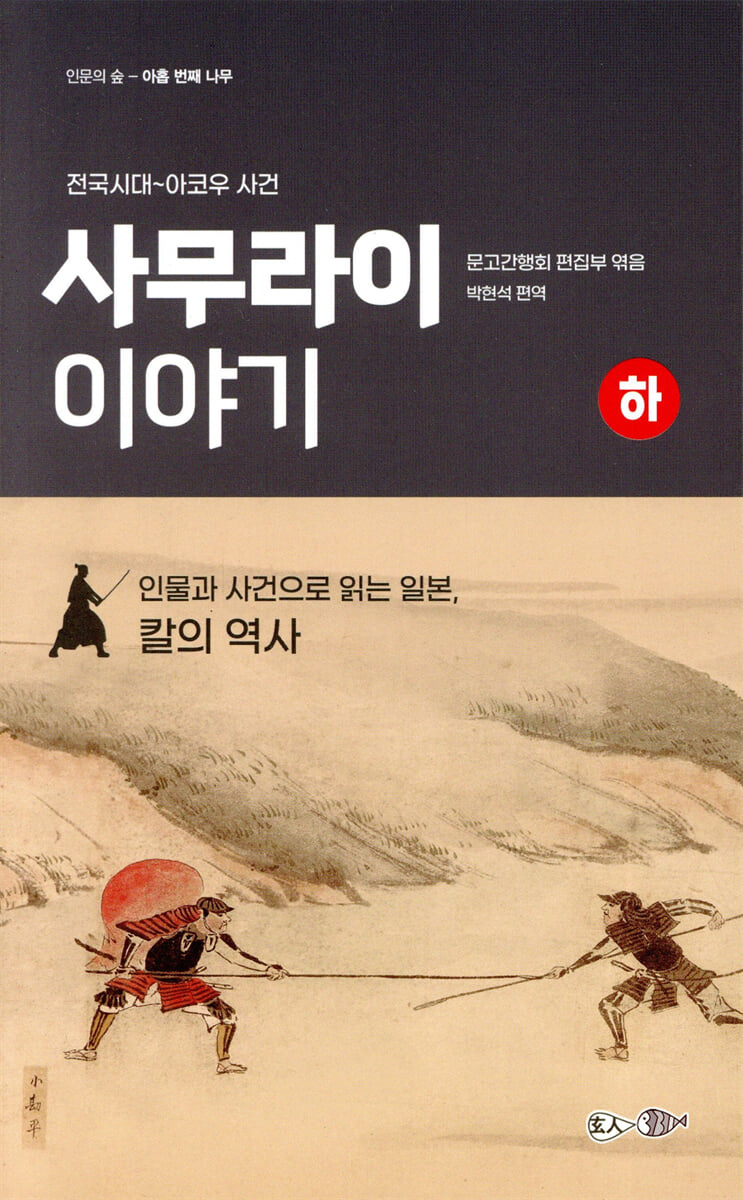
Samurai Story (Part 2)
 |
Description
Book Introduction
The story of the samurai who ruled Japanese society for 700 years.
From the Middle Ages to the modern era, Japanese history has been a history of swords.
Politics was conducted by warriors, and their spirit soon became the spirit that represented Japan.
Therefore, to understand present-day Japan, it is necessary to understand the spirit of the samurai who ruled them for a long time.
This book contains stories of warriors who were active from the Sengoku period, which can be said to be the latter half of the 700-year samurai regime, to the Akō Incident (Chushingura) that occurred in the middle of the Edo shogunate, written in an easy-to-understand manner.
Through this book, I hope you will learn about the warrior spirit that runs deep within the Japanese people.
From the Middle Ages to the modern era, Japanese history has been a history of swords.
Politics was conducted by warriors, and their spirit soon became the spirit that represented Japan.
Therefore, to understand present-day Japan, it is necessary to understand the spirit of the samurai who ruled them for a long time.
This book contains stories of warriors who were active from the Sengoku period, which can be said to be the latter half of the 700-year samurai regime, to the Akō Incident (Chushingura) that occurred in the middle of the Edo shogunate, written in an easy-to-understand manner.
Through this book, I hope you will learn about the warrior spirit that runs deep within the Japanese people.
index
Chapter 14: Hojo Ujiyasu
1.
Sengoku period (Sengoku period)
2.
Hojo Soun (Battle of Kawagoe Castle)
Chapter 15: Uesugi Kenshin and Takeda Shingen
1.
Uesugi Kenshin
2.
Takeda Shingen
3.
Battle of Kawanakajima
Chapter 16: Mori Motonari
1.
Why didn't you ask to be made the leader of Japan?
2.
Battle of Itsukushima
Chapter 17: Emperor Go
1.
Mosquito net instead of clothes
2.
The Emperor's virtue
Chapter 18 Oda Nobunaga
1.
Okehazama
2.
Secret Lion
3.
A peaceful country and a beautiful palace (Battle of Anegawa)
4.
Nagashino Castle (Battle of Nagashino)
5.
May Darkness (The Incident at Honnoji)
Chapter 19: Toyotomi Hideyoshi
1.
The Hero's Last Battle (Battle of Takamatsu Castle)
2.
The Last of the Traitors (Battle of Yamazaki)
3.
Battle of Shizugatake
4.
Golden Castle
5.
Kanpaku
6.
Shining throne
7.
Tiger and Lynx (Battle of Odawara)
8.
Towards the Ming Dynasty (Imjin War)
9.
fading light
Chapter 20 Tokugawa Ieyasu
1.
childhood
2.
In front of the enemy (Battle of Mikatagahara)
3.
The Battle of Komaki and Nagakute
4.
The Battle of Sekigahara
5.
The Curse of the Bell (Hokoji Bell Incident)
6.
Fallen paulownia leaves (Battle of Osaka)
Chapter 21: Tokugawa Iemitsu
1.
Shogun from birth
2.
Beyond the sea
3.
Kirishitan
4.
Shimahara Rebellion
5.
isolationism
Chapter 22: Emperor Gokomyo
1.
The insolent shogunate
2.
Cut the boat here
Chapter 23: Tokugawa Mitsukuni
1.
Garden of Learning
2.
Several scholars
3.
Sakura no Baba
4.
Great Japanese History
5.
Oh, loyal subject
6.
Mito Komon
Chapter 24: Oishi Yoshio
1.
Inukubo Nari
2.
Akou's Doctor (Ako Incident)
1.
Sengoku period (Sengoku period)
2.
Hojo Soun (Battle of Kawagoe Castle)
Chapter 15: Uesugi Kenshin and Takeda Shingen
1.
Uesugi Kenshin
2.
Takeda Shingen
3.
Battle of Kawanakajima
Chapter 16: Mori Motonari
1.
Why didn't you ask to be made the leader of Japan?
2.
Battle of Itsukushima
Chapter 17: Emperor Go
1.
Mosquito net instead of clothes
2.
The Emperor's virtue
Chapter 18 Oda Nobunaga
1.
Okehazama
2.
Secret Lion
3.
A peaceful country and a beautiful palace (Battle of Anegawa)
4.
Nagashino Castle (Battle of Nagashino)
5.
May Darkness (The Incident at Honnoji)
Chapter 19: Toyotomi Hideyoshi
1.
The Hero's Last Battle (Battle of Takamatsu Castle)
2.
The Last of the Traitors (Battle of Yamazaki)
3.
Battle of Shizugatake
4.
Golden Castle
5.
Kanpaku
6.
Shining throne
7.
Tiger and Lynx (Battle of Odawara)
8.
Towards the Ming Dynasty (Imjin War)
9.
fading light
Chapter 20 Tokugawa Ieyasu
1.
childhood
2.
In front of the enemy (Battle of Mikatagahara)
3.
The Battle of Komaki and Nagakute
4.
The Battle of Sekigahara
5.
The Curse of the Bell (Hokoji Bell Incident)
6.
Fallen paulownia leaves (Battle of Osaka)
Chapter 21: Tokugawa Iemitsu
1.
Shogun from birth
2.
Beyond the sea
3.
Kirishitan
4.
Shimahara Rebellion
5.
isolationism
Chapter 22: Emperor Gokomyo
1.
The insolent shogunate
2.
Cut the boat here
Chapter 23: Tokugawa Mitsukuni
1.
Garden of Learning
2.
Several scholars
3.
Sakura no Baba
4.
Great Japanese History
5.
Oh, loyal subject
6.
Mito Komon
Chapter 24: Oishi Yoshio
1.
Inukubo Nari
2.
Akou's Doctor (Ako Incident)
Into the book
[People are castles, people are fences, people are moats, affection is allies, resentment is enemies]
“No matter how high the stone wall, no matter how deep the moat, if the hearts of the general and his retainers are not one, it is of no use.”
“My last name is Soldiers.
He said, “My moat is also soldiers,” and did not pay any attention to building a castle.
There were countless heroes and valiant men during the Warring States Period, but none had such brilliant ideas and fought so skillfully as these two.
These two people could be said to be the flowers of the Warring States period.
Both of these men had the intention of entering Kyoto and ruling the country, but Shingen passed away in April of the first year of Tensho (1573) at the age of 53, and Kenshin passed away in March of the sixth year of Tensho (1578) at the age of 49.
If either of these two had entered Kyoto, they would have engaged in a fierce battle with Nobunaga, but history has not provided us with such a scene.
After the Onin War, all those who built castles built them on top of mountains.
In those days, small castles competed with small castles, and a hundred warriors, each wielding a spear, charged forward and ran wild to decide the outcome. However, the world has changed, and generals have formed alliances and formed allied forces. Battles have become increasingly large, and it is no longer possible to achieve a great victory through wars in valleys or mountains.
Therefore, the location for building the castle was chosen to be a place with good communication with various regions so that a large army could be gathered.
Hideyoshi was the first to open his eyes to this fact.
Even when Nobunaga was alive, he always recommended good places such as Komakiyama Castle, Gifu Castle, and Azuchi Castle.
Compared to previous Japanese history, the outstanding point of Dai Nihon Sa is that Empress Jingu was regarded as an empress rather than an emperor, and Otomo, the son of Emperor Kobun, was regarded as an emperor and included in the genealogy of successive emperors.
In this way, the Southern Dynasty was recognized as the legitimate emperor.
Most of the subsequent history was created based on this history of Japan.
“No matter how high the stone wall, no matter how deep the moat, if the hearts of the general and his retainers are not one, it is of no use.”
“My last name is Soldiers.
He said, “My moat is also soldiers,” and did not pay any attention to building a castle.
There were countless heroes and valiant men during the Warring States Period, but none had such brilliant ideas and fought so skillfully as these two.
These two people could be said to be the flowers of the Warring States period.
Both of these men had the intention of entering Kyoto and ruling the country, but Shingen passed away in April of the first year of Tensho (1573) at the age of 53, and Kenshin passed away in March of the sixth year of Tensho (1578) at the age of 49.
If either of these two had entered Kyoto, they would have engaged in a fierce battle with Nobunaga, but history has not provided us with such a scene.
After the Onin War, all those who built castles built them on top of mountains.
In those days, small castles competed with small castles, and a hundred warriors, each wielding a spear, charged forward and ran wild to decide the outcome. However, the world has changed, and generals have formed alliances and formed allied forces. Battles have become increasingly large, and it is no longer possible to achieve a great victory through wars in valleys or mountains.
Therefore, the location for building the castle was chosen to be a place with good communication with various regions so that a large army could be gathered.
Hideyoshi was the first to open his eyes to this fact.
Even when Nobunaga was alive, he always recommended good places such as Komakiyama Castle, Gifu Castle, and Azuchi Castle.
Compared to previous Japanese history, the outstanding point of Dai Nihon Sa is that Empress Jingu was regarded as an empress rather than an emperor, and Otomo, the son of Emperor Kobun, was regarded as an emperor and included in the genealogy of successive emperors.
In this way, the Southern Dynasty was recognized as the legitimate emperor.
Most of the subsequent history was created based on this history of Japan.
--- From the text
Publisher's Review
From the Middle Ages to the modern era, Japan, an island nation, was rarely invaded by foreign powers.
But instead, the internal fighting continued unabated.
The biggest cause of the civil war that lasted for many years was the struggle for power, and the largest force in that power struggle was the shogunate representing the traditional imperial family and the samurai family.
Of course, since the shogun, the leader of the warriors, held power for a long time based on military force, the power of the emperor was very weak. However, the emperor had the potential to form a force that could threaten the shogun just by existing, so he was always a target of the shogun's wariness.
This subtle conflict between the Emperor and the Shogun continues to influence the consciousness of the Japanese people to this day, creating an invisible competitive spirit between the East (the region centered around Tokyo, a society centered around the Shogun) and the West (the region centered around Kyoto and Osaka, a society centered around the Emperor).
If we turn our attention to the samurai clan, there was a conflict between the Genji (Minamoto clan) and the Heike (Taira clan).
It would not be an exaggeration to say that the struggle for power between the two families was a fight between these two families.
Of course, there is a tendency in history after the Warring States period to try to force the status of the warriors who stood out in each region into the history of the two Genpei clans (a term that refers to the Genji and Heike clans), but the conflict between the two Genpei clans had such a great influence on the consciousness of the Japanese people that it was necessary to force it into their history.
Because the flag representing the Genji was white and the flag representing the Heike was red, the term "Red and White War" is still commonly used in Japan.
It is also undeniable that the two families, the Minamoto and Taira, had a profound influence on the Japanese spirit.
Next, if we turn our attention to the common soldiers, the greatest ethic that governed them was loyalty.
However, the loyalty of the warriors was a little different from the loyalty to the king that we generally know. Loyalty to the king was of course absolute, but in addition, loyalty to the master one served was also added as a virtue that must be maintained.
And when these two loyalties conflicted, there were times when loyalty to the master one was directly serving took precedence over loyalty to the king. A thorough understanding of this relationship will allow for a more accurate understanding of Japanese history.
Another core idea of the warriors was shame.
In order to avoid being shamed, they would sometimes even throw away their lives without much difficulty.
Let us examine in detail the origins of the underlying spirit of Japan's history, which has long been characterized by a unique political system in which the imperial family and the shogunate coexisted and ruled the world.
But instead, the internal fighting continued unabated.
The biggest cause of the civil war that lasted for many years was the struggle for power, and the largest force in that power struggle was the shogunate representing the traditional imperial family and the samurai family.
Of course, since the shogun, the leader of the warriors, held power for a long time based on military force, the power of the emperor was very weak. However, the emperor had the potential to form a force that could threaten the shogun just by existing, so he was always a target of the shogun's wariness.
This subtle conflict between the Emperor and the Shogun continues to influence the consciousness of the Japanese people to this day, creating an invisible competitive spirit between the East (the region centered around Tokyo, a society centered around the Shogun) and the West (the region centered around Kyoto and Osaka, a society centered around the Emperor).
If we turn our attention to the samurai clan, there was a conflict between the Genji (Minamoto clan) and the Heike (Taira clan).
It would not be an exaggeration to say that the struggle for power between the two families was a fight between these two families.
Of course, there is a tendency in history after the Warring States period to try to force the status of the warriors who stood out in each region into the history of the two Genpei clans (a term that refers to the Genji and Heike clans), but the conflict between the two Genpei clans had such a great influence on the consciousness of the Japanese people that it was necessary to force it into their history.
Because the flag representing the Genji was white and the flag representing the Heike was red, the term "Red and White War" is still commonly used in Japan.
It is also undeniable that the two families, the Minamoto and Taira, had a profound influence on the Japanese spirit.
Next, if we turn our attention to the common soldiers, the greatest ethic that governed them was loyalty.
However, the loyalty of the warriors was a little different from the loyalty to the king that we generally know. Loyalty to the king was of course absolute, but in addition, loyalty to the master one served was also added as a virtue that must be maintained.
And when these two loyalties conflicted, there were times when loyalty to the master one was directly serving took precedence over loyalty to the king. A thorough understanding of this relationship will allow for a more accurate understanding of Japanese history.
Another core idea of the warriors was shame.
In order to avoid being shamed, they would sometimes even throw away their lives without much difficulty.
Let us examine in detail the origins of the underlying spirit of Japan's history, which has long been characterized by a unique political system in which the imperial family and the shogunate coexisted and ruled the world.
GOODS SPECIFICS
- Date of issue: August 10, 2024
- Page count, weight, size: 344 pages | 130*210*30mm
- ISBN13: 9791190156523
- ISBN10: 1190156520
You may also like
카테고리
korean


korean

![GQ KOREA Mark (Monthly): December [2025]](http://librairie.coreenne.fr/cdn/shop/files/8ef265dbbfbf186523ed75ba7319009d.jpg?v=1765340328&width=3840)


