

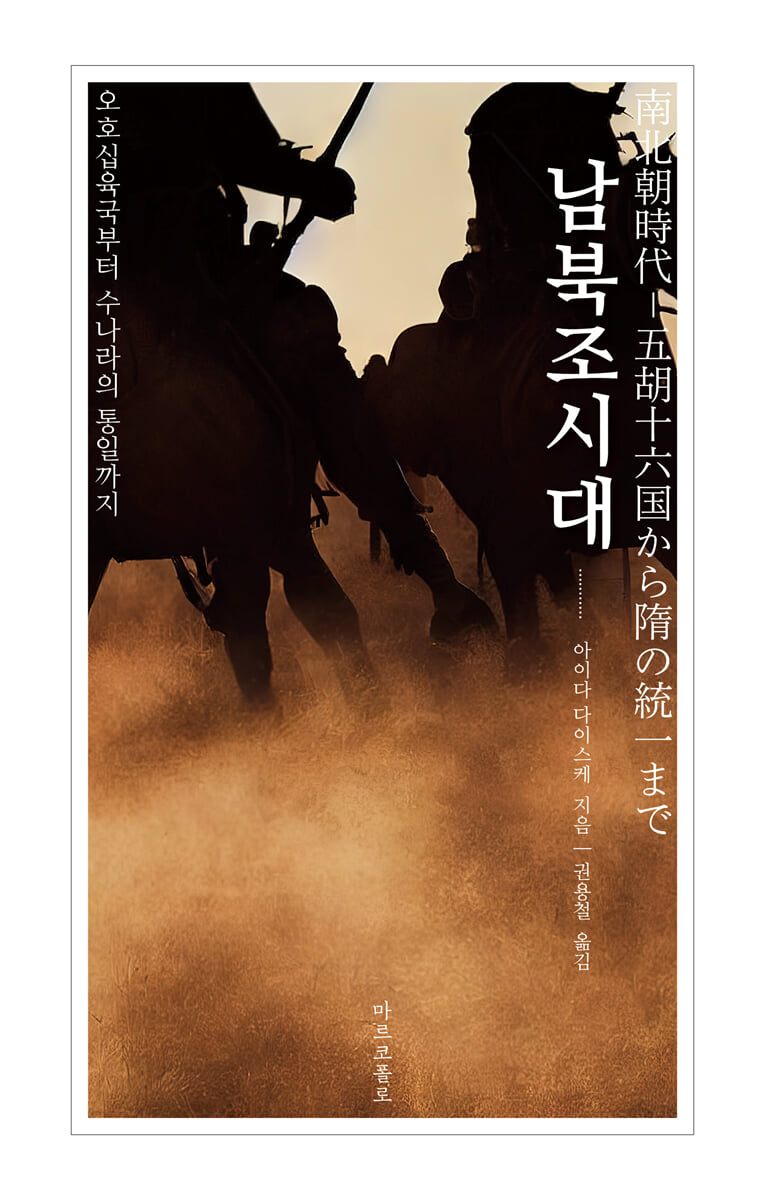
The Southern and Northern Dynasties: From the Sixteen Kingdoms to the Unification of the Sui Dynasty
 |
Description
Book Introduction
The 'Northern and Southern Dynasties' in China refers to the 150 years from the unification of northern China by the Northern Wei Dynasty (439 AD) after the Sixteen States of Wuhu to the unification of Sui (589 AD).
They are the Northern Dynasties (Northern Wei, Eastern Wei, Western Wei, Northern Qi) led by northern nomads and the Southern Dynasties (Song, Qi, Liang, Jin) led by the aristocratic society of the Han people.
In addition to the war between the North and the South, rebellions such as the Six Jin Rebellion continued, while the path to a system and culture passed down to future generations was opened through exchanges between Koreans and nomads.
We look back at the people who lived through those turbulent times.
The Northern and Southern Dynasties period was an important period that laid the foundation for the subsequent Sui and Tang dynasties through a complex process of conflict, reconciliation, integration, and mutual influence between Han and non-Han peoples.
Therefore, the ‘birth of a new Chinese world’ is directly related to the ‘dynamism’ of the Northern and Southern Dynasties period.
A panoramic view unfolds of how various nomadic tribes, such as the Huns, Xianbei, Jur, Jiang, Di, and Tuyuhun, who emerged after the fall of the Han Empire, infiltrated China and shaped its history.
This book shows that the Northern and Southern Dynasties, which we often think of as a complex era filled with war, was not actually like that.
It is certainly surprising that the various systems formed during the Northern and Southern Dynasties period had a significant influence on the formation of the later Sui and Tang dynasties.
And it shows how various ethnic groups other than the Han Chinese who appeared during the Northern and Southern Dynasties shaped and influenced Chinese history.
Until now, there has been no book that introduces the events and people that occurred during the Northern and Southern Dynasties in such detail.
They are the Northern Dynasties (Northern Wei, Eastern Wei, Western Wei, Northern Qi) led by northern nomads and the Southern Dynasties (Song, Qi, Liang, Jin) led by the aristocratic society of the Han people.
In addition to the war between the North and the South, rebellions such as the Six Jin Rebellion continued, while the path to a system and culture passed down to future generations was opened through exchanges between Koreans and nomads.
We look back at the people who lived through those turbulent times.
The Northern and Southern Dynasties period was an important period that laid the foundation for the subsequent Sui and Tang dynasties through a complex process of conflict, reconciliation, integration, and mutual influence between Han and non-Han peoples.
Therefore, the ‘birth of a new Chinese world’ is directly related to the ‘dynamism’ of the Northern and Southern Dynasties period.
A panoramic view unfolds of how various nomadic tribes, such as the Huns, Xianbei, Jur, Jiang, Di, and Tuyuhun, who emerged after the fall of the Han Empire, infiltrated China and shaped its history.
This book shows that the Northern and Southern Dynasties, which we often think of as a complex era filled with war, was not actually like that.
It is certainly surprising that the various systems formed during the Northern and Southern Dynasties period had a significant influence on the formation of the later Sui and Tang dynasties.
And it shows how various ethnic groups other than the Han Chinese who appeared during the Northern and Southern Dynasties shaped and influenced Chinese history.
Until now, there has been no book that introduces the events and people that occurred during the Northern and Southern Dynasties in such detail.
- You can preview some of the book's contents.
Preview
index
Preface - The Birth of a New Chinese World
Introduction - The Collapse of the Western Jin Dynasty and the Rise and Fall of Dynasties - The Various Regimes of the Five Hu
1.
The collapse of the Western Jin Dynasty and the rise of the Han Dynasty
2.
The rise and fall of great powers
Chapter 1 - Northern Wei's Rule over North China (Northern Dynasties 1)
1.
Tuoba Gui's founding of the Northern Wei Dynasty
2.
Emperor Taiwu's unification of northern China and Choi Ho's setbacks
3.
The birth of the Grand Emperor
4.
Nomadic government and sacrificial rites that connected scholars
Chapter 2 - The Song Dynasty (Southern Dynasties 1) Created a New 'Tradition'
1.
The founding of Song Yu-yu
2.
The Creation of 'Tradition' and the Storm of Purges
3.
Song and Je culture
Chapter 3 - The Light and Shadow of Emperor Xiaowen's Sinicization Policy (Northern Dynasty 2)
1.
Empress Dowager Feng's various reforms and the penetration of northern China's rule
2.
Emperor Xiaowen's Sinicization Policy - Moving the Capital to Luoyang, Rituals, Official Regulations, and Customs
3.
Luoyang's prosperity and aristocratic politics
Chapter 4 - The Battle between the Eastern and Western Wei (Northern Dynasty 3)
1.
The Yuk Jin Rebellion and Lee Ju-yeong's Tyranny
2.
The agony of the equal-ranking eunuch - in the gap between the Hun-gwi and the Korean nobility
3.
The Restoration Policy of Yuwen Tai, a powerful official of the Western Wei Dynasty - Nomadic Government and the System of the Book of Rites
Chapter 5 - Emperor Bodhisattva Soyeon and the Man of Blue, Hou Jing (Southern Dynasties 2)
1.
The founding of the Yang Dynasty and the reform of the Heavenly King
2.
The Light and Shadow of the Emperor Bodhisattva
3.
The Rebellion of Hou Jing and the Collapse of the Liang Dynasty
Chapter 6 - Another Three Kingdoms Period (Northern Qi, Northern Zhou, Jin) (Northern Dynasties 4, Southern Dynasties 3)
1.
Northern Qi - The Intensifying Power Struggle
2.
Northern Zhou - The Road to Unification of North China
3.
Jin - the last dynasty of the Southern Dynasties
The Final Chapter - Dynamism in the Southern and Northern Dynasties
Conclusion
References
Introduction of main characters
Chronology
Introduction - The Collapse of the Western Jin Dynasty and the Rise and Fall of Dynasties - The Various Regimes of the Five Hu
1.
The collapse of the Western Jin Dynasty and the rise of the Han Dynasty
2.
The rise and fall of great powers
Chapter 1 - Northern Wei's Rule over North China (Northern Dynasties 1)
1.
Tuoba Gui's founding of the Northern Wei Dynasty
2.
Emperor Taiwu's unification of northern China and Choi Ho's setbacks
3.
The birth of the Grand Emperor
4.
Nomadic government and sacrificial rites that connected scholars
Chapter 2 - The Song Dynasty (Southern Dynasties 1) Created a New 'Tradition'
1.
The founding of Song Yu-yu
2.
The Creation of 'Tradition' and the Storm of Purges
3.
Song and Je culture
Chapter 3 - The Light and Shadow of Emperor Xiaowen's Sinicization Policy (Northern Dynasty 2)
1.
Empress Dowager Feng's various reforms and the penetration of northern China's rule
2.
Emperor Xiaowen's Sinicization Policy - Moving the Capital to Luoyang, Rituals, Official Regulations, and Customs
3.
Luoyang's prosperity and aristocratic politics
Chapter 4 - The Battle between the Eastern and Western Wei (Northern Dynasty 3)
1.
The Yuk Jin Rebellion and Lee Ju-yeong's Tyranny
2.
The agony of the equal-ranking eunuch - in the gap between the Hun-gwi and the Korean nobility
3.
The Restoration Policy of Yuwen Tai, a powerful official of the Western Wei Dynasty - Nomadic Government and the System of the Book of Rites
Chapter 5 - Emperor Bodhisattva Soyeon and the Man of Blue, Hou Jing (Southern Dynasties 2)
1.
The founding of the Yang Dynasty and the reform of the Heavenly King
2.
The Light and Shadow of the Emperor Bodhisattva
3.
The Rebellion of Hou Jing and the Collapse of the Liang Dynasty
Chapter 6 - Another Three Kingdoms Period (Northern Qi, Northern Zhou, Jin) (Northern Dynasties 4, Southern Dynasties 3)
1.
Northern Qi - The Intensifying Power Struggle
2.
Northern Zhou - The Road to Unification of North China
3.
Jin - the last dynasty of the Southern Dynasties
The Final Chapter - Dynamism in the Southern and Northern Dynasties
Conclusion
References
Introduction of main characters
Chronology
GOODS SPECIFICS
- Date of issue: August 17, 2024
- Page count, weight, size: 328 pages | 137*215*30mm
- ISBN13: 9791192667577
- ISBN10: 1192667573
You may also like
카테고리
korean


korean

![GQ KOREA Mark (Monthly): December [2025]](http://librairie.coreenne.fr/cdn/shop/files/8ef265dbbfbf186523ed75ba7319009d.jpg?v=1765340328&width=3840)


