

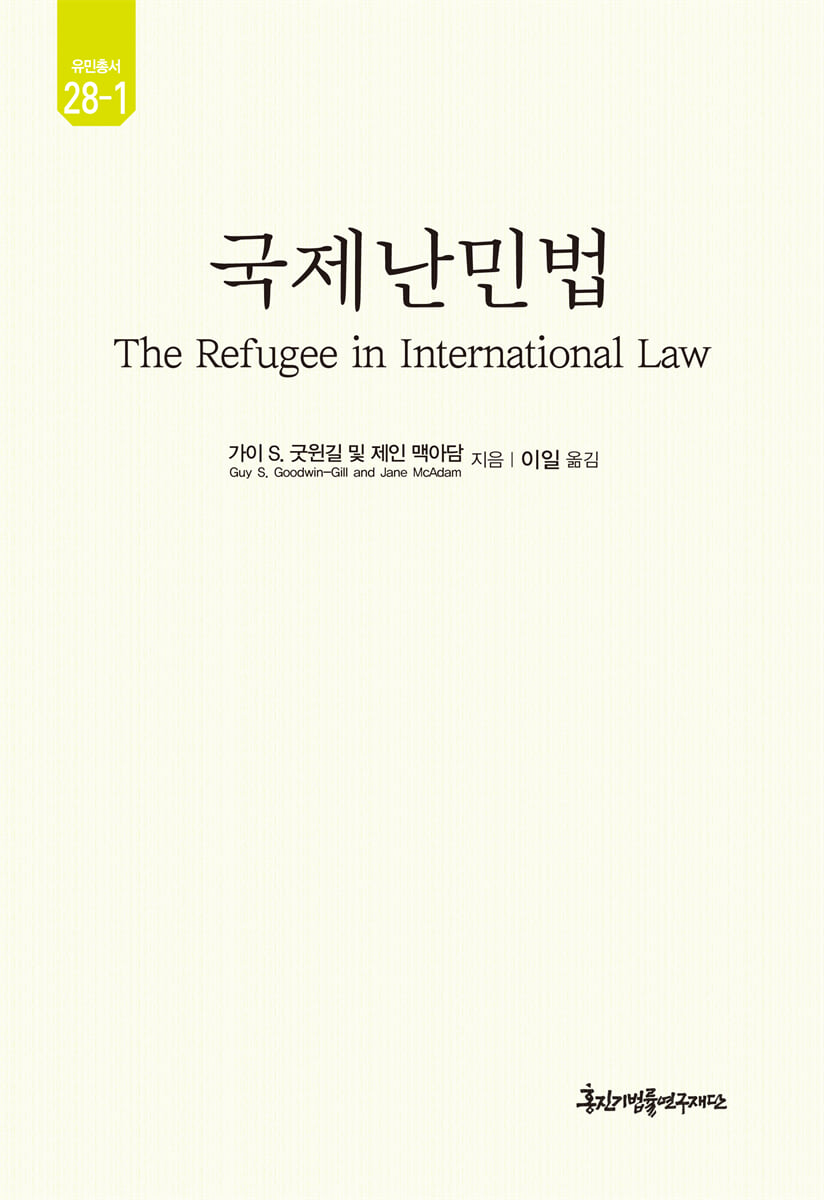
International Refugee Law 1
 |
Description
Book Introduction
Today, international refugee law and institutions have a history of over 100 years.
Fridtjof Nansen, the first High Commissioner for Refugees of the League of Nations, had to deal with the causes of refugee creation, such as war and conflict, social reconstruction and nation-building, famine and epidemics, problems not so different from those facing the international community today.
We hope this book will serve as a reminder to readers of the inherent dignity of all who seek refuge, and that fleeing persecution or other serious harm is not a crime.
We have attempted to reiterate the importance, resilience, and capacity for development of the international protection system.
We aim to provide an authoritative account of refugees in international law, offering insights into current and future debates and hoping for a future in which the need for asylum may actually be reduced.
Fridtjof Nansen, the first High Commissioner for Refugees of the League of Nations, had to deal with the causes of refugee creation, such as war and conflict, social reconstruction and nation-building, famine and epidemics, problems not so different from those facing the international community today.
We hope this book will serve as a reminder to readers of the inherent dignity of all who seek refuge, and that fleeing persecution or other serious harm is not a crime.
We have attempted to reiterate the importance, resilience, and capacity for development of the international protection system.
We aim to provide an authoritative account of refugees in international law, offering insights into current and future debates and hoping for a future in which the need for asylum may actually be reduced.
index
introduction
Acknowledgements
Translator's Preface
List of countries (as of April 30, 2021)
List of case laws
Table of treaties and other international and regional organizations
abbreviation
Guide for readers
Chapter 1 Refugees in International Law
Section 1 Introduction
Section 2 Refugees in the Law and Practice of the United Nations Security Council
Section 3 Refugees in Domestic and International Law
Section 4 Protection
Section 5: Limited Future or Free Future?
Part 1 Nan Min
Chapter 2: Definition and Description of Refugees
Section 1 Refugees
Section 2 Refugees as defined in the international conventions of 1922-1946
Section 3: Purposes of the United Nations and Refugees
Section 3.1 UNHCR Regulations
Section 3.2 Development of legal definitions and expansion of duties
March 3rd Internally Displaced Persons
Section 3.3.1 Problem Situation
Section 3.3.2 Responsibilities of the United Nations and UNHCR
Section 4 Refugees as defined in the 1951 Convention and the 1967 Protocol relating to the Status of Refugees
Section 5 Regional Approaches to Refugee Definitions
Section 6 Refugees under Domestic Law: Some Examples
Section 7: Responsibilities and International Obligations of the Organization
Section 8: The Purpose of General International Law and Refugees
Chapter 3 Determination of Refugee Status: Analysis and Application
Section 1. Competence of the UNHCR and the States Parties to the Refugee Convention and Protocol
Section 2: Determination of Refugee Status by the UNHCR
Section 3: Determination of Refugee Status by a State
Section 3.1 European Union Qualifications Directive
Verse 4: Persecution: A Question of Interpretation
4.1 Protected Interests
4.2 Methods and means of persecution
Section 4.2.1 Persecution as a crime under international law
4.3 Agents of persecution
Section 4.3.1 Perpetrators of Persecution and State Responsibility
4.4 Fear, Intention, Motive, and Basis of Persecution
Section 5: Definition of Refugees and Reasons for Persecution
Section 5.1 General
Section 5.1.1 'Goodwill' and Activities in Refuge Countries
Section 5.1.2 Nationality and Stateless Persons
Section 5.1.3 Deprivation of Citizenship, Persecution and Nationality
5.2 Reasons for Persecution
Section 5.2.1 Race
Section 5.2.2 Religion
Section 5.2.3 Nationality or Ethnicity
Section 5.2.4 Members of specific social groups
Section 5.2.4.1 Conceptual Development
5.2.4.2 The category of resolution
Section 5.2.4.3 For general victims
Section 5.2.4.4 Gender-Based Claims
Section 5.2.4.5 Sexual Orientation and Gender Identity Claims
Section 5.2.4.6 A Social Perspective on 'Social Groups'
Section 5.2.5 Political Opinions
Section 6: Persecution: Issues of Application
6.1 Persecution and General Applicable Law
6.1.1 Conscientious Objectors
Section 6.1.1.1 Right to Conscientious Objection to Military Service
Section 6.1.1.2 Right to refuse to participate in a conflict that is “condemned by the international community”
Section 6.1.1.3 The nature of disputes between individuals and states
6.1.1.4 Establishing a Well-founded Fear of Persecution
Section 6.1.2 Political and non-political prisoners
6.2 Persecution and Danger Situations
Section 6.2.1 Domestic Protection/Asylum/Relocation Alternatives
Section 6.2.2 Refuge from Armed Conflict and Violence
Section 6.2.3 Individuals and Groups
6.3 Children who are applicants for asylum
Verse 7: Persecution and Lack of Protection
Chapter 4 Loss and Denial of Refugee Status and Benefits
Section 1 'Withdrawal', Suspension and Exclusion
Section 2: Suspension: Voluntary action of an individual
Section 3: Suspension: Change of Circumstances
3.1 Changes in personal circumstances
3.2 Changes in circumstances in the country of origin
3.3 Investigation into the suspension
3.4 Exceptional circumstances that sustain the status
Section 4 Protection or assistance by other countries or United Nations agencies
4.1 The so-called country of first asylum principle
Section 4.2 Refugees receiving protection and assistance from the United Nations
4.2.1 Historical Background
Section 4.2.2 UNHCR Statutes and the 1951 Refugee Convention
Section 4.2.3 Protection under the 1951 Convention
Developments since Section 4.2.4
Section 4.2.5 Future Outlook
Section 4.3 Other refugees not considered to be in need of international protection
Section 5: Exclusion from refugee status
Section 5.1 'Serious Reasons'
5.2 Crimes against peace, war crimes, and crimes against humanity
Background on the Drafting of Article 5.2.1 Section 1F(a)
Scope of Article 5.2.2 Section 1F(a)
5.2.2.1 Crimes against the Peace
Section 5.2.2.2 War Crimes
5.2.2.3 Crimes against humanity
Section 5.2.3 Personal Responsibility
5.3 Serious non-political crimes
Background on the Drafting of Article 1F(b) of Section 5.3.1
Section 5.3.1.1 Relationship with extradition of criminals
Section 5.3.1.2 'Significant' and 'Non-political'
Section 5.3.2 Circumstances, Proportionality and Security
5.4 Acts contrary to the purposes and principles of the United Nations
Background for the Drafting of Article 5.4.1 Section 1F(c)
Section 5.4.2 'Purposes and Principles of the United Nations'
Section 5.4.3 Personal Responsibility
Section 5.4.4 Refugee Status, Security, and Terrorism
Section 5.4.5 Terrorism, Armed Conflict and the United Nations
Part 2 Rain Ho
Chapter 5: Principle of Non-Return - 1
Evolution of the 1st Principle
Section 2: Principle of Non-Refouling under General International Law
2.1 Agreements and Conventions
Section 2.2 Declaration and Resolution
Section 2.3 UNHCR Executive Committee Decision on International Protection
Section 2.4: Perspectives and National Implementation of Countries
Section 2.4.1 Perspectives of States
Section 2.4.2 Implementation by States: Some Aspects
Section 3: Scope of the principle of non-refoulement under the 1951 Refugee Convention
3.1 Human Scope
Section 3.2 Questions about Risk
Section 4: Exceptions to the principle of non-refoulement under the 1951 Refugee Convention
Section 5: Application of the principle of non-refoulement to specific situations
May 1st Ban on Forced Repatriation and "Illegal Entry"
5.2 Prohibition of forced repatriation and extradition of criminals
5.3 Prohibition of forced repatriation and expulsion
Section 6: Prohibition of forced return and large-scale refugee influx
6.1 Some Aspects of National Implementation
Section 7 Temporary Protection
7.1 Temporary Shelter Standards
Section 8: Prohibition of forced repatriation and the passage of time
Section 9: Non-refoulement as a principle of international customary law
Chapter 6: Principle of Non-Return - 2
1. Time, place, method, and means
Section 1.1 Extraterritorial Application
Section 1.1.1 Establishment of Responsibility
Section 1.1.2 Example: Interception on the High Seas
Section 1.2 'International Zone'
Section 1.2.1 'Borders of Territory' and Diplomatic Asylum
Section 1.3 Joint and Individual Responsibilities of States
Section 2: Prohibition of forced repatriation and refuge at sea
2.1 Stowaways
Section 2.2 Asylum seekers at sea
Section 2.2.1 Pollution
Section 2.2.2 Contiguous waters
Section 2.2.3 Inland waters and territorial waters
Section 2.3 Maritime Rescue
Section 2.3.1 International Cooperation and the Mediterranean Case
Chapter 7 Protection under International Human Rights Law and General International Law
Section 1 Introduction
Section 2: Development of the concept of protection as a supplementary form
Section 3 Scope of Protection under Human Rights Law
3.1 The absolute nature of the prohibition of forced repatriation under the Human Rights Act
3.2 torture
Section 3.2.1 Legal Sanctions
Section 3.2.2 Intention
3.3 Cruel, inhuman or degrading treatment or punishment
Section 3.4 General Risks
Section 3.5 Degree of Proof
Section 3.6 Right to Life
3.6.1 Death Penalty
Section 3.7 Right to Effective Remedies
Section 4 Other Rights
Section 5: Best interests of the child
Section 6 European Union Qualifications Directive
Section 7 Rights and Legal Status of Supplementary Protection Recipients
Section 7.1 Exclusion from supplementary protection
Chapter 8: The Concept of Asylum
Section 1 Introduction
Section 2 Asylum under international conventions, other systems and laws
Asylum under regional agreements
Section 4: Obstruction of Protection: Trends in State Implementation
Section 4.1 Access
Section 4.2 Blocking
Section 4.3 Other Arrival Blocking Policies
Section 4.3.1 Visa System
Section 4.3.2 Pre-entry permits and transport operator sanctions
Section 5: Response to International Law
5.1 Right to leave any country
Article 31 of the 1951 Convention, Section 5.2
Section 5.3 Principle of Good Faith
Section 6 Entry Barrier Policy: The Concepts of a "Safe" Country and "Effective Protection"
Section 6.1 Jurisdiction Issues: Determining Which State is Responsible for Examining a Protection Application
Section 6.2 'Safe Country' Mechanism
Section 6.3 'Effective Protection'
Section 6.4 Safe State Implementation in the European Union
Section 6.4.1 First country of asylum
Section 6.4.2 Safe Country of Origin
Section 6.4.3 Safe Third Countries
Section 6.4.4 Safe Countries in Europe
Section 6.4.5 Dublin Rules
Section 6.5 Safe Third Country Bilateral Agreement between the United States and Canada
Section 6.6 Re-entry Agreement
Section 6.7 Offshore Processing
Section 6.7.1 Legal Issues
Section 7. Standards for the treatment of asylum seekers
Section 8 Detention
August 1st Detention and Mass Refugee Influx
Section 9: Sintering
Acknowledgements
Translator's Preface
List of countries (as of April 30, 2021)
List of case laws
Table of treaties and other international and regional organizations
abbreviation
Guide for readers
Chapter 1 Refugees in International Law
Section 1 Introduction
Section 2 Refugees in the Law and Practice of the United Nations Security Council
Section 3 Refugees in Domestic and International Law
Section 4 Protection
Section 5: Limited Future or Free Future?
Part 1 Nan Min
Chapter 2: Definition and Description of Refugees
Section 1 Refugees
Section 2 Refugees as defined in the international conventions of 1922-1946
Section 3: Purposes of the United Nations and Refugees
Section 3.1 UNHCR Regulations
Section 3.2 Development of legal definitions and expansion of duties
March 3rd Internally Displaced Persons
Section 3.3.1 Problem Situation
Section 3.3.2 Responsibilities of the United Nations and UNHCR
Section 4 Refugees as defined in the 1951 Convention and the 1967 Protocol relating to the Status of Refugees
Section 5 Regional Approaches to Refugee Definitions
Section 6 Refugees under Domestic Law: Some Examples
Section 7: Responsibilities and International Obligations of the Organization
Section 8: The Purpose of General International Law and Refugees
Chapter 3 Determination of Refugee Status: Analysis and Application
Section 1. Competence of the UNHCR and the States Parties to the Refugee Convention and Protocol
Section 2: Determination of Refugee Status by the UNHCR
Section 3: Determination of Refugee Status by a State
Section 3.1 European Union Qualifications Directive
Verse 4: Persecution: A Question of Interpretation
4.1 Protected Interests
4.2 Methods and means of persecution
Section 4.2.1 Persecution as a crime under international law
4.3 Agents of persecution
Section 4.3.1 Perpetrators of Persecution and State Responsibility
4.4 Fear, Intention, Motive, and Basis of Persecution
Section 5: Definition of Refugees and Reasons for Persecution
Section 5.1 General
Section 5.1.1 'Goodwill' and Activities in Refuge Countries
Section 5.1.2 Nationality and Stateless Persons
Section 5.1.3 Deprivation of Citizenship, Persecution and Nationality
5.2 Reasons for Persecution
Section 5.2.1 Race
Section 5.2.2 Religion
Section 5.2.3 Nationality or Ethnicity
Section 5.2.4 Members of specific social groups
Section 5.2.4.1 Conceptual Development
5.2.4.2 The category of resolution
Section 5.2.4.3 For general victims
Section 5.2.4.4 Gender-Based Claims
Section 5.2.4.5 Sexual Orientation and Gender Identity Claims
Section 5.2.4.6 A Social Perspective on 'Social Groups'
Section 5.2.5 Political Opinions
Section 6: Persecution: Issues of Application
6.1 Persecution and General Applicable Law
6.1.1 Conscientious Objectors
Section 6.1.1.1 Right to Conscientious Objection to Military Service
Section 6.1.1.2 Right to refuse to participate in a conflict that is “condemned by the international community”
Section 6.1.1.3 The nature of disputes between individuals and states
6.1.1.4 Establishing a Well-founded Fear of Persecution
Section 6.1.2 Political and non-political prisoners
6.2 Persecution and Danger Situations
Section 6.2.1 Domestic Protection/Asylum/Relocation Alternatives
Section 6.2.2 Refuge from Armed Conflict and Violence
Section 6.2.3 Individuals and Groups
6.3 Children who are applicants for asylum
Verse 7: Persecution and Lack of Protection
Chapter 4 Loss and Denial of Refugee Status and Benefits
Section 1 'Withdrawal', Suspension and Exclusion
Section 2: Suspension: Voluntary action of an individual
Section 3: Suspension: Change of Circumstances
3.1 Changes in personal circumstances
3.2 Changes in circumstances in the country of origin
3.3 Investigation into the suspension
3.4 Exceptional circumstances that sustain the status
Section 4 Protection or assistance by other countries or United Nations agencies
4.1 The so-called country of first asylum principle
Section 4.2 Refugees receiving protection and assistance from the United Nations
4.2.1 Historical Background
Section 4.2.2 UNHCR Statutes and the 1951 Refugee Convention
Section 4.2.3 Protection under the 1951 Convention
Developments since Section 4.2.4
Section 4.2.5 Future Outlook
Section 4.3 Other refugees not considered to be in need of international protection
Section 5: Exclusion from refugee status
Section 5.1 'Serious Reasons'
5.2 Crimes against peace, war crimes, and crimes against humanity
Background on the Drafting of Article 5.2.1 Section 1F(a)
Scope of Article 5.2.2 Section 1F(a)
5.2.2.1 Crimes against the Peace
Section 5.2.2.2 War Crimes
5.2.2.3 Crimes against humanity
Section 5.2.3 Personal Responsibility
5.3 Serious non-political crimes
Background on the Drafting of Article 1F(b) of Section 5.3.1
Section 5.3.1.1 Relationship with extradition of criminals
Section 5.3.1.2 'Significant' and 'Non-political'
Section 5.3.2 Circumstances, Proportionality and Security
5.4 Acts contrary to the purposes and principles of the United Nations
Background for the Drafting of Article 5.4.1 Section 1F(c)
Section 5.4.2 'Purposes and Principles of the United Nations'
Section 5.4.3 Personal Responsibility
Section 5.4.4 Refugee Status, Security, and Terrorism
Section 5.4.5 Terrorism, Armed Conflict and the United Nations
Part 2 Rain Ho
Chapter 5: Principle of Non-Return - 1
Evolution of the 1st Principle
Section 2: Principle of Non-Refouling under General International Law
2.1 Agreements and Conventions
Section 2.2 Declaration and Resolution
Section 2.3 UNHCR Executive Committee Decision on International Protection
Section 2.4: Perspectives and National Implementation of Countries
Section 2.4.1 Perspectives of States
Section 2.4.2 Implementation by States: Some Aspects
Section 3: Scope of the principle of non-refoulement under the 1951 Refugee Convention
3.1 Human Scope
Section 3.2 Questions about Risk
Section 4: Exceptions to the principle of non-refoulement under the 1951 Refugee Convention
Section 5: Application of the principle of non-refoulement to specific situations
May 1st Ban on Forced Repatriation and "Illegal Entry"
5.2 Prohibition of forced repatriation and extradition of criminals
5.3 Prohibition of forced repatriation and expulsion
Section 6: Prohibition of forced return and large-scale refugee influx
6.1 Some Aspects of National Implementation
Section 7 Temporary Protection
7.1 Temporary Shelter Standards
Section 8: Prohibition of forced repatriation and the passage of time
Section 9: Non-refoulement as a principle of international customary law
Chapter 6: Principle of Non-Return - 2
1. Time, place, method, and means
Section 1.1 Extraterritorial Application
Section 1.1.1 Establishment of Responsibility
Section 1.1.2 Example: Interception on the High Seas
Section 1.2 'International Zone'
Section 1.2.1 'Borders of Territory' and Diplomatic Asylum
Section 1.3 Joint and Individual Responsibilities of States
Section 2: Prohibition of forced repatriation and refuge at sea
2.1 Stowaways
Section 2.2 Asylum seekers at sea
Section 2.2.1 Pollution
Section 2.2.2 Contiguous waters
Section 2.2.3 Inland waters and territorial waters
Section 2.3 Maritime Rescue
Section 2.3.1 International Cooperation and the Mediterranean Case
Chapter 7 Protection under International Human Rights Law and General International Law
Section 1 Introduction
Section 2: Development of the concept of protection as a supplementary form
Section 3 Scope of Protection under Human Rights Law
3.1 The absolute nature of the prohibition of forced repatriation under the Human Rights Act
3.2 torture
Section 3.2.1 Legal Sanctions
Section 3.2.2 Intention
3.3 Cruel, inhuman or degrading treatment or punishment
Section 3.4 General Risks
Section 3.5 Degree of Proof
Section 3.6 Right to Life
3.6.1 Death Penalty
Section 3.7 Right to Effective Remedies
Section 4 Other Rights
Section 5: Best interests of the child
Section 6 European Union Qualifications Directive
Section 7 Rights and Legal Status of Supplementary Protection Recipients
Section 7.1 Exclusion from supplementary protection
Chapter 8: The Concept of Asylum
Section 1 Introduction
Section 2 Asylum under international conventions, other systems and laws
Asylum under regional agreements
Section 4: Obstruction of Protection: Trends in State Implementation
Section 4.1 Access
Section 4.2 Blocking
Section 4.3 Other Arrival Blocking Policies
Section 4.3.1 Visa System
Section 4.3.2 Pre-entry permits and transport operator sanctions
Section 5: Response to International Law
5.1 Right to leave any country
Article 31 of the 1951 Convention, Section 5.2
Section 5.3 Principle of Good Faith
Section 6 Entry Barrier Policy: The Concepts of a "Safe" Country and "Effective Protection"
Section 6.1 Jurisdiction Issues: Determining Which State is Responsible for Examining a Protection Application
Section 6.2 'Safe Country' Mechanism
Section 6.3 'Effective Protection'
Section 6.4 Safe State Implementation in the European Union
Section 6.4.1 First country of asylum
Section 6.4.2 Safe Country of Origin
Section 6.4.3 Safe Third Countries
Section 6.4.4 Safe Countries in Europe
Section 6.4.5 Dublin Rules
Section 6.5 Safe Third Country Bilateral Agreement between the United States and Canada
Section 6.6 Re-entry Agreement
Section 6.7 Offshore Processing
Section 6.7.1 Legal Issues
Section 7. Standards for the treatment of asylum seekers
Section 8 Detention
August 1st Detention and Mass Refugee Influx
Section 9: Sintering
GOODS SPECIFICS
- Date of issue: September 29, 2025
- Format: Hardcover book binding method guide
- Page count, weight, size: 1,008 pages | 152*224*58mm
- ISBN13: 9788949968780
You may also like
카테고리
korean


korean

![GQ KOREA Mark (Monthly): December [2025]](http://librairie.coreenne.fr/cdn/shop/files/8ef265dbbfbf186523ed75ba7319009d.jpg?v=1765340328&width=3840)


