

Simple X-ray imaging interpretation of musculoskeletal disorders for primary care physicians
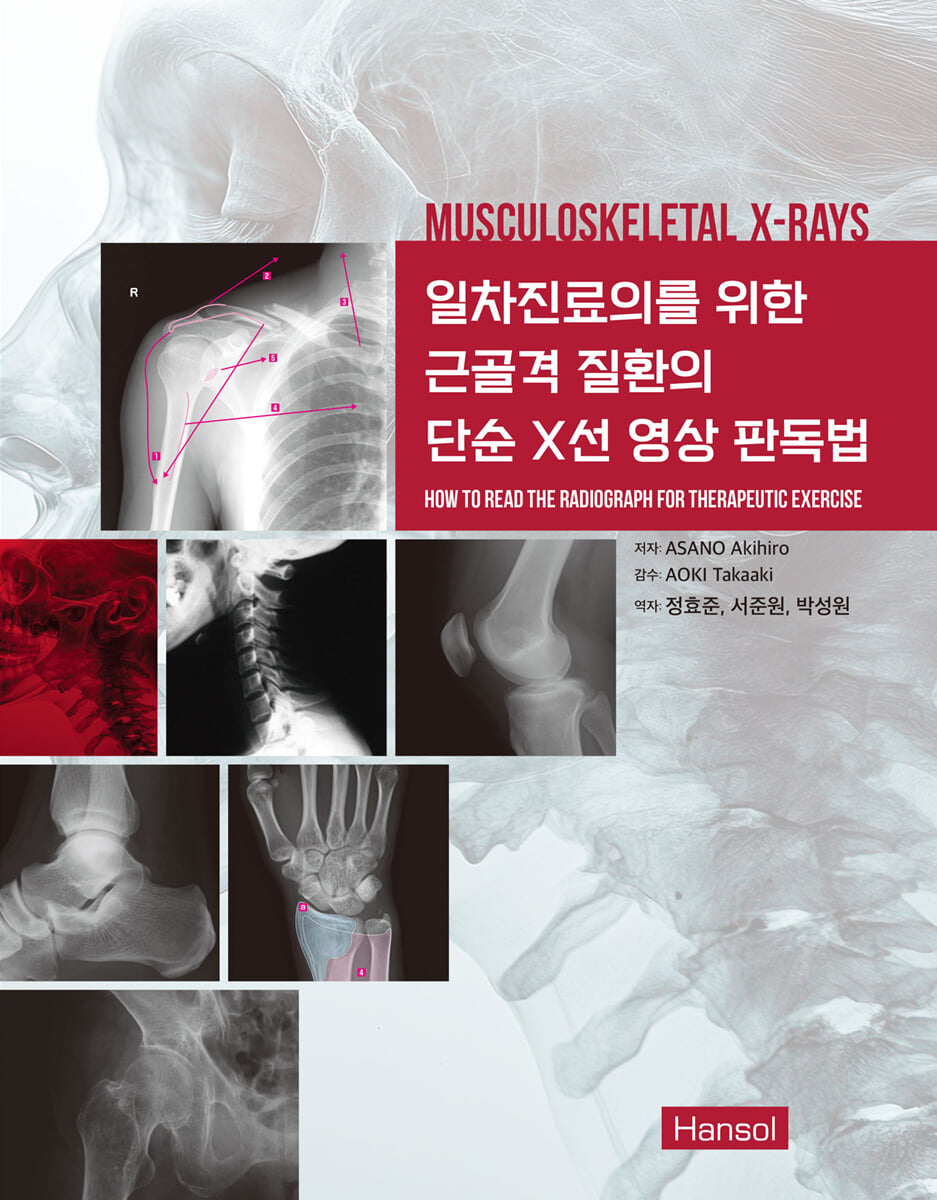 |
Description
Book Introduction
As imaging diagnostic equipment continues to advance, clearer images can be obtained.
As one of the pieces of information obtained from patients, it is very important to not only interpret image information more accurately, but also to closely examine the most basic simple X-ray images once again and imagine the condition of soft tissues that are not directly visible in the images and utilize it in rehabilitation treatment.
When conducting rehabilitation treatment for a patient, it is necessary to first accurately understand the patient's disease, assess the patient's current condition through palpation, and then approach treatment based on as much information as possible from imaging.
If you don't properly understand the imaging information, it can be difficult to provide adequate treatment to the patient.
We hope that this book can be used as a guide to identify disease conditions using basic, simple X-ray images, interpret anatomical structures through images, and classify and guide rehabilitation methods based on this.
Another unique feature of this book is that it includes instructions for drawing schematic diagrams of images based on normal anatomy.
By accurately understanding the normal structure and drawing X-ray images, we will be able to more deeply check and understand the disease condition.
We hope you will use this book as a reference for obtaining imaging information to provide appropriate treatment to patients in routine rehabilitation medical settings.
This book details how to diagnose, treat, and monitor the progress of musculoskeletal disorders using X-ray images and how to utilize these images in exercise therapy.
I think this is essential content, as there is no opportunity to learn in depth about X-ray imaging, which is most commonly used in outpatient treatment along with ultrasound imaging.
As one of the pieces of information obtained from patients, it is very important to not only interpret image information more accurately, but also to closely examine the most basic simple X-ray images once again and imagine the condition of soft tissues that are not directly visible in the images and utilize it in rehabilitation treatment.
When conducting rehabilitation treatment for a patient, it is necessary to first accurately understand the patient's disease, assess the patient's current condition through palpation, and then approach treatment based on as much information as possible from imaging.
If you don't properly understand the imaging information, it can be difficult to provide adequate treatment to the patient.
We hope that this book can be used as a guide to identify disease conditions using basic, simple X-ray images, interpret anatomical structures through images, and classify and guide rehabilitation methods based on this.
Another unique feature of this book is that it includes instructions for drawing schematic diagrams of images based on normal anatomy.
By accurately understanding the normal structure and drawing X-ray images, we will be able to more deeply check and understand the disease condition.
We hope you will use this book as a reference for obtaining imaging information to provide appropriate treatment to patients in routine rehabilitation medical settings.
This book details how to diagnose, treat, and monitor the progress of musculoskeletal disorders using X-ray images and how to utilize these images in exercise therapy.
I think this is essential content, as there is no opportunity to learn in depth about X-ray imaging, which is most commonly used in outpatient treatment along with ultrasound imaging.
- You can preview some of the book's contents.
Preview
index
Ⅰ General Theory
Read the bones
Read the fixed state
Reading soft tissue
Read the progress
Read about bone degenerative diseases
Ⅱ. Specific Theory
Clavicle and shoulder
Upper arm and elbow
Forearm and hand
hip joint
thigh
knee
lower leg
ankle
spine and spinal column
Ⅲ Drawing Bones
Read the bones
Read the fixed state
Reading soft tissue
Read the progress
Read about bone degenerative diseases
Ⅱ. Specific Theory
Clavicle and shoulder
Upper arm and elbow
Forearm and hand
hip joint
thigh
knee
lower leg
ankle
spine and spinal column
Ⅲ Drawing Bones
GOODS SPECIFICS
- Date of issue: September 10, 2025
- Page count, weight, size: 480 pages | 210*280*30mm
- ISBN13: 9791189657680
- ISBN10: 1189657686
You may also like
카테고리
korean


korean

![GQ KOREA Mark (Monthly): December [2025]](http://librairie.coreenne.fr/cdn/shop/files/8ef265dbbfbf186523ed75ba7319009d.jpg?v=1765340328&width=3840)


