

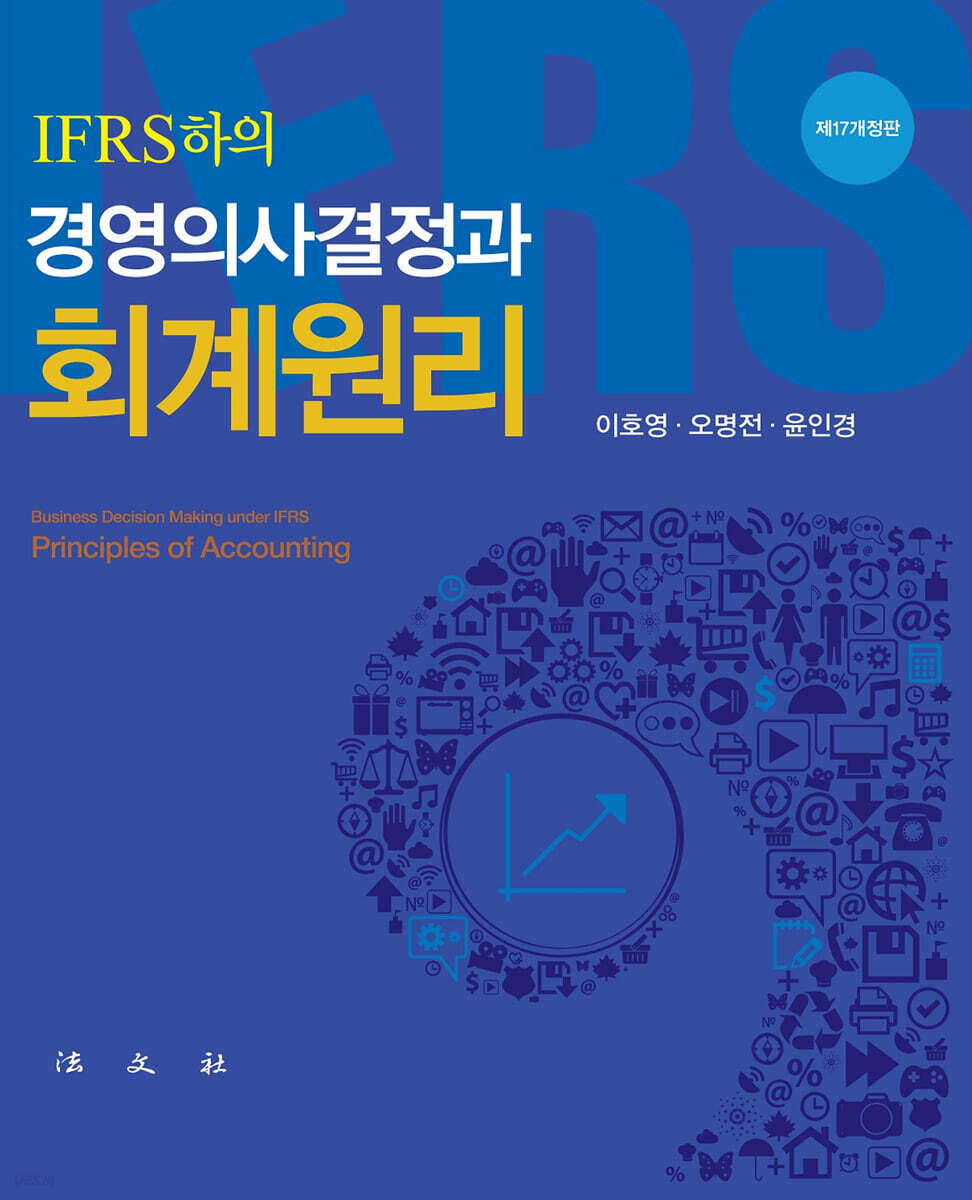
Management Decision-Making and Accounting Principles under IFRS
 |
Description
Book Introduction
It has already been two years and six months since the 16th revised edition was published in January 2023.
The 17th revised edition was revised to supplement areas that the authors felt needed supplementation during their lectures and to improve readers' understanding by considering the overall relevance and chronological order of the content.
Specifically, to help readers more easily understand various accounting concepts, we've added examples that can be easily encountered in our daily lives to the "Understanding with Analogies" section. Furthermore, each chapter presents simple decision-making cases to help readers understand how accounting is utilized in business decision-making.
And we tried to help with logical understanding through the “Concept Plus” corner.
This textbook includes detailed explanations and examples for each topic, making it accessible not only to business students encountering accounting for the first time, but also to businesspeople and the general public interested in the practice and theory of accounting.
It also covers some in-depth topics, such as five-step revenue recognition, inventory valuation, bill discounting, tangible asset valuation, cash flow statements, and financial statement analysis, so it can be used as a financial accounting course in business schools. Depending on the purpose of the class, these topics can be omitted.
In the case of MBA classes, if this textbook is used as the basic textbook and financial accounting cases published in the accounting journal published by the Korean Accounting Association, the Korea Business Review (KBR) case studies of the Korean Management Association, the Ivey Business Case Studies of Western University of Canada, and the Harvard Business Review Case Studies are used in classes, it is believed that it will be very helpful in understanding the basic concepts of accounting and at the same time thinking about accounting topics in connection with practical issues.
The 17th revised edition was revised to supplement areas that the authors felt needed supplementation during their lectures and to improve readers' understanding by considering the overall relevance and chronological order of the content.
Specifically, to help readers more easily understand various accounting concepts, we've added examples that can be easily encountered in our daily lives to the "Understanding with Analogies" section. Furthermore, each chapter presents simple decision-making cases to help readers understand how accounting is utilized in business decision-making.
And we tried to help with logical understanding through the “Concept Plus” corner.
This textbook includes detailed explanations and examples for each topic, making it accessible not only to business students encountering accounting for the first time, but also to businesspeople and the general public interested in the practice and theory of accounting.
It also covers some in-depth topics, such as five-step revenue recognition, inventory valuation, bill discounting, tangible asset valuation, cash flow statements, and financial statement analysis, so it can be used as a financial accounting course in business schools. Depending on the purpose of the class, these topics can be omitted.
In the case of MBA classes, if this textbook is used as the basic textbook and financial accounting cases published in the accounting journal published by the Korean Accounting Association, the Korea Business Review (KBR) case studies of the Korean Management Association, the Ivey Business Case Studies of Western University of Canada, and the Harvard Business Review Case Studies are used in classes, it is believed that it will be very helpful in understanding the basic concepts of accounting and at the same time thinking about accounting topics in connection with practical issues.
- You can preview some of the book's contents.
Preview
index
[General Accounting Principles]
CHAPTER 01 CONCEPTS AND STRUCTURE OF ACCOUNTING
01 Concept and Function of Accounting
02 Components of Accounting
03 General understanding of financial statements
CHAPTER 02 Accounting Cycle (1): Transaction Identification
01 Economic and accounting events
02 Transaction Analysis
03 Profitable Transactions and Accrual Basis
CHAPTER 03 Accounting Cycle (2): Recording Transactions
01 Accounting Cycle
02 Account Settings
03 Record of profitable transactions
04 Dissatisfaction with the transaction
05 General ledger posting and account balance calculation
CHAPTER 04 Accounting Cycle (3): Transaction Reconciliation
01 Revision and indignation
02 Closing journal entry (closing journal entry)
03 Jeongsan Table
CHAPTER 05 Financial Statements
01 Significance of the financial statements
02 Jasan
03 Debt and Equity
04 Format of financial statements
05 Use and Limitations of Financial Statements
Week 6
CHAPTER 06 Revenue Recognition and the Statement of Comprehensive Income
01 Period recognition and accrual basis of revenue and expenses
02 Recognition and Measurement of Revenue
03 Recognition and reporting of expenses
04 Format of Comprehensive Income Statement
Conceptual Framework for Boron Financial Reporting
[Accounting Principles]
CHAPTER 07 Cash and Cash Equivalents
01 Liquidity and Corporate Cash Management
02 Cash and cash equivalents
03 Internal Controls on Cash
CHAPTER 08 Accounts Receivable and Accounts Payable
01 Accounts Receivable
02 Recording of accounts receivable
03 Valuation of Accounts Receivable
04 Payment Debt
CHAPTER 09 Inventory Assets
01 Inventory assets of a merchandise trading company
02 Items to include in inventory assets
03 Determining Inventory Quantity: Perpetual Inventory and Physical Inventory
04 Cost allocation of inventory assets
05 Valuation of Inventory Assets
Boron inventory asset error
CHAPTER 10 Tangible and Intangible Assets
01 Tangible assets
02 Depreciation Concept and Accounting Treatment
03 Calculation of depreciation expense
04 Disposal of tangible assets
05 Intangible Assets
06 Investment Real Estate
Other topics: Accounting changes related to impairment, revaluation, and depreciation of tangible assets
CHAPTER 11 Financial Assets and Investment Stocks in Associated Companies (Equity Method Applied)
01 The significance of financial assets
02 Classification of Financial Assets
03 Measurement of Financial Assets
04 Investment stocks in affiliated companies (equity method applied)
CHAPTER 12 Non-Current Liabilities
01 Non-current liabilities
02 Private Debt
03 Other non-current liabilities
CHAPTER 13 CAPITAL
01 Meaning and Classification of Capital
02 Paid-in capital
03 Retained earnings
04 Other capital components
05 Earnings per share
06 Statement of Changes in Equity
CHAPTER 14 CASH FLOW STATEMENT
01 Cash Flow Statement
02 Analysis of Transactions Affecting Cash
03 Cash inflows and outflows
04 Cash Flow Report
CHAPTER 15 ANALYSIS OF FINANCIAL STATEMENTS
01 Use of Financial Statements
02 Methods of Financial Statement Analysis
CHAPTER 01 CONCEPTS AND STRUCTURE OF ACCOUNTING
01 Concept and Function of Accounting
02 Components of Accounting
03 General understanding of financial statements
CHAPTER 02 Accounting Cycle (1): Transaction Identification
01 Economic and accounting events
02 Transaction Analysis
03 Profitable Transactions and Accrual Basis
CHAPTER 03 Accounting Cycle (2): Recording Transactions
01 Accounting Cycle
02 Account Settings
03 Record of profitable transactions
04 Dissatisfaction with the transaction
05 General ledger posting and account balance calculation
CHAPTER 04 Accounting Cycle (3): Transaction Reconciliation
01 Revision and indignation
02 Closing journal entry (closing journal entry)
03 Jeongsan Table
CHAPTER 05 Financial Statements
01 Significance of the financial statements
02 Jasan
03 Debt and Equity
04 Format of financial statements
05 Use and Limitations of Financial Statements
Week 6
CHAPTER 06 Revenue Recognition and the Statement of Comprehensive Income
01 Period recognition and accrual basis of revenue and expenses
02 Recognition and Measurement of Revenue
03 Recognition and reporting of expenses
04 Format of Comprehensive Income Statement
Conceptual Framework for Boron Financial Reporting
[Accounting Principles]
CHAPTER 07 Cash and Cash Equivalents
01 Liquidity and Corporate Cash Management
02 Cash and cash equivalents
03 Internal Controls on Cash
CHAPTER 08 Accounts Receivable and Accounts Payable
01 Accounts Receivable
02 Recording of accounts receivable
03 Valuation of Accounts Receivable
04 Payment Debt
CHAPTER 09 Inventory Assets
01 Inventory assets of a merchandise trading company
02 Items to include in inventory assets
03 Determining Inventory Quantity: Perpetual Inventory and Physical Inventory
04 Cost allocation of inventory assets
05 Valuation of Inventory Assets
Boron inventory asset error
CHAPTER 10 Tangible and Intangible Assets
01 Tangible assets
02 Depreciation Concept and Accounting Treatment
03 Calculation of depreciation expense
04 Disposal of tangible assets
05 Intangible Assets
06 Investment Real Estate
Other topics: Accounting changes related to impairment, revaluation, and depreciation of tangible assets
CHAPTER 11 Financial Assets and Investment Stocks in Associated Companies (Equity Method Applied)
01 The significance of financial assets
02 Classification of Financial Assets
03 Measurement of Financial Assets
04 Investment stocks in affiliated companies (equity method applied)
CHAPTER 12 Non-Current Liabilities
01 Non-current liabilities
02 Private Debt
03 Other non-current liabilities
CHAPTER 13 CAPITAL
01 Meaning and Classification of Capital
02 Paid-in capital
03 Retained earnings
04 Other capital components
05 Earnings per share
06 Statement of Changes in Equity
CHAPTER 14 CASH FLOW STATEMENT
01 Cash Flow Statement
02 Analysis of Transactions Affecting Cash
03 Cash inflows and outflows
04 Cash Flow Report
CHAPTER 15 ANALYSIS OF FINANCIAL STATEMENTS
01 Use of Financial Statements
02 Methods of Financial Statement Analysis
GOODS SPECIFICS
- Date of issue: September 5, 2025
- Format: Hardcover book binding method guide
- Page count, weight, size: 680 pages | 219*258*35mm
- ISBN13: 9788918916231
- ISBN10: 891891623X
You may also like
카테고리
korean


korean

![GQ KOREA Mark (Monthly): December [2025]](http://librairie.coreenne.fr/cdn/shop/files/8ef265dbbfbf186523ed75ba7319009d.jpg?v=1765340328&width=3840)


