

Reading the Analects of Confucius in Japan
 |
Description
Book Introduction
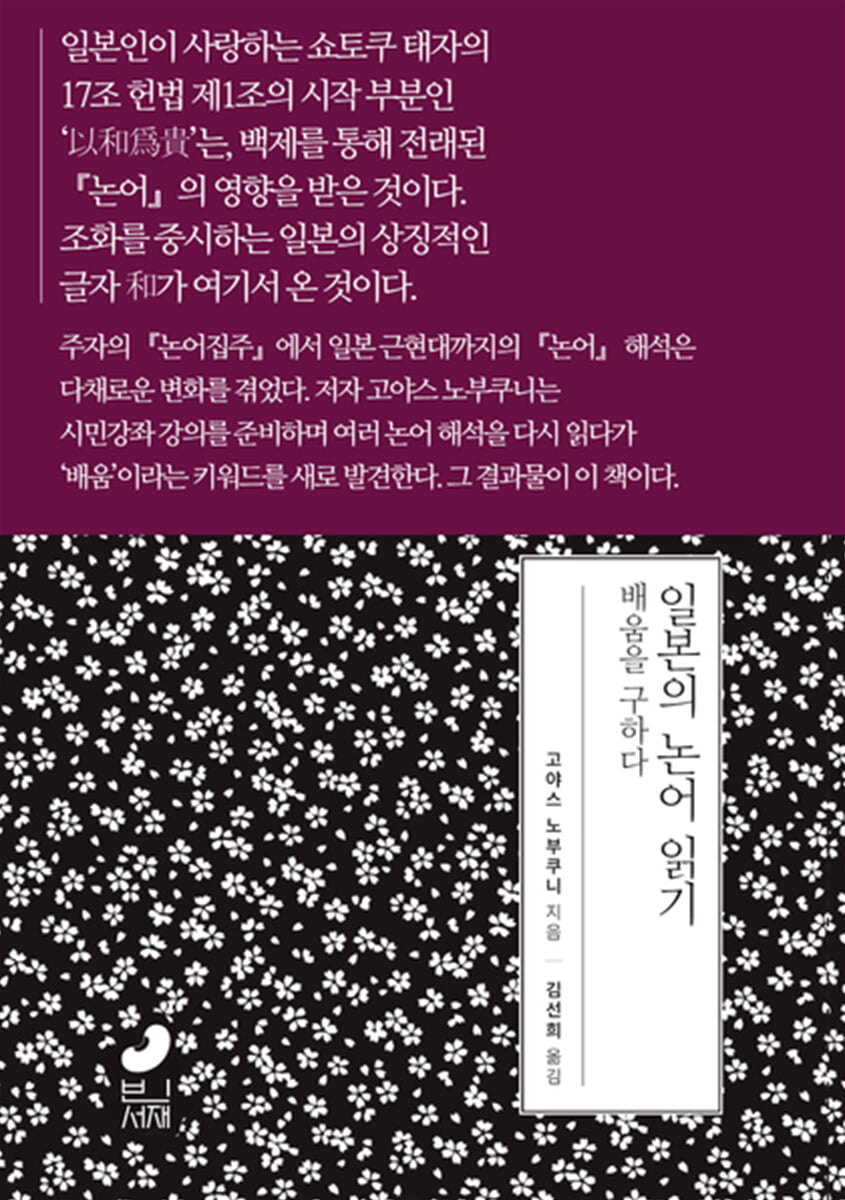
The first part of Article 1 of the 17-article constitution of Prince Shotoku, beloved by the Japanese, which begins with "以和爲貴," was influenced by the Analects of Confucius, which was transmitted through Baekje.
The Japanese character 和, which symbolizes harmony, comes from here.
The interpretation of the Analects of Confucius from Zhu Xi's Commentary on the Analects to modern and contemporary Japan has undergone various changes.
While preparing a lecture for a citizen lecture course, author Koyasu Nobukuni reread several interpretations of the Analects and discovered a new keyword: “learning.”
The result is this book.
Ito Jinsai, a Confucian scholar of the Edo period who valued the teachings of the "Great Book of the Universe," defined the Analects of Confucius in this way and wrote the Analects of Confucius Compendium, thereby reestablishing Confucianism in Edo Japan.
"There is nothing more exciting than chewing on the figures of the past and present while eating roasted beans," said Ogyu Sorai, an outstanding critic of Zhu Xi's philosophy who also highly praised Dasan Jeong Yak-yong.
He criticized both Zhu Xi and Ito Jinsai without hesitation, reread the Analects, and wrote the Analects of Confucius.
Eiichi Shibusawa, a model of modern Japanese entrepreneurship and the new face of the 10,000 yen note, chose the Analects of Confucius as a medium to convey his life's experiences to the younger generation, and also left behind the bestseller, The Analects of Confucius and the Abacus.
The Japanese character 和, which symbolizes harmony, comes from here.
The interpretation of the Analects of Confucius from Zhu Xi's Commentary on the Analects to modern and contemporary Japan has undergone various changes.
While preparing a lecture for a citizen lecture course, author Koyasu Nobukuni reread several interpretations of the Analects and discovered a new keyword: “learning.”
The result is this book.
Ito Jinsai, a Confucian scholar of the Edo period who valued the teachings of the "Great Book of the Universe," defined the Analects of Confucius in this way and wrote the Analects of Confucius Compendium, thereby reestablishing Confucianism in Edo Japan.
"There is nothing more exciting than chewing on the figures of the past and present while eating roasted beans," said Ogyu Sorai, an outstanding critic of Zhu Xi's philosophy who also highly praised Dasan Jeong Yak-yong.
He criticized both Zhu Xi and Ito Jinsai without hesitation, reread the Analects, and wrote the Analects of Confucius.
Eiichi Shibusawa, a model of modern Japanese entrepreneurship and the new face of the 10,000 yen note, chose the Analects of Confucius as a medium to convey his life's experiences to the younger generation, and also left behind the bestseller, The Analects of Confucius and the Abacus.
index
The Analects and the Restoration of the Right to Learn 5
Part I, Chapter 31
Lesson 1: On Learning 33
1.1 Chapter 1 of the Scholarship... 34
1.2 Chapter 15 of the Constitution... 39
1.3 Chapter 4 of the Constitution... 42
Lecture 2: On the Shoulder 49
2.1 Chapter 2 of the Scholarship... 51
2.2 Chapter 3 of the Scholarship... 58
2.3 Chapter 27 of the Book of Mormon... 61
2.4 Ongya Chapter 22... 63
2.5 Chapter 1 of the Book of Changes... 66
Chapter 3: On the Tao 71
3.1 Chapter 8 of the Lee In... 72
3.2 Chapter 15 of the Lee In... 78
3.3 Ongya Chapter 17... 83
3.4 Gongyajang Chapter 21.
. 84
Lecture 4: On Faith 87
4.1 Chapter 22 of the Constitution... 90
4.2 Anyeon Chapter 7... 94
4.3 Taebaek Chapter 16... 100
4.4 Yanghwa Chapter 8... 102
Lesson 5: On the Sky 105
5.1 Chapter 5 of Anyeon... 108
5.2 Chapter 4 of the Constitution... 112
5.3 Advanced Chapter 9... 118
5.4 Advanced Chapter 10... 120
5.5 Constitution, Chapter 37... 122
5.6 Chapter 13 of the 8th Day... 126
Lecture 6: On Virtue 131
6.1 Chapter 1 of the Constitution... 134
6.2 Chapter 3 of the Constitution... 141
6.3 Alcohol Chapter 22... 144
Part II 149
Lesson 7: Asking the Human 151
7.1 Chapter 1 of Anyeon... 153
7.2 Anyeon Chapter 1 (continued) 159
7.3 Alcohol Chapter 29... 164
7.4 Anyeon Chapter 3... 166
7.5 Alcohol Chapter 6... 168
Lecture 8: Asking Politics 171
8.1 Chapter 11 of Anyeon... 172
8.2 Anyeon Chapter 17... 176
8.3 Anyeon Chapter 19... 179
8.4 Anyeon Chapter 7... 181
Chapter 3, 8.5... 183
Chapter 15 of 8.6... 187
Lesson 9: Asking about Filial Piety 191
9.1 Chapter 5 of the Constitution... 194
9.2 Chapter 6 of the Constitution... 198
9.3 Chapter 7 of the Constitution... 201
9.4 Chapter 2 of the Scholarship... 203
Lesson 10: Thinking of Virtue 207
10.1 Chapter 11 of the Lee In... 208
10.2 Chapter 25 of the Book of Eighteenth Century... 212
10.3 Ongya Chapter 29... 214
10.4 Constitution, Chapter 6... 217
10.5 Weiling Gong, Chapter 4... 221
10.6 Constitution, Chapter 5... 222
10.7 Weiling Gong, Chapter 8... 225
Lecture 11: Loyalty and Loyalty 229
11.1 Chapter 4 of the Scholarship... 231
11.2 Chapter 8 of the Scholarship... 235
11.3 Chapter 15 of the Lee In... 239
11.4 Gongyajang Chapter 28.
. 241
Lesson 12: Private Life and Ghosts 245
12.1 Advanced Chapter 9... 247
12.2 Advanced Chapter 10... 249
12.3 Advanced Chapter 11... 250
12.4 Ongya Chapter 10... 252
12.5 Advanced Chapter 12... 255
Lesson 13: The Gentleman 263
13.1 Chapter 12 of the Constitution... 266
13.2 Chapter 14 of the Constitution... 270
Chapter 23 of 13.3... 272
13.4 Chapter 14 of the Scholarship... 274
13.5 Ongya Chapter 13... 275
Part III 277
Lesson 14: Learning the Door 279
14.1 Ongya Chapter 18... 280
14.2 Chapter 6 of the Scholarship... 283
14.3 Chapter 24 of Alcohol... 286
14.4 Ongya Chapter 27... 290
Lesson 15: Learning from the Past and the New 293
15.1 Chapter 1 of Alcohol... 295
15.2 Alcohol Chapter 19... 299
15.3 Chapter 11 of the Constitution... 301
15.4 Chapter 17 of the Constitution... 304
Chapter 8 of the 15.5 Jahan... 306
15.6 Chapter 9 of the Gye clan... 311
15.7 Yanghwa Chapter 2 and Chapter 3 314
Lesson 16: On Poetry 317
16.1 Chapter 2 of the Constitution... 319
16.2 Chapter 8, Day 8... 325
16.3 Yanghwa Chapter 9... 330
16.4 Taebaek Chapter 8... 334
Lecture 17: On Evil 337
17.1 Chapter 13 of Alcohol... 339
17.2 Chapter 23 of the 8th Day... 341
Lesson 18: About Examples 353
18.1 Chapter 15 of the Eighth Day... 356
18.2 Chapter 3, Day 3... 358
18.3 Chapter 4 of the 8th Day... 360
18.4 Anyeon Chapter 1... 361
18.5 Advanced Chapter 1... 365
18.6 Yowal Final Chapter ··· 367
Part IV: The Analects of Confucius, 369
Lecture 19: Zengzi, Zixia, and Zigong 371
19.1 Taebaek Chapter 5... 373
19.2 Taebaek Chapter 7... 375
19.3 Advanced Chapter 16... 378
Chapter 19.4, Chapter 6, Chapter 380
Chapter 19.5, Chapter 5... 383
19.6 Chapter 10 of the Scholarship... 385
19.7 Chapter 13 of the Book of Changes... 388
19.8 Yanghwa, Chapter 5... 390
19.9 Gongyajang Chapter 13.
. 392
Lesson 20: Bungee and Freedom 397
20.1 Ongya Chapter 22... 397
20.2 Chapter 21 of Anyeon... 402
20.3 Ongya Chapter 14... 406
20.4 Yanghwa Chapter 4... 408
Lecture 21: Anhui and Jang 411
21.1 Ongya Chapter 7... 413
21.2 Ongya Chapter 11... 416
21.3 Ongya Chapter 3 ··· 418
21.4 Weilinggong Chapter 6... 422
21.5 Chapter 18 of the Constitution... 425
Lesson 22: Jaro 429
22.1 Gongyajang Chapter 7... 431
22.2 Chapter 10 of Alcohol... 434
22.3 Gongyajang Chapter 26... 437
22.4 Chapter 18 of Alcohol... 441
22.5 Chapter 34 of Alcohol... 443
Lesson 23: Zengshi and Yu Yu 447
23.1 Advanced Chapter 26... 448
23.2 Chapter 6 of the Palil... 464
Chapter 14 of 23.3... 468
23.4 Advanced Chapter 22... 470
23.5 Chapter 14 of Alcohol... 474
23.6 Ongya Chapter 12... 476
Index of the Analects and Commentaries 479
Part I, Chapter 31
Lesson 1: On Learning 33
1.1 Chapter 1 of the Scholarship... 34
1.2 Chapter 15 of the Constitution... 39
1.3 Chapter 4 of the Constitution... 42
Lecture 2: On the Shoulder 49
2.1 Chapter 2 of the Scholarship... 51
2.2 Chapter 3 of the Scholarship... 58
2.3 Chapter 27 of the Book of Mormon... 61
2.4 Ongya Chapter 22... 63
2.5 Chapter 1 of the Book of Changes... 66
Chapter 3: On the Tao 71
3.1 Chapter 8 of the Lee In... 72
3.2 Chapter 15 of the Lee In... 78
3.3 Ongya Chapter 17... 83
3.4 Gongyajang Chapter 21.
. 84
Lecture 4: On Faith 87
4.1 Chapter 22 of the Constitution... 90
4.2 Anyeon Chapter 7... 94
4.3 Taebaek Chapter 16... 100
4.4 Yanghwa Chapter 8... 102
Lesson 5: On the Sky 105
5.1 Chapter 5 of Anyeon... 108
5.2 Chapter 4 of the Constitution... 112
5.3 Advanced Chapter 9... 118
5.4 Advanced Chapter 10... 120
5.5 Constitution, Chapter 37... 122
5.6 Chapter 13 of the 8th Day... 126
Lecture 6: On Virtue 131
6.1 Chapter 1 of the Constitution... 134
6.2 Chapter 3 of the Constitution... 141
6.3 Alcohol Chapter 22... 144
Part II 149
Lesson 7: Asking the Human 151
7.1 Chapter 1 of Anyeon... 153
7.2 Anyeon Chapter 1 (continued) 159
7.3 Alcohol Chapter 29... 164
7.4 Anyeon Chapter 3... 166
7.5 Alcohol Chapter 6... 168
Lecture 8: Asking Politics 171
8.1 Chapter 11 of Anyeon... 172
8.2 Anyeon Chapter 17... 176
8.3 Anyeon Chapter 19... 179
8.4 Anyeon Chapter 7... 181
Chapter 3, 8.5... 183
Chapter 15 of 8.6... 187
Lesson 9: Asking about Filial Piety 191
9.1 Chapter 5 of the Constitution... 194
9.2 Chapter 6 of the Constitution... 198
9.3 Chapter 7 of the Constitution... 201
9.4 Chapter 2 of the Scholarship... 203
Lesson 10: Thinking of Virtue 207
10.1 Chapter 11 of the Lee In... 208
10.2 Chapter 25 of the Book of Eighteenth Century... 212
10.3 Ongya Chapter 29... 214
10.4 Constitution, Chapter 6... 217
10.5 Weiling Gong, Chapter 4... 221
10.6 Constitution, Chapter 5... 222
10.7 Weiling Gong, Chapter 8... 225
Lecture 11: Loyalty and Loyalty 229
11.1 Chapter 4 of the Scholarship... 231
11.2 Chapter 8 of the Scholarship... 235
11.3 Chapter 15 of the Lee In... 239
11.4 Gongyajang Chapter 28.
. 241
Lesson 12: Private Life and Ghosts 245
12.1 Advanced Chapter 9... 247
12.2 Advanced Chapter 10... 249
12.3 Advanced Chapter 11... 250
12.4 Ongya Chapter 10... 252
12.5 Advanced Chapter 12... 255
Lesson 13: The Gentleman 263
13.1 Chapter 12 of the Constitution... 266
13.2 Chapter 14 of the Constitution... 270
Chapter 23 of 13.3... 272
13.4 Chapter 14 of the Scholarship... 274
13.5 Ongya Chapter 13... 275
Part III 277
Lesson 14: Learning the Door 279
14.1 Ongya Chapter 18... 280
14.2 Chapter 6 of the Scholarship... 283
14.3 Chapter 24 of Alcohol... 286
14.4 Ongya Chapter 27... 290
Lesson 15: Learning from the Past and the New 293
15.1 Chapter 1 of Alcohol... 295
15.2 Alcohol Chapter 19... 299
15.3 Chapter 11 of the Constitution... 301
15.4 Chapter 17 of the Constitution... 304
Chapter 8 of the 15.5 Jahan... 306
15.6 Chapter 9 of the Gye clan... 311
15.7 Yanghwa Chapter 2 and Chapter 3 314
Lesson 16: On Poetry 317
16.1 Chapter 2 of the Constitution... 319
16.2 Chapter 8, Day 8... 325
16.3 Yanghwa Chapter 9... 330
16.4 Taebaek Chapter 8... 334
Lecture 17: On Evil 337
17.1 Chapter 13 of Alcohol... 339
17.2 Chapter 23 of the 8th Day... 341
Lesson 18: About Examples 353
18.1 Chapter 15 of the Eighth Day... 356
18.2 Chapter 3, Day 3... 358
18.3 Chapter 4 of the 8th Day... 360
18.4 Anyeon Chapter 1... 361
18.5 Advanced Chapter 1... 365
18.6 Yowal Final Chapter ··· 367
Part IV: The Analects of Confucius, 369
Lecture 19: Zengzi, Zixia, and Zigong 371
19.1 Taebaek Chapter 5... 373
19.2 Taebaek Chapter 7... 375
19.3 Advanced Chapter 16... 378
Chapter 19.4, Chapter 6, Chapter 380
Chapter 19.5, Chapter 5... 383
19.6 Chapter 10 of the Scholarship... 385
19.7 Chapter 13 of the Book of Changes... 388
19.8 Yanghwa, Chapter 5... 390
19.9 Gongyajang Chapter 13.
. 392
Lesson 20: Bungee and Freedom 397
20.1 Ongya Chapter 22... 397
20.2 Chapter 21 of Anyeon... 402
20.3 Ongya Chapter 14... 406
20.4 Yanghwa Chapter 4... 408
Lecture 21: Anhui and Jang 411
21.1 Ongya Chapter 7... 413
21.2 Ongya Chapter 11... 416
21.3 Ongya Chapter 3 ··· 418
21.4 Weilinggong Chapter 6... 422
21.5 Chapter 18 of the Constitution... 425
Lesson 22: Jaro 429
22.1 Gongyajang Chapter 7... 431
22.2 Chapter 10 of Alcohol... 434
22.3 Gongyajang Chapter 26... 437
22.4 Chapter 18 of Alcohol... 441
22.5 Chapter 34 of Alcohol... 443
Lesson 23: Zengshi and Yu Yu 447
23.1 Advanced Chapter 26... 448
23.2 Chapter 6 of the Palil... 464
Chapter 14 of 23.3... 468
23.4 Advanced Chapter 22... 470
23.5 Chapter 14 of Alcohol... 474
23.6 Ongya Chapter 12... 476
Index of the Analects and Commentaries 479
Into the book
Are boys truly motivated to learn today? Hasn't the modern institution of school education, which has become a step-by-step process of teaching and acquiring knowledge, actually robbed boys of their motivation to learn?
--- p.47
Where there is no trust in the people, politics cannot be established, and neither can a nation be established.
If the people lose the confidence and trust that the government has, then politics has already collapsed.
--- p.181
The original nature of learning the teachings of the ancients is erudition.
Learning narrowly is contrary to the original meaning of learning.
The emergence of so-called "idiot experts," that is, people who lack social common sense or culture outside of a specific field, is a phenomenon that emerged in modern times.
--- p.289
To be sincere in your intentions is to ask earnestly.
What can be gained from learning? That depends on whether the learner has a pressing question.
--- p.379
However, when his disciple asked about humanity, Confucius answered according to the level of life his disciple had lived.
That's what teaching is.
--- p.47
Where there is no trust in the people, politics cannot be established, and neither can a nation be established.
If the people lose the confidence and trust that the government has, then politics has already collapsed.
--- p.181
The original nature of learning the teachings of the ancients is erudition.
Learning narrowly is contrary to the original meaning of learning.
The emergence of so-called "idiot experts," that is, people who lack social common sense or culture outside of a specific field, is a phenomenon that emerged in modern times.
--- p.289
To be sincere in your intentions is to ask earnestly.
What can be gained from learning? That depends on whether the learner has a pressing question.
--- p.379
However, when his disciple asked about humanity, Confucius answered according to the level of life his disciple had lived.
That's what teaching is.
--- p.403
GOODS SPECIFICS
- Date of issue: July 1, 2024
- Page count, weight, size: 500 pages | 128*188*30mm
- ISBN13: 9791198765208
- ISBN10: 1198765208
You may also like
카테고리
korean


korean

![GQ KOREA Mark (Monthly): December [2025]](http://librairie.coreenne.fr/cdn/shop/files/8ef265dbbfbf186523ed75ba7319009d.jpg?v=1765340328&width=3840)


