

History is money
 |
Description
Book Introduction
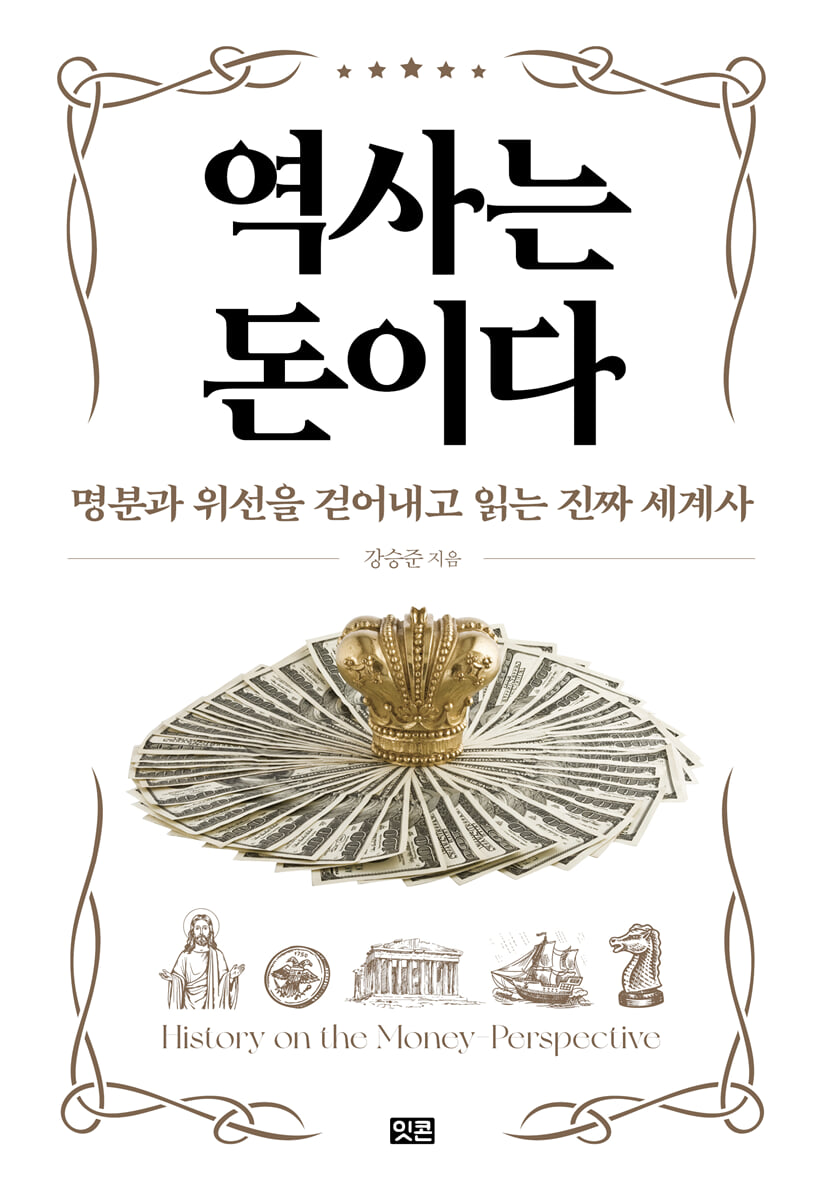
Throughout human history, it has transcended religion, ideology, nationality, and region. The only medium is 'money'. What is the origin of the long-standing animosity between Jews and Palestinians? What was the real cause of the conflict between emperors and popes, such as the "Humiliation of Canossa" and the "Avignon Papacy"? How did "Hamel's Journal" change the course of history in Korea and Japan? All these histories share a common thread. There are grand reasons such as race, religion, and ideology, but the real reason hidden behind them is ‘money.’ No one would disagree with the assertion that the desire for wealth has driven humanity. But its scope is so vast that it far surpasses our imagination, and among them are many sublime events that seem absolutely improbable. Readers who still harbor a naive sense of humanity may be shocked by this book. South Korea was one of the weakest countries to fall victim to the history of huge money, and it is still a precarious nation standing in the midst of the whirlpool. History inevitably repeats itself. If we cannot see through the true intentions wrapped in pretense and hypocrisy, there can be no future. This book will serve as a notebook of mistakes to help you develop such insight. |
- You can preview some of the book's contents.
Preview
index
[Chapter 1] Three Perspectives on World History: Wealth, Money, and Finance
- In the end, it was money that moved the world (World History from the Perspective of Wealth)
From Gold to Digital Currency: The "War of Money" (A World History Through the Lens of Currency)
From a Money Changer to a Global Investment Bank (A World History from a Financial Perspective)
[Chapter 2] Ancient Times
- Where did the first currency originate? (Ancient Middle Eastern countries and metal coins)
- An invention made for trade, the alphabet (the beginning of trade with the ancient Phoenicians)
Israel vs. Palestine: The Beginning of a Long-Simmering Negative Relationship (History of the Jewish Diaspora)
- Jesus, the revolutionary who dreamed of economic structural reform (the birth of Christianity and the Jewish-Roman War)
- Ancient Greece grew through piracy (Battle of Salamis, Alexander and Hellenism)
- Caesar, who waged wars of conquest like ventures (the development of Rome and the construction of the empire)
- The recognition of Christianity was due to financial difficulties (the move of the capital to Constantinople and the fall of the Western Roman Empire).
[Chapter 3] The Middle Ages
- The Holy Roman Empire, which was neither Rome nor an empire (a deal between the Pope and the Germanic kingdoms)
- In the Age of God, churches have become businesses (conflicts over the Avignon Papacy and church taxes)
- Early Islam and Christianity had good relations (the birth and spread of Islam)
- The origin of the word 'bank' comes from money changers (the development of the financial industry)
- Holy War or Holy Money? (The Process and Impact of the Crusades)
- The first middle class emerged thanks to the Black Death (the collapse of feudalism and the manorial economy)
- France won but lost vs England lost but won (Normandy, the shipping powerhouse, and the Hundred Years' War)
- Renaissance art flourished with Medici money (commercial revolution and humanism movement)
- The end of the Middle Ages and the fall of the Eastern Roman Empire (the fall of Constantinople and the beginning of the modern era)
[Chapter 4] Modern Times
- From the kingdom of God to the kingdom of kings (the emergence of monarchy and absolute monarchy)
- The half-brothers of printing, indulgences and the Reformation (Luther's Reformation)
Western Europe conquers the world with money and military innovation (gunpowder weapons and mercenary systems)
- A venture capitalist named Columbus (discovery of the New World and the beginning of the Age of Exploration)
- Risked his life for pepper and gold (the rise of Portugal and the opening of the East Indies route)
- Spain, the land where the sun never sets, the invincible armada (Charles V's war enterprise)
- Those who rise from war fall from war (The decline of Spain and the Fugger family)
- What happens when a king is obsessed with religion (Catholicism and tax issues)
How Silver Overflow Ruined Spain (Europe's Price Revolution)
Diversity and inclusivity are the answer (the Ottoman Empire and countries that accepted Jews)
- New York was originally Dutch territory (due to the activities of the Dutch East India Company)
- Hamel's Journal of Drifting Away (The Switched Fates of Japan and Korea) was actually a claim for unpaid wages.
How Herring Fishing Developed into Banking (The Bank of Amsterdam and Modern Capitalism)
- The tulip mania didn't really have much of an impact (the decline of the Netherlands as a financial nation)
- England, from a pirate nation to a maritime trading nation (absolute monarchy and mercantilism)
- Isaac Newton with a serrated edge on a coin (Glorious Revolution and the Bank of England)
- France, always strong, but always second in command (backward economic structure of early modern France)
- The speculative incidents that shook the end of the modern era (Mississippi Bubble and South Sea Bubble)
[Chapter 5] Modern Times
- The tremendous changes brought about by the disclosure of royal expenditure ledgers (French Revolution and Napoleonic Wars)
Why Britain Was So Resilient During the Global Financial Crisis (19th-Century British Financial Crisis and the Bank of England)
- From silver to gold, the world's monetary standard changed (the British gold standard and the expansion of the pound sterling).
- The two-party system in the United States was established thanks to the central bank (the creation and decline of two Banks of the United States).
Was Lincoln's assassination really the work of financial power? (The issuance of the greenback and the development of capitalism)
The Gold Standard Story in The Wizard of Oz (The Process of Establishing the American Gold Standard)
- No one knows the true extent of Rothschild's wealth (The Birth and Growth of the Jewish Financial Empire)
- Why the US central bank is called the "Board of Governors" (Establishment of the Federal Reserve System)
- The weight of the British Empire and the end of innovation (the decline of British industry and the rise of latecomers)
[Chapter 6] Modern Times
- The ultimate winner of World War I was the United States (world situation before and after the war)
The Fall of the Pound, the Rise of the Dollar (The Fall of the Gold Standard and the Shift in Financial Hegemony)
The Fed tied up liquidity as markets collapsed (the Great Depression and policy failures)
How did Germany recover so quickly? (World War II and the rise of the Soviet Union)
The enviable, invincible "reserve currency" (the Bretton Woods system and the dollar's status)
- The dream of Jerusalem turns into a nightmare (the birth of the modern nation and the establishment of Israel)
The dollar defeated gold and achieved true hegemony (the Nixon Shock and the Smithsonian Agreement)
Paul Volcker's Lonely War Against Stagflation (Oil Shock and Plaza Accord)
- The longest-serving Federal Reserve Chairman who led the US's alternative economic era (policy changes during the Alan Greenspan era)
- What happens when policymakers are indecisive (Japan's policy failures and long-term recession)
- The tyranny of international capital, which Korea also suffered from, and the foreign exchange crisis (financial crisis in developing countries)
The era of quantitative easing triggered by the 2008 financial crisis (a new direction for economic policy after the crisis)
Challenges to currency and the financial system continue (Cryptocurrencies and the future of finance)
- In the end, it was money that moved the world (World History from the Perspective of Wealth)
From Gold to Digital Currency: The "War of Money" (A World History Through the Lens of Currency)
From a Money Changer to a Global Investment Bank (A World History from a Financial Perspective)
[Chapter 2] Ancient Times
- Where did the first currency originate? (Ancient Middle Eastern countries and metal coins)
- An invention made for trade, the alphabet (the beginning of trade with the ancient Phoenicians)
Israel vs. Palestine: The Beginning of a Long-Simmering Negative Relationship (History of the Jewish Diaspora)
- Jesus, the revolutionary who dreamed of economic structural reform (the birth of Christianity and the Jewish-Roman War)
- Ancient Greece grew through piracy (Battle of Salamis, Alexander and Hellenism)
- Caesar, who waged wars of conquest like ventures (the development of Rome and the construction of the empire)
- The recognition of Christianity was due to financial difficulties (the move of the capital to Constantinople and the fall of the Western Roman Empire).
[Chapter 3] The Middle Ages
- The Holy Roman Empire, which was neither Rome nor an empire (a deal between the Pope and the Germanic kingdoms)
- In the Age of God, churches have become businesses (conflicts over the Avignon Papacy and church taxes)
- Early Islam and Christianity had good relations (the birth and spread of Islam)
- The origin of the word 'bank' comes from money changers (the development of the financial industry)
- Holy War or Holy Money? (The Process and Impact of the Crusades)
- The first middle class emerged thanks to the Black Death (the collapse of feudalism and the manorial economy)
- France won but lost vs England lost but won (Normandy, the shipping powerhouse, and the Hundred Years' War)
- Renaissance art flourished with Medici money (commercial revolution and humanism movement)
- The end of the Middle Ages and the fall of the Eastern Roman Empire (the fall of Constantinople and the beginning of the modern era)
[Chapter 4] Modern Times
- From the kingdom of God to the kingdom of kings (the emergence of monarchy and absolute monarchy)
- The half-brothers of printing, indulgences and the Reformation (Luther's Reformation)
Western Europe conquers the world with money and military innovation (gunpowder weapons and mercenary systems)
- A venture capitalist named Columbus (discovery of the New World and the beginning of the Age of Exploration)
- Risked his life for pepper and gold (the rise of Portugal and the opening of the East Indies route)
- Spain, the land where the sun never sets, the invincible armada (Charles V's war enterprise)
- Those who rise from war fall from war (The decline of Spain and the Fugger family)
- What happens when a king is obsessed with religion (Catholicism and tax issues)
How Silver Overflow Ruined Spain (Europe's Price Revolution)
Diversity and inclusivity are the answer (the Ottoman Empire and countries that accepted Jews)
- New York was originally Dutch territory (due to the activities of the Dutch East India Company)
- Hamel's Journal of Drifting Away (The Switched Fates of Japan and Korea) was actually a claim for unpaid wages.
How Herring Fishing Developed into Banking (The Bank of Amsterdam and Modern Capitalism)
- The tulip mania didn't really have much of an impact (the decline of the Netherlands as a financial nation)
- England, from a pirate nation to a maritime trading nation (absolute monarchy and mercantilism)
- Isaac Newton with a serrated edge on a coin (Glorious Revolution and the Bank of England)
- France, always strong, but always second in command (backward economic structure of early modern France)
- The speculative incidents that shook the end of the modern era (Mississippi Bubble and South Sea Bubble)
[Chapter 5] Modern Times
- The tremendous changes brought about by the disclosure of royal expenditure ledgers (French Revolution and Napoleonic Wars)
Why Britain Was So Resilient During the Global Financial Crisis (19th-Century British Financial Crisis and the Bank of England)
- From silver to gold, the world's monetary standard changed (the British gold standard and the expansion of the pound sterling).
- The two-party system in the United States was established thanks to the central bank (the creation and decline of two Banks of the United States).
Was Lincoln's assassination really the work of financial power? (The issuance of the greenback and the development of capitalism)
The Gold Standard Story in The Wizard of Oz (The Process of Establishing the American Gold Standard)
- No one knows the true extent of Rothschild's wealth (The Birth and Growth of the Jewish Financial Empire)
- Why the US central bank is called the "Board of Governors" (Establishment of the Federal Reserve System)
- The weight of the British Empire and the end of innovation (the decline of British industry and the rise of latecomers)
[Chapter 6] Modern Times
- The ultimate winner of World War I was the United States (world situation before and after the war)
The Fall of the Pound, the Rise of the Dollar (The Fall of the Gold Standard and the Shift in Financial Hegemony)
The Fed tied up liquidity as markets collapsed (the Great Depression and policy failures)
How did Germany recover so quickly? (World War II and the rise of the Soviet Union)
The enviable, invincible "reserve currency" (the Bretton Woods system and the dollar's status)
- The dream of Jerusalem turns into a nightmare (the birth of the modern nation and the establishment of Israel)
The dollar defeated gold and achieved true hegemony (the Nixon Shock and the Smithsonian Agreement)
Paul Volcker's Lonely War Against Stagflation (Oil Shock and Plaza Accord)
- The longest-serving Federal Reserve Chairman who led the US's alternative economic era (policy changes during the Alan Greenspan era)
- What happens when policymakers are indecisive (Japan's policy failures and long-term recession)
- The tyranny of international capital, which Korea also suffered from, and the foreign exchange crisis (financial crisis in developing countries)
The era of quantitative easing triggered by the 2008 financial crisis (a new direction for economic policy after the crisis)
Challenges to currency and the financial system continue (Cryptocurrencies and the future of finance)
Into the book
Since the beginning of history, there have been constant massacres and wars, and there have also been dark histories such as witch hunts.
Even just a hundred years ago, absurd things like the slave trade, the Opium Wars, and the Holocaust occurred.
How could such things have been possible? How could people of that time have acted so casually? Were the standards for judging right and wrong different back then? I don't think so.
Even then, human conscience would not have been much different from now.
My conclusion is that they acted not based on right or wrong, but on self-interest.
In short, he chose money over conscience.
Of course, there were also adults and heroes who transcended their own interests for the sake of justice.
But they too had to pay a price in some form to get ordinary people to move in order to achieve their goals.
If all humans acted only according to right and wrong, much of world history would be different.
--- p.16, from “In the end, it was money that moved the world.”
In the past, finance was, to put it simply, a loan business, and, to put it badly, a usury business.
In the Bible, moneylenders and tax collectors are portrayed as evil people.
The Vatican condemned lending money and charging interest, calling it a sin, a theft of God's time.
In this way, finance in the past, namely the loan business, was a business that was looked down upon for a long time.
The moneylending business has been a field in which Jews have excelled for generations.
It is also related to the sad history of the Jews.
Although Christianity separated from Judaism, Christians hated the Jews for sending Jesus, the Son of God, to death.
The Jews began a long period of wandering after losing two wars with Rome in the first century.
In Rome they could not own land, nor could they become soldiers or farmers.
They had no choice but to engage in commerce, handicrafts, and loan sharking.
No one could have known that later on, these things would become successful industries called trade and finance.
--- p.37, from “The Misfortunes of the Jews and the Beginning of Finance”
The Phoenicians needed writing to record their business transactions.
They developed Egyptian hieroglyphs and Sumerian cuneiform script and were the first to use a phonetic alphabet.
A phonetic alphabet is a character (phonetic alphabet) that represents human speech sounds as symbols. It is said that it was developed to quickly write down the sounds of other languages for trade.
This was around the 17th century BC.
Afterwards, the alphabet spread to surrounding areas through the trade and colonial activities of the Phoenicians around the 11th century BC, and around the 9th century BC, the Greeks created the Greek language by adding vowels to the Phoenician alphabet, which consisted of only 22 consonants.
And this was passed on to the Romans around the 8th century BC, leading to the creation of the Latin alphabet, the Roman alphabet.
The Latin alphabet in the Roman era had 23 letters, but in the Middle Ages it became 26 letters, forming the alphabet we know today.
--- p.37, from “The Alphabet, an Invention Made for Business”
There is also an interesting claim that Jesus' hometown changed because of taxes.
Why did Joseph and Mary leave their hometown of Nazareth in Galilee and travel to Bethlehem in Judea to give birth to Jesus? Bethlehem was the birthplace of King David, and Joseph was a descendant of David, making it his hometown.
They went to Bethlehem because the Roman emperor Augustus had ordered all his people to return to their hometowns and pay their taxes.
(Omitted) Jesus admonished the tax collectors not to collect more taxes than what was set, and strongly rebuked the Jewish church priests for using the church to make huge profits.
At that time, money changers' business was rampant within the church with the tacit approval of church officials. In the Gospel of Matthew, there is a record that Jesus discovered money changers in the temple and overturned their stalls.
--- p.37, from “Jesus, the Revolutionary Who Dreamed of Economic Structural Reform”
Church taxes were a significant burden not only to individual Christians, but also to monarchs.
Because people couldn't afford to pay taxes to the government because they had to pay taxes to the church.
There were many cases where the national and royal finances were in trouble because the government could not collect enough taxes due to church taxes.
Still, the kings of Europe had no choice.
As can be seen from the humiliation of Canossa, the power of the papacy was greater than that of the king.
(Omitted) In this situation, the kings had no choice but to be greedy for church taxes.
The king and the pope clashed over church taxes, and the incident that arose out of this was the Avignon Papacy.
Henry VIII of England also used his divorce from Queen Catherine as an excuse to break with the Pope in order to seize church taxes and property, and later announced the Act of Supremacy, which became the basis for the establishment of the Anglican Church.
Religion was just a pretext for them to be covered, and deep down in their hearts there was always money.
--- p.110, from “The Age of God, Churches That Have Become Businesses”
Another example that shows that the Crusades were a war of money is the story of the Knights Templar.
When they protected pilgrims heading to Jerusalem wearing white robes emblazoned with red crosses, European countries showed enthusiastic support.
Thanks to this, the Knights Templar received special privileges from the Pope, and some people even donated land or money to the order.
However, with the rise of Saladin and the loss of Jerusalem, the Knights Templar, left with nothing to do, turned into loan sharks.
He became a financier in armor.
Lords and knights who had no money but wanted to participate in the Crusades borrowed money from the Knights Templar to purchase archers, horses, weapons, and other items, and formed an order of knights.
The Knights Templar played a money game with knights who participated in the war, offering interest rates of 30-40%.
(Omitted) In 1307, Philip IV declared the Knights Templar heretical, confiscated their vast wealth, and burned them at the stake.
It was the first time that Christian finance was hit by the hammer of power.
What's interesting is that Philip IV also owed a huge debt to the Knights Templar.
Perhaps his driving out of the Knights Templar was his intention to avoid paying back the money.
For similar reasons, Philip IV confiscated the property of Jewish moneylenders and exiled them from the country rather than repaying their huge debts.
--- p.110, from “The Era of Killing Creditors to Avoid Repayment”
The interesting thing is that the tulip mania actually had little impact on the Dutch economy.
By invalidating gift contracts before they were fulfilled, the number of bankrupts was minimized, and after the wave passed, society quickly found stability as the Calvinist doctrines emphasizing temperance and abstinence spread again.
The true significance of the tulip mania is that it first demonstrated the characteristics of modern futures and options trading and the resulting bubbles.
It is fascinating to note that futures and options trading, which are considered sophisticated techniques even today, were commonly used in the tulip market in Amsterdam some 400 years ago.
--- p.281, from “The Tulip Wave Didn’t Actually Have Much of a Shock”
In ancient and medieval times, the easiest method for monarchs to supplement their finances was to print bad currency.
They just blatantly mixed copper instead of gold and silver.
Kings and monarchs created and circulated fiat money to raise funds for national events or wars.
The private sector also figured out a way to profit.
It is a process of collecting gold and silver dust by gradually scraping off the edges of gold and silver coins.
This was called clipping.
Another method is to put gold or silver coins in a bag and rub them together to collect the metal dust that falls out.
This was called sweating.
(Omitted) The new currency was minted at the Royal Mint.
The new coins had a serrated edge.
This was the idea of the famous scientist Isaac Newton, who was appointed Master of the Royal Mint in 1696, and it helped prevent the circulation of bad, shaved coins.
--- p.312, from "Isaac Newton's Indentation on the Coin Edge"
The superficial conflict of the Civil War was over slavery, but the more serious issue was tariffs.
When the War of 1812 broke out between Britain and the United States, British merchants released the huge stockpiles they had accumulated during the war into the American market when the war ended.
American industry was hit hard by the influx of cheap, high-quality British products.
The U.S. government imposed high tariffs to protect industry and pay off war debts.
(Omitted) The South had to export cotton and import agricultural machinery and other items in return. Since there was no manufacturing industry, most of the products had to be imported from Britain or, even if they were of poor quality, used products from the North.
All the money was supposed to flow north.
Moreover, as cotton prices fell by half, the economic situation in the South worsened, and there was even talk of secession from the Union, centered around South Carolina.
Even just a hundred years ago, absurd things like the slave trade, the Opium Wars, and the Holocaust occurred.
How could such things have been possible? How could people of that time have acted so casually? Were the standards for judging right and wrong different back then? I don't think so.
Even then, human conscience would not have been much different from now.
My conclusion is that they acted not based on right or wrong, but on self-interest.
In short, he chose money over conscience.
Of course, there were also adults and heroes who transcended their own interests for the sake of justice.
But they too had to pay a price in some form to get ordinary people to move in order to achieve their goals.
If all humans acted only according to right and wrong, much of world history would be different.
--- p.16, from “In the end, it was money that moved the world.”
In the past, finance was, to put it simply, a loan business, and, to put it badly, a usury business.
In the Bible, moneylenders and tax collectors are portrayed as evil people.
The Vatican condemned lending money and charging interest, calling it a sin, a theft of God's time.
In this way, finance in the past, namely the loan business, was a business that was looked down upon for a long time.
The moneylending business has been a field in which Jews have excelled for generations.
It is also related to the sad history of the Jews.
Although Christianity separated from Judaism, Christians hated the Jews for sending Jesus, the Son of God, to death.
The Jews began a long period of wandering after losing two wars with Rome in the first century.
In Rome they could not own land, nor could they become soldiers or farmers.
They had no choice but to engage in commerce, handicrafts, and loan sharking.
No one could have known that later on, these things would become successful industries called trade and finance.
--- p.37, from “The Misfortunes of the Jews and the Beginning of Finance”
The Phoenicians needed writing to record their business transactions.
They developed Egyptian hieroglyphs and Sumerian cuneiform script and were the first to use a phonetic alphabet.
A phonetic alphabet is a character (phonetic alphabet) that represents human speech sounds as symbols. It is said that it was developed to quickly write down the sounds of other languages for trade.
This was around the 17th century BC.
Afterwards, the alphabet spread to surrounding areas through the trade and colonial activities of the Phoenicians around the 11th century BC, and around the 9th century BC, the Greeks created the Greek language by adding vowels to the Phoenician alphabet, which consisted of only 22 consonants.
And this was passed on to the Romans around the 8th century BC, leading to the creation of the Latin alphabet, the Roman alphabet.
The Latin alphabet in the Roman era had 23 letters, but in the Middle Ages it became 26 letters, forming the alphabet we know today.
--- p.37, from “The Alphabet, an Invention Made for Business”
There is also an interesting claim that Jesus' hometown changed because of taxes.
Why did Joseph and Mary leave their hometown of Nazareth in Galilee and travel to Bethlehem in Judea to give birth to Jesus? Bethlehem was the birthplace of King David, and Joseph was a descendant of David, making it his hometown.
They went to Bethlehem because the Roman emperor Augustus had ordered all his people to return to their hometowns and pay their taxes.
(Omitted) Jesus admonished the tax collectors not to collect more taxes than what was set, and strongly rebuked the Jewish church priests for using the church to make huge profits.
At that time, money changers' business was rampant within the church with the tacit approval of church officials. In the Gospel of Matthew, there is a record that Jesus discovered money changers in the temple and overturned their stalls.
--- p.37, from “Jesus, the Revolutionary Who Dreamed of Economic Structural Reform”
Church taxes were a significant burden not only to individual Christians, but also to monarchs.
Because people couldn't afford to pay taxes to the government because they had to pay taxes to the church.
There were many cases where the national and royal finances were in trouble because the government could not collect enough taxes due to church taxes.
Still, the kings of Europe had no choice.
As can be seen from the humiliation of Canossa, the power of the papacy was greater than that of the king.
(Omitted) In this situation, the kings had no choice but to be greedy for church taxes.
The king and the pope clashed over church taxes, and the incident that arose out of this was the Avignon Papacy.
Henry VIII of England also used his divorce from Queen Catherine as an excuse to break with the Pope in order to seize church taxes and property, and later announced the Act of Supremacy, which became the basis for the establishment of the Anglican Church.
Religion was just a pretext for them to be covered, and deep down in their hearts there was always money.
--- p.110, from “The Age of God, Churches That Have Become Businesses”
Another example that shows that the Crusades were a war of money is the story of the Knights Templar.
When they protected pilgrims heading to Jerusalem wearing white robes emblazoned with red crosses, European countries showed enthusiastic support.
Thanks to this, the Knights Templar received special privileges from the Pope, and some people even donated land or money to the order.
However, with the rise of Saladin and the loss of Jerusalem, the Knights Templar, left with nothing to do, turned into loan sharks.
He became a financier in armor.
Lords and knights who had no money but wanted to participate in the Crusades borrowed money from the Knights Templar to purchase archers, horses, weapons, and other items, and formed an order of knights.
The Knights Templar played a money game with knights who participated in the war, offering interest rates of 30-40%.
(Omitted) In 1307, Philip IV declared the Knights Templar heretical, confiscated their vast wealth, and burned them at the stake.
It was the first time that Christian finance was hit by the hammer of power.
What's interesting is that Philip IV also owed a huge debt to the Knights Templar.
Perhaps his driving out of the Knights Templar was his intention to avoid paying back the money.
For similar reasons, Philip IV confiscated the property of Jewish moneylenders and exiled them from the country rather than repaying their huge debts.
--- p.110, from “The Era of Killing Creditors to Avoid Repayment”
The interesting thing is that the tulip mania actually had little impact on the Dutch economy.
By invalidating gift contracts before they were fulfilled, the number of bankrupts was minimized, and after the wave passed, society quickly found stability as the Calvinist doctrines emphasizing temperance and abstinence spread again.
The true significance of the tulip mania is that it first demonstrated the characteristics of modern futures and options trading and the resulting bubbles.
It is fascinating to note that futures and options trading, which are considered sophisticated techniques even today, were commonly used in the tulip market in Amsterdam some 400 years ago.
--- p.281, from “The Tulip Wave Didn’t Actually Have Much of a Shock”
In ancient and medieval times, the easiest method for monarchs to supplement their finances was to print bad currency.
They just blatantly mixed copper instead of gold and silver.
Kings and monarchs created and circulated fiat money to raise funds for national events or wars.
The private sector also figured out a way to profit.
It is a process of collecting gold and silver dust by gradually scraping off the edges of gold and silver coins.
This was called clipping.
Another method is to put gold or silver coins in a bag and rub them together to collect the metal dust that falls out.
This was called sweating.
(Omitted) The new currency was minted at the Royal Mint.
The new coins had a serrated edge.
This was the idea of the famous scientist Isaac Newton, who was appointed Master of the Royal Mint in 1696, and it helped prevent the circulation of bad, shaved coins.
--- p.312, from "Isaac Newton's Indentation on the Coin Edge"
The superficial conflict of the Civil War was over slavery, but the more serious issue was tariffs.
When the War of 1812 broke out between Britain and the United States, British merchants released the huge stockpiles they had accumulated during the war into the American market when the war ended.
American industry was hit hard by the influx of cheap, high-quality British products.
The U.S. government imposed high tariffs to protect industry and pay off war debts.
(Omitted) The South had to export cotton and import agricultural machinery and other items in return. Since there was no manufacturing industry, most of the products had to be imported from Britain or, even if they were of poor quality, used products from the North.
All the money was supposed to flow north.
Moreover, as cotton prices fell by half, the economic situation in the South worsened, and there was even talk of secession from the Union, centered around South Carolina.
--- p.381, from “The Real Cause of War Hidden Behind the Emancipation of Slaves”
GOODS SPECIFICS
- Date of issue: May 30, 2024
- Format: Hardcover book binding method guide
- Page count, weight, size: 540 pages | 156*226*35mm
- ISBN13: 9791190877886
- ISBN10: 1190877880
You may also like
카테고리
korean


korean

![GQ KOREA Mark (Monthly): December [2025]](http://librairie.coreenne.fr/cdn/shop/files/8ef265dbbfbf186523ed75ba7319009d.jpg?v=1765340328&width=3840)


