

The Story of Sinuhe, the First Novel
 |
Description
Book Introduction
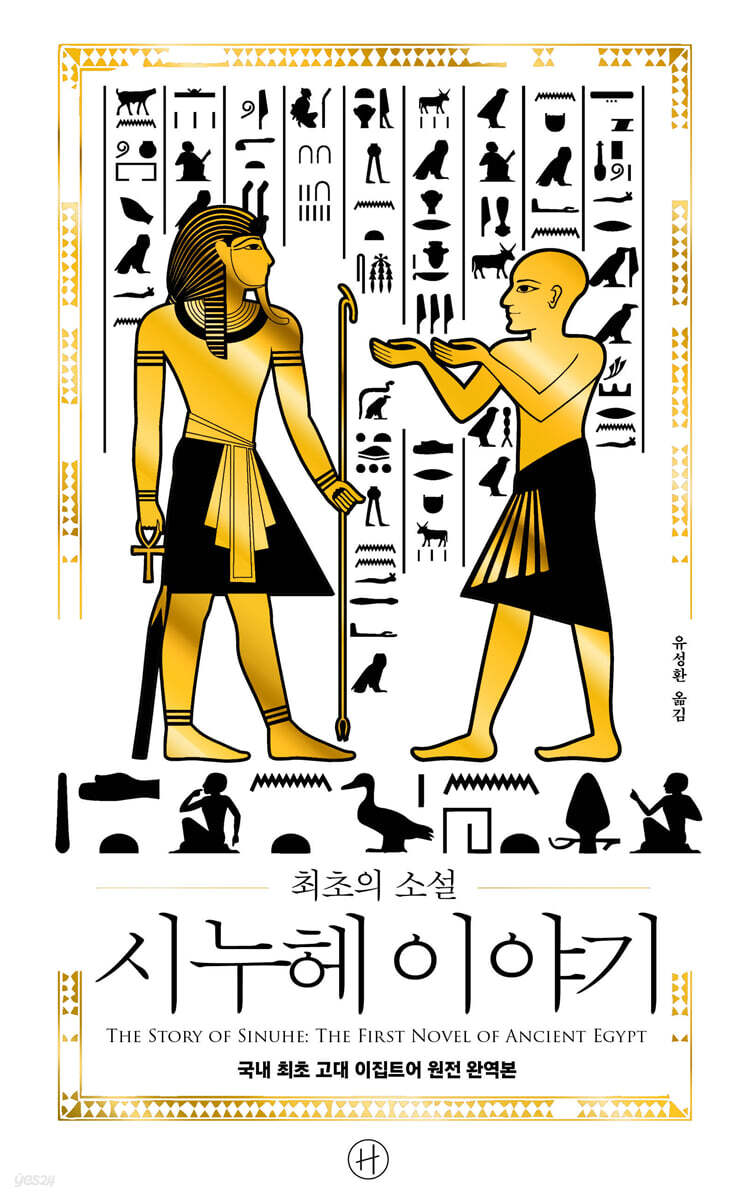
“It allows us to have a bleak conversation with the ‘Homo Pictus’ of 4000 years ago, “A truly ‘one-of-a-kind’ achievement.” - Shin Hyeong-cheol (literary critic) “The literature that originated from the first civilization of mankind Enjoy the pleasure of reading in our language!” - Joo Won-jun (first president of the Korean Society for Ancient Near Eastern Studies) The World's First Novel, The Story of Sinuhe The only complete nuclear power plant in Korea! Korea's leading Egyptian literature scholar offers a captivating account of the immortal epic that poignantly portrays the lives, desires, dreams, and hopes of people 4,000 years ago. What comes to mind when you think of ancient Egypt? The scorching sands of the desert. A pyramid towers over it. Pharaoh's golden mask. A black, dried-out mummy in a magnificent coffin. The tragedy of Cleopatra and the curse of the Pharaoh… . What we know is mostly images dramatized and caricatured through visual media. In fact, we do not really know how culturally rich ancient Egypt was. The first novel, The Story of Sinuhe, has been published, revealing the true face of ancient Egypt, which flourished along the bountiful Nile River for over 5,000 years. The Tales of Sinuhe, written between 1911 and 1830 BC, is considered one of the greatest epics of ancient Egypt. This story, which tells the story of the life of Sinuhe, a nobleman who left and returned to Egypt during the Middle Kingdom (2055–1650 BC), was copied countless times by scribes on papyrus and stone tablets, and is the most complete surviving work today. The Tale of Sinuhe, which vividly conveys the lives, desires, dreams, and hopes of ancient Egyptians, is of exceptional literary and academic value as the origin of mythological journeys, as a source of information revealing the imagery of ancient Egyptians, and as a work that combines various narrative techniques. Above all, this book will capture the attention of readers who appreciate the value of original texts because it vividly demonstrates the boundless charm of ancient Egyptian civilization. This is the first translation of an ancient Egyptian original text in Korea, meticulously translated and commented on with passion by Dr. Seonghwan Yoo, who majored in Egyptology in the United States after being captivated by the charm of Egyptian hieroglyphs and currently teaches ancient West Asian civilization in the Department of Asian Languages and Civilizations at Seoul National University. Humanist, which has published excellent and valuable translations of original texts ranging from ancient Mesopotamian mythology to medieval European chivalric literature, such as 『The First Myth: The Epic of Gilgamesh』, 『The First Goddess: Inanna』, 『The First History: Sumer』, and 『The Song of Roland』, presents readers with another pleasant shock with a translation of the original text from ancient Egyptian. |
- You can preview some of the book's contents.
Preview
index
Translator's Preface
Note
I.
The first novel, The Story of Sinuhe
Chapter 1.
Sinuhe's escape
01.
"Sinuhe says"
02.
Death of Amenemhat I
03.
Sinuhe's escape
04.
Meeting with Ammunensh
05.
Hymn to Senwasret I
A Classic Guide│Was Amenemhat I Assassinated?
Chapter 2.
Life in Lechenu
06.
Settlement in Lechenu
07.
The duel between the warriors Sinuhe and Rechenu
08.
Sinuhe's longing for home
09.
Sinuhe's Prayer
10.
Royal proclamation
11.
Sinuhe's reply
Classic Guidebook 2│How to View Syria and Palestine
Chapter 3.
The Return of Sinuhe
12.
Sinuhe's return and audience
13.
Sinuhe's Lottery
14.
envoy
Classic Guidebook 3│Ancient Egyptians' Views of the Afterlife and Funeral Procedures
II.
A Guide to the First Novel, The Story of Sinuhe
Geography of Ancient Egypt
History of Ancient Egypt
Appendix 1.
Ancient Egyptian Timeline
Appendix 2.
King List of the Middle Kingdom
Ancient Egyptian Language and the Evolution of Calligraphy
Epic literature of ancient Egypt
Introduction to the translated text
supplement
Recommendation
Translator's Note
References
Source of illustration/text
Search
Note
I.
The first novel, The Story of Sinuhe
Chapter 1.
Sinuhe's escape
01.
"Sinuhe says"
02.
Death of Amenemhat I
03.
Sinuhe's escape
04.
Meeting with Ammunensh
05.
Hymn to Senwasret I
A Classic Guide│Was Amenemhat I Assassinated?
Chapter 2.
Life in Lechenu
06.
Settlement in Lechenu
07.
The duel between the warriors Sinuhe and Rechenu
08.
Sinuhe's longing for home
09.
Sinuhe's Prayer
10.
Royal proclamation
11.
Sinuhe's reply
Classic Guidebook 2│How to View Syria and Palestine
Chapter 3.
The Return of Sinuhe
12.
Sinuhe's return and audience
13.
Sinuhe's Lottery
14.
envoy
Classic Guidebook 3│Ancient Egyptians' Views of the Afterlife and Funeral Procedures
II.
A Guide to the First Novel, The Story of Sinuhe
Geography of Ancient Egypt
History of Ancient Egypt
Appendix 1.
Ancient Egyptian Timeline
Appendix 2.
King List of the Middle Kingdom
Ancient Egyptian Language and the Evolution of Calligraphy
Epic literature of ancient Egypt
Introduction to the translated text
supplement
Recommendation
Translator's Note
References
Source of illustration/text
Search
Detailed image
.jpg)
Into the book
“The Tale of Sinuhe is a masterpiece of ancient Egyptian literature, created by an unknown scribe who possessed the literary talent to transform the physical and mental wanderings of a man constantly struggling with his own fragmented identity and the fate of man governed by divine providence into a narrative of exile and return, drawing on his extensive knowledge of texts from various fields.”
---From the Translator's Preface
“He asked me, ‘Why have you come here? What is it? Has something happened to you in your country?’ I answered him, ‘His Majesty Sheheteb-Bre, king of Upper and Lower Egypt, has returned to Aqet.
“No one knows what will happen because of it,” he said vaguely, “It was reported to me on my way back from the expedition to the land of Chemeh.
My mind was in disarray, and my heart, my body, was not what it should be, so it drove me to flee.
(But) no one ever spoke to me or spat in my face.
I have not heard a word of rebuke, nor have any messengers heard my name.
“I have no way of knowing who brought me to this foreign land, it seems like divine providence,” he said.
---「04.
From "Encounter with Ammunenshi"
“The fugitive runs away because of his circumstances, but my true heart is in my homeland.
He who crawls crawls because he is hungry, but I gave bread to my neighbor.
Some leave their land because of their nakedness, but I have white garments of fine linen.
Some people move on their own because they have no one to send, but I have many servants.
“My house is good and my dwelling place is spacious, but my memory remains in the palace.”
---「08.
From "Sinuhe's Homesickness"
“As I laid my head on the ground between the sphinxes, the royal children stood in the passage to meet me, and the courtiers who had accompanied me to the colonnade guided me along the path leading to the throne room.
I saw His Majesty seated on a throne set in a chamber made of gold.
At that time, I was lying face down on the ground and fainted right in front of his eyes.
The god spoke cheerfully, but I was like a man possessed by darkness; my spirit was gone and my limbs were shaking.
“My heart—it was not what was in my body, so I could not distinguish between life and death.”
---「12.
From "Sinuhe's Return and Audience"
“The Story of Sinuhe” reveals the ‘identity of the Egyptians’ through the escape of the protagonist Sinuhe.
To be more precise, it should be said that the answer to the question of identity is derived not from the event of escape, but from the process in which the protagonist and the reader each discover the reason why he had no choice but to escape.
Moreover, although Sinuhe's escape is a core theme that runs through "The Story of Sinuhe," the reason for his escape is not clearly revealed until the end of the story.
However, the questions that Sinuhe inevitably faces as she explores the reasons for her flight—questions like, “What is the relationship between a king and his subjects?”, “What is the relationship between gods and humans?”, and “What is the relationship between an individual’s actions and the fate that befalls them?”—ultimately lead to the answer to the ultimate question: “What is Egyptian identity?”
---From the Translator's Preface
“He asked me, ‘Why have you come here? What is it? Has something happened to you in your country?’ I answered him, ‘His Majesty Sheheteb-Bre, king of Upper and Lower Egypt, has returned to Aqet.
“No one knows what will happen because of it,” he said vaguely, “It was reported to me on my way back from the expedition to the land of Chemeh.
My mind was in disarray, and my heart, my body, was not what it should be, so it drove me to flee.
(But) no one ever spoke to me or spat in my face.
I have not heard a word of rebuke, nor have any messengers heard my name.
“I have no way of knowing who brought me to this foreign land, it seems like divine providence,” he said.
---「04.
From "Encounter with Ammunenshi"
“The fugitive runs away because of his circumstances, but my true heart is in my homeland.
He who crawls crawls because he is hungry, but I gave bread to my neighbor.
Some leave their land because of their nakedness, but I have white garments of fine linen.
Some people move on their own because they have no one to send, but I have many servants.
“My house is good and my dwelling place is spacious, but my memory remains in the palace.”
---「08.
From "Sinuhe's Homesickness"
“As I laid my head on the ground between the sphinxes, the royal children stood in the passage to meet me, and the courtiers who had accompanied me to the colonnade guided me along the path leading to the throne room.
I saw His Majesty seated on a throne set in a chamber made of gold.
At that time, I was lying face down on the ground and fainted right in front of his eyes.
The god spoke cheerfully, but I was like a man possessed by darkness; my spirit was gone and my limbs were shaking.
“My heart—it was not what was in my body, so I could not distinguish between life and death.”
---「12.
From "Sinuhe's Return and Audience"
“The Story of Sinuhe” reveals the ‘identity of the Egyptians’ through the escape of the protagonist Sinuhe.
To be more precise, it should be said that the answer to the question of identity is derived not from the event of escape, but from the process in which the protagonist and the reader each discover the reason why he had no choice but to escape.
Moreover, although Sinuhe's escape is a core theme that runs through "The Story of Sinuhe," the reason for his escape is not clearly revealed until the end of the story.
However, the questions that Sinuhe inevitably faces as she explores the reasons for her flight—questions like, “What is the relationship between a king and his subjects?”, “What is the relationship between gods and humans?”, and “What is the relationship between an individual’s actions and the fate that befalls them?”—ultimately lead to the answer to the ultimate question: “What is Egyptian identity?”
---From the translator's note
Publisher's Review
1.
What on earth is "The Story of Sinuhe"?
― The birth of the 'world's first novel'
The early Middle Kingdom of Egypt, which resolved the chaos of the First Intermediate Period (2160 BC - 2055 BC) and reestablished a unified nation.
Amen-em-Hat I, who founded the 12th Dynasty (1985–1773 BC), passed away suddenly.
Sinuhe, a nobleman who accompanied one of the princes who had gone on a conquest on behalf of the king, heard the news of the king's death and fled in fear to a distant foreign land, Syria-Palestine.
Another prince, who quickly returned to the capital, ascended the throne as Senwasret I, and Sinuhe, who arrived in Palestine after many hardships, gained the trust of the local chieftain and succeeded in settling down.
But Sinuhe's heart is always in her homeland, Egypt.
This is because they believe that no matter how wealthy one may be in a foreign country, one must die in one's home country to achieve eternal life.
The Tale of Sinuhe, written about 4,000 years ago, is an ancient Egyptian epic that vividly portrays mythological motifs of wandering, adventure, return, and forgiveness.
In the Epic of Gilgamesh, written around the same time, Gilgamesh goes on an adventure with his friend Enkidu, is shocked by his friend's death, and wanders in search of eternal life, returning with a bitter awakening.
Meanwhile, Sinuhe, the protagonist of "The Story of Sinuhe," embarks on a journey from being an Egyptian to a non-Egyptian through flight, and then being restored as a true Egyptian through return.
If the Epic of Gilgamesh contains the essence of Sumer, the ancient civilization that flourished between the Tigris and Euphrates rivers, then it would not be an exaggeration to say that the Tale of Sinuhe is the world's first novel, appearing in ancient Egypt, one of the four great civilizations of the world along with Mesopotamia.
“A noble and high-ranking official,” “a true friend and servant of the king,” Sinuhe remained a model and standard for Egyptians, both during the Middle Kingdom when the story was first written down and during the New Kingdom when countless scribes painstakingly copied it in its entirety.
Even after fleeing Egypt, Sinuhe struggled to remember that she was Egyptian, fought in the Egyptian way, won, and dreamed of returning to Egypt in triumph. The story of Sinuhe, who finally returned to Egypt in glory, was a landmark that showed what kind of attitude an Egyptian should have.
The translator boldly calls "The Story of Sinuhe" "the first novel" because the dreams and aspirations of the ancient Egyptians are delicately expressed through highly developed literary techniques.
“The Tale of Sinuhe is a masterpiece of ancient Egyptian literature, created by an unknown scribe who possessed the literary talent to transform the physical and mental wanderings of a man constantly struggling with his own fragmented identity and the fate of man governed by divine providence into a narrative of exile and return, drawing on his extensive knowledge of texts from various fields.”
- Translator's Preface, page 10
“The fugitive runs away because of his circumstances, but my heart is in my homeland.
He who crawls crawls because he is hungry, but I gave bread to my neighbor.
Some leave their land because of their nakedness, but I have white garments of fine linen.
Some people move on their own because they have no one to send, but I have many servants.
“My house is good and my dwelling place is spacious, but my memory remains in the palace.”
- 〈08.
“Sinuhe’s Homesickness,” pp. 67–68
2.
Why is "The Story of Sinuhe" Important?
― A corpus of narrative literature that embodies the lives, desires, dreams, and hopes of ancient Egyptians.
《The Story of Sinuhe》 is a masterpiece of narrative literature that colorfully depicts a character's escape and return using all the literary techniques of the time.
It is not a tool-like record, such as a chronicle of kings or a list of properties, which one might think of when thinking of ancient records, but a literary work in itself with a unique plot and rhetoric that attracted the attention of contemporary readers.
A hymn to the king is inserted in the form of a poem into the story of the escape, which unfolds from Sinuhe's first-person perspective, and when the narrative of the conqueror defeating foreign enemies by imitating the king of Egypt ends, a prayer asking to return to Egypt is inserted.
The king, responding to Sinuhe's passionate prayer, issues a proclamation granting amnesty, and a reply that would not have been included if the person had been real is inserted, heightening the dramatic atmosphere.
Sinuhe, standing before the king, successfully completes her return to being an Egyptian, repeatedly fainting and being moved on the stage of the palace.
The core of “The Story of Sinuhe” is its narrative structure, which goes beyond the expectation that it would simply describe the course of events in a simple manner.
This is the secret behind why the "Sinuhe Story" was copied for so long and survived in so many editions, allowing it to be restored as the most complete form of ancient literature.
Since its first discovery in the 19th century, the Tale of Sinuhe has been the subject of much interest to many Egyptologists, and as research continues, it has become increasingly clear that it is a highly valuable literary work.
We can gauge what kind of person the king (Pharaoh) was to the ancient Egyptians, how precious the land they were born and raised in was, and how strong their desire was to remain in Egypt even after death and enjoy eternal glory.
Here, the importance of being able to present to our readers the complete translation of the ancient Egyptian original of the Sinuhe story, which contains the lives, desires, dreams, and hopes of the Egyptians, becomes clear.
“It is true that the number of manuscripts and the range of transmission of “The Story of Sinuhe” are overwhelming compared to other works.
For example, just like the Tale of Sinuhe, the Tale of the Shipwrecked Sailor and the Tale of Khufu and the Magician, which are considered masterpieces of Middle Kingdom epic literature, only one manuscript remains.
(…) But I think this is rather clear evidence—even taking all coincidences into account—of how unique the Sinuhe story was to the ancient Egyptians.”
- Translator's Note, p. 233
“As I laid my head on the ground between the sphinxes, the royal children stood in the passage to meet me, and the courtiers who had accompanied me to the colonnade guided me along the path leading to the throne room.
I saw His Majesty seated on a throne set in a chamber made of gold.
At that time, I was lying face down on the ground and fainted right in front of his eyes.
The god spoke cheerfully, but I was like a man possessed by darkness; my spirit was gone and my limbs were shaking.
“My heart—it was not what was in my body, so I could not distinguish between life and death.”
- 〈12.
Sinuhe's Return and Audience, pp. 109–111
3.
Why Should You Read The Story of Sinuhe Now?
― The infinite charm of ancient Egyptian civilization, unraveled by Korea's leading Egyptian literature scholar.
Dr. Yoo Seong-hwan, who translated “The Story of Sinuhe,” was fascinated by Egyptian hieroglyphs and studied them on his own for several years. After making an existential decision, he went to Brown University in the United States to study Egyptology in earnest.
Among Egyptology, he paid great attention to philology and thoroughly learned the various writing systems and narrative structures of ancient Egypt.
Drawing on his extensive study and love of ancient Egyptian civilization, the translator has appeared on numerous television programs, catering to the needs of readers seeking fascinating knowledge.
《The Story of Sinuhe, the First Novel》 is filled with the translator's extensive knowledge of ancient Egyptian civilization and his passion to share the charm of Egyptian civilization with a wider audience.
〈Ⅰ.
The first novel, “The Story of Sinuhe,” included a translation of the original text of “The Story of Sinuhe,” along with an abundance of annotations that amounted to about five times the length of the translated text.
The commentary highlights the translator's expertise in ancient literature, including the contemporary trends, beliefs, place names, customs, and religious views. The "Classical Guide" appended at the end of each chapter in Part 1 appropriately addresses any questions that arise while reading the translation.
It carefully explains whether Amenemhat I was actually assassinated, what Syria-Palestine was like for the ancient Egyptians, what death meant to the ancient Egyptians, and how seriously they treated funerals.
〈Ⅱ.
The first novel, "The Story of Sinuhe," is full of commentary that helps us understand the entire ancient Egyptian civilization.
From the geography and history of ancient Egypt to the evolution of the ancient Egyptian language and script, examples of narrative literature, and translated texts, it provides an easy-to-understand explanation of the basic knowledge needed to understand ancient Egypt, including parts related to the "Sinuhe Story."
The highlight of the book is the translator's note, "Translator's Note: An Egyptian Narrative by, for, and of the Egyptians," which condenses the translator's thoughts, so I highly recommend reading it.
Additionally, at the beginning of each piece, key sentences are marked with hieroglyphs, and visual materials such as maps, murals, stone tablets, papyrus manuscripts, and various ancient Egyptian scripts are collected to help readers vividly picture the times in their minds.
《The Story of Sinuhe, the First Novel》 is special in that it is a literary work from approximately 4,000 years ago that has been translated into Korean after approximately 100 years of research and several years of translation.
This book, which illuminates a relatively unfamiliar era for us, contributes to broadening the scope of our translated literature by focusing on major narrative works written during the Middle Kingdom, the "golden age of classical literature."
Above all, this book will be of great help in understanding ancient Egypt, a world that seems familiar yet is very unfamiliar to us.
It's time to immerse yourself in the endless charm of the ancient Egyptian civilization that constantly tempts us.
“The Story of Sinuhe” reveals the ‘identity of the Egyptians’ through the escape of the protagonist Sinuhe.
To be more precise, it should be said that the answer to the question of identity is derived not through the event of escape, but through the process in which the protagonist and the reader each discover the reason why he had no choice but to escape.
Moreover, although Sinuhe's escape is a core theme that runs through "The Story of Sinuhe," the reason for his escape is not clearly revealed until the end of the story.
However, the questions that Sinuhe inevitably faces as she explores the reasons for her flight—questions like, “What is the relationship between a king and his subjects?”, “What is the relationship between gods and humans?”, and “What is the relationship between an individual’s actions and the fate that befalls them?”—ultimately lead to the answer to the ultimate question: “What is Egyptian identity?”
- Translator's Note, p. 254
“As is done to the highest-ranking court lady, a funeral priest was assigned and a funeral estate was granted, including farmland in front of the reception facility.
My figure is covered with gold leaf, and my robe is made of pumpkin gold.
The one who ordered this to be done was His Majesty, for there has never been a precedent for such a thing being done to a lowly person.
“Until the day comes when I finally anchor, I will live in Your Majesty’s favor.”
- 〈13.
Sinuhe's Lottery, pp. 124-125
Editor's Note
When I was young, I was obsessed with a series called 'Visual Museum'.
Among them, I liked “Ancient Egypt” so much that I don’t know how many times I’ve read it.
That book was on the bookshelf at my maternal grandparents' house, where I used to visit every vacation. I feel sorry for my cousins, but I confess that I looked forward to vacation because I liked books more than people (sorry, kids).
I begged my mom to buy me a video of the Abu Simbel Temple restoration documentary, and I watched it so many times that the tape was stretched out (thanks to that, I confess my age).
The moment I first saw the manuscript of "The Story of Sinuhe, the First Novel," I was reminded of the time when I was captivated by the charm of ancient Egypt.
Although my memories of King Tutankhamun's golden mask and the magnificent temples of Ramses II have faded, reading and editing the manuscripts brought me back to my childhood (I really wish I were younger...) as I saw a new side of an ancient civilization on a different time scale.
no).
To me, the Middle Kingdom was a relatively unimportant period, sandwiched between the Old Kingdom, famous for its pyramids, and the New Kingdom, known for Ramses II.
I think the fun of being an editor comes from coming across fields that you either weren't very interested in, or didn't think you would be interested in.
The more I read the manuscript, the more I realized why the translator called the Middle Kingdom the "golden age of classical literature" and readily declared "The Story of Sinuhe" the "first novel."
The story of Sinuhe, which condenses various narrative techniques into one work, is a work that allows one to feel the cultural power of an ancient civilization the more one learns about it.
The phrase 'translation of the ancient Egyptian original' (even though I didn't translate it) is also a part that makes me feel 'concerned'.
I usually avoid hot places, but thanks to this book, I'm thinking about going to Egypt for my next trip.
- Editor Kim Joo-won
Translator's Note
Over the past ten years, I have written over ten papers and have translated and introduced a wide variety of literature to our academic community.
However, this is the first time that a work of narrative literature of considerable length has been compiled into a single book and presented to readers under the title of 'Complete Translation of the Original Text.'
I sincerely hope that my translation of “The Story of Sinuhe” will provide readers with the pleasure of rereading an old classic in a new way.
- Translator: Yoo Seong-hwan
What on earth is "The Story of Sinuhe"?
― The birth of the 'world's first novel'
The early Middle Kingdom of Egypt, which resolved the chaos of the First Intermediate Period (2160 BC - 2055 BC) and reestablished a unified nation.
Amen-em-Hat I, who founded the 12th Dynasty (1985–1773 BC), passed away suddenly.
Sinuhe, a nobleman who accompanied one of the princes who had gone on a conquest on behalf of the king, heard the news of the king's death and fled in fear to a distant foreign land, Syria-Palestine.
Another prince, who quickly returned to the capital, ascended the throne as Senwasret I, and Sinuhe, who arrived in Palestine after many hardships, gained the trust of the local chieftain and succeeded in settling down.
But Sinuhe's heart is always in her homeland, Egypt.
This is because they believe that no matter how wealthy one may be in a foreign country, one must die in one's home country to achieve eternal life.
The Tale of Sinuhe, written about 4,000 years ago, is an ancient Egyptian epic that vividly portrays mythological motifs of wandering, adventure, return, and forgiveness.
In the Epic of Gilgamesh, written around the same time, Gilgamesh goes on an adventure with his friend Enkidu, is shocked by his friend's death, and wanders in search of eternal life, returning with a bitter awakening.
Meanwhile, Sinuhe, the protagonist of "The Story of Sinuhe," embarks on a journey from being an Egyptian to a non-Egyptian through flight, and then being restored as a true Egyptian through return.
If the Epic of Gilgamesh contains the essence of Sumer, the ancient civilization that flourished between the Tigris and Euphrates rivers, then it would not be an exaggeration to say that the Tale of Sinuhe is the world's first novel, appearing in ancient Egypt, one of the four great civilizations of the world along with Mesopotamia.
“A noble and high-ranking official,” “a true friend and servant of the king,” Sinuhe remained a model and standard for Egyptians, both during the Middle Kingdom when the story was first written down and during the New Kingdom when countless scribes painstakingly copied it in its entirety.
Even after fleeing Egypt, Sinuhe struggled to remember that she was Egyptian, fought in the Egyptian way, won, and dreamed of returning to Egypt in triumph. The story of Sinuhe, who finally returned to Egypt in glory, was a landmark that showed what kind of attitude an Egyptian should have.
The translator boldly calls "The Story of Sinuhe" "the first novel" because the dreams and aspirations of the ancient Egyptians are delicately expressed through highly developed literary techniques.
“The Tale of Sinuhe is a masterpiece of ancient Egyptian literature, created by an unknown scribe who possessed the literary talent to transform the physical and mental wanderings of a man constantly struggling with his own fragmented identity and the fate of man governed by divine providence into a narrative of exile and return, drawing on his extensive knowledge of texts from various fields.”
- Translator's Preface, page 10
“The fugitive runs away because of his circumstances, but my heart is in my homeland.
He who crawls crawls because he is hungry, but I gave bread to my neighbor.
Some leave their land because of their nakedness, but I have white garments of fine linen.
Some people move on their own because they have no one to send, but I have many servants.
“My house is good and my dwelling place is spacious, but my memory remains in the palace.”
- 〈08.
“Sinuhe’s Homesickness,” pp. 67–68
2.
Why is "The Story of Sinuhe" Important?
― A corpus of narrative literature that embodies the lives, desires, dreams, and hopes of ancient Egyptians.
《The Story of Sinuhe》 is a masterpiece of narrative literature that colorfully depicts a character's escape and return using all the literary techniques of the time.
It is not a tool-like record, such as a chronicle of kings or a list of properties, which one might think of when thinking of ancient records, but a literary work in itself with a unique plot and rhetoric that attracted the attention of contemporary readers.
A hymn to the king is inserted in the form of a poem into the story of the escape, which unfolds from Sinuhe's first-person perspective, and when the narrative of the conqueror defeating foreign enemies by imitating the king of Egypt ends, a prayer asking to return to Egypt is inserted.
The king, responding to Sinuhe's passionate prayer, issues a proclamation granting amnesty, and a reply that would not have been included if the person had been real is inserted, heightening the dramatic atmosphere.
Sinuhe, standing before the king, successfully completes her return to being an Egyptian, repeatedly fainting and being moved on the stage of the palace.
The core of “The Story of Sinuhe” is its narrative structure, which goes beyond the expectation that it would simply describe the course of events in a simple manner.
This is the secret behind why the "Sinuhe Story" was copied for so long and survived in so many editions, allowing it to be restored as the most complete form of ancient literature.
Since its first discovery in the 19th century, the Tale of Sinuhe has been the subject of much interest to many Egyptologists, and as research continues, it has become increasingly clear that it is a highly valuable literary work.
We can gauge what kind of person the king (Pharaoh) was to the ancient Egyptians, how precious the land they were born and raised in was, and how strong their desire was to remain in Egypt even after death and enjoy eternal glory.
Here, the importance of being able to present to our readers the complete translation of the ancient Egyptian original of the Sinuhe story, which contains the lives, desires, dreams, and hopes of the Egyptians, becomes clear.
“It is true that the number of manuscripts and the range of transmission of “The Story of Sinuhe” are overwhelming compared to other works.
For example, just like the Tale of Sinuhe, the Tale of the Shipwrecked Sailor and the Tale of Khufu and the Magician, which are considered masterpieces of Middle Kingdom epic literature, only one manuscript remains.
(…) But I think this is rather clear evidence—even taking all coincidences into account—of how unique the Sinuhe story was to the ancient Egyptians.”
- Translator's Note, p. 233
“As I laid my head on the ground between the sphinxes, the royal children stood in the passage to meet me, and the courtiers who had accompanied me to the colonnade guided me along the path leading to the throne room.
I saw His Majesty seated on a throne set in a chamber made of gold.
At that time, I was lying face down on the ground and fainted right in front of his eyes.
The god spoke cheerfully, but I was like a man possessed by darkness; my spirit was gone and my limbs were shaking.
“My heart—it was not what was in my body, so I could not distinguish between life and death.”
- 〈12.
Sinuhe's Return and Audience, pp. 109–111
3.
Why Should You Read The Story of Sinuhe Now?
― The infinite charm of ancient Egyptian civilization, unraveled by Korea's leading Egyptian literature scholar.
Dr. Yoo Seong-hwan, who translated “The Story of Sinuhe,” was fascinated by Egyptian hieroglyphs and studied them on his own for several years. After making an existential decision, he went to Brown University in the United States to study Egyptology in earnest.
Among Egyptology, he paid great attention to philology and thoroughly learned the various writing systems and narrative structures of ancient Egypt.
Drawing on his extensive study and love of ancient Egyptian civilization, the translator has appeared on numerous television programs, catering to the needs of readers seeking fascinating knowledge.
《The Story of Sinuhe, the First Novel》 is filled with the translator's extensive knowledge of ancient Egyptian civilization and his passion to share the charm of Egyptian civilization with a wider audience.
〈Ⅰ.
The first novel, “The Story of Sinuhe,” included a translation of the original text of “The Story of Sinuhe,” along with an abundance of annotations that amounted to about five times the length of the translated text.
The commentary highlights the translator's expertise in ancient literature, including the contemporary trends, beliefs, place names, customs, and religious views. The "Classical Guide" appended at the end of each chapter in Part 1 appropriately addresses any questions that arise while reading the translation.
It carefully explains whether Amenemhat I was actually assassinated, what Syria-Palestine was like for the ancient Egyptians, what death meant to the ancient Egyptians, and how seriously they treated funerals.
〈Ⅱ.
The first novel, "The Story of Sinuhe," is full of commentary that helps us understand the entire ancient Egyptian civilization.
From the geography and history of ancient Egypt to the evolution of the ancient Egyptian language and script, examples of narrative literature, and translated texts, it provides an easy-to-understand explanation of the basic knowledge needed to understand ancient Egypt, including parts related to the "Sinuhe Story."
The highlight of the book is the translator's note, "Translator's Note: An Egyptian Narrative by, for, and of the Egyptians," which condenses the translator's thoughts, so I highly recommend reading it.
Additionally, at the beginning of each piece, key sentences are marked with hieroglyphs, and visual materials such as maps, murals, stone tablets, papyrus manuscripts, and various ancient Egyptian scripts are collected to help readers vividly picture the times in their minds.
《The Story of Sinuhe, the First Novel》 is special in that it is a literary work from approximately 4,000 years ago that has been translated into Korean after approximately 100 years of research and several years of translation.
This book, which illuminates a relatively unfamiliar era for us, contributes to broadening the scope of our translated literature by focusing on major narrative works written during the Middle Kingdom, the "golden age of classical literature."
Above all, this book will be of great help in understanding ancient Egypt, a world that seems familiar yet is very unfamiliar to us.
It's time to immerse yourself in the endless charm of the ancient Egyptian civilization that constantly tempts us.
“The Story of Sinuhe” reveals the ‘identity of the Egyptians’ through the escape of the protagonist Sinuhe.
To be more precise, it should be said that the answer to the question of identity is derived not through the event of escape, but through the process in which the protagonist and the reader each discover the reason why he had no choice but to escape.
Moreover, although Sinuhe's escape is a core theme that runs through "The Story of Sinuhe," the reason for his escape is not clearly revealed until the end of the story.
However, the questions that Sinuhe inevitably faces as she explores the reasons for her flight—questions like, “What is the relationship between a king and his subjects?”, “What is the relationship between gods and humans?”, and “What is the relationship between an individual’s actions and the fate that befalls them?”—ultimately lead to the answer to the ultimate question: “What is Egyptian identity?”
- Translator's Note, p. 254
“As is done to the highest-ranking court lady, a funeral priest was assigned and a funeral estate was granted, including farmland in front of the reception facility.
My figure is covered with gold leaf, and my robe is made of pumpkin gold.
The one who ordered this to be done was His Majesty, for there has never been a precedent for such a thing being done to a lowly person.
“Until the day comes when I finally anchor, I will live in Your Majesty’s favor.”
- 〈13.
Sinuhe's Lottery, pp. 124-125
Editor's Note
When I was young, I was obsessed with a series called 'Visual Museum'.
Among them, I liked “Ancient Egypt” so much that I don’t know how many times I’ve read it.
That book was on the bookshelf at my maternal grandparents' house, where I used to visit every vacation. I feel sorry for my cousins, but I confess that I looked forward to vacation because I liked books more than people (sorry, kids).
I begged my mom to buy me a video of the Abu Simbel Temple restoration documentary, and I watched it so many times that the tape was stretched out (thanks to that, I confess my age).
The moment I first saw the manuscript of "The Story of Sinuhe, the First Novel," I was reminded of the time when I was captivated by the charm of ancient Egypt.
Although my memories of King Tutankhamun's golden mask and the magnificent temples of Ramses II have faded, reading and editing the manuscripts brought me back to my childhood (I really wish I were younger...) as I saw a new side of an ancient civilization on a different time scale.
no).
To me, the Middle Kingdom was a relatively unimportant period, sandwiched between the Old Kingdom, famous for its pyramids, and the New Kingdom, known for Ramses II.
I think the fun of being an editor comes from coming across fields that you either weren't very interested in, or didn't think you would be interested in.
The more I read the manuscript, the more I realized why the translator called the Middle Kingdom the "golden age of classical literature" and readily declared "The Story of Sinuhe" the "first novel."
The story of Sinuhe, which condenses various narrative techniques into one work, is a work that allows one to feel the cultural power of an ancient civilization the more one learns about it.
The phrase 'translation of the ancient Egyptian original' (even though I didn't translate it) is also a part that makes me feel 'concerned'.
I usually avoid hot places, but thanks to this book, I'm thinking about going to Egypt for my next trip.
- Editor Kim Joo-won
Translator's Note
Over the past ten years, I have written over ten papers and have translated and introduced a wide variety of literature to our academic community.
However, this is the first time that a work of narrative literature of considerable length has been compiled into a single book and presented to readers under the title of 'Complete Translation of the Original Text.'
I sincerely hope that my translation of “The Story of Sinuhe” will provide readers with the pleasure of rereading an old classic in a new way.
- Translator: Yoo Seong-hwan
GOODS SPECIFICS
- Date of issue: May 20, 2024
- Format: Hardcover book binding method guide
- Page count, weight, size: 296 pages | 500g | 130*210*20mm
- ISBN13: 9791170871514
- ISBN10: 1170871518
You may also like
카테고리
korean


korean

![GQ KOREA Mark (Monthly): December [2025]](http://librairie.coreenne.fr/cdn/shop/files/8ef265dbbfbf186523ed75ba7319009d.jpg?v=1765340328&width=3840)


