

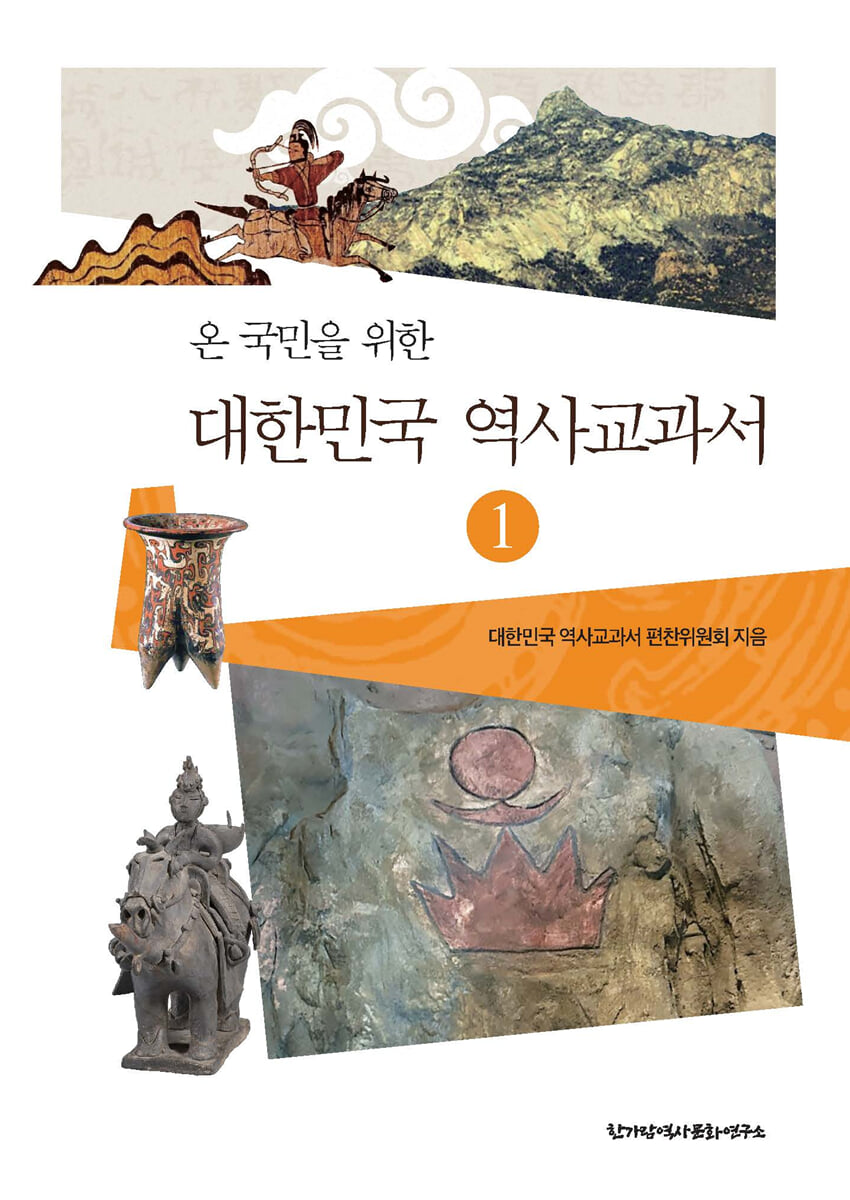
Korean History Textbook 1
 |
Description
Book Introduction
Currently, Korean students learn history through history textbooks approved by the government. A textbook approved by the government is a textbook that has been published by a specific publisher and compiled by scholars and teachers, and then passed a government review to determine whether it passed or failed. Therefore, you cannot break out of the framework because you will be eliminated if you do not follow the writing standards set by the country. The History Textbook of the Republic of Korea is a freely published history textbook that is not subject to state censorship. A freely published textbook is a textbook that scholars and teachers freely compile based on academic diversity without a censorship process. Currently, most OECD countries follow a free issuance system. It goes without saying that the free textbook system is a desirable system in that it fosters a more diverse way of thinking in students than the textbooks approved by the government. In history textbooks, the content is more important than the system, and the content of the 『Republic of Korea History Textbook』 is written from the perspective of national independence domestically and peace and coexistence internationally. The narrative system evenly describes the development of national history from the Paleolithic Age to the modern era, and the narrative volume evenly describes each unit from the Paleolithic Age to the modern era to ensure a consistent perspective. As for the characteristics of the narrative, each period is described as being closely related to us. |
- You can preview some of the book's contents.
Preview
index
While publishing a freely published history textbook
Ⅰ.
Prehistoric times
1.
Paleolithic and Neolithic Ages
① The Paleolithic Age and human evolution
② Neolithic Age and Neolithic Revolution
2.
Our people's prehistoric times
① Paleolithic relics and artifacts
② The direct ancestors of our people were Neolithic people.
③ Dongyi tribe's Liao civilization and Hongshan culture
④ Bronze Age and Iron Age
II. Development of Historical Era and Gojoseon
1.
The founding and development of Gojoseon
① Dangun Wanggeom founds Gojoseon
② Gojoseon territory and country character
2.
Central Plains and Japan during the Gojoseon period
① Various ethnic groups and countries in the Central Plains
② Expansion of Gojoseon residents into the Japanese archipelago
③ The border between Gojoseon and the Central Plains countries
3.
Gija Joseon and Wiman Joseon
① Samjoseon and Gijajoseon
② Understanding Wiman Joseon
4.
War between Wiman Joseon and Han
① War between Wiman Joseon and Han
② Hansa Commandery and Nakrang Commandery
5.
Gojoseon economy, society, and culture
① Gojoseon's economy
② Laws and taxes of Gojoseon
③ Religion of Gojoseon
④Gojoseon's science and technology
⑤ Literature and art of Gojoseon
Ⅲ.
Developments in various countries and eras
1.
grant
① The founding and development of Buyeo
②Politics and society of Buyeo
③ Buyeo's foreign relations
④ The decline and fall of Buyeo
2.
Samhan
① The reality of the Three Hans
②Samhan, Goguryeo, Baekje, and Silla
③ The fall of Mahan
④Customs of the Three Hans
3.
Silla Chronicles
① The founding story of Silla and its characteristics
② Development of Silla
③ Administrative organization of Silla
4.
Early history of Goguryeo
① The founding of Goguryeo
② Goguryeo's early capital and territory
③ Goguryeo's political system and territorial expansion
④ Conflict with the Later Han Dynasty
5.
Baekje Early History
①Baekje founding history
②Baekje's founding date and early capital
③Baekje early central administrative organization
④ Diplomacy and war in the early Baekje period
6.
Go
① The founding of Gaya and its territory
② The rise and fall of Gaya
③ Expansion of the Gaya lineage into the Japanese archipelago
7.
Choi clan Nakrang country
① Origin of the Choi clan's Nakrang Kingdom
② Relics and artifacts fabricated to show that the Nakrang Commandery was located in Pyongyang
③ Relics and artifacts of the Nakrang Kingdom excavated by North Korean academics
8.
Eupru, Dongokjeo, Ye
① Location of Eupru, Dongokjeo, and Yeui
② Countries that migrated from west to east
③ Example and example
④ Ethnicity
⑤ Period of foundation and fall
9.
why
①Location of the country
②Why is the verb moving?
Ⅳ.
Integration and Development in the Five Kingdoms Era
1.
Baekje Middle Ages
① Baekje's growth and conflict with Goguryeo
② Manage the continent
③ Manage the archipelago
2.
Goguryeo Middle Ages
① Goguryeo and Xianbei
② Trials and Overcomings of Middle Goguryeo
③ King Gwanggaeto the Great's territorial expansion
④ King Jangsu's move of the capital to Pyongyang
3.
Silla Middle Ages
① The rapid development of mid-Silla
② The rise of Silla during the reign of King Jinheung
4.
Economy, society, and culture of the five countries
①Economies of five countries
② Handicrafts and commerce in the Five Kingdoms period
③ Natural science and metal technology of five countries
④ Society of the Five Kingdoms Period
⑤ Lifestyles of the Five Kingdoms Period
⑥Culture of the Five Kingdoms Period
V.
The Three Kingdoms Period and the Great War in East Asia
1.
Gosu Battle
① Goguryeo had three fronts
②1st Gosu War
③2nd Gosu War
④ The Third Battle of Goguryeo and the Fall of the Sui Dynasty
2.
Godangdaejeon
① The Tang Dynasty enters the picture
② First Gokse War
③Second Goktang War
3.
The War of the Five Kingdoms
① Conflict between Silla and Baekje
② Silla signs a territorial division agreement with the Tang Dynasty.
③ Baekje, destroyed
④ Goguryeo falls
4.
New Tang Dynasty
① Tang Dynasty violates territorial division agreement
② Defeat the Tang Dynasty
Ⅵ.
Two Kingdoms Period and Later Three Kingdoms Period
1.
North Korea's Daejin Kingdom
① Daejin Geon-guk
② The Tang-Tang War and the Development of the Jin Dynasty
③ Jin's social structure
④ Jin's foreign relations
⑤ Jin's economy and socio-cultural
⑥ The decline and fall of Jin
2.
Southern Dynasty Daeshinra
① The launch of Silla and its territory
② The economy and culture of late Silla
③ The culture of Great Silla
3.
Later Three Kingdoms Period
① The prosperity of Seorabeol and the crisis of the provinces
② The crisis of the later Silla Dynasty
4.
The Three Kingdoms Period unfolds
① Nationwide peasant uprising and the later Three Kingdoms period
② Wang Geon ousts Gung Ye and ascends to the throne.
③Unify the Three Hans
Ⅶ.
Goryeo Dynasty
1.
Politics of the early Goryeo Dynasty
① Foreign relations during the Goryeo Dynasty
② The founding of Goryeo and the establishment of its system
③ Establish a ruling system
④ The establishment of an aristocratic society and the movement to move the capital to the western capital
⑤ Foreign wars in the early Goryeo period
2.
Politics of the late Goryeo Dynasty
①Establishment of a military regime
② Invasion and resistance of Yuan
③Political changes in the late Goryeo period
④ Emergence and conflict of frequent routes
⑤ The Wihwado Retreat and the Fall of Goryeo
3.
Goryeo's economy
① Goryeo's basic economic structure
② Economic activities by status
4.
Goryeo society
① Goryeo's social structure
② People's lifestyle
③Social changes in the late Goryeo Dynasty
5.
Goryeo's culture
①Basic characteristics of Goryeo culture
② Development of Buddhism and reform movements
③Development of science and technology
④Development of various cultures
Ⅰ.
Prehistoric times
1.
Paleolithic and Neolithic Ages
① The Paleolithic Age and human evolution
② Neolithic Age and Neolithic Revolution
2.
Our people's prehistoric times
① Paleolithic relics and artifacts
② The direct ancestors of our people were Neolithic people.
③ Dongyi tribe's Liao civilization and Hongshan culture
④ Bronze Age and Iron Age
II. Development of Historical Era and Gojoseon
1.
The founding and development of Gojoseon
① Dangun Wanggeom founds Gojoseon
② Gojoseon territory and country character
2.
Central Plains and Japan during the Gojoseon period
① Various ethnic groups and countries in the Central Plains
② Expansion of Gojoseon residents into the Japanese archipelago
③ The border between Gojoseon and the Central Plains countries
3.
Gija Joseon and Wiman Joseon
① Samjoseon and Gijajoseon
② Understanding Wiman Joseon
4.
War between Wiman Joseon and Han
① War between Wiman Joseon and Han
② Hansa Commandery and Nakrang Commandery
5.
Gojoseon economy, society, and culture
① Gojoseon's economy
② Laws and taxes of Gojoseon
③ Religion of Gojoseon
④Gojoseon's science and technology
⑤ Literature and art of Gojoseon
Ⅲ.
Developments in various countries and eras
1.
grant
① The founding and development of Buyeo
②Politics and society of Buyeo
③ Buyeo's foreign relations
④ The decline and fall of Buyeo
2.
Samhan
① The reality of the Three Hans
②Samhan, Goguryeo, Baekje, and Silla
③ The fall of Mahan
④Customs of the Three Hans
3.
Silla Chronicles
① The founding story of Silla and its characteristics
② Development of Silla
③ Administrative organization of Silla
4.
Early history of Goguryeo
① The founding of Goguryeo
② Goguryeo's early capital and territory
③ Goguryeo's political system and territorial expansion
④ Conflict with the Later Han Dynasty
5.
Baekje Early History
①Baekje founding history
②Baekje's founding date and early capital
③Baekje early central administrative organization
④ Diplomacy and war in the early Baekje period
6.
Go
① The founding of Gaya and its territory
② The rise and fall of Gaya
③ Expansion of the Gaya lineage into the Japanese archipelago
7.
Choi clan Nakrang country
① Origin of the Choi clan's Nakrang Kingdom
② Relics and artifacts fabricated to show that the Nakrang Commandery was located in Pyongyang
③ Relics and artifacts of the Nakrang Kingdom excavated by North Korean academics
8.
Eupru, Dongokjeo, Ye
① Location of Eupru, Dongokjeo, and Yeui
② Countries that migrated from west to east
③ Example and example
④ Ethnicity
⑤ Period of foundation and fall
9.
why
①Location of the country
②Why is the verb moving?
Ⅳ.
Integration and Development in the Five Kingdoms Era
1.
Baekje Middle Ages
① Baekje's growth and conflict with Goguryeo
② Manage the continent
③ Manage the archipelago
2.
Goguryeo Middle Ages
① Goguryeo and Xianbei
② Trials and Overcomings of Middle Goguryeo
③ King Gwanggaeto the Great's territorial expansion
④ King Jangsu's move of the capital to Pyongyang
3.
Silla Middle Ages
① The rapid development of mid-Silla
② The rise of Silla during the reign of King Jinheung
4.
Economy, society, and culture of the five countries
①Economies of five countries
② Handicrafts and commerce in the Five Kingdoms period
③ Natural science and metal technology of five countries
④ Society of the Five Kingdoms Period
⑤ Lifestyles of the Five Kingdoms Period
⑥Culture of the Five Kingdoms Period
V.
The Three Kingdoms Period and the Great War in East Asia
1.
Gosu Battle
① Goguryeo had three fronts
②1st Gosu War
③2nd Gosu War
④ The Third Battle of Goguryeo and the Fall of the Sui Dynasty
2.
Godangdaejeon
① The Tang Dynasty enters the picture
② First Gokse War
③Second Goktang War
3.
The War of the Five Kingdoms
① Conflict between Silla and Baekje
② Silla signs a territorial division agreement with the Tang Dynasty.
③ Baekje, destroyed
④ Goguryeo falls
4.
New Tang Dynasty
① Tang Dynasty violates territorial division agreement
② Defeat the Tang Dynasty
Ⅵ.
Two Kingdoms Period and Later Three Kingdoms Period
1.
North Korea's Daejin Kingdom
① Daejin Geon-guk
② The Tang-Tang War and the Development of the Jin Dynasty
③ Jin's social structure
④ Jin's foreign relations
⑤ Jin's economy and socio-cultural
⑥ The decline and fall of Jin
2.
Southern Dynasty Daeshinra
① The launch of Silla and its territory
② The economy and culture of late Silla
③ The culture of Great Silla
3.
Later Three Kingdoms Period
① The prosperity of Seorabeol and the crisis of the provinces
② The crisis of the later Silla Dynasty
4.
The Three Kingdoms Period unfolds
① Nationwide peasant uprising and the later Three Kingdoms period
② Wang Geon ousts Gung Ye and ascends to the throne.
③Unify the Three Hans
Ⅶ.
Goryeo Dynasty
1.
Politics of the early Goryeo Dynasty
① Foreign relations during the Goryeo Dynasty
② The founding of Goryeo and the establishment of its system
③ Establish a ruling system
④ The establishment of an aristocratic society and the movement to move the capital to the western capital
⑤ Foreign wars in the early Goryeo period
2.
Politics of the late Goryeo Dynasty
①Establishment of a military regime
② Invasion and resistance of Yuan
③Political changes in the late Goryeo period
④ Emergence and conflict of frequent routes
⑤ The Wihwado Retreat and the Fall of Goryeo
3.
Goryeo's economy
① Goryeo's basic economic structure
② Economic activities by status
4.
Goryeo society
① Goryeo's social structure
② People's lifestyle
③Social changes in the late Goryeo Dynasty
5.
Goryeo's culture
①Basic characteristics of Goryeo culture
② Development of Buddhism and reform movements
③Development of science and technology
④Development of various cultures
Detailed image

Publisher's Review
The historical perspective of independence activists, seen 80 years after liberation
- Publication of the "Republic of Korea History Textbook (2 volumes)" -
1.
Lee Jong-chan, the president of the Gwangbokhoe (grandson of Woo-dang Lee Hoe-young, former director of the National Intelligence Service), had one question his entire life.
Born in 1936, he grew up in Shanghai during his childhood.
The elders in his family, who were anti-Japanese fighters, always taught him Korean history.
I wondered why the history I learned back then was so different from the history taught in this country now.
The answer is self-evident.
This is because all the 'history (national history) textbooks' published since liberation in 1945 until now, regardless of whether they were government-authorized or approved, are essentially no different from the Korean history section in the 'Simsang Elementary School National History (Japanese History)' published by the Education Bureau of the Government-General of Korea.
All historical writing is made up of time and space.
The current textbooks are greatly distorted in these two aspects.
The current textbooks have shortened the time span of our history by erasing Dangun.
History, which has reduced time, cannot help but reduce space.
The core of China's Northeast Project is that Manchuria and the North Korean territory are ancient Chinese lands.
There is information that in the event of a North Korean emergency, China will occupy North Korea and make it one of the four northeastern provinces.
The core logic behind China's occupation of North Korea is that Chinese commanderies (Hansa Commanderies), including Lelang Commandery, were located within North Korean territory, including Pyongyang.
The currently used textbooks indicate that the Nakrang Commandery was located in Pyongyang.
If China, occupying North Korean territory, were to ask, "Didn't the Korean history textbooks approved by the South Korean Ministry of Education say North Korean territory belongs to us?" What would be our response? The Han Four Commanderies, including the Lelang Commandery, were not in North Korean territory, but in what is now western Hebei and Liaoning provinces in China. Yet, Korean history textbooks, following the instructions of the Japanese Governor-General of Korea, are selling off our historical space.
2.
Goryeo's northern territory cut off by 2,000 li
Current Korean history textbooks draw the territory of Goryeo as a diagonal line from the Amnok River to present-day Wonsan Bay and refer to it as the 'Great Wall of China.'
According to this, Goryeo was a poor country that occupied only two-thirds of the Korean Peninsula.
The explanation continues that during the reign of King Sejong of Joseon, the border was expanded from the Amnok River to the Duman River by establishing four military camps and six garrisons.
In doing so, he criticizes that Japan handed over Gando, north of the Tumen River, to the Qing Dynasty in 1909 through the Gando Convention.
Goryeo occupied only two-thirds of the Korean Peninsula, and if the maximum border was the extension from the Amnok River to the Duman River during the reign of King Sejong of Joseon, then Gando is not our land.
Are you saying that Japan sold Gando, which was originally 'other people's land', to the Qing?
The northern territory of Goryeo was from 'Cheolyeong' south of Shenyang in present-day Liaoning Province to 'Gongheumjin' 700 li north of the Duman River.
This 'Cheollyeong-Gongheumjin' border is a border recognized by the Ming monarchs, including Zhu Yuanzhang, the founder of the Ming Dynasty, and this fact is clearly stated in our 『History of Goryeo』, 『Annals of Emperor Taizong』, and 『Annals of King Sejong』, and in China's 『History of Yuan』 and 『History of Ming』.
However, Japanese colonial historians such as Ikeuchi Hiroshi, whom Lee Byeong-do praised as respectable figures, and Imanishi Ryu, a master of historical manipulation, are still teaching Goryeo and Joseon history, which is a history that was manipulated within the framework of the “peninsular view of history.”
While Danjae Shin Chae-ho and others were writing 『Ancient History of Joseon』 and other works while blowing on their frozen hands in Yeosu Prison, Lee Byeong-do and Shin Seok-ho, who were from the Joseon History Compilation Committee of the Government-General of Korea and who were loved by Ikeuchi Hiroshi, Tsuda Sokichi, and others, distorted and manipulated our history, took control of all history-related government organizations and all university history departments in the Republic of Korea even after liberation and elevated the Joseon Government-General of Korea's Imperial History view to the sole established theory.
This field is the only one in our society where there is no distinction between conservative and progressive, but rather a cartel of imperialist views.
The result is the Korean history textbook we use today.
3.
The erasure of ancient history and the mechanical narrative of the independence movement.
The current Korean history textbooks are trying to erase Korean history.
The current textbooks have reduced the long history of one million years from the Paleolithic Age to the Goryeo Dynasty to one-tenth of the original.
Dangun was wiped out according to the instructions of the Japanese Government-General of Korea, and the history of Gojoseon, Buyeo, Goguryeo, and Daejin (Balhae) was virtually erased to the point where it was difficult to find unless you looked for it with your eyes wide open.
Of course, all the history of Baekje and Gaya's expansion into the Japanese archipelago on the continent was also deleted.
What about the remaining 9/10ths of the book? It presents numerous fragmented passages, making it difficult to understand the overall flow. Furthermore, it portrays the political dictatorship of the Noron faction, in which a few Noron families monopolized power, as if King Jeongjo were responsible for it.
The "Republic of Korea History Textbook" was the first to describe the history of the independence war by line, emphasizing the theory of armed struggle over the patriotic enlightenment movement or the theory of diplomatic independence. It vividly described not only the history of the nationalist independence war but also the history of the socialist and anarchist independence wars, which had been neglected in textbooks until then.
It also describes in detail the historical aggression of Japan and the historical views and historical struggles of independence activists who fought against it.
4.
The period of anti-Japanese resistance was, on the one hand, a period of 'territorial war' to recover lost territory, and on the other hand, a period of 'historical war' to recover lost history.
Although some of the territory was recovered with the liberation on August 15, 1945, history is still controlled by the Education Bureau of the Government-General of Korea.
All history textbooks need a historical perspective that covers everything from ancient to modern history.
There are two major historical views that permeate the current Korean history textbooks.
One is the Imperial History Office of the Government-General of Korea, and the other is the Noron History Office of the late Joseon Dynasty.
It is confusing because the history of the independence movement and the democratization process are intertwined in this.
Since the explanations before and after do not match, you have no choice but to memorize it.
Also, history is a field that is both fun and meaningful, but the current textbooks are too boring.
Our students consider history a hate subject.
It seems that the Japanese Government-General of Korea's strategy of making people hate the history of their ancestors by saying, "Do you still want to study Korean history?" is still continuing to this day.
The History Textbook of the Republic of Korea is an easy read because it describes the flow of history that runs through all eras from the Paleolithic Age to the present.
Rather than memorizing miscellaneous knowledge, learn the flow and meaning of history.
Additionally, it was shown that it was based on facts by presenting abundant supporting evidence.
The "Korean History Textbook" is a "Korean History Dictionary" that describes one million years of history from the Paleolithic Age to the present, and half a thousand years from the founding of Dangun Joseon to the present.
If the current Korean history textbooks as well as various historical dictionaries are biased dictionaries and dictionaries filled with lies that mix the Japanese Government-General of Korea's view of history with the Noron faction's view of history from the late Joseon Dynasty, then the "Republic of Korea History Textbook" will serve as a true "dictionary" and a guidepost for all areas of our history.
If you have any questions about Korean history or have felt something strange because it is inconsistent, you will find the answer by reading the History Textbook of the Republic of Korea.
5.
Currently, the Hangaram History and Culture Research Institute is conducting a 'Teacher Training Course for the History Textbook of the Republic of Korea (11 weeks in total)', and even before the book was published, people who heard about it and applied for the course are so crowded that the lecture rooms are already cramped.
The instructors are the writers and editors of the "History Textbook of the Republic of Korea," and the students are diverse, including history teachers with over 30 years of experience, former district mayors, high-ranking public officials who served as secretaries to the Blue House, university professors, businesspeople, and ordinary citizens who seek to correct history.
This shows how great the desire for a correct history is.
It is expected that students in the ‘Republic of Korea History Textbook Teacher Training Course’ will be able to serve as instructors in various courses according to their wishes.
This will be the beginning of a collective intelligence-based effort to bring down the situation in which a small number of colonial historians have virtually 100% control over Korean historical academia, and return Korean history to the bosom of the Korean people.
This is the way for us, who are celebrating the 80th anniversary of liberation, to not be ashamed before the spirits of the 300,000 martyrs and patriots who sacrificed their lives to reclaim this country.
The freely published 『History Textbook of the Republic of Korea』, which conforms to the preamble of the Constitution of the Republic of Korea, which states that “we, the people of the Republic of Korea, resplendent with a long history and tradition, inherit the legitimacy of the Provisional Government of the Republic of Korea established through the March 1st Movement,” is being revealed to the public for the first time ahead of the 80th anniversary of liberation.
- Publication of the "Republic of Korea History Textbook (2 volumes)" -
1.
Lee Jong-chan, the president of the Gwangbokhoe (grandson of Woo-dang Lee Hoe-young, former director of the National Intelligence Service), had one question his entire life.
Born in 1936, he grew up in Shanghai during his childhood.
The elders in his family, who were anti-Japanese fighters, always taught him Korean history.
I wondered why the history I learned back then was so different from the history taught in this country now.
The answer is self-evident.
This is because all the 'history (national history) textbooks' published since liberation in 1945 until now, regardless of whether they were government-authorized or approved, are essentially no different from the Korean history section in the 'Simsang Elementary School National History (Japanese History)' published by the Education Bureau of the Government-General of Korea.
All historical writing is made up of time and space.
The current textbooks are greatly distorted in these two aspects.
The current textbooks have shortened the time span of our history by erasing Dangun.
History, which has reduced time, cannot help but reduce space.
The core of China's Northeast Project is that Manchuria and the North Korean territory are ancient Chinese lands.
There is information that in the event of a North Korean emergency, China will occupy North Korea and make it one of the four northeastern provinces.
The core logic behind China's occupation of North Korea is that Chinese commanderies (Hansa Commanderies), including Lelang Commandery, were located within North Korean territory, including Pyongyang.
The currently used textbooks indicate that the Nakrang Commandery was located in Pyongyang.
If China, occupying North Korean territory, were to ask, "Didn't the Korean history textbooks approved by the South Korean Ministry of Education say North Korean territory belongs to us?" What would be our response? The Han Four Commanderies, including the Lelang Commandery, were not in North Korean territory, but in what is now western Hebei and Liaoning provinces in China. Yet, Korean history textbooks, following the instructions of the Japanese Governor-General of Korea, are selling off our historical space.
2.
Goryeo's northern territory cut off by 2,000 li
Current Korean history textbooks draw the territory of Goryeo as a diagonal line from the Amnok River to present-day Wonsan Bay and refer to it as the 'Great Wall of China.'
According to this, Goryeo was a poor country that occupied only two-thirds of the Korean Peninsula.
The explanation continues that during the reign of King Sejong of Joseon, the border was expanded from the Amnok River to the Duman River by establishing four military camps and six garrisons.
In doing so, he criticizes that Japan handed over Gando, north of the Tumen River, to the Qing Dynasty in 1909 through the Gando Convention.
Goryeo occupied only two-thirds of the Korean Peninsula, and if the maximum border was the extension from the Amnok River to the Duman River during the reign of King Sejong of Joseon, then Gando is not our land.
Are you saying that Japan sold Gando, which was originally 'other people's land', to the Qing?
The northern territory of Goryeo was from 'Cheolyeong' south of Shenyang in present-day Liaoning Province to 'Gongheumjin' 700 li north of the Duman River.
This 'Cheollyeong-Gongheumjin' border is a border recognized by the Ming monarchs, including Zhu Yuanzhang, the founder of the Ming Dynasty, and this fact is clearly stated in our 『History of Goryeo』, 『Annals of Emperor Taizong』, and 『Annals of King Sejong』, and in China's 『History of Yuan』 and 『History of Ming』.
However, Japanese colonial historians such as Ikeuchi Hiroshi, whom Lee Byeong-do praised as respectable figures, and Imanishi Ryu, a master of historical manipulation, are still teaching Goryeo and Joseon history, which is a history that was manipulated within the framework of the “peninsular view of history.”
While Danjae Shin Chae-ho and others were writing 『Ancient History of Joseon』 and other works while blowing on their frozen hands in Yeosu Prison, Lee Byeong-do and Shin Seok-ho, who were from the Joseon History Compilation Committee of the Government-General of Korea and who were loved by Ikeuchi Hiroshi, Tsuda Sokichi, and others, distorted and manipulated our history, took control of all history-related government organizations and all university history departments in the Republic of Korea even after liberation and elevated the Joseon Government-General of Korea's Imperial History view to the sole established theory.
This field is the only one in our society where there is no distinction between conservative and progressive, but rather a cartel of imperialist views.
The result is the Korean history textbook we use today.
3.
The erasure of ancient history and the mechanical narrative of the independence movement.
The current Korean history textbooks are trying to erase Korean history.
The current textbooks have reduced the long history of one million years from the Paleolithic Age to the Goryeo Dynasty to one-tenth of the original.
Dangun was wiped out according to the instructions of the Japanese Government-General of Korea, and the history of Gojoseon, Buyeo, Goguryeo, and Daejin (Balhae) was virtually erased to the point where it was difficult to find unless you looked for it with your eyes wide open.
Of course, all the history of Baekje and Gaya's expansion into the Japanese archipelago on the continent was also deleted.
What about the remaining 9/10ths of the book? It presents numerous fragmented passages, making it difficult to understand the overall flow. Furthermore, it portrays the political dictatorship of the Noron faction, in which a few Noron families monopolized power, as if King Jeongjo were responsible for it.
The "Republic of Korea History Textbook" was the first to describe the history of the independence war by line, emphasizing the theory of armed struggle over the patriotic enlightenment movement or the theory of diplomatic independence. It vividly described not only the history of the nationalist independence war but also the history of the socialist and anarchist independence wars, which had been neglected in textbooks until then.
It also describes in detail the historical aggression of Japan and the historical views and historical struggles of independence activists who fought against it.
4.
The period of anti-Japanese resistance was, on the one hand, a period of 'territorial war' to recover lost territory, and on the other hand, a period of 'historical war' to recover lost history.
Although some of the territory was recovered with the liberation on August 15, 1945, history is still controlled by the Education Bureau of the Government-General of Korea.
All history textbooks need a historical perspective that covers everything from ancient to modern history.
There are two major historical views that permeate the current Korean history textbooks.
One is the Imperial History Office of the Government-General of Korea, and the other is the Noron History Office of the late Joseon Dynasty.
It is confusing because the history of the independence movement and the democratization process are intertwined in this.
Since the explanations before and after do not match, you have no choice but to memorize it.
Also, history is a field that is both fun and meaningful, but the current textbooks are too boring.
Our students consider history a hate subject.
It seems that the Japanese Government-General of Korea's strategy of making people hate the history of their ancestors by saying, "Do you still want to study Korean history?" is still continuing to this day.
The History Textbook of the Republic of Korea is an easy read because it describes the flow of history that runs through all eras from the Paleolithic Age to the present.
Rather than memorizing miscellaneous knowledge, learn the flow and meaning of history.
Additionally, it was shown that it was based on facts by presenting abundant supporting evidence.
The "Korean History Textbook" is a "Korean History Dictionary" that describes one million years of history from the Paleolithic Age to the present, and half a thousand years from the founding of Dangun Joseon to the present.
If the current Korean history textbooks as well as various historical dictionaries are biased dictionaries and dictionaries filled with lies that mix the Japanese Government-General of Korea's view of history with the Noron faction's view of history from the late Joseon Dynasty, then the "Republic of Korea History Textbook" will serve as a true "dictionary" and a guidepost for all areas of our history.
If you have any questions about Korean history or have felt something strange because it is inconsistent, you will find the answer by reading the History Textbook of the Republic of Korea.
5.
Currently, the Hangaram History and Culture Research Institute is conducting a 'Teacher Training Course for the History Textbook of the Republic of Korea (11 weeks in total)', and even before the book was published, people who heard about it and applied for the course are so crowded that the lecture rooms are already cramped.
The instructors are the writers and editors of the "History Textbook of the Republic of Korea," and the students are diverse, including history teachers with over 30 years of experience, former district mayors, high-ranking public officials who served as secretaries to the Blue House, university professors, businesspeople, and ordinary citizens who seek to correct history.
This shows how great the desire for a correct history is.
It is expected that students in the ‘Republic of Korea History Textbook Teacher Training Course’ will be able to serve as instructors in various courses according to their wishes.
This will be the beginning of a collective intelligence-based effort to bring down the situation in which a small number of colonial historians have virtually 100% control over Korean historical academia, and return Korean history to the bosom of the Korean people.
This is the way for us, who are celebrating the 80th anniversary of liberation, to not be ashamed before the spirits of the 300,000 martyrs and patriots who sacrificed their lives to reclaim this country.
The freely published 『History Textbook of the Republic of Korea』, which conforms to the preamble of the Constitution of the Republic of Korea, which states that “we, the people of the Republic of Korea, resplendent with a long history and tradition, inherit the legitimacy of the Provisional Government of the Republic of Korea established through the March 1st Movement,” is being revealed to the public for the first time ahead of the 80th anniversary of liberation.
GOODS SPECIFICS
- Date of issue: May 16, 2024
- Page count, weight, size: 536 pages | 182*257*20mm
- ISBN13: 9791190777544
- ISBN10: 1190777541
You may also like
카테고리
korean


korean

![GQ KOREA Mark (Monthly): December [2025]](http://librairie.coreenne.fr/cdn/shop/files/8ef265dbbfbf186523ed75ba7319009d.jpg?v=1765340328&width=3840)


