

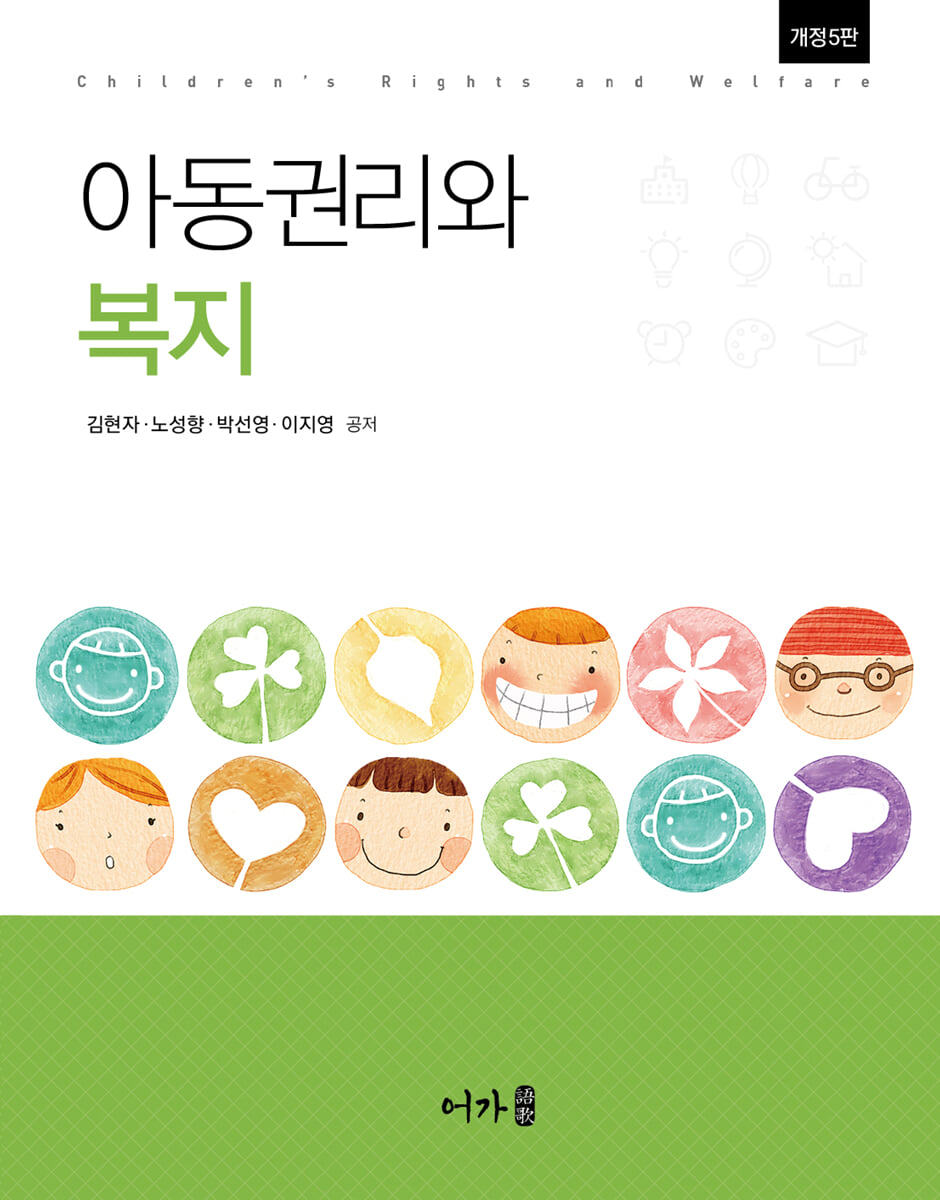
Children's Rights and Welfare
 |
Description
Book Introduction
The fifth revised edition of 『Children's Rights and Welfare』 reflects the latest developments in children's rights and welfare to the greatest extent possible, and we have also endeavored to incorporate the valuable opinions of those who have lectured on the original book.
index
Chapter 1 Children's Rights
1.
The characteristics of children's rights and the development of children's rights thought
1) Natural law theory
2) Geneva Declaration
3) UN Declaration of the Rights of the Child
4) UN Convention on the Rights of the Child
2.
UN Convention on the Rights of the Child
1) The birth and composition of the UN Convention on the Rights of the Child
2) Fundamental rights of the child and the basic principles of the Convention
3) Key contents of the UN Convention on the Rights of the Child
4) Submission of a State Party's implementation report on the UN Convention on the Rights of the Child
5) Level of implementation of the recommendations in Korea's country report to the UN Committee on the Rights of the Child
3.
The development of modern children's rights thought in Korea
1) 〈Chapter 3 of the Convention on the Rights of the Child〉
2) Children's Charter
3) Youth Charter
4.
Government policy approach to children's rights
1) First Basic Plan for Children's Policy (2015-2019)
2) 2nd Basic Plan for Children's Policy (2020-2024)
3) Establishment of the Committee on the Rights of the Child
4) Support for the promotion of children's rights
5) Announcement of the Charter of the Rights of the Child
6) Recent trends
Chapter 2: The Concept of Child Welfare
1.
Concept of child
1) Definition of a child
2) Changes in children's views
3) Modern view of children
2.
The concept of child welfare
3.
The significance of child welfare
1) Environmental changes and child welfare
2) Changes in values and child welfare
Chapter 3: The Development of Child Welfare
1.
The history of child welfare development in Korea
1) Child welfare in traditional society
2) Modern child welfare
3) Modern child welfare
2.
Child welfare in foreign countries
1) England
2) United States
3) Sweden
4) Japan
Chapter 4: Prerequisites for Child Welfare
1.
Target of child welfare
1) Children subject to protection
2) General children
2.
Basic Premise of Child Welfare
1) Parents and family
2) Economic stability
3) Education
4) Health
5) Play and leisure
6) Safety and Protection
3.
Principles of Child Welfare
1) Principle of rights and responsibilities
2) Principles of universality and selectivity
3) Principles of developmental function
4) Principle of inclusivity
5) Principle of Professionalism
Chapter 5 Child Welfare Policy and Related Laws
1.
Child welfare policy
1) Concept of child welfare policy
2) Trends in child welfare policies
3) 2nd Basic Plan for Children's Policy
2.
Child welfare related laws
1) Types of laws related to child welfare
2) Composition of laws related to child welfare
3) Child Welfare Act
Chapter 6 Childcare Services
1.
The concept and necessity of childcare
1) Concept of childcare
2) The need for childcare
2.
History of childcare
1) Childcare system before 1990
2) Operation of childcare facilities under the Infant and Toddler Care Act (1991-2003)
3) Introduction of evaluation and certification led by the Ministry of Gender Equality and Family (2004-2007)
4) Childcare led by the Ministry of Health and Welfare (2008-June 2024)
5) Ministry of Education Reserve Integration (2024-present)
3.
Status of childcare services
1) Childcare statistics
4. Challenges of childcare services
Chapter 7 Child Abuse Protection Services
1.
The concept of child abuse
2.
Characteristics and Current Status of Child Abuse
1) Characteristics of child abuse
2) Current status of child abuse
3.
Child Protection Services for Child Abuse
1) Child protection services
2) On-site investigation and case assessment
3) Case intervention
4) Case closure and follow-up management
4.
Welfare Practice Directions for Preventing Child Abuse
1) Establishing a system for early detection and intervention of child abuse.
2) Establishing a legal and institutional system to ensure the safe growth of abused children.
Chapter 8 Foster Care, Adoption, and Facility Protection Services
1.
Foster care services
1) Concept and characteristics of foster care services
2) Types of foster care services
3) Composition of foster care services
4) Selection criteria and considerations for foster families
2.
Adoption Services
1) Concept and characteristics of adoption services
2) Types of adoption services
3) Structure of adoption services
4) Current status of adoption services
5) Current status and improvements to adoption service policies
3.
Facility protection services
1) Concept and characteristics of facility protection services
2) Purpose and principles of facility protection services
3) Types of facility protection services
4) Status of facility protection services
5) Development status of children in institutional care
6) Facility protection service utilization system
7) Challenges of facility protection services
Chapter 9 After-School Child Welfare Services
1.
Concept and Types of After-School Child Welfare Services
1) Absence of adult supervision: self-protection, telephone cooperation line
2) Adult remote supervision: Self-protection under parental remote supervision, neighborhood safety check program
3) Direct adult care after school hours: short-term leisure programs, after-school programs, academies, youth group activities
4) Direct adult guidance: protection by relatives, home care, after-school care
2.
The Need for After-School Child Guidance Services
1) Social necessity
2) Child developmental needs
3.
Current status of elementary after-school care classes
1) Background and history of the introduction of elementary after-school care classes
2) Current status of elementary school after-school care classroom operation
4.
Challenges of After-School Child Guidance Services
1) Providing high-quality after-school childcare services.
2) Securing dedicated personnel for excellent elementary care classrooms
3) Establishment of safe care classrooms
4) Establishing a care service linkage system tailored to regional characteristics
Chapter 10 Welfare Services for Children in Poverty
1.
The concept of poverty
1) Absolute poverty
2) Relative poverty
3) Subjective poverty
2.
The concept of children in poverty
3.
Current issues facing children in poverty
1) Developmental difficulties
2) Inequality of growth
3) Parental stress
4.
Welfare services for children in poverty
1) Current status of welfare services for children in poverty
2) Changes in welfare services for children in poverty
Chapter 11 Welfare Services for Children with Disabilities
1.
Concept of disability
2.
The concept of children with disabilities
3.
Current status of children with disabilities
1) Status of disabled infants and toddlers by age
2) Status of children with disabilities by type of disability
3) Status of children with disabilities by degree of disability
4) Status of daycare center use by children with disabilities
5) Status of special education
4.
Welfare services for children with disabilities
1) Survey on the status of children with disabilities
2) Welfare services for children with disabilities
3) Expertise of personnel providing welfare services for children with disabilities
Chapter 12 Child Welfare Services for Diverse Families
1.
Emergence of different family types
2.
single-parent families
1) Concept
2) Divorce status
3) Current status of single-parent families
4) Single-parent families and child welfare
3.
grandparents' family
1) Concept
2) Current status of the grandparent family
3) Grandparent-grandchild families and child welfare
4.
multicultural family
1) Concept
2) Current status of multicultural families
3) Multicultural families and child welfare
5.
North Korean defector family
1) Concept
2) Current status of North Korean defector families
3) Welfare of North Korean defectors' families and children
References |
1.
The characteristics of children's rights and the development of children's rights thought
1) Natural law theory
2) Geneva Declaration
3) UN Declaration of the Rights of the Child
4) UN Convention on the Rights of the Child
2.
UN Convention on the Rights of the Child
1) The birth and composition of the UN Convention on the Rights of the Child
2) Fundamental rights of the child and the basic principles of the Convention
3) Key contents of the UN Convention on the Rights of the Child
4) Submission of a State Party's implementation report on the UN Convention on the Rights of the Child
5) Level of implementation of the recommendations in Korea's country report to the UN Committee on the Rights of the Child
3.
The development of modern children's rights thought in Korea
1) 〈Chapter 3 of the Convention on the Rights of the Child〉
2) Children's Charter
3) Youth Charter
4.
Government policy approach to children's rights
1) First Basic Plan for Children's Policy (2015-2019)
2) 2nd Basic Plan for Children's Policy (2020-2024)
3) Establishment of the Committee on the Rights of the Child
4) Support for the promotion of children's rights
5) Announcement of the Charter of the Rights of the Child
6) Recent trends
Chapter 2: The Concept of Child Welfare
1.
Concept of child
1) Definition of a child
2) Changes in children's views
3) Modern view of children
2.
The concept of child welfare
3.
The significance of child welfare
1) Environmental changes and child welfare
2) Changes in values and child welfare
Chapter 3: The Development of Child Welfare
1.
The history of child welfare development in Korea
1) Child welfare in traditional society
2) Modern child welfare
3) Modern child welfare
2.
Child welfare in foreign countries
1) England
2) United States
3) Sweden
4) Japan
Chapter 4: Prerequisites for Child Welfare
1.
Target of child welfare
1) Children subject to protection
2) General children
2.
Basic Premise of Child Welfare
1) Parents and family
2) Economic stability
3) Education
4) Health
5) Play and leisure
6) Safety and Protection
3.
Principles of Child Welfare
1) Principle of rights and responsibilities
2) Principles of universality and selectivity
3) Principles of developmental function
4) Principle of inclusivity
5) Principle of Professionalism
Chapter 5 Child Welfare Policy and Related Laws
1.
Child welfare policy
1) Concept of child welfare policy
2) Trends in child welfare policies
3) 2nd Basic Plan for Children's Policy
2.
Child welfare related laws
1) Types of laws related to child welfare
2) Composition of laws related to child welfare
3) Child Welfare Act
Chapter 6 Childcare Services
1.
The concept and necessity of childcare
1) Concept of childcare
2) The need for childcare
2.
History of childcare
1) Childcare system before 1990
2) Operation of childcare facilities under the Infant and Toddler Care Act (1991-2003)
3) Introduction of evaluation and certification led by the Ministry of Gender Equality and Family (2004-2007)
4) Childcare led by the Ministry of Health and Welfare (2008-June 2024)
5) Ministry of Education Reserve Integration (2024-present)
3.
Status of childcare services
1) Childcare statistics
4. Challenges of childcare services
Chapter 7 Child Abuse Protection Services
1.
The concept of child abuse
2.
Characteristics and Current Status of Child Abuse
1) Characteristics of child abuse
2) Current status of child abuse
3.
Child Protection Services for Child Abuse
1) Child protection services
2) On-site investigation and case assessment
3) Case intervention
4) Case closure and follow-up management
4.
Welfare Practice Directions for Preventing Child Abuse
1) Establishing a system for early detection and intervention of child abuse.
2) Establishing a legal and institutional system to ensure the safe growth of abused children.
Chapter 8 Foster Care, Adoption, and Facility Protection Services
1.
Foster care services
1) Concept and characteristics of foster care services
2) Types of foster care services
3) Composition of foster care services
4) Selection criteria and considerations for foster families
2.
Adoption Services
1) Concept and characteristics of adoption services
2) Types of adoption services
3) Structure of adoption services
4) Current status of adoption services
5) Current status and improvements to adoption service policies
3.
Facility protection services
1) Concept and characteristics of facility protection services
2) Purpose and principles of facility protection services
3) Types of facility protection services
4) Status of facility protection services
5) Development status of children in institutional care
6) Facility protection service utilization system
7) Challenges of facility protection services
Chapter 9 After-School Child Welfare Services
1.
Concept and Types of After-School Child Welfare Services
1) Absence of adult supervision: self-protection, telephone cooperation line
2) Adult remote supervision: Self-protection under parental remote supervision, neighborhood safety check program
3) Direct adult care after school hours: short-term leisure programs, after-school programs, academies, youth group activities
4) Direct adult guidance: protection by relatives, home care, after-school care
2.
The Need for After-School Child Guidance Services
1) Social necessity
2) Child developmental needs
3.
Current status of elementary after-school care classes
1) Background and history of the introduction of elementary after-school care classes
2) Current status of elementary school after-school care classroom operation
4.
Challenges of After-School Child Guidance Services
1) Providing high-quality after-school childcare services.
2) Securing dedicated personnel for excellent elementary care classrooms
3) Establishment of safe care classrooms
4) Establishing a care service linkage system tailored to regional characteristics
Chapter 10 Welfare Services for Children in Poverty
1.
The concept of poverty
1) Absolute poverty
2) Relative poverty
3) Subjective poverty
2.
The concept of children in poverty
3.
Current issues facing children in poverty
1) Developmental difficulties
2) Inequality of growth
3) Parental stress
4.
Welfare services for children in poverty
1) Current status of welfare services for children in poverty
2) Changes in welfare services for children in poverty
Chapter 11 Welfare Services for Children with Disabilities
1.
Concept of disability
2.
The concept of children with disabilities
3.
Current status of children with disabilities
1) Status of disabled infants and toddlers by age
2) Status of children with disabilities by type of disability
3) Status of children with disabilities by degree of disability
4) Status of daycare center use by children with disabilities
5) Status of special education
4.
Welfare services for children with disabilities
1) Survey on the status of children with disabilities
2) Welfare services for children with disabilities
3) Expertise of personnel providing welfare services for children with disabilities
Chapter 12 Child Welfare Services for Diverse Families
1.
Emergence of different family types
2.
single-parent families
1) Concept
2) Divorce status
3) Current status of single-parent families
4) Single-parent families and child welfare
3.
grandparents' family
1) Concept
2) Current status of the grandparent family
3) Grandparent-grandchild families and child welfare
4.
multicultural family
1) Concept
2) Current status of multicultural families
3) Multicultural families and child welfare
5.
North Korean defector family
1) Concept
2) Current status of North Korean defector families
3) Welfare of North Korean defectors' families and children
References |
Publisher's Review
In modern society, optimal physical environments that pursue convenience are constantly being provided.
However, we are simultaneously faced with a serious national crisis of low birth rates and an aging population due to changes in values and changes in the natural and social environment.
What should all sectors of education, politics, economy, and society be working together to address and look toward for the sake of children living in these times?
What we must live by and not let go of in any situation is the definition and belief of happiness.
To achieve this, children need a safe and comfortable home and social environment where they can grow up physically and emotionally healthy.
It can be said that this is nothing other than the realization and guarantee of children's rights.
To this end, our country is currently implementing government-level child welfare policies through various administrative departments, including the Ministry of Health and Welfare, the Ministry of Education, and the Ministry of Gender Equality and Family. It is also fortunate that educational institutions are including children's rights and welfare as required subjects in their departments.
Accordingly, the authors felt a responsibility to ensure that departments that train early childhood teachers and social workers think about and have a sense of mission for a "country where children are happy," and they tried to structure the curriculum so that students could understand children's rights and welfare as easily as possible.
And I wrote it with the hope that it would lead to progressive efforts and changes in children's rights and welfare in the field.
The 2025 revised fifth edition reflects the latest developments in children's rights and welfare to the greatest extent possible, and we have also endeavored to incorporate the valuable opinions of those who have lectured on the original book.
I hope that this country will become a place where genuine welfare is achieved, and that students who learn about child welfare through textbooks, professors who teach, and those in the field will learn and practice true and happy lives for students who walk the path of learning.
To this end, all of the writing staff will continue to revise and improve.
However, we are simultaneously faced with a serious national crisis of low birth rates and an aging population due to changes in values and changes in the natural and social environment.
What should all sectors of education, politics, economy, and society be working together to address and look toward for the sake of children living in these times?
What we must live by and not let go of in any situation is the definition and belief of happiness.
To achieve this, children need a safe and comfortable home and social environment where they can grow up physically and emotionally healthy.
It can be said that this is nothing other than the realization and guarantee of children's rights.
To this end, our country is currently implementing government-level child welfare policies through various administrative departments, including the Ministry of Health and Welfare, the Ministry of Education, and the Ministry of Gender Equality and Family. It is also fortunate that educational institutions are including children's rights and welfare as required subjects in their departments.
Accordingly, the authors felt a responsibility to ensure that departments that train early childhood teachers and social workers think about and have a sense of mission for a "country where children are happy," and they tried to structure the curriculum so that students could understand children's rights and welfare as easily as possible.
And I wrote it with the hope that it would lead to progressive efforts and changes in children's rights and welfare in the field.
The 2025 revised fifth edition reflects the latest developments in children's rights and welfare to the greatest extent possible, and we have also endeavored to incorporate the valuable opinions of those who have lectured on the original book.
I hope that this country will become a place where genuine welfare is achieved, and that students who learn about child welfare through textbooks, professors who teach, and those in the field will learn and practice true and happy lives for students who walk the path of learning.
To this end, all of the writing staff will continue to revise and improve.
GOODS SPECIFICS
- Date of issue: August 1, 2025
- Page count, weight, size: 328 pages | 188*240mm
- ISBN13: 9791170751816
- ISBN10: 1170751814
You may also like
카테고리
korean


korean

![GQ KOREA Mark (Monthly): December [2025]](http://librairie.coreenne.fr/cdn/shop/files/8ef265dbbfbf186523ed75ba7319009d.jpg?v=1765340328&width=3840)


