

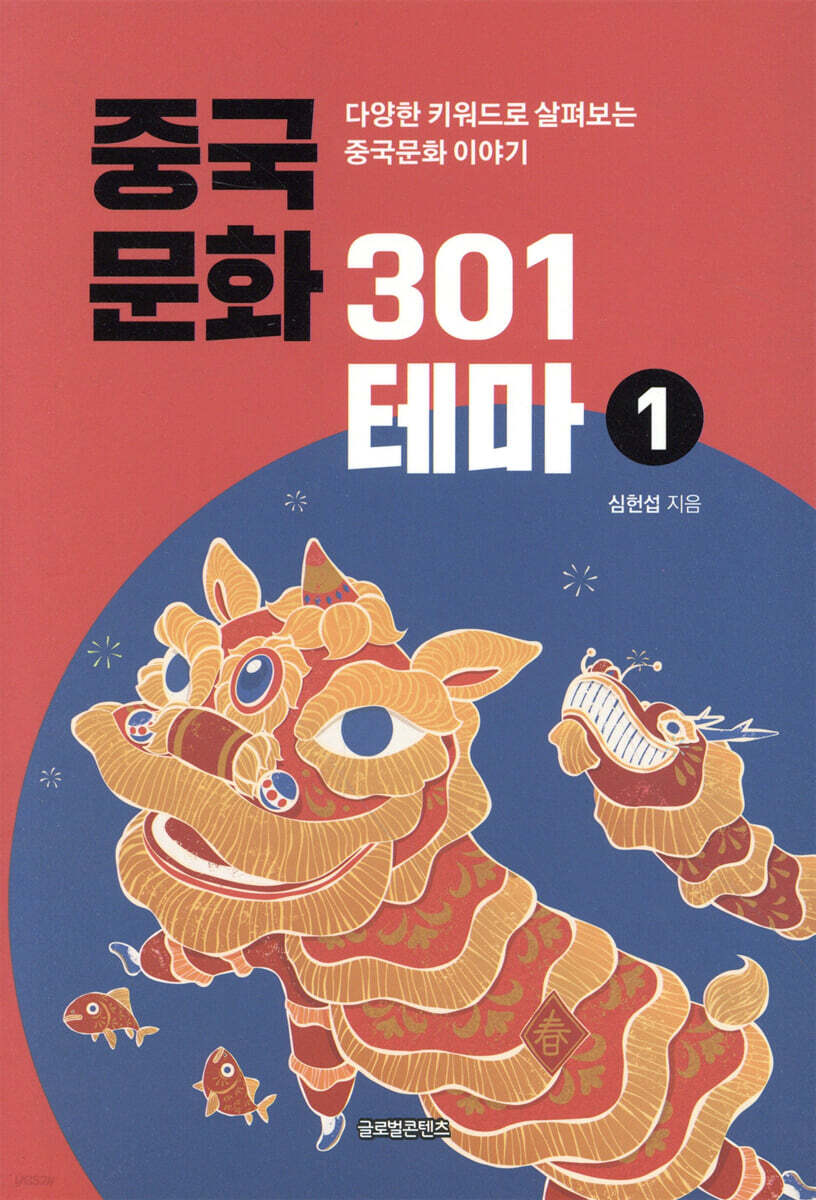
Chinese Culture 301 Theme 1
 |
Description
Book Introduction
Our neighbor, China, with whom we have been together for a long time and with whom we will continue to be together for a long time!
An Introduction to Chinese Culture Through 301 Themes
Our country and China have been neighbors for a long time, sometimes clashing fiercely, and sometimes growing together.
Despite experiencing many situations throughout their history, the anti-Chinese and anti-Korean sentiments that are prevalent in both countries today are not easily subsiding.
From a psychological perspective, it is said that the emotion of 'disgust' can be alleviated through 'understanding'.
“China is a neighbor with whom we must stand shoulder to shoulder and stay together forever.
As the author says, “In order to overcome China beyond being anti-China, we must first understand China,” this book was created with the hope that by understanding China, the relationship between the two countries will develop in a positive direction.
『Chinese Culture 301 Theme 1』 is divided into three chapters and covers themes 1 to 131.
Chapter 1, "Symbols, Politics, Diplomacy, and Society," serves as a first step toward understanding China, examining its national symbols, unique political system, diplomatic issues, and internal social problems.
Chapter 2, "Economy and Business," then explores the pros and cons of rapid economic development, the Internet mobile economy, and Chinese merchants.
Finally, Chapter 3, 'History and People,' briefly reviews the long history that led to the birth of modern-day China and introduces various figures who existed within it.
The story of the birth, division, unification, and turbulent times of successive dynasties, leading up to the founding of the People's Republic of China, is told in an interesting way, intertwined with the people involved.
It was designed to enhance the reader's understanding by appropriately utilizing various visual materials and additional explanations.
The appendix includes a chronology of Chinese history and idioms.
China is a country with the world's fourth largest land area.
There are numerous ethnic groups living together in it, and it borders 14 countries.
Due to these geographical and environmental reasons, China has a diverse and unique culture, and it is very difficult to examine five thousand years of history in one day.
The author, who lived in China for 10 years, designed a book that would be easy for anyone to understand Chinese culture.
By incorporating his own experiences and not going into overly specialized areas, he has compiled a vast story into two volumes, comprehensively and balancedly covering essential information.
Moreover, the structure that can be seen at a glance allows even those who have found China difficult to enjoy it comfortably.
As you follow each of the 301 themes, you will find yourself immersed in Chinese culture before you know it.
We expect this book to be a valuable comprehensive textbook for readers interested in and wanting to learn about China, as well as for those needing to quickly understand Chinese culture for business purposes.
An Introduction to Chinese Culture Through 301 Themes
Our country and China have been neighbors for a long time, sometimes clashing fiercely, and sometimes growing together.
Despite experiencing many situations throughout their history, the anti-Chinese and anti-Korean sentiments that are prevalent in both countries today are not easily subsiding.
From a psychological perspective, it is said that the emotion of 'disgust' can be alleviated through 'understanding'.
“China is a neighbor with whom we must stand shoulder to shoulder and stay together forever.
As the author says, “In order to overcome China beyond being anti-China, we must first understand China,” this book was created with the hope that by understanding China, the relationship between the two countries will develop in a positive direction.
『Chinese Culture 301 Theme 1』 is divided into three chapters and covers themes 1 to 131.
Chapter 1, "Symbols, Politics, Diplomacy, and Society," serves as a first step toward understanding China, examining its national symbols, unique political system, diplomatic issues, and internal social problems.
Chapter 2, "Economy and Business," then explores the pros and cons of rapid economic development, the Internet mobile economy, and Chinese merchants.
Finally, Chapter 3, 'History and People,' briefly reviews the long history that led to the birth of modern-day China and introduces various figures who existed within it.
The story of the birth, division, unification, and turbulent times of successive dynasties, leading up to the founding of the People's Republic of China, is told in an interesting way, intertwined with the people involved.
It was designed to enhance the reader's understanding by appropriately utilizing various visual materials and additional explanations.
The appendix includes a chronology of Chinese history and idioms.
China is a country with the world's fourth largest land area.
There are numerous ethnic groups living together in it, and it borders 14 countries.
Due to these geographical and environmental reasons, China has a diverse and unique culture, and it is very difficult to examine five thousand years of history in one day.
The author, who lived in China for 10 years, designed a book that would be easy for anyone to understand Chinese culture.
By incorporating his own experiences and not going into overly specialized areas, he has compiled a vast story into two volumes, comprehensively and balancedly covering essential information.
Moreover, the structure that can be seen at a glance allows even those who have found China difficult to enjoy it comfortably.
As you follow each of the 301 themes, you will find yourself immersed in Chinese culture before you know it.
We expect this book to be a valuable comprehensive textbook for readers interested in and wanting to learn about China, as well as for those needing to quickly understand Chinese culture for business purposes.
- You can preview some of the book's contents.
Preview
index
preface
Ⅰ.
Symbols and Politics, Diplomacy, and Society
1_ Symbol
001 Country Overview
002 Territory
003 Ethnicity and Population
004 National name, national flag, national emblem
005 Country
006 National Bird and Chrysanthemum
2_ Politics
007 History of the Chinese Communist Party
008 Composition of the Chinese Communist Party
009 National People's Congress
010 Chinese People's Political Consultative Conference
011 State Council
012 Courts and Prosecutors' Office
013 Chinese People's Liberation Army
014 Administrative divisions
015 Surname, First Name, and Abbreviation
3_ Diplomacy
016 Border Dispute
017 Cross-Strait Relations
018 Hong Kong and Hong Kongers
019 Establishment of diplomatic relations and exchanges between Korea and China
020 Korean Wave
021 One-on-one
4_ Society
022 Population Policy
023 Household registration system
024 Regional Dialects
025 Minority
026 Korean-Chinese
027 Status of Chinese Residents
028 Education System and Prestigious Universities
029 Media
030 The emergence of new media
Ⅱ.
Economy and Business
1_ Development of the Chinese economy
031 History of the Chinese Economy
032 Current Status of Chinese Economic Development
033 Western Development
034 Regional Development Strategy
035 Made in China 2025
036 Land Policy and Real Estate
037 Stock Market
038 New status
039 Chinese currency
040 Internationalization of the Renminbi and Digital Currency
2_ The shadow of economic development
041 Migrant Workers
042 The agricultural and livestock problem
043 Environmental Issues
044 Plates and wild vegetables
3_ Internet and Mobile Economy
045 E-commerce
046 Gwanggonjeol
047 Manghong
048 Mobile Easy Payment
049 Sharing Economy
050 BAT
4_ Chinese merchant
051 Traditional merchant group
052 Hoseolam
053 Lee Ga-seong
054 Mount
Ⅲ.
History and People
1_ The founding of China
055 The Three Sovereigns and Five Emperors
056 The era of Ha Sang-ju
057 Jiang Taigong and the Duke of Zhou
058 Beautiful and Beautiful Color
059 Spring and Autumn Period and Warring States Period
060 The Hundred Schools of Thought
061 The Life and Thought of Confucius
062 The Four Books and Five Classics
063 Unification of Qin and Qin Shi Huang
064 Breast and Xiang Yu
065 The Three Great Villains
066 Western Han and Eastern Han
067 The Birth of the Silk Road
068 Sima Qian's Records of the Grand Historian
2_ Division and Unification
069 Battle of Red Cliffs and the Three Kingdoms Period
070 Guan Yu
071 Famous Horses in History
072 Zhuge Liang and Sima Yi
073 Wei, Jin, Southern and Northern Dynasties: Northern Dynasties
074 Wei, Jin, Southern and Northern Dynasties: Southern Dynasties
075 Unification of the Sui Dynasty and the Goguryeo Expedition
076 The founding of the party and the constitution
077 Princess Munseong and Songchan Gampo
078 Empress Wu Zetian
079 The Rebellion of Emperor Xuanzong of Tang and Anshi
080 Four Beauties
081 The Three Great Traitors
3_ Into the arms of China
082 The chaos of the Five Dynasties and Ten Kingdoms
083 The Rise and Fall of Song
084 Wang Anshi and Sima Guang
085 The Hero of the People
086 The southward movement of nomadic peoples and the fall of the Northern Song Dynasty
087 Akbi and Jinhoe
088 Four Great Inventions
The Founding and Fall of the 089 Won
090 Marco Polo and the Travels
091 Founding and Zhu Yuanzhang
092 Emperor Yongle's Achievements
093 The Great Expedition of Purification
094 Civil Disaster and Civil Disaster
095 The Rebellion of Ijaseong and the Fall of the Ming Dynasty
096 Zheng Chenggong's Restoration of Taiwan
097 The Founding of the Qing Dynasty and Entry into Beijing
098 The Third Rebellion
099 Kang Geon-seong
4_ Turbulent times
100 Opium Wars
101 Taiping Heavenly Kingdom
102 Self-Strengthening Movement
103 Sino-Japanese War (First Sino-Japanese War)
104 Baekil Yushin (Martial Arts Reform)
105 Boxer Rebellion
106 Empress Dowager Cixi
107 The Last Emperor
108 Xinhai Revolution
109. Sun Yat-sen
110 The Three Song Sisters
111 Yuan Shikai and the Warlord Era
112 May 4th Movement
113 The founding of the Communist Party, the Red Army, and the Long March
114 Joint venture between the Communist Party and the Kuomintang
115 Zhang Xueliang and the Xi'an Incident
116 Sino-Japanese War
117 Chiang Kai-shek
118 History of Taiwan
5_ People's Republic of China
119 Chinese Civil War and the Establishment of the People's Republic of China
120 Mao Zedong
121 Great Leap Forward
122 Cultural Revolution
123 US-China diplomatic relations
124 Zhou Enlai
Purge of the Gang of Four
126 Reform and Opening
127 Deng Xiaoping
128 Tiananmen Square Incident
129 Jiang Zemin and the Three Represents Theory
130 Hogeumdo and the Scientific Development Center
131 Xi Jinping and Socialism with Chinese Characteristics in the New Era
supplement
1.
Chinese historical chronology
2.
Idiom
References
Ⅰ.
Symbols and Politics, Diplomacy, and Society
1_ Symbol
001 Country Overview
002 Territory
003 Ethnicity and Population
004 National name, national flag, national emblem
005 Country
006 National Bird and Chrysanthemum
2_ Politics
007 History of the Chinese Communist Party
008 Composition of the Chinese Communist Party
009 National People's Congress
010 Chinese People's Political Consultative Conference
011 State Council
012 Courts and Prosecutors' Office
013 Chinese People's Liberation Army
014 Administrative divisions
015 Surname, First Name, and Abbreviation
3_ Diplomacy
016 Border Dispute
017 Cross-Strait Relations
018 Hong Kong and Hong Kongers
019 Establishment of diplomatic relations and exchanges between Korea and China
020 Korean Wave
021 One-on-one
4_ Society
022 Population Policy
023 Household registration system
024 Regional Dialects
025 Minority
026 Korean-Chinese
027 Status of Chinese Residents
028 Education System and Prestigious Universities
029 Media
030 The emergence of new media
Ⅱ.
Economy and Business
1_ Development of the Chinese economy
031 History of the Chinese Economy
032 Current Status of Chinese Economic Development
033 Western Development
034 Regional Development Strategy
035 Made in China 2025
036 Land Policy and Real Estate
037 Stock Market
038 New status
039 Chinese currency
040 Internationalization of the Renminbi and Digital Currency
2_ The shadow of economic development
041 Migrant Workers
042 The agricultural and livestock problem
043 Environmental Issues
044 Plates and wild vegetables
3_ Internet and Mobile Economy
045 E-commerce
046 Gwanggonjeol
047 Manghong
048 Mobile Easy Payment
049 Sharing Economy
050 BAT
4_ Chinese merchant
051 Traditional merchant group
052 Hoseolam
053 Lee Ga-seong
054 Mount
Ⅲ.
History and People
1_ The founding of China
055 The Three Sovereigns and Five Emperors
056 The era of Ha Sang-ju
057 Jiang Taigong and the Duke of Zhou
058 Beautiful and Beautiful Color
059 Spring and Autumn Period and Warring States Period
060 The Hundred Schools of Thought
061 The Life and Thought of Confucius
062 The Four Books and Five Classics
063 Unification of Qin and Qin Shi Huang
064 Breast and Xiang Yu
065 The Three Great Villains
066 Western Han and Eastern Han
067 The Birth of the Silk Road
068 Sima Qian's Records of the Grand Historian
2_ Division and Unification
069 Battle of Red Cliffs and the Three Kingdoms Period
070 Guan Yu
071 Famous Horses in History
072 Zhuge Liang and Sima Yi
073 Wei, Jin, Southern and Northern Dynasties: Northern Dynasties
074 Wei, Jin, Southern and Northern Dynasties: Southern Dynasties
075 Unification of the Sui Dynasty and the Goguryeo Expedition
076 The founding of the party and the constitution
077 Princess Munseong and Songchan Gampo
078 Empress Wu Zetian
079 The Rebellion of Emperor Xuanzong of Tang and Anshi
080 Four Beauties
081 The Three Great Traitors
3_ Into the arms of China
082 The chaos of the Five Dynasties and Ten Kingdoms
083 The Rise and Fall of Song
084 Wang Anshi and Sima Guang
085 The Hero of the People
086 The southward movement of nomadic peoples and the fall of the Northern Song Dynasty
087 Akbi and Jinhoe
088 Four Great Inventions
The Founding and Fall of the 089 Won
090 Marco Polo and the Travels
091 Founding and Zhu Yuanzhang
092 Emperor Yongle's Achievements
093 The Great Expedition of Purification
094 Civil Disaster and Civil Disaster
095 The Rebellion of Ijaseong and the Fall of the Ming Dynasty
096 Zheng Chenggong's Restoration of Taiwan
097 The Founding of the Qing Dynasty and Entry into Beijing
098 The Third Rebellion
099 Kang Geon-seong
4_ Turbulent times
100 Opium Wars
101 Taiping Heavenly Kingdom
102 Self-Strengthening Movement
103 Sino-Japanese War (First Sino-Japanese War)
104 Baekil Yushin (Martial Arts Reform)
105 Boxer Rebellion
106 Empress Dowager Cixi
107 The Last Emperor
108 Xinhai Revolution
109. Sun Yat-sen
110 The Three Song Sisters
111 Yuan Shikai and the Warlord Era
112 May 4th Movement
113 The founding of the Communist Party, the Red Army, and the Long March
114 Joint venture between the Communist Party and the Kuomintang
115 Zhang Xueliang and the Xi'an Incident
116 Sino-Japanese War
117 Chiang Kai-shek
118 History of Taiwan
5_ People's Republic of China
119 Chinese Civil War and the Establishment of the People's Republic of China
120 Mao Zedong
121 Great Leap Forward
122 Cultural Revolution
123 US-China diplomatic relations
124 Zhou Enlai
Purge of the Gang of Four
126 Reform and Opening
127 Deng Xiaoping
128 Tiananmen Square Incident
129 Jiang Zemin and the Three Represents Theory
130 Hogeumdo and the Scientific Development Center
131 Xi Jinping and Socialism with Chinese Characteristics in the New Era
supplement
1.
Chinese historical chronology
2.
Idiom
References
GOODS SPECIFICS
- Date of issue: April 30, 2024
- Page count, weight, size: 396 pages | 690g | 152*224*25mm
- ISBN13: 9791158524081
- ISBN10: 1158524080
You may also like
카테고리
korean


korean

![GQ KOREA Mark (Monthly): December [2025]](http://librairie.coreenne.fr/cdn/shop/files/8ef265dbbfbf186523ed75ba7319009d.jpg?v=1765340328&width=3840)


