

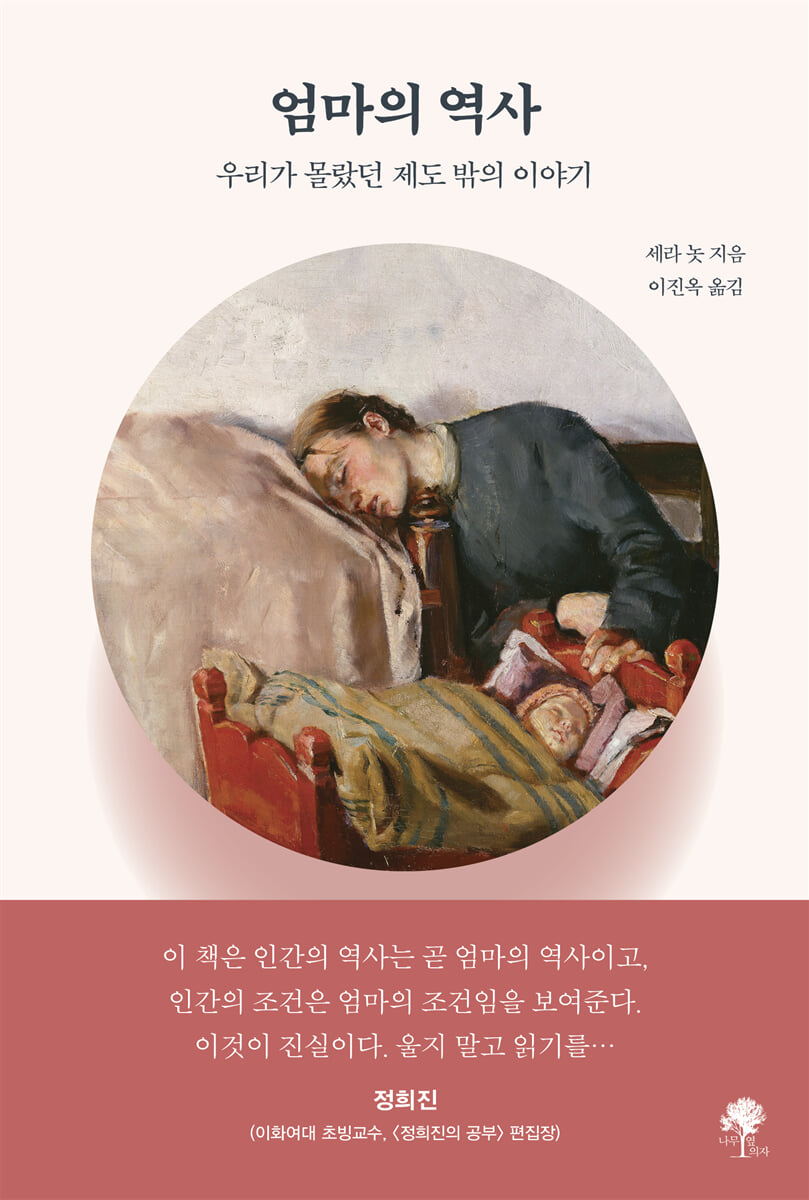
Mom's History
 |
Description
Book Introduction
The Evolution of Motherhood: A Working Mom Historian's Account
A striking and moving portrait of the vast and complex experience of motherhood.
This book says that human history is the history of mothers.
The human condition shows that it is the mother's condition.
This is the truth.
Don't cry and read...
Jeong Hee-jin (Visiting Professor at Ewha Womans University, Editor-in-Chief of [Jeong Hee-jin's Study])
What did being a mother look like back then?
An intimate and original study that revives the lost stories of ordinary women.
This book begins with the question, "What did being a mother look like in the past?"
For centuries, historians have written extensively about wars, politics, and revolutions, but they have neglected the everyday history of raising children.
The experiences associated with becoming a mother have been lost or forgotten.
The author, a history professor at Indiana University and mother of two, explores fascinating sources—diaries, letters, short notes, lines from court records, and portraits—left behind by mothers of the past to vividly bring to life the lost stories of ordinary women.
From 17th-century North American mothers who bore an average of eighteen children to late 20th-century feminists debating whether to have children, the author creates a striking and moving portrait of the vast and complex maternal experience.
Beginning her research while pregnant with her second child, Knott attempts to combine history and essay by adding her own experiences to past anecdotes about pregnancy, childbirth, and childcare.
This new proposal for a history that is verb-oriented, anecdotal, and written in the first person offers an excellent methodology for approaching the maternal experience, free from the myth of objectivity in translation.
A striking and moving portrait of the vast and complex experience of motherhood.
This book says that human history is the history of mothers.
The human condition shows that it is the mother's condition.
This is the truth.
Don't cry and read...
Jeong Hee-jin (Visiting Professor at Ewha Womans University, Editor-in-Chief of [Jeong Hee-jin's Study])
What did being a mother look like back then?
An intimate and original study that revives the lost stories of ordinary women.
This book begins with the question, "What did being a mother look like in the past?"
For centuries, historians have written extensively about wars, politics, and revolutions, but they have neglected the everyday history of raising children.
The experiences associated with becoming a mother have been lost or forgotten.
The author, a history professor at Indiana University and mother of two, explores fascinating sources—diaries, letters, short notes, lines from court records, and portraits—left behind by mothers of the past to vividly bring to life the lost stories of ordinary women.
From 17th-century North American mothers who bore an average of eighteen children to late 20th-century feminists debating whether to have children, the author creates a striking and moving portrait of the vast and complex maternal experience.
Beginning her research while pregnant with her second child, Knott attempts to combine history and essay by adding her own experiences to past anecdotes about pregnancy, childbirth, and childcare.
This new proposal for a history that is verb-oriented, anecdotal, and written in the first person offers an excellent methodology for approaching the maternal experience, free from the myth of objectivity in translation.
- You can preview some of the book's contents.
Preview
index
prolog
1.
Becoming a Mom by the Numbers
2.
generation
3.
Find out if you're pregnant
4.
10 weeks, or 8 weeks later
5.
birth
6.
Rising apron
7.
The thing called childbirth
8.
Hello, baby
9.
Tears and anecdotes
10.
Postpartum care period
11.
damp cloth
12.
Interrupted time
13.
midnight
14.
full breast
15.
uncertainty or thought experiment
16.
Hospital prescriptions and suspicions
17.
Baby drop-off and pick-up
18.
paper flowers
19.
Oak laundry tub
20.
Yard baby, lap baby
21.
Navigating Time
At the end of that night
Acknowledgements
About the research method
annotation
Search
Translator's Note
1.
Becoming a Mom by the Numbers
2.
generation
3.
Find out if you're pregnant
4.
10 weeks, or 8 weeks later
5.
birth
6.
Rising apron
7.
The thing called childbirth
8.
Hello, baby
9.
Tears and anecdotes
10.
Postpartum care period
11.
damp cloth
12.
Interrupted time
13.
midnight
14.
full breast
15.
uncertainty or thought experiment
16.
Hospital prescriptions and suspicions
17.
Baby drop-off and pick-up
18.
paper flowers
19.
Oak laundry tub
20.
Yard baby, lap baby
21.
Navigating Time
At the end of that night
Acknowledgements
About the research method
annotation
Search
Translator's Note
Detailed image

Into the book
Perhaps the best way to explore what it was like to have children in the past is to set aside the grand narratives and focus on the fragments and anecdotes.
Perhaps the best way to explore what it was like to be a mother in the past is to build a grid of tiny scenes, tracing the many different related events.
Pregnancy, miscarriage, fetal movement, preparation for labor, childbirth.
Next, washing, feeding, sleeping, not sleeping, providing for needs, being disturbed, leaving, and coming to find.
All of this forms the very essence of the instinctive process, the very blood and guts of 'being with children'.
They are verbs.
As a verb, it is 'to become a mother'.
---From the "Prologue"
In other words, it is much more difficult to present a living mother as an enslaved woman, an indigenous woman, or a working-class woman with her own past.
Writing and reading were strictly forbidden among the slave classes, which means that we have very little information about them.
All Native American tribes transmitted their culture orally rather than writing it down and storing it in archives.
The working class, regardless of race or ethnicity, spent most of their waking hours simply trying to make ends meet.
But I will push through.
Without them, perspectives become misunderstood, diminished, and wrong.
--- p.31
What about the behavior of the post-1963 generation? Bonnie Pereira, a young lesbian in the 1970s in America, said she "wanted to be a mother" and had sex with men solely for that purpose.
Her contemporary, Michelle O'Neill, explained to the same researcher that she had conceived her son through artificial insemination, saying she "always loved children, especially babies."
Turkey-baster babies (a dropper-shaped tool used to scoop up the juices from a whole turkey roast, and then used to collect the semen inside a condom after sex for artificial insemination. - Translator's note), they were first called this.
Now, not only can sex be separated from procreation, but both sex and procreation have been liberated from heterosexual relationships.
--- p.47
To feel the inner tactile sensations of a child, we need the privilege of relative silence.
A woman on a South Carolina rice farm was typically around nineteen when she felt her first movements.
The season would have been mostly late spring or early summer.
On these plantations, pregnancy usually occurred in winter, when the hectic labor of harvest was replaced by the work of repairing roads and canals and milling wheat.
Perhaps the first movement this woman felt was as she straightened beside the wooden washtub, or perhaps as her hands coiled and tied the straw into a broad, round basket for winnowing rice, her fingers moving in the design of her Senegambian or Angolan ancestors.
Perhaps he sensed the movement while standing there, covering the rice seeds with his feet after they had been scattered in the furrows, or while chasing away the yellow and black rice-feeders, also called rice-eaters, that were about to migrate south in late summer when the rice was ripe and beginning to bow its head.
Or perhaps the baby's first movement responded to the ecstatic sounds of the sacred worship of slave religion, where call and response intersect and rice mortars are beaten with drums covered with animal skins.
--- p.82~83
In other times, the idea of motherhood gave individual women room for negotiation, even power.
A pregnant mistress was so angry at one of her apprentice's behavior that she took him to the Lord Mayor's Court in London.
Husbands who maintained patriarchal authority believed that they should accommodate their wives' reasonable whims.
A famous botanist was told by his pregnant wife that she wanted to smash a dozen eggs in his face—and he complied.
Strange stories have made morality flat.
In the 18th century, a husband, unable to buy lobster for his wife at Leadenhall Market, surprised her by bringing home one.
But later the child was born “red and bubbling.”
--- p.97
Telling anecdotes seems to me a particularly powerful way to move between capital-H history—slavery, the rise of industrialization, revolutionary ideologies—and the very ordinary issues of life with children.
Anecdotes provide a rare opportunity to interpret various scenes, references, and objects that illuminate what it means to be with a child.
Even if there is no continuous data, and the meager traces of records that remain usually seem to be of little importance or trivial.
Anecdotes are the only means by which we can continue to ask, 'What was it like?'
--- p.135
San Francisco, 1896.
Jeong Hing Tong is looking forward to a “red egg and ginger party” to celebrate one month since giving birth to her first child.
She was a Chinese immigrant from a town called Foshan, and was part of the first generation to come to America from Asia, following a long tradition of immigrants since the Gold Rush of 1848.
In Chinatown, such women are typically completely confined.
Once outside, I was ridiculed for my bound feet.
The plan for eggs and ginger, good luck and recovery, will be ruined by a massive earthquake anyway.
People will pour out into the streets.
With her baby in her arms, she will somehow make it to the Golden Gate Bridge in a horse-drawn cart and see the city engulfed in flames.
--- p.150
It can be argued that interruptions are indeed a common condition of most people's everyday experiences.
Interference is a condition of care.
Being interrupted is a common experience for anyone who primarily cares for someone else in a direct way, in a time that is not their own.
In a patriarchal time and place, the wife will take care of her husband.
In the early modern period, apprentices became masters.
A domestic slave is a slave owner.
The housekeeper is the employer.
Nurses are doctors and patients.
Secretaries are bosses.
--- p.185~186
From the late eighteenth century onwards, the blissful sensation of breastfeeding was newly and characteristically defined, moralized, expressed, felt, recalled, and recorded – that is, sentimentalized.
It appeals to emotions and is moralized.
Completing the duty of breastfeeding with pleasure will give you “the sweetest and most heart-fluttering joy” (William Buchan, bestseller Advice to Mothers).
Breastfeeding is “the best source of the most tender and loving kind of joy” (Maternal Solicitude, or, Lady's Manual, by American midwife Mary Watkins, 1809).
It was also felt as a “painful yet pleasurable sensation” (Cincinnati-born writer Ann Allen, 1858).
The passage, “I miss the mouth of my dear little daughter, who longed for my breast” (letter from the Duchess of Devonshire, 1784), while weaning her one-year-old child, reflects the passage of time.
--- p.232~233
Distinguishing the special role of friends from that of mothers, relatives, neighbors, and grandmothers made little sense in Onni Lee Logan's Alabama.
Her local and family world did not allow for separate gatherings of her own generation.
Among the many women she advised over her long career, the distinctiveness of "friends' suggestions" may have been most familiar to her racially mixed clientele of the 1970s and early 1980s.
By that time, the civil rights movement had made basic health care available to poor black communities, and those who benefited from Oni Lee's knowledge included young white women in the counterculture.
--- p.298
Navigating these periods of childhood—and for me, those brief periods, slow to live and fast to disappear—is largely a matter of managing and getting along, of living through each stage of life.
Caring for a baby is hard work.
Holding a baby often requires two hands.
Raising very young children is unlikely to lead to political upheaval, revolution, reform, or the creation of literature and art.
Perhaps they will later become activities that bring new insights, passions, priorities, or skills.
--- p.390
So I accept anecdotes as one of the valuable states of creating knowledge.
That is, it is produced by the present mother, available from scattered historical sources, and creates knowledge with a solid genealogy through historical writing.
Clearly there is tension between these three origins.
For example, the sense of interruption that characterizes so much contemporary parenting is neither universal nor transhistorical, yet has its own particular history.
Perhaps the best way to explore what it was like to be a mother in the past is to build a grid of tiny scenes, tracing the many different related events.
Pregnancy, miscarriage, fetal movement, preparation for labor, childbirth.
Next, washing, feeding, sleeping, not sleeping, providing for needs, being disturbed, leaving, and coming to find.
All of this forms the very essence of the instinctive process, the very blood and guts of 'being with children'.
They are verbs.
As a verb, it is 'to become a mother'.
---From the "Prologue"
In other words, it is much more difficult to present a living mother as an enslaved woman, an indigenous woman, or a working-class woman with her own past.
Writing and reading were strictly forbidden among the slave classes, which means that we have very little information about them.
All Native American tribes transmitted their culture orally rather than writing it down and storing it in archives.
The working class, regardless of race or ethnicity, spent most of their waking hours simply trying to make ends meet.
But I will push through.
Without them, perspectives become misunderstood, diminished, and wrong.
--- p.31
What about the behavior of the post-1963 generation? Bonnie Pereira, a young lesbian in the 1970s in America, said she "wanted to be a mother" and had sex with men solely for that purpose.
Her contemporary, Michelle O'Neill, explained to the same researcher that she had conceived her son through artificial insemination, saying she "always loved children, especially babies."
Turkey-baster babies (a dropper-shaped tool used to scoop up the juices from a whole turkey roast, and then used to collect the semen inside a condom after sex for artificial insemination. - Translator's note), they were first called this.
Now, not only can sex be separated from procreation, but both sex and procreation have been liberated from heterosexual relationships.
--- p.47
To feel the inner tactile sensations of a child, we need the privilege of relative silence.
A woman on a South Carolina rice farm was typically around nineteen when she felt her first movements.
The season would have been mostly late spring or early summer.
On these plantations, pregnancy usually occurred in winter, when the hectic labor of harvest was replaced by the work of repairing roads and canals and milling wheat.
Perhaps the first movement this woman felt was as she straightened beside the wooden washtub, or perhaps as her hands coiled and tied the straw into a broad, round basket for winnowing rice, her fingers moving in the design of her Senegambian or Angolan ancestors.
Perhaps he sensed the movement while standing there, covering the rice seeds with his feet after they had been scattered in the furrows, or while chasing away the yellow and black rice-feeders, also called rice-eaters, that were about to migrate south in late summer when the rice was ripe and beginning to bow its head.
Or perhaps the baby's first movement responded to the ecstatic sounds of the sacred worship of slave religion, where call and response intersect and rice mortars are beaten with drums covered with animal skins.
--- p.82~83
In other times, the idea of motherhood gave individual women room for negotiation, even power.
A pregnant mistress was so angry at one of her apprentice's behavior that she took him to the Lord Mayor's Court in London.
Husbands who maintained patriarchal authority believed that they should accommodate their wives' reasonable whims.
A famous botanist was told by his pregnant wife that she wanted to smash a dozen eggs in his face—and he complied.
Strange stories have made morality flat.
In the 18th century, a husband, unable to buy lobster for his wife at Leadenhall Market, surprised her by bringing home one.
But later the child was born “red and bubbling.”
--- p.97
Telling anecdotes seems to me a particularly powerful way to move between capital-H history—slavery, the rise of industrialization, revolutionary ideologies—and the very ordinary issues of life with children.
Anecdotes provide a rare opportunity to interpret various scenes, references, and objects that illuminate what it means to be with a child.
Even if there is no continuous data, and the meager traces of records that remain usually seem to be of little importance or trivial.
Anecdotes are the only means by which we can continue to ask, 'What was it like?'
--- p.135
San Francisco, 1896.
Jeong Hing Tong is looking forward to a “red egg and ginger party” to celebrate one month since giving birth to her first child.
She was a Chinese immigrant from a town called Foshan, and was part of the first generation to come to America from Asia, following a long tradition of immigrants since the Gold Rush of 1848.
In Chinatown, such women are typically completely confined.
Once outside, I was ridiculed for my bound feet.
The plan for eggs and ginger, good luck and recovery, will be ruined by a massive earthquake anyway.
People will pour out into the streets.
With her baby in her arms, she will somehow make it to the Golden Gate Bridge in a horse-drawn cart and see the city engulfed in flames.
--- p.150
It can be argued that interruptions are indeed a common condition of most people's everyday experiences.
Interference is a condition of care.
Being interrupted is a common experience for anyone who primarily cares for someone else in a direct way, in a time that is not their own.
In a patriarchal time and place, the wife will take care of her husband.
In the early modern period, apprentices became masters.
A domestic slave is a slave owner.
The housekeeper is the employer.
Nurses are doctors and patients.
Secretaries are bosses.
--- p.185~186
From the late eighteenth century onwards, the blissful sensation of breastfeeding was newly and characteristically defined, moralized, expressed, felt, recalled, and recorded – that is, sentimentalized.
It appeals to emotions and is moralized.
Completing the duty of breastfeeding with pleasure will give you “the sweetest and most heart-fluttering joy” (William Buchan, bestseller Advice to Mothers).
Breastfeeding is “the best source of the most tender and loving kind of joy” (Maternal Solicitude, or, Lady's Manual, by American midwife Mary Watkins, 1809).
It was also felt as a “painful yet pleasurable sensation” (Cincinnati-born writer Ann Allen, 1858).
The passage, “I miss the mouth of my dear little daughter, who longed for my breast” (letter from the Duchess of Devonshire, 1784), while weaning her one-year-old child, reflects the passage of time.
--- p.232~233
Distinguishing the special role of friends from that of mothers, relatives, neighbors, and grandmothers made little sense in Onni Lee Logan's Alabama.
Her local and family world did not allow for separate gatherings of her own generation.
Among the many women she advised over her long career, the distinctiveness of "friends' suggestions" may have been most familiar to her racially mixed clientele of the 1970s and early 1980s.
By that time, the civil rights movement had made basic health care available to poor black communities, and those who benefited from Oni Lee's knowledge included young white women in the counterculture.
--- p.298
Navigating these periods of childhood—and for me, those brief periods, slow to live and fast to disappear—is largely a matter of managing and getting along, of living through each stage of life.
Caring for a baby is hard work.
Holding a baby often requires two hands.
Raising very young children is unlikely to lead to political upheaval, revolution, reform, or the creation of literature and art.
Perhaps they will later become activities that bring new insights, passions, priorities, or skills.
--- p.390
So I accept anecdotes as one of the valuable states of creating knowledge.
That is, it is produced by the present mother, available from scattered historical sources, and creates knowledge with a solid genealogy through historical writing.
Clearly there is tension between these three origins.
For example, the sense of interruption that characterizes so much contemporary parenting is neither universal nor transhistorical, yet has its own particular history.
--- p.407
Publisher's Review
A book that perfectly blends history and essays!
Motherhood is as old as human history.
The author's purpose in writing this book is to examine how this most fundamental experience has changed over time and culture, and to capture the historical footsteps of mothers.
Nod creates his own genre to construct a new type of historical interpretation.
It shows a vivid, living and breathing past and present by piling up anecdotes that go back and forth between essays and history.
This writing is both expansive and intimate, sophisticated and lyrical.
As a historical work, this book illuminates mothers in Britain and North America from the 17th century to the late 20th century.
These include women from diverse social groups, from Cree and Ojibwe women to sharecroppers in the Appalachian Mountains, from enslaved people on rice plantations in South Carolina to tenement dwellers in New York City and London's East End.
She meticulously examines diaries, letters, court records, and medical manuals, and delves into the broader perspective of the intimate relationship between economic and social structures and motherhood.
As an essay, this book poses new questions, fills in the gaps in the historical record with imagination, and explores a lost past, attempting to chronicle the experience of becoming a mother—one of the most ordinary and often overlooked experiences in human experience.
And the author explores and records his own experiences.
Nott shows that even interrupted time, the cries of a newborn, and sleep deprivation have a history, by constructing a structure of anecdotes rather than grand narratives.
By harmonizing essays and history, Noth seeks to redefine the rich and creative nature of a mother's early experiences of pregnancy, childbirth, and childcare, while also placing them squarely within history.
Countless anecdotes from the past and present that captivate you with each page turn open up new ways of understanding motherhood.
A verb-oriented, anecdotal, first-person narrative history of motherhood
The author describes her research as “a verb-oriented, anecdotal, first-person essay-style history of motherhood,” and provides a detailed explanation of why she proposed this research method at the end of the book.
To the question of why it is an anecdote, three origins are revealed.
First, the presentation of anecdotes is a tradition in historical writing that emerged in the 17th century and was adopted as a means of exploring personal lives and inner worlds, in contrast to political and conventional narratives about men's deeds.
Second, the traces of past motherhood are extremely fragmentary and fragmentary.
Anecdotes—digressions in letters, passages from travelogues, slave narratives, brief reports from anthropologists on reservations, brief testimonies from oral histories or sociological surveys—are crucial evidence of the maternal experience, a way of viewing its totality, and serve to transform absence into presence, the author says.
Third, a 21st-century theory of motherhood, as psychoanalyst Lisa Buraitser so aptly puts it, is that “motherhood lends itself to anecdotes.” Buraitser illuminates the importance of anecdotes by noting that the mother’s narratives and utterances are constantly interrupted and punctured by the child’s constant interruptions.
Why verb-oriented? Because motherhood is a diverse experience, comprised of countless verbs.
Verbs also have a special relationship with anecdotes.
An anecdote typically unfolds a scene or shows a person or group of people acting, being, feeling, and thinking.
The authors explain that a verb-oriented perspective helps individualize and specialize motherhood, which is often misunderstood as natural, biological, and immutable.
Historical fragments are truly diverse.
Pregnancy and childcare are influenced by time and space.
Being a mother to a child is not a fixed state.
[…] Figuring out what it means to be a mother means going into the pluralistic and concrete, exploring its immense diversity.
(Page 17)
For her, who writes while raising children, Noth says first-person writing can complement this verb-oriented approach.
This reminds us that objectivity is not the only promise in historical writing, and it pushes authors to write directly and sustainably about maternal experience.
At the end of her research, Knott emphasizes, “What was most remarkable of all was that I instinctively recognized that mothering was a kind of work, a labor of love, an activity always performed among other activities.”
Thus, we envision that mothering will be the starting point for building a broad coalition of care where all care is championed.
Change the noun into a verb, and the identity of 'mother' into the action of 'acting like a mother.'
The outlook will look very different.
Advocacy for care under late capitalism—from all kinds of caregivers—adoptive mothers, birth mothers, employed foster mothers, women, men, lesbians, gays, transgender people, and others—could actually build a broad coalition.
The 21st century is still rumbling beneath our feet.
(Pages 396-397)
Motherhood is as old as human history.
The author's purpose in writing this book is to examine how this most fundamental experience has changed over time and culture, and to capture the historical footsteps of mothers.
Nod creates his own genre to construct a new type of historical interpretation.
It shows a vivid, living and breathing past and present by piling up anecdotes that go back and forth between essays and history.
This writing is both expansive and intimate, sophisticated and lyrical.
As a historical work, this book illuminates mothers in Britain and North America from the 17th century to the late 20th century.
These include women from diverse social groups, from Cree and Ojibwe women to sharecroppers in the Appalachian Mountains, from enslaved people on rice plantations in South Carolina to tenement dwellers in New York City and London's East End.
She meticulously examines diaries, letters, court records, and medical manuals, and delves into the broader perspective of the intimate relationship between economic and social structures and motherhood.
As an essay, this book poses new questions, fills in the gaps in the historical record with imagination, and explores a lost past, attempting to chronicle the experience of becoming a mother—one of the most ordinary and often overlooked experiences in human experience.
And the author explores and records his own experiences.
Nott shows that even interrupted time, the cries of a newborn, and sleep deprivation have a history, by constructing a structure of anecdotes rather than grand narratives.
By harmonizing essays and history, Noth seeks to redefine the rich and creative nature of a mother's early experiences of pregnancy, childbirth, and childcare, while also placing them squarely within history.
Countless anecdotes from the past and present that captivate you with each page turn open up new ways of understanding motherhood.
A verb-oriented, anecdotal, first-person narrative history of motherhood
The author describes her research as “a verb-oriented, anecdotal, first-person essay-style history of motherhood,” and provides a detailed explanation of why she proposed this research method at the end of the book.
To the question of why it is an anecdote, three origins are revealed.
First, the presentation of anecdotes is a tradition in historical writing that emerged in the 17th century and was adopted as a means of exploring personal lives and inner worlds, in contrast to political and conventional narratives about men's deeds.
Second, the traces of past motherhood are extremely fragmentary and fragmentary.
Anecdotes—digressions in letters, passages from travelogues, slave narratives, brief reports from anthropologists on reservations, brief testimonies from oral histories or sociological surveys—are crucial evidence of the maternal experience, a way of viewing its totality, and serve to transform absence into presence, the author says.
Third, a 21st-century theory of motherhood, as psychoanalyst Lisa Buraitser so aptly puts it, is that “motherhood lends itself to anecdotes.” Buraitser illuminates the importance of anecdotes by noting that the mother’s narratives and utterances are constantly interrupted and punctured by the child’s constant interruptions.
Why verb-oriented? Because motherhood is a diverse experience, comprised of countless verbs.
Verbs also have a special relationship with anecdotes.
An anecdote typically unfolds a scene or shows a person or group of people acting, being, feeling, and thinking.
The authors explain that a verb-oriented perspective helps individualize and specialize motherhood, which is often misunderstood as natural, biological, and immutable.
Historical fragments are truly diverse.
Pregnancy and childcare are influenced by time and space.
Being a mother to a child is not a fixed state.
[…] Figuring out what it means to be a mother means going into the pluralistic and concrete, exploring its immense diversity.
(Page 17)
For her, who writes while raising children, Noth says first-person writing can complement this verb-oriented approach.
This reminds us that objectivity is not the only promise in historical writing, and it pushes authors to write directly and sustainably about maternal experience.
At the end of her research, Knott emphasizes, “What was most remarkable of all was that I instinctively recognized that mothering was a kind of work, a labor of love, an activity always performed among other activities.”
Thus, we envision that mothering will be the starting point for building a broad coalition of care where all care is championed.
Change the noun into a verb, and the identity of 'mother' into the action of 'acting like a mother.'
The outlook will look very different.
Advocacy for care under late capitalism—from all kinds of caregivers—adoptive mothers, birth mothers, employed foster mothers, women, men, lesbians, gays, transgender people, and others—could actually build a broad coalition.
The 21st century is still rumbling beneath our feet.
(Pages 396-397)
GOODS SPECIFICS
- Date of issue: February 22, 2024
- Page count, weight, size: 484 pages | 566g | 135*200*30mm
- ISBN13: 9791161571638
You may also like
카테고리
korean


korean

![ELLE 엘르 스페셜 에디션 A형 : 12월 [2025]](http://librairie.coreenne.fr/cdn/shop/files/b8e27a3de6c9538896439686c6b0e8fb.jpg?v=1766436872&width=3840)


