

chimera
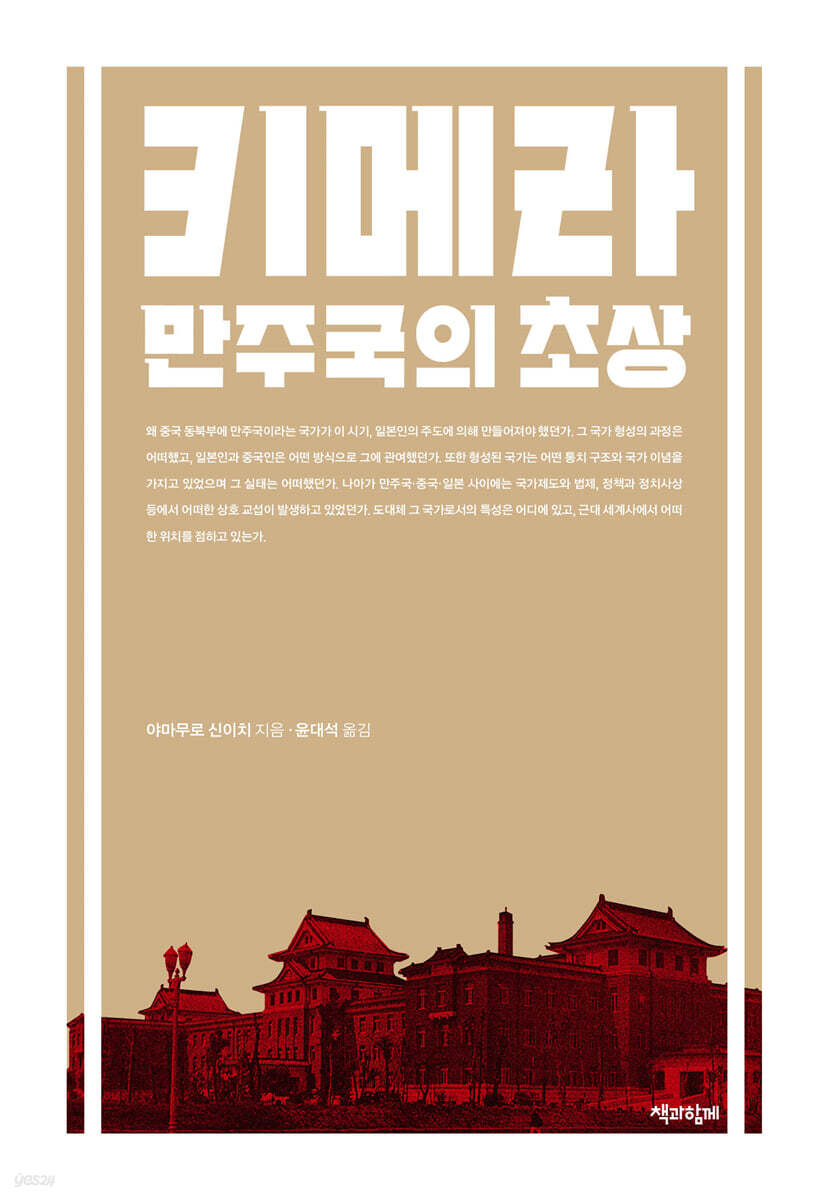 |
Description
Book Introduction
Was Manchukuo a puppet state hastily created by Japan?
Or was it a failed utopia?
Manchukuo, a country founded in northeastern China in 1932, suddenly disappeared in 1945 with Japan's defeat in the Pacific War.
This book is an introductory book that provides a comprehensive overview of Manchukuo, including why it was founded, what its purpose was, how it was run, and how the Japanese and Chinese were involved in this process.
Japanese humanist Shinichi Yamamuro drew this portrait of Manchukuo by comparing it to the Chimera, a monster from Greek mythology with the head of a lion, the body of a sheep, and the tail of a dragon.
The translation published in 2009 was republished with translation errors corrected and ambiguous sentences made clearer.
Or was it a failed utopia?
Manchukuo, a country founded in northeastern China in 1932, suddenly disappeared in 1945 with Japan's defeat in the Pacific War.
This book is an introductory book that provides a comprehensive overview of Manchukuo, including why it was founded, what its purpose was, how it was run, and how the Japanese and Chinese were involved in this process.
Japanese humanist Shinichi Yamamuro drew this portrait of Manchukuo by comparing it to the Chimera, a monster from Greek mythology with the head of a lion, the body of a sheep, and the tail of a dragon.
The translation published in 2009 was republished with translation errors corrected and ambiguous sentences made clearer.
- You can preview some of the book's contents.
Preview
index
Translator's Note
Introduction: A Look at Manchukuo
1.
The Shadow of Manchukuo
2.
puppet state Manchukuo
3.
The ideal state of Manchukuo
4.
Manchukuo as a Chimera
Chapter 1: Japan's Only Way to Survive
─ The Kwantung Army's theory of Manchurian dominion
1.
Manmong - Gordian Knot
2.
The launch of the Manmong-dominated plan
3.
Formation of self-sufficiency and national reform
4.
Joseon's rule and blocking communism
5.
Large and small strategic bases
6.
The Japan-US War and the World's Final War Theory
7.
The justification for Manmong's possession of the territory
Chapter 2: It will become a paradise for all the peoples living in Manmong.
─ The construction of a new nation and the search for a national founding ideology
1.
Transition to building an independent nation
2.
The Seongjeongbu Independence Movement and Ishihara's Transition
3.
Wi Cheong-han and Bo Gyeong-an-min Biyang Byeong-ju
4.
Manchurian Youth League and National Cooperation
5.
The Great Wave of Daiyuhokai and Heung-a
6.
Tachibana Shiraki and the Royal Road of Autonomy
Chapter 3: Becoming a Model for World Politics
─ The banner of morality and the formation of Manchukuo politics
1.
Creating a motive for the founding of the nation and providing funeral assistance
2.
Suncheon Anmin and the paradise of harmony among the five races
3.
The Dragon's Homecoming - Dreaming of a Restoration
4.
The administration is pursued by all the people.
5.
The gap between the form of government and the reality of governance
6.
Four Key Concepts of Manchukuo Politics
Chapter 4: The Defense Ministry's Policy is Always Cooperating with the Japanese Empire
─ The Disruption of the Royal Road and the Path to Unity
1.
The dream of a morning full of flowers - days of being chased
2.
The Retreat of Royalism—The Frozen Founding Ideology
3.
The Path of the Pendulum: Manchukuo's Recognition and Zheng Xiaoxu
4.
Chrysanthemums and Orchids - Imports from Manchukuo and the Imperial Empire
5.
The Barry of Ilmanil - Conflicts Surrounding Governance
6.
Metamorphose - The Transformation of the Chimera
7.
Life or death, I can't let go─the fate of Japan
Final Chapter: Chimera, Reality and Illusion
1.
The Duality of Manchukuo: National Harmony and Strife
2.
An Geo-nak-eop - The eyes are like a knife
3.
A monarchy—a barracks state without citizens
4.
The death of the chimera
Reviews
Boron: What is the historical significance of Manchuria and Manchukuo?
Review of the expanded edition
main
References
Search
Introduction: A Look at Manchukuo
1.
The Shadow of Manchukuo
2.
puppet state Manchukuo
3.
The ideal state of Manchukuo
4.
Manchukuo as a Chimera
Chapter 1: Japan's Only Way to Survive
─ The Kwantung Army's theory of Manchurian dominion
1.
Manmong - Gordian Knot
2.
The launch of the Manmong-dominated plan
3.
Formation of self-sufficiency and national reform
4.
Joseon's rule and blocking communism
5.
Large and small strategic bases
6.
The Japan-US War and the World's Final War Theory
7.
The justification for Manmong's possession of the territory
Chapter 2: It will become a paradise for all the peoples living in Manmong.
─ The construction of a new nation and the search for a national founding ideology
1.
Transition to building an independent nation
2.
The Seongjeongbu Independence Movement and Ishihara's Transition
3.
Wi Cheong-han and Bo Gyeong-an-min Biyang Byeong-ju
4.
Manchurian Youth League and National Cooperation
5.
The Great Wave of Daiyuhokai and Heung-a
6.
Tachibana Shiraki and the Royal Road of Autonomy
Chapter 3: Becoming a Model for World Politics
─ The banner of morality and the formation of Manchukuo politics
1.
Creating a motive for the founding of the nation and providing funeral assistance
2.
Suncheon Anmin and the paradise of harmony among the five races
3.
The Dragon's Homecoming - Dreaming of a Restoration
4.
The administration is pursued by all the people.
5.
The gap between the form of government and the reality of governance
6.
Four Key Concepts of Manchukuo Politics
Chapter 4: The Defense Ministry's Policy is Always Cooperating with the Japanese Empire
─ The Disruption of the Royal Road and the Path to Unity
1.
The dream of a morning full of flowers - days of being chased
2.
The Retreat of Royalism—The Frozen Founding Ideology
3.
The Path of the Pendulum: Manchukuo's Recognition and Zheng Xiaoxu
4.
Chrysanthemums and Orchids - Imports from Manchukuo and the Imperial Empire
5.
The Barry of Ilmanil - Conflicts Surrounding Governance
6.
Metamorphose - The Transformation of the Chimera
7.
Life or death, I can't let go─the fate of Japan
Final Chapter: Chimera, Reality and Illusion
1.
The Duality of Manchukuo: National Harmony and Strife
2.
An Geo-nak-eop - The eyes are like a knife
3.
A monarchy—a barracks state without citizens
4.
The death of the chimera
Reviews
Boron: What is the historical significance of Manchuria and Manchukuo?
Review of the expanded edition
main
References
Search
Into the book
There once was a country called Manchukuo.
Manchukuo, a state that suddenly appeared in northeastern China on March 1, 1932, and disappeared on August 18, 1945, with the abdication of Emperor Puyi.
That life lasted only 13 years and 5 months.
However, for the Japanese who lived there, the end of the nation may have been the beginning of the true experience of Manchukuo.
Only after experiencing the indescribable horrors of the Soviet invasion, repatriation, or detention in Siberia*—the very borderline between life and death—did individuals begin to ask themselves what Manchukuo was and how they themselves had related to it, and to draw diverse images of Manchukuo.
The various fragments of Manchukuo that still live in the memories of those people are etched in countless memoirs and memoirs, and we can still examine them today.
--- p.15~16, from “A Look at Manchukuo”
The main reason Manchuria was called Japan's lifeline was because it bordered colonial Korea and was considered the front line of defense against the Soviet Union and China.
So, if the Soviet Union or China were to expel Japan from Manchuria with overwhelming force, Japan's rule over Korea itself would be in jeopardy.
These concerns became an obsession that Japan must have power in Manchuria.
This was also why the “Policy Programme for China” drafted in May 1924 through an agreement between the Ministry of Foreign Affairs, the Ministry of General Staff, the Ministry of the Army, and the Ministry of the Navy stipulated that “maintaining order in Manchuria and Mongolia is of vital interest to the region, especially to the Empire in governing Korea, and the utmost care must always be taken to this end.”
Itagaki also emphasized the threat of the Soviet Union, saying, “If Russia crosses the border, it is only a matter of time before Korea is occupied,” and emphasized that occupied Manchuria is essential for the defense of Korea.
--- p.49~50, from “Chapter 1: The Only Way for Japan to Survive”
Regarding the policy plan of the 22nd, Ishihara said, “The central government did not even consider the September 19th opinion on occupying Manchuria and Mongolia, and even Major General Tatekawa did not agree with it at all, so I knew that it could not be carried out, so I swallowed my tears and retreated to the Manchuria and Mongolian independent country.
The last bastion was to record the opinion that “when the opportunity comes again, there will soon be a day when the theory of Manmong territory will be realized.”
Ishihara's plan for an independent Manchurian state was a final standoff, a retreat that swallowed back tears and, when the opportunity arose, a transition to realizing the long-cherished dream of Manchurian independence.
The theory of the Mongol-Manchurian occupation of Manchuria, which had been refined by the Kwantung Army centered around Ishihara since 1928, was forced to 'retreat' just before it was put into practice due to the army's central government's rejection.
--- p.81, from “Chapter 2: It will become a paradise for all the peoples living in Manmong”
What determined the politics of Manchukuo in this way was to avoid international criticism of it being a puppet state and a protectorate, and to ostensibly take the form of political decisions being made through the independent initiative of local Chinese people, while internally it was a request for how to efficiently realize Japan's ruling intentions through Japanese officials under the guidance of the Kwantung Army.
Whether it is the ten thousand-year rule, the ten thousand-year ratio, the centrality of the General Affairs Office, or internal guidance, they are all nothing more than stopgap measures and schemes to cover up the discrepancy between legal and de facto authority while representing the duality of authority.
Thus, while possessing this contradiction of superficial and internal disparity, the principle of Japan-Manchuria relations was to make Manchukuo “permanently comply with our national policy.”
--- p.203, from “Chapter 3: Becoming a Model for World Politics”
Okura, who introduced this testimony, emphasized that it was by no means a one-sided view from the Chinese side, and also introduced the testimony of Japanese people living in Manchuria.
According to him, the causes of discontent with the new state included the tyranny of the opium monopoly, military police, and police officers, the tyranny of Japanese officials, and the confiscation of firearms for self-defense, and he said, “If the army withdraws now, it is no exaggeration to say that all Japanese will be killed,” and that a high-ranking military official also said, “If the Russo-Russian War breaks out now, about 10 divisions of the Japanese army will have to fight against the Manchurians.”
These Japanese testimonies must have been the honest real experiences of people who were in daily contact with other ethnic groups in the area.
However, there is no need to quote these testimonies, as most of what the Chinese officials said was accepted as fact by the Kwantung Army and Japanese officials.
Manchukuo, a state that suddenly appeared in northeastern China on March 1, 1932, and disappeared on August 18, 1945, with the abdication of Emperor Puyi.
That life lasted only 13 years and 5 months.
However, for the Japanese who lived there, the end of the nation may have been the beginning of the true experience of Manchukuo.
Only after experiencing the indescribable horrors of the Soviet invasion, repatriation, or detention in Siberia*—the very borderline between life and death—did individuals begin to ask themselves what Manchukuo was and how they themselves had related to it, and to draw diverse images of Manchukuo.
The various fragments of Manchukuo that still live in the memories of those people are etched in countless memoirs and memoirs, and we can still examine them today.
--- p.15~16, from “A Look at Manchukuo”
The main reason Manchuria was called Japan's lifeline was because it bordered colonial Korea and was considered the front line of defense against the Soviet Union and China.
So, if the Soviet Union or China were to expel Japan from Manchuria with overwhelming force, Japan's rule over Korea itself would be in jeopardy.
These concerns became an obsession that Japan must have power in Manchuria.
This was also why the “Policy Programme for China” drafted in May 1924 through an agreement between the Ministry of Foreign Affairs, the Ministry of General Staff, the Ministry of the Army, and the Ministry of the Navy stipulated that “maintaining order in Manchuria and Mongolia is of vital interest to the region, especially to the Empire in governing Korea, and the utmost care must always be taken to this end.”
Itagaki also emphasized the threat of the Soviet Union, saying, “If Russia crosses the border, it is only a matter of time before Korea is occupied,” and emphasized that occupied Manchuria is essential for the defense of Korea.
--- p.49~50, from “Chapter 1: The Only Way for Japan to Survive”
Regarding the policy plan of the 22nd, Ishihara said, “The central government did not even consider the September 19th opinion on occupying Manchuria and Mongolia, and even Major General Tatekawa did not agree with it at all, so I knew that it could not be carried out, so I swallowed my tears and retreated to the Manchuria and Mongolian independent country.
The last bastion was to record the opinion that “when the opportunity comes again, there will soon be a day when the theory of Manmong territory will be realized.”
Ishihara's plan for an independent Manchurian state was a final standoff, a retreat that swallowed back tears and, when the opportunity arose, a transition to realizing the long-cherished dream of Manchurian independence.
The theory of the Mongol-Manchurian occupation of Manchuria, which had been refined by the Kwantung Army centered around Ishihara since 1928, was forced to 'retreat' just before it was put into practice due to the army's central government's rejection.
--- p.81, from “Chapter 2: It will become a paradise for all the peoples living in Manmong”
What determined the politics of Manchukuo in this way was to avoid international criticism of it being a puppet state and a protectorate, and to ostensibly take the form of political decisions being made through the independent initiative of local Chinese people, while internally it was a request for how to efficiently realize Japan's ruling intentions through Japanese officials under the guidance of the Kwantung Army.
Whether it is the ten thousand-year rule, the ten thousand-year ratio, the centrality of the General Affairs Office, or internal guidance, they are all nothing more than stopgap measures and schemes to cover up the discrepancy between legal and de facto authority while representing the duality of authority.
Thus, while possessing this contradiction of superficial and internal disparity, the principle of Japan-Manchuria relations was to make Manchukuo “permanently comply with our national policy.”
--- p.203, from “Chapter 3: Becoming a Model for World Politics”
Okura, who introduced this testimony, emphasized that it was by no means a one-sided view from the Chinese side, and also introduced the testimony of Japanese people living in Manchuria.
According to him, the causes of discontent with the new state included the tyranny of the opium monopoly, military police, and police officers, the tyranny of Japanese officials, and the confiscation of firearms for self-defense, and he said, “If the army withdraws now, it is no exaggeration to say that all Japanese will be killed,” and that a high-ranking military official also said, “If the Russo-Russian War breaks out now, about 10 divisions of the Japanese army will have to fight against the Manchurians.”
These Japanese testimonies must have been the honest real experiences of people who were in daily contact with other ethnic groups in the area.
However, there is no need to quote these testimonies, as most of what the Chinese officials said was accepted as fact by the Kwantung Army and Japanese officials.
--- p.264~265, from “Chapter 4: The Great Defense Strategy is Always Cooperation with the Japanese Empire”
Publisher's Review
Was Manchukuo a puppet state hastily created by Japan?
Or was it a failed utopia?
“I would like to imagine Manchukuo as a chimera monster with the head of a lion, the body of a sheep, and the tail of a dragon.
“The lion represents the Kwantung Army, the sheep represents the imperial state, and the dragon represents the Chinese emperor and modern China, the meaning of which I believe will become clear as the story unfolds.”
Manchukuo, a country founded in northeastern China in 1932, suddenly disappeared in 1945 with Japan's defeat in the Pacific War.
"Chimera: A Portrait of Manchukuo" is an introductory book that provides a general overview of Manchukuo, including why it was founded, what its goals were, how it was run, and how the Japanese and Chinese were involved in this process.
Japanese humanist Shinichi Yamamuro drew this portrait of Manchukuo by comparing it to the Chimera, a monster from Greek mythology with the head of a lion, the body of a sheep, and the tail of a dragon.
What does Manchukuo mean to us?
Today, the prevailing view is that Manchukuo was a puppet state established by Japan.
However, when Manchukuo was founded in 1932, many people devoted themselves to building the country with their own expectations and ideals.
Manchukuo was the place where each of the Chinese powers who opposed the Kwantung Army, the imperialists, the Kuomintang government, intellectuals including Marxists, and even the last emperor Puyi could realize their own utopias.
The ideal state where the people of Suncheon and Anmin (順天安民) and the five ethnic groups' harmony would be realized, that was the founding ideology of Manchukuo.
In chapters 1-3, the author presents the process by which many people, each with various expectations, participated in the construction of Manchukuo. Then, in chapter 4, he examines in depth the process by which these ideals were quickly distorted and crumbled.
Manchukuo, which was, in the words of a Japanese intellectual, “a place of movement to exclude Western imperialist rule and build an ideal nation in Asia,” was reduced to a logistics base for Japan’s “world war” ambitions, a land of brutal plunder and exploitation where newborn babies were raised naked even in temperatures of minus 30 degrees Celsius.
Manchukuo is also closely related to our modern history.
It is already well known that colonialists who participated in Manchukuo, including Park Chung-hee, a graduate of the Manchukuo Military Academy, Choi Kyu-ha, a graduate of Daedong Gakuin, and Kang Young-hoon and Min Ki-sik, both graduates of Kengoku University, became the main players in managing the nation-state of the Republic of Korea. This also stimulates curiosity about what it was about Manchukuo that attracted them.
The history of Manchukuo also provides insights into how we interact with the world.
After the fall of Manchukuo, a Korean student at Kengoku University is said to have said the following to a Japanese assistant professor:
“Teacher, only when Joseon is liberated from Japanese subjugation and becomes independent can Korea and Japan truly cooperate.” This was painful advice to the retreating Japanese Empire, which was in ruins, but it is also words that cannot but be heeded by citizens of the world today.
This book is a new version of the 2009 translation that corrects translation errors and makes ambiguous sentences clearer.
I hope that the portrait of Manchukuo, recreated again, will help paint a portrait of Manchukuo in the 21st century.
Or was it a failed utopia?
“I would like to imagine Manchukuo as a chimera monster with the head of a lion, the body of a sheep, and the tail of a dragon.
“The lion represents the Kwantung Army, the sheep represents the imperial state, and the dragon represents the Chinese emperor and modern China, the meaning of which I believe will become clear as the story unfolds.”
Manchukuo, a country founded in northeastern China in 1932, suddenly disappeared in 1945 with Japan's defeat in the Pacific War.
"Chimera: A Portrait of Manchukuo" is an introductory book that provides a general overview of Manchukuo, including why it was founded, what its goals were, how it was run, and how the Japanese and Chinese were involved in this process.
Japanese humanist Shinichi Yamamuro drew this portrait of Manchukuo by comparing it to the Chimera, a monster from Greek mythology with the head of a lion, the body of a sheep, and the tail of a dragon.
What does Manchukuo mean to us?
Today, the prevailing view is that Manchukuo was a puppet state established by Japan.
However, when Manchukuo was founded in 1932, many people devoted themselves to building the country with their own expectations and ideals.
Manchukuo was the place where each of the Chinese powers who opposed the Kwantung Army, the imperialists, the Kuomintang government, intellectuals including Marxists, and even the last emperor Puyi could realize their own utopias.
The ideal state where the people of Suncheon and Anmin (順天安民) and the five ethnic groups' harmony would be realized, that was the founding ideology of Manchukuo.
In chapters 1-3, the author presents the process by which many people, each with various expectations, participated in the construction of Manchukuo. Then, in chapter 4, he examines in depth the process by which these ideals were quickly distorted and crumbled.
Manchukuo, which was, in the words of a Japanese intellectual, “a place of movement to exclude Western imperialist rule and build an ideal nation in Asia,” was reduced to a logistics base for Japan’s “world war” ambitions, a land of brutal plunder and exploitation where newborn babies were raised naked even in temperatures of minus 30 degrees Celsius.
Manchukuo is also closely related to our modern history.
It is already well known that colonialists who participated in Manchukuo, including Park Chung-hee, a graduate of the Manchukuo Military Academy, Choi Kyu-ha, a graduate of Daedong Gakuin, and Kang Young-hoon and Min Ki-sik, both graduates of Kengoku University, became the main players in managing the nation-state of the Republic of Korea. This also stimulates curiosity about what it was about Manchukuo that attracted them.
The history of Manchukuo also provides insights into how we interact with the world.
After the fall of Manchukuo, a Korean student at Kengoku University is said to have said the following to a Japanese assistant professor:
“Teacher, only when Joseon is liberated from Japanese subjugation and becomes independent can Korea and Japan truly cooperate.” This was painful advice to the retreating Japanese Empire, which was in ruins, but it is also words that cannot but be heeded by citizens of the world today.
This book is a new version of the 2009 translation that corrects translation errors and makes ambiguous sentences clearer.
I hope that the portrait of Manchukuo, recreated again, will help paint a portrait of Manchukuo in the 21st century.
GOODS SPECIFICS
- Date of issue: February 8, 2024
- Page count, weight, size: 480 pages | 145*210*30mm
- ISBN13: 9791192913605
- ISBN10: 1192913604
You may also like
카테고리
korean


korean

![GQ KOREA Mark (Monthly): December [2025]](http://librairie.coreenne.fr/cdn/shop/files/8ef265dbbfbf186523ed75ba7319009d.jpg?v=1765340328&width=3840)


