

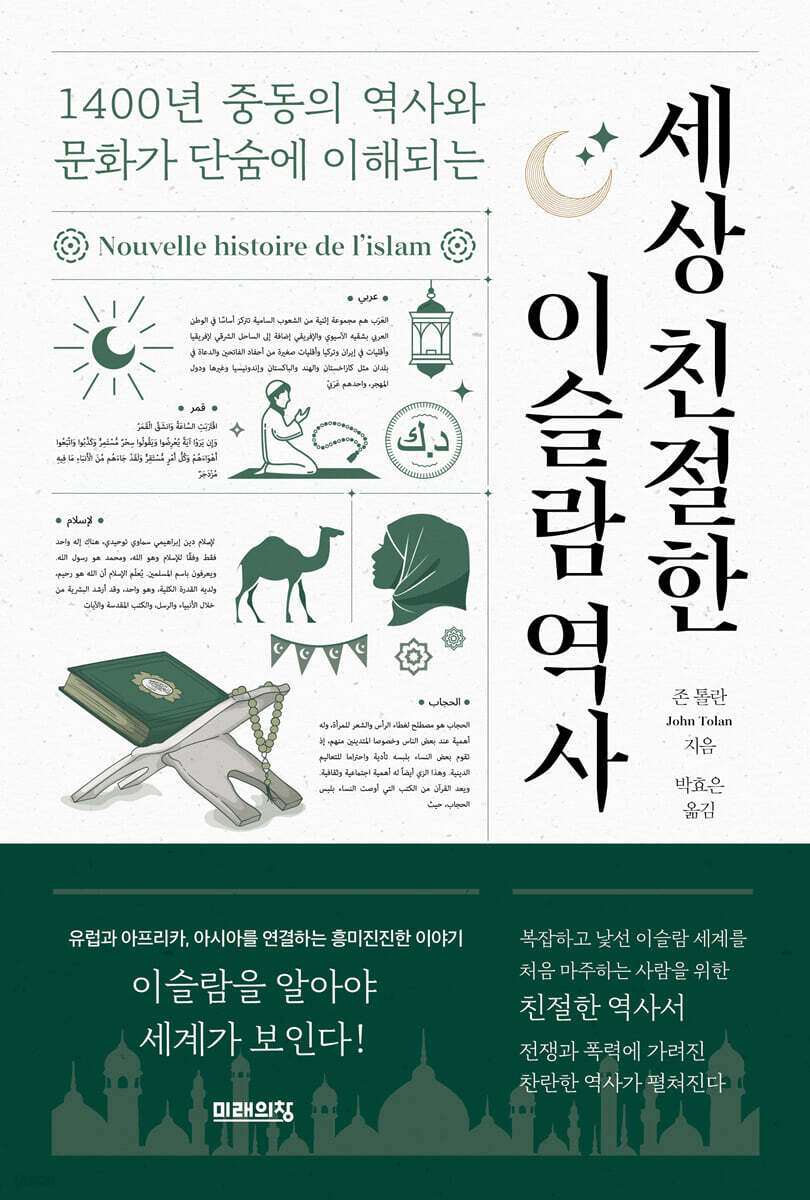
The world's kindest Islamic history
 |
Description
Book Introduction
For those new to Islam
A friendly guide that lets you see the flow of history at a glance
The tragic and devastating images of war, terrorism, and civil war in the Middle East reinforce negative and biased perceptions of Islam.
But in the Middle East, good and evil are not clearly distinguished.
This is because the division and radicalization of Islam are hidden within complex international relations based on vested interests.
Therefore, to properly understand the Middle East issue, it is essential to understand Islam within its historical context and to grasp the background and context in which extremism emerged.
In the process, we must also evaluate the internal reformist movement that seeks to modernize and reinterpret Islam, which exists behind the dictatorship and violence.
"A Kind History of Islam" covers the entire 1,400-year history of Islam, unravels the historical origins and development of today's Middle Eastern problems, and presents the rich and diverse aspects of Islam.
Even those unfamiliar with the Islamic world will naturally acquire a balanced understanding of Islam by following the contents of this book, and gain a new perspective on today's world, intricately intertwined with the Middle East.
A friendly guide that lets you see the flow of history at a glance
The tragic and devastating images of war, terrorism, and civil war in the Middle East reinforce negative and biased perceptions of Islam.
But in the Middle East, good and evil are not clearly distinguished.
This is because the division and radicalization of Islam are hidden within complex international relations based on vested interests.
Therefore, to properly understand the Middle East issue, it is essential to understand Islam within its historical context and to grasp the background and context in which extremism emerged.
In the process, we must also evaluate the internal reformist movement that seeks to modernize and reinterpret Islam, which exists behind the dictatorship and violence.
"A Kind History of Islam" covers the entire 1,400-year history of Islam, unravels the historical origins and development of today's Middle Eastern problems, and presents the rich and diverse aspects of Islam.
Even those unfamiliar with the Islamic world will naturally acquire a balanced understanding of Islam by following the contents of this book, and gain a new perspective on today's world, intricately intertwined with the Middle East.
- You can preview some of the book's contents.
Preview
index
Entering the Complex and Diverse World of Islam, Part 9
Part 1: The Founding of Islam
Chapter 1: The Qur'an and the Birth of the Muslim Community 19
The Quran, the Word of God, and the Hadith, the Islamic traditions
Biblical prophets appearing in the Quran
Satan's whispers that deceived Muhammad
Didn't Islam oppress slaves and women?
The Medina Charter, which aims for coexistence of various religions and tribes
What does the Day of Judgment look like in the Quran?
Muhammad's body was left to rot
Chapter 2: Islam Becomes the Religion of the Umayyad Dynasty and the Empire 51
The era of the Orthodox Caliphs, the four successors to Muhammad
Establishment of the Umayyad Dynasty
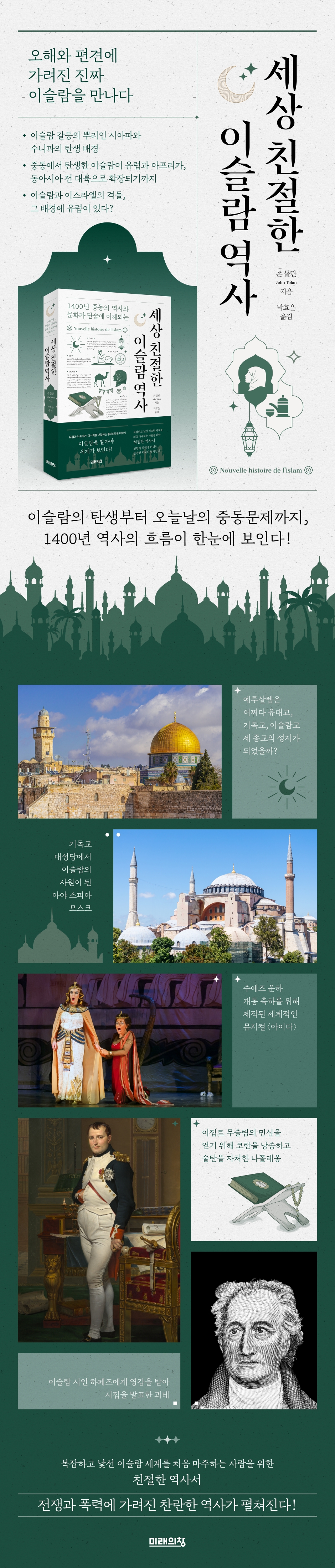
How did Jerusalem become a holy place for three religions?
Abd al-Malik, who created Islam's own scriptures and currency
The complex and nuanced relationship between Muslims and Christians
Dimmi: Protection or Discrimination?
The Duality of Jihad in the Umayyad Era
Ideological contradictions in the late Umayyad dynasty
Chapter 3: The Abbasid Dynasty in Baghdad: A Melting Pot of Diverse Religions and Cultures 87
The decline of the Umayyad dynasty and the revolt of the Abbasid dynasty
Baghdad, the capital of the Abbasid dynasty that succeeded Persia: Al-Mansur period
Enjoying Wine and Embracing Non-Muslims: The Years of Al-Mahdi and Harun Al-Rashid
The Sharp Conflict Between the Mu'tazilah School and Ibn Hanbal: The Reign of Al-Ma'mun
The Abbasid Dynasty entered a period of decline
Abbasid Baghdad, a melting pot of diverse religions
The emergence of Sufism, the practice of mysticism
Chapter 4: The Islamic World Divided into Three Caliphates 125
The Fatimid dynasty of Shia Islam, which flourished in Egypt
The Umayyad dynasty that rekindled its dynasty in Cordoba
The division of the Umayyad dynasty and the proliferation of taifas
Political division and cultural prosperity in the Islamic world
Part 2: The Expansion of Islam
Chapter 5: Foreign Invasion and the Reorganization of the Islamic World 161
The historical encounter between Turks and Islam
The ruthless Islamic expedition of the Crusaders
The Muravid and Muwahid dynasties fought against the Franks with jihad.
The sorrow of the Mudejar, a Muslim living in a Christian world
The Islamic counterattack against the Crusaders and the Mamluk dynasty founded by slave soldiers
The Mamluk Dynasty, which defeated the Crusaders, now faces the Mongol Empire.
The three greatest scholars of the Iberian Peninsula
Chapter 6: The Travels of Ibn Battuta 191
A journey that will mark history begins at the heart of the Islamic world.
From Africa to China, Islam Experienced Outside the Arab World
The end of a long journey that lasted 24 years
The various aspects of the Islamic world as seen by Ibn Battuta
Chapter 7: Islam Spreads from Africa to Asia 231
The rise of the Ottoman Empire, a new power in the Islamic world
The Ottoman Empire's unstoppable expansion
Islamic dynasties in India and Indonesia
Islamic dynasties in West Africa
Part 3: The Modernization of Islam
Chapter 8: Colonial Rule and Resistance Movements 273
The prelude to colonial rule: How did India become a British colony?
The fall of the Ottoman Empire, the powerhouse of the Islamic world
Napoleon's expedition to Egypt and the Egyptian ruler Muhammad Ali
The emergence of the Wahhabis, a radical Islamist sect
Greek War of Independence and French Conquest of Algeria
Ottoman reforms and Egyptian independence
Nahda, the 19th-century Arab cultural revival movement
Chapter 9: Colonial Liberation, Nationalism, and the Rise of Political Islam 305
The Rise of the Wahhabi Movement in the Arabian Peninsula and the Muslim Brotherhood in Egypt: 1925–1949
The contradiction between French secularism and colonial collectivism
Why did Israel and Islam clash?: 1945–1967
A fierce political battle between the West and Islam
Chapter 10: Reform and Radicalism: Muslims in the 21st Century at a Crossroads 343
Islam faces conflict with the West and internal revolution
Discussion for the Reform of Islam
Going Out: Muslims and Western Islam 374
Acknowledgements 380
Week 381
Part 1: The Founding of Islam
Chapter 1: The Qur'an and the Birth of the Muslim Community 19
The Quran, the Word of God, and the Hadith, the Islamic traditions
Biblical prophets appearing in the Quran
Satan's whispers that deceived Muhammad
Didn't Islam oppress slaves and women?
The Medina Charter, which aims for coexistence of various religions and tribes
What does the Day of Judgment look like in the Quran?
Muhammad's body was left to rot
Chapter 2: Islam Becomes the Religion of the Umayyad Dynasty and the Empire 51
The era of the Orthodox Caliphs, the four successors to Muhammad
Establishment of the Umayyad Dynasty
How did Jerusalem become a holy place for three religions?
Abd al-Malik, who created Islam's own scriptures and currency
The complex and nuanced relationship between Muslims and Christians
Dimmi: Protection or Discrimination?
The Duality of Jihad in the Umayyad Era
Ideological contradictions in the late Umayyad dynasty
Chapter 3: The Abbasid Dynasty in Baghdad: A Melting Pot of Diverse Religions and Cultures 87
The decline of the Umayyad dynasty and the revolt of the Abbasid dynasty
Baghdad, the capital of the Abbasid dynasty that succeeded Persia: Al-Mansur period
Enjoying Wine and Embracing Non-Muslims: The Years of Al-Mahdi and Harun Al-Rashid
The Sharp Conflict Between the Mu'tazilah School and Ibn Hanbal: The Reign of Al-Ma'mun
The Abbasid Dynasty entered a period of decline
Abbasid Baghdad, a melting pot of diverse religions
The emergence of Sufism, the practice of mysticism
Chapter 4: The Islamic World Divided into Three Caliphates 125
The Fatimid dynasty of Shia Islam, which flourished in Egypt
The Umayyad dynasty that rekindled its dynasty in Cordoba
The division of the Umayyad dynasty and the proliferation of taifas
Political division and cultural prosperity in the Islamic world
Part 2: The Expansion of Islam
Chapter 5: Foreign Invasion and the Reorganization of the Islamic World 161
The historical encounter between Turks and Islam
The ruthless Islamic expedition of the Crusaders
The Muravid and Muwahid dynasties fought against the Franks with jihad.
The sorrow of the Mudejar, a Muslim living in a Christian world
The Islamic counterattack against the Crusaders and the Mamluk dynasty founded by slave soldiers
The Mamluk Dynasty, which defeated the Crusaders, now faces the Mongol Empire.
The three greatest scholars of the Iberian Peninsula
Chapter 6: The Travels of Ibn Battuta 191
A journey that will mark history begins at the heart of the Islamic world.
From Africa to China, Islam Experienced Outside the Arab World
The end of a long journey that lasted 24 years
The various aspects of the Islamic world as seen by Ibn Battuta
Chapter 7: Islam Spreads from Africa to Asia 231
The rise of the Ottoman Empire, a new power in the Islamic world
The Ottoman Empire's unstoppable expansion
Islamic dynasties in India and Indonesia
Islamic dynasties in West Africa
Part 3: The Modernization of Islam
Chapter 8: Colonial Rule and Resistance Movements 273
The prelude to colonial rule: How did India become a British colony?
The fall of the Ottoman Empire, the powerhouse of the Islamic world
Napoleon's expedition to Egypt and the Egyptian ruler Muhammad Ali
The emergence of the Wahhabis, a radical Islamist sect
Greek War of Independence and French Conquest of Algeria
Ottoman reforms and Egyptian independence
Nahda, the 19th-century Arab cultural revival movement
Chapter 9: Colonial Liberation, Nationalism, and the Rise of Political Islam 305
The Rise of the Wahhabi Movement in the Arabian Peninsula and the Muslim Brotherhood in Egypt: 1925–1949
The contradiction between French secularism and colonial collectivism
Why did Israel and Islam clash?: 1945–1967
A fierce political battle between the West and Islam
Chapter 10: Reform and Radicalism: Muslims in the 21st Century at a Crossroads 343
Islam faces conflict with the West and internal revolution
Discussion for the Reform of Islam
Going Out: Muslims and Western Islam 374
Acknowledgements 380
Week 381
Detailed image
Into the book
Khadijah took Muhammad to the home of her Christian cousin Waraqa to seek advice.
After carefully listening to the events that befell the new Prophet Muhammad, Waraqah concluded that the angel who had visited him must have been the same angel who had appeared to Moses.
This is how Islam was born.
--- p.20
The reason Muhammad and his followers changed the 'qibla' (direction of prayer), which can be considered a major change in religious ritual, was because of the conflict they experienced with the Jews of Medina.
Originally, the direction in which Muhammad and the believers prayed was toward Jerusalem, but around 624, Muhammad received revelation and changed the direction of prayer toward the Kaaba in Mecca.
--- p.44
In this situation, the first Fitna took place in 656-661 and the second Fitna took place in 680-692, and the Muslim community was eventually divided.
Furthermore, due to conflicts between tribes, Islam was divided into Sunni, Shia, and Khawarij, and after the end of the first Fitna, the Umayyad Dynasty (661-750) was finally established.
--- p.52
Historians studying the Umayyad period often overlook the fact that Muslims were a smaller minority than Christians during and after the Umayyad period.
Even in Syria, the center of dynastic power, Christians overwhelmingly outnumbered Muslims.
--- p.76
A 10th-century mufti of Cordoba criticized Muslims who participated in Christmas festivities, exchanged gifts with Christians, or celebrated New Year, Hajj, and the Winter Solstice with them.
But since such practices were already widespread, no one listened to his criticism.
Even the caliphs sometimes participated in the Feast of St. John and watched horse races and other events organized by Christians.
--- p.143
After the Mongols converted to Islam in the 14th century, the Islamic world expanded from Morocco to Sumatra, and then from Mali to the Volga River.
Of course, at the time, few people had any idea of the entire territory under Islamic control.
But the Moroccan traveler Ibn Battuta did just that.
--- p.191
He even made up a city and lied about visiting it, claiming to have visited Irkari, a city ruled by the warrior princess Urduja, somewhere between Sumatra and China. In fact, Ibn Battuta was known for his boasting.
Ibn Khaldun, who frequently interacted with Ibn Battuta in his twenties at the court of Sultan Abu Inan Faris of the Marinid dynasty of Morocco, also reported that the people of the kingdom whispered about him and called him a liar.
--- p.193
In 1258, the Mongols sacked Baghdad and took Muhammad's relics to Cairo, and in 1517, when the Ottoman Sultan Selim I conquered Egypt, he brought the relics to the Topkapi Palace in Constantinople.
To this day, those relics are kept in the Topkapi Palace.
--- p.232
Napoleon, in an attempt to win the hearts of the Egyptian ulama, read the Quran to them, asking them to interpret verses from it, and elected them as members of the Egyptian government's royal council.
--- p.280
Britain had been plotting to partition Palestine into a Jewish and an Arab state since 1937 and asked the UN to come up with a solution.
This issue was one that needed to be addressed urgently, as the Jews, who had sought to build a Jewish state, had experienced the tragic narrative of the Holocaust.
--- p.325
Meanwhile, President Joe Biden has accused Saudi Crown Prince Mohammed bin Salman of being behind the 2018 assassination of Saudi journalist Jamal Khashoggi, who was working in the United States, and just days after taking office in February 2021, he declared that the United States would no longer support Saudi government forces involved in the Yemeni civil war.
--- p.353
Historically, women in Islam, Judaism, and Christianity have worn veils to maintain modesty.
Additionally, several Christian fathers insisted that women should cover their heads with veils when praying.
The practice of women wearing veils is widespread in the Islamic world, and takes many forms, including the shayla (a long veil that covers the head), hijab (a veil that covers the head and neck), chador (a veil that covers the entire body except the face), niqab (a veil that covers the entire face except the eyes), and burqa (a veil that covers the face and body with a mesh covering the eye area).
After carefully listening to the events that befell the new Prophet Muhammad, Waraqah concluded that the angel who had visited him must have been the same angel who had appeared to Moses.
This is how Islam was born.
--- p.20
The reason Muhammad and his followers changed the 'qibla' (direction of prayer), which can be considered a major change in religious ritual, was because of the conflict they experienced with the Jews of Medina.
Originally, the direction in which Muhammad and the believers prayed was toward Jerusalem, but around 624, Muhammad received revelation and changed the direction of prayer toward the Kaaba in Mecca.
--- p.44
In this situation, the first Fitna took place in 656-661 and the second Fitna took place in 680-692, and the Muslim community was eventually divided.
Furthermore, due to conflicts between tribes, Islam was divided into Sunni, Shia, and Khawarij, and after the end of the first Fitna, the Umayyad Dynasty (661-750) was finally established.
--- p.52
Historians studying the Umayyad period often overlook the fact that Muslims were a smaller minority than Christians during and after the Umayyad period.
Even in Syria, the center of dynastic power, Christians overwhelmingly outnumbered Muslims.
--- p.76
A 10th-century mufti of Cordoba criticized Muslims who participated in Christmas festivities, exchanged gifts with Christians, or celebrated New Year, Hajj, and the Winter Solstice with them.
But since such practices were already widespread, no one listened to his criticism.
Even the caliphs sometimes participated in the Feast of St. John and watched horse races and other events organized by Christians.
--- p.143
After the Mongols converted to Islam in the 14th century, the Islamic world expanded from Morocco to Sumatra, and then from Mali to the Volga River.
Of course, at the time, few people had any idea of the entire territory under Islamic control.
But the Moroccan traveler Ibn Battuta did just that.
--- p.191
He even made up a city and lied about visiting it, claiming to have visited Irkari, a city ruled by the warrior princess Urduja, somewhere between Sumatra and China. In fact, Ibn Battuta was known for his boasting.
Ibn Khaldun, who frequently interacted with Ibn Battuta in his twenties at the court of Sultan Abu Inan Faris of the Marinid dynasty of Morocco, also reported that the people of the kingdom whispered about him and called him a liar.
--- p.193
In 1258, the Mongols sacked Baghdad and took Muhammad's relics to Cairo, and in 1517, when the Ottoman Sultan Selim I conquered Egypt, he brought the relics to the Topkapi Palace in Constantinople.
To this day, those relics are kept in the Topkapi Palace.
--- p.232
Napoleon, in an attempt to win the hearts of the Egyptian ulama, read the Quran to them, asking them to interpret verses from it, and elected them as members of the Egyptian government's royal council.
--- p.280
Britain had been plotting to partition Palestine into a Jewish and an Arab state since 1937 and asked the UN to come up with a solution.
This issue was one that needed to be addressed urgently, as the Jews, who had sought to build a Jewish state, had experienced the tragic narrative of the Holocaust.
--- p.325
Meanwhile, President Joe Biden has accused Saudi Crown Prince Mohammed bin Salman of being behind the 2018 assassination of Saudi journalist Jamal Khashoggi, who was working in the United States, and just days after taking office in February 2021, he declared that the United States would no longer support Saudi government forces involved in the Yemeni civil war.
--- p.353
Historically, women in Islam, Judaism, and Christianity have worn veils to maintain modesty.
Additionally, several Christian fathers insisted that women should cover their heads with veils when praying.
The practice of women wearing veils is widespread in the Islamic world, and takes many forms, including the shayla (a long veil that covers the head), hijab (a veil that covers the head and neck), chador (a veil that covers the entire body except the face), niqab (a veil that covers the entire face except the eyes), and burqa (a veil that covers the face and body with a mesh covering the eye area).
--- p.361
Publisher's Review
If you become numb and insensitive to Middle Eastern and Islamic issues,
Now is the time to read Islam
In the midst of the recurring wars and violence in the Middle East, tragedy has become a daily occurrence, negative prejudices against Islam are strengthening, and our ethical sensibilities are gradually becoming dulled.
One could blame the numbness created by repetition, but the complexity of the Middle East problem, which defies clear-cut solutions, and our own hazy understanding and indifference toward Islam are also contributing factors.
To move beyond the inertial reaction and fleeting interest in the daily reports on Middle Eastern issues and to confront today's world, which is so closely intertwined with the Middle East, we must understand Islamic history.
As the title suggests, 『A Friendly History of Islam』 is a friendly guide for those who are new to Islam.
It serves as a guidepost for the long and complex history of Islam, tracing the flow of its 1,400-year history from its birth to the present day.
If you want to gain a new perspective on the world, if you want to understand Islam at least once in your life, this book will help you.
Beyond misunderstanding and prejudice,
Why You Should Read Islamic History
Contrary to its terrifying appearance today, Islam was originally rational and ethical.
Because the Quran teaches that all human beings are equal, Islam sought a new path by breaking away from evil practices, such as freeing slaves and guaranteeing the status and rights of women.
Islam also collected taxes and funds for the poor, travelers, and captives, and was tolerant enough to embrace different languages and races and to recognize religious diversity.
Islam, which encouraged learning and the arts, was also a treasure trove of vast knowledge and culture.
Islam, which inherited the academic achievements of Greece and Persia, led the way in the study of philosophy and medicine in particular.
Aristotle's philosophy, which Europe had ignored, was at the core of the rationalist interpretation of the Quran, and later, when it was transmitted back to Europe, it influenced Christian doctrine and philosophy.
The Canon of Medicine, written by the Islamic scholar Ibn Sina, was the most widely used medical textbook in India and Oxford University Medical School, and led the birth and development of modern medicine.
In this way, Islam's splendid history, culture, and academic achievements dispel our misunderstandings and prejudices, and confirm its rational and great aspects.
As Islam spread widely through exchanges and wars with neighboring countries, it permeated the history, culture, and religion of many parts of the world.
Islam spreads across the world,
Digging into its colorful aspects
Islam, which has expanded beyond the Middle East, connects vast regions religiously, culturally, and historically.
In Europe, Spain on the Iberian Peninsula and Greece under the rule of the Ottoman Empire were spheres of influence under Islam, while the Songhai Empire and Egypt in Africa were Islamic countries.
In Asia, countries such as Mongolia, India, Indonesia, and China accepted Islam.
Islam, which expanded across the continent in this way, changed in various ways according to the indigenous customs and political situations of each region.
While there was a version of Islam that emphasized strict asceticism and practiced surveillance and control, there was also an Islam that permitted the drinking of wine and tolerated intimate relationships between men and women.
There was also an Islam that pursued mysticism and worshipped the tombs of saints, and an ideology that rejected this as idolatry.
Islam has also been realized in numerous other areas, including the wearing of veils by women, the acceptance of Christian culture, and the interpretation of the Quran.
The diverse aspects of Islam that cannot be explained in a single way are one of the difficulties in understanding Islam.
This also ties into why it is difficult to understand the Middle East today.
This is because the roots of the debate and conflict surrounding the Middle East and Islam are connected to the complex history of Islam.
The complexity was further compounded by the intertwining of Western international relations based on vested interests.
The only way to unravel this is to understand the historical context.
The minimum role we can play at the site of history,
Let's read Islamic history!
The violent nature of Islamic militant groups, which fuels the media and the press with war and terrorism, is also an undeniable aspect of Islam.
However, if we examine the causes and background of the Middle East problem, we cannot look at it from a biased perspective that blames Islam itself for the evil.
Europe fostered the division of Islam in order to win the World War, and the establishment of Israel, recognized by Britain and the UN, became the cause of the Palestinian conflict.
The United States and Britain provided financial and logistical support to the Afghan rebels, including Osama bin Laden, in order to check the Soviet Union.
The European Union has supported the Libyan government, which commits inhumane acts such as torture, exploitation, and murder, in an effort to stem the flow of refugees into Libya, and has also contributed to forced repatriations.
But even in today's Islam, shrouded in political strife and gloomy tones, there are glimmers of hope.
Although it ended in failure, there were massive popular movements against violence and dictatorship in the Middle East and Islam, such as the Jasmine Revolution and the Arab Spring, as well as internal criticism of radical Islamic militant groups.
There are also constant calls to reform Islam through a modern reinterpretation of the Quran and Islam.
If you want to see the world from a multifaceted perspective, in the dynamic flow of history, read Islamic history.
It may be difficult and unfamiliar at first, but it will be possible with 『A Kind History of Islam』.
Now is the time to read Islam
In the midst of the recurring wars and violence in the Middle East, tragedy has become a daily occurrence, negative prejudices against Islam are strengthening, and our ethical sensibilities are gradually becoming dulled.
One could blame the numbness created by repetition, but the complexity of the Middle East problem, which defies clear-cut solutions, and our own hazy understanding and indifference toward Islam are also contributing factors.
To move beyond the inertial reaction and fleeting interest in the daily reports on Middle Eastern issues and to confront today's world, which is so closely intertwined with the Middle East, we must understand Islamic history.
As the title suggests, 『A Friendly History of Islam』 is a friendly guide for those who are new to Islam.
It serves as a guidepost for the long and complex history of Islam, tracing the flow of its 1,400-year history from its birth to the present day.
If you want to gain a new perspective on the world, if you want to understand Islam at least once in your life, this book will help you.
Beyond misunderstanding and prejudice,
Why You Should Read Islamic History
Contrary to its terrifying appearance today, Islam was originally rational and ethical.
Because the Quran teaches that all human beings are equal, Islam sought a new path by breaking away from evil practices, such as freeing slaves and guaranteeing the status and rights of women.
Islam also collected taxes and funds for the poor, travelers, and captives, and was tolerant enough to embrace different languages and races and to recognize religious diversity.
Islam, which encouraged learning and the arts, was also a treasure trove of vast knowledge and culture.
Islam, which inherited the academic achievements of Greece and Persia, led the way in the study of philosophy and medicine in particular.
Aristotle's philosophy, which Europe had ignored, was at the core of the rationalist interpretation of the Quran, and later, when it was transmitted back to Europe, it influenced Christian doctrine and philosophy.
The Canon of Medicine, written by the Islamic scholar Ibn Sina, was the most widely used medical textbook in India and Oxford University Medical School, and led the birth and development of modern medicine.
In this way, Islam's splendid history, culture, and academic achievements dispel our misunderstandings and prejudices, and confirm its rational and great aspects.
As Islam spread widely through exchanges and wars with neighboring countries, it permeated the history, culture, and religion of many parts of the world.
Islam spreads across the world,
Digging into its colorful aspects
Islam, which has expanded beyond the Middle East, connects vast regions religiously, culturally, and historically.
In Europe, Spain on the Iberian Peninsula and Greece under the rule of the Ottoman Empire were spheres of influence under Islam, while the Songhai Empire and Egypt in Africa were Islamic countries.
In Asia, countries such as Mongolia, India, Indonesia, and China accepted Islam.
Islam, which expanded across the continent in this way, changed in various ways according to the indigenous customs and political situations of each region.
While there was a version of Islam that emphasized strict asceticism and practiced surveillance and control, there was also an Islam that permitted the drinking of wine and tolerated intimate relationships between men and women.
There was also an Islam that pursued mysticism and worshipped the tombs of saints, and an ideology that rejected this as idolatry.
Islam has also been realized in numerous other areas, including the wearing of veils by women, the acceptance of Christian culture, and the interpretation of the Quran.
The diverse aspects of Islam that cannot be explained in a single way are one of the difficulties in understanding Islam.
This also ties into why it is difficult to understand the Middle East today.
This is because the roots of the debate and conflict surrounding the Middle East and Islam are connected to the complex history of Islam.
The complexity was further compounded by the intertwining of Western international relations based on vested interests.
The only way to unravel this is to understand the historical context.
The minimum role we can play at the site of history,
Let's read Islamic history!
The violent nature of Islamic militant groups, which fuels the media and the press with war and terrorism, is also an undeniable aspect of Islam.
However, if we examine the causes and background of the Middle East problem, we cannot look at it from a biased perspective that blames Islam itself for the evil.
Europe fostered the division of Islam in order to win the World War, and the establishment of Israel, recognized by Britain and the UN, became the cause of the Palestinian conflict.
The United States and Britain provided financial and logistical support to the Afghan rebels, including Osama bin Laden, in order to check the Soviet Union.
The European Union has supported the Libyan government, which commits inhumane acts such as torture, exploitation, and murder, in an effort to stem the flow of refugees into Libya, and has also contributed to forced repatriations.
But even in today's Islam, shrouded in political strife and gloomy tones, there are glimmers of hope.
Although it ended in failure, there were massive popular movements against violence and dictatorship in the Middle East and Islam, such as the Jasmine Revolution and the Arab Spring, as well as internal criticism of radical Islamic militant groups.
There are also constant calls to reform Islam through a modern reinterpretation of the Quran and Islam.
If you want to see the world from a multifaceted perspective, in the dynamic flow of history, read Islamic history.
It may be difficult and unfamiliar at first, but it will be possible with 『A Kind History of Islam』.
GOODS SPECIFICS
- Date of issue: January 30, 2024
- Page count, weight, size: 392 pages | 592g | 152*225*25mm
- ISBN13: 9791193638040
- ISBN10: 1193638046
You may also like
카테고리
korean


korean

![GQ KOREA Mark (Monthly): December [2025]](http://librairie.coreenne.fr/cdn/shop/files/8ef265dbbfbf186523ed75ba7319009d.jpg?v=1765340328&width=3840)


