

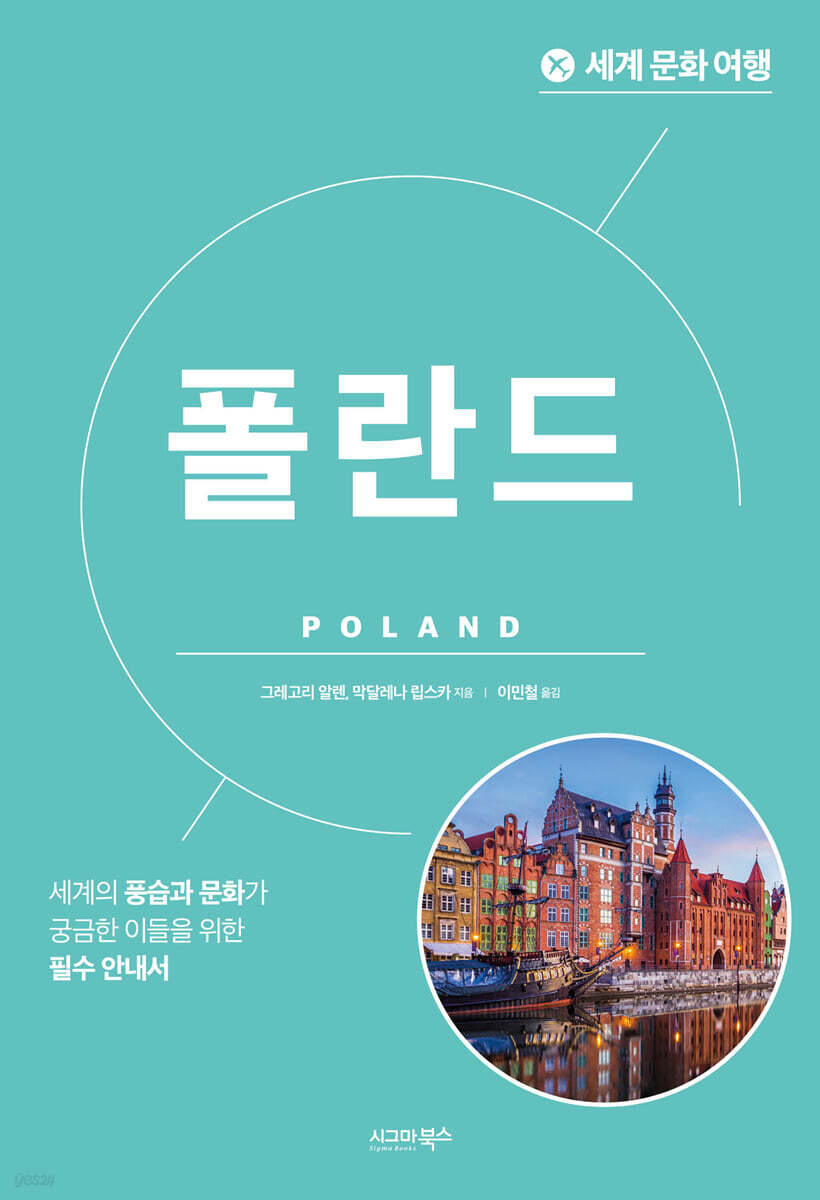
World Cultural Journey - Poland
 |
Description
Book Introduction
Polish customs, history, culture, lifestyle, and life
This book is the Polish edition of the World Cultural Journey series and covers Polish customs, history, culture, lifestyle, and general information about life.
Whether you're visiting Poland for business or simply for pleasure, we'll help you make your time in Poland richer and more memorable.
This book contains information about Polish local customs and traditions, history, religion, politics, Polish families, work, leisure, food, clothing, shelter, and communication.
This book is the Polish edition of the World Cultural Journey series and covers Polish customs, history, culture, lifestyle, and general information about life.
Whether you're visiting Poland for business or simply for pleasure, we'll help you make your time in Poland richer and more memorable.
This book contains information about Polish local customs and traditions, history, religion, politics, Polish families, work, leisure, food, clothing, shelter, and communication.
- You can preview some of the book's contents.
Preview
index
Poland evangelism
Entering
Basic information
01 Territory and People
Geographic features
A brief history
Ethnic composition
Intelligentsia
Polish cities
Government and Politics
Poland within the European Union
02 Values and mindset
Catholicism in Poland
pride and patriotism
Attitude towards rules.
Is anyone there?
Bribery and corruption
Chivalry or sexism?
Attitude toward money
Attitude toward foreigners
racism and homophobia
generation gap
The gap between urban and rural areas
The legacy of communism
03 Customs and Traditions
Holidays and Events
special event
04 Making Friends
Meet Polish people
Polite and unpolite titles
“A guest in the house is a god.”
Giving and receiving gifts
drink
Dating a Polish person
05 Family Life
Polish family
Polish family
Renting an apartment
home appliances
grocery shopping
online shopping
Day
education
Urban and rural areas
06 Leisure Life
Eating out
nightlife
Tourist shopping
call
museum
art performance
outdoor activities
07 Travel, Health, and Safety
How to enter the country
Move
Local transportation
lodgment
medical treatment
police
08 Business Status
Polish businessman
Polish business culture
First meeting
group meeting
presentation
negotiation
contract
Corporate Culture vs. Local Culture
Managing Cultural Differences
female entrepreneurs
09 Communication
Polish
conversation
sense of humor
abuse
'Yes' culture
media
phone call
Internet and email
mail
conclusion
Useful apps
Useful websites
References
Entering
Basic information
01 Territory and People
Geographic features
A brief history
Ethnic composition
Intelligentsia
Polish cities
Government and Politics
Poland within the European Union
02 Values and mindset
Catholicism in Poland
pride and patriotism
Attitude towards rules.
Is anyone there?
Bribery and corruption
Chivalry or sexism?
Attitude toward money
Attitude toward foreigners
racism and homophobia
generation gap
The gap between urban and rural areas
The legacy of communism
03 Customs and Traditions
Holidays and Events
special event
04 Making Friends
Meet Polish people
Polite and unpolite titles
“A guest in the house is a god.”
Giving and receiving gifts
drink
Dating a Polish person
05 Family Life
Polish family
Polish family
Renting an apartment
home appliances
grocery shopping
online shopping
Day
education
Urban and rural areas
06 Leisure Life
Eating out
nightlife
Tourist shopping
call
museum
art performance
outdoor activities
07 Travel, Health, and Safety
How to enter the country
Move
Local transportation
lodgment
medical treatment
police
08 Business Status
Polish businessman
Polish business culture
First meeting
group meeting
presentation
negotiation
contract
Corporate Culture vs. Local Culture
Managing Cultural Differences
female entrepreneurs
09 Communication
Polish
conversation
sense of humor
abuse
'Yes' culture
media
phone call
Internet and email
conclusion
Useful apps
Useful websites
References
Into the book
Poland has long served as a bridge between East and West in central Europe.
With an area of 312,700㎢, it is one of the largest countries in Europe, slightly larger than Italy and slightly smaller than Germany.
With a population of 37.9 million, it is the fifth largest among the 27 EU countries.
---From "Chapter 1 Territory and People"
Over the years, Polish culture has been influenced by many factors.
The prominent Catholic Church, the proud aristocracy that has endured through the ages, a center of education and trade, constantly shifting borders, countless wars, the countries that occupied Poland, and even communism have all left their mark on Polish culture.
---From "Chapter 2: Values and Way of Thinking"
Few people are as passionate about their holidays as the Poles.
Poles celebrate national holidays, religious events, weddings and name-days.
Moreover, the customs and ways of celebrating traditional Catholic holidays in Poland have strong pagan elements, creating a unique atmosphere.
---From "Chapter 3 Customs and Traditions"
Poles are lively and sociable.
However, in first meetings, especially when they are not introduced by an acquaintance, they are cautious and keep their distance from the other person.
Poles consider it unnatural, pretentious and even a little embarrassing to be too friendly on a first date.
This attitude is in contrast to the warm attitude shown towards friends and relatives.
---From "Chapter 4 Making Friends"
Family is at the heart of Polish culture.
Even though they are of different generations, many Polish people visit their parents frequently and go out to see them every weekend.
For Poles, home is not just a place to live, but a meeting place always open to family and friends.
---From "Chapter 5 Family Life"
One of the most positive changes since the fall of communism has been the dramatic increase in the availability of leisure activities.
Poles tend to work long hours but take a lot of vacation time, and few people want to spend their holidays at home.
International travel has become more common thanks to the reduced cost of travel to Southern Europe, North Africa, and the Alps.
---From "Chapter 6 Leisure Life"
Transportation to and from major cities is fast, safe, and cheap, but if you're traveling to less-traveled areas, the trip can be quite arduous, with little to no interesting cultural experiences.
But as capital flows in, the road network is gradually improving.
---From Chapter 7: Travel, Health, and Safety
Until recently, most of the executives of foreign companies in Poland were foreigners.
But now there are many excellent and experienced Polish executives in foreign companies as well.
Because they interact closely with foreigners and learn about their work, they have a competitive advantage over foreigners who are unfamiliar with Polish affairs.
---From "Chapter 8 Business Status"
Poles are very proud of their native language and consider it a sign of respect for Polish culture when foreigners make the effort to learn Polish.
Moreover, Poles believe that there are not many foreigners who want to learn Polish.
This is because there are many foreigners who have stayed in Poland for a long time but only know how to order drinks.
With an area of 312,700㎢, it is one of the largest countries in Europe, slightly larger than Italy and slightly smaller than Germany.
With a population of 37.9 million, it is the fifth largest among the 27 EU countries.
---From "Chapter 1 Territory and People"
Over the years, Polish culture has been influenced by many factors.
The prominent Catholic Church, the proud aristocracy that has endured through the ages, a center of education and trade, constantly shifting borders, countless wars, the countries that occupied Poland, and even communism have all left their mark on Polish culture.
---From "Chapter 2: Values and Way of Thinking"
Few people are as passionate about their holidays as the Poles.
Poles celebrate national holidays, religious events, weddings and name-days.
Moreover, the customs and ways of celebrating traditional Catholic holidays in Poland have strong pagan elements, creating a unique atmosphere.
---From "Chapter 3 Customs and Traditions"
Poles are lively and sociable.
However, in first meetings, especially when they are not introduced by an acquaintance, they are cautious and keep their distance from the other person.
Poles consider it unnatural, pretentious and even a little embarrassing to be too friendly on a first date.
This attitude is in contrast to the warm attitude shown towards friends and relatives.
---From "Chapter 4 Making Friends"
Family is at the heart of Polish culture.
Even though they are of different generations, many Polish people visit their parents frequently and go out to see them every weekend.
For Poles, home is not just a place to live, but a meeting place always open to family and friends.
---From "Chapter 5 Family Life"
One of the most positive changes since the fall of communism has been the dramatic increase in the availability of leisure activities.
Poles tend to work long hours but take a lot of vacation time, and few people want to spend their holidays at home.
International travel has become more common thanks to the reduced cost of travel to Southern Europe, North Africa, and the Alps.
---From "Chapter 6 Leisure Life"
Transportation to and from major cities is fast, safe, and cheap, but if you're traveling to less-traveled areas, the trip can be quite arduous, with little to no interesting cultural experiences.
But as capital flows in, the road network is gradually improving.
---From Chapter 7: Travel, Health, and Safety
Until recently, most of the executives of foreign companies in Poland were foreigners.
But now there are many excellent and experienced Polish executives in foreign companies as well.
Because they interact closely with foreigners and learn about their work, they have a competitive advantage over foreigners who are unfamiliar with Polish affairs.
---From "Chapter 8 Business Status"
Poles are very proud of their native language and consider it a sign of respect for Polish culture when foreigners make the effort to learn Polish.
Moreover, Poles believe that there are not many foreigners who want to learn Polish.
This is because there are many foreigners who have stayed in Poland for a long time but only know how to order drinks.
---From Chapter 9: Communication
Publisher's Review
Poland rises again with strong will
Poland has recently emerged from communism, so we should learn from them with an open mind.
But despite the rapid changes in Poland's economic, cultural, and political landscape, the core spirit of Polish culture remains constant.
The undulating countryside, the delicate and passionate music of Chopin, and the crisp, golden autumn mornings of Poland excite Poles and tourists alike.
The stubborn spirit of resistance and pride that Polish history has fostered, along with the romanticism inherited from the nobility, often led to dire consequences.
Fortunately, Poland is now leaving its painful past behind and waking up to the realities of a new Europe and modern society.
Now is a unique opportunity to discover Poland's new position as a member of the European family.
Poland today is a mix of old and new, but the two are not always in harmony.
We will explore Poland's long-standing traditions, its communist legacy, and the divisions in its recent politics and society.
To understand Poland, you must know not only the people, but also the land and its history.
Polish identity has been created through history.
Therefore, we will also introduce major events in the past that shook Poland.
By exploring Polish values and attitudes, we will explore how to view a relationship-oriented society and what are the unique characteristics of Polish social and professional life.
We'll also look at where and how to interact with Polish people, how they behave on a daily basis, and how they celebrate special occasions.
We'll also share tips on overcoming language barriers and choosing the right transportation.
We will also provide you with essential information for doing business in Poland to ensure you have a fun and successful time in Poland.
An essential guide for those curious about world customs and cultures.
The "World Cultural Journey" series is a guidebook that introduces the customs, culture, lifestyle, and life of various countries around the world.
It contains information about the beliefs, attitudes, and behaviors of people from various countries, allowing you to understand local etiquette and sensitive issues.
It will also help you avoid embarrassing mistakes abroad, build better relationships with locals, and maximize the impact of your visit.
The 『World Cultural Journey』 series currently has 37 volumes published in Japan, China, Turkey, Portugal, Mongolia, Switzerland, Vietnam, Italy, Spain, Hong Kong, Cuba, Greece, New Zealand, Israel, Mexico, Austria, Hungary, Denmark, Norway, Netherlands, Singapore, Morocco, Laos, United Arab Emirates, Germany, France, Russia, Finland, Sweden, Iceland, Thailand, Philippines, Czech Republic, Belgium, Ethiopia, Canada, and Poland.
Poland has recently emerged from communism, so we should learn from them with an open mind.
But despite the rapid changes in Poland's economic, cultural, and political landscape, the core spirit of Polish culture remains constant.
The undulating countryside, the delicate and passionate music of Chopin, and the crisp, golden autumn mornings of Poland excite Poles and tourists alike.
The stubborn spirit of resistance and pride that Polish history has fostered, along with the romanticism inherited from the nobility, often led to dire consequences.
Fortunately, Poland is now leaving its painful past behind and waking up to the realities of a new Europe and modern society.
Now is a unique opportunity to discover Poland's new position as a member of the European family.
Poland today is a mix of old and new, but the two are not always in harmony.
We will explore Poland's long-standing traditions, its communist legacy, and the divisions in its recent politics and society.
To understand Poland, you must know not only the people, but also the land and its history.
Polish identity has been created through history.
Therefore, we will also introduce major events in the past that shook Poland.
By exploring Polish values and attitudes, we will explore how to view a relationship-oriented society and what are the unique characteristics of Polish social and professional life.
We'll also look at where and how to interact with Polish people, how they behave on a daily basis, and how they celebrate special occasions.
We'll also share tips on overcoming language barriers and choosing the right transportation.
We will also provide you with essential information for doing business in Poland to ensure you have a fun and successful time in Poland.
An essential guide for those curious about world customs and cultures.
The "World Cultural Journey" series is a guidebook that introduces the customs, culture, lifestyle, and life of various countries around the world.
It contains information about the beliefs, attitudes, and behaviors of people from various countries, allowing you to understand local etiquette and sensitive issues.
It will also help you avoid embarrassing mistakes abroad, build better relationships with locals, and maximize the impact of your visit.
The 『World Cultural Journey』 series currently has 37 volumes published in Japan, China, Turkey, Portugal, Mongolia, Switzerland, Vietnam, Italy, Spain, Hong Kong, Cuba, Greece, New Zealand, Israel, Mexico, Austria, Hungary, Denmark, Norway, Netherlands, Singapore, Morocco, Laos, United Arab Emirates, Germany, France, Russia, Finland, Sweden, Iceland, Thailand, Philippines, Czech Republic, Belgium, Ethiopia, Canada, and Poland.
GOODS SPECIFICS
- Date of issue: January 10, 2024
- Page count, weight, size: 240 pages | 130*190*16mm
- ISBN13: 9791168621954
- ISBN10: 116862195X
You may also like
카테고리
korean


korean

![GQ KOREA Mark (Monthly): December [2025]](http://librairie.coreenne.fr/cdn/shop/files/8ef265dbbfbf186523ed75ba7319009d.jpg?v=1765340328&width=3840)


