

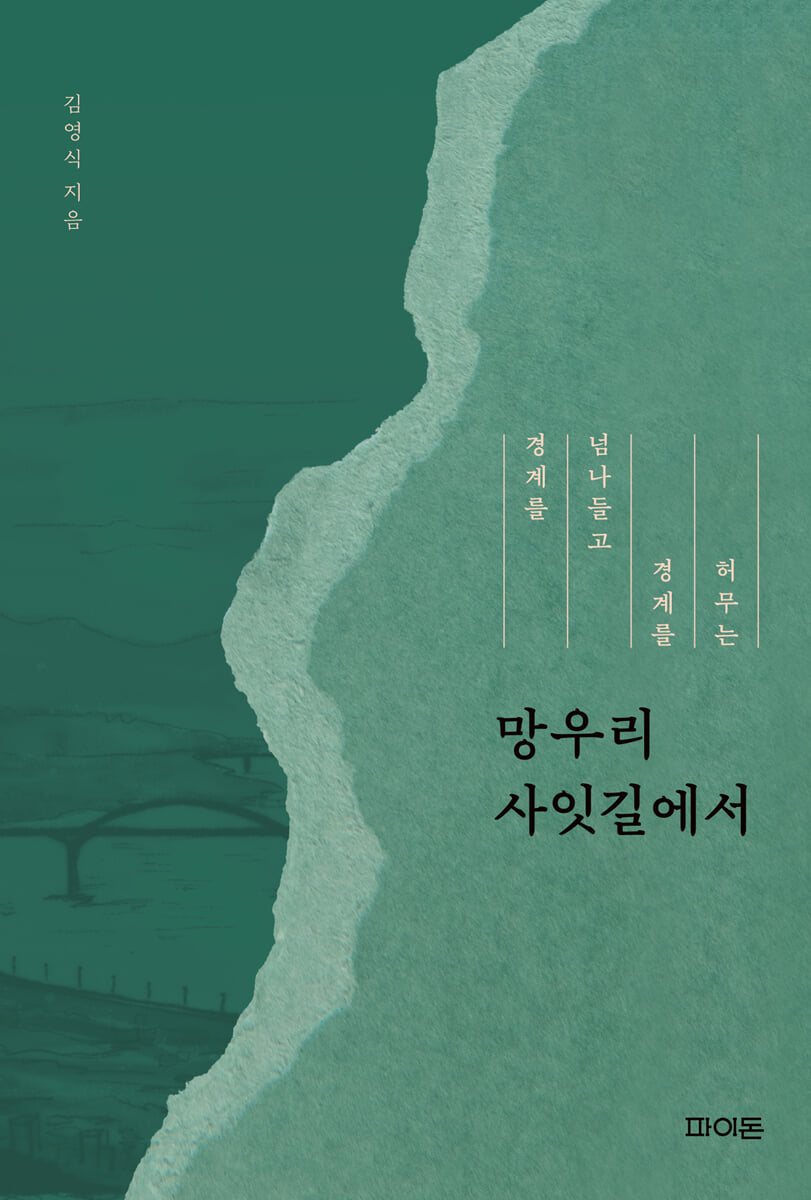
On the side road of Manguri
 |
Description
Book Introduction
A new essay by Kim Young-sik, the "Manguri writer" who transformed Manguri Cemetery into a cultural heritage site.
Author Kim Young-sik, who introduced the humanistic value of Mangwoo-ri Park (Mangwoo-ri, Mangwoo History and Culture Park) to the world, has published an introduction to Mangwoo-ri that focuses on its meaning rather than its people.
This is a humanities essay that interestingly unravels the hidden history of Mangwoori, the meaning and value realized after long reflection, and the many episodes experienced since first encountering Mangwoori as a college student to the present.
If the biographies of "101 People of Mangwoo Historical and Cultural Park" focused on individual figures in vertical columns, this book, comprised of meaning, value, and anecdotes, is horizontal columns, clearly presenting the entire image of Mangwoo Park before the reader's eyes.
The author provides an easy-to-understand answer to the question, “Why is Mangwoo-ri called the Humanities Park?” using figures and statistics.
This book contains many interesting new facts.
In a postcard sent to Kim Eul-han, Miwa Wasaburo (Inspector Miwa), who was infamous as a high-ranking police officer during the Japanese colonial period, asks about the well-being of Chunwon Lee Gwang-su's wife, Heo Yeong-suk.
The author develops a persuasive theory by finding clues as to who designed the tomb of Bang Jeong-hwan, which displays the most unique sculptural beauty in Mangwoo-ri.
It is also very interesting to read the articles comparing the cemetery cultures of Korea and Japan, the story of poet Park Se-hyung, son of poet Park In-hwan, and the stories of people who have a connection with Manguri.
Author Kim Young-sik, who introduced the humanistic value of Mangwoo-ri Park (Mangwoo-ri, Mangwoo History and Culture Park) to the world, has published an introduction to Mangwoo-ri that focuses on its meaning rather than its people.
This is a humanities essay that interestingly unravels the hidden history of Mangwoori, the meaning and value realized after long reflection, and the many episodes experienced since first encountering Mangwoori as a college student to the present.
If the biographies of "101 People of Mangwoo Historical and Cultural Park" focused on individual figures in vertical columns, this book, comprised of meaning, value, and anecdotes, is horizontal columns, clearly presenting the entire image of Mangwoo Park before the reader's eyes.
The author provides an easy-to-understand answer to the question, “Why is Mangwoo-ri called the Humanities Park?” using figures and statistics.
This book contains many interesting new facts.
In a postcard sent to Kim Eul-han, Miwa Wasaburo (Inspector Miwa), who was infamous as a high-ranking police officer during the Japanese colonial period, asks about the well-being of Chunwon Lee Gwang-su's wife, Heo Yeong-suk.
The author develops a persuasive theory by finding clues as to who designed the tomb of Bang Jeong-hwan, which displays the most unique sculptural beauty in Mangwoo-ri.
It is also very interesting to read the articles comparing the cemetery cultures of Korea and Japan, the story of poet Park Se-hyung, son of poet Park In-hwan, and the stories of people who have a connection with Manguri.
- You can preview some of the book's contents.
Preview
index
Opening remarks
Part 1: History as seen from a side street
1.
The sunrise spot, the morning sun rises again
2.
A great neighborhood to live in, a legend proven by science
3.
The Secret of Jungnangcheon's Tale: Byeonjungryang
4.
Manguri and Achasan Mountain where tigers appeared
5.
Baek Sa Lee Hang-bok's Donggangjeongsa
6.
Searching for six patriotic leaders from Jungnang-gu
7.
I'd rather go to Manguri to die
8.
Inspector Miwa: Who is Miwa Wasaburo?
9.
Girls of Joseon
10.
Who designed the tomb of Bang Jeong-hwan?
11.
Silverflies, take flight again
Part 2: Insights from a side street
1.
The true meaning of 'Mangwoo' rediscovered
2.
Enjoying the moment, forgetting worries
3.
Japanese graveyard worship culture
4.
Differences between the National Cemetery and Mangwoo-ri Park
5.
Mangwoo-ri Park, the sacred site of the March 1st Movement
6.
The pioneers of Hangul are gathered here.
7.
Why are there so many crosses on Manguri Hill?
8.
Remembering the Donghak Peasant Revolution and the March 1st Movement
9.
Museum of Modern Korean Calligraphy
10.
The dream of establishing a museum of modern Korean literature
11.
People gathered around Master Dosan
12.
Who can throw stones at the dead?
13.
Manguri, the center of newtro
People I met on the side street in Part 3
1.
First encounter with Manguri
2.
Diary of a Sangbong-dong college student
3.
Before the book came into the world
4.
The place where the man cheats
5.
Korea National Trust Manguri Committee
6.
The world's first graveyard quiz event, Challenge! Running Man
7.
Straighten a fallen tombstone
8.
Seniors who came to Manguri
9.
Mr. Seo Rip-gyu, whom I met at Mangwoo-ri
10.
Poet Park Se-hyung, son of poet Park In-hwan
11.
A letter received by poet Park In-hwan
12.
Yu Gwan-sun's grave found after a hundred years
13.
Getting into a prestigious university through the Manguri experience
14.
Eternal Memory Volunteer Group
Reading Poetry and Poetry in Closing Remarks
Part 1: History as seen from a side street
1.
The sunrise spot, the morning sun rises again
2.
A great neighborhood to live in, a legend proven by science
3.
The Secret of Jungnangcheon's Tale: Byeonjungryang
4.
Manguri and Achasan Mountain where tigers appeared
5.
Baek Sa Lee Hang-bok's Donggangjeongsa
6.
Searching for six patriotic leaders from Jungnang-gu
7.
I'd rather go to Manguri to die
8.
Inspector Miwa: Who is Miwa Wasaburo?
9.
Girls of Joseon
10.
Who designed the tomb of Bang Jeong-hwan?
11.
Silverflies, take flight again
Part 2: Insights from a side street
1.
The true meaning of 'Mangwoo' rediscovered
2.
Enjoying the moment, forgetting worries
3.
Japanese graveyard worship culture
4.
Differences between the National Cemetery and Mangwoo-ri Park
5.
Mangwoo-ri Park, the sacred site of the March 1st Movement
6.
The pioneers of Hangul are gathered here.
7.
Why are there so many crosses on Manguri Hill?
8.
Remembering the Donghak Peasant Revolution and the March 1st Movement
9.
Museum of Modern Korean Calligraphy
10.
The dream of establishing a museum of modern Korean literature
11.
People gathered around Master Dosan
12.
Who can throw stones at the dead?
13.
Manguri, the center of newtro
People I met on the side street in Part 3
1.
First encounter with Manguri
2.
Diary of a Sangbong-dong college student
3.
Before the book came into the world
4.
The place where the man cheats
5.
Korea National Trust Manguri Committee
6.
The world's first graveyard quiz event, Challenge! Running Man
7.
Straighten a fallen tombstone
8.
Seniors who came to Manguri
9.
Mr. Seo Rip-gyu, whom I met at Mangwoo-ri
10.
Poet Park Se-hyung, son of poet Park In-hwan
11.
A letter received by poet Park In-hwan
12.
Yu Gwan-sun's grave found after a hundred years
13.
Getting into a prestigious university through the Manguri experience
14.
Eternal Memory Volunteer Group
Reading Poetry and Poetry in Closing Remarks
Publisher's Review
A modern landscape carved into a wall, with humanistic insights beyond life and death.
Mangwooli Park is a rare space where you can encounter the stories of various figures from Korea's turbulent modern and contemporary history, including independence activists, social figures, and cultural artists who "forget their worries and sleep."
And Manguri Park, which is receiving renewed attention from a historical and cultural perspective beyond life and death, is said to be “a place where one can forget one’s worries (忘憂), where one can enjoy the experience of climbing the remains of the deceased, listening to their stories through their screams, thinking about their lives, and looking back on one’s present self (樂) and finally attain enlightenment (以) through the experience (樂) of forgetting one’s worries (忘憂), and enjoying forgetting one’s worries (樂以忘憂).”
The author conveys the value of the Manguri experience, which leads to the path of humanistic insight, in various places in the book.
This book, which was revised and supplemented from the serialized article titled “Manguri Story” that was published twice a month in the Jungnang Newspaper from 2021 to 2022, is divided into three parts: history as seen from the “side road,” enlightenment gained from the “side road,” and stories of people met from the “side road.”
In 2016, the Seoul Metropolitan Government created the 'Manguri Side Road' as a humanities path for citizens to experience and reflect on history.
The 'side road' is a path that crosses and breaks down boundaries, walking between graves, between the past and the present, between life and death, between him and me.
The unique back side of the Miwa Gyeongbu and Manguri, and the Miwa Gyeongbu
In the once popular drama "Wild Times" that was a hit with the entire nation, Miwa and Inspector appear like licorice in a pharmacy.
At that time, Miwa was the most active person, managing and understanding most of the famous people in Joseon, and had a bad relationship with independence activists who were buried in Manguri, including Han Yong-un, Ahn Chang-ho, and Bang Jeong-hwan.
However, regarding Bang Jeong-hwan, there is a record that he said, “Bang Jeong-hwan, he’s an ugly guy, but there’s something about him that I don’t hate… If he had been Japanese, he wouldn’t be the kind of person to be called around by a lowly police inspector like me,” and that he visited Dr. Kim Sang-ok at the Imun-ri Cemetery on the anniversary of his death, the day of the bombing of Jongno Police Station, to pray for the repose of his soul.
Meanwhile, the author reveals an interesting record that Miwa was so good at Korean that she passed the Korean Language Promotion Examination with the highest score, that her religion was Buddhism, Zen Buddhism at that, and that her hobbies and special skills were “flower arrangement and gardening.” He also reveals part of a New Year’s card that Miwa Wasaburo sent to Kim Eul-han, who was in charge of Jongno Police Station in January 1968, which included a message asking about the well-being of Lee Gwang-su’s wife, Heo Yeong-suk.
Who designed Sofa Bang Jeong-hwan's tomb?
The tomb of Bang Jeong-hwan, which attracts special attention from those who visit Manguri, is not a common burial mound, but a stone tomb with a foundation made of mugwort stones and a square white tombstone on top, with the calligraphy of O Se-chang engraved on it.
The author, while searching for the tomb of the sofa, had a question every time he saw it.
“In the days when graves were made of earth, this kind of shape would not have been created without the artist’s imagination.
“Every time I saw the tomb of a sofa, which was so artistically outstanding, I wondered who had created it.” (p. 79) However, I could not find any information about the tomb of the sofa.
The clue finally found was the list of founding members in an article titled “Monument to the late Bang Jeong-hwan, founder of Children’s Day” in the Chosun Ilbo on May 3, 1936.
Among the founders is Kim Bok-jin, who was the first modern sculptor in Korea to be selected for the Imperial Art Exhibition in 1924 and who designed a medal given to readers by the Chosun Joongang Ilbo in 1935. He was a close friend of Sopa, who was two years older than him.
The author infers that since Kim Bok-jin was a founder of KAPF and a member of the Korean Communist Party, “it is highly likely that no one revealed the name of the monument’s creator, or even left a record, in order to protect the honor of the sofa” (p. 81).
Since all of Kim Bok-jin's sculptures were lost during the Korean War, if the author's inference is true, the Tomb of Sopa would be the only work by Kim Bok-jin, Korea's first modern sculptor, that we can see today.
The history of Japanese graveyard worship culture
In Manguri, there is a Japanese-style tomb of Saito Otosaku, the first director of the Forestry Department of the Government-General.
And there are also several Korean tombs built during the late Japanese colonial period that follow the Japanese style.
Unlike Korea, the Japanese do not weed the graves, but rather wash them with water to remove moss from the gravestones.
The work is called sotae (掃苔), which means wiping away moss, and it even includes the hobby of visiting the graves of famous people.
Such a person is called a 'sotaega', and his records are called 'sotaegi' and 'sotaerok'. (p. 110) Japanese novelists such as Mori Ogai and Nagai Kafu are also considered famous sotaega.
According to the author, the Japanese hobby of visiting graves and learning by visiting the graves of famous people dates back to the Edo period, and there are quite a few related books that can be read across generations.
On the other hand, in Korea, although Mangwooli Park has recently been attracting attention as a site for the humanities, it is difficult to say that the culture of visiting graveyards has become established, and an appropriate term to match 'sotaega' has not yet been created.
Even without mentioning the Parisians who enjoy strolls and dates in the cemetery in the heart of the city, it is true that the cultural foundation for remembering death and reflecting on life in everyday life has been weak.
As more people enjoy cemeteries as cultural attractions, the quality of culture will improve.
What is the difference between Mangwooli Park and the National Cemetery?
“Seven of the 33 people involved in the March 1st Movement were buried in Mangwoo-ri, but four of them, Na Yong-hwan, Park Dong-wan, Lee Jong-il, and Hong Byeong-gi, were moved to the National Cemetery in 1966, and currently three of them, Han Yong-un, Oh Se-chang, and Park Hee-do, remain.
In addition, patriot Ahn Chang-ho was relocated to Dosan Park, and Song Jin-woo, Na Un-gyu, and others were relocated to the National Cemetery.
… Currently, in Mangwooli Park, there are the graves of nine patriotic martyrs who received national honors, including Han Yong-un, Oh Se-chang, Moon Il-pyeong, and Bang Jeong-hwan.” (pp. 113-114) In this way, the graves of patriotic martyrs scattered across the country were relocated one by one to the National Cemetery.
The author points out that the idea of relocating the graves of patriotic martyrs who sleep in Manguri to the National Cemetery without any consideration is a stereotype.
In the case of Han Yong-un, the Buddhist Youth Association and various other organizations are stepping in to support management, and people related to the deceased are resting nearby.
Bang Jeong-hwan is also with people he had a relationship with during his lifetime, such as Park Hee-do, Lee In-seong, and Choi Shin-bok. As for Ahn Chang-ho, only the grave site remains now, but people who followed Dosan during his lifetime came to the vicinity of Manguri Dosan after his death and said, “Dosan is the person with the largest organization in Manguri” (p. 154).
It is a sight that is unimaginable if you think of it as a national cemetery.
“The National Cemetery is a noble place in itself, but unfortunately, at this point in time, it feels like a totalitarian, lack of individuality and management convenience.
In contrast, in Mangwoo-ri, there are tombs and gravestones of various shapes, and in addition to patriots, there are also pro-Japanese collaborators, leftists, and other diverse figures gathered together, as if in a microcosm of the real society we live in.
It can be said to be more humanistic than the National Cemetery.
That's why we call Mangwooli Park the Humanities Park." (pp. 116-117)
Mangwooli Park is a rare space where you can encounter the stories of various figures from Korea's turbulent modern and contemporary history, including independence activists, social figures, and cultural artists who "forget their worries and sleep."
And Manguri Park, which is receiving renewed attention from a historical and cultural perspective beyond life and death, is said to be “a place where one can forget one’s worries (忘憂), where one can enjoy the experience of climbing the remains of the deceased, listening to their stories through their screams, thinking about their lives, and looking back on one’s present self (樂) and finally attain enlightenment (以) through the experience (樂) of forgetting one’s worries (忘憂), and enjoying forgetting one’s worries (樂以忘憂).”
The author conveys the value of the Manguri experience, which leads to the path of humanistic insight, in various places in the book.
This book, which was revised and supplemented from the serialized article titled “Manguri Story” that was published twice a month in the Jungnang Newspaper from 2021 to 2022, is divided into three parts: history as seen from the “side road,” enlightenment gained from the “side road,” and stories of people met from the “side road.”
In 2016, the Seoul Metropolitan Government created the 'Manguri Side Road' as a humanities path for citizens to experience and reflect on history.
The 'side road' is a path that crosses and breaks down boundaries, walking between graves, between the past and the present, between life and death, between him and me.
The unique back side of the Miwa Gyeongbu and Manguri, and the Miwa Gyeongbu
In the once popular drama "Wild Times" that was a hit with the entire nation, Miwa and Inspector appear like licorice in a pharmacy.
At that time, Miwa was the most active person, managing and understanding most of the famous people in Joseon, and had a bad relationship with independence activists who were buried in Manguri, including Han Yong-un, Ahn Chang-ho, and Bang Jeong-hwan.
However, regarding Bang Jeong-hwan, there is a record that he said, “Bang Jeong-hwan, he’s an ugly guy, but there’s something about him that I don’t hate… If he had been Japanese, he wouldn’t be the kind of person to be called around by a lowly police inspector like me,” and that he visited Dr. Kim Sang-ok at the Imun-ri Cemetery on the anniversary of his death, the day of the bombing of Jongno Police Station, to pray for the repose of his soul.
Meanwhile, the author reveals an interesting record that Miwa was so good at Korean that she passed the Korean Language Promotion Examination with the highest score, that her religion was Buddhism, Zen Buddhism at that, and that her hobbies and special skills were “flower arrangement and gardening.” He also reveals part of a New Year’s card that Miwa Wasaburo sent to Kim Eul-han, who was in charge of Jongno Police Station in January 1968, which included a message asking about the well-being of Lee Gwang-su’s wife, Heo Yeong-suk.
Who designed Sofa Bang Jeong-hwan's tomb?
The tomb of Bang Jeong-hwan, which attracts special attention from those who visit Manguri, is not a common burial mound, but a stone tomb with a foundation made of mugwort stones and a square white tombstone on top, with the calligraphy of O Se-chang engraved on it.
The author, while searching for the tomb of the sofa, had a question every time he saw it.
“In the days when graves were made of earth, this kind of shape would not have been created without the artist’s imagination.
“Every time I saw the tomb of a sofa, which was so artistically outstanding, I wondered who had created it.” (p. 79) However, I could not find any information about the tomb of the sofa.
The clue finally found was the list of founding members in an article titled “Monument to the late Bang Jeong-hwan, founder of Children’s Day” in the Chosun Ilbo on May 3, 1936.
Among the founders is Kim Bok-jin, who was the first modern sculptor in Korea to be selected for the Imperial Art Exhibition in 1924 and who designed a medal given to readers by the Chosun Joongang Ilbo in 1935. He was a close friend of Sopa, who was two years older than him.
The author infers that since Kim Bok-jin was a founder of KAPF and a member of the Korean Communist Party, “it is highly likely that no one revealed the name of the monument’s creator, or even left a record, in order to protect the honor of the sofa” (p. 81).
Since all of Kim Bok-jin's sculptures were lost during the Korean War, if the author's inference is true, the Tomb of Sopa would be the only work by Kim Bok-jin, Korea's first modern sculptor, that we can see today.
The history of Japanese graveyard worship culture
In Manguri, there is a Japanese-style tomb of Saito Otosaku, the first director of the Forestry Department of the Government-General.
And there are also several Korean tombs built during the late Japanese colonial period that follow the Japanese style.
Unlike Korea, the Japanese do not weed the graves, but rather wash them with water to remove moss from the gravestones.
The work is called sotae (掃苔), which means wiping away moss, and it even includes the hobby of visiting the graves of famous people.
Such a person is called a 'sotaega', and his records are called 'sotaegi' and 'sotaerok'. (p. 110) Japanese novelists such as Mori Ogai and Nagai Kafu are also considered famous sotaega.
According to the author, the Japanese hobby of visiting graves and learning by visiting the graves of famous people dates back to the Edo period, and there are quite a few related books that can be read across generations.
On the other hand, in Korea, although Mangwooli Park has recently been attracting attention as a site for the humanities, it is difficult to say that the culture of visiting graveyards has become established, and an appropriate term to match 'sotaega' has not yet been created.
Even without mentioning the Parisians who enjoy strolls and dates in the cemetery in the heart of the city, it is true that the cultural foundation for remembering death and reflecting on life in everyday life has been weak.
As more people enjoy cemeteries as cultural attractions, the quality of culture will improve.
What is the difference between Mangwooli Park and the National Cemetery?
“Seven of the 33 people involved in the March 1st Movement were buried in Mangwoo-ri, but four of them, Na Yong-hwan, Park Dong-wan, Lee Jong-il, and Hong Byeong-gi, were moved to the National Cemetery in 1966, and currently three of them, Han Yong-un, Oh Se-chang, and Park Hee-do, remain.
In addition, patriot Ahn Chang-ho was relocated to Dosan Park, and Song Jin-woo, Na Un-gyu, and others were relocated to the National Cemetery.
… Currently, in Mangwooli Park, there are the graves of nine patriotic martyrs who received national honors, including Han Yong-un, Oh Se-chang, Moon Il-pyeong, and Bang Jeong-hwan.” (pp. 113-114) In this way, the graves of patriotic martyrs scattered across the country were relocated one by one to the National Cemetery.
The author points out that the idea of relocating the graves of patriotic martyrs who sleep in Manguri to the National Cemetery without any consideration is a stereotype.
In the case of Han Yong-un, the Buddhist Youth Association and various other organizations are stepping in to support management, and people related to the deceased are resting nearby.
Bang Jeong-hwan is also with people he had a relationship with during his lifetime, such as Park Hee-do, Lee In-seong, and Choi Shin-bok. As for Ahn Chang-ho, only the grave site remains now, but people who followed Dosan during his lifetime came to the vicinity of Manguri Dosan after his death and said, “Dosan is the person with the largest organization in Manguri” (p. 154).
It is a sight that is unimaginable if you think of it as a national cemetery.
“The National Cemetery is a noble place in itself, but unfortunately, at this point in time, it feels like a totalitarian, lack of individuality and management convenience.
In contrast, in Mangwoo-ri, there are tombs and gravestones of various shapes, and in addition to patriots, there are also pro-Japanese collaborators, leftists, and other diverse figures gathered together, as if in a microcosm of the real society we live in.
It can be said to be more humanistic than the National Cemetery.
That's why we call Mangwooli Park the Humanities Park." (pp. 116-117)
GOODS SPECIFICS
- Date of issue: December 15, 2023
- Page count, weight, size: 256 pages | 125*185*20mm
- ISBN13: 9791198109293
- ISBN10: 1198109297
You may also like
카테고리
korean


korean

![GQ KOREA Mark (Monthly): December [2025]](http://librairie.coreenne.fr/cdn/shop/files/8ef265dbbfbf186523ed75ba7319009d.jpg?v=1765340328&width=3840)


