

Tales of Medieval Europe
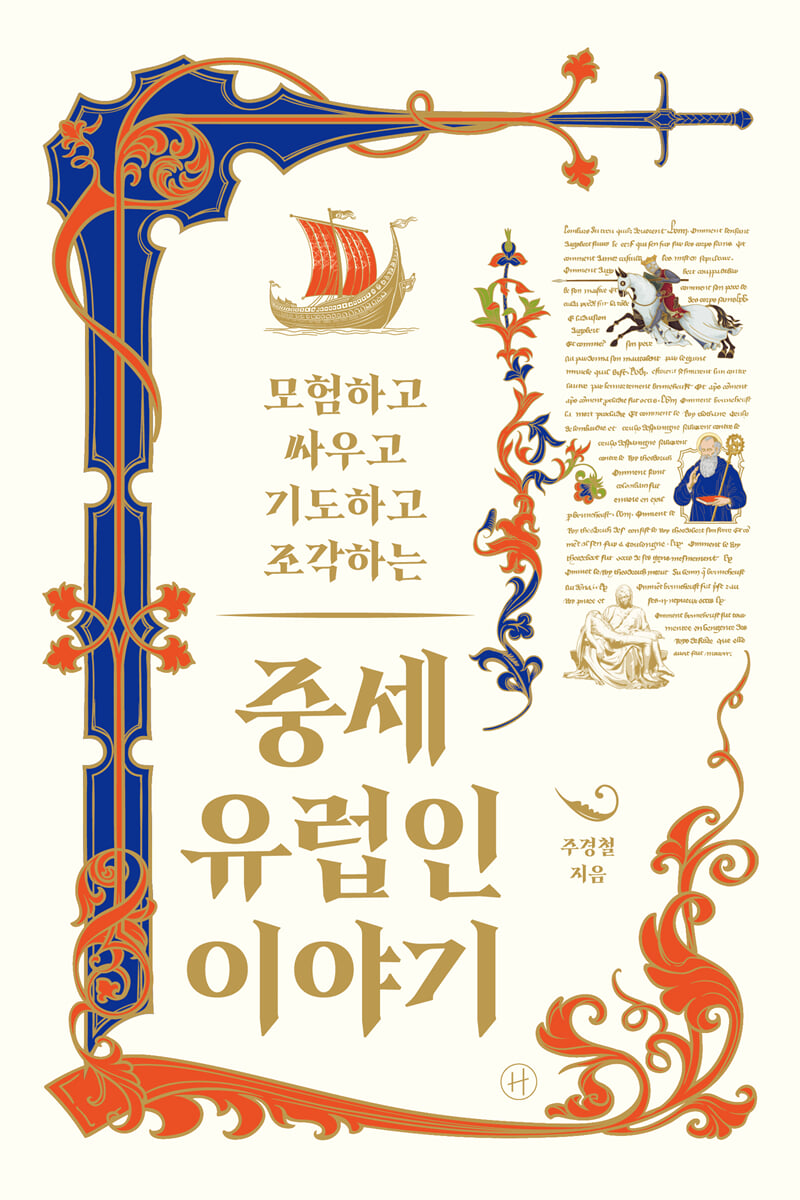 |
Description
Book Introduction
This time it's the Middle Ages!
From Viking to Fra Mauro,
A medieval mosaic created by a colorful crowd
It's not just movies and dramas that are anticipated for prequels.
This book is a kind of prequel to "Ju Kyung-chul's European Stories," which dramatically depicts the unique and energetic figures who walked modern Europe from Joan of Arc to Napoleon.
The previous work, which was an excellent historical textbook on the modern European world and Europeans, was well-received by many readers.
It provides not only knowledge but also the pleasure of imagination.
―9**
The difficult and boring history was blown away in one fell swoop.
-rice paddy*
What a wonderful story! It feels like I've read a novel.
―ds******
The map of history is drawn through the lives of each character.
-good**
Modern interpretations and wit transform historical figures into entirely different characters.
-Re*
It's full of events that are more dramatic and unbelievable than a movie.
-poop**
Historical figures come to life vividly thanks to the breathtaking writing skills.
-belt***
It unravels the difficult and unfamiliar history of the West in a gripping and absorbing way.
Even though it's a story from 500 years ago, it's vivid as if I'm hearing the news yesterday.
―Thin***
Encouraged by this response, the medieval people were called upon to build a unique civilization, unlike any other era, by inheriting the achievements of the previous era and passing it on to modern people.
Viking warriors who left Scandinavia and traveled all over Normandy, England, Sicily, Russia, Byzantium, and America, turning early medieval Europe into a stage for a new leap forward; an emperor who stood barefoot in the snow for three days asking for forgiveness and a pope who knelt in the emperor's battle of revenge; Countess Matilda who held the sole position of mediator in the most heated battle between the cross and the crown of the time; Romeo and Juliet of Cordoba; Eleanor of Aquitaine who married two kings, gave birth to two kings, participated in the Crusades, and opened a court of love; the 'Children's Crusade', an unprecedented event born from an apocalyptic world; ambitious royals who rushed to the throne without regard for their parents or siblings; a holy king who healed illnesses with his touch; Louis XIII and his wife complaining of infertility in front of the Black Madonna of Loreto; geniuses of the Middle Ages, which can be called the 'Age of the Cathedral'. Architects, sculptors, and stonemasons; witches, inquisitors, ascetics, and heretics created by wars and plagues that caused unimaginable fear and anxiety; Lucrezia, the Pope's daughter who had to endure three marriages for the sake of ruthless power against her will; the Medici masterminds of the murder-for-hire scandal revealed after 500 years, and so on.
This book vividly reveals that the Middle Ages were a world created by all sorts of people fighting, loving, strife, and adventure. By bringing together medieval people we were curious about but had little knowledge of, it presents a colorful mosaic of the Middle Ages.
From Viking to Fra Mauro,
A medieval mosaic created by a colorful crowd
It's not just movies and dramas that are anticipated for prequels.
This book is a kind of prequel to "Ju Kyung-chul's European Stories," which dramatically depicts the unique and energetic figures who walked modern Europe from Joan of Arc to Napoleon.
The previous work, which was an excellent historical textbook on the modern European world and Europeans, was well-received by many readers.
It provides not only knowledge but also the pleasure of imagination.
―9**
The difficult and boring history was blown away in one fell swoop.
-rice paddy*
What a wonderful story! It feels like I've read a novel.
―ds******
The map of history is drawn through the lives of each character.
-good**
Modern interpretations and wit transform historical figures into entirely different characters.
-Re*
It's full of events that are more dramatic and unbelievable than a movie.
-poop**
Historical figures come to life vividly thanks to the breathtaking writing skills.
-belt***
It unravels the difficult and unfamiliar history of the West in a gripping and absorbing way.
Even though it's a story from 500 years ago, it's vivid as if I'm hearing the news yesterday.
―Thin***
Encouraged by this response, the medieval people were called upon to build a unique civilization, unlike any other era, by inheriting the achievements of the previous era and passing it on to modern people.
Viking warriors who left Scandinavia and traveled all over Normandy, England, Sicily, Russia, Byzantium, and America, turning early medieval Europe into a stage for a new leap forward; an emperor who stood barefoot in the snow for three days asking for forgiveness and a pope who knelt in the emperor's battle of revenge; Countess Matilda who held the sole position of mediator in the most heated battle between the cross and the crown of the time; Romeo and Juliet of Cordoba; Eleanor of Aquitaine who married two kings, gave birth to two kings, participated in the Crusades, and opened a court of love; the 'Children's Crusade', an unprecedented event born from an apocalyptic world; ambitious royals who rushed to the throne without regard for their parents or siblings; a holy king who healed illnesses with his touch; Louis XIII and his wife complaining of infertility in front of the Black Madonna of Loreto; geniuses of the Middle Ages, which can be called the 'Age of the Cathedral'. Architects, sculptors, and stonemasons; witches, inquisitors, ascetics, and heretics created by wars and plagues that caused unimaginable fear and anxiety; Lucrezia, the Pope's daughter who had to endure three marriages for the sake of ruthless power against her will; the Medici masterminds of the murder-for-hire scandal revealed after 500 years, and so on.
This book vividly reveals that the Middle Ages were a world created by all sorts of people fighting, loving, strife, and adventure. By bringing together medieval people we were curious about but had little knowledge of, it presents a colorful mosaic of the Middle Ages.
- You can preview some of the book's contents.
Preview
index
preface
Part 1: The Age of the Vikings: The Dynamics of the Frontier: Where Destruction, Interchange, and Innovation Intersect
1 Vikings: Expanding the History of Medieval Europe
Heatherby, the Viking brokerage city
2 The Vikings' Eastward Expansion: Beyond Russia and the Byzantine Empire
The Viking culture that was created
3 Landed in America 500 years before Columbus
Greenland and the 'Collapse of Civilization'
From warriors to nobles, the birth of Normandy
Mont Saint-Michel Abbey
5 The Norman Conquest: A New Beginning in British History
Bayeux Tapestry
6 The Norman Dynasty: From Brutal Conquest to Tolerant Integration
Changes in English
7 Norman mercenaries establish the Kingdom of Sicily
Cappella Palatina in Palermo
Part 2: The Cross and the Crown: Heated Competition and New Developments in Performance
8. The Mosque-Cathedral of Cordoba: A "Jewel of the World" Where Two Civilizations Coexist
Ibn Zaydun and Walada
9 El Cid, the fictional hero of the reconquest movement
Santiago de Compostela
10. Heinrich the "Birdhunter" Opens the Way to Empire
Quedlinburg, a Nazi mecca
11 The Humiliation of Canossa, the Emperor's Plaster Sin, and Revenge
Matilda, the Italian Joan of Arc
12 The Papal Revolution: Preparing the Modern World with the Power of Law
Strengthening the confession
13 The Signal of the Crusades: "Tied the Christians' Intestines to Stakes..."
Song of Roland
14 The Boy's Crusade: A Strange Phenomenon in an Apocalyptic World
Duke of Bouillon, an exemplary crusader knight
Part 3 Power, Love, and Faith: Medieval Styles That Transcend Our Thoughts and Feelings
15 Eleanor of Aquitaine, Building a Kingdom and Opening the Way to Courtly Love
The Palace of Love
16 The end of the Plantagenet Empire and the most powerful king in Europe, Henry II
Richard the Lionheart
17 Are Kings Sacred in the 21st Century?
scrofula
18 The reign of the holy but cruel King Louis IX
Sainte-Chapelle
19 Gothic Cathedral, a sacred space led by the king
revolutionary destruction
20 Paris' Notre Dame Cathedral, an 800-year-old stone house that creates an enchanting light and sound
Viollet-le-Duc
21 Santa Casa of Loreto, the church that protects freedom and liberation
Our Lady of Loreto
Part 4 The Medieval Mind: Anxiety and the Longing for Salvation
22 The plague, a medieval horror brought by caravans and trading ships
Prescription for the Plague
23 The plague brought a storm of doomsday fanaticism, and the witch hunts began.
Waldo, 'The Poor Man of Lyon'
24 The Home of Medieval Legends, Ghost Stories
Snowball Story
25. The Trial of the Holy Spirit: Asking God's Will to Detect Sin
The World's New Tribunal
26 From Sacred Poverty to Pure Wealth: Scholasticism Opened the Door to Capitalism
oppression of poverty
27 Mapa Mundi, a world drawn through a Christian worldview
Cheonhado, a world map created by Joseon
Part 5: A Journey to Modernity: The Cold-Blooded Power and the Scent of Art
28 Richard III, The White Rose that Bloomed in Hell's Battlefield
The king's remains
29 The Renaissance-era melodrama of Cesare and Lucrezia
Cesare praised by Machiavelli
The secret of the Medici murders revealed after 30,500 years
Another unsolved mystery involving the Medici family
31 Ivan the Terrible Creates a Sacred State Through Brutal Violence
St. Basil's Cathedral
32 Florence, the city of vibrant geniuses
Reasons to work in Florence
33 Michelangelo's Three Pietas Meditating on Light in Pain
Controversy Surrounding the 'Vatican Pieta'
34 Fra Mauro Map, Foreshadowing the Asian Voyage
Map of the Honil Gangni Station National Road
References
Image source and location
Part 1: The Age of the Vikings: The Dynamics of the Frontier: Where Destruction, Interchange, and Innovation Intersect
1 Vikings: Expanding the History of Medieval Europe
Heatherby, the Viking brokerage city
2 The Vikings' Eastward Expansion: Beyond Russia and the Byzantine Empire
The Viking culture that was created
3 Landed in America 500 years before Columbus
Greenland and the 'Collapse of Civilization'
From warriors to nobles, the birth of Normandy
Mont Saint-Michel Abbey
5 The Norman Conquest: A New Beginning in British History
Bayeux Tapestry
6 The Norman Dynasty: From Brutal Conquest to Tolerant Integration
Changes in English
7 Norman mercenaries establish the Kingdom of Sicily
Cappella Palatina in Palermo
Part 2: The Cross and the Crown: Heated Competition and New Developments in Performance
8. The Mosque-Cathedral of Cordoba: A "Jewel of the World" Where Two Civilizations Coexist
Ibn Zaydun and Walada
9 El Cid, the fictional hero of the reconquest movement
Santiago de Compostela
10. Heinrich the "Birdhunter" Opens the Way to Empire
Quedlinburg, a Nazi mecca
11 The Humiliation of Canossa, the Emperor's Plaster Sin, and Revenge
Matilda, the Italian Joan of Arc
12 The Papal Revolution: Preparing the Modern World with the Power of Law
Strengthening the confession
13 The Signal of the Crusades: "Tied the Christians' Intestines to Stakes..."
Song of Roland
14 The Boy's Crusade: A Strange Phenomenon in an Apocalyptic World
Duke of Bouillon, an exemplary crusader knight
Part 3 Power, Love, and Faith: Medieval Styles That Transcend Our Thoughts and Feelings
15 Eleanor of Aquitaine, Building a Kingdom and Opening the Way to Courtly Love
The Palace of Love
16 The end of the Plantagenet Empire and the most powerful king in Europe, Henry II
Richard the Lionheart
17 Are Kings Sacred in the 21st Century?
scrofula
18 The reign of the holy but cruel King Louis IX
Sainte-Chapelle
19 Gothic Cathedral, a sacred space led by the king
revolutionary destruction
20 Paris' Notre Dame Cathedral, an 800-year-old stone house that creates an enchanting light and sound
Viollet-le-Duc
21 Santa Casa of Loreto, the church that protects freedom and liberation
Our Lady of Loreto
Part 4 The Medieval Mind: Anxiety and the Longing for Salvation
22 The plague, a medieval horror brought by caravans and trading ships
Prescription for the Plague
23 The plague brought a storm of doomsday fanaticism, and the witch hunts began.
Waldo, 'The Poor Man of Lyon'
24 The Home of Medieval Legends, Ghost Stories
Snowball Story
25. The Trial of the Holy Spirit: Asking God's Will to Detect Sin
The World's New Tribunal
26 From Sacred Poverty to Pure Wealth: Scholasticism Opened the Door to Capitalism
oppression of poverty
27 Mapa Mundi, a world drawn through a Christian worldview
Cheonhado, a world map created by Joseon
Part 5: A Journey to Modernity: The Cold-Blooded Power and the Scent of Art
28 Richard III, The White Rose that Bloomed in Hell's Battlefield
The king's remains
29 The Renaissance-era melodrama of Cesare and Lucrezia
Cesare praised by Machiavelli
The secret of the Medici murders revealed after 30,500 years
Another unsolved mystery involving the Medici family
31 Ivan the Terrible Creates a Sacred State Through Brutal Violence
St. Basil's Cathedral
32 Florence, the city of vibrant geniuses
Reasons to work in Florence
33 Michelangelo's Three Pietas Meditating on Light in Pain
Controversy Surrounding the 'Vatican Pieta'
34 Fra Mauro Map, Foreshadowing the Asian Voyage
Map of the Honil Gangni Station National Road
References
Image source and location
Detailed image
.jpg)
Into the book
For a long time, the European Middle Ages had been painted with the false image of the Dark Ages.
It is as if after the splendid light of ancient Greco-Roman culture faded, pitch-black darkness enveloped Europe.
The argument is that for 1,000 years, from approximately 500 AD to 1500 AD, the chaotic state of feudalism and superstitious religions shackled the human spirit and society, a period of ignorance that lasted until the Renaissance, when the light of culture was revived and modern Western civilization blossomed.
Many people still accept this story as truth, but it's best to forget such outdated explanations as soon as possible.
Today's historians present a very different picture of the Middle Ages.
--- p.5~6, from the “Preface”
The people we call Vikings came from Sweden, Norway, and Denmark.
It spread in all directions over a period of about 300 years starting in the 8th century, and its scope is truly astonishing.
To the south, they crossed the Atlantic coast and reached the Mediterranean Sea, to the west they landed in the Americas 500 years before Columbus, to the southeast they reached Russia and the Byzantine Empire, and perhaps even further as far as India and China.
Sometimes they acted as raiders and sometimes as merchants, but they also created new political units, such as the Duchy of Normandy in northwestern France or the Kingdom of Sicily, and had a great influence on the formation of the Russian state.
The Viking phenomenon is a remarkable event that encompasses destruction, exchange, and innovation.
--- p.15, 「Part 1.
From "The Age of the Vikings"
Even if that was the Pope's intention, why were the people of the time so enthusiastic? The prevailing view was that the Crusades were motivated by an ulterior motive: the poor, deprived of opportunities at home, those with nothing to lose, seeking to make a fortune through military adventures.
However, recent empirical research suggests the opposite.
The Crusaders were wealthy men with a lot to lose.
In fact, it is absurd to say that one participates in a war for material gain.
(…) Those who made money during this period were merchants who bought land from the knights who participated in the crusades or sold war supplies, in other words, people who did not participate in the crusades.
--- p.131, 「13.
From “The signal flare of the Crusades: ‘Tied the end of the Christian intestines to a stake...””
In 1212, an unprecedented event called the 'Children's Crusade' occurred.
(…) What on earth is going on that has tens of thousands of children marching to the distant Middle East, radiating fervent religious fervor?
--- p.137, 「14.
From "The Boy's Crusade: Strange Phenomena in an Apocalyptic World"
The history of medieval Europe is not a stage exclusively for men.
The spectacular achievements of these outstanding women are also dazzling.
The dramatic life of Eleanor is representative.
She was the queen of two countries, France and England, the mother of two kings, a warrior who fought in the Crusades and led an army to protect her son's throne, and a woman who pioneered a new style of love.
--- p.148, 「Part 3.
From “Power, Love, and Faith”
Why are Elizabeth II and Charles III of England kings? What is their basis for claiming the throne? While most people today will likely find it difficult to agree or understand, the answer is that they are divine.
--- p.171, 「17.
Is the King Sacred in the 21st Century?
Whether or not the story of the house being blown away and moving is true is up to each individual to decide for themselves, but for those who firmly believe in this, it is undoubtedly a more important relic than anything else in the world.
There are many, many sacred relics in the world.
Examples include fragments of the cross on which Jesus was hung in his final moments, and the thorns of his crown (one of which is preserved in the British Museum).
However, it cannot be denied that the 'Hymn', which is the strongest evidence that tells us about the time when Jesus was on this earth, is a key relic.
This is why millions of pilgrims and tourists flock to Loreto every year.
--- p.214, 「21.
From "Santa Casa of Loreto, the Church that Protects Freedom and Liberation"
So who ordered the assassination? Surprisingly, it was revealed to be Charles V, Holy Roman Emperor.
The motive for the murder is easily deduced.
Because Alessandro, who was assassinated by Lorenzino in 1537, was his son-in-law.
(…) The evidence comes from the Simancas Archives in Spain, far from Italy.
The reason historians have not been able to uncover the truth until now is because they have only looked at Italian documents when trying to uncover the truth behind the murders within the Medici family.
The actual incident was unfolding in a much larger context, so the evidence should have been examined internationally.
It is as if after the splendid light of ancient Greco-Roman culture faded, pitch-black darkness enveloped Europe.
The argument is that for 1,000 years, from approximately 500 AD to 1500 AD, the chaotic state of feudalism and superstitious religions shackled the human spirit and society, a period of ignorance that lasted until the Renaissance, when the light of culture was revived and modern Western civilization blossomed.
Many people still accept this story as truth, but it's best to forget such outdated explanations as soon as possible.
Today's historians present a very different picture of the Middle Ages.
--- p.5~6, from the “Preface”
The people we call Vikings came from Sweden, Norway, and Denmark.
It spread in all directions over a period of about 300 years starting in the 8th century, and its scope is truly astonishing.
To the south, they crossed the Atlantic coast and reached the Mediterranean Sea, to the west they landed in the Americas 500 years before Columbus, to the southeast they reached Russia and the Byzantine Empire, and perhaps even further as far as India and China.
Sometimes they acted as raiders and sometimes as merchants, but they also created new political units, such as the Duchy of Normandy in northwestern France or the Kingdom of Sicily, and had a great influence on the formation of the Russian state.
The Viking phenomenon is a remarkable event that encompasses destruction, exchange, and innovation.
--- p.15, 「Part 1.
From "The Age of the Vikings"
Even if that was the Pope's intention, why were the people of the time so enthusiastic? The prevailing view was that the Crusades were motivated by an ulterior motive: the poor, deprived of opportunities at home, those with nothing to lose, seeking to make a fortune through military adventures.
However, recent empirical research suggests the opposite.
The Crusaders were wealthy men with a lot to lose.
In fact, it is absurd to say that one participates in a war for material gain.
(…) Those who made money during this period were merchants who bought land from the knights who participated in the crusades or sold war supplies, in other words, people who did not participate in the crusades.
--- p.131, 「13.
From “The signal flare of the Crusades: ‘Tied the end of the Christian intestines to a stake...””
In 1212, an unprecedented event called the 'Children's Crusade' occurred.
(…) What on earth is going on that has tens of thousands of children marching to the distant Middle East, radiating fervent religious fervor?
--- p.137, 「14.
From "The Boy's Crusade: Strange Phenomena in an Apocalyptic World"
The history of medieval Europe is not a stage exclusively for men.
The spectacular achievements of these outstanding women are also dazzling.
The dramatic life of Eleanor is representative.
She was the queen of two countries, France and England, the mother of two kings, a warrior who fought in the Crusades and led an army to protect her son's throne, and a woman who pioneered a new style of love.
--- p.148, 「Part 3.
From “Power, Love, and Faith”
Why are Elizabeth II and Charles III of England kings? What is their basis for claiming the throne? While most people today will likely find it difficult to agree or understand, the answer is that they are divine.
--- p.171, 「17.
Is the King Sacred in the 21st Century?
Whether or not the story of the house being blown away and moving is true is up to each individual to decide for themselves, but for those who firmly believe in this, it is undoubtedly a more important relic than anything else in the world.
There are many, many sacred relics in the world.
Examples include fragments of the cross on which Jesus was hung in his final moments, and the thorns of his crown (one of which is preserved in the British Museum).
However, it cannot be denied that the 'Hymn', which is the strongest evidence that tells us about the time when Jesus was on this earth, is a key relic.
This is why millions of pilgrims and tourists flock to Loreto every year.
--- p.214, 「21.
From "Santa Casa of Loreto, the Church that Protects Freedom and Liberation"
So who ordered the assassination? Surprisingly, it was revealed to be Charles V, Holy Roman Emperor.
The motive for the murder is easily deduced.
Because Alessandro, who was assassinated by Lorenzino in 1537, was his son-in-law.
(…) The evidence comes from the Simancas Archives in Spain, far from Italy.
The reason historians have not been able to uncover the truth until now is because they have only looked at Italian documents when trying to uncover the truth behind the murders within the Medici family.
The actual incident was unfolding in a much larger context, so the evidence should have been examined internationally.
--- p.303~305, 「30.
From "The Secret of the Medici Murder Case Revealed After 500 Years"
From "The Secret of the Medici Murder Case Revealed After 500 Years"
Publisher's Review
From Scandinavia to Central and Western Europe, the Iberian Peninsula, and Russia
A 1,000-Year Journey to Meet Medieval People
Our journey through medieval Europe to meet medieval people begins in an unexpected place.
Rather than the usual central stages of European history, such as France, Italy, and Germany, we head to the "periphery"—the bloody but surprisingly innovative places, starting from Scandinavia, the home of the Vikings, and extending to Russia and Byzantium.
Next, we pass through the Iberian Peninsula, where Islam has been present for 800 years, and arrive at the heart of Western Europe, where crosses and crowns fight and holy knights march.
After wandering through palaces and monasteries, towns and streets where people love, fight for power, and pursue the divine, they pause for a moment in a tall, light-filled Gothic cathedral that embodies the ideal of heaven.
Leaving behind the tragic and bizarre scenes of medieval life in an age of war, famine, and disease, we conclude our 1,000-year journey, enjoying the thrilling emotions of culture and art that blossomed brilliantly amidst harsh politics and economic stagnation.
This five-part journey takes you across Europe, from the Viking Age through the fierce struggles of the castles, the Hundred Years' War and the plague, to the dawn of modernity.
The medieval man summoned by the modern age,
Medieval events that bring to mind today's issues
Historical figures are figures born from their time, but they are also figures demanded by another time.
In this book, there are quite a few medieval people who have been brought back to the modern era.
The history of medieval Germany is complex, with hundreds of political units large and small before its unification into the German Empire in the 19th century.
Why wouldn't there have been any ideals to overcome this chaos and unite Europe as a single unit?
This plan was realized as the Holy Roman Empire, which nominally enjoyed the highest authority in Europe, and the person who opened the way was Henry the Fowler.
In the mid-20th century, Heinrich is suddenly mobilized for Nazi propaganda.
Nazi Germany, which was at war with the Soviet Union, realized that this great king, a warrior who had annihilated the Slavs and an ancestor who had founded the German Empire, was very useful for Nazi propaganda, so they covered Quedlinburg, where Heinrich was buried, with swastikas and turned it into a Nazi shrine.
Meanwhile, in Spain, El Cid, who had been treated as a "liar" and a "dirty traitor" until the 19th century for fighting fellow Christian forces rather than Islamic forces, was resurrected as a national hero.
During the Spanish-American War, when the country was in decline, a hero was needed to restore the country's honor, and later dictator Franco portrayed himself as a second El Cid.
In addition, as nationalist sentiments erupted in the late 19th century, the people of Northern Europe summoned the Vikings to honor their brave ancestors who had roamed the world in the past in order to boost their national pride, and the ruler of "Grozny", nicknamed Ivan IV and known for his lightning-like, terrifying, and terrifying majesty, was surprisingly popular in Russia, unlike in other countries, and is still talked about today.
There are also stories here and there that touch on the issues we are concerned about today.
We look at war and pandemics from the perspective that crises do not lead to the total collapse of society, but rather are processes of seeking new change and development to find a way out of adversity.
The process of a scientific approach sprouting from the limitations of an era that demanded a deep abhorrence of one's sins, gathering as much repentance as possible, mixing it well with tears and applying a plaster; the process of a modern judicial system developing by overcoming the absurd problem of the divine trial; the ideological foundation that enabled the birth of capitalism from sacred poverty to clean wealth—these are the dark sides of the crisis, and we need to pay attention to these dark sides.
The fact that Florence's culture flourished most profusely at a time when economic prosperity had peaked, was in decline, and power struggles were ruthless, also reminds us of our own times.
The coronation of Charles III raises the question of whether kings are still sacred in the 21st century. The history of the Norman dynasty, which moved from brutal conquest to fusion, and the mosque-cathedral of Cordoba offer food for thought in this age of conflict between different civilizations.
Conveyed through 170 cut plates and maps
A beautiful and bizarre medieval landscape
We naturally encounter medieval Europe in the old castle walls we encounter while walking down the alleys of Europe, the cathedral spires in the heart of the city, the tapestries adorning the walls of museums, the rickety chronicles that breathe life into medieval history, the paintings, sculptures, and maps that still captivate us today, and even in OTT dramas and movies.
This book provides numerous visual aids to help us understand the Middle Ages that we have been encountering without even knowing it.
For example, the book introduces the stories of famous places that are considered tourist destinations for European travelers, such as Notre Dame Cathedral in Paris, Santiago de Compostela, Mont Saint-Michel Abbey, Duomo Opera Museum, St. Basil's Cathedral, Santa Casa de Loreto, and Cappella Palatina in Palermo, without leaving out anything, and adds vividness with on-site photos.
He also actively used illustrations from various chronicles and medieval books to enable people to see his own appearance as it was portrayed by his contemporaries.
The multi-cut map provides a glimpse into the complex political landscape of medieval Europe.
Professor Joo Kyung-chul's writing style, which is a sophisticated refinement of history that makes it easily understandable to the general public and, above all, draws readers into the story with its well-honed writing skills, will be enriched by over 170 visual aids.
A 1,000-Year Journey to Meet Medieval People
Our journey through medieval Europe to meet medieval people begins in an unexpected place.
Rather than the usual central stages of European history, such as France, Italy, and Germany, we head to the "periphery"—the bloody but surprisingly innovative places, starting from Scandinavia, the home of the Vikings, and extending to Russia and Byzantium.
Next, we pass through the Iberian Peninsula, where Islam has been present for 800 years, and arrive at the heart of Western Europe, where crosses and crowns fight and holy knights march.
After wandering through palaces and monasteries, towns and streets where people love, fight for power, and pursue the divine, they pause for a moment in a tall, light-filled Gothic cathedral that embodies the ideal of heaven.
Leaving behind the tragic and bizarre scenes of medieval life in an age of war, famine, and disease, we conclude our 1,000-year journey, enjoying the thrilling emotions of culture and art that blossomed brilliantly amidst harsh politics and economic stagnation.
This five-part journey takes you across Europe, from the Viking Age through the fierce struggles of the castles, the Hundred Years' War and the plague, to the dawn of modernity.
The medieval man summoned by the modern age,
Medieval events that bring to mind today's issues
Historical figures are figures born from their time, but they are also figures demanded by another time.
In this book, there are quite a few medieval people who have been brought back to the modern era.
The history of medieval Germany is complex, with hundreds of political units large and small before its unification into the German Empire in the 19th century.
Why wouldn't there have been any ideals to overcome this chaos and unite Europe as a single unit?
This plan was realized as the Holy Roman Empire, which nominally enjoyed the highest authority in Europe, and the person who opened the way was Henry the Fowler.
In the mid-20th century, Heinrich is suddenly mobilized for Nazi propaganda.
Nazi Germany, which was at war with the Soviet Union, realized that this great king, a warrior who had annihilated the Slavs and an ancestor who had founded the German Empire, was very useful for Nazi propaganda, so they covered Quedlinburg, where Heinrich was buried, with swastikas and turned it into a Nazi shrine.
Meanwhile, in Spain, El Cid, who had been treated as a "liar" and a "dirty traitor" until the 19th century for fighting fellow Christian forces rather than Islamic forces, was resurrected as a national hero.
During the Spanish-American War, when the country was in decline, a hero was needed to restore the country's honor, and later dictator Franco portrayed himself as a second El Cid.
In addition, as nationalist sentiments erupted in the late 19th century, the people of Northern Europe summoned the Vikings to honor their brave ancestors who had roamed the world in the past in order to boost their national pride, and the ruler of "Grozny", nicknamed Ivan IV and known for his lightning-like, terrifying, and terrifying majesty, was surprisingly popular in Russia, unlike in other countries, and is still talked about today.
There are also stories here and there that touch on the issues we are concerned about today.
We look at war and pandemics from the perspective that crises do not lead to the total collapse of society, but rather are processes of seeking new change and development to find a way out of adversity.
The process of a scientific approach sprouting from the limitations of an era that demanded a deep abhorrence of one's sins, gathering as much repentance as possible, mixing it well with tears and applying a plaster; the process of a modern judicial system developing by overcoming the absurd problem of the divine trial; the ideological foundation that enabled the birth of capitalism from sacred poverty to clean wealth—these are the dark sides of the crisis, and we need to pay attention to these dark sides.
The fact that Florence's culture flourished most profusely at a time when economic prosperity had peaked, was in decline, and power struggles were ruthless, also reminds us of our own times.
The coronation of Charles III raises the question of whether kings are still sacred in the 21st century. The history of the Norman dynasty, which moved from brutal conquest to fusion, and the mosque-cathedral of Cordoba offer food for thought in this age of conflict between different civilizations.
Conveyed through 170 cut plates and maps
A beautiful and bizarre medieval landscape
We naturally encounter medieval Europe in the old castle walls we encounter while walking down the alleys of Europe, the cathedral spires in the heart of the city, the tapestries adorning the walls of museums, the rickety chronicles that breathe life into medieval history, the paintings, sculptures, and maps that still captivate us today, and even in OTT dramas and movies.
This book provides numerous visual aids to help us understand the Middle Ages that we have been encountering without even knowing it.
For example, the book introduces the stories of famous places that are considered tourist destinations for European travelers, such as Notre Dame Cathedral in Paris, Santiago de Compostela, Mont Saint-Michel Abbey, Duomo Opera Museum, St. Basil's Cathedral, Santa Casa de Loreto, and Cappella Palatina in Palermo, without leaving out anything, and adds vividness with on-site photos.
He also actively used illustrations from various chronicles and medieval books to enable people to see his own appearance as it was portrayed by his contemporaries.
The multi-cut map provides a glimpse into the complex political landscape of medieval Europe.
Professor Joo Kyung-chul's writing style, which is a sophisticated refinement of history that makes it easily understandable to the general public and, above all, draws readers into the story with its well-honed writing skills, will be enriched by over 170 visual aids.
GOODS SPECIFICS
- Date of issue: November 6, 2023
- Page count, weight, size: 360 pages | 538g | 140*210*22mm
- ISBN13: 9791170870661
- ISBN10: 117087066X
You may also like
카테고리
korean


korean

![GQ KOREA Mark (Monthly): December [2025]](http://librairie.coreenne.fr/cdn/shop/files/8ef265dbbfbf186523ed75ba7319009d.jpg?v=1765340328&width=3840)


