

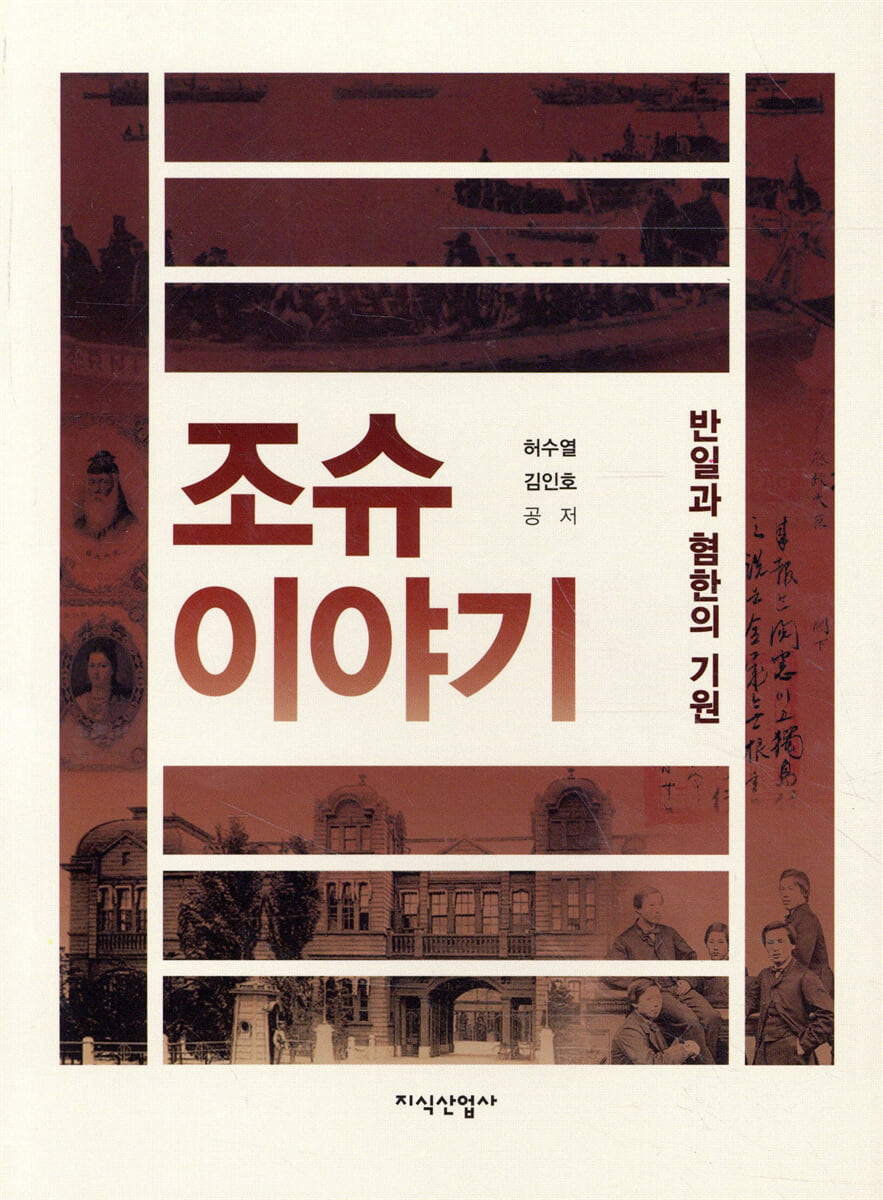
The Story of Joshu
 |
Description
Book Introduction
This book is a modern Japanese history book for the general public, allowing the public to revisit modern Japanese history from an easy-to-understand and novel perspective.
The author wrote this book with a combination of ruthless academic grounding and deep compassion and affection for Northeast Asian history.
The basis for this is that quantitative methodology was used and it contains a thorough historical perspective and historical context.
Above all, the author tried to write a modern history of Japan that would be more friendly to the public and leave a lasting impression.
The complex ties between Korea and Japan are explained in a storytelling style, focusing on a specific region called Choshu.
The author wrote this book with a combination of ruthless academic grounding and deep compassion and affection for Northeast Asian history.
The basis for this is that quantitative methodology was used and it contains a thorough historical perspective and historical context.
Above all, the author tried to write a modern history of Japan that would be more friendly to the public and leave a lasting impression.
The complex ties between Korea and Japan are explained in a storytelling style, focusing on a specific region called Choshu.
- You can preview some of the book's contents.
Preview
index
At the beginning of the book
Chapter 1: Traces of Choshu
1.
Mori Terumoto
2.
The Imjin War and the Mori Clan
3.
General Shin Rip's Bae Soo-jin
4.
mortal death
5.
Admiral Yi Sun-sin's counterattack and the construction of a Japanese fortress
6.
The Battle of Sekigahara and the Beginning of the Choshu Domain
7.
The shogunate of the Edo period
8.
Japan's isolation during the Edo period
Chapter 2 Japan at the End of the Edo Shogunate
1.
The shock of the black wheel ship
2.
Japan at the end of the Edo period and Choshu
3.
Yoshida Shoin and Shoka Sonjuku
Chapter 3: The Meiji Restoration and the Choshu Leaders
1.
Yoshida Shoin's disciples rise up against the shogunate
2.
Choshu becomes the enemy of the court
3.
Choshu defeats the shogunate
4.
Choshu takes control of the Meiji government
5.
The Meiji government's policy of enriching the nation and strengthening its military and overseas invasions
Chapter 4: Theory of Conquering Korea
1.
History of Japanese-Korean aggression
2.
Empress Jingu's Conquest of the Three Kingdoms
3.
Yoshida Shoin's Seikanron
4.
Ideologization of Jeong Han-ron
5.
The Evolution of Jeonghanron: From Saigo Takamori to Fukuzawa Yukichi
Chapter 5: The Japanese Empire's Invasion of Korea
1.
Another 8.15
2.
Dokdo is an island outside of Japanese territory - Taijingryujeon
3.
Umbrella Island is Dokdo
4.
Japan annexed Dokdo through deception and violence.
5.
San Francisco Peace Treaty and Dokdo
Coming out
Chapter 1: Traces of Choshu
1.
Mori Terumoto
2.
The Imjin War and the Mori Clan
3.
General Shin Rip's Bae Soo-jin
4.
mortal death
5.
Admiral Yi Sun-sin's counterattack and the construction of a Japanese fortress
6.
The Battle of Sekigahara and the Beginning of the Choshu Domain
7.
The shogunate of the Edo period
8.
Japan's isolation during the Edo period
Chapter 2 Japan at the End of the Edo Shogunate
1.
The shock of the black wheel ship
2.
Japan at the end of the Edo period and Choshu
3.
Yoshida Shoin and Shoka Sonjuku
Chapter 3: The Meiji Restoration and the Choshu Leaders
1.
Yoshida Shoin's disciples rise up against the shogunate
2.
Choshu becomes the enemy of the court
3.
Choshu defeats the shogunate
4.
Choshu takes control of the Meiji government
5.
The Meiji government's policy of enriching the nation and strengthening its military and overseas invasions
Chapter 4: Theory of Conquering Korea
1.
History of Japanese-Korean aggression
2.
Empress Jingu's Conquest of the Three Kingdoms
3.
Yoshida Shoin's Seikanron
4.
Ideologization of Jeong Han-ron
5.
The Evolution of Jeonghanron: From Saigo Takamori to Fukuzawa Yukichi
Chapter 5: The Japanese Empire's Invasion of Korea
1.
Another 8.15
2.
Dokdo is an island outside of Japanese territory - Taijingryujeon
3.
Umbrella Island is Dokdo
4.
Japan annexed Dokdo through deception and violence.
5.
San Francisco Peace Treaty and Dokdo
Coming out
Into the book
The Meiji era, which began with the Meiji Restoration, was a truly exciting and glorious era for the Japanese people.
Imagine the excitement that must have been felt when Japan, on the fringes of Asia, faced the prospect of becoming a colony of Western powers at any moment, triumphed over the mighty nations of China and Russia, and finally developed to the point of standing shoulder to shoulder with the Western powers it so revered. Hagi and Choshu produced many of the figures who played a crucial role in ushering in this era of inspiration.
However, since Japan's development during the Meiji period was marked by war and invasion, from a Korean perspective, Hagi was also the home of the main perpetrators of the invasion.
Inoue Kaoru and Miura Goro, who were involved in the assassination of Empress Myeongseong, Ito Hirobumi and Katsura Taro, who were prime ministers during the First Sino-Japanese War and the Russo-Japanese War, Ito Hirobumi, who paved the way for Korea to become a protectorate and the first Resident-General, and to make Korea a colony, Terauchi Masatake, who concurrently served as the Japanese Army Minister and Resident-General of Korea, making Korea their colony and even serving as the first Governor-General of Korea, were all from Choshu.
Choshu also had a tremendous influence on modern Korean history.
Imagine the excitement that must have been felt when Japan, on the fringes of Asia, faced the prospect of becoming a colony of Western powers at any moment, triumphed over the mighty nations of China and Russia, and finally developed to the point of standing shoulder to shoulder with the Western powers it so revered. Hagi and Choshu produced many of the figures who played a crucial role in ushering in this era of inspiration.
However, since Japan's development during the Meiji period was marked by war and invasion, from a Korean perspective, Hagi was also the home of the main perpetrators of the invasion.
Inoue Kaoru and Miura Goro, who were involved in the assassination of Empress Myeongseong, Ito Hirobumi and Katsura Taro, who were prime ministers during the First Sino-Japanese War and the Russo-Japanese War, Ito Hirobumi, who paved the way for Korea to become a protectorate and the first Resident-General, and to make Korea a colony, Terauchi Masatake, who concurrently served as the Japanese Army Minister and Resident-General of Korea, making Korea their colony and even serving as the first Governor-General of Korea, were all from Choshu.
Choshu also had a tremendous influence on modern Korean history.
--- From the text
Publisher's Review
Modern Japanese history seen through the lens of Joshu!
The author examines the complex relationship between Korea and Japan within a historical context.
In the process, it easily explains the deep-rooted history of why Japan came to hate Korea (anti-Korean) and why Korea came to oppose Japan (anti-Japanese).
From the Japanese perspective, it was a truly thrilling and glorious era (the Meiji era). At a time when the periphery of Asia faced the threat of becoming a colony of Western powers, they fought and defeated the great powers of China and Russia, ultimately achieving development that rivaled the Western powers they had so revered. The overwhelming emotion must have been palpable. Choshu was the birthplace of many of the figures who played a crucial role in ushering in this era.
However, since Japan's development during the Meiji period was marked by war and invasion, Choshu, from the perspective of Korea, was also the birthplace of the main culprits of the invasion.
In search of the roots of anti-Korean and anti-Japanese sentiment!
This book contains the results of a comprehensive examination of why Japan, a country since the Three Kingdoms period, has continuously reproduced political ideologies that incite anti-Korean sentiment, such as the Three Han Conquests, the Jeonghanron, and the Tal-Aron, and why it does not hesitate to invade the Korean Peninsula and the surrounding good peoples, inciting fear and destruction in their lives, and ultimately how it was used as a means of invasion.
Furthermore, readers will be able to understand the development of Choshu history through this book, as well as the roots of various historical contexts that are currently hanging over Korea and Japan, such as the Dokdo issue, the issue of Joseon's economic exploitation, and the Imna Japanfu issue.
▶ Structure of this book
In Chapter 1 (Traces of Choshu), Mori Terumoto analyzed the story of the period from just before the Imjin War to the period when Choshu Domain was expanding, as well as the role, military power, and strategy of Choshu Domain in the actual Imjin War.
In addition, the process of the Joseon army's retreat after General Shin Rip's Bae Su-jin and the dramatic counterattack by Yi Sun-sin were summarized, and the movements of the Japanese army under long-term siege were also examined.
In addition, we looked at the survival strategy that the Choshu clan, which fought against the Tokugawa shogunate in mainland Japan after the Imjin War, employed and was eventually forced into a valley called Hagi, how the Edo period shogunate ruled the Yamaguchi region, and how the 300 years of stubbornness of the Choshu clan's leaders actually led to resistance against the Tokugawa shogunate.
Chapter 2 (Japan at the End of the Edo Shogunate) summarizes the Tokugawa Shogunate's concerns and difficult responses to the situation of Western powers' annexation, as well as the various response strategies of the Choshu Domain within it.
In particular, it introduces the movements of the Tokugawa faction, which was formed around Yoshida Shoin, and their various attempts to resist Western powers and challenge the shogunate.
Chapter 3 (The Meiji Restoration and the Leaders of Choshu) consists of three sections, focusing on the situation in which Yoshida Shoin's disciples regrouped and secretly promoted the overthrow of the shogunate, and when this was exposed, they suffered tremendous suppression from the shogunate, maintained their power by submitting to their masters, and ultimately developed their skills by acquiring various new Western weapon systems and technologies necessary for the overthrow of the shogunate.
And finally, he laid the groundwork for the overthrow of the shogunate by deploying a small force of soldiers and overthrowing the 200,000-strong army of the shogunate.
The book also describes in detail the various reform measures to strengthen the country and the military promoted by Choshu, who took control of the central power after the shogunate, and the expansion into surrounding regions such as Ryukyu.
Chapter 4 (Jeonghan Theory) states that the Jeonghan Theory did not first appear in modern times, but has persisted since the Three Kingdoms period, and that it was possible because of the Japanese people's fear and hatred of the Korean Peninsula. It organizes various invasion situations between the two countries that appeared in ancient society, and analyzes the formation process and implications of the so-called Imna Japan Theory, which is said to have originated from Empress Jingu's conquest of the Three Kingdoms.
In addition, we analyzed the process by which this anti-Korean sentiment was established as Jeonghanron, what political implications Jeonghanron had during the Meiji Restoration, and how it gradually evolved into an ideology of invasion.
Specifically, the Seikanron theory, which evolved in various forms through Yoshida Shoin, Saigo Takamori, Fukuzawa Yukichi, and various intellectuals during the Japanese colonial period, was organized from various angles.
Chapter 5 (Japanese Empire's Invasion of Korea) attempts to vividly reconstruct the history of the invasion of the Korean Peninsula by examining the process by which the Japanese military gradually occupied Korea following the Japan-Korea Protocol signed on August 15, 1904, using various rare materials collected from various Japanese national archives.
In addition, by focusing on the Dokdo issue through various secret maps and rare materials created by Japan that were not frequently accessed, we ultimately sought to establish that Usando is Dokdo and what deception and violence Japan used to annex Dokdo.
In addition, we analyzed how the Allied Powers understood and intended to deal with Dokdo during the process of concluding the Treaty of San Francisco after liberation.
The author examines the complex relationship between Korea and Japan within a historical context.
In the process, it easily explains the deep-rooted history of why Japan came to hate Korea (anti-Korean) and why Korea came to oppose Japan (anti-Japanese).
From the Japanese perspective, it was a truly thrilling and glorious era (the Meiji era). At a time when the periphery of Asia faced the threat of becoming a colony of Western powers, they fought and defeated the great powers of China and Russia, ultimately achieving development that rivaled the Western powers they had so revered. The overwhelming emotion must have been palpable. Choshu was the birthplace of many of the figures who played a crucial role in ushering in this era.
However, since Japan's development during the Meiji period was marked by war and invasion, Choshu, from the perspective of Korea, was also the birthplace of the main culprits of the invasion.
In search of the roots of anti-Korean and anti-Japanese sentiment!
This book contains the results of a comprehensive examination of why Japan, a country since the Three Kingdoms period, has continuously reproduced political ideologies that incite anti-Korean sentiment, such as the Three Han Conquests, the Jeonghanron, and the Tal-Aron, and why it does not hesitate to invade the Korean Peninsula and the surrounding good peoples, inciting fear and destruction in their lives, and ultimately how it was used as a means of invasion.
Furthermore, readers will be able to understand the development of Choshu history through this book, as well as the roots of various historical contexts that are currently hanging over Korea and Japan, such as the Dokdo issue, the issue of Joseon's economic exploitation, and the Imna Japanfu issue.
▶ Structure of this book
In Chapter 1 (Traces of Choshu), Mori Terumoto analyzed the story of the period from just before the Imjin War to the period when Choshu Domain was expanding, as well as the role, military power, and strategy of Choshu Domain in the actual Imjin War.
In addition, the process of the Joseon army's retreat after General Shin Rip's Bae Su-jin and the dramatic counterattack by Yi Sun-sin were summarized, and the movements of the Japanese army under long-term siege were also examined.
In addition, we looked at the survival strategy that the Choshu clan, which fought against the Tokugawa shogunate in mainland Japan after the Imjin War, employed and was eventually forced into a valley called Hagi, how the Edo period shogunate ruled the Yamaguchi region, and how the 300 years of stubbornness of the Choshu clan's leaders actually led to resistance against the Tokugawa shogunate.
Chapter 2 (Japan at the End of the Edo Shogunate) summarizes the Tokugawa Shogunate's concerns and difficult responses to the situation of Western powers' annexation, as well as the various response strategies of the Choshu Domain within it.
In particular, it introduces the movements of the Tokugawa faction, which was formed around Yoshida Shoin, and their various attempts to resist Western powers and challenge the shogunate.
Chapter 3 (The Meiji Restoration and the Leaders of Choshu) consists of three sections, focusing on the situation in which Yoshida Shoin's disciples regrouped and secretly promoted the overthrow of the shogunate, and when this was exposed, they suffered tremendous suppression from the shogunate, maintained their power by submitting to their masters, and ultimately developed their skills by acquiring various new Western weapon systems and technologies necessary for the overthrow of the shogunate.
And finally, he laid the groundwork for the overthrow of the shogunate by deploying a small force of soldiers and overthrowing the 200,000-strong army of the shogunate.
The book also describes in detail the various reform measures to strengthen the country and the military promoted by Choshu, who took control of the central power after the shogunate, and the expansion into surrounding regions such as Ryukyu.
Chapter 4 (Jeonghan Theory) states that the Jeonghan Theory did not first appear in modern times, but has persisted since the Three Kingdoms period, and that it was possible because of the Japanese people's fear and hatred of the Korean Peninsula. It organizes various invasion situations between the two countries that appeared in ancient society, and analyzes the formation process and implications of the so-called Imna Japan Theory, which is said to have originated from Empress Jingu's conquest of the Three Kingdoms.
In addition, we analyzed the process by which this anti-Korean sentiment was established as Jeonghanron, what political implications Jeonghanron had during the Meiji Restoration, and how it gradually evolved into an ideology of invasion.
Specifically, the Seikanron theory, which evolved in various forms through Yoshida Shoin, Saigo Takamori, Fukuzawa Yukichi, and various intellectuals during the Japanese colonial period, was organized from various angles.
Chapter 5 (Japanese Empire's Invasion of Korea) attempts to vividly reconstruct the history of the invasion of the Korean Peninsula by examining the process by which the Japanese military gradually occupied Korea following the Japan-Korea Protocol signed on August 15, 1904, using various rare materials collected from various Japanese national archives.
In addition, by focusing on the Dokdo issue through various secret maps and rare materials created by Japan that were not frequently accessed, we ultimately sought to establish that Usando is Dokdo and what deception and violence Japan used to annex Dokdo.
In addition, we analyzed how the Allied Powers understood and intended to deal with Dokdo during the process of concluding the Treaty of San Francisco after liberation.
GOODS SPECIFICS
- Date of issue: September 15, 2023
- Page count, weight, size: 412 pages | 148*190*30mm
- ISBN13: 9788942391202
- ISBN10: 8942391206
You may also like
카테고리
korean


korean

![GQ KOREA Mark (Monthly): December [2025]](http://librairie.coreenne.fr/cdn/shop/files/8ef265dbbfbf186523ed75ba7319009d.jpg?v=1765340328&width=3840)


