

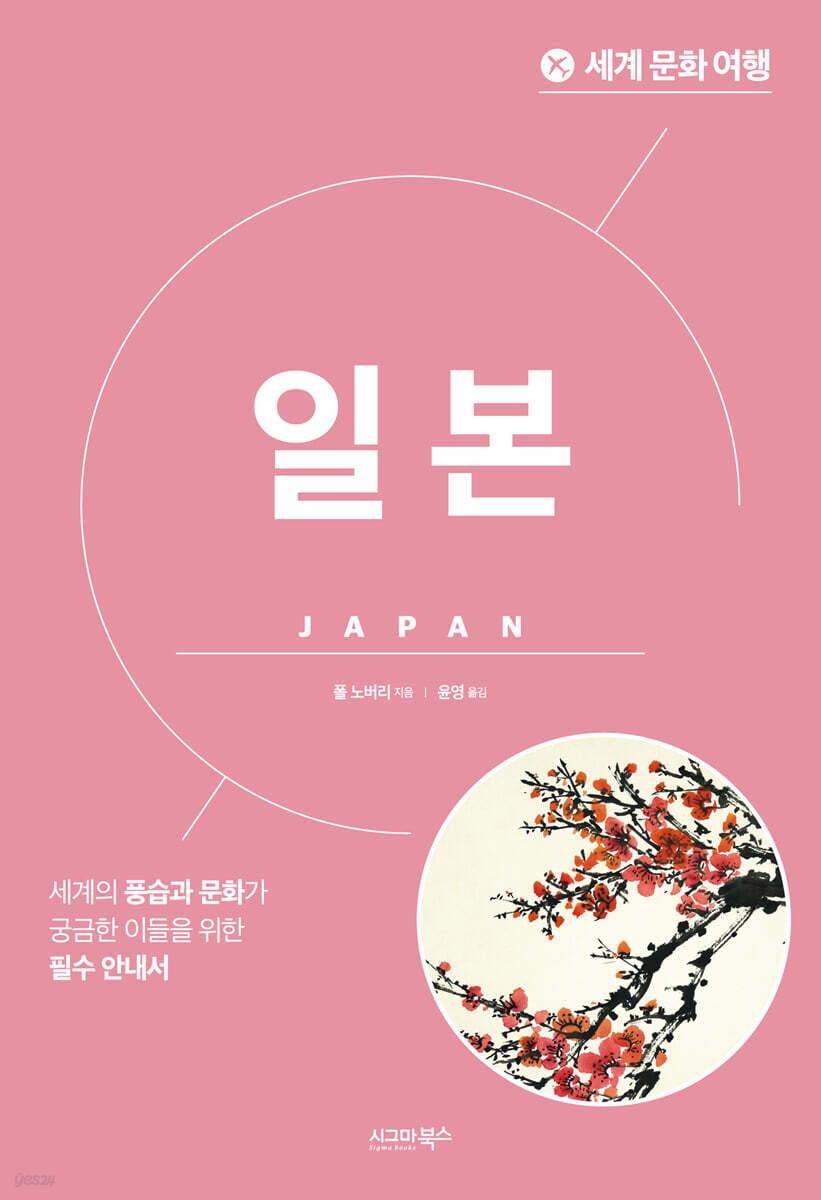
World Cultural Tour - Japan
 |
Description
Book Introduction
Japanese customs, history, culture, lifestyle, and life
This book is the Japanese edition of the "World Cultural Journey" series and covers Japanese customs, history, culture, lifestyle, and general information about life.
Whether you're visiting Japan for business or simply for pleasure, this guide will help you make your time there more enriching and memorable.
This book contains information on Japanese local customs and traditions, history, religion, politics, Japanese families, work, leisure, food, clothing, shelter, communication, etc.
This book is the Japanese edition of the "World Cultural Journey" series and covers Japanese customs, history, culture, lifestyle, and general information about life.
Whether you're visiting Japan for business or simply for pleasure, this guide will help you make your time there more enriching and memorable.
This book contains information on Japanese local customs and traditions, history, religion, politics, Japanese families, work, leisure, food, clothing, shelter, communication, etc.
- You can preview some of the book's contents.
Preview
index
· Japan missionary work
· Entering
·Basic information
01 Territory and People
location
soil
Climate and Seasons
earthquake
rice and fish
Connected Japan
Japanese, a brief history
Hiroshima and Nagasaki
Reconstruction and Resumption
02 Values and mindset
Me and us
work ethic
face
Honne and tatemae
unexpected profit
Haragei
Sensitivity, quiet conversation, and distance/space
Inside and outside
A token of gratitude
etiquette
Attitude toward foreigners
03 Religion, Customs and Traditions
believer
shrine
buddhism
new religious movements
Religion and Rites of Passage
Aspects of traditional culture
04 Japanese Family Life
Visiting a Japanese person's home
Japanese bath
Decrease in extended families
Children and Family Life
05 Leisure Life
Leisure activities
social life
Geisha and the World of Entertainment
Leisure and work
Cultural life
sports
Eat and drink
public transportation system
Visitors and police
06 Gift Giving
What kind of gift would be good?
07 Food and Drink
tea ceremony
'Beautiful' food
fish dishes
A few things about sake
Japanese cooking ingredients
Japanese phrases to know when eating out
08 Living in Japan
Finding the way
Nothing changes in Japan
Entry requirements
Daily life
09 Business Status
Japanese economy
Important things to know when getting introduced
Aspects of communication
Women in Business
Understanding 'No'
Understanding 'Yes'
agreement
Unequal Partnerships: Lessons to Know Beforehand
Other notes
10 Language and Communication
The structure of language
conclusion
Useful apps
·References
· Entering
·Basic information
01 Territory and People
location
soil
Climate and Seasons
earthquake
rice and fish
Connected Japan
Japanese, a brief history
Hiroshima and Nagasaki
Reconstruction and Resumption
02 Values and mindset
Me and us
work ethic
face
Honne and tatemae
unexpected profit
Haragei
Sensitivity, quiet conversation, and distance/space
Inside and outside
A token of gratitude
etiquette
Attitude toward foreigners
03 Religion, Customs and Traditions
believer
shrine
buddhism
new religious movements
Religion and Rites of Passage
Aspects of traditional culture
04 Japanese Family Life
Visiting a Japanese person's home
Japanese bath
Decrease in extended families
Children and Family Life
05 Leisure Life
Leisure activities
social life
Geisha and the World of Entertainment
Leisure and work
Cultural life
sports
Eat and drink
public transportation system
Visitors and police
06 Gift Giving
What kind of gift would be good?
07 Food and Drink
tea ceremony
'Beautiful' food
fish dishes
A few things about sake
Japanese cooking ingredients
Japanese phrases to know when eating out
08 Living in Japan
Finding the way
Nothing changes in Japan
Entry requirements
Daily life
09 Business Status
Japanese economy
Important things to know when getting introduced
Aspects of communication
Women in Business
Understanding 'No'
Understanding 'Yes'
agreement
Unequal Partnerships: Lessons to Know Beforehand
Other notes
10 Language and Communication
The structure of language
conclusion
Useful apps
·References
Into the book
Japan has six steep, rugged mountain ranges running through its center, creating a unique landscape.
Additionally, due to its geological location within the Pacific 'Ring of Fire', volcanoes can be found here and there.
Of the more than 100 volcanoes, about 77 are designated as active (although very few are actually active).
Among them, Bandai and Asama in central Honshu are particularly famous for their volcanoes.
Unzen and Sakurajima in Kyushu are also currently in an active phase.
Mount Fuji, the highest volcano in Japan at 3,776 meters, last erupted in 1707 but is still classified as an active volcano.
---From "01 Territory and People"
In Japan, there is a "we" (group-oriented) culture because the voice of the group, such as a company, family, school, or social group, is more important than the voice of the individual.
In business situations, Japanese people will always mention their own company first and foremost.
Only after stating the department you belong to and your role within it, do you finally say your name.
---From "02 Values and Way of Thinking"
Among Japan's most important festivals (matsuri) and commemorative events are Hatsumiya Mairi, when newborn babies visit a shrine for the first time, and the Shichi-Go-San Festival, held in November for children.
In this way, in the Shinto world, 'new beginnings' are very important, and people want to receive Kami's blessings.
So, on New Year's Day, when people start something new—the first agricultural activity of the year, a new business, the opening of a new building, a new educational course—people seek out Shinto.
---From “03 Religion, Customs and Traditions”
You can also try a homestay group as a preparation for visiting a Japanese home.
You can get more detailed information by visiting the local tourist information center.
It is also a good idea to visit the Japanese embassy before departing for Japan.
In fact, more and more Japanese families are registering as 'host families'.
This is particularly relevant to the JET University Graduate Training Programme, which has been operating successfully for over 30 years.
---From "04 Japanese Family Life"
Tea has been central to Japanese culture for centuries.
The formal procedure of drinking tea, the 'tea ceremony', has been passed down for hundreds of years.
Although originally perfectly refined within the discipline of Zen Buddhism, the custom of drinking tea itself has long been entrenched as part of the cultural life of the ruling class.
One of the great 'tea masters' was Sen no Rikyu.
During his lifetime (1522-1591), he made the 'tea ceremony' part of his political dynamics.
---From "05 Leisure Life"
As you know, gifts can come and go.
There's a joke that says one of the gifts you give will end up in your hands after passing through the hands of this person and that person.
In fact, because of this gift-giving culture, stores and supermarkets have many formally wrapped gifts, so you can see exactly what's inside without even opening the packaging.
So, if you happen to get a gift you gave in the past again, make sure to keep it for future use.
---From "06 Giving a Gift"
The traditional Japanese diet, which focuses on rice and fish as staple foods, is very different from that of other countries around the world.
In particular, neighboring meat-eating countries in Southeast Asia have traditionally used a lot of strong spices, but Japan does not do so at all.
In Japanese cuisine, flavor enhancements are limited to soy sauces and purees made from large Japanese radishes.
Interestingly, people from countries with a high carbohydrate and meat intake and a wide variety of thick, rich sauces report feeling a digestive cleanse when they follow the Japanese diet while in Japan.
---From "07 Food and Drink"
There are many things in Japan that are contradictory and even illogical from a foreigner's perspective.
This is a fact that anyone who visits Japan must accept.
One of the most representative examples of such a problem is that road names or road numbers are not properly assigned or are absent altogether.
Because there was no proper urban planning law, urban development was carried out indiscriminately, resulting in street names and numbers being jumbled up or not even existing.
So, in Japan's big cities, getting from A to B can be a frustrating and challenging task like no other!
---From "08 Living in Japan"
When being introduced, Japanese businessmen will first exchange business cards (Macy).
Be sure to prepare a business card, ideally with a Japanese translation on the other side.
Before departure, check with your airline to see if they offer this service.
If you are pressed for time, prepare it in advance and print it out as soon as you check in at the hotel.
Remember, in Japan, without a business card, you don't exist!
---From "09 Business Status"
Japanese doesn't fit easily into any language family tree.
On the one hand, it has grammatical connections with Korean and Central Asian languages, but on the other hand, when written, it is quite similar to some Polynesian languages.
In fact, one of the most intriguing theories about the origins of the Japanese language is that it is a Polynesian pronunciation of a Central Asian language.
Unlike Chinese, which is the origin of many Japanese kanji, which has complex tones, Japanese is not an inflectional language and is therefore relatively easy to pronounce even for beginners.
Additionally, due to its geological location within the Pacific 'Ring of Fire', volcanoes can be found here and there.
Of the more than 100 volcanoes, about 77 are designated as active (although very few are actually active).
Among them, Bandai and Asama in central Honshu are particularly famous for their volcanoes.
Unzen and Sakurajima in Kyushu are also currently in an active phase.
Mount Fuji, the highest volcano in Japan at 3,776 meters, last erupted in 1707 but is still classified as an active volcano.
---From "01 Territory and People"
In Japan, there is a "we" (group-oriented) culture because the voice of the group, such as a company, family, school, or social group, is more important than the voice of the individual.
In business situations, Japanese people will always mention their own company first and foremost.
Only after stating the department you belong to and your role within it, do you finally say your name.
---From "02 Values and Way of Thinking"
Among Japan's most important festivals (matsuri) and commemorative events are Hatsumiya Mairi, when newborn babies visit a shrine for the first time, and the Shichi-Go-San Festival, held in November for children.
In this way, in the Shinto world, 'new beginnings' are very important, and people want to receive Kami's blessings.
So, on New Year's Day, when people start something new—the first agricultural activity of the year, a new business, the opening of a new building, a new educational course—people seek out Shinto.
---From “03 Religion, Customs and Traditions”
You can also try a homestay group as a preparation for visiting a Japanese home.
You can get more detailed information by visiting the local tourist information center.
It is also a good idea to visit the Japanese embassy before departing for Japan.
In fact, more and more Japanese families are registering as 'host families'.
This is particularly relevant to the JET University Graduate Training Programme, which has been operating successfully for over 30 years.
---From "04 Japanese Family Life"
Tea has been central to Japanese culture for centuries.
The formal procedure of drinking tea, the 'tea ceremony', has been passed down for hundreds of years.
Although originally perfectly refined within the discipline of Zen Buddhism, the custom of drinking tea itself has long been entrenched as part of the cultural life of the ruling class.
One of the great 'tea masters' was Sen no Rikyu.
During his lifetime (1522-1591), he made the 'tea ceremony' part of his political dynamics.
---From "05 Leisure Life"
As you know, gifts can come and go.
There's a joke that says one of the gifts you give will end up in your hands after passing through the hands of this person and that person.
In fact, because of this gift-giving culture, stores and supermarkets have many formally wrapped gifts, so you can see exactly what's inside without even opening the packaging.
So, if you happen to get a gift you gave in the past again, make sure to keep it for future use.
---From "06 Giving a Gift"
The traditional Japanese diet, which focuses on rice and fish as staple foods, is very different from that of other countries around the world.
In particular, neighboring meat-eating countries in Southeast Asia have traditionally used a lot of strong spices, but Japan does not do so at all.
In Japanese cuisine, flavor enhancements are limited to soy sauces and purees made from large Japanese radishes.
Interestingly, people from countries with a high carbohydrate and meat intake and a wide variety of thick, rich sauces report feeling a digestive cleanse when they follow the Japanese diet while in Japan.
---From "07 Food and Drink"
There are many things in Japan that are contradictory and even illogical from a foreigner's perspective.
This is a fact that anyone who visits Japan must accept.
One of the most representative examples of such a problem is that road names or road numbers are not properly assigned or are absent altogether.
Because there was no proper urban planning law, urban development was carried out indiscriminately, resulting in street names and numbers being jumbled up or not even existing.
So, in Japan's big cities, getting from A to B can be a frustrating and challenging task like no other!
---From "08 Living in Japan"
When being introduced, Japanese businessmen will first exchange business cards (Macy).
Be sure to prepare a business card, ideally with a Japanese translation on the other side.
Before departure, check with your airline to see if they offer this service.
If you are pressed for time, prepare it in advance and print it out as soon as you check in at the hotel.
Remember, in Japan, without a business card, you don't exist!
---From "09 Business Status"
Japanese doesn't fit easily into any language family tree.
On the one hand, it has grammatical connections with Korean and Central Asian languages, but on the other hand, when written, it is quite similar to some Polynesian languages.
In fact, one of the most intriguing theories about the origins of the Japanese language is that it is a Polynesian pronunciation of a Central Asian language.
Unlike Chinese, which is the origin of many Japanese kanji, which has complex tones, Japanese is not an inflectional language and is therefore relatively easy to pronounce even for beginners.
---From "09 Language and Communication"
Publisher's Review
Japan, a country far yet close
I'm curious about that country!
What comes to mind when you think of Japan? We sometimes say that Japan is a country that is both distant and close.
But in any case, it is a country that is inseparable from us both historically and culturally.
It is because it is the closest and historically intertwined here and there.
And because of that history, there are certainly aspects of Japan that make it difficult to view it objectively.
The author of this book looks at Japan in a dry and unfiltered manner (perhaps because the author is British).
Looking at the structure of the book, it begins with a brief overview of Japan's geographical features and history.
Next, it deals with Japanese values and ways of thinking, which is interesting because there are many aspects that are different from ours.
For example, there are the 'private aspect' and the 'public aspect' called 'honne' and 'tatemae'.
Honne is related to one's true intentions and inner feelings, while tatemae is the facade put on over thoughts or concepts.
The author emphasizes that understanding this psychology is essential if you want to have a long-term, sustained relationship with the Japanese.
The fastest way to understand Japan in more detail!
This book also covers religion, customs, and traditions, including Shinto and Buddhism, which are considered traditional Japanese religions, as well as various new religions.
It also covers precautions and bathing culture when visiting a Japanese home, as well as the important Japanese gift-giving culture, food culture, and sake.
It also contains everyday information needed if you plan to stay in Japan for a long time.
It covers business in Japan and will be useful for anyone doing business or traveling to Japan.
Finally, we conclude by discussing Japanese.
Not everything about Japan is covered in depth and detail in this one-handed book.
But it covers most of the general aspects of Japan in a simple and clear way.
These are things you must check and know at least once before traveling to Japan, going on a business trip, or going to study abroad.
It's not a burden to read, so you'll be able to learn a little about Japan and the Japanese people in a short time.
An essential guide for those curious about world customs and cultures.
The "World Cultural Journey" series is a guidebook that introduces the customs, culture, lifestyle, and life of various countries around the world.
It contains information about the beliefs, attitudes, and behaviors of people from various countries, allowing you to understand local etiquette and sensitive issues.
It will also help you avoid embarrassing mistakes abroad, build better relationships with locals, and maximize the impact of your visit.
The 『World Cultural Journey』 series currently has 34 volumes published in Japan, China, Turkey, Portugal, Mongolia, Switzerland, Vietnam, Italy, Spain, Hong Kong, Cuba, Greece, New Zealand, Israel, Mexico, Austria, Hungary, Denmark, Norway, Netherlands, Singapore, Morocco, Laos, United Arab Emirates, Germany, France, Russia, Finland, Sweden, Thailand, Philippines, Czech Republic, and Belgium.
I'm curious about that country!
What comes to mind when you think of Japan? We sometimes say that Japan is a country that is both distant and close.
But in any case, it is a country that is inseparable from us both historically and culturally.
It is because it is the closest and historically intertwined here and there.
And because of that history, there are certainly aspects of Japan that make it difficult to view it objectively.
The author of this book looks at Japan in a dry and unfiltered manner (perhaps because the author is British).
Looking at the structure of the book, it begins with a brief overview of Japan's geographical features and history.
Next, it deals with Japanese values and ways of thinking, which is interesting because there are many aspects that are different from ours.
For example, there are the 'private aspect' and the 'public aspect' called 'honne' and 'tatemae'.
Honne is related to one's true intentions and inner feelings, while tatemae is the facade put on over thoughts or concepts.
The author emphasizes that understanding this psychology is essential if you want to have a long-term, sustained relationship with the Japanese.
The fastest way to understand Japan in more detail!
This book also covers religion, customs, and traditions, including Shinto and Buddhism, which are considered traditional Japanese religions, as well as various new religions.
It also covers precautions and bathing culture when visiting a Japanese home, as well as the important Japanese gift-giving culture, food culture, and sake.
It also contains everyday information needed if you plan to stay in Japan for a long time.
It covers business in Japan and will be useful for anyone doing business or traveling to Japan.
Finally, we conclude by discussing Japanese.
Not everything about Japan is covered in depth and detail in this one-handed book.
But it covers most of the general aspects of Japan in a simple and clear way.
These are things you must check and know at least once before traveling to Japan, going on a business trip, or going to study abroad.
It's not a burden to read, so you'll be able to learn a little about Japan and the Japanese people in a short time.
An essential guide for those curious about world customs and cultures.
The "World Cultural Journey" series is a guidebook that introduces the customs, culture, lifestyle, and life of various countries around the world.
It contains information about the beliefs, attitudes, and behaviors of people from various countries, allowing you to understand local etiquette and sensitive issues.
It will also help you avoid embarrassing mistakes abroad, build better relationships with locals, and maximize the impact of your visit.
The 『World Cultural Journey』 series currently has 34 volumes published in Japan, China, Turkey, Portugal, Mongolia, Switzerland, Vietnam, Italy, Spain, Hong Kong, Cuba, Greece, New Zealand, Israel, Mexico, Austria, Hungary, Denmark, Norway, Netherlands, Singapore, Morocco, Laos, United Arab Emirates, Germany, France, Russia, Finland, Sweden, Thailand, Philippines, Czech Republic, and Belgium.
GOODS SPECIFICS
- Date of issue: October 10, 2023
- Page count, weight, size: 230 pages | 306g | 130*190*14mm
- ISBN13: 9791168621602
- ISBN10: 1168621607
You may also like
카테고리
korean


korean

![GQ KOREA Mark (Monthly): December [2025]](http://librairie.coreenne.fr/cdn/shop/files/8ef265dbbfbf186523ed75ba7319009d.jpg?v=1765340328&width=3840)


