

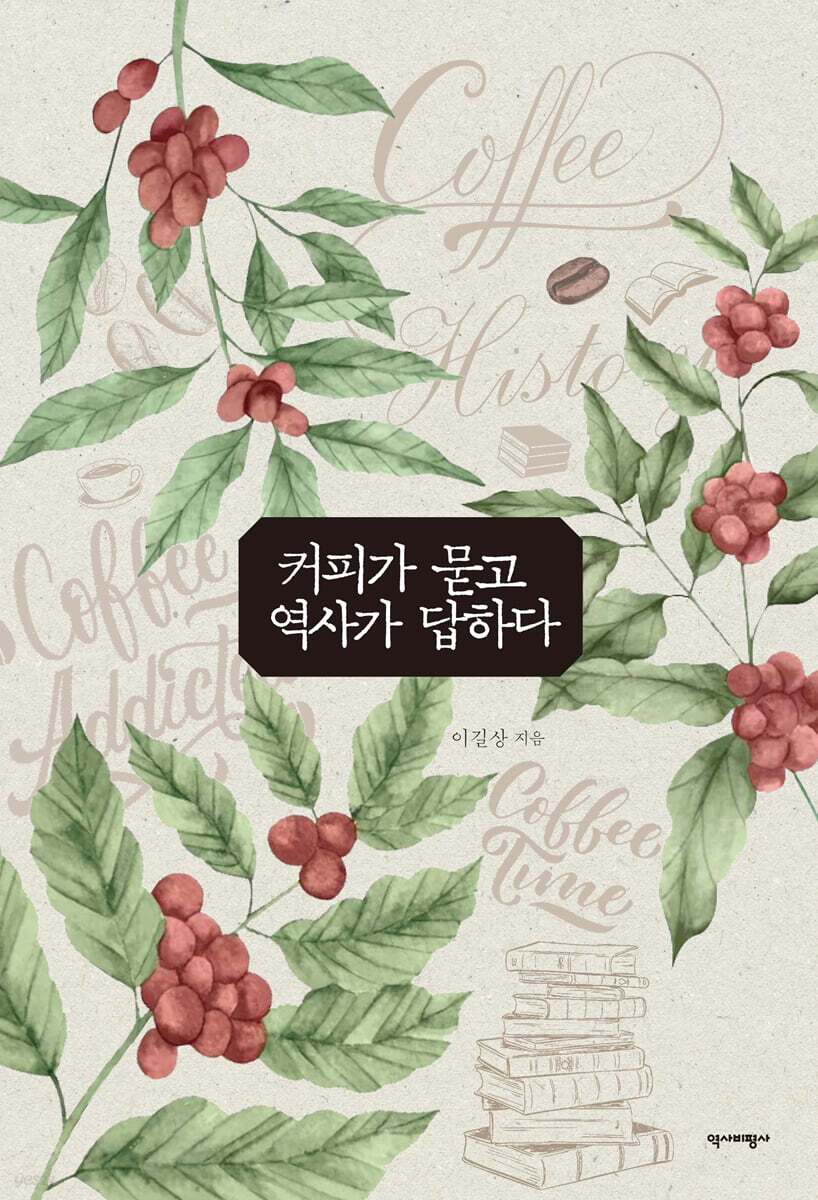
Coffee Asks, History Answers
 |
Description
Book Introduction
More than 20 years after the first Starbucks store opened in front of Ewha Womans University in 1999, Seoul now has the most Starbucks stores among OECD member cities.
Today, office workers who had lunch today also head back to work with takeout coffee, and after work, they go to a cafe to catch up with friends.
Koreans drink 12.3 cups of coffee per week, and it is estimated that more than 500,000 people have barista certification.
At this point, it seems like no one would deny that Korea is a coffee republic.
The author, an educator and coffee humanist, presents the world history of coffee from the emergence of the coffee tree to the recent coffee culture in Korea from a Korean perspective.
Above all, the book's greatest effort was to correct the distorted history and fake news about coffee.
Today, office workers who had lunch today also head back to work with takeout coffee, and after work, they go to a cafe to catch up with friends.
Koreans drink 12.3 cups of coffee per week, and it is estimated that more than 500,000 people have barista certification.
At this point, it seems like no one would deny that Korea is a coffee republic.
The author, an educator and coffee humanist, presents the world history of coffee from the emergence of the coffee tree to the recent coffee culture in Korea from a Korean perspective.
Above all, the book's greatest effort was to correct the distorted history and fake news about coffee.
- You can preview some of the book's contents.
Preview
index
Part 1.
The birth and spread of coffee
01 The Birth of Coffee, The Real Story 24
Coffee the Dinosaurs Never Tasted ┃ Arabia Felix, the Cradle of Coffee ┃ Coffee: A Collaboration of African, Islamic, and Eastern Civilizations ┃ Islam Suppressed Coffee? ┃ Coffee, Finally Emerging as a Cultivated Plant
02 Coffee, Crossing the Mediterranean to Europe 50
The Scary Story of Coffee in Europe ┃ The Three Routes That Spread Coffee to Europe ┃ The Witch-Hunter Who First Drank Coffee in Europe
03 Coffee Houses, Waking Up a Drunk Europe 67
The first coffee house in Europe: Oxford or London? ┃ Coffee houses as free spaces, incubators of the Industrial Revolution ┃ Coffee houses as equal spaces, were women allowed to enter? ┃ Cafes that appeared in every city, fighting against beer ┃ Not a beverage, but a trade item: the Dutch's unique perception of coffee
04 European intellectuals create and distort legends 89
The legend of the camel herder created by intellectual curiosity ┃ The Islamic country of Yemen transformed into the Christian country of Ethiopia ┃ The camel disappeared and the name of the goat herder was given
05 Production is done by black slaves, consumption is done by white Westerners. 103
Bichen, the Korean scholar who transplanted coffee to Java ┃ Coffee Typica, born in the Caribbean ┃ Coffee Bourbon, born in the Indian Ocean ┃ Coffee planted on St. Helena in the Atlantic ┃ Coffee transplanted to the blessed land of Brazil ┃ Coffee grown with the tears of slaves, a 'black commodity' ┃ Coffee is tears, the fall of Yemeni coffee
06 The Coffee Buzz: A City Surrounded by Cafes 132
Britain, which abandoned coffee and chose tea ┃ Germany, the country of the "Coffee Cantata" ┃ Vienna, Austria, a city built around cafes
Part 2.
Coffee and War
07 Coffee with the Revolution, Heroes with Coffee 146
Coffee is patriotism, tea is treason, the American independence movement and coffee ┃ Coffee that awakens fools, the trigger for the French Revolution ┃ Coffee that helped the Industrial Revolution, the Industrial Revolution that helped coffee ┃ Britain's success was France's failure, the rise of Napoleon ┃ Fake coffee popularized by Napoleon ┃ Napoleon of St. Helena who left after drinking a spoonful of coffee ┃ The golden age of tinsmiths, the coffee revolution brought about by a 91-year-old bishop
08 The Coffee Trend Created by War, The President Created by Coffee 173
The first coffee boom triggered by fake news, the rise of Brazil ┃ Iced coffee born from patriotism ┃ Poor President Lincoln created by coffee ┃ Coffee was the winner of the Civil War ┃ Bad President McKinley created by coffee ┃ Factory coffee, the birth of a low-quality American coffee culture ┃ Coffee rust, the destroyer, and the disappearance of Java and Ceylon coffee
09 The Era of Coffee Wars: The Battle Between Consumer Giants the United States and Production Giants Brazil 202
The Second Coffee Boom, Driven by High Prices, and the Coexistence of Brazil and the United States ┃ Americans Drinking Coffee Mixed with Coal Ash and Brick Dust ┃ Blending Coffee and Coffee: The Birth of Maxwell House ┃ Following Brazil's Path: The Emergence of Central and South American Coffee ┃ Coffee Trees Return to Their Homeland in Africa
10 Enemies Coffee Has Faced: Price Crashes, Substitutes, Harmfulness, and Grounds 224
Coffee Price War: The American Coffee King Who Supported Brazil ┃ Coffee That Fought Sex Suppressants ┃ Coffee That Fought the Harmful Effects of Coffee ┃ Necessity is the Mother of Invention: The Emergence of Espresso and Paper Filters
11 World Wars, the Mafia, and the Great Depression Before Coffee 241
You can't be a soldier without coffee. World War I and coffee. ┃ Mild coffee, born from a stroke of luck, the rise of Colombian coffee. ┃ The mafia and coffee breaks born of Prohibition. ┃ The Great Depression that destroyed coffee, coffee that brought down a president.
12 World War II: The Birth of Americano and Instant Coffee 263
The Birth of "Americano," a Coffee That Doesn't Really Feel Like Coffee ┃ Robusta Coffee, Revived by the Espresso Trend ┃ Traces of Mussolini and Hitler in Coffee History ┃ Nescafé, the Brand That Created a Good National Image
Part 3.
Coffee and Culture
13 The First Wave of Coffee: The Dignity of Coffee Ruined by Convenience 280
The Golden Age of Instant Coffee, Born of Convenience ┃ The Coffee Tree Reborn as a Plant of Peace in Africa ┃ The Allure of Speed: The Emergence of Coffee Vending Machines
14 The Second Wave of Coffee: The Ripples Caused by Specialty Coffee 292
Challenging Coffee Common Sense: The Rise of Starbucks ┃ Grinding Coffee to Gold: The Myth of Starbucks ┃ Resistance and Challenges to the Desire for Standardization
15 The Third Wave of Coffee: From Beverage to Culture 305
The home of coffee, coffee culture in the Islamic world ┃ The home of the coffee spirit, coffee culture in Italy ┃ The home of cafe culture, coffee culture in France ┃ The country that has preserved its coffee heritage, coffee culture in Cuba ┃ The last remaining country of tea, coffee culture in India ┃ The cup, not the coffee ┃ The country with the scent of kissaten, coffee culture in Japan ┃ The coffee culture of Korea, the 'Coffee Republic'
The birth and spread of coffee
01 The Birth of Coffee, The Real Story 24
Coffee the Dinosaurs Never Tasted ┃ Arabia Felix, the Cradle of Coffee ┃ Coffee: A Collaboration of African, Islamic, and Eastern Civilizations ┃ Islam Suppressed Coffee? ┃ Coffee, Finally Emerging as a Cultivated Plant
02 Coffee, Crossing the Mediterranean to Europe 50
The Scary Story of Coffee in Europe ┃ The Three Routes That Spread Coffee to Europe ┃ The Witch-Hunter Who First Drank Coffee in Europe
03 Coffee Houses, Waking Up a Drunk Europe 67
The first coffee house in Europe: Oxford or London? ┃ Coffee houses as free spaces, incubators of the Industrial Revolution ┃ Coffee houses as equal spaces, were women allowed to enter? ┃ Cafes that appeared in every city, fighting against beer ┃ Not a beverage, but a trade item: the Dutch's unique perception of coffee
04 European intellectuals create and distort legends 89
The legend of the camel herder created by intellectual curiosity ┃ The Islamic country of Yemen transformed into the Christian country of Ethiopia ┃ The camel disappeared and the name of the goat herder was given
05 Production is done by black slaves, consumption is done by white Westerners. 103
Bichen, the Korean scholar who transplanted coffee to Java ┃ Coffee Typica, born in the Caribbean ┃ Coffee Bourbon, born in the Indian Ocean ┃ Coffee planted on St. Helena in the Atlantic ┃ Coffee transplanted to the blessed land of Brazil ┃ Coffee grown with the tears of slaves, a 'black commodity' ┃ Coffee is tears, the fall of Yemeni coffee
06 The Coffee Buzz: A City Surrounded by Cafes 132
Britain, which abandoned coffee and chose tea ┃ Germany, the country of the "Coffee Cantata" ┃ Vienna, Austria, a city built around cafes
Part 2.
Coffee and War
07 Coffee with the Revolution, Heroes with Coffee 146
Coffee is patriotism, tea is treason, the American independence movement and coffee ┃ Coffee that awakens fools, the trigger for the French Revolution ┃ Coffee that helped the Industrial Revolution, the Industrial Revolution that helped coffee ┃ Britain's success was France's failure, the rise of Napoleon ┃ Fake coffee popularized by Napoleon ┃ Napoleon of St. Helena who left after drinking a spoonful of coffee ┃ The golden age of tinsmiths, the coffee revolution brought about by a 91-year-old bishop
08 The Coffee Trend Created by War, The President Created by Coffee 173
The first coffee boom triggered by fake news, the rise of Brazil ┃ Iced coffee born from patriotism ┃ Poor President Lincoln created by coffee ┃ Coffee was the winner of the Civil War ┃ Bad President McKinley created by coffee ┃ Factory coffee, the birth of a low-quality American coffee culture ┃ Coffee rust, the destroyer, and the disappearance of Java and Ceylon coffee
09 The Era of Coffee Wars: The Battle Between Consumer Giants the United States and Production Giants Brazil 202
The Second Coffee Boom, Driven by High Prices, and the Coexistence of Brazil and the United States ┃ Americans Drinking Coffee Mixed with Coal Ash and Brick Dust ┃ Blending Coffee and Coffee: The Birth of Maxwell House ┃ Following Brazil's Path: The Emergence of Central and South American Coffee ┃ Coffee Trees Return to Their Homeland in Africa
10 Enemies Coffee Has Faced: Price Crashes, Substitutes, Harmfulness, and Grounds 224
Coffee Price War: The American Coffee King Who Supported Brazil ┃ Coffee That Fought Sex Suppressants ┃ Coffee That Fought the Harmful Effects of Coffee ┃ Necessity is the Mother of Invention: The Emergence of Espresso and Paper Filters
11 World Wars, the Mafia, and the Great Depression Before Coffee 241
You can't be a soldier without coffee. World War I and coffee. ┃ Mild coffee, born from a stroke of luck, the rise of Colombian coffee. ┃ The mafia and coffee breaks born of Prohibition. ┃ The Great Depression that destroyed coffee, coffee that brought down a president.
12 World War II: The Birth of Americano and Instant Coffee 263
The Birth of "Americano," a Coffee That Doesn't Really Feel Like Coffee ┃ Robusta Coffee, Revived by the Espresso Trend ┃ Traces of Mussolini and Hitler in Coffee History ┃ Nescafé, the Brand That Created a Good National Image
Part 3.
Coffee and Culture
13 The First Wave of Coffee: The Dignity of Coffee Ruined by Convenience 280
The Golden Age of Instant Coffee, Born of Convenience ┃ The Coffee Tree Reborn as a Plant of Peace in Africa ┃ The Allure of Speed: The Emergence of Coffee Vending Machines
14 The Second Wave of Coffee: The Ripples Caused by Specialty Coffee 292
Challenging Coffee Common Sense: The Rise of Starbucks ┃ Grinding Coffee to Gold: The Myth of Starbucks ┃ Resistance and Challenges to the Desire for Standardization
15 The Third Wave of Coffee: From Beverage to Culture 305
The home of coffee, coffee culture in the Islamic world ┃ The home of the coffee spirit, coffee culture in Italy ┃ The home of cafe culture, coffee culture in France ┃ The country that has preserved its coffee heritage, coffee culture in Cuba ┃ The last remaining country of tea, coffee culture in India ┃ The cup, not the coffee ┃ The country with the scent of kissaten, coffee culture in Japan ┃ The coffee culture of Korea, the 'Coffee Republic'
Into the book
Long ago, when I was studying abroad in the United States, I had a chance encounter with Professor Howard Zinn, a famous historian, in my advisor's lab.
First sentence
Since the coffee tree, especially the Arabica coffee tree, originated in Ethiopia, many claim that the coffee drink also originated in Ethiopia.
However, the claim that the origin of an ingredient is the birthplace of the food or beverage made from that ingredient is not in line with common sense.
--- p.28
The drink called 'coffee' is not an independent invention of a specific country, a specific person, or a specific civilization, but is a product of exchange between civilizations.
--- p.33
The story of Islamic leaders oppressing coffee in coffee history is a typical example of fake news created by Western historians' perverse desire to contrast the irrational and ruthless attitude of Easterners toward coffee with the rational attitude of Westerners.
--- p.43~44
If coffee emerged in the Islamic world in the 15th century as a drink that helped wake you up, in 17th-century England it emerged as a drink that helped you sober up.
--- p.64
Why is it said that women were banned from entering coffeehouses in their early days? The reason is simple.
This is because of the desire to highlight the advantages of modernization achieved by Westerners.
If we define pre-modern society as a discriminatory society, then modern society after industrialization is interpreted as a historically advanced society in which discrimination has disappeared.
--- p.77
Coffee was transformed into a cruel commodity produced by black slaves and consumed by white Westerners.
In the history of mankind, there has never been a drink so violent, with producers and consumers so polarized.
It was the beginning of a tragedy.
--- p.123
Beethoven is famous for grinding exactly 60 coffee beans and drinking a cup of coffee.
60 roasted coffee beans weigh about 7g.
--- p.139
Coffee became a symbol of the spirit of independence, and drinking it instead of tea was considered a patriotic duty.
Ukus described the psychological state of Americans at the time as 'Tea = England = Bad', 'Coffee = America = Good'.
--- p.150
Fools who began to believe Montesquieu's words, "Coffee makes many fools act wisely, if only temporarily," began to follow the scent of coffee one by one.
… … The beverage that the awakened citizens drank was coffee, and the place where they gathered was a cafe.
--- p.155
If the Civil War, in which more than 600,000 people died, was hell, it was coffee that brought a small salvation to the soldiers who fought in it.
But this saving hand extended only to the North Korean army.
--- p.185
Lincoln became president through coffee, the Civil War that Lincoln started, McKinley became president through his participation in the Civil War and serving coffee, Roosevelt succeeded McKinley, Secretary of War Taft appointed by Roosevelt, Taft became president, Joseon fell and Japan rose because of them.
Joseon was hit, scratched, and eventually fell on the wheel of history that those who started with coffee rolled.
--- p.192
Chik's feelings for recommending expensive coffee as the best coffee, even though he doesn't know much about coffee, were half regretful and half curious about coffee.
That night, Chick began experimenting with roasting and tasting the various coffee beans he delivered.
… …Chick's blended coffee became even more popular, and the hotel allowed him to use the name 'Maxwell House' as the brand name for the beans he developed.
This is how 'Maxwell House' coffee was born.
--- p.210
Ultimately, a system was created in which a large number of workers had to sacrifice themselves for a small number of capitalists.
The 'coffee token' is a system that has emerged as a symbol of exploitation in many Central and South American coffee farms, including El Salvador.
--- p.215
Mussolini's second achievement in coffee history was the invention of the 'Moka pot'.
The moka pot, a household espresso tool made of aluminum, is a product of Mussolini's aluminum industrialization policy.
First sentence
Since the coffee tree, especially the Arabica coffee tree, originated in Ethiopia, many claim that the coffee drink also originated in Ethiopia.
However, the claim that the origin of an ingredient is the birthplace of the food or beverage made from that ingredient is not in line with common sense.
--- p.28
The drink called 'coffee' is not an independent invention of a specific country, a specific person, or a specific civilization, but is a product of exchange between civilizations.
--- p.33
The story of Islamic leaders oppressing coffee in coffee history is a typical example of fake news created by Western historians' perverse desire to contrast the irrational and ruthless attitude of Easterners toward coffee with the rational attitude of Westerners.
--- p.43~44
If coffee emerged in the Islamic world in the 15th century as a drink that helped wake you up, in 17th-century England it emerged as a drink that helped you sober up.
--- p.64
Why is it said that women were banned from entering coffeehouses in their early days? The reason is simple.
This is because of the desire to highlight the advantages of modernization achieved by Westerners.
If we define pre-modern society as a discriminatory society, then modern society after industrialization is interpreted as a historically advanced society in which discrimination has disappeared.
--- p.77
Coffee was transformed into a cruel commodity produced by black slaves and consumed by white Westerners.
In the history of mankind, there has never been a drink so violent, with producers and consumers so polarized.
It was the beginning of a tragedy.
--- p.123
Beethoven is famous for grinding exactly 60 coffee beans and drinking a cup of coffee.
60 roasted coffee beans weigh about 7g.
--- p.139
Coffee became a symbol of the spirit of independence, and drinking it instead of tea was considered a patriotic duty.
Ukus described the psychological state of Americans at the time as 'Tea = England = Bad', 'Coffee = America = Good'.
--- p.150
Fools who began to believe Montesquieu's words, "Coffee makes many fools act wisely, if only temporarily," began to follow the scent of coffee one by one.
… … The beverage that the awakened citizens drank was coffee, and the place where they gathered was a cafe.
--- p.155
If the Civil War, in which more than 600,000 people died, was hell, it was coffee that brought a small salvation to the soldiers who fought in it.
But this saving hand extended only to the North Korean army.
--- p.185
Lincoln became president through coffee, the Civil War that Lincoln started, McKinley became president through his participation in the Civil War and serving coffee, Roosevelt succeeded McKinley, Secretary of War Taft appointed by Roosevelt, Taft became president, Joseon fell and Japan rose because of them.
Joseon was hit, scratched, and eventually fell on the wheel of history that those who started with coffee rolled.
--- p.192
Chik's feelings for recommending expensive coffee as the best coffee, even though he doesn't know much about coffee, were half regretful and half curious about coffee.
That night, Chick began experimenting with roasting and tasting the various coffee beans he delivered.
… …Chick's blended coffee became even more popular, and the hotel allowed him to use the name 'Maxwell House' as the brand name for the beans he developed.
This is how 'Maxwell House' coffee was born.
--- p.210
Ultimately, a system was created in which a large number of workers had to sacrifice themselves for a small number of capitalists.
The 'coffee token' is a system that has emerged as a symbol of exploitation in many Central and South American coffee farms, including El Salvador.
--- p.215
Mussolini's second achievement in coffee history was the invention of the 'Moka pot'.
The moka pot, a household espresso tool made of aluminum, is a product of Mussolini's aluminum industrialization policy.
--- p.272
Publisher's Review
The Birth of Coffee: The True Story
This book is an authentic coffee history book.
The dramatic birth of the beverage called 'coffee' unfolds throughout world history, combining the fruit of the coffee tree that crossed the Red Sea from Africa and grew natively in the southern part of the Arabian Peninsula, the religious aspirations of Sufis who prayed all night to approach God, and the tea-making culture that was introduced from China.
It covers the birth, growth, cultivation, and industrialization of coffee, as well as the history and culture related to coffee.
To this end, the author first attempted to correct the deliberate mistakes of Westerners who were steeped in Orientalism.
The person who most severely distorted the origin and history of coffee was Antoine Galland, a Frenchman famous for writing The Arabian Nights.
He was fluent in Arabic and traveled extensively in Constantinople, where coffee culture was widespread. Based on this experience, he published a translated paper titled “The Origin and Development of Coffee,” which had a great influence on European society.
But the paper was full of intentional distortions of facts.
The author criticizes Galland's claims, which he claims have contaminated the history of coffee, by trying to link the origins of coffee to Ethiopia, a Christian nation, rather than to the Islamic Sufis of Yemen.
The butterfly effect of coffee
This book is a history of the world of coffee.
This book describes the history of coffee, which has been a part of the twists and turns of history, including the French Revolution, the American Revolution and Civil War, the Napoleonic Wars, the Industrial Revolution, two World Wars, and the Great Depression of the 1930s, and the history that coffee has changed.
First, a story about American President Lincoln and coffee.
Lincoln was a man of few words, but his wife Mary was a very nagging woman by nature.
When nagging her husband didn't work, she threw firewood, a broom, books, and tomatoes at him.
Then one evening, after dinner, Mary started nagging over coffee, and Lincoln remained silent.
Mary, angry, ended up throwing the coffee in front of her in Lincoln's face.
Lincoln ran away from home and became a circuit lawyer, traveling to various cities where trials were held, becoming widely known and eventually becoming the President of the United States.
Coffee cannot be left out as a decisive factor in the North's victory in the American Civil War.
The difference in strength between the Northern Army, which was rationed to ten cups of coffee a day, and the Southern Army, which was almost completely cut off from coffee supplies, was enormous.
At that time, General Benjamin, the leader of the Northern Army, gave the order to attack when his soldiers were full of coffee energy and said to his fellow general, “If your soldiers had drank coffee in the morning, they could have won this battle.” The Northern Army, which had coffee in its arsenal, eventually won.
Coffee also provided satisfaction to both workers and capitalists.
As workers who had been relieving their fatigue from work with alcohol began drinking coffee, their working hours became longer thanks to coffee's stimulating effect, and as industrial accidents caused by alcohol decreased, the profits of capitalists also increased.
As workers and capitalists alike welcomed it, coffee quickly replaced alcohol and became the drink of factory workers.
In this way, coffee helped the Industrial Revolution progress, and the Industrial Revolution promoted coffee consumption.
Coffee Wave
This book is a history of coffee culture.
It is not only comprised of stories about the history of coffee, but also contains a wealth of stories related to coffee culture.
The history of coffee culture since World War II can be divided into three periods.
The first wave of coffee lasted from the end of World War II until the late 1980s, when Starbucks emerged. During this period, consumers could buy and drink standardized coffee at low prices anywhere, anytime.
In the United States, large coffee companies such as Folgers, Maxwell House, and Green Mountain Coffee dominated the market, while in Europe, large coffee companies such as Nestlé dominated the market.
Coffee beans were almost exclusively from cheap Brazilian origin, and consumers' selection criteria were based solely on advertising.
The second wave was triggered by Starbucks, which appeared in the United States.
Starbucks' reputation spread around the world thanks to its bold challenge of purchasing high-quality green coffee beans whenever possible and using a certain amount of green beans purchased through fair trade to demonstrate moral responsibility towards coffee farmers.
The second wave of coffee has transformed coffee from a beverage to a culture of enjoyment.
Cafes, a third place other than home or work, began to gain attention as a place where people who wanted to share coffee culture could meet, and Starbucks was the pioneer of this new culture.
The third wave began with a new challenge to overcome the standardization of coffee and the standardized coffee culture brought about by Starbucks.
The only thing that symbolizes the third wave is the spirit of “no rules” in coffee.
Third wave coffee is the highest quality coffee produced in a culture that recognizes the diversity of coffee producers, coffee consumers, baristas, coffee making methods, and places where coffee is enjoyed.
Even in Korea, known as the Republic of Coffee, the third wave is taking place.
Today, Korea is a place where Starbucks stores are located in every hot spot, and where roastery cafes that purchase green coffee beans and roast them themselves are located in every alley.
The increase in roastery cafes like this is evidence that the number of consumers enjoying the taste and aroma of coffee is increasing in Korea.
Now in Korea, coffee has gone beyond being a simple beverage and has become a familiar culture enjoyed by everyone.
Coffee, the master of transformation
The original name for Viennese coffee is 'Café Einspanner'.
It is a word made up of 'ein' meaning one and 'spanner' meaning bridle, and refers to a carriage pulled by one horse.
This is a drink that coachmen in Vienna, Austria used to drink while sitting on top of their carriages in the cold winter. It is made by adding sugar to hot coffee and topping it with a generous amount of whipped cream.
It was a wonderful coffee that the coachman could easily drink on the carriage, as it contained enough sugar to relieve the coachman's fatigue and the cream prevented the coffee from overflowing.
Because it originated and became popular in Vienna, it was introduced to Korea in the 1970s and earned the nickname ‘Vienna Coffee.’
With the Japanese attack on Pearl Harbor on December 7, 1941, and the United States' full-scale entry into World War II, coffee prices became unstable, and the U.S. government implemented coffee rationing.
When coffee became scarce, Americans began mixing a lot of water into their coffee and drinking it. Americans got used to the taste of this coffee and continued to drink it like this even after the war.
This weak coffee is the 'Americano', which is currently the one pick coffee in Korea.
Meanwhile, after seven years of development efforts, the Nestlé research team created a powdered coffee called 'Nescafe'.
This coffee, which dissolves easily in water, was supplied to Allied soldiers, including those from the United States and the United Kingdom, during World War II, and even after the war, people around the world could not escape the convenience of Nescafé.
As a coffee humanist, the author meticulously corrects distorted history and fake news about coffee, while telling countless stories related to coffee.
It's a sweet story that's easy to read while drinking a cup of coffee.
This book is an authentic coffee history book.
The dramatic birth of the beverage called 'coffee' unfolds throughout world history, combining the fruit of the coffee tree that crossed the Red Sea from Africa and grew natively in the southern part of the Arabian Peninsula, the religious aspirations of Sufis who prayed all night to approach God, and the tea-making culture that was introduced from China.
It covers the birth, growth, cultivation, and industrialization of coffee, as well as the history and culture related to coffee.
To this end, the author first attempted to correct the deliberate mistakes of Westerners who were steeped in Orientalism.
The person who most severely distorted the origin and history of coffee was Antoine Galland, a Frenchman famous for writing The Arabian Nights.
He was fluent in Arabic and traveled extensively in Constantinople, where coffee culture was widespread. Based on this experience, he published a translated paper titled “The Origin and Development of Coffee,” which had a great influence on European society.
But the paper was full of intentional distortions of facts.
The author criticizes Galland's claims, which he claims have contaminated the history of coffee, by trying to link the origins of coffee to Ethiopia, a Christian nation, rather than to the Islamic Sufis of Yemen.
The butterfly effect of coffee
This book is a history of the world of coffee.
This book describes the history of coffee, which has been a part of the twists and turns of history, including the French Revolution, the American Revolution and Civil War, the Napoleonic Wars, the Industrial Revolution, two World Wars, and the Great Depression of the 1930s, and the history that coffee has changed.
First, a story about American President Lincoln and coffee.
Lincoln was a man of few words, but his wife Mary was a very nagging woman by nature.
When nagging her husband didn't work, she threw firewood, a broom, books, and tomatoes at him.
Then one evening, after dinner, Mary started nagging over coffee, and Lincoln remained silent.
Mary, angry, ended up throwing the coffee in front of her in Lincoln's face.
Lincoln ran away from home and became a circuit lawyer, traveling to various cities where trials were held, becoming widely known and eventually becoming the President of the United States.
Coffee cannot be left out as a decisive factor in the North's victory in the American Civil War.
The difference in strength between the Northern Army, which was rationed to ten cups of coffee a day, and the Southern Army, which was almost completely cut off from coffee supplies, was enormous.
At that time, General Benjamin, the leader of the Northern Army, gave the order to attack when his soldiers were full of coffee energy and said to his fellow general, “If your soldiers had drank coffee in the morning, they could have won this battle.” The Northern Army, which had coffee in its arsenal, eventually won.
Coffee also provided satisfaction to both workers and capitalists.
As workers who had been relieving their fatigue from work with alcohol began drinking coffee, their working hours became longer thanks to coffee's stimulating effect, and as industrial accidents caused by alcohol decreased, the profits of capitalists also increased.
As workers and capitalists alike welcomed it, coffee quickly replaced alcohol and became the drink of factory workers.
In this way, coffee helped the Industrial Revolution progress, and the Industrial Revolution promoted coffee consumption.
Coffee Wave
This book is a history of coffee culture.
It is not only comprised of stories about the history of coffee, but also contains a wealth of stories related to coffee culture.
The history of coffee culture since World War II can be divided into three periods.
The first wave of coffee lasted from the end of World War II until the late 1980s, when Starbucks emerged. During this period, consumers could buy and drink standardized coffee at low prices anywhere, anytime.
In the United States, large coffee companies such as Folgers, Maxwell House, and Green Mountain Coffee dominated the market, while in Europe, large coffee companies such as Nestlé dominated the market.
Coffee beans were almost exclusively from cheap Brazilian origin, and consumers' selection criteria were based solely on advertising.
The second wave was triggered by Starbucks, which appeared in the United States.
Starbucks' reputation spread around the world thanks to its bold challenge of purchasing high-quality green coffee beans whenever possible and using a certain amount of green beans purchased through fair trade to demonstrate moral responsibility towards coffee farmers.
The second wave of coffee has transformed coffee from a beverage to a culture of enjoyment.
Cafes, a third place other than home or work, began to gain attention as a place where people who wanted to share coffee culture could meet, and Starbucks was the pioneer of this new culture.
The third wave began with a new challenge to overcome the standardization of coffee and the standardized coffee culture brought about by Starbucks.
The only thing that symbolizes the third wave is the spirit of “no rules” in coffee.
Third wave coffee is the highest quality coffee produced in a culture that recognizes the diversity of coffee producers, coffee consumers, baristas, coffee making methods, and places where coffee is enjoyed.
Even in Korea, known as the Republic of Coffee, the third wave is taking place.
Today, Korea is a place where Starbucks stores are located in every hot spot, and where roastery cafes that purchase green coffee beans and roast them themselves are located in every alley.
The increase in roastery cafes like this is evidence that the number of consumers enjoying the taste and aroma of coffee is increasing in Korea.
Now in Korea, coffee has gone beyond being a simple beverage and has become a familiar culture enjoyed by everyone.
Coffee, the master of transformation
The original name for Viennese coffee is 'Café Einspanner'.
It is a word made up of 'ein' meaning one and 'spanner' meaning bridle, and refers to a carriage pulled by one horse.
This is a drink that coachmen in Vienna, Austria used to drink while sitting on top of their carriages in the cold winter. It is made by adding sugar to hot coffee and topping it with a generous amount of whipped cream.
It was a wonderful coffee that the coachman could easily drink on the carriage, as it contained enough sugar to relieve the coachman's fatigue and the cream prevented the coffee from overflowing.
Because it originated and became popular in Vienna, it was introduced to Korea in the 1970s and earned the nickname ‘Vienna Coffee.’
With the Japanese attack on Pearl Harbor on December 7, 1941, and the United States' full-scale entry into World War II, coffee prices became unstable, and the U.S. government implemented coffee rationing.
When coffee became scarce, Americans began mixing a lot of water into their coffee and drinking it. Americans got used to the taste of this coffee and continued to drink it like this even after the war.
This weak coffee is the 'Americano', which is currently the one pick coffee in Korea.
Meanwhile, after seven years of development efforts, the Nestlé research team created a powdered coffee called 'Nescafe'.
This coffee, which dissolves easily in water, was supplied to Allied soldiers, including those from the United States and the United Kingdom, during World War II, and even after the war, people around the world could not escape the convenience of Nescafé.
As a coffee humanist, the author meticulously corrects distorted history and fake news about coffee, while telling countless stories related to coffee.
It's a sweet story that's easy to read while drinking a cup of coffee.
GOODS SPECIFICS
- Date of issue: September 11, 2023
- Page count, weight, size: 360 pages | 526g | 152*224*18mm
- ISBN13: 9788976965837
- ISBN10: 8976965833
You may also like
카테고리
korean


korean

![GQ KOREA Mark (Monthly): December [2025]](http://librairie.coreenne.fr/cdn/shop/files/8ef265dbbfbf186523ed75ba7319009d.jpg?v=1765340328&width=3840)


