

People the Queen Loved
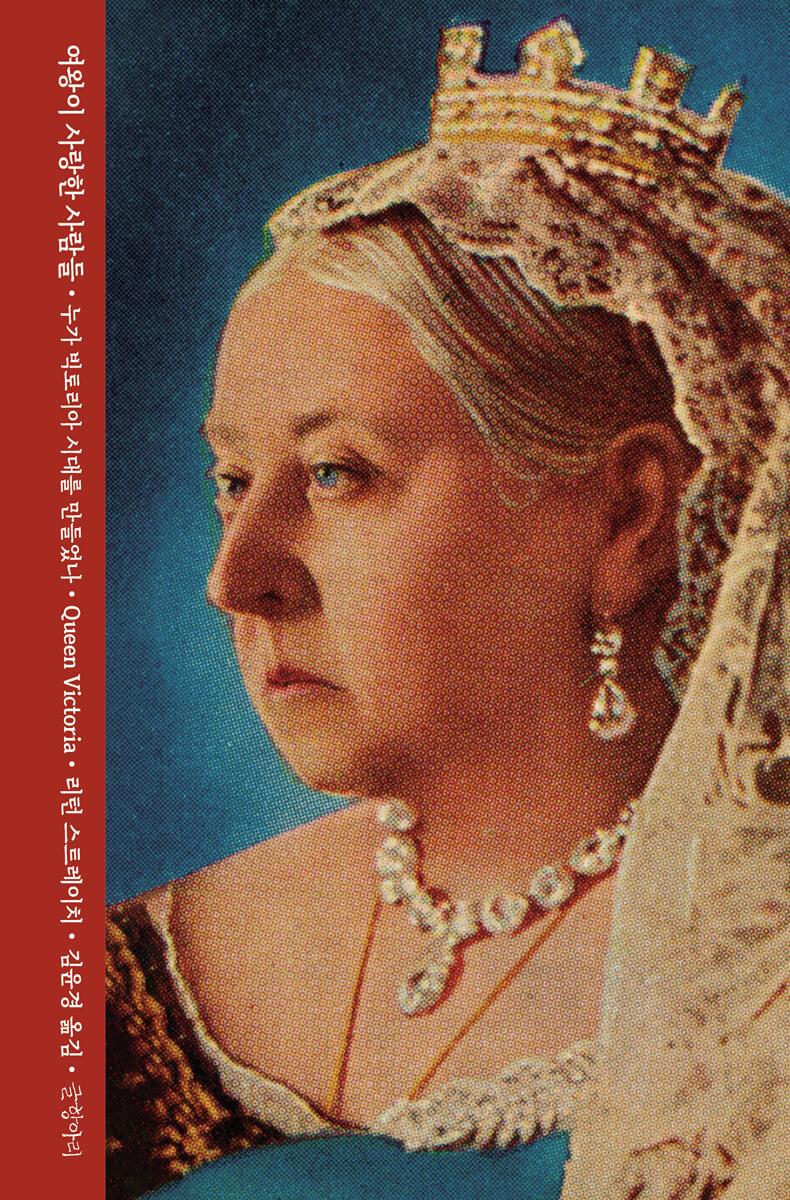 |
Description
Book Introduction
The most authoritative and most romantic
Queen Victoria's biography!
Victoria, the greatest queen in British history
A master of electric literature has cheerfully brought it back to life
The lovely queen and those who made her era
James Tate Black Memorial Award Winner
After The Return Stretch, biographical literature could never go back to the way it was before.
_『Guardian』
I was reading Strachey's biography in prison and laughed so hard that I got a warning from the guard.
_Bertrand Russell
The Queen's mother, the Duchess of Kent, her governess, Letzen, her husband, Prince Albert, and her political rivals or allies, Melbourne, Palmerston, and Disraeli.
The political drama about the Queen and those she loved and hated is revived by the master of biographical literature, Lytton Strachey.
Strachey, the founder of realistic biographies that reject made-up figures, recreates Queen Victoria as stubborn, sometimes foolish, overly emotional, and even comical.
But the truth that runs through all of this proves why Queen Victoria was so beloved by the British people.
This is a story about the queen's love, and at the same time, it is a story that makes you fall in love with the queen.
Queen Victoria's biography!
Victoria, the greatest queen in British history
A master of electric literature has cheerfully brought it back to life
The lovely queen and those who made her era
James Tate Black Memorial Award Winner
After The Return Stretch, biographical literature could never go back to the way it was before.
_『Guardian』
I was reading Strachey's biography in prison and laughed so hard that I got a warning from the guard.
_Bertrand Russell
The Queen's mother, the Duchess of Kent, her governess, Letzen, her husband, Prince Albert, and her political rivals or allies, Melbourne, Palmerston, and Disraeli.
The political drama about the Queen and those she loved and hated is revived by the master of biographical literature, Lytton Strachey.
Strachey, the founder of realistic biographies that reject made-up figures, recreates Queen Victoria as stubborn, sometimes foolish, overly emotional, and even comical.
But the truth that runs through all of this proves why Queen Victoria was so beloved by the British people.
This is a story about the queen's love, and at the same time, it is a story that makes you fall in love with the queen.
- You can preview some of the book's contents.
Preview
index
1 Background of the Succession to the Throne
2 Childhood
3rd Melbourne
4 Married Life
5 Lord Palmerston
6 The Queen's Last Years
7. Widowhood
8 Lord Gladstone and Beckensfield
9 Old age
10 Conclusion
main
References
2 Childhood
3rd Melbourne
4 Married Life
5 Lord Palmerston
6 The Queen's Last Years
7. Widowhood
8 Lord Gladstone and Beckensfield
9 Old age
10 Conclusion
main
References
Into the book
The people felt that the queen was actually very similar to them.
They instinctively sensed and responded to Victoria's undeniable truthfulness.
This was actually a very endearing feature.
--- p.373
When the Queen emerged from her long period of obscurity, the impression was profound and immediate.
The cabinet ministers who attended the first royal meeting could not hide their surprise and admiration for the queen's attitude.
(…) The public was very enthusiastic.
Sentiment and romance began to be in vogue, and the sight of a young queen, innocent, modest, fair-haired, and rosy-cheeked, riding through the capital in a carriage filled the hearts of onlookers with the joy of affectionate loyalty.
--- p.73
However miserable the Queen's eyes were, they were less so than her mouth.
The stubbornness of the small, protruding teeth and the small, receding jaw gave more misery than any strong jaw could have foreshadowed.
It was a stubbornness that was not easily shaken, incomprehensible, and stupid—a stubbornness that was dangerously similar to stubbornness.
The stubbornness of a monarch is on a different level from that of an ordinary person.
--- p.106
One day, when an angry Albert locked himself in the room and refused to come out, the equally angry queen knocked on the door and asked to be let in.
“Who are you?” he asked.
“The Queen of England.” But the door did not open, and the Queen banged on the door again.
The same question and answer were repeated several times.
Then finally silence fell, and there was a light knock on the door again.
“Who are you?” Albert asked persistently.
This time, a different answer came back.
"It's your wife, Albert." And immediately the door opened.
--- p.151
Among the people of that time, she was the embodiment of a new era and a living pinnacle.
The last remnants of the 18th century have disappeared.
Cynicism and subtlety were pulverized, and duty, diligence, morality, and family triumphed.
Even the simple chairs and tables were neat and solid, with an unparalleled adaptability.
The Victorian era was in full bloom.
--- p.179
One might assume that she, as a female monarch, would support women's liberation, arguably the most important reform of all the era's reforms, but on the contrary, the mere mention of it made her feel dizzy.
(…) “I am desperate to mobilize everyone who can speak or write to stop this vicious and absurd claim to ‘woman’s rights’ and all the horrors that go with it, on which poor, weak women, utterly oblivious to the meaning of womanly feelings and decency, are exerting their energies.”
--- p.306
Another shrine, more secret and no less sacred, existed: Albert's suite at Windsor Castle.
(…) Everything here was left as it was when Prince Albert died, and Victoria displayed an incomprehensible obsession with her husband, such as making sure his clothes were fresh on the bed every evening and water was ready in the basin, as if he were still alive.
This incredible ritual has been performed without fail for nearly 40 years.
--- p.362
Longevity was an almost indispensable quality in gaining national popularity, and she demonstrated in person one of the most admirable traits of the British people: tenacity.
She worked tirelessly while ruling the country for 60 years.
Moreover, he was of noble character.
Her nature was clearly visible, even through the fog that enveloped the throne.
The Queen's familiar image was easily imprinted in the public imagination.
They instinctively sensed and responded to Victoria's undeniable truthfulness.
This was actually a very endearing feature.
--- p.373
When the Queen emerged from her long period of obscurity, the impression was profound and immediate.
The cabinet ministers who attended the first royal meeting could not hide their surprise and admiration for the queen's attitude.
(…) The public was very enthusiastic.
Sentiment and romance began to be in vogue, and the sight of a young queen, innocent, modest, fair-haired, and rosy-cheeked, riding through the capital in a carriage filled the hearts of onlookers with the joy of affectionate loyalty.
--- p.73
However miserable the Queen's eyes were, they were less so than her mouth.
The stubbornness of the small, protruding teeth and the small, receding jaw gave more misery than any strong jaw could have foreshadowed.
It was a stubbornness that was not easily shaken, incomprehensible, and stupid—a stubbornness that was dangerously similar to stubbornness.
The stubbornness of a monarch is on a different level from that of an ordinary person.
--- p.106
One day, when an angry Albert locked himself in the room and refused to come out, the equally angry queen knocked on the door and asked to be let in.
“Who are you?” he asked.
“The Queen of England.” But the door did not open, and the Queen banged on the door again.
The same question and answer were repeated several times.
Then finally silence fell, and there was a light knock on the door again.
“Who are you?” Albert asked persistently.
This time, a different answer came back.
"It's your wife, Albert." And immediately the door opened.
--- p.151
Among the people of that time, she was the embodiment of a new era and a living pinnacle.
The last remnants of the 18th century have disappeared.
Cynicism and subtlety were pulverized, and duty, diligence, morality, and family triumphed.
Even the simple chairs and tables were neat and solid, with an unparalleled adaptability.
The Victorian era was in full bloom.
--- p.179
One might assume that she, as a female monarch, would support women's liberation, arguably the most important reform of all the era's reforms, but on the contrary, the mere mention of it made her feel dizzy.
(…) “I am desperate to mobilize everyone who can speak or write to stop this vicious and absurd claim to ‘woman’s rights’ and all the horrors that go with it, on which poor, weak women, utterly oblivious to the meaning of womanly feelings and decency, are exerting their energies.”
--- p.306
Another shrine, more secret and no less sacred, existed: Albert's suite at Windsor Castle.
(…) Everything here was left as it was when Prince Albert died, and Victoria displayed an incomprehensible obsession with her husband, such as making sure his clothes were fresh on the bed every evening and water was ready in the basin, as if he were still alive.
This incredible ritual has been performed without fail for nearly 40 years.
--- p.362
Longevity was an almost indispensable quality in gaining national popularity, and she demonstrated in person one of the most admirable traits of the British people: tenacity.
She worked tirelessly while ruling the country for 60 years.
Moreover, he was of noble character.
Her nature was clearly visible, even through the fog that enveloped the throne.
The Queen's familiar image was easily imprinted in the public imagination.
--- p.379
Publisher's Review
Rewritten by a 20th century master
Queen Victoria, an icon of the 19th century
Meet Queen Victoria, the indomitable icon who represented an era in Britain, through the writings of Lytton Strachey, a master of biographical literature.
Return Strachey is a master who is evaluated to have opened a new chapter in biographical literature. He rejected the monotony of biographies and discovered new aspects of historical figures that had not been highlighted before.
The queen he resurrected is a far cry from the monarch who commanded the vast Commonwealth, the very figure who embodied Britain, the "nation on which the sun never sets."
Although she was at the center of a great historical upheaval, she herself was very conservative, and although she was given the title of Empress and was revered as the greatest king in history, she actually had very little power, and rather than sitting on the throne with a solemn expression, she would occasionally swear and explode with emotion.
She was also a 'female' monarch in an era when the highly revolutionary topic of women's suffrage was emerging, but she hated the new voices of women and chose to remain a woman her entire life.
So what made Queen Victoria queen? To find out, Strachey brings together the queen and seven people she either passionately loved or fiercely hated.
They are the Queen's mother, the Duchess of Kent, her governess, Letzen, her husband, Prince Albert, and the political allies or nemesis Lords Melbourne, Palmerston, Gladstone, and Beckensfield.
The Duchess of Kent and Letzen shaped Victoria's regal values as a princess and heir to the throne; Prince Albert called Victoria, who enjoyed dancing all night, to her desk, reading lamp, and piles of papers; and Melbourne, Palmerston, Gladstone, and Beckensfield, who sometimes contested and sometimes joined forces with the stubborn and willful Queen to overcome national difficulties.
Their secret and passionate relationship with the Queen, both publicly and privately, unfolds across the genres of history, politics, and romance, and together with Victoria herself, they create the 'Queen Victoria' beloved by the British people, and eventually create the era that came to be called the 'Victorian Age'.
But Victoria was not simply a made-up queen.
On the one hand, Strachey illuminates Queen Victoria's 'truthfulness'.
Victoria, a child of exceptional honesty, maintained that honesty until her death, always revealing her feelings to her family, politicians, and the public without hiding anything.
In that respect, Victoria was a rare politician, and even a human being of rare virtue.
Victoria's love, her hatred, her sorrow, her pride as a monarch and even her sometimes incomprehensible stubbornness were all clearly revealed to all, and although this brought about several crises and conflicts during her reign, it ultimately made the public sympathize with her and love her deeply.
Despite Strachey's unvarnished description of the queen's comical aspects and limitations—her protruding mouth and stubbornness, her unmonarchical gait and overly emotional demeanor, her meager intellect and imperialistic mindset—we come to understand why Britain loved and revered Queen Victoria so much.
A new historical writing―
The name 'Return Strachey'
Lytton Strachey, author of "The Queen's Lovers," was born in the late 19th century and spent his early 20th century in London, where he encountered Virginia Woolf, E.
He discussed philosophy and art with M. Foster, John Keynes, and others, and they formed the London intellectual group 'Bloomsbury Group', which later had an indispensable influence on art and academia.
Strachey also created his own biographical style in the new art historical trend of the first half of the 20th century, and played a decisive role in the direction of biographical literature thereafter.
The Guardian once commented on him, saying, “After Lyton Strachey, biographical literature has never been the same again.”
Rather than a chronological list of the achievements of a great man, Strachey has created a compact, yet deeply poignant and humorous biography that is full of insight and compassion into the psychology of the man.
As a result, the characters in Strachey's biographies have become three-dimensional and realistic, with distinct light and shadows, unlike before.
Strachey's characteristic humor also permeates the writing, and Bertrand Russell recalled, "I was reading Strachey's biography in prison and laughed so hard that I had to be warned by the guards."
Strachey's biographical narrative, a mixture of paradox, irony, and exaggeration, is groundbreaking even from a modern perspective, and seems to tread a precarious line between historical truth and fictional imagination.
His humorous writing style, which lightly mocks the norms of biographical literature and, more broadly, historical writing, uses irreverence as a filter and wit as a companion, still provides us with fresh enjoyment today.
Queen Victoria, an icon of the 19th century
Meet Queen Victoria, the indomitable icon who represented an era in Britain, through the writings of Lytton Strachey, a master of biographical literature.
Return Strachey is a master who is evaluated to have opened a new chapter in biographical literature. He rejected the monotony of biographies and discovered new aspects of historical figures that had not been highlighted before.
The queen he resurrected is a far cry from the monarch who commanded the vast Commonwealth, the very figure who embodied Britain, the "nation on which the sun never sets."
Although she was at the center of a great historical upheaval, she herself was very conservative, and although she was given the title of Empress and was revered as the greatest king in history, she actually had very little power, and rather than sitting on the throne with a solemn expression, she would occasionally swear and explode with emotion.
She was also a 'female' monarch in an era when the highly revolutionary topic of women's suffrage was emerging, but she hated the new voices of women and chose to remain a woman her entire life.
So what made Queen Victoria queen? To find out, Strachey brings together the queen and seven people she either passionately loved or fiercely hated.
They are the Queen's mother, the Duchess of Kent, her governess, Letzen, her husband, Prince Albert, and the political allies or nemesis Lords Melbourne, Palmerston, Gladstone, and Beckensfield.
The Duchess of Kent and Letzen shaped Victoria's regal values as a princess and heir to the throne; Prince Albert called Victoria, who enjoyed dancing all night, to her desk, reading lamp, and piles of papers; and Melbourne, Palmerston, Gladstone, and Beckensfield, who sometimes contested and sometimes joined forces with the stubborn and willful Queen to overcome national difficulties.
Their secret and passionate relationship with the Queen, both publicly and privately, unfolds across the genres of history, politics, and romance, and together with Victoria herself, they create the 'Queen Victoria' beloved by the British people, and eventually create the era that came to be called the 'Victorian Age'.
But Victoria was not simply a made-up queen.
On the one hand, Strachey illuminates Queen Victoria's 'truthfulness'.
Victoria, a child of exceptional honesty, maintained that honesty until her death, always revealing her feelings to her family, politicians, and the public without hiding anything.
In that respect, Victoria was a rare politician, and even a human being of rare virtue.
Victoria's love, her hatred, her sorrow, her pride as a monarch and even her sometimes incomprehensible stubbornness were all clearly revealed to all, and although this brought about several crises and conflicts during her reign, it ultimately made the public sympathize with her and love her deeply.
Despite Strachey's unvarnished description of the queen's comical aspects and limitations—her protruding mouth and stubbornness, her unmonarchical gait and overly emotional demeanor, her meager intellect and imperialistic mindset—we come to understand why Britain loved and revered Queen Victoria so much.
A new historical writing―
The name 'Return Strachey'
Lytton Strachey, author of "The Queen's Lovers," was born in the late 19th century and spent his early 20th century in London, where he encountered Virginia Woolf, E.
He discussed philosophy and art with M. Foster, John Keynes, and others, and they formed the London intellectual group 'Bloomsbury Group', which later had an indispensable influence on art and academia.
Strachey also created his own biographical style in the new art historical trend of the first half of the 20th century, and played a decisive role in the direction of biographical literature thereafter.
The Guardian once commented on him, saying, “After Lyton Strachey, biographical literature has never been the same again.”
Rather than a chronological list of the achievements of a great man, Strachey has created a compact, yet deeply poignant and humorous biography that is full of insight and compassion into the psychology of the man.
As a result, the characters in Strachey's biographies have become three-dimensional and realistic, with distinct light and shadows, unlike before.
Strachey's characteristic humor also permeates the writing, and Bertrand Russell recalled, "I was reading Strachey's biography in prison and laughed so hard that I had to be warned by the guards."
Strachey's biographical narrative, a mixture of paradox, irony, and exaggeration, is groundbreaking even from a modern perspective, and seems to tread a precarious line between historical truth and fictional imagination.
His humorous writing style, which lightly mocks the norms of biographical literature and, more broadly, historical writing, uses irreverence as a filter and wit as a companion, still provides us with fresh enjoyment today.
GOODS SPECIFICS
- Date of issue: July 7, 2023
- Page count, weight, size: 404 pages | 484g | 135*205*20mm
- ISBN13: 9791169091282
- ISBN10: 1169091288
You may also like
카테고리
korean


korean

![GQ KOREA Mark (Monthly): December [2025]](http://librairie.coreenne.fr/cdn/shop/files/8ef265dbbfbf186523ed75ba7319009d.jpg?v=1765340328&width=3840)


