

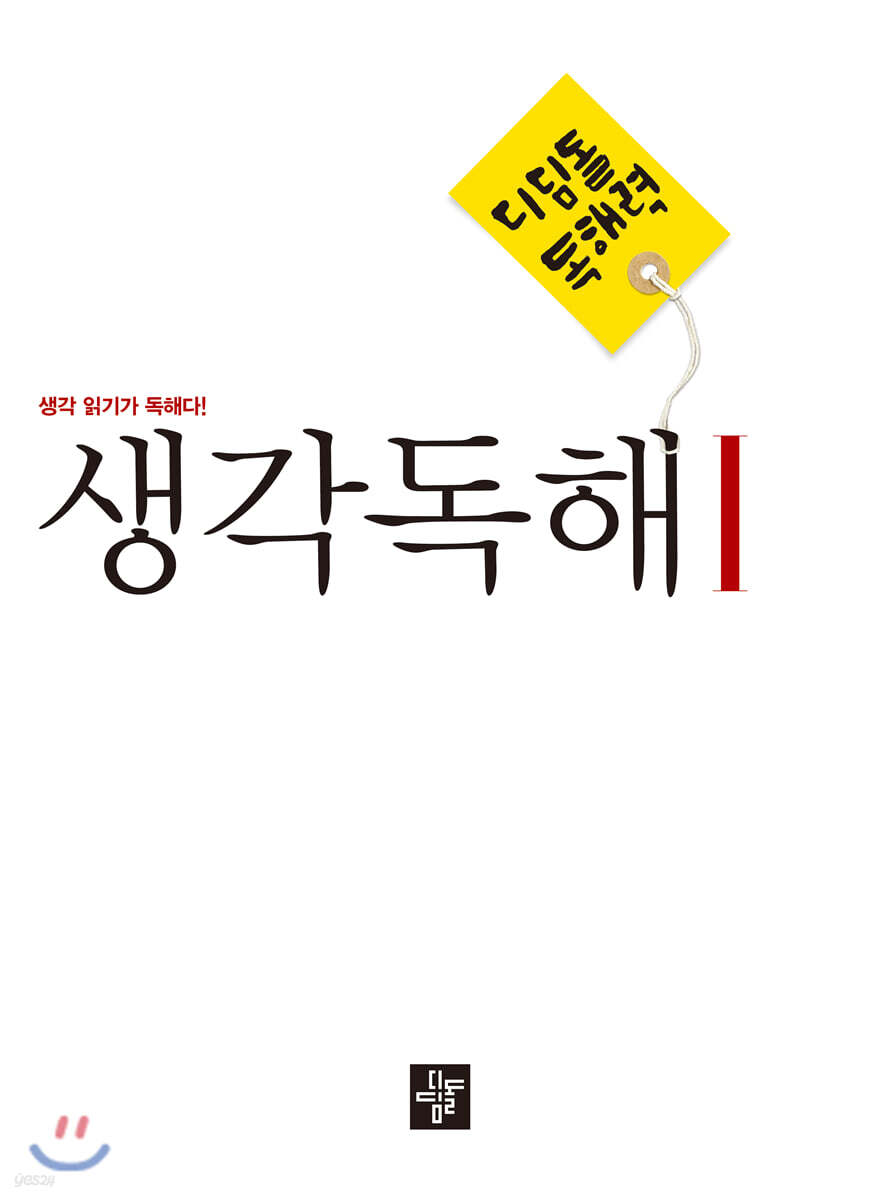
Stepping Stone Middle School Korean Reading Comprehension - Thinking Reading 1
 |
Description
Book Introduction
Reading minds is reading comprehension! Why do Korean scores differ when we read the same text? Being good at reading isn't about who can read faster. Learning how to read and think properly is the core of reading comprehension. Thinking Reading focuses on the process of reading, starting with the question "why" and then thinking about "what" and "how." It selects "big ideas" that span various fields such as humanities, social sciences, science, technology, and the arts, helping readers develop their thinking skills beyond simply reading. To reach your destination, the CSAT, let's start with reading comprehension, just like unfolding a map. |
- You can preview some of the book's contents.
Preview
index
Thinking Reading I
01 Curiosity
Mind Reading 1 [Psychology] What is Curiosity?
Mind Reading 2 [Myth] Curiosity, Breaking Taboos
The entire content of the article is already included in the first paragraph of the Principle Reading.
Mind Reading 3 [Management/Advertising] What on Earth Is That Advertisement?
Mind Reading 4 [Science and Technology] What would this look like if we looked at it broadly?
Mind Reading 5 [History & Culture] The Birth of the Museum, a Wondrous Repository
Mind Reading 6 [Mystery & Science] Are Aliens and UFOs Real?
02 Big Question
Mind Reading 1 [Society/Ethics] Is Justice Really Necessary in Society?
Mind Reading 2 [History] Why Learn History?
Why you should pay attention to repetitive words when reading with principles
Mind Reading 3 [Psychology/Metaphysics] Why Am I Me?
Mind Reading 4 [Philosophy] What is happiness?
Why You Should Pay Attention to Negative Statements in Reading the Principle
Mind Reading 5 [Astronomy] Why is the night sky dark?
Mind Reading 6 [Art] Why Are the People in Egyptian Murals So Unique?
03 Happening
Mind Reading 1 [History] Cleopatra's Nose
How the author arouses interest by reading the principle
Mind Reading 2 [Technology] Rediscovering Rubber
Mind Reading 3 [Politics] The Fall of the Berlin Wall, Caused by Misinformation
Mind Reading 4 [Movie] A Film That Started with the Horseshoe Controversy
Mind Reading 5 [Art] Understanding Abstract Painting
Mind Reading 6 [Art] A New Adventure in Art, Happening
04 Tools
Mind Reading 1 [Philosophy] Why is rational thinking necessary?
Why you should remember the definitions of the terms in Principle Reading
Mind Reading 2 [Politics and Economy] To properly reflect the opinions of many people
Mind Reading 3 [Mathematics/History] Sandai, the Driving Force of Traditional Chinese Mathematics
Mind Reading 4 [Technology] Was Napoleon Really Short?
Mind Reading 5 [Arts & Culture] Objects Become Art
Reading Thoughts 6 [Anthropology/Language] The Necessity of Writing and Discussions
05 difference
Mind Reading 1 [Logic] Mill's Proposed Law of Agreement and Law of Difference
Mind Reading 2 [Society] Why Do Generational Differences Occur?
Why you should pay attention to the beginning and end of a reading text based on principles
Reading Thoughts 3 [Society and Culture] Cultures Read Differently
Reading Thoughts 4 [Mathematics] Different Number Systems for Different Regions and Ethnicities
Mind Reading 5 [Life Science] Why Are Animals' Pupils Differently Shaped?
Mind Reading 6 [Art] How Are Eastern and Western Paintings Different?
06 Origin
Mind Reading 1 [Astronomy] The Universe as Seen by Scientists
Why we should pay attention to connectives, which are the link between reading and thinking in principle
Mind Reading 2 [Chemistry/History] Making Gold from Non-Metals
Mind Reading 3 [Economy] The Rise of Money and Beyond
Mind Reading 4 [Anthropology] Prehistoric Human Life
Mind Reading 5 [Life Science] Discussions on the Origin of Life
Mind Reading 6 [Chemistry and Earth Science] How Were Elements Created?
07 Extinction
Mind Reading 1 [Anthropology] Why Did Neanderthals Extinct?
Mind Reading 2 [World History] Why Did the Roman Empire Fall?
Why You Should Pay Attention to the Perspectives Revealed in Thinking-Reading Texts: Thinking-Reading 3 [Language] Languages That Are Disappearing from the World
Mind Reading 4 [Society/Law] The Story of Joseon's Now-Lost Law
Mind Reading 5 [Art] Danto's Art Eschatology
Mind Reading 6 [Life Science] Cells Age Too
01 Curiosity
Mind Reading 1 [Psychology] What is Curiosity?
Mind Reading 2 [Myth] Curiosity, Breaking Taboos
The entire content of the article is already included in the first paragraph of the Principle Reading.
Mind Reading 3 [Management/Advertising] What on Earth Is That Advertisement?
Mind Reading 4 [Science and Technology] What would this look like if we looked at it broadly?
Mind Reading 5 [History & Culture] The Birth of the Museum, a Wondrous Repository
Mind Reading 6 [Mystery & Science] Are Aliens and UFOs Real?
02 Big Question
Mind Reading 1 [Society/Ethics] Is Justice Really Necessary in Society?
Mind Reading 2 [History] Why Learn History?
Why you should pay attention to repetitive words when reading with principles
Mind Reading 3 [Psychology/Metaphysics] Why Am I Me?
Mind Reading 4 [Philosophy] What is happiness?
Why You Should Pay Attention to Negative Statements in Reading the Principle
Mind Reading 5 [Astronomy] Why is the night sky dark?
Mind Reading 6 [Art] Why Are the People in Egyptian Murals So Unique?
03 Happening
Mind Reading 1 [History] Cleopatra's Nose
How the author arouses interest by reading the principle
Mind Reading 2 [Technology] Rediscovering Rubber
Mind Reading 3 [Politics] The Fall of the Berlin Wall, Caused by Misinformation
Mind Reading 4 [Movie] A Film That Started with the Horseshoe Controversy
Mind Reading 5 [Art] Understanding Abstract Painting
Mind Reading 6 [Art] A New Adventure in Art, Happening
04 Tools
Mind Reading 1 [Philosophy] Why is rational thinking necessary?
Why you should remember the definitions of the terms in Principle Reading
Mind Reading 2 [Politics and Economy] To properly reflect the opinions of many people
Mind Reading 3 [Mathematics/History] Sandai, the Driving Force of Traditional Chinese Mathematics
Mind Reading 4 [Technology] Was Napoleon Really Short?
Mind Reading 5 [Arts & Culture] Objects Become Art
Reading Thoughts 6 [Anthropology/Language] The Necessity of Writing and Discussions
05 difference
Mind Reading 1 [Logic] Mill's Proposed Law of Agreement and Law of Difference
Mind Reading 2 [Society] Why Do Generational Differences Occur?
Why you should pay attention to the beginning and end of a reading text based on principles
Reading Thoughts 3 [Society and Culture] Cultures Read Differently
Reading Thoughts 4 [Mathematics] Different Number Systems for Different Regions and Ethnicities
Mind Reading 5 [Life Science] Why Are Animals' Pupils Differently Shaped?
Mind Reading 6 [Art] How Are Eastern and Western Paintings Different?
06 Origin
Mind Reading 1 [Astronomy] The Universe as Seen by Scientists
Why we should pay attention to connectives, which are the link between reading and thinking in principle
Mind Reading 2 [Chemistry/History] Making Gold from Non-Metals
Mind Reading 3 [Economy] The Rise of Money and Beyond
Mind Reading 4 [Anthropology] Prehistoric Human Life
Mind Reading 5 [Life Science] Discussions on the Origin of Life
Mind Reading 6 [Chemistry and Earth Science] How Were Elements Created?
07 Extinction
Mind Reading 1 [Anthropology] Why Did Neanderthals Extinct?
Mind Reading 2 [World History] Why Did the Roman Empire Fall?
Why You Should Pay Attention to the Perspectives Revealed in Thinking-Reading Texts: Thinking-Reading 3 [Language] Languages That Are Disappearing from the World
Mind Reading 4 [Society/Law] The Story of Joseon's Now-Lost Law
Mind Reading 5 [Art] Danto's Art Eschatology
Mind Reading 6 [Life Science] Cells Age Too
Detailed image

Publisher's Review
[How to Use Textbooks (How to Use Thinking Reading)]
Is reading comprehension complete just by reading the passage and solving the problems?
True reading is when you can read the writer's thoughts!
Reading comprehension refers to the ability to read text and understand its meaning.
The basis of reading comprehension is how accurately you can grasp the content of the text, that is, the information organized according to the writer's thoughts.
So, if I understand all the content of the text, is reading comprehension finished?
There is no writing that does not contain the writer's thoughts.
However, writers often do not express their thoughts directly, but hide them tightly in their writing.
The best strategy for developing reading comprehension is not to simply read the text, but to put yourself in the author's shoes and read the author's hidden thoughts.
True reading is when you can read the writer's thoughts.
One, can you read thoughts from various fields with one idea?
Aren't you curious about what thoughts are circulating across the humanities, society, economics, history, science, technology, art, music, and more, all based on the same idea? Mind Reading presents a panoramic view of diverse fields, all connected by a single, big idea.
Don't be overwhelmed by the uncertainty of what questions will appear on the CSAT. Start by learning how to read your mind!
Second, curious about the principles of reading comprehension? The author's thoughts are the principles of reading comprehension!
As you solve the problem, you might wonder, "Why did the author write this way? Why did they pose this problem?" You might also feel a sense of resentment. You can find answers to these questions through thoughtful reading, using the image tips and principles hidden throughout the text.
Third, no more rigid paragraph structures! Structure your thoughts with fun thought puzzles!
If you practice turning the thoughts in each paragraph into a puzzle, like playing a game, before you know it, when you read a piece of writing, your mind will see the writing in a familiar puzzle form!
Fourth, real reading is complete when you can gather your thoughts into one word!
If I just read without organizing my thoughts, like floating dust, the text I read will soon disappear from my mind without a trace.
When I can read a long piece of writing and summarize it in one sentence, or even one word, then that writing becomes truly mine.
In the structuring of thoughts, try to integrate various thoughts into paragraphs, sentences, and words and make them your own!
Is reading comprehension complete just by reading the passage and solving the problems?
True reading is when you can read the writer's thoughts!
Reading comprehension refers to the ability to read text and understand its meaning.
The basis of reading comprehension is how accurately you can grasp the content of the text, that is, the information organized according to the writer's thoughts.
So, if I understand all the content of the text, is reading comprehension finished?
There is no writing that does not contain the writer's thoughts.
However, writers often do not express their thoughts directly, but hide them tightly in their writing.
The best strategy for developing reading comprehension is not to simply read the text, but to put yourself in the author's shoes and read the author's hidden thoughts.
True reading is when you can read the writer's thoughts.
One, can you read thoughts from various fields with one idea?
Aren't you curious about what thoughts are circulating across the humanities, society, economics, history, science, technology, art, music, and more, all based on the same idea? Mind Reading presents a panoramic view of diverse fields, all connected by a single, big idea.
Don't be overwhelmed by the uncertainty of what questions will appear on the CSAT. Start by learning how to read your mind!
Second, curious about the principles of reading comprehension? The author's thoughts are the principles of reading comprehension!
As you solve the problem, you might wonder, "Why did the author write this way? Why did they pose this problem?" You might also feel a sense of resentment. You can find answers to these questions through thoughtful reading, using the image tips and principles hidden throughout the text.
Third, no more rigid paragraph structures! Structure your thoughts with fun thought puzzles!
If you practice turning the thoughts in each paragraph into a puzzle, like playing a game, before you know it, when you read a piece of writing, your mind will see the writing in a familiar puzzle form!
Fourth, real reading is complete when you can gather your thoughts into one word!
If I just read without organizing my thoughts, like floating dust, the text I read will soon disappear from my mind without a trace.
When I can read a long piece of writing and summarize it in one sentence, or even one word, then that writing becomes truly mine.
In the structuring of thoughts, try to integrate various thoughts into paragraphs, sentences, and words and make them your own!
GOODS SPECIFICS
- Date of issue: September 15, 2020
- Page count, weight, size: 280 pages | 220*300*20mm
- ISBN13: 9788926158722
- ISBN10: 8926158721
- Reference book for use in grades: Common for middle school students
- Reference book usage semester: Common semester
- Reference book difficulty: Medium Reference book difficulty guide
You may also like
카테고리
korean


korean

![GQ KOREA Mark (Monthly): December [2025]](http://librairie.coreenne.fr/cdn/shop/files/8ef265dbbfbf186523ed75ba7319009d.jpg?v=1765340328&width=3840)


