

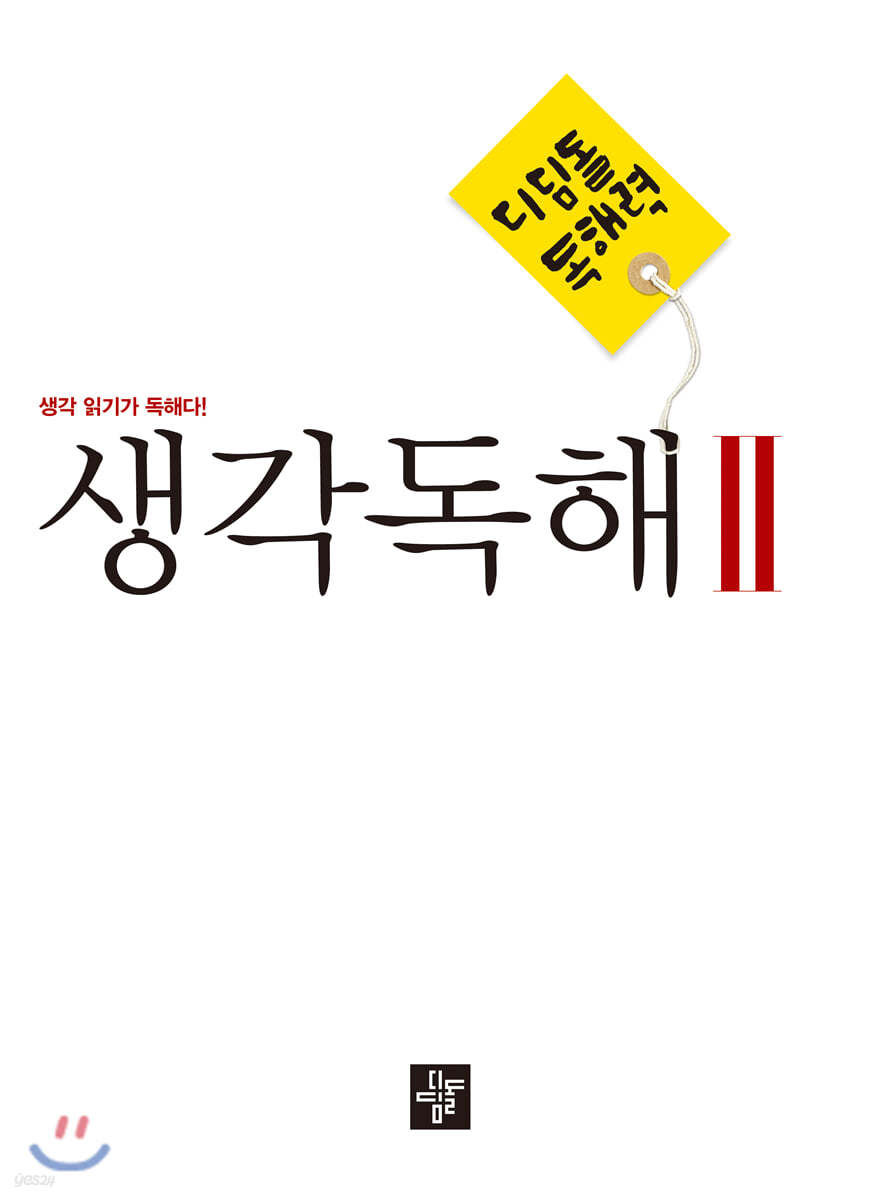
Stepping Stone Middle School Korean Reading Comprehension - Thinking Reading 2
 |
Description
Book Introduction
Reading minds is reading comprehension! Why do Korean scores differ when we read the same text? Being good at reading isn't about who can read faster. Learning how to read and think properly is the core of reading comprehension. Thinking Reading focuses on the process of reading, starting with the question "why" and then thinking about "what" and "how." It selects "big ideas" that span various fields such as humanities, social sciences, science, technology, and the arts, helping readers develop their thinking skills beyond simply reading. To reach your destination, the CSAT, let's start with reading comprehension, just like unfolding a map. |
- You can preview some of the book's contents.
Preview
index
Thinking Reading II
01 Discovery
Mind Reading 1 [Psychology] Rediscovering the Mind
Mind Reading 2 [Chemistry] From the Four Elements Novel to Atomic Theory
Mind Reading 3 [Mathematics] Expressing Nothing
Mind Reading 4 [People & Society] Who Will Win the Nobel Prize?
Mind Reading 5 [History/Archaeology] From Beyond 2000 Years
Mind Reading 6 [World History/Geography] Heading Towards the End of the World
If you understand the process of reading thought in principle, you can see the flow of the text.
02 Light
Mind Reading 1 [Astronomy] The River of Starlight, the Milky Way
Mind Reading 2 [Environment] The Two Faces of Light
The most important part of reading with principles is completed at the end.
Mind Reading 3 [Art] Monet, Painting Light
Mind Reading 4 [Architecture] Stained Glass and Medieval Cathedrals
Mind Reading 5 [Physics] Is light a particle or a wave?
Reading Thoughts 6 [Religion and Culture] Zoroastrianism, Worship of Light
03 Beauty
Mind Reading 1 [Mathematics/Life Science] The Fibonacci Sequence Discovered in Nature
Mind Reading 2 [History, Society, and Culture] Are poppies still pretty today?
How to Give a Title That Fits Your Reading Text
Mind Reading 3 [Physics] Why do rainbows have so many colors?
Mind Reading 4 [Architecture] Gaudí's Architectural World: Resembling Nature
Mind Reading 5 [Tradition and Aesthetics] Korea's Traditional Beauty and Nature
Mind Reading 6 [Music] How do we feel emotions when we listen to music?
04 Strength
Mind Reading 1 [Physics/Mathematics] To accurately measure force
Mind Reading 2 [Education/Society] The Power of Kindergarten
Mind Reading 3 [Politics and Ideology] Where Does the King's Power Come From?
Mind Reading 4 [Technology] Beyond Human Power
Mind Reading 5 [Earth Science] Sunlight and Thermal Energy
Reading with the principle that each paragraph contains one central idea
Mind Reading 6 [International Politics and Culture] The Pen is Mightier than the Sword
05 Mystery
Mind Reading 1 [Math] The Secret to Simplifying Large Numbers
Mind Reading 2 [Humanities/Mythology] How Hero Myths Are Created
Mind Reading 3 [Life Science] The Story of Hormones That Regulate Our Bodies
The writer of the book, Thinking by Principle, also enjoys comparing things to other subjects.
Mind Reading 4 [Astronomy] Black Holes Finally Revealed
Mind Reading 5 [Biology/Environment] Cacti Survive the Desert
Mind Reading 6 [Medicine] How Does the Brain Remember the Past?
06 Rival
Mind Reading 1 [Economy] Debate on the Economic System
Reading the Mind with Principles: Why We Try to Compromise Two or More Views
Mind Reading 2 [Religion and Science] The History of the Struggle Between Religion and Science
Mind Reading 3 [Technology] Current Wars
Mind Reading 4 [Art] Faceless Self-Portrait
The author also likes to analyze and think in terms of principles.
Thought Reading 5 [Thought] Is human nature good or evil?
Reading Thoughts 6 [Philosophy] Kant's Epistemology
07 Existence
Reading Thoughts 1 [Philosophy] The Philosophical Meaning of Existence
Mind Reading 2 [Art] What is art for?
Mind Reading 3 [Society/Philosophy] The Nature and Role of the State
The reason the author of "Reading with Principles" tells us again
Mind Reading 4 [Metaphysics] Does God Exist?
Mind Reading 5 [Physics/Astronomy] Einstein's Perspective on Time and Space
Mind Reading 6 [Philosophy/Art] Rodin's "The Thinker"
01 Discovery
Mind Reading 1 [Psychology] Rediscovering the Mind
Mind Reading 2 [Chemistry] From the Four Elements Novel to Atomic Theory
Mind Reading 3 [Mathematics] Expressing Nothing
Mind Reading 4 [People & Society] Who Will Win the Nobel Prize?
Mind Reading 5 [History/Archaeology] From Beyond 2000 Years
Mind Reading 6 [World History/Geography] Heading Towards the End of the World
If you understand the process of reading thought in principle, you can see the flow of the text.
02 Light
Mind Reading 1 [Astronomy] The River of Starlight, the Milky Way
Mind Reading 2 [Environment] The Two Faces of Light
The most important part of reading with principles is completed at the end.
Mind Reading 3 [Art] Monet, Painting Light
Mind Reading 4 [Architecture] Stained Glass and Medieval Cathedrals
Mind Reading 5 [Physics] Is light a particle or a wave?
Reading Thoughts 6 [Religion and Culture] Zoroastrianism, Worship of Light
03 Beauty
Mind Reading 1 [Mathematics/Life Science] The Fibonacci Sequence Discovered in Nature
Mind Reading 2 [History, Society, and Culture] Are poppies still pretty today?
How to Give a Title That Fits Your Reading Text
Mind Reading 3 [Physics] Why do rainbows have so many colors?
Mind Reading 4 [Architecture] Gaudí's Architectural World: Resembling Nature
Mind Reading 5 [Tradition and Aesthetics] Korea's Traditional Beauty and Nature
Mind Reading 6 [Music] How do we feel emotions when we listen to music?
04 Strength
Mind Reading 1 [Physics/Mathematics] To accurately measure force
Mind Reading 2 [Education/Society] The Power of Kindergarten
Mind Reading 3 [Politics and Ideology] Where Does the King's Power Come From?
Mind Reading 4 [Technology] Beyond Human Power
Mind Reading 5 [Earth Science] Sunlight and Thermal Energy
Reading with the principle that each paragraph contains one central idea
Mind Reading 6 [International Politics and Culture] The Pen is Mightier than the Sword
05 Mystery
Mind Reading 1 [Math] The Secret to Simplifying Large Numbers
Mind Reading 2 [Humanities/Mythology] How Hero Myths Are Created
Mind Reading 3 [Life Science] The Story of Hormones That Regulate Our Bodies
The writer of the book, Thinking by Principle, also enjoys comparing things to other subjects.
Mind Reading 4 [Astronomy] Black Holes Finally Revealed
Mind Reading 5 [Biology/Environment] Cacti Survive the Desert
Mind Reading 6 [Medicine] How Does the Brain Remember the Past?
06 Rival
Mind Reading 1 [Economy] Debate on the Economic System
Reading the Mind with Principles: Why We Try to Compromise Two or More Views
Mind Reading 2 [Religion and Science] The History of the Struggle Between Religion and Science
Mind Reading 3 [Technology] Current Wars
Mind Reading 4 [Art] Faceless Self-Portrait
The author also likes to analyze and think in terms of principles.
Thought Reading 5 [Thought] Is human nature good or evil?
Reading Thoughts 6 [Philosophy] Kant's Epistemology
07 Existence
Reading Thoughts 1 [Philosophy] The Philosophical Meaning of Existence
Mind Reading 2 [Art] What is art for?
Mind Reading 3 [Society/Philosophy] The Nature and Role of the State
The reason the author of "Reading with Principles" tells us again
Mind Reading 4 [Metaphysics] Does God Exist?
Mind Reading 5 [Physics/Astronomy] Einstein's Perspective on Time and Space
Mind Reading 6 [Philosophy/Art] Rodin's "The Thinker"
Detailed image

Publisher's Review
[How to Use Textbooks (How to Use Thinking Reading)]
Is reading comprehension complete just by reading the passage and solving the problems?
True reading is when you can read the writer's thoughts!
Reading comprehension refers to the ability to read text and understand its meaning.
The basis of reading comprehension is how accurately you can grasp the content of the text, that is, the information organized according to the writer's thoughts.
So, if I understand all the content of the text, is reading comprehension finished?
There is no writing that does not contain the writer's thoughts.
However, writers often do not express their thoughts directly, but hide them tightly in their writing.
The best strategy for developing reading comprehension is not to simply read the text, but to put yourself in the author's shoes and read the author's hidden thoughts.
True reading is when you can read the writer's thoughts.
One, can you read thoughts from various fields with one idea?
Aren't you curious about what thoughts are circulating across the humanities, society, economics, history, science, technology, art, music, and more, all based on the same idea? Mind Reading presents a panoramic view of diverse fields, all connected by a single, big idea.
Don't be overwhelmed by the uncertainty of what questions will appear on the CSAT. Start by learning how to read your mind!
Second, curious about the principles of reading comprehension? The author's thoughts are the principles of reading comprehension!
As you solve the problem, you might wonder, "Why did the author write this way? Why did they pose this problem?" You might also feel a sense of resentment. You can find answers to these questions through thoughtful reading, using the image tips and principles hidden throughout the text.
Third, no more rigid paragraph structures! Structure your thoughts with fun thought puzzles!
If you practice turning the thoughts in each paragraph into a puzzle, like playing a game, before you know it, when you read a piece of writing, your mind will see the writing in a familiar puzzle form!
Fourth, real reading is complete when you can gather your thoughts into one word!
If I just read without organizing my thoughts, like floating dust, the text I read will soon disappear from my mind without a trace.
When I can read a long piece of writing and summarize it in one sentence, or even one word, then that writing becomes truly mine.
In the structuring of thoughts, try to integrate various thoughts into paragraphs, sentences, and words and make them your own!
Is reading comprehension complete just by reading the passage and solving the problems?
True reading is when you can read the writer's thoughts!
Reading comprehension refers to the ability to read text and understand its meaning.
The basis of reading comprehension is how accurately you can grasp the content of the text, that is, the information organized according to the writer's thoughts.
So, if I understand all the content of the text, is reading comprehension finished?
There is no writing that does not contain the writer's thoughts.
However, writers often do not express their thoughts directly, but hide them tightly in their writing.
The best strategy for developing reading comprehension is not to simply read the text, but to put yourself in the author's shoes and read the author's hidden thoughts.
True reading is when you can read the writer's thoughts.
One, can you read thoughts from various fields with one idea?
Aren't you curious about what thoughts are circulating across the humanities, society, economics, history, science, technology, art, music, and more, all based on the same idea? Mind Reading presents a panoramic view of diverse fields, all connected by a single, big idea.
Don't be overwhelmed by the uncertainty of what questions will appear on the CSAT. Start by learning how to read your mind!
Second, curious about the principles of reading comprehension? The author's thoughts are the principles of reading comprehension!
As you solve the problem, you might wonder, "Why did the author write this way? Why did they pose this problem?" You might also feel a sense of resentment. You can find answers to these questions through thoughtful reading, using the image tips and principles hidden throughout the text.
Third, no more rigid paragraph structures! Structure your thoughts with fun thought puzzles!
If you practice turning the thoughts in each paragraph into a puzzle, like playing a game, before you know it, when you read a piece of writing, your mind will see the writing in a familiar puzzle form!
Fourth, real reading is complete when you can gather your thoughts into one word!
If I just read without organizing my thoughts, like floating dust, the text I read will soon disappear from my mind without a trace.
When I can read a long piece of writing and summarize it in one sentence, or even one word, then that writing becomes truly mine.
In the structuring of thoughts, try to integrate various thoughts into paragraphs, sentences, and words and make them your own!
GOODS SPECIFICS
- Date of issue: September 15, 2020
- Page count, weight, size: 280 pages | 220*300*20mm
- ISBN13: 9788926158739
- ISBN10: 892615873X
- Reference book for use in grades: Common for middle school students
- Reference book usage semester: Common semester
- Reference book difficulty: Medium Reference book difficulty guide
You may also like
카테고리
korean


korean

![GQ KOREA Mark (Monthly): December [2025]](http://librairie.coreenne.fr/cdn/shop/files/8ef265dbbfbf186523ed75ba7319009d.jpg?v=1765340328&width=3840)


